







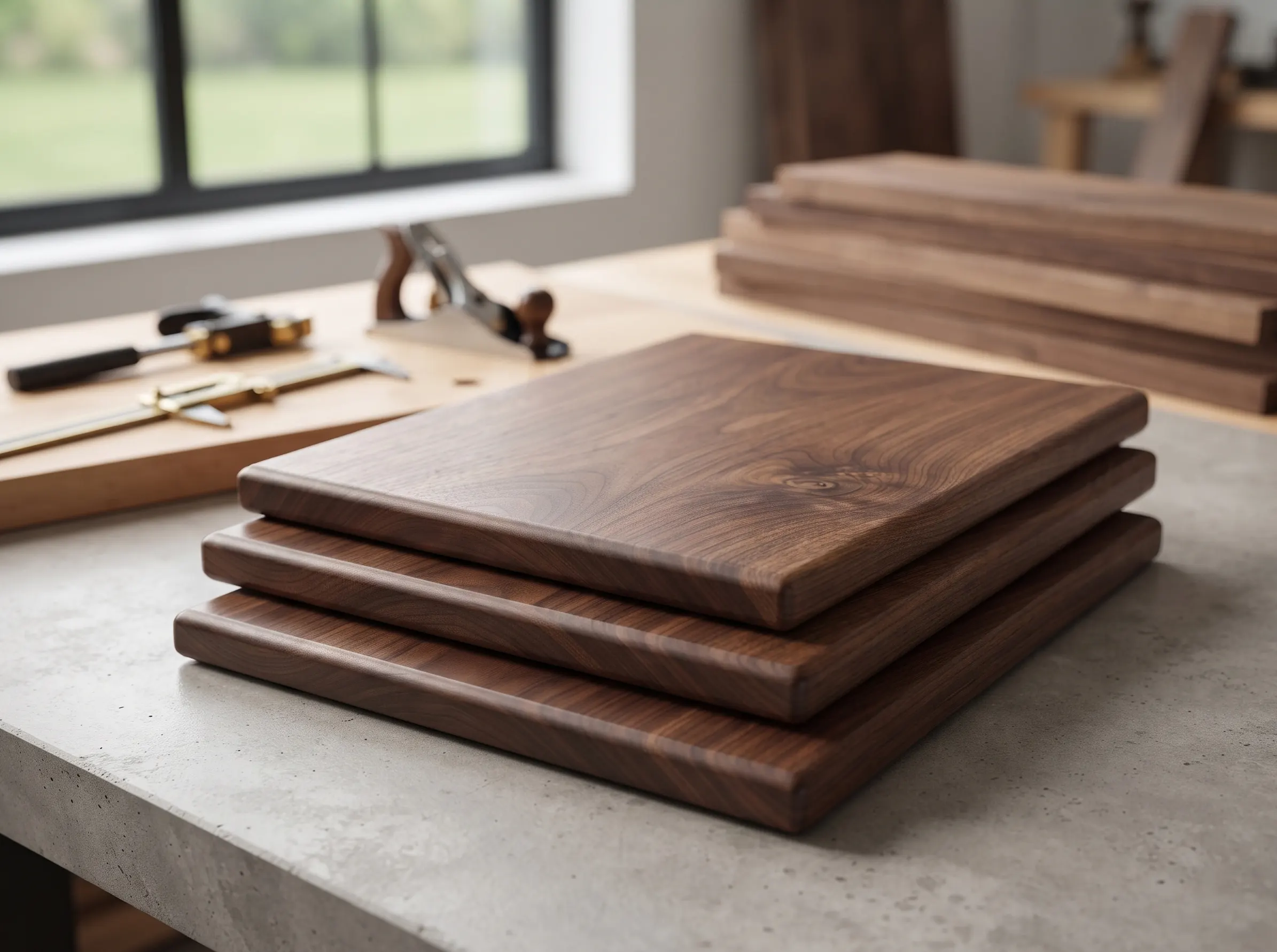
Here’s the uncomfortable truth in one paragraph. A large share of furniture sold as “American walnut” never touched American soil. In the walnut furniture China supply chain, the label carries three kinds of water: domestic Chinese walnut species passed off as imported American stock, walnut from other growing regions relabeled as American, and non-walnut woods — stained poplar, rubberwood, even paulownia — dyed dark brown and sold as the real thing. This happens because the “American walnut” premium is enormous, most overseas buyers cannot tell species apart, and origin fraud at the wholesale level is, frankly, an open secret. The fix is not to avoid Chinese-made walnut furniture — much of it is honestly labeled and excellent value — but to know what questions to ask, what documents to demand, and what your own eyes and hands can verify before the deposit leaves your account.
Why Buyers Pay the Premium — and Why They Can’t Verify It
Walk any furniture fair in Guangzhou or Shanghai and count the walnut labels. Then ask the salesperson where the lumber came from. You’ll get confident answers — “Ohio,” “Missouri,” “Appalachian” — delivered with the fluency of a script. The problem isn’t that buyers are careless. The problem is that walnut sits in a rare blind spot: it is one of the highest-premium wood labels in furniture, and one of the least verifiable at the point of sale.
Black walnut commands a price multiple over comparable temperate hardwoods, and that premium is priced into every dining table, cabinet, and bed frame carrying the label. Yet unlike species with dramatic visual signatures, walnut’s look — chocolate brown, straight to wavy grain — can be imitated with stain, photography, and careful showroom lighting. The buyer paying for origin is usually the last person in the chain to know the truth.
The Species Truth: What “Black Walnut” Actually Means
Definition: Juglans nigra
American black walnut is Juglans nigra, a species native to the eastern and central United States, with its commercial heartland in the Ohio Valley, the Midwest, and the Appalachian region. It is a slow-growing hardwood valued for dimensional stability, a rich chocolate-brown heartwood that darkens with age, and a grain that takes a finish beautifully. Critically, “walnut” on a spec sheet is not one wood — the Juglans genus contains many species across Asia, Europe, and the Americas, and their commercial values differ enormously.
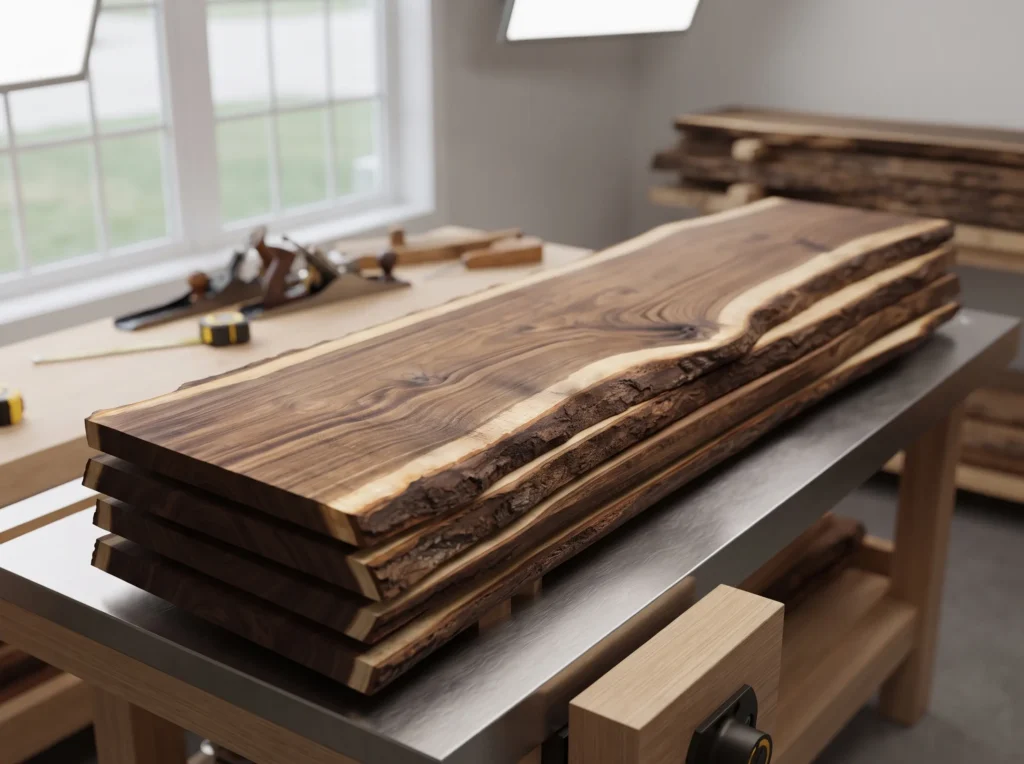
Definition: Chinese Walnut and Manchurian Walnut
China has its own genuine walnut species. The most commercially relevant is Juglans mandshurica — Manchurian walnut, known in the trade as 核桃楸 (hetaoqiu) — a native species from Northeast China with a lighter, more yellowish-brown color and generally coarser figure than J. nigra. There is also cultivated common walnut (Juglans regia), grown widely in Yunnan and Xinjiang, whose timber is used for furniture and crafts. Neither is “fake.” Both are real walnut. They simply are not American black walnut, and they do not carry its price.
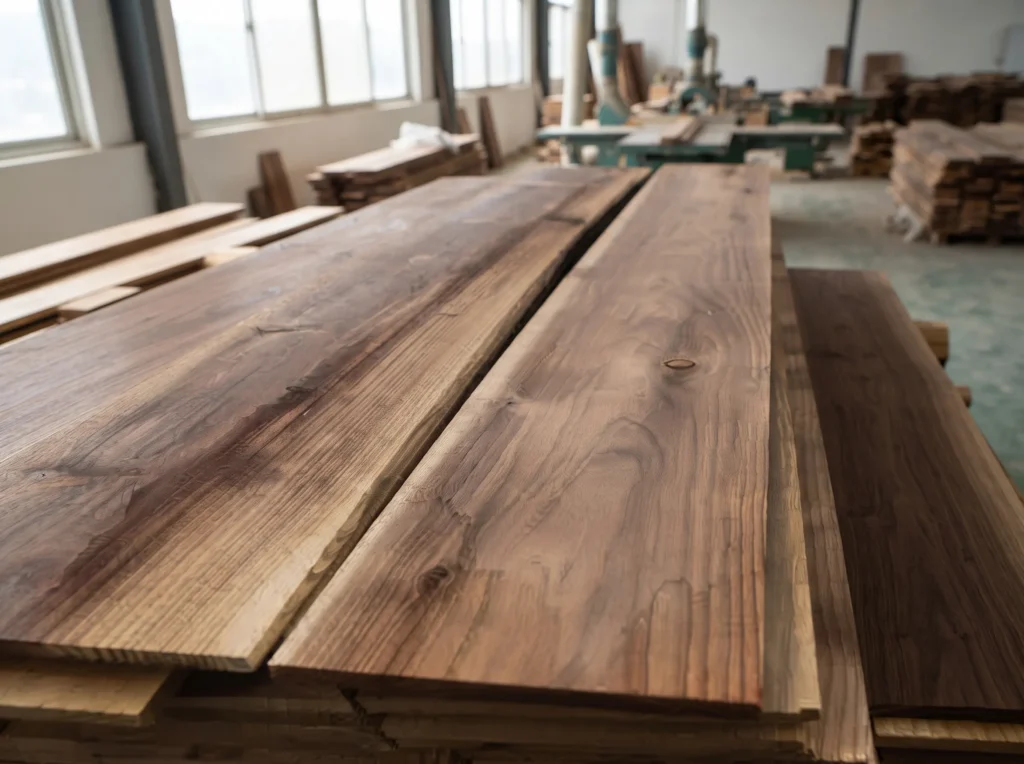
American Black Walnut vs. Chinese Walnut Species
| Attribute | American Black Walnut (J. nigra) | Chinese Walnut Species (J. mandshurica / J. regia) |
|---|---|---|
| Origin | Eastern & central USA | Northeast China (Manchurian); Yunnan, Xinjiang (common walnut) |
| Heartwood color | Deep chocolate brown, darkens with age | Yellowish to grayish brown, lighter overall |
| Grain figure | Straight to wavy, prized cathedral patterns | Generally coarser, less dramatic figure |
| Density (air-dry, approx.) | ~640 kg/m³ | ~560–600 kg/m³ (subject to verification) |
| Stability | Excellent, low movement in service | Good, slightly more movement reported anecdotally |
| Commercial value | High premium tier | Mid-to-low tier domestically |
| Stain uptake | Rich, even | Lighter base can be stained to imitate nigra |
The Three Flavors of “American Walnut” Fraud
Through years of walking kiln yards and lumber warehouses across Foshan, Shunde, and the Northeast China timber circuit, we’ve seen the same three patterns repeat. Industry observers and our own sourcing work consistently point to these categories; specific market shares are subject to verification, but the structure of the fraud is well documented.
| Fraud Type | What It Actually Is | How Common | How It’s Sold |
|---|---|---|---|
| Domestic passed as imported | Chinese Manchurian or common walnut lumber, labeled “American walnut” | Widespread in mid-market wholesale | “Same species family, same quality” |
| Third-country passed as American | Walnut from other origins (e.g., European or Central Asian stock) relabeled | Common in mixed-lot trading | Blended into “American origin” lots |
| Non-walnut imitation | Stained poplar, rubberwood, or similar species sold as walnut | Concentrated in veneer and low-price solid-wood segments | Achieved with dye, dark stain, photography |
The first two categories sit in a legal gray zone that suppliers exploit with vocabulary. “Walnut” without a species name is technically true for J. mandshurica. “American walnut style” is not a lie if you squint. The third category is outright fraud, and it is more common in veneered products, where a thin walnut-look surface hides an entirely different core.
Why the Fraud Works: The Price Structure
| Cost Layer | Honest American Black Walnut | Chinese Walnut Sold as American | Stained Non-Walnut |
|---|---|---|---|
| Raw lumber cost | Highest tier; fluctuates with US export and kiln prices | Roughly 40–70% of nigra cost (subject to verification) | Lowest; commodity species |
| Processing | Standard | Standard | Extra dye/stain labor |
| Label premium captured | Zero (honest) | 30–60% margin on the name alone | Highest margin, highest risk |
| Buyer exposure | None | Overpay for mid-tier wood | Structural and reputational risk |
The economics explain everything. A factory or trader who swaps a container of Chinese walnut into “American” lots captures the entire origin premium without changing a single machine setting. Buyers who cannot verify species or origin — and most cannot — are the profit center.
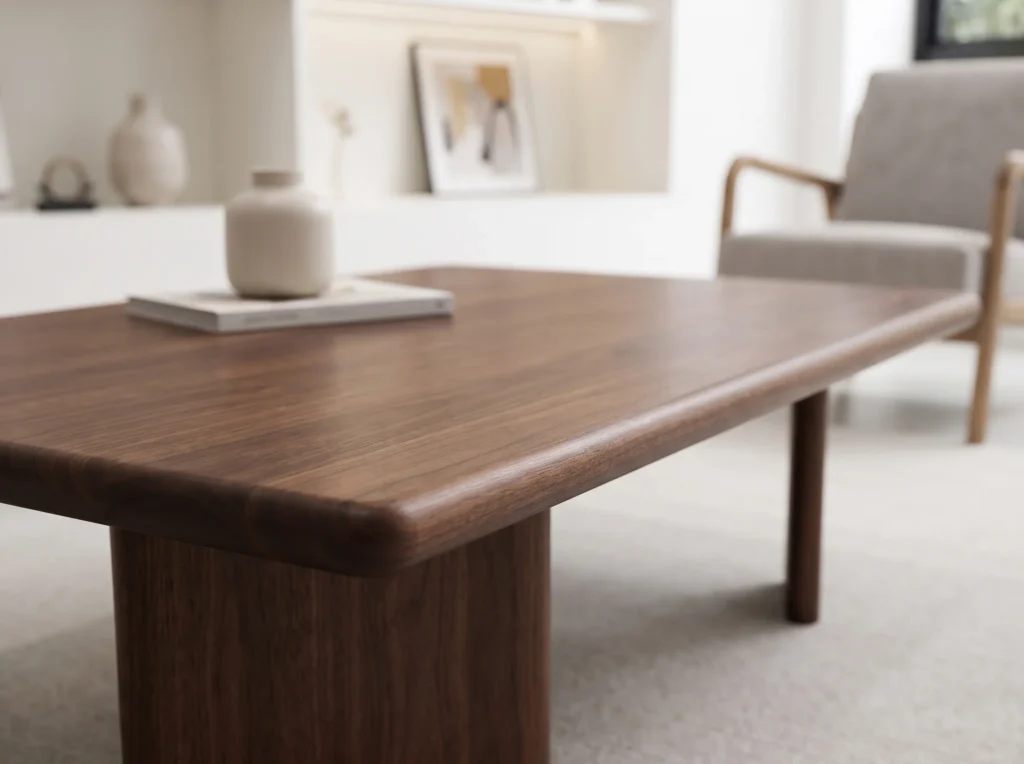
Red Flags: Walnut Finish Is Not Walnut Wood
This is the single most important sentence in this article for retail buyers. “Walnut finish” means the color. “Walnut wood” means the species. One word of difference on a product page, and the price can legitimately double. “Walnut finish” furniture is typically rubberwood, MDF, or poplar with a dark stain — perfectly acceptable products, if priced as what they are.
Other high-risk patterns: full-container “American walnut” quotes priced suspiciously below prevailing US lumber rates; suppliers who cannot produce phytosanitary certificates or bills of lading matching the claimed origin; sample pieces that look dramatically lighter at freshly sanded edges than on the finished surface; and any resistance to third-party species testing written into the purchase contract.
How Buyers Actually Verify: Hands, Eyes, and Paper
Physical Inspection Methods
| Method | What to Look For | What It Tells You |
|---|---|---|
| Cross-section at a hidden edge | Even brown color through the cut; stained imitations show light core | Distinguishes solid walnut from stained softwood |
| Grain continuity | Natural variation, occasional sapwood streaks | Machine-perfect uniform grain suggests print or heavy dye |
| Weight and density | Walnut feels dense but not oak-heavy | Very light pieces suggest poplar or paulownia |
| Smell when sanded | Mild, slightly sweet walnut odor | Sharp chemical smell suggests heavy staining |
| Color at joints and hardware holes | Consistent color inside holes | Dye pooling or light interiors expose imitation |
Document and Origin Verification
| Document | What It Must Show | Red Flag |
|---|---|---|
| Phytosanitary certificate | Country of origin matching the claim | Origin field blank or third country |
| Bill of lading / import records | US port of loading for claimed American stock | Transshipment routes that erase origin |
| Lumber grade certification | NHLA grading (FAS, No. 1 Common, etc.) for US stock | Vague “export grade” with no standard |
| Species test report | Third-party lab identification (e.g., microscopy/DNA) | Supplier refuses contractual testing clause |
A note on grades: FAS (Firsts and Seconds) is the top NHLA grade and implies large clear cuttings — it says nothing about origin by itself. A Chinese walnut board can be graded to NHLA standards; the grade and the origin are separate claims, and you should verify both.
None of these checks replaces professional species identification. Accredited labs can confirm Juglans nigra through wood anatomy or DNA methods. For contracts above a meaningful threshold, write in a testing clause with cost consequences for mismatch. That single sentence changes supplier behavior more than any negotiation tactic we’ve seen.
What Different Buyers Should Do
Importers and wholesalers should stop asking “is this real walnut” and start asking for import documentation on every lot, then reconcile documents against a random cross-section test on arrival. Retail buyers and e-commerce sellers should audit their own product listings first — many sellers are unknowingly repeating supplier claims and carrying the liability. Project buyers and designers should specify species and origin in writing on purchase orders, not in emails. Individual buyers should treat “walnut finish” listings as stain products unless the seller explicitly warrants solid walnut in writing, and should check the inside of drawers, the underside of tabletops, and hardware holes with a phone flashlight.
And a fair word for the honest side of the trade: Chinese-grown walnut furniture, correctly labeled, is genuinely good material at an honest price. The fraud is the label swap, not the geography. “Grown in China” is not a confession; “American” on a Chinese-grown board is.

Frequently Asked Questions
What is the real difference between American black walnut vs Chinese walnut?
The core differences are color depth, figure, and value. American Juglans nigra develops a rich chocolate-brown heartwood with prized grain patterns; Chinese species such as Manchurian walnut run lighter and coarser. Physically, the gap is smaller than the price gap — many substitute species perform well — which is exactly why fraud pays. For buyers, the honest question is whether the premium is buying performance or just a name.
Is walnut veneer on another core material fraud?
Not inherently. Veneer-over-plywood construction is standard, legitimate furniture making. It becomes fraud only when the seller presents it as solid walnut or lets the “walnut” label imply solid construction without correction. The remedy is simple: ask “solid or veneered” in writing before paying.
How do I ask for proof of origin without offending the supplier?
Frame it as compliance, not accusation. Request phytosanitary certificates, bills of lading, and grade certificates as standard onboarding documents — professional factories produce these routinely. A supplier who treats a documentation request as an insult is telling you something important.
Can I verify the wood species myself at home?
You can screen, not confirm. Check cross-sections for consistent color, smell freshly sanded spots, and look for dye pooling in hardware holes. These catch most stained imitations. Species-level confirmation between walnut types requires laboratory testing.
What can I do if the material doesn’t match the contract?
If your contract specifies species and origin, a documented mismatch is a breach. Preserve samples, commission a lab test, and invoke the contract remedies. This is why the testing clause matters: without written specifications, “walnut” on a dispute table is a debate, not a claim.
Now we want to hear from you. Have you encountered a “walnut” label that didn’t survive inspection? Drop your experience in the comments — the details you share may protect the next buyer who reads them.
Recommended Resource
Interi Furniture specializes in custom furniture manufacturing for residential, hospitality, and commercial projects. Their experience in materials, craftsmanship, and project realization makes them a valuable resource for designers and buyers seeking tailored furniture solutions from China.