






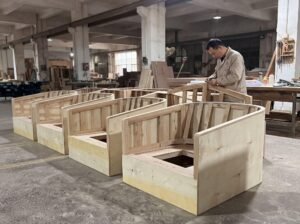

Here’s the whole story in one paragraph. Total spend: roughly $12,000–$20,000 for a small first order (furniture value plus freight, insurance, duties, and local charges). Total timeline: four to five months from first message to goods in your garage. The biggest pitfall: not getting scammed—but losing control of the process, especially the gap between an approved sample and the mass-produced goods, and the shock of volume-based freight. Worth it? Yes, if you treat it as a project to manage, not a website to shop from. This is the honest cost of source furniture from China when nobody is holding your hand.
The Dream—and the Information Gap
Like most people who get this idea, I started with a simple math problem. A sofa I liked locally cost $2,800; similar listings from Chinese manufacturers showed $600–$900. The gap felt like free money.
What I didn’t understand yet is that the factory price is the smallest part of the equation. The gap between FOB price and landed cost is where every first time importer either learns the business or pays tuition.
Every beginner sourcing guide I found explained the steps. Almost none of them explained the failure modes. That’s the gap this article fills.
What the Tutorials Won’t Tell You
The biggest misconception I carried was that fraud is the primary risk. In practice, outright scams are rare on established B2B platforms. The real risk is process failure—money and time burned on predictable, avoidable mistakes.
The second misconception is that beginner sourcing guide content prepares you emotionally. It doesn’t. Knowing the steps intellectually and controlling them under pressure are different skills.
The third misconception is that a factory that replies warmly and fast is a good factory. In furniture sourcing, overly eager communication is often a sales agent’s script. The cold, precise, slightly slow factory engineer is frequently the safer partner.

The Full Journey, Stage by Stage
Stage One: Preparation (Weeks 1–2)
I defined the product list, target materials, and—critically—measured the space the furniture would occupy. Forgetting that last step became expensive later.
I also set a hard total budget with a 30% contingency buffer. That buffer saved the project twice.
Stage Two: Supplier Screening (Weeks 2–5)
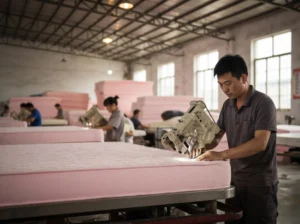
I contacted 20+ suppliers across Foshan, Shunde, and Dongguan through B2B platforms and factory directories. Responses ranged from instant brochures to delayed technical questions.
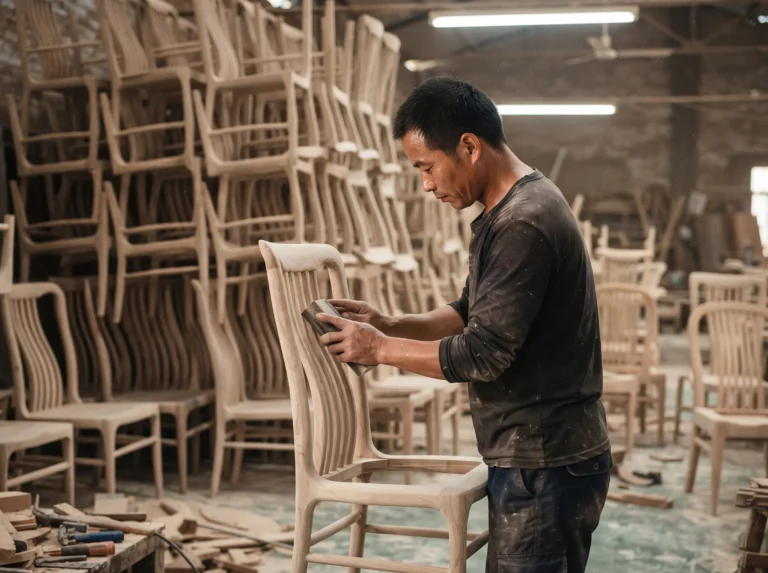
The suppliers who asked me about fabric grades, foam density, and carton specs earned trust. The ones who only sent price lists did not.
Stage Three: Samples (Weeks 5–9)
I ordered samples from three shortlisted factories. Sample cost: $150–$400 each including express courier, subject to verification.
Sample quality was excellent across the board. This is exactly where the first trap sits—more on that in the risk section.
Stage Four: Deposit and Production (Weeks 9–17)
I placed a trial order around $8,000 FOB value and paid the standard 30% deposit. Production was quoted at 30–45 days.
In-cargo reality: production finished around day 40, with two delays I had to chase myself. Nobody updates you unless you ask.
Stage Five: Inspection (Week 17)
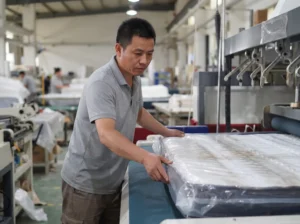
I hired a third-party inspection agency for roughly $150–$300 per man-day, subject to verification. They found issues that photos would never have revealed: inconsistent stitching, wrong carton labeling, foam density slightly below spec.
The factory corrected everything before balance payment. This single step was the best money I spent.
Stage Six: Ocean Freight and Customs (Weeks 17–20)
Here’s where the budget math broke my assumptions. Sea freight, insurance, destination port charges, customs duties, and last-mile delivery added 30–40% on top of the FOB price, subject to verification.
Volume, not weight, drives furniture freight cost. My goods took more space than I estimated.
Stage Seven: Balance Payment and Receiving (Weeks 20–22)
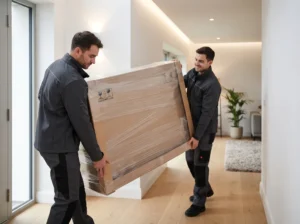
I released the 70% balance only after passing inspection and receiving the bill of lading. Goods arrived roughly three weeks after vessel departure.
Final landed cost per piece ran roughly 1.6–2.1× the FOB unit price.
Complete Timeline
| Stage | What I Expected | What Happened | Actual Time |
|---|---|---|---|
| Preparation | A weekend of browsing | Real product spec work | 2 weeks |
| Supplier screening | Fast replies, quick choice | 3 weeks of filtering noise | 3 weeks |
| Samples | Quick yes/no | Logistics and customs delays | 4 weeks |
| Deposit & production | 30 days, smooth | ~40 days, self-chased updates | 6–7 weeks |
| Inspection | Optional formality | Caught real defects | 1 week |
| Freight & customs | A simple invoice | 30–40% cost surprise | 3 weeks |
| Receiving | End of the story | Damage claims and assembly reality | 1–2 weeks |
Real Cost Structure
| Category | Budgeted | Actual | Share of Total |
|---|---|---|---|
| Furniture (FOB value) | $8,000 | $8,000 | ~55% |
| Samples & couriers | $500 | $650 | ~4% |
| Inspection | $200 | $300 | ~2% |
| Ocean freight + insurance | $1,800 | $2,400 | ~16% |
| Duties, port & customs charges | $900 | $1,300 | ~9% |
| Last-mile delivery & handling | $600 | $900 | ~6% |
| Contingency (breakage, fixes) | $500 | $800 | ~5% |
| Total | ~$12,500 | ~$14,350 | 100% |
All figures subject to verification; your destination country’s tariff schedule controls the duty line.
Expectation vs. Reality
| Stage | What I Expected | What Actually Happened |
|---|---|---|
| Finding suppliers | The best factory has the best website | The best factory had the dullest Alibaba page |
| Samples | Sample approval = order secured | Sample was a hand-built showcase; bulk differed |
| Production | Factory manages itself | Without weekly check-ins, my order went quiet |
| Freight | Freight is a minor line item | Freight + customs + duties exceeded 30% |
| Communication | Language was the main barrier | Time zones and unstated assumptions were worse |
| Payment | 30/70 terms are a trap | Terms are fine; unverified nodes are the trap |
Payment Node Control
| Node | Amount | Trigger to Release | Control Mechanism |
|---|---|---|---|
| Sample fee | $150–$400 | Sample shipped with tracking | Courier tracking number |
| Deposit | 30% | Signed PI + factory bank account verified | Bank details match company name |
| Mid-production check | $0 | Photos/video at ~50% production | Third-party or video call |
| Balance | 70% | Passed inspection + B/L copy received | Inspection report as release condition |
| After-sales hold | Negotiated | Delivery confirmed, defects resolved | Contract clause, 5–10% if agreed |
FOB, CIF, or DDP: The Decision Logic
| Term | Who Handles What | Hidden Risk for Beginners | My Verdict |
|---|---|---|---|
| FOB | Factory delivers to port; you book freight | You must find a forwarder | Best control, real work |
| CIF | Factory arranges freight to your port | Inflated freight + vague destination charges | Tempting, opaque |
| DDP | Delivered to your door, duties included | “Nothing to manage” = zero visibility, markup risk | Avoid on first orders |
FOB is the right choice for most first orders. CIF is acceptable with a trusted forwarder cross-checking the freight rate. DDP quotes that promise you can sit back and relax are the most dangerous offer a first time importer will receive.
If I Did It Again
| Decision Point | What I Did | What I’d Do Now |
|---|---|---|
| Product scope | Ordered 12 SKUs at once | Start with 3–4 SKUs from one factory |
| Sample protocol | Approved one sample per factory | Request a pre-production sample cut from bulk materials |
| Freight planning | Estimated volume by gut | Measured every carton spec before ordering |
| Supplier count | Shortlisted 3, committed to 1 | Kept a backup factory warm until deposit |
| Communication | Waited for updates | Set a fixed weekly check-in call, in writing |
| Trade term | FOB with a random forwarder | FOB with a forwarder who handles furniture weekly |
High-Risk Warnings
The Sample Trap
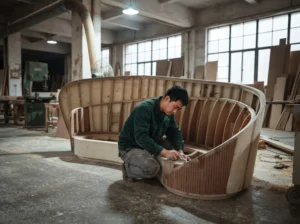
A sample is often built by the factory’s best craftsman with the best materials on hand. Mass production runs on allocated materials and line workers. The fix: a pre-production sample made from the actual batch materials, plus an inspection clause tied to the approved sample.

Payment Node Drift
Paying the 70% balance before inspection is how beginners lose leverage. The balance is your only enforcement tool. Once it’s released, your problem becomes a negotiation, not a right.
The Volume-Freight Shock
Furniture freight is priced by cubic meter, not charm. A $900 sofa can cost $400–$600 to ship. Always ask for carton dimensions before committing, and model the landed cost per piece—not the FOB price.
The DDP Lure
A door-to-door quote that promises zero involvement is structurally designed to hide margin. If you cannot see the freight and duty breakdown, you are the breakdown.
Playbooks by Buyer Type
For Individual Buyers
Buy less than you think. One container’s worth of mistakes is expensive; a single mixed LCL shipment teaches the same lessons for a fraction of the cost. Use a forwarder, hire an inspector, and never skip the inspection.
For Small-Business and Resale Buyers
Negotiate SKU consolidation with one factory before negotiating price. Freight efficiency beats unit price at small volumes. Lock packaging specs in the proforma invoice, not in WeChat messages.
For New Importers Building a Business
Treat the first order as paid education with resale value. Document every cost line, every delay cause, and every factory response time. That document becomes your second-order playbook.

FAQ
How much total budget do I need for a first furniture order from China?
For a small trial order, plan for $12,000–$20,000 all-in, including roughly 30–40% above the FOB goods value for freight, duties, and local charges. All figures subject to verification and vary by destination country.
How long does ocean shipping from China take?
Port-to-port transit typically runs 2–6 weeks depending on route, plus 1–3 weeks for booking, loading, customs clearance, and final delivery. Door-to-door, expect four to five months from your first supplier message.
What if I don’t speak Chinese?
It’s rarely the blocker it seems. Export-focused factories have English-speaking staff, and precision beats fluency: written specs, confirmed drawings, and a shared inspection checklist communicate more than small talk.
Should I hire a sourcing agent?
A good agent earns their commission on factory vetting, negotiation, and inspection coordination. A bad one is a markup with a WeChat account. Verify who pays them and whether they disclose factory identities—transparency is the screening test.
What if the goods arrive wrong or damaged?
This is why inspection before balance payment exists. If damage happens in transit, marine insurance and documented condition reports are your claim foundation. If goods are wrong at the factory, your leverage ended when you paid the balance—another reason node control matters.
Was It Worth It?
Yes—with qualifications. The landed cost still undercut local retail meaningfully, but the margin was thinner than the factory-price fantasy, and the savings were paid for in months of management. Anyone searching how to import furniture from China for beginners deserves this truth: the process is learnable, the risks are controllable, and the people who fail are usually not the ones who were cheated. They are the ones who stopped managing the process.
What’s the one thing stopping you from placing your first order—or what happened on yours? Tell us in the comments.
Recommended Resource
Interi Furniture specializes in custom furniture manufacturing for residential, hospitality, and commercial projects. Their experience in materials, craftsmanship, and project realization makes them a valuable resource for designers and buyers seeking tailored furniture solutions from China.