


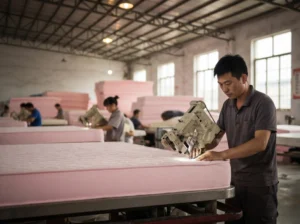








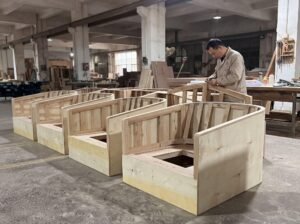
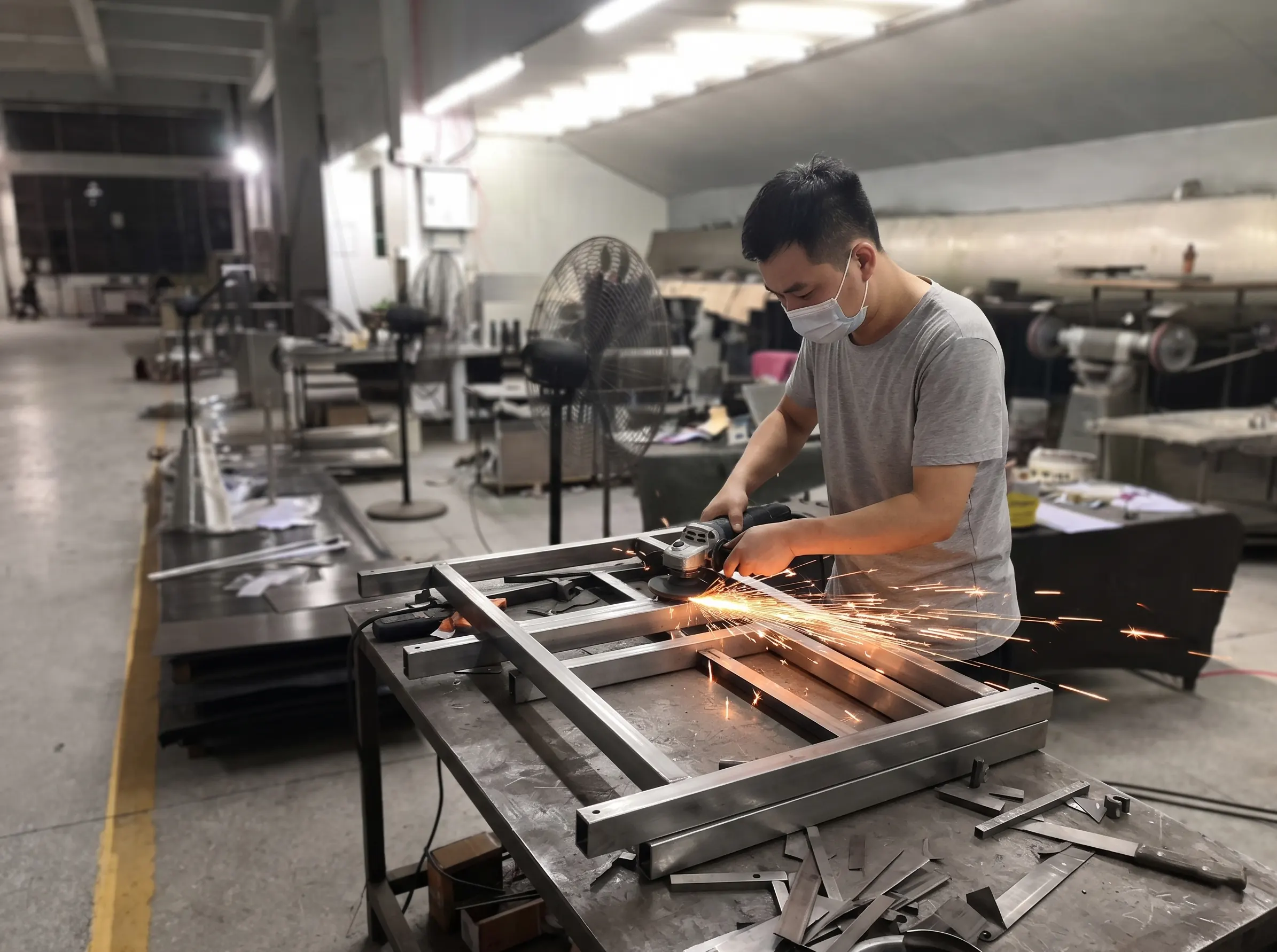
Last October I stood in a panel-furniture plant outside Foshan, watching six woodworking lines feed a single spray booth. The sales manager told me, without blinking, that the factory ships 100 containers a month. The booth looked tired. So did the finish on the sample panels stacked near the door.
I tell that story because it captures everything about this topic. A plant’s output is capped by its slowest step — the bottleneck process — and by how many hours that step can genuinely spare, not by the machine count on the brochure. The only reliable way to judge available production capacity is to work from the supplier’s own records: recent output, shipment history, staffing, and the orders already booked. This article walks through how I assess factory capacity from the outside, what a “100 containers a month” claim actually means, and how to lock down a production slot before your deposit leaves your account.
Why I Stopped Asking “What’s Your Monthly Capacity?”
For years I ran the same checklist most buyers run. License, export history, showroom, samples, price. It took a few painful delays — including one where a “very capable” factory quietly pushed my order behind a larger one — before I added the question that matters: how much capacity will actually be free when my order runs?
Nobody had a clean answer, and over time I stopped expecting one. Capacity moves with the product mix and the order book, and plenty of plants simply do not track “remaining capacity” as a single number. That is not always concealment. But the risk of a wrong guess lands on you, not on them. In my experience with factory capacity in China, the plants that look most impressive on a tour are not always the ones with room for your order, and the gap is widest where subcontracting and mixed product lines make the real picture hard to see.
Three ideas get blurred constantly in sales conversations, so it helps to separate them before anything else:
| Term | What it actually covers | Where people go wrong |
|---|---|---|
| Industry conditions | How furniture manufacturing as a whole is doing | Used as if it says something about one plant’s schedule |
| Plant capacity | What the equipment, crews, and processes could produce under stated conditions | Treated as if none of it were already sold |
| Available capacity | What’s genuinely left for a new order after existing commitments, changeovers, maintenance, and rework | Quoted as a single number, when it only makes sense per product and per window |
That last row is the one that decides your delivery date. Everything below is about pinning it down.
What the Capacity Claim Usually Means
When a supplier quotes a monthly figure, listen for which of three things they might be describing. I’ve heard all three called “capacity” in the same afternoon.
Theoretical capacity is the engineering maximum. Full crews, no changeovers, zero defects, materials always on time. It has its uses — it marks the ceiling — but nobody plans around a ceiling.
Sustainable capacity is what the plant can hold month after month at its normal rhythm, with realistic downtime and quality control factored in. Here’s the part most articles skip: there is no honest industry-wide percentage that converts theoretical into sustainable for furniture in general. The gap depends on the product mix, shift patterns, automation, and plain management discipline. You build this number per supplier, from their records, or you don’t really have it.
Actual output is what left the building. Verifiable, concrete, and the best anchor for judging furniture factory production capacity in your category.
| The claim | What it often is | How I’d treat it |
|---|---|---|
| “Monthly capacity: 100 containers” | A theoretical or brochure figure | A ceiling. Plan lower and verify |
| “We did 100 containers last October” | A peak month, probably with overtime | Proof it happened once. Ask for the six-month average |
| “We ship roughly 70 a month” | An average of actual shipments | A working baseline — still check the product mix inside it |
The Bottleneck Runs the Factory
Every plant I’ve spent time in had one step that everything else waited on. Sometimes it was a spray booth. Sometimes the sewing room. Once, memorably, it was a single aging edge-bander that the whole case-goods line depended on.
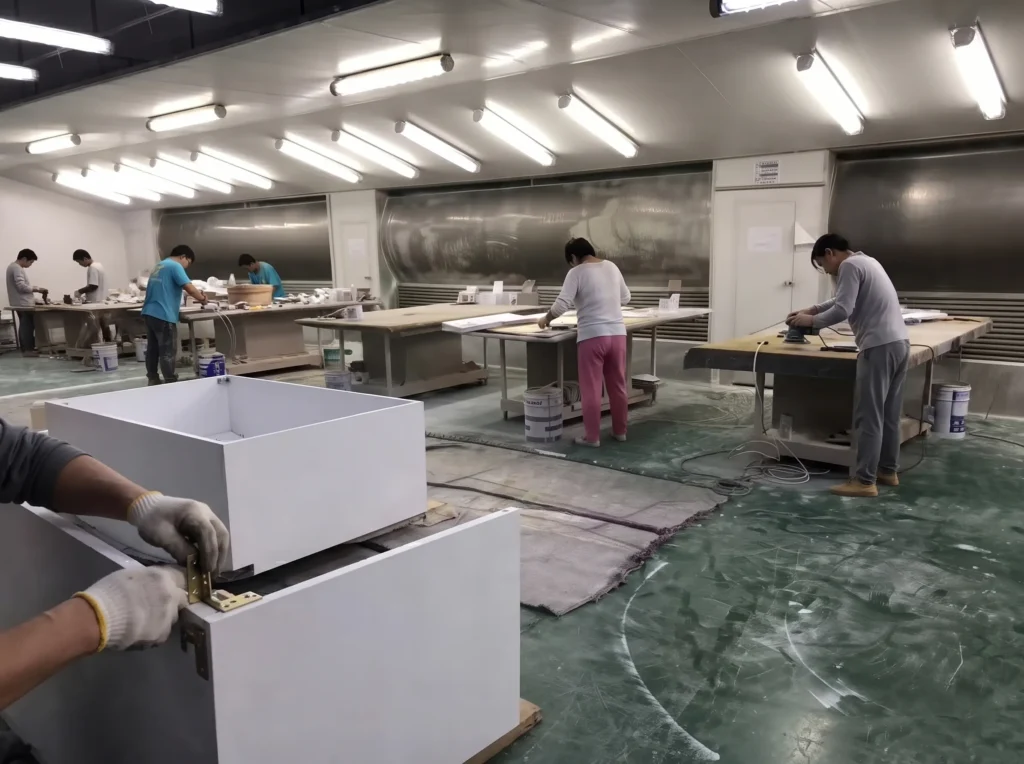
A factory with ten woodworking lines but one spray booth may simply be a finishing-limited operation. The woodshop can cut and assemble components faster than the booth can coat them, and the surplus piles up as work-in-progress. That idle-looking excess upstream is not spare capacity. It’s a queue.
The constraint moves, too. Push the mix toward upholstered pieces and the limit can shift to sewing. Approve a new finish and the coating line slows. This is why I don’t count machines, and I don’t count total workers either. I want to know which process limits output for my product, in my production window — because that’s where the real bottleneck process sits.
| Layer | What’s in it | What I actually check |
|---|---|---|
| Equipment | Lines, booths, kilns, saws, presses | Effective running hours and real cycle time, not the nameplate |
| Labor | Crews at each station, by shift | Headcount at the constraint station, and how steady it stays |
| Bottleneck | The slowest step for this product | Sustained daily throughput across shifts, not the best shift |
How I Assess a Factory From the Outside
You can’t verify much from one WeChat message, and a guided tour tells you how the factory receives visitors, not how it runs in March. What works is reconstruction: pull the picture together from records, and never lean on a single source. My rule is two independent indicators minimum for any conclusion, and everything stays subject to verification against that supplier’s own documents.
The core calculation is simpler than it sounds, but the units have to match your order. Take the production hours your order needs — quantities multiplied by the standard output of the constrained workstation — and set that against the hours that workstation can realistically offer in your window. Then subtract what’s already committed, allow for material lead times, planned maintenance, and a sensible rework margin. What remains is an estimate, and I treat it as one until it’s checked against actual production and shipment records.
The records I lean on most:
| Record | What it can tell you | Its blind spot |
|---|---|---|
| Output logs | Real monthly production by period | Output is not the same as room for you |
| Shipment and loading records | What actually left, and when | Includes subcontracted goods; lags production |
| Machine-hour logs | How hard the equipment worked | Silent on yield and product complexity |
| Energy-use data | A rough proxy for machine activity | Swings with HVAC, drying, and product mix |
| Staffing at the constraint station | Labor genuinely available on the limiting step | Shifts with season, attrition, training gaps |
| Material inflow tied to firm orders | Backlog pressure and purchasing rhythm | Stock can reflect strategy, not demand |
| Movement of finished goods | Shipping rhythm, possible hold-ups | Piles may be staging, pending bookings, or a client-requested delay |
One more thing about the “containers per month” habit. A container is a logistics unit, not a production unit. A 40HQ of flat-packed chairs and a 40HQ of fully assembled sofas are completely different workloads. Whenever the factory will tolerate it, I verify in pieces or standard hours for my items, and use container counts only as a rough cross-check.
The Calendar Moves the Number
I’d love to hand you a tidy month-by-month discount table. There isn’t one, and anyone who claims otherwise is guessing.
What I can tell you is what moves the number. Order clustering is the big one — when half your market wants goods on the water before the same retail deadline, everyone is fighting for the same production windows, and the plant that looked roomy in June feels very different in September. Chinese New Year is its own event: shutdown length, return-to-work rates, and restart speed differ from factory to factory and from year to year, and the only reliable version is that supplier’s own record from the same period last year. Material availability bends things too; a fabric or finish with a long approval chain can eat the very weeks you were counting on. Product mix changes the load entirely — a run of upholstered sofas stresses sewing and inspection, a run of case goods stresses cutting and coating. And then there’s the quiet stuff: rework, breakdowns, a late material truck. None of it shows up in the claimed capacity figure, and all of it comes out of your window.
So skip the fixed seasonal discount. Ask instead for output and delivery records from comparable periods, confirm the shutdown dates in writing, and find out what’s already committed for your target window. That answer is worth more than any rule of thumb.
Pressure Shows Up in Odd Places
Let me be straight about quality, because this is where a lot of sourcing articles overreach. A busy factory is not automatically a sloppy one. Some of the best-run plants I’ve visited were running near their constraint and holding standards anyway. Some half-idle factories cut corners to protect margin.
What pressure does do is narrow the margin for error. When a plant runs hot for weeks, the odds of rework, skipped inspection steps, and process drift go up, and the slack that would normally absorb a bad batch disappears. So I watch delivery and quality as separate dials, never assuming one fails before the other. The evidence worth pulling: rework rates, any drift from approved materials or finishes, and QC records from comparable orders. And one question that tells you a lot — ask what happens to a defective batch mid-order. A supplier with real slack answers easily. One without starts hedging.
Signals Worth Watching Before They Reach Your Order
Capacity trouble rarely announces itself. It seeps out through small operational frictions, and these are the practical signs a factory is over capacity — or heading there — long before your delivery date moves.
| What you notice | What it might mean | How I’d check |
|---|---|---|
| Replies slow down noticeably | Overload, staff changes, messy processes | Whether the delays track production milestones |
| Your contact gets swapped mid-order | Internal reshuffle or account juggling | Who owns the order now and what they can see |
| Sampling runs past the promised date | Sampling pulled into production, or weak planning | Promise versus actual, across several orders |
| New worries about your specifications | A real technical issue — or priority shifting | Which spec is genuinely the constraint |
| Payment terms tighten suddenly | Cash absorbed by materials, or a policy change | Whether it moved for all buyers or just you |
| Scheduling talk goes vague | No firm slot, or reluctance to commit on paper | A week-level loading plan with named milestones |
A single one of these proves nothing. Most have innocent explanations, and I’ve seen every one of them turn out fine. What gets my attention is several appearing together, especially when the explanations don’t line up with records or agreed milestones. At that point I ask for an updated schedule with evidence behind it, and if the story still wobbles, I start warming up the backup supplier.
Questions That Get Real Answers
How you ask shapes what you get. Broad questions invite brochure numbers; narrow ones produce answers you can hold the supplier to later.
| Instead of this | Try this | Why it works |
|---|---|---|
| “What’s your monthly capacity?” | “How do you count monthly output — and which process limits this product?” | Forces the real measure and the real constraint into the open |
| “Can you handle my order?” | “What production window can you confirm, and what does it depend on?” | Produces a commitment instead of a yes |
| “Are you busy right now?” | “What’s scheduled ahead of my order, and how much of the relevant capacity is spoken for?” | Shows the workload your order is joining |
| “How long is your lead time?” | “What were the actual production and dispatch dates on comparable orders?” | Puts the quote against their own history |
A supplier who answers with dates, figures, and named processes is managing capacity. One who answers in generalities either doesn’t know or doesn’t want to say — and either way, that’s information.
Big Plant or Small Plant?
Size answers a different question than the one you’re asking. A large manufacturer may bring purchasing power, testing facilities, and compliance documentation that a smaller plant can’t match. A mid-sized factory with modest utilization may give a mid-sized order noticeably more attention — better shifts, senior inspectors, priority when the constraint jams. Neither is a law. I’ve seen huge plants babysit small accounts and mid-sized ones fumble badly, so I verify scheduling priorities and customer structure rather than assume.
What is reliably true is arithmetic: when a bigger or more urgent order lands, priorities can shift. That’s why agreed slots go in writing, with named milestones, and get monitored through production instead of discovered at the ship date. Fit beats size, almost every time.

Mistakes I See Repeatedly
Taking Enthusiasm as Confirmation
A supplier saying yes is sales behavior, not scheduling evidence. I want the document that says when production starts and which milestones they expect to hit. That piece of paper — not the warmth of the meeting — is what I follow up against.
Reading a Lead-Time Quote as a Promise
Production, inspection, packing, and freight are different legs of the journey, and a quoted lead time might only cover some of them. Before I build my own plan around a number, I confirm what it includes and what could move it.
Treating the Showroom as the Factory
A polished showroom and good samples prove presentation and product capability. They tell you nothing about this month’s production availability. Recent output, relevant quality records, and your own order’s schedule — that’s the file that matters.
Different Buyers, Different Angles
Importers and Wholesalers
If you’re running regular container programs, compare your planned demand against the supplier’s historical output and confirmed commitments for the same period. When volumes get serious, qualify a second supplier before the first one gets tight. Doing it after a missed slot costs far more.
E-Commerce and Cross-Border Sellers
Seasonal sellers should plan backward from their own sales forecast, approval timelines, and the supplier’s confirmed schedule — not from some generic lead-time number floating around the industry. For replenishment, the question that matters is whether repeat orders can slot in without the factory disturbing existing commitments.
Individual and Small Buyers
Small orders get prioritized differently depending on the supplier’s business model and order mix, and that’s worth accepting rather than fighting. Before any deposit, get sample approval, production start, inspection, and dispatch milestones agreed in writing. Steady, friendly replies are reassuring. They are not proof of capacity, and I’d rather have the written milestones.

Frequently Asked Questions
How do I know how much capacity is actually left for my order?
Ask what’s already committed for your production window, then set that against the plant’s output records from the same months in recent periods. The difference is your working estimate. Confirm it with at least one independent indicator — machine-hour logs, or staffing at the constraint station — before you trust it.
What does “100 containers per month” actually mean?
Could be a theoretical estimate, a peak month, or an average — the claim alone doesn’t say. Ask which one it is, then pull recent shipment records, look at what product mix those shipments carried, and check what’s already scheduled. Verify in product units where you can, because a container means very different things for different furniture.
How does Chinese New Year affect things?
Shutdown length, return rates, and restart speed all vary by factory and by year, so no fixed discount applies. Get output and delivery records from the same period in previous years, agree shutdown dates in writing, and settle how the schedule picks up after the holiday.
What signs suggest a factory is stretched beyond its real capacity?
Missed production milestones, sampling delays that keep repeating, schedule revisions nobody can explain, and progress reports that contradict each other. One of these happens to everyone. Several together, with explanations that don’t match the records — that’s when I start making backup plans.
How should I confirm a slot before paying a deposit?
Ask for a written schedule: production window, start date, key milestones, dispatch plan, and the assumptions behind all of it. Then test it against how the supplier performed on comparable orders, and keep the paperwork with your purchase file.
A capacity claim opens a conversation. It shouldn’t close one. The buyers I’ve watched get burned almost always skipped the verification step that took an afternoon.

Has a supplier’s real capacity ever caught you off guard — good or bad? Drop it in the comments. Someone reading it next month might dodge a delay because you bothered.
Recommended Resource
Interi Furniture specializes in custom furniture manufacturing for residential, hospitality, and commercial projects. Their experience in materials, craftsmanship, and project realization makes them a valuable resource for designers and buyers seeking tailored furniture solutions from China.