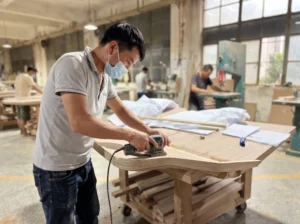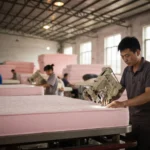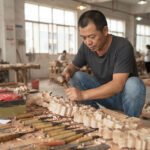


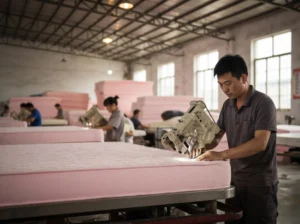




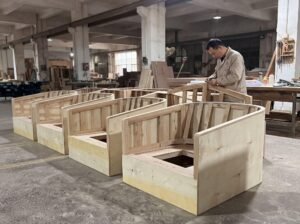
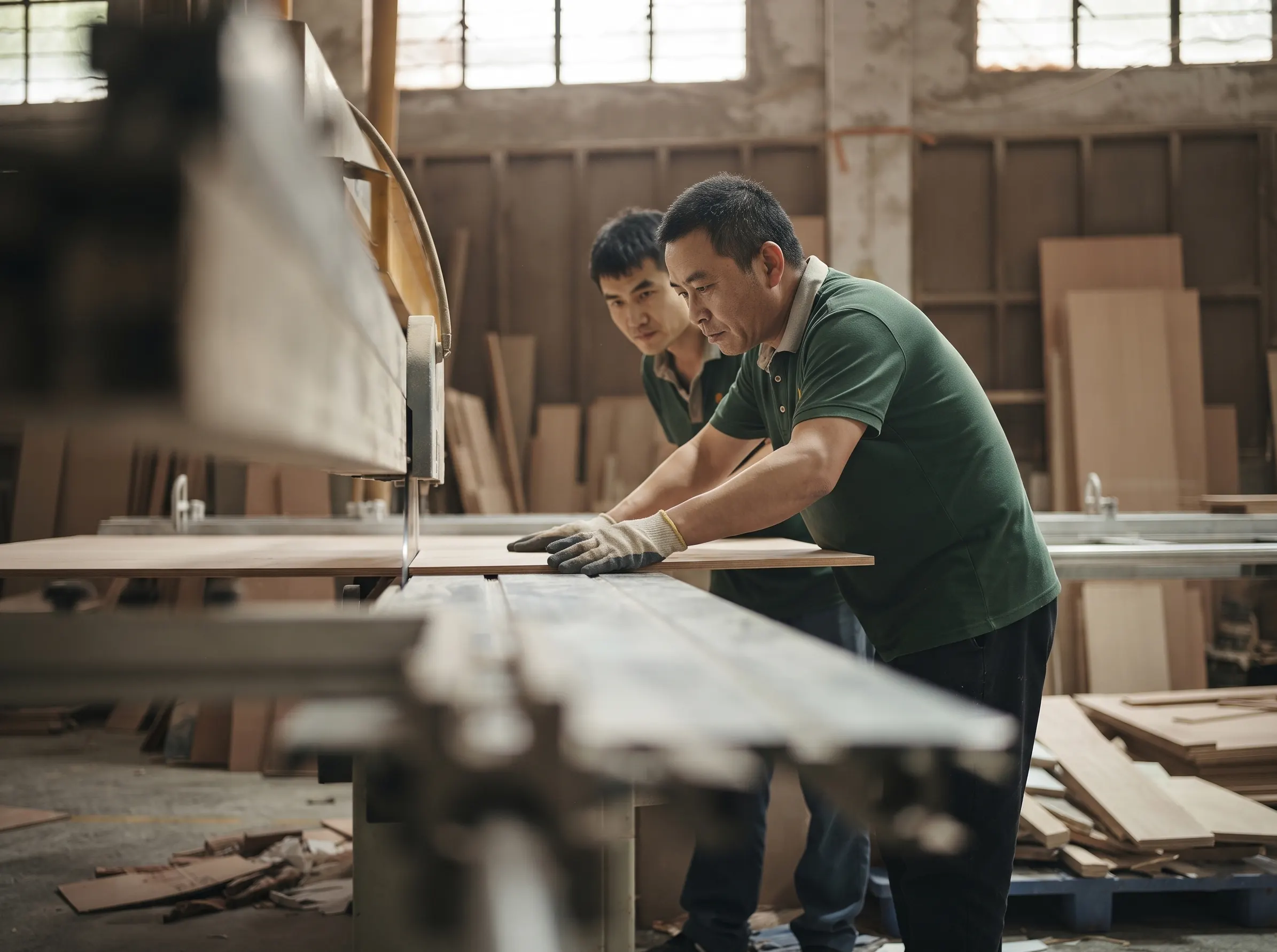
After a decade walking factory floors in Foshan, Shunde, Dongguan, Ganzhou’s Nankang, and Anji, I can tell you that Chinese furniture manufacturing splits into five distinct types: brand OEM powerhouses, export-specialized trading factories, domestic-to-export converters, single-category specialists, and family workshops. The most common and most expensive mistake overseas buyers make is not choosing a bad factory — it is choosing the right factory for the wrong business model. A first-tier OEM plant that produces for European retail chains will not answer your 40-container-per-year inquiry, and a ten-person sofa workshop cannot survive your national retail program. Factory match beats factory rank, every single time. This is a framework built on industry observation, subject to verification, and any single factory may sit between categories — judge by direct contact, not by labels.
Why Buyers Keep Picking the Wrong Factory
Almost every sourcing failure I have witnessed starts with the same sentence: “Help me find the best furniture factory in China.” There is no best. There is only best-for-you. The buyer who wants the best usually wants credibility, scale, and quality assurance in one package — and assumes the biggest factory delivers all three. Sometimes it does. Often it simply delivers a polite rejection, or worse, a quiet subcontract of your order to a third workshop you never audited.
The mismatch problem is structural. China produces the majority of the world’s furniture exports across clusters that each evolved under different pressure. Some factories grew by serving one global brand for fifteen years. Some grew by saying yes to every export inquiry on Alibaba. Some built their business on domestic e-commerce and only recently discovered overseas buyers pay in dollars. Each type developed a different operating logic, cost structure, and tolerance for your order size. Treating them as one interchangeable pool of “Chinese factories” is the original sin of bad sourcing, and it is exactly why two buyers with identical budgets can have wildly different outcomes.
What We Mean by “Factory Type”
A factory type, in this framework, is a recurring pattern of capability, order logic, and communication behavior that emerges from how a factory got its orders historically. It is not an official classification, not a quality ranking, and not a fixed identity. A factory can be a single-category specialist for dining tables and an export-specialized operation simultaneously — the categories describe dominant traits, not boxes. Everything below reflects qualitative industry convention drawn from field visits and buyer interviews, subject to verification, and should be confirmed against your own direct experience with any specific supplier.
Brand OEM Powerhouses
These are the factories you have seen in export statistics without knowing their names. They run five to twenty production lines, hold BSCI or Sedex audits, serve one to three anchor global brands or large retail chains, and fill their capacity twelve months ahead through formal programs. Their survival logic is program volume with thin margins and zero tolerance for compliance failure. Your 200-piece container order does not register on their planning horizon, and their sales engineers are trained to filter you out within two emails. The uncomfortable truth: when a powerhouse does accept a small order, it is frequently subcontracted to a sister factory — a same-owner external workshop — and you are paying top-tier prices for third-tier execution.
Export-Specialized Trading Factories
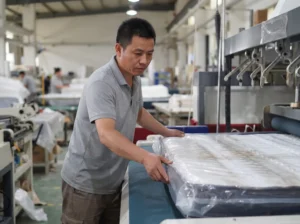
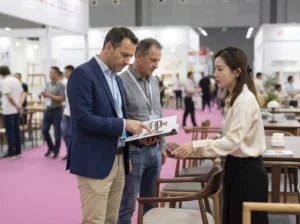
Do not let the word “trading” confuse you. These are real manufacturers with real workshops, but their commercial DNA is export trading: they built the business by responding to foreign inquiries, quote fast, speak functional English, understand FOB and CIF terms instinctively, and know which certificates a given market demands. They typically run mixed product lines across two to four categories, carry no anchor brand, and live on order flow from mid-size importers and overseas wholesalers. They are the workhorse of the types furniture factories China ecosystem — flexible, responsive, competent across the middle band of quality and price. Their weakness is depth: for highly engineered products or cutting-edge materials, they are often assembling knowledge rather than owning it.
Domestic-to-Export Converters
These factories spent a decade or more serving the Chinese domestic market — furniture malls, domestic e-commerce platforms, provincial distributors — and pivoted to exports when domestic competition squeezed margins. They frequently offer the best price-to-quality ratio in the market, because domestic competition on materials and finish is brutal. The catch is procedural: export documentation, fumigation requirements, English communication, and familiarity with foreign testing standards are often learned in real time, on your order. They suit buyers who know the process and can manage the paperwork themselves. They are hazardous for first-time importers who assume exporting is a factory’s problem, not theirs.
Single-Category Specialists
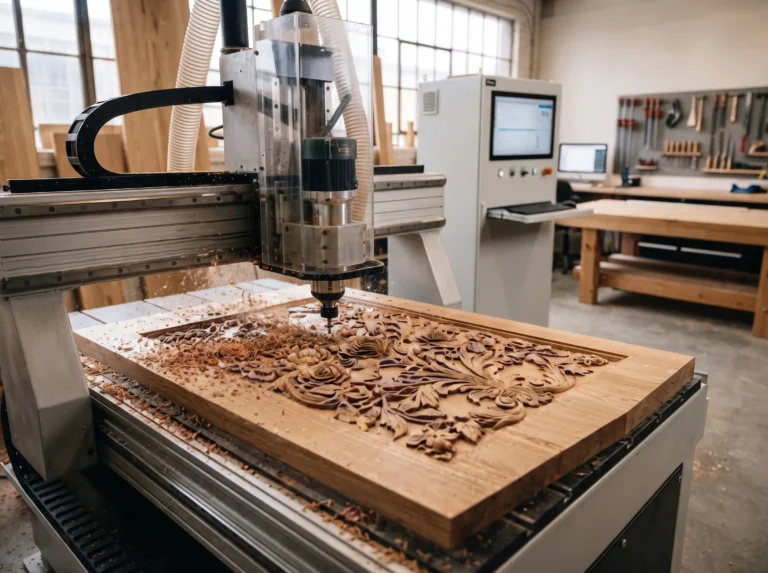
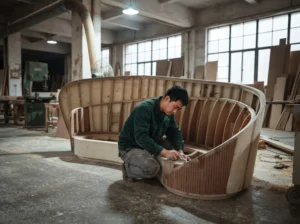
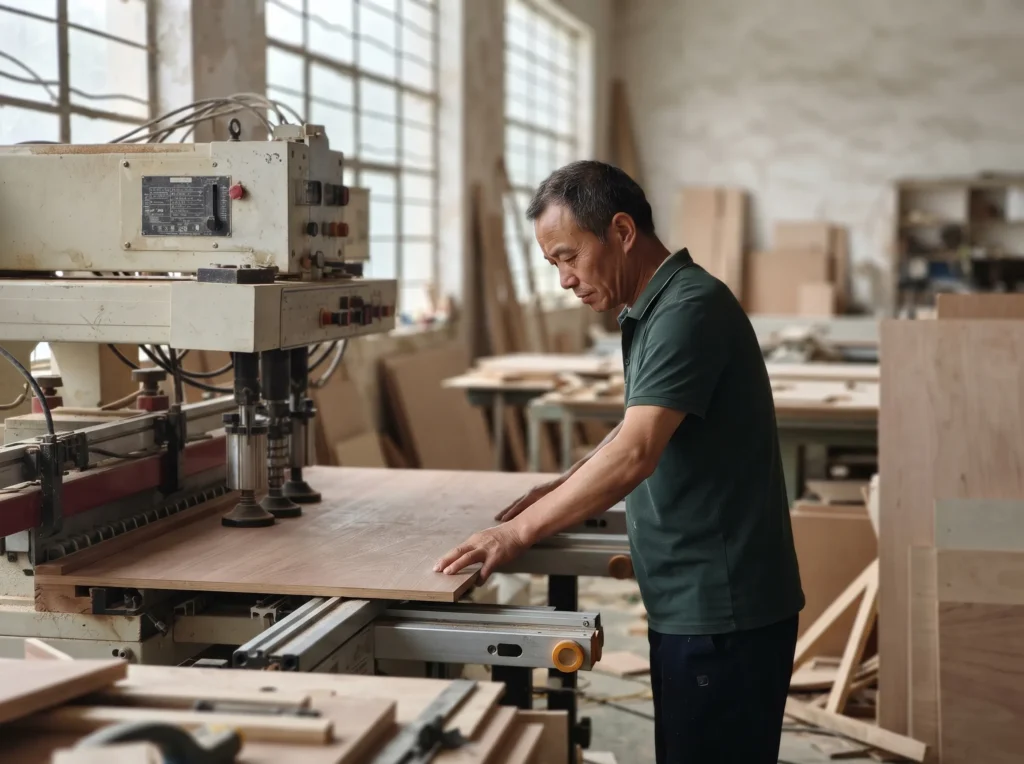
These factories make one thing, or one narrow family of things, at a level of obsession that generalists cannot replicate. A factory that only makes rattan chairs. A plant that only produces metal bed frames. A workshop that has spent eight years refining one extendable dining table mechanism. They usually run lean operations with 30 to 200 workers, invest disproportionately in the machinery their category demands, and know their cost structure to the cent. For e-commerce sellers building a focused catalog and for drop shippers needing one hero product with consistent restocking, this is often the optimal factory match — small enough to care, deep enough to deliver. The risk is narrowness: they cannot consolidate a mixed container, and a category downturn hits them hard.
Family Workshops and Micro Factories
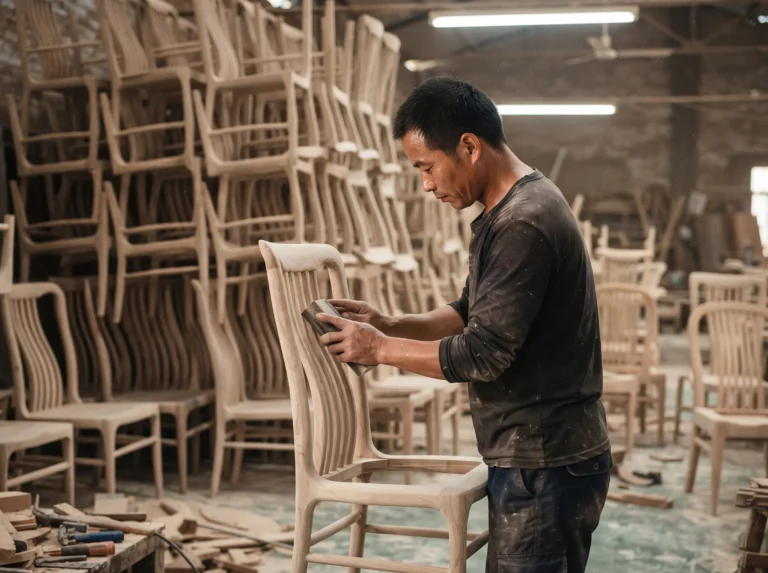
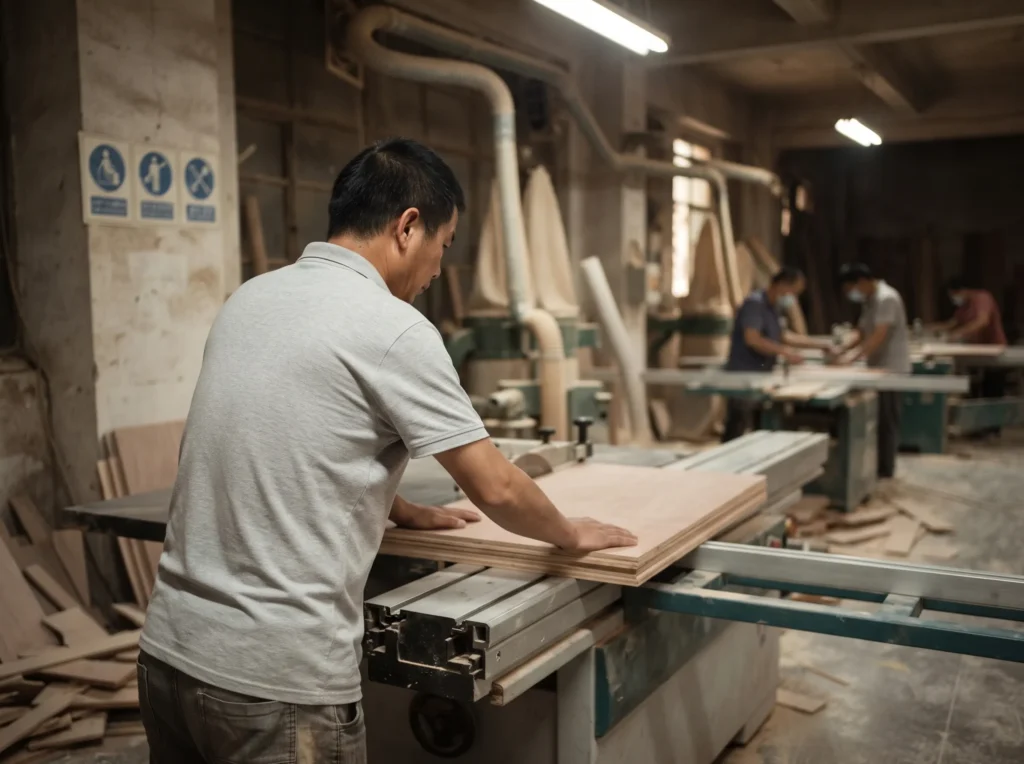
The final type is the ten-to-thirty-person operation, often family-run, found in the back streets of Shunde or the industrial villages around Nankang. They build to order, quote by gut feeling, and can be astonishingly cheap because overhead is near zero. Most individual overseas buyers who believe they are “talking directly to the factory” are talking to this type, usually through a trading agent. The price is real. So is the risk structure: no formal quality system, no financial cushion, no compliance infrastructure, and complete dependence on the owner’s personal reliability. Some of these workshops produce genuinely excellent work. Some disappear between your deposit and your delivery date. Diligence, or a trusted intermediary, is not optional here.
The Five Types at a Glance
| Factory Type | Typical Size | Order Scale Comfort Zone | Core Survival Logic | Best For |
|---|---|---|---|---|
| Brand OEM Powerhouse | 500–3,000+ workers | Program volume, annual contracts | Anchor-brand compliance programs | National retail chains, large importers |
| Export-Specialized Trading Factory | 100–500 workers | Mixed containers, repeat mid-size orders | Export inquiry flow, responsiveness | Mid-size importers, wholesalers |
| Domestic-to-Export Converter | 100–800 workers | Flexible, learning export norms | Domestic price-to-quality advantage | Experienced buyers managing their own logistics |
| Single-Category Specialist | 30–200 workers | Focused category orders, hero products | Category depth and machinery investment | E-commerce sellers, drop shippers |
| Family Workshop | 10–30 workers | Small batches, made-to-order | Minimal overhead, owner-driven flexibility | Individual buyers with strong diligence |
Capability Comparison Across Five Dimensions
| Dimension | OEM Powerhouse | Export-Specialized | Domestic-to-Export | Single-Category | Family Workshop |
|---|---|---|---|---|---|
| Order Scale Tolerance | Rejects small orders; absorbs huge programs | Middle band; flexible | Flexible but process-shaky | Focused volume in one category | Small batches only |
| Customization Depth | High engineering, slow iteration | Moderate, fast sampling | High physical customization, weak spec documentation | Deep within category, shallow outside | Total flexibility, zero documentation |
| Compliance Experience | Mature audits and certifications | Solid market-specific knowledge | Weak and inconsistent | Varies; often category-specific only | Essentially none |
| Communication Cost | High gatekeeping, slow replies | Low; functional English | High; interpretation often needed | Low; engineer-to-engineer | Very high; agent usually required |
| Price Elasticity | Rigid program pricing | Moderate room to negotiate | Strong initial advantage | Fair and predictable | Lowest headline price, highest hidden risk |
Matching Factory Type to Business Model
| Your Business Model | Recommended Primary Type | Acceptable Secondary | Mismatch to Avoid |
|---|---|---|---|
| Bulk wholesale importer | Export-Specialized | OEM Powerhouse at sufficient volume | Family Workshop for program orders |
| Private-label retailer | Single-Category or OEM Powerhouse | Export-Specialized | Domestic-to-Export without QA support |
| E-commerce seller | Single-Category Specialist | Export-Specialized | OEM Powerhouse minimums |
| Drop shipper | Single-Category Specialist | Export-Specialized with small-MOQ division | Any type demanding container volumes |
| Individual buyer | Family Workshop via trusted agent | Export-Specialized for single items | Direct engagement with any type unverified |
Reading the Signals on the Ground
| Type | On-Site Signal | Digital Signal | Conversation Signal |
|---|---|---|---|
| OEM Powerhouse | Brand-coded production lines, audit certificates framed at reception | Minimal web presence, no marketplace storefront | Asks for your annual volume in the first call |
| Export-Specialized | Mixed product samples, export packing area, English signage | Active on B2B platforms, fast quote turnaround | Instantly discusses FOB terms and your market’s certificates |
| Domestic-to-Export | Domestic brand brochures in the showroom, new export cartons beside old domestic ones | Recently translated website, sparse export references | Strong on product, vague on shipping documents |
| Single-Category | One machine type dominates the floor; deep raw material stock of one material | Catalog covers one narrow category completely | Talks about their category’s tolerances unprompted |
| Family Workshop | Owner’s office inside the workshop, one-line production flow | Messaging-app-first communication, no formal site | Quotes by voice message; no formal quotation format |
The Cost of Getting It Wrong
| Mismatch | What Actually Happens | Who Suffers |
|---|---|---|
| Small order placed with OEM Powerhouse | Silent subcontract to an unaudited sister factory at top-tier pricing | Buyer pays premium, receives mystery-tier quality |
| Program order placed with Family Workshop | Capacity collapse mid-production, missed season | Retailer’s launch window, buyer’s cash flow |
| Mixed container requested from Single-Category Specialist | Factory declines or sources half the items from strangers | Consolidation falls apart, costs rise |
| First-time importer with Domestic-to-Export Converter | Documentation errors, customs holds, blame disputes | Buyer absorbs delays and penalties |
| “We can make anything” factory for engineered products | Everything made to mediocre standard | Brand damage at retail, no recourse |
High-Risk Scenarios Worth Naming Directly
Three patterns deserve explicit warning because they cause the most expensive losses. First, the subcontracted powerhouse order: when a prestigious factory accepts your modest order suspiciously easily, ask which production line will run it and request line photos during production — the evasion in the answer tells you everything. Second, the overextended small factory: a workshop celebrating a sudden large order is a workshop about to miss deadlines, because it has no buffer labor, no buffer cash, and no second line. Walk the floor and count simultaneous orders before you commit. Third, the universal factory claim: any factory telling you it manufactures sofas, dining sets, office chairs, and outdoor furniture at equal quality is telling you it owns none of the specialized machinery that makes any one of those categories excellent. Versatility in a sales email is usually a confession in disguise.
A Playbook for Each Kind of Buyer
Importers running container-volume wholesale should anchor with an export-specialized factory, treating the OEM powerhouse as a goal rather than a starting point — earn your way up through two or three clean years of volume. Retailers building private label get the best result by pairing a single-category specialist as the core product engine with an export-specialized partner for consolidation. E-commerce sellers should resist the glamour of big names entirely; a focused specialist that restocks your hero product reliably outperforms a famous factory treating you as noise. Drop shippers need the specialist’s small-batch tolerance plus a formal quality agreement, because your customer sees the factory’s mistake as your brand. Individual buyers should only approach family workshops through a vetted local agent, pay in stages tied to inspection milestones, and treat the lowest quote as a risk indicator rather than a victory.

Frequently Asked Questions
Which furniture factory type is right for importers with a small first order?
An export-specialized trading factory is the practical starting point for most small-to-mid importers, because it is built to handle mixed containers, communicates in workable English, and expects buyers to grow. A single-category specialist is the better choice if your entire first order lives in one product family. Approaching an OEM powerhouse with a small trial order usually produces silence or a subcontract you cannot control.
How do I know if a factory is truly a single-category specialist?
Check whether its product catalog covers one narrow family with unusual depth — mechanism variations, material grades, and finish options far beyond a generalist’s range. On a video call or visit, ask what percentage of revenue comes from the category; a specialist answers instantly and proudly. A generalist pretending to specialize will hedge.
What should I do when big factories ignore my inquiries?
Stop interpreting silence as rejection of your quality as a buyer. Powerhouses filter by program volume and rarely reconsider. Redirect the energy toward export-specialized factories and specialists, where your order size is normal rather than trivial, and revisit the big names only when your annual volume justifies their attention.
Are domestic-to-export factories safe to work with?
They can be excellent, but only with the right buyer profile. If you can manage export documentation, specify testing requirements in writing, and place your own inspector on the floor before shipment, converters offer value that export-hardened factories struggle to match. If this is your first import, the procedural risk outweighs the price advantage.
Can I work with two different factory types at the same time?
Not only can you — sophisticated buyers usually should. A common structure pairs a single-category specialist for hero products with an export-specialized factory for breadth and consolidation. The requirement is discipline: separate contracts, separate inspections, and no assumption that one factory’s quality standard binds the other.
Your Next Step
Which business model are you running right now — and which factory type have you actually been talking to? Describe your situation in the comments, and we will tell you honestly whether you are matched or mismatched.
Recommended Resource
Interi Furniture specializes in custom furniture manufacturing for residential, hospitality, and commercial projects. Their experience in materials, craftsmanship, and project realization makes them a valuable resource for designers and buyers seeking tailored furniture solutions from China.