








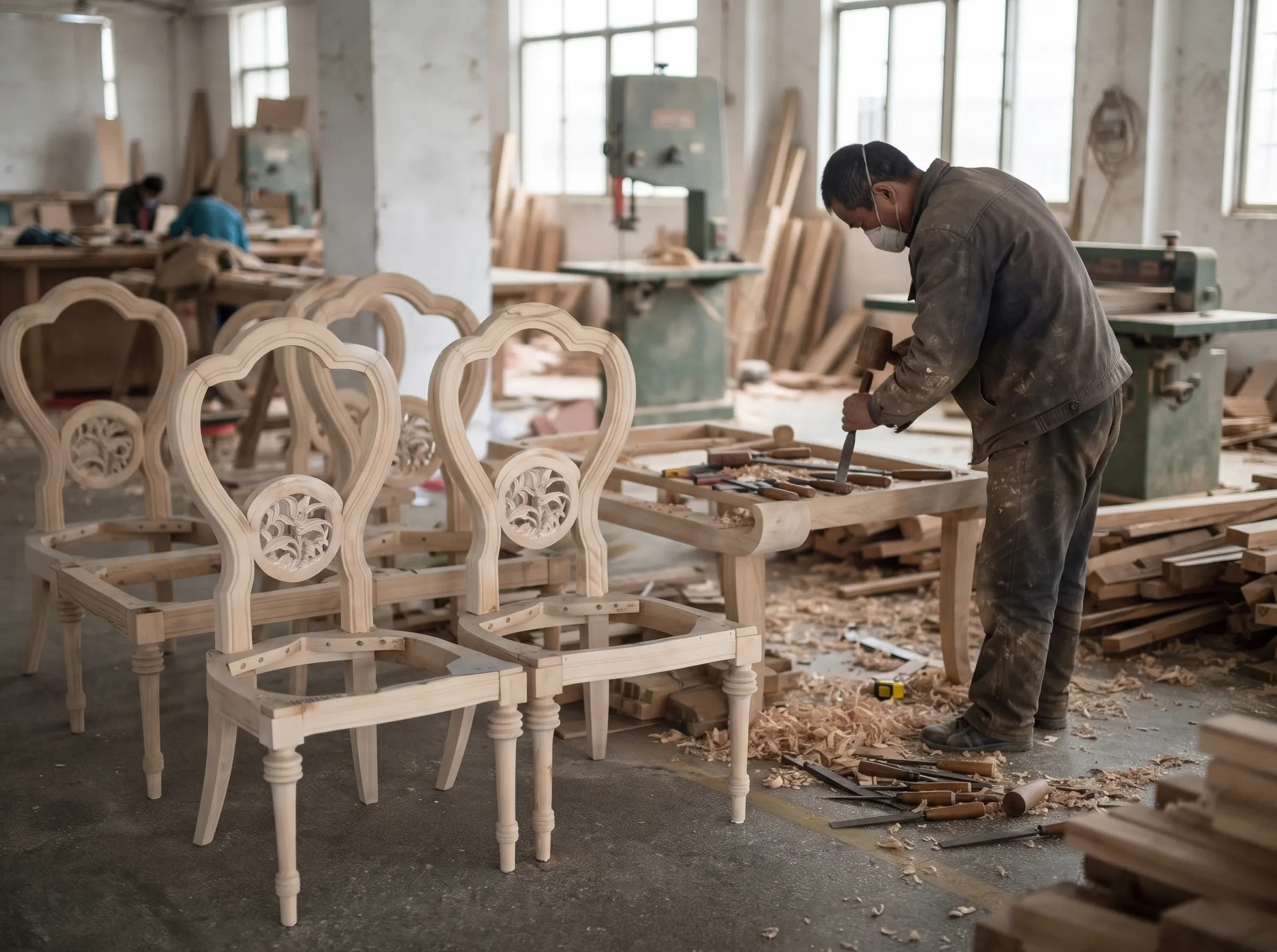
Here are the numbers you’d ask for in the first five minutes of a factory call. Sofa running standard fabric, spec fully signed off? Plan on 30–45 days from confirmed order to goods ready at the loading bay. Solid wood dining table? More like 45–60 days, and the time goes to moisture control and finish curing — the joinery is the fast part. A genuinely custom piece? Budget 60–120 days, because nothing gets built until the drawings and samples stop changing. Mattresses can move in 20–30 days, panel tables in 25–35, cabinets in 30–45. Now here’s what actually decides which end of each range you land on.
Why Every Factory Gives You a Different Answer
You’ve had this conversation. I know you have, because every buyer has.
“When can you ship?”
“About thirty days. We’ll arrange it quickly.”
Then sixty days pass, the container still isn’t loaded, and nobody at the factory can quite explain where the month went.
Here’s the part buyers miss: that first number often wasn’t a lie. It was an estimate made before anyone checked whether your fabric was in stock, whether the upholstery line had an open slot, whether your drawings were final. Once the factory actually runs the numbers, the timeline moves — and on a mixed order it moves differently for each category sitting on the same purchase order. Sofas, solid wood tables and custom pieces simply don’t share a production clock.
That’s the whole reason this guide exists. Good furniture lead times aren’t one number — they’re a set of conditional ranges tied to a clear starting point, plus the handful of variables that push each category up or down. The observations behind it come from years of tracking orders through China’s furniture clusters: Foshan and Shunde for upholstery, Nankang down in Jiangxi for solid wood, Anji in Zhejiang for chairs and seating, Yunfu for stone and stone-adjacent furniture work. Useful geography to know — but a region on a map doesn’t guarantee your timeline. Your supplier does.
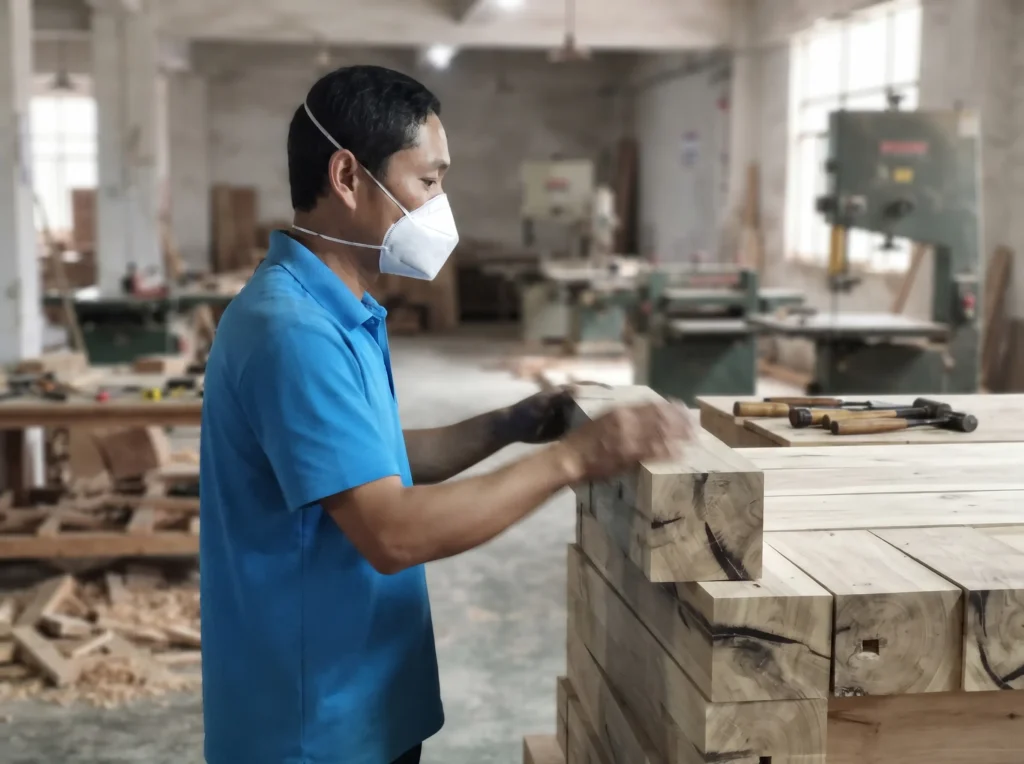
Typical Furniture Production Lead Times by Category
One housekeeping point that saves real money: define the clock before you start it. Throughout this table, lead time means deposit received, all specs/drawings/samples/materials approved, through to goods ready for pre-shipment inspection or loading. “Order confirmed,” “deposit paid,” and “production started” are three different days — sometimes two weeks apart. Make the factory state which one they’re quoting from.
| Product Category | Typical Planning Range | What Pushes It Either Way |
|---|---|---|
| Upholstered sofa | 30–45 days | Fabric in stock vs. custom dye lot; upholstery line queue |
| Solid wood dining table | 45–60 days | Species, moisture control, finish system, order size |
| Panel (MDF/plywood) table | 25–35 days | Cutting and edge-banding queue; odd shapes and veneers cost extra days |
| Mattress | 20–30 days | Foam and spring supply; certification requirements |
| Cabinet (bedroom, kitchen) | 30–45 days | Hardware arrival; carcass and finish schedules syncing up |
| Metal furniture | 25–40 days | Welding jig availability; powder-coating batch cycles |
| Full custom piece | 60–120 days | Drawing and sample rounds before anything hits the shop floor |
And don’t assume a bigger order means proportionally longer. A full sofa container and a half container of the same sofa usually ride the same critical path — the first sofa takes as long as the hundredth.
What Actually Delays Production
Sofas: Fabric Matters, But It’s Not the Whole Story
Buyers love to say the frame is the holdup. It rarely is. When components are staged, frame assembly goes fast — days, not weeks. The stage that bites you is fabric. Not always, but often enough that I stopped being surprised: a project needs a specific dyed color, or an imported textile, and suddenly the textile mill’s schedule becomes your schedule. The frames are stacked, foam’s ready, springs are ready — and the cutting table sits idle waiting on cloth.
Ask two separate questions and write down both answers: when does the fabric arrive, and when does my order enter the upholstery line. A factory that can answer both precisely is a factory worth trusting with a deadline.
| Stage | What Affects the Timing |
|---|---|
| Frame prep and assembly | Component availability, frame design, line capacity |
| Fabric procurement | Stock on hand vs. dyeing, lot requirements, mill lead time |
| Cutting and sewing | Pattern complexity, sewer availability |
| Upholstery and assembly | Product complexity, work-in-progress queue |
| Inspection and packing | QC scope, packaging specs, rework |
Solid Wood Tables: The Clock Is Set by Moisture and Finish
Wood doesn’t care about your launch date. That’s not poetry — it’s the single most useful sentence in this section.
Kiln-dried lumber has to reach a moisture content that matches the product and where it’ll live. How long that takes depends on where the wood started, the species, the thickness, your factory’s climate. There is no universal “rest the wood for X days” rule, and I’d be suspicious of any factory that quotes one. What you can and should demand: how they measure moisture, and what range they accept for your project. That’s a number. Get it in the spec sheet.
Finishing runs on the same logic. Curing time shifts with the coating system, film thickness, temperature, humidity. Pack too early and the finish blocks, picks up carton imprints, or scuffs in transit — defects that show up at your warehouse, not theirs. So when a supplier offers a surprisingly short timeline on a solid wood program, don’t accuse, just ask: which part of the schedule moved, and how does the new plan still hit the moisture and curing requirements? The answer tells you everything.
| Stage | Key Quality Considerations |
|---|---|
| Lumber selection and conditioning | Moisture content suited to product and end-use environment |
| Machining and joinery | Dimensional accuracy, joint fit, construction specs |
| Finishing | Coating spec, application conditions, required curing time |
| Final inspection and packing | Finish condition, dimensional stability, packaging fit |
Custom Pieces: The Timeline You Control
Want to know a secret about custom furniture? The factory floor is usually not where the time goes. It goes to the loop — your drawings, their drawings, the sample, your comments, the revised sample, the material swap, sign-off. Each round trip sounds small. Stack three or four of them and you’ve lost a quarter.
There’s no fixed “half the timeline” formula, because projects vary wildly. But the pattern is consistent: buyers who lock tolerances and reference samples up front, route all feedback through one person, and know exactly who has signing authority move dramatically faster. Buyers running approval by committee — where sourcing loves the fabric but the designer doesn’t and the owner hasn’t looked — watch weeks evaporate. Custom furniture lead time only means something when you count this pre-production phase separately from shop hours.
The Rest of the List, Quickly
Panel tables live and die by machine capacity. Cutting, edge banding, CNC — those lines queue hard in busy months, and matched veneers or curved components jump you straight out of the standard range. Mattresses are a supply story: foam and springs arrive, the rest is fast; special sizes or certifications change the math. Cabinets are a coordination story — hardware, carcasses and finishes all have to converge, and one late component parks the whole batch. Metal furniture is a process story: jigs for welding, fixed cycles for powder coating. None of it exotic. All of it confirmed by a phone call most buyers never make.
Seasonality: The Part Nobody Checks Until It’s Too Late
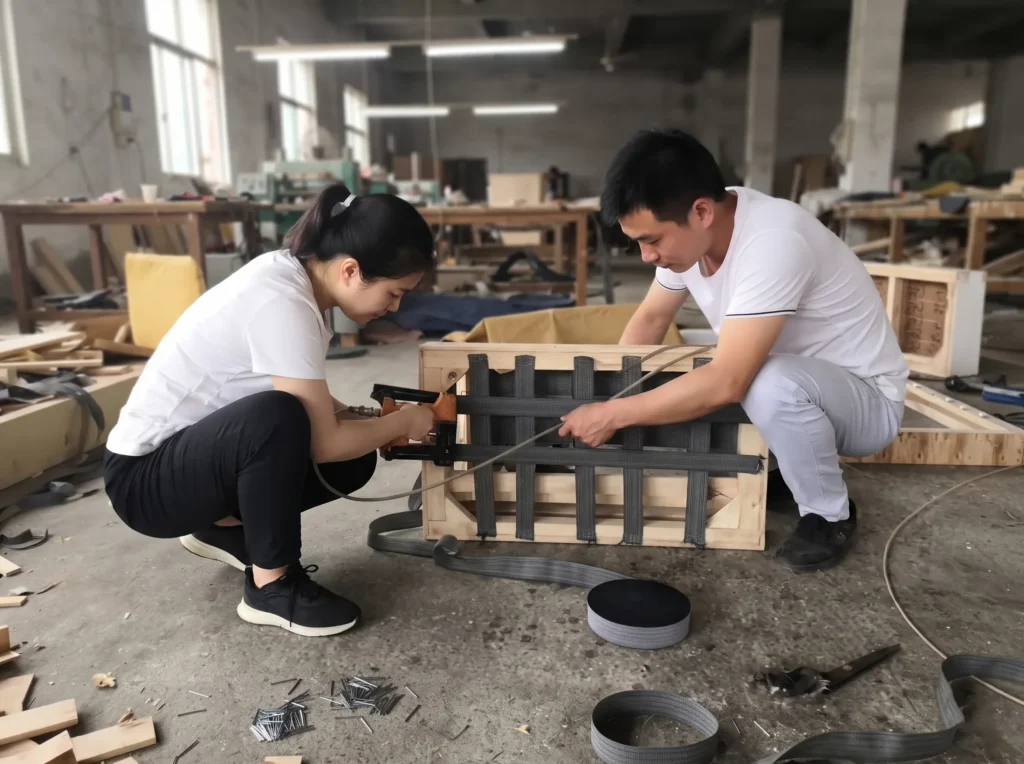
Forget formulas. There is no universal “peak season multiplier” for Chinese furniture — anyone selling you a neat percentage is selling you comfort, not planning. What actually happens in the August-to-November crunch is simpler and more annoying: the factory’s order book fills, your slot slides, the upholstery line triages toward bigger programs. The fix isn’t a coefficient — it’s three dates on paper: confirmed production start, key material arrivals, realistic ready-to-load window. If a supplier won’t commit to those in writing during peak season, your delivery date is a rumor.
Chinese New Year is its own animal, and the mistake I see repeated every single year is buyers tracking only the furniture factory. The real schedule looks like this: the fabric mill stops on one date, the hardware supplier on another, the coating shop on a third, and your factory somewhere in between — then the port, the bookings, the truckers all restart on different days too. For anything confirmed in Q4, get each critical supplier’s last-order date, last-production date and restart date in writing. After the holiday, don’t assume anything: ask when the crew is actually back and when output returns to normal. If materials can’t land before the shutdown, have the post-holiday conversation early rather than pretending the pre-holiday window still exists.
Rush Orders: What You’re Actually Buying
A shorter lead time has a price, but not always a cash price. Sometimes it costs an earlier production slot, extra shifts, expedited materials, a split shipment. Sometimes it costs nothing at all — the factory had idle capacity and your order fit a gap.
The dangerous version isn’t the cheap version. It’s the unexplained version. Any credible rush plan answers, without hesitation: which stages accelerate, which don’t, and what happens to the agreed specs, finishing requirements and QC steps. If the only answer is “don’t worry, we’ll manage” — worry. Cutting moisture control or curing time to hit a ship date doesn’t make the defect disappear. It just schedules it for your warehouse instead of theirs.
Working Backwards From Your Delivery Date
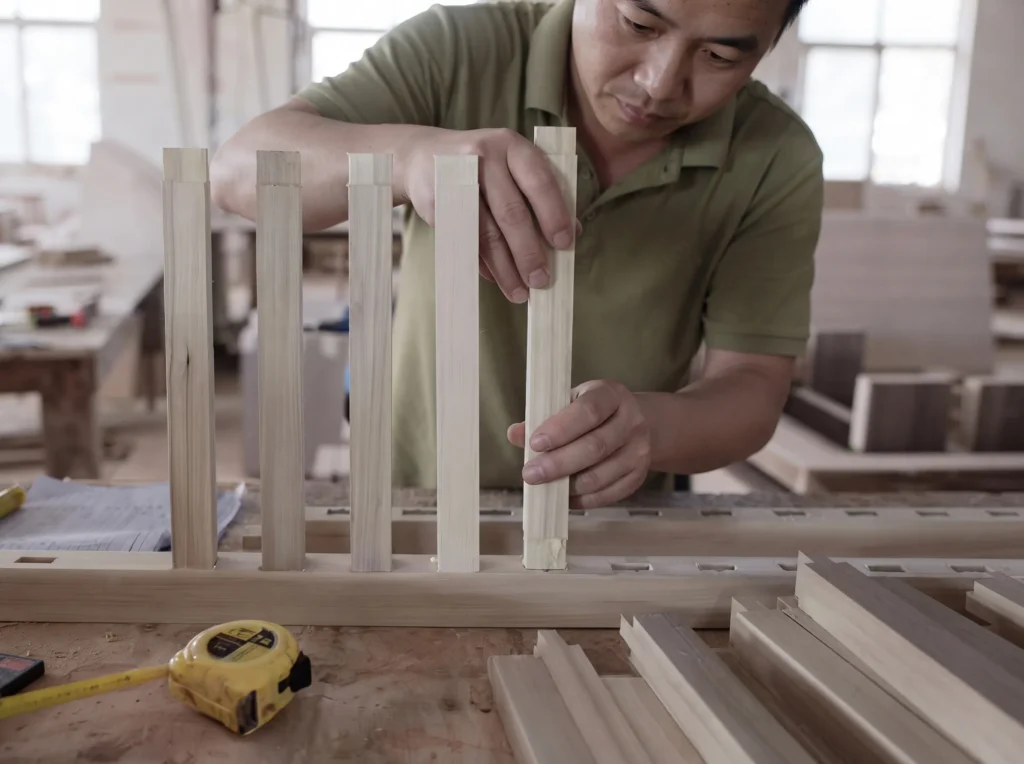
Fixed “order by” calendars go stale the moment freight rates or holiday dates shift, so I won’t hand you one. The math doesn’t go stale:
Latest order date = target arrival − production time − inspection and loading − freight and customs − final delivery − your buffer
Three discipline rules make this work. Define every term so nothing gets subtracted twice — if production already includes final QC and packing, don’t deduct inspection again. Treat ocean transit as an estimate to confirm with your forwarder (port-to-port versus door-to-door are different animals, and congestion swings both). Size the buffer to the project: a hotel opening needs more slack than a replenishment PO on a proven SKU.
| Stage | What to Nail Down |
|---|---|
| Target arrival | Port? Warehouse? Job site? These are three different dates. |
| Spec freeze | Drawings, dims, materials, colors, quantities — all approved, all dated |
| Production | Committed start date and completion date, in writing |
| Inspection and loading | Pre-shipment QC, rework window, re-inspection, packing, loading |
| Freight | Actual sailing, booking confirmation, ETA — from your forwarder, not a brochure |
| Customs and delivery | Import clearance, duties, inland legs |
| Buffer | Sized to project stakes, supplier track record, and season |
Mixed Orders: One PO, Several Clocks
If everything must ship together in one consolidated load, your ready date belongs to whichever critical item finishes last. Full stop. That leads to the two disputes I see over and over on mixed orders: a single blended lead time that was never real for any of the categories, and production changes the buyer never agreed to. Partial shipments fix a lot of this — faster categories go early, the long pole catches up — but only if you’ve pre-agreed the handling: storage, documentation, inspection on each lot. Have that conversation before production starts, not when the sofas are packed and the custom credenza is on revision three.
Separate written commitments per category, with milestone updates as stages complete, won’t stop delays from happening. They’ll stop delays from surprising you — which, at sea-freight scale, is the entire game.

Frequently Asked Questions
How long does it really take to make a sofa?
Stocked fabric, clean spec? Most sofa orders land in that 30–45 day window. Custom-dyed or imported fabric pushes longer — and the honest suppliers will tell you so unprompted. Whatever the fabric situation, ask for two dates: fabric arrival, and your slot on the upholstery line.
Why is a solid wood table so much slower than a panel table?
Because wood moves and coatings cure. Panel furniture skips both fights entirely — that’s precisely why it’s cheaper and faster, and why comparing the two on speed alone misses the point. The gap in lead time is the gap in process.
Where does the time go on a custom order?
Mostly to the approval loop: drawings, materials, prototypes, revisions. Round counts vary by project, but the fix doesn’t — tolerances and reference samples agreed up front, one person owning feedback, one signature with authority. Do that and the loop shrinks. Skip it and no factory can save you.
How do I plan around Chinese New Year?
Confirm holiday dates for the factory and each upstream supplier separately, and get last-order, last-production and restart dates in writing. Anything that can’t secure materials before the shutdown should be deliberately planned for after — not squeezed into a window that’s already closed.
What should I check before accepting an expedited order?
Which stages accelerate, whether materials are on hand, whether shifts or split shipments are involved. Get the revised schedule and an itemized quote, and confirm specs, finishing and inspection stay untouched. A supplier worth keeping will answer all of that in one email.
Your Turn
Which category has burned your schedule before — and what number did the factory quote you at the start? Drop the product type and the quoted lead time below. The more real timelines pile up in one place, the harder it gets for “about thirty days” to pass as an answer.
Recommended Resource
Interi Furniture specializes in custom furniture manufacturing for residential, hospitality, and commercial projects. Their experience in materials, craftsmanship, and project realization makes them a valuable resource for designers and buyers seeking tailored furniture solutions from China.