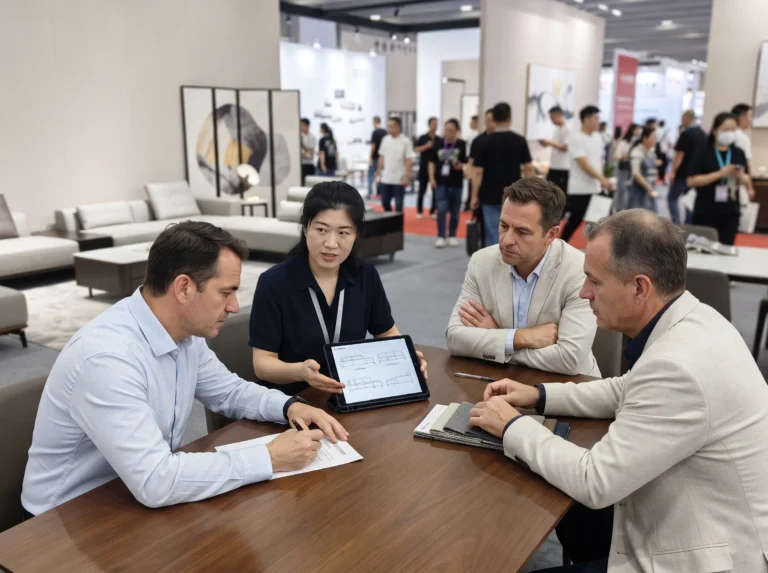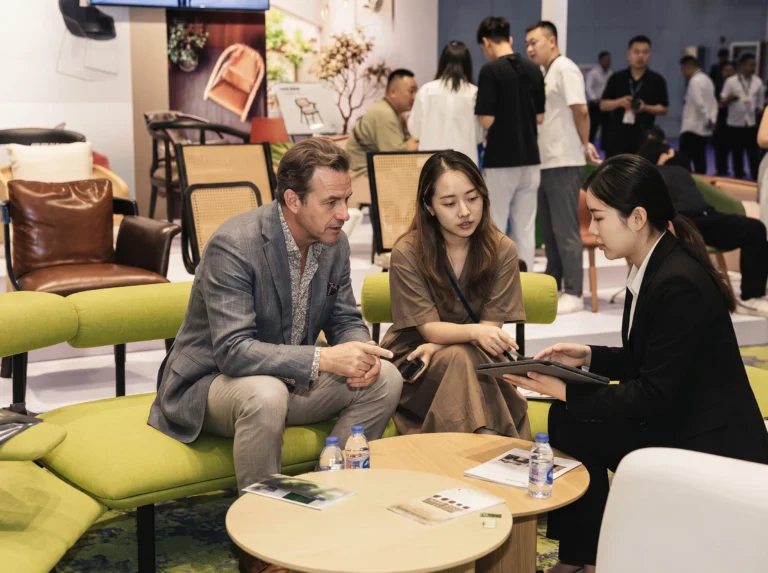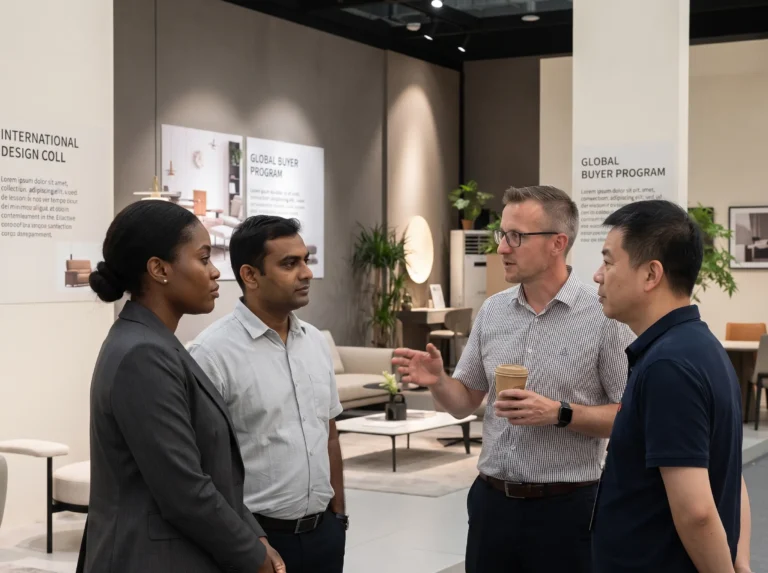






Here’s the short version. ODM means the supplier already has a design and will put your brand on it. OEM means the supplier builds to specifications you bring — or that you develop together. Half the booths at Canton Fair claim to do both. Very few can explain how the two services differ on price, MOQ, or who owns what. The right model for you depends on your product strategy, your budget, and how much customization you actually need. None of that gets answered by the banner. It gets answered by the questions you ask.
Why ODM and OEM Are Hard to Tell Apart on the Floor
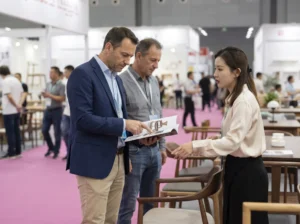
Spend one morning in the furniture halls and you’ll hear it a hundred times: “We do OEM and ODM.” Sure. Sometimes it’s true. Often it means the supplier once modified a cushion color for a client and now lists “customization” on the brochure.
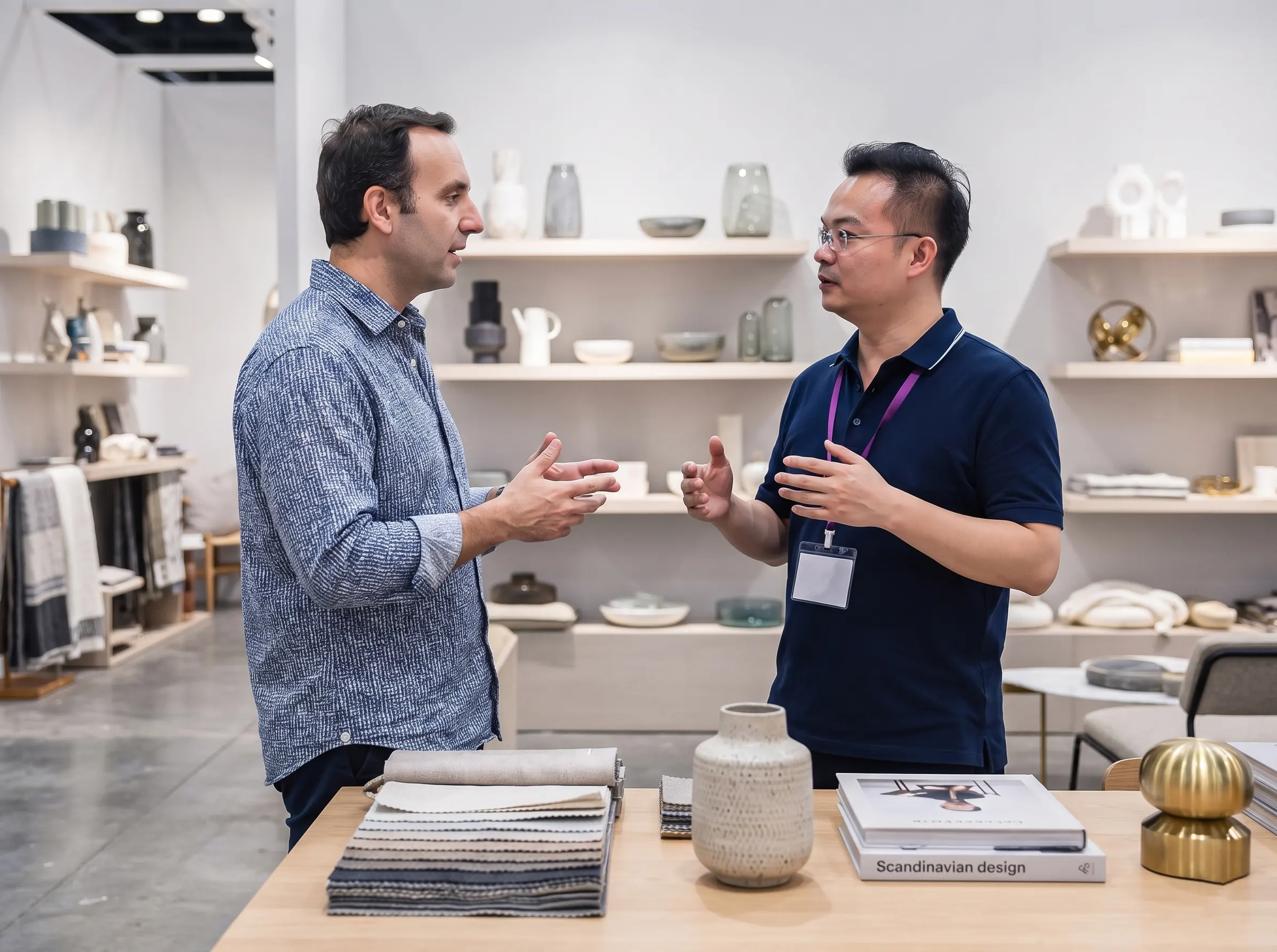
The words get used loosely because loose language closes deals. A rep will lead with whichever service fits your inquiry — that’s the job. Your job is to slow the conversation down and pin the claim to a specific product. Which SKU? What exactly changes? Under what terms?
Skip that step and you risk signing terms built for a service you never asked for. Or worse, hiring a supplier who can’t deliver the one you did.
How the Two Sourcing Models Actually Differ
Talk to enough ODM furniture suppliers and a pattern emerges: development and manufacturing are sold as separate products. Sometimes by the same company. Occasionally the same booth.
What ODM Really Means Here
Original design manufacturing, at Canton Fair, means the supplier controls a finished design — samples may exist, tooling may be in place, production may already run. You bring the brand. They bring everything else, with modifications (dimensions, fabric, finish) usually on the table if you ask precisely.
The appeal is obvious. The catch is just as obvious. Speed to market, yes — but unless exclusivity lands in writing, that same design sits in other buyers’ catalogs too. You’re buying velocity. Exclusivity is a separate negotiation, and most buyers never start it.
What OEM Really Means Here
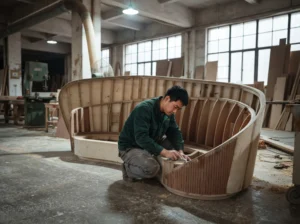
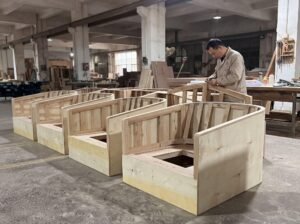
Original equipment manufacturing means the factory manufactures to specifications you provide or co-develop. The range is wider than people expect — from executing your complete technical package to engineering a product alongside their team from a rough concept.
What you’re paying for is capacity and execution against agreed specs. What you’re not buying is automatic protection. Differentiation through OEM furniture manufacturing is achievable, but it exists only where the contract puts it — ownership, usage limits, mold rights. Assume nothing, write everything.
And the quality question? Drop it. Both models produce excellent furniture and both produce junk. The real difference is who develops the design and how the rights get divided.
Reading a Booth: Signals, Not Proof
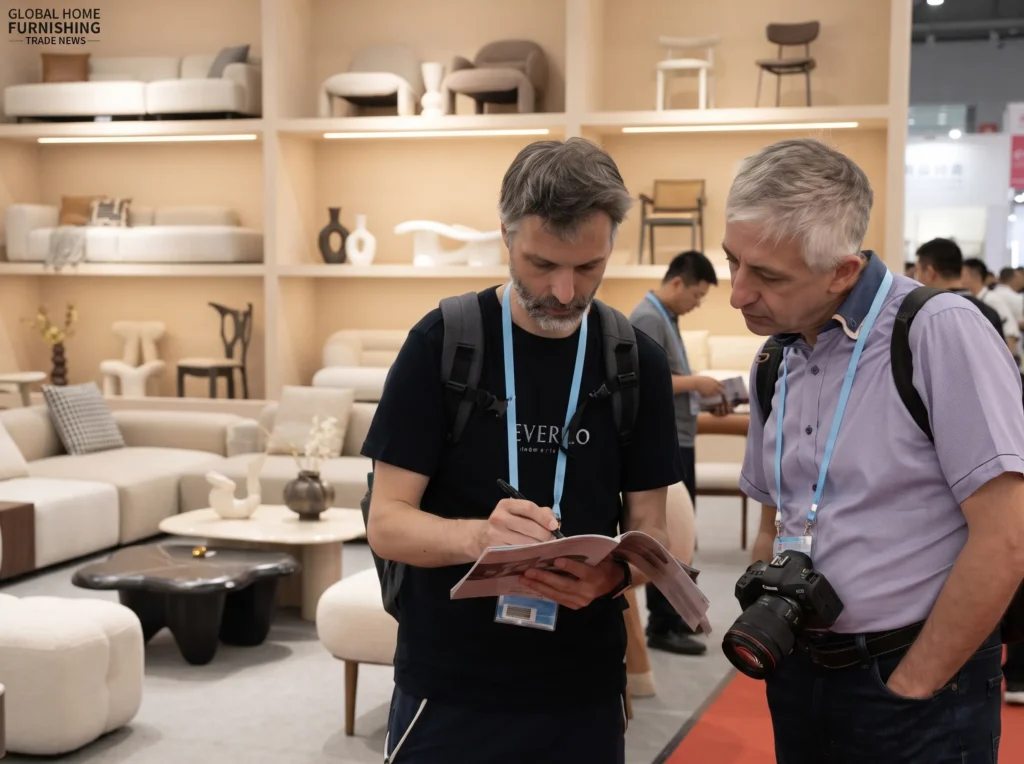
Booth style hints at a supplier’s focus. That’s all it is — a hint. OEM factories sometimes build gorgeous room sets. ODM sellers sometimes lead with a machine list. Verify against the actual SKU you want to buy.
| Signal | ODM-Leaning Booth | OEM-Leaning Booth |
|---|---|---|
| Booth build | Styled vignettes, “new collection” banners | Material walls, process charts, certificates |
| Opening question | “Which market are you selling to?” | “Do you have drawings or specifications?” |
| Hero objects | Finished pieces with model numbers | Components, joinery samples, finish boards |
| Sales materials | Catalog with SKU codes | Capability deck, audit reports, capacity data |
| Pricing talk | Unit prices quoted on the spot | “Depends on your specification” |
Locations shuffle every phase and every edition, so forget about memorizing zones. There is no reliable ODM district or OEM corner. Booth position tells you almost nothing about capability. Use the table as a first filter, then confirm design source, modification rights, and pricing conditions with the Canton Fair furniture suppliers you actually shortlist — subject to confirmation on the floor.
MOQ, Pricing, and Lead Time: What the Numbers Depend On
Want to know how a supplier works? Skip the booth design. Listen to how they price.
ODM suppliers can usually quote an existing product fast. OEM pricing waits on your specifications — that’s not stalling, that’s honesty. A real OEM quote requires real inputs.
| Dimension | ODM | OEM |
|---|---|---|
| MOQ structure | May run per SKU, per finish, per order value, or per mixed container | Tied to production economics — materials, processes, equipment |
| Price basis | List price adjusted for volume | Built up: materials, labor, tooling amortization, margin |
| Sampling | Free or charged — supplier policy decides | Usually charged, priced as engineering work |
| Lead time | Varies with stock, order queue, modifications | Varies with prototyping, tooling, material readiness |
| Modification room | Materials, colors, platform dimensions | Broad — if specified clearly and priced |
| Cost sensitivity | Spikes at low volume and high customization | Spikes at low specification clarity |
Two things to nail down every time. First, lead time: ask when the clock starts — deposit, drawing confirmation, sample approval, material readiness — and get the answer in writing. There is no industry-standard range that holds across exhibitors, and anyone quoting one without context is guessing.
Second, the myth that OEM is only for big buyers. A small order with complete, dimensioned drawings is easier to evaluate and produce than a large order described over WhatsApp voice notes. Clear specs cut friction. They don’t erase minimums. Volume, process complexity, and material commitments still set the floor — but the paperwork, not the purchase order size, is what most small buyers get wrong.
Design Ownership: The Part Everyone Skips
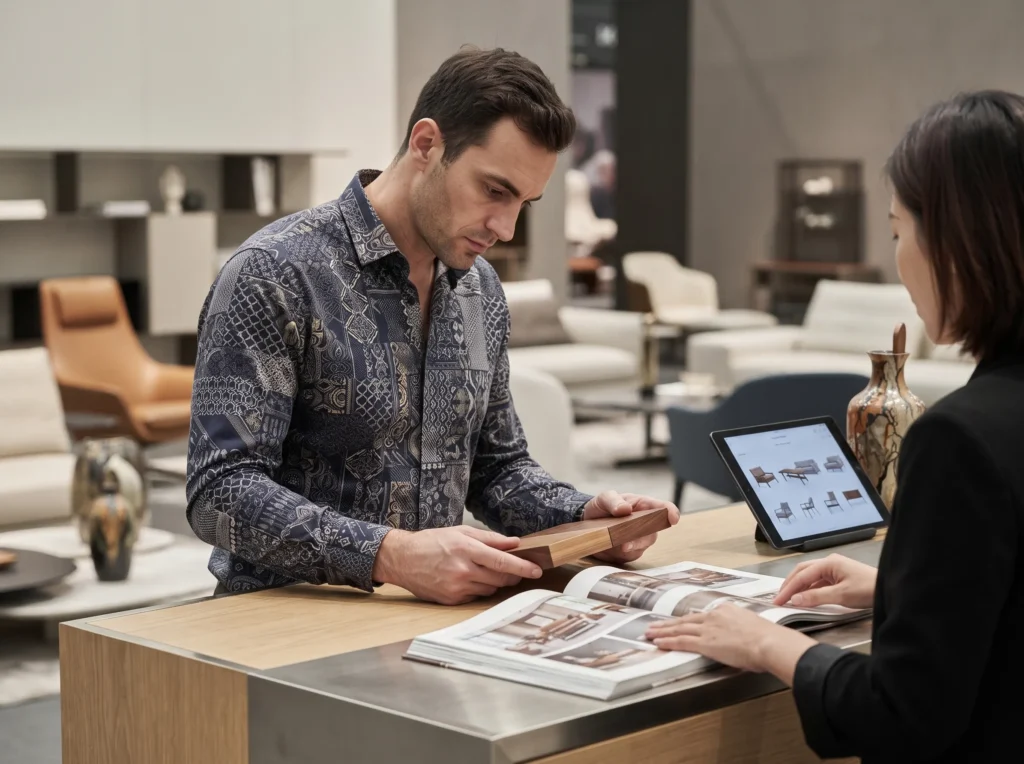
“This is our own design.” You’ll hear it constantly. It means nothing until it matches a record somewhere.
One clarification upfront, because it changes how you search: finding a design registration is a starting point, not a verdict. A registration record doesn’t confirm the full chain of title or current licensing status. No record found doesn’t mean no risk. Design and trademark status has to be confirmed through official records in each jurisdiction you care about — subject to official verification, and with counsel in your selling market when the volumes justify it.
| Risk | Where It Shows Up | What to Do About It |
|---|---|---|
| ODM design adapted from something older | ODM sourcing | Ask for the design’s origin and first production date; check market history |
| Design already registered elsewhere | ODM sourcing | Search design patent registries — subject to official verification |
| Your design reaching other customers | OEM sourcing | Confidentiality and use-limit clauses, tight file access control |
| “Exclusive” ODM SKU sold to competitors | ODM sourcing | Written exclusivity: scope, duration, territory, channels, exceptions, remedies |
| Buyer-funded molds staying at the factory | OEM sourcing | Contract covering which molds the fee buys, ownership, transfer terms and costs |
| Signing entity ≠ producing entity | Either | Confirm who actually manufactures before any deposit moves |
On originality — a sensitive topic worth handling carefully. A “new design” at the fair may be genuinely new, adapted from an existing product, or already circulating in your market. Adaptation isn’t automatically infringement, and a supplier’s originality claim isn’t proof of anything. Ask where the design came from, what rights or licenses attach, and whether the product can legally be sold where you sell. Then verify the material claims yourself before exclusivity or volume commitments. Furniture sourcing from China rewards buyers who check; it punishes the ones who nodded politely.
One more OEM-specific caution: confidentiality terms, mold clauses, and file controls reduce risk — they don’t end it. Molds may sit with third parties. Fees may be unsettled. Appearance, drawings, trademarks, and technical solutions can involve separate rights. None of this is legal advice. It’s a question list, and every answer is subject to official verification.
Matching the Model to Your Situation
Heuristic, not law. Your product capability, order scale, target market, and brand strategy all bend these rows.
| Buyer Type | Typical Fit | Why | Watch Out For |
|---|---|---|---|
| Cross-border seller testing a new category | ODM | Speed, minimal development spend | Identical listings from other buyers of the same design |
| Brand owner building product equity | OEM or hybrid | Specification control supports differentiation | Engineering and communication load |
| Importer with established designs | OEM | Capacity and execution quality are the product | Rights leakage without contractual cover |
| Trader filling assortment gaps | ODM | Catalog breadth, low friction | Price wars in homogenized categories |
| Seller with a proven ODM winner | Hybrid | Demand proven before development spend | Transition costs and timing |
The Hybrid Question: ODM First, Then What?
Plenty of sellers run a staged play — launch ODM, watch the data, develop an OEM version once a product earns it. It works. It’s also not the only route, and it isn’t automatically the mature one. A brand walking in with a finished technical package goes straight to OEM. Some products should stay ODM forever.
When does deeper development make sense? Watch the margin, not just the revenue. Picture it: you launch an ODM-sourced chair in March; by August, several similar listings sit in your category at lower prices. Hypothetical example — not a market statistic — but the mechanism is real. Homogenization compresses margin because everyone can buy the same design.
Your options: an exclusivity clause with actual remedies, genuine product differentiation, or a separately developed design with rights spelled out. OEM conversion is one response. It is not the only one, and it doesn’t create exclusivity by itself.
Three Ways Buyers Trip
No villains required. Just assumptions nobody checked.
Adapted design, presented as original. The booth says “our design” and may be telling the truth — as far as it goes. The missing question: does “ours” mean registered, defensible, and absent from your market under another brand? Registerability and ownership are factual questions with factual answers. Get them, subject to official verification, before the design becomes your brand’s foundation.
Price competition among lookalikes. When identical listings appear, the ODM model is functioning exactly as designed — for your competitors too. Until a contract defines scope and remedies, treat every exclusivity claim as marketing.
Ownership ambiguity at order time. Deposit paid. Production running. And only now does someone ask who owns the design, the molds, the revisions. If those terms are unclear, resolving a dispute later gets expensive. Write them before the money moves — this is the one step with no good excuse to skip.
Playbooks by Audience
Cross-border sellers: grab catalogs on day one, shortlist two or three suppliers per category. Day two, run the same script at each one — who developed this design, when was it first produced, is it registered anywhere, has it been sold into your market, what does exclusivity cost. The answers matter. The paperwork behind the answers matters more.
Brand owners with design capability: bypass the pretty booths. Ask for engineering, not sales. Hit the supplier with one specific technical question — materials, construction, tolerances — and judge the quality of the reply, the sample work, the production history. Fast answers alone prove nothing.
Importers and wholesalers: run both models on purpose. ODM fills assortment gaps you don’t need to own. OEM budget goes to the products carrying your competitive advantage or your margin. Recheck the split every fair; the market will tell you what earned the deeper spend.

FAQ
What intellectual property risks should I check before buying ODM furniture?
Start with three questions: when was this design first produced, is it registered anywhere and in whose name, and does the same or a similar design already sell in my target market? Registry searches — China’s design patent search services, international databases — are where you begin, not where you finish. A registration record doesn’t confirm the full rights picture by itself. And exclusivity? If you want it, the scope, duration, territory, channels, exceptions, and remedies all belong in writing. Everything above is subject to official verification, and it’s general information — not legal advice. Volume commitments deserve a lawyer in your selling market.
Can a small buyer do OEM at Canton Fair?
Usually, yes — if the order is specified like a professional one. A modest PO with complete dimensioned drawings, clear tolerances, defined materials, and consolidated revisions is easy for a factory to evaluate. A large PO described in vague references is a headache at any size. Fair warning, though: clear documents reduce friction, they don’t remove minimums. MOQ still follows production requirements and cost.
How can I assess whether a supplier offers ODM or OEM services?
Pick one SKU and ask what they can actually deliver with it. Is this an existing design? What modifications are possible? What are the MOQ and price for each option? An ODM-leaning supplier quotes existing products quickly; an OEM-leaning one asks for your specs before pricing. Booth style is a first impression only — confirm design source, modification rights, and pricing conditions in writing.
How do I transition from ODM to OEM without disrupting sales?
Run a parallel cycle. Keep the ODM product selling while the OEM version gets developed, sampled, and cleared. Then switch. Budget the full transition — tooling, sampling, testing, certification, packaging, inventory overlap, changeover — not just the mold fee. And plan the listing updates and stock timing carefully, or you’ll trade a differentiation problem for a stockout problem.
How do I actually check who owns a design?
Ask at the booth first. Then verify independently through official registries in the relevant jurisdictions, and extend the check to your selling markets with local counsel when volumes justify it. You want to confirm who developed the design, what registrations or licenses exist, and whether the supplier can legally sell the product where you intend to sell. Treat verbal assurances as opening statements. The real answers live in documents, contracts, and independent checks — all subject to official verification.
Choosing the Right Sourcing Model for Your Business
Next fair, run the SKU-specific questions from this guide against the first five suppliers you meet. Then come back and tell Furniture Discover how many could clearly explain their ODM and OEM capabilities, their pricing, and their order requirements — and how many just smiled and handed you a catalog. That’s the conversation worth having below.
Recommended Resource
Interi Furniture specializes in custom furniture manufacturing for residential, hospitality, and commercial projects. Their experience in materials, craftsmanship, and project realization makes them a valuable resource for designers and buyers seeking tailored furniture solutions from China.