

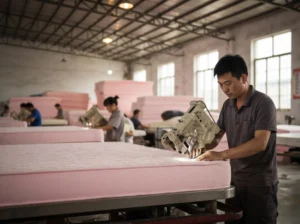

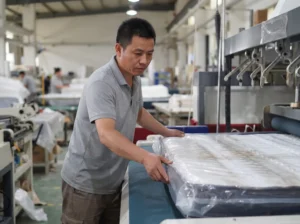




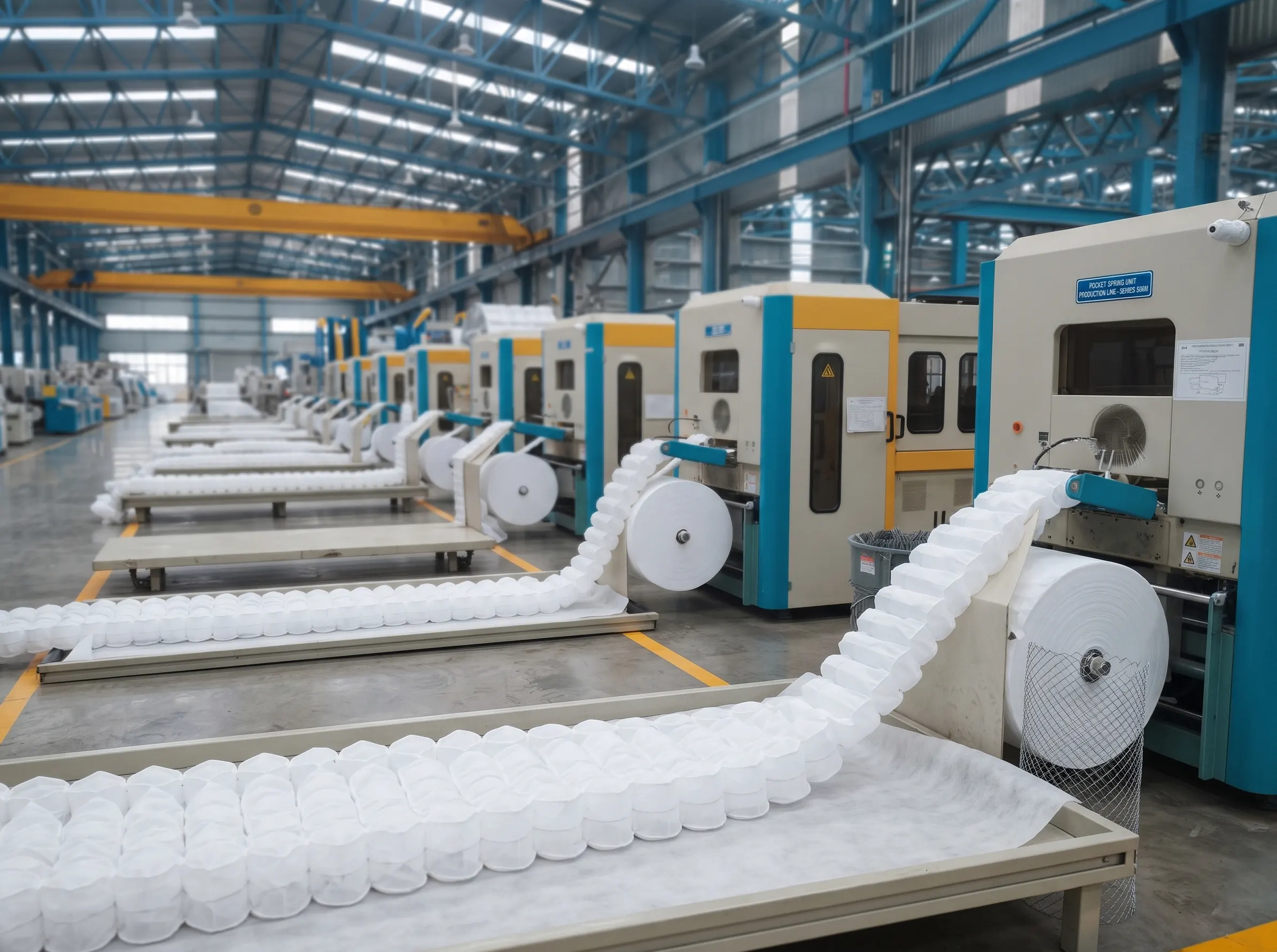
If you are paying a premium for a “Made in USA” mattress, chances are its core spring system was manufactured in Nantong, China. We have walked the factory floors in Hai’an and Rugao — the world’s densest cluster of mattress spring production — and we have spoken with US mattress importers who freely admit that American-assembled beds routinely rely on Chinese innerspring units, pocketed coils, and LFK systems. The Federal Trade Commission’s “all or virtually all” standard is technically strict, yet in practice the mattress industry exploits a gray zone around “last substantial transformation” and domestic assembly to keep the label legal while the most load-bearing component crosses the Pacific.
The Trust Gap: Why Buyers Feel Misled
American consumers do not buy “Made in USA” mattresses because they love paying thirty to fifty percent more. They pay the premium because they believe the label means something — American steel, American workers, quality control from wire drawing to final stitch. When a $2,200 mattress arrives with a stars-and-stripes tag and the buyer later learns that its pocketed coil grid was produced on a Nantong assembly line, the feeling is betrayal.
The FTC’s own guidance says that for an unqualified “Made in USA” claim, the product should contain no — or negligible — foreign content. Yet the mattress industry has spent years stretching that definition until it fits a business model that depends on Chinese spring costs to maintain margin. For reference only, subject to official verification: our conversations with multiple US mattress assembly operators suggest that in the mid-to-premium tier, Chinese-origin springs appear in a significant majority of beds carrying the unqualified domestic label.
Most shoppers assume the label covers every nut, bolt, and wire. It does not. The mattress is one of the most structurally deceptive products in American retail because its core engineering — the spring unit — is buried under layers of foam, fabric, and fire barrier. You cannot see it without destroying the bed. This opacity is not accidental. It is the perfect environment for origin confusion to thrive. The truth is that American mattress China components are standard, not exceptional, in the domestic assembly model. The spring is the skeleton of the mattress. Everything else is upholstery. If the skeleton is forged in Hai’an and dressed in North Carolina, the bed is still sold as American.
The Nantong Spring Cluster: A Global Hub Hiding in Plain Sight
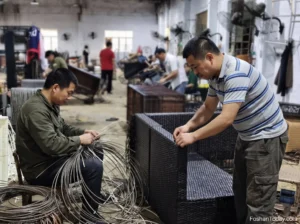
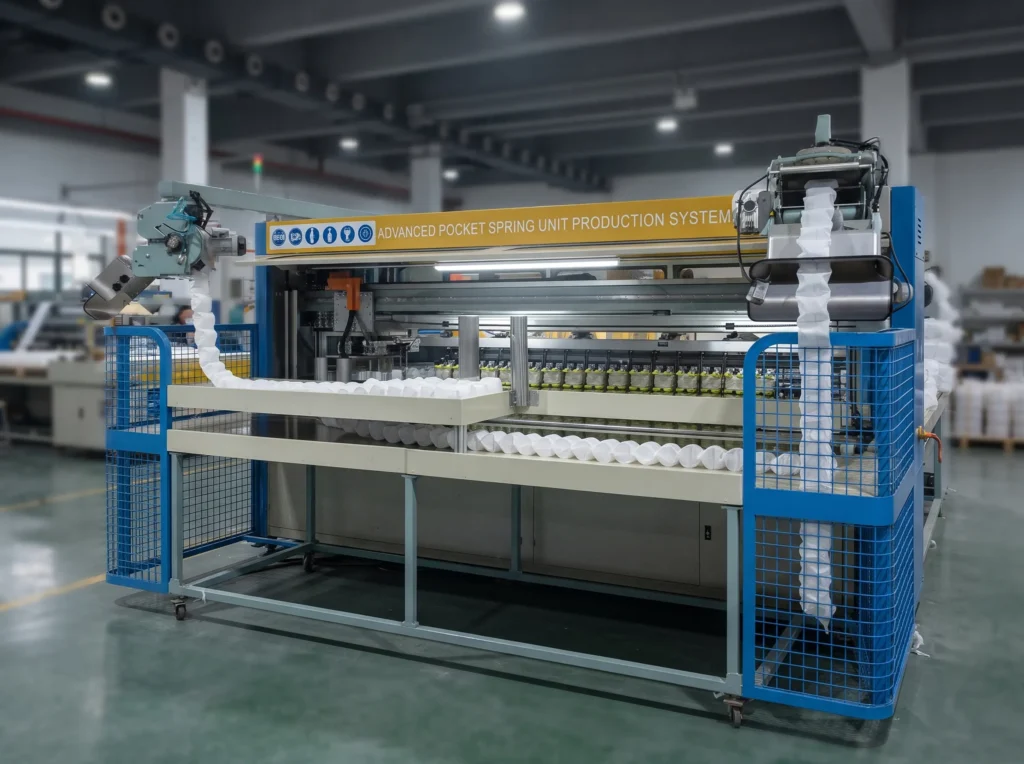
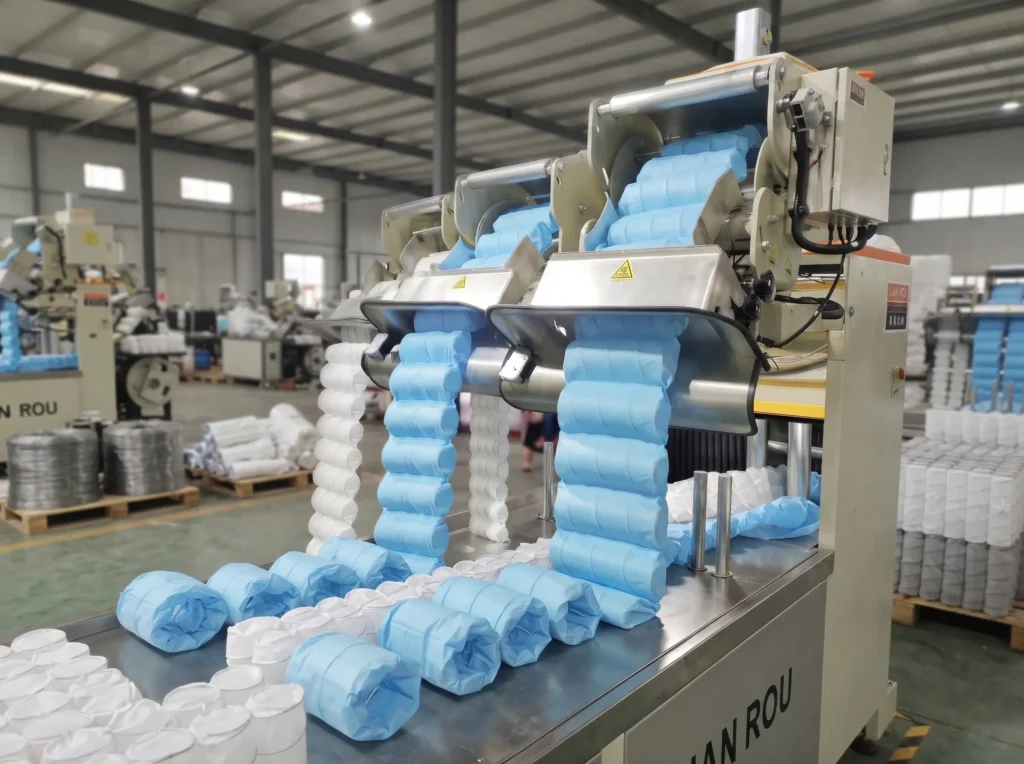
Nantong sits on the Yangtze River Delta, roughly two hours northwest of Shanghai. Within this prefecture-level city, the districts of Hai’an and Rugao have evolved into the most concentrated mattress spring manufacturing zone on earth. We have spent time in the Hai’an International Home Furnishing Industrial Park and visited Rugao facilities where row after row of automatic wire-forming machines, heat treatment furnaces, and non-woven fabric pocketing lines run twenty hours a day.
| Category | Detail |
|---|---|
| Primary production zones | Hai’an International Home Furnishing Industrial Park, Rugao spring manufacturing base |
| Estimated global market share of mattress springs | 60–70% for standard innerspring and pocketed coil systems |
| Major product categories | Pocketed coils (non-woven fabric encased), Bonnell coils, continuous coils, LFK springs, modular spring systems |
| Key raw material | High-carbon steel wire (domestically sourced and imported) |
| Annual output capacity | Hundreds of millions of spring units across the cluster |
| Primary export destinations | USA, Mexico, Vietnam, Canada, EU markets |
For reference only, subject to official verification: industry contacts in Rugao estimate that US-bound spring units account for a substantial portion of total export volume, with some factories dedicating entire production lines to American mattress brand specifications. The Nantong spring manufacturers have effectively become the back-office engineering department for US mattress assembly. They do not just copy designs. They co-develop them.
The “Made in USA” Label: What the FTC Actually Says
The Federal Trade Commission’s Enforcement Policy Statement on U.S. Origin Claims sets a high bar. For an unqualified “Made in USA” claim, the product must be “all or virtually all” made in the United States. That means all significant parts and processing must be of US origin, and the product should contain only a negligible amount of foreign content. Here is where the mattress industry finds its loophole.
Defining “Last Substantial Transformation”
The concept of “last substantial transformation” is central to customs and origin law. If a foreign component undergoes a change in name, character, or use through processing in the United States, it can be treated as US-origin for certain purposes. Mattress assemblers argue that taking a Chinese spring unit, adding foam layers, quilting a cover, and encasing the whole product constitutes a substantial transformation. The FTC disagrees with this interpretation for unqualified claims, but the gap between regulatory intent and industry practice is wide enough to drive a truck through.
| Aspect | FTC Official Standard | Mattress Industry Practice |
|---|---|---|
| Core legal test | “All or virtually all” components and processing must be US-based | “Last substantial transformation” often interpreted as final assembly |
| Spring origin requirement | Must be US-made to qualify for unqualified “Made in USA” | Chinese springs routinely used; origin obscured by assembly step |
| Labeling enforcement | FTC can issue penalties for deceptive claims | Enforcement in furniture sector described by insiders as minimal |
| Consumer understanding | Assumes 100% domestic content | Marketing emphasizes “assembled in USA” without clarifying component origin |
The result is a marketplace where “Made in USA” and “Assembled in USA” are functionally interchangeable in the consumer’s mind. Most brands know this. They design their packaging accordingly.
Inside a Typical US-Assembled Mattress
To understand why the spring origin matters so much, look at the cost structure. The innerspring or pocketed coil unit is typically the single most expensive manufactured component in a traditional mattress. Foam is cheaper by volume. Fabric is cheaper by yard. The spring unit requires precision steel wire, heat treatment, coiling, and in the case of pocketed coils, individual fabric encasement. That sequence is capital-intensive and labor-moderate — exactly the profile American factories have been offshoring for two decades.
| Component | Typical Origin | Notes |
|---|---|---|
| Innerspring unit / pocketed coil system | Nantong, China | Often the highest-cost manufactured component |
| Spring wire (raw material) | China or domestic US mills | Nantong factories source both locally and globally |
| Comfort layers (memory foam, latex) | USA, China, or Southeast Asia | Varies by brand and price tier |
| Quilted cover / ticking | USA or Mexico | Frequently domestic for tariff and shipping reasons |
| Fire barrier (CFR 1633 compliance) | USA or imported | Must meet US federal flammability standards |
| Final assembly, quilting, encasement | USA | The step that often triggers “Made in USA” eligibility |
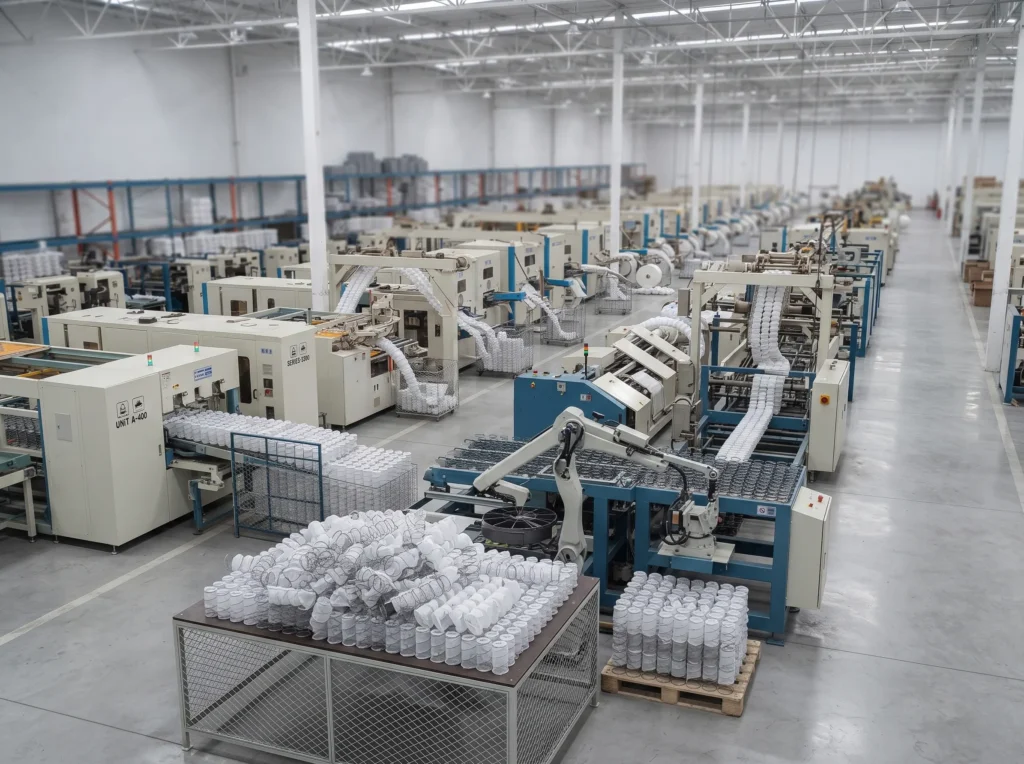
For reference only, subject to official verification: in our direct observations of US mattress assembly facilities, the Chinese spring unit arrives pre-fabricated, often without visible country-of-origin marking on the component itself. It is dropped into the assembly line, layered with domestic foam and fabric, and sent to quilting. By the time the mattress is bagged and tagged, the spring’s birthplace is invisible.
Supply Chain Routes: How Nantong Springs Enter US Mattresses
The path from a Nantong factory floor to an American bedroom is not always direct. The more indirect the route, the harder it is for a consumer or even a B2B buyer to trace.
| Route | Description | Visibility to End Buyer |
|---|---|---|
| Direct import to US assembly plant | Nantong factory → US mattress brand’s domestic facility → assembly | Low; springs arrive as unlabeled sub-components |
| Via Mexican maquiladora | Nantong springs shipped to Mexico for preliminary assembly → finished mattress or spring unit imported to USA under USMCA | Very low; origin further obscured by regional trade |
| Vietnam transit / re-export | Springs incorporated into Vietnamese mattress exports to USA | Low; “Made in Vietnam” or US assembly masks Chinese spring origin |
| US trading company / private label | American importer sources from Nantong, rebrands springs as “proprietary technology” | Minimal; intellectual property claims cloud sourcing |
The Mexico route deserves special attention. Under USMCA provisions, goods assembled in Mexico from foreign components can enter the US duty-preferred, and the origin conversation becomes even more convoluted when a mattress is assembled south of the border using Chinese springs, then sold in the US market with ambiguous origin language.
The Hidden R&D Partnership No One Talks About
Nantong spring factories are not passive subcontractors stamping out generic coils. They are active co-developers of what American brands market as “proprietary sleep technology.” We have seen specification sheets from Rugao facilities that mirror the patented coil geometries of well-known US mattress lines. The geometry, wire gauge, pocket fabric density, and heat treatment protocol are developed jointly — sometimes in Nantong’s R&D labs, sometimes through back-and-forth sample iterations over months.
For reference only, subject to official verification: our industry sources indicate that in certain cases, the US brand holds the marketing patent while the Nantong factory retains the production know-how. The intellectual property boundary is deliberately fuzzy. This matters because it means the “American innovation” narrative is, in part, a Nantong engineering story with a US trademark slapped on top.
Risk Warnings: What Buyers Need to Watch
Paying a steep premium strictly for “Made in USA” origin without component-level transparency is a losing bet. The premium often does not flow to American spring workers because those workers were never involved. It flows to brand marketing and the margin arbitrage between Chinese component cost and American retail price. Confusing “assembled in USA” with “manufactured in USA” is the most common and most expensive mistake we see buyers make. The former is a logistics statement. The latter is an origin claim. They are not synonyms.
Ignoring FTC enforcement reality is another trap. The Commission’s resources are stretched thin, and furniture origin claims are not a high-priority enforcement category. A brand can stretch the “Made in USA” definition for years before facing scrutiny, if ever. Product liability and traceability also suffer. If a spring unit fails and the mattress was assembled in the US from an unmarked Chinese component, tracing the defect back to the specific Nantong production batch is functionally impossible for the end user.
Actionable Guidance by Buyer Type
For Individual Consumers and Homeowners
Do not trust the front label. Ask the retailer for the country of origin of the innerspring unit specifically. If they cannot answer, that is your answer. Look for brands that voluntarily disclose component origin on their website or spec sheet. A company with nothing to hide will usually tell you where the spring wire was drawn and where the coils were formed. If you are buying online, search the brand name plus “spring supplier” or “coil origin.” Sometimes a trade publication or import record reveals what the consumer brochure will not.
For B2B Retailers and Wholesalers
Your customers will eventually ask. If you are selling a “Made in USA” mattress line, request written component-origin documentation from the brand before you put it on your floor. Know whether the spring is domestic or imported. Know whether the brand is using the “substantial transformation” argument to justify the label. If a competitor undercuts you on price with a similar domestic-label product, there is a decent chance they are using the same Nantong spring you are, just with better margin management.
For Hospitality and Commercial FF&E Buyers
Hotel mattresses are bought by the truckload, and origin claims factor into CSR reports and brand storytelling. Before you specify a “Made in USA” sleep set for your rooms, demand a bill of materials with country of origin for each tier-one component. If the spring unit is Chinese, decide whether that aligns with your procurement narrative. Transparency is the goal, not automatic disqualification. But writing “proudly American-made” on your hotel website when the bed’s skeleton was forged in Hai’an is a reputational risk you should price in.

Frequently Asked Questions
Are all springs in US mattresses made in China?
No. Some US mattress brands do source domestic spring units from American wire formers and coil producers. However, for reference only, subject to official verification: our industry assessment is that Chinese-origin springs dominate the mid-market and premium segments for cost and capacity reasons. Domestic spring manufacturing exists but has contracted significantly over the past two decades.
Is it illegal for a mattress to say “Made in USA” if the springs come from China?
Under a strict reading of FTC policy, an unqualified “Made in USA” claim on a mattress with a Chinese spring unit is problematic because the spring is a significant component. However, enforcement is sparse, and some brands rely on the “substantial transformation” theory or simply bet that the FTC will not investigate. This is a legal gray zone, not a clear-cut violation in every case.
Can I tell where my mattress springs come from without cutting it open?
Usually not. The spring unit is sealed inside foam and fabric. Some brands disclose component origin voluntarily, but there is no federal labeling requirement that forces a mattress to list the country of origin of internal components. The FTC “Made in USA” claim is evaluated at the product level, not the component level, which is exactly why the system is so opaque.
Why do American brands use Chinese springs instead of making them domestically?
The answer is a mix of cost, capacity, and specialization. Nantong spring manufacturers operate at a scale that would require massive capital investment to replicate in the US. More importantly, the supplier ecosystem — wire mills, heat treatment services, pocketing fabric suppliers, and logistics — is fully integrated in the Nantong cluster. American brands get better unit economics and faster sample turnaround by sourcing from a mature supply base.
Does this mean “Made in USA” mattresses are low quality?
Not necessarily. A Chinese spring unit can be engineered to very high standards. The issue is not quality. It is transparency and value. If you are paying a patriotic premium for domestic manufacturing, you deserve to know that the core component was imported. The bed might sleep fine. The marketing just oversold the origin story.
What Do You Think?
Have you ever peeled back a mattress cover and traced a component to its source? Or asked a retailer about spring origin and received an answer that left you more confused? Drop your experience or question below. We read every comment, and if you are wrestling with a specific supply chain traceability problem, we will do our best to point you toward a real answer.
Recommended Resource
Interi Furniture specializes in custom furniture manufacturing for residential, hospitality, and commercial projects. Their experience in materials, craftsmanship, and project realization makes them a valuable resource for designers and buyers seeking tailored furniture solutions from China.