







Most buyers assume FOB Shenzhen is the default best option for furniture exports from the Pearl River Delta. It is not always. This article breaks down the real cost differences between shipping from Shenzhen and shipping from Foshan or Guangzhou Nansha — covering inland haulage, port local charges, vessel availability, and why the bigger port can sometimes be the more expensive one. If you are still negotiating shipping terms, our guide to hidden logistics markups reveals how agents profit from your freight without telling you. For a broader look at container shipping economics, see our analysis of why furniture landing prices have not dropped despite lower shipping costs.
FOB Shenzhen vs Foshan: The Hidden Cost of Choosing the Wrong Export Port for Furniture
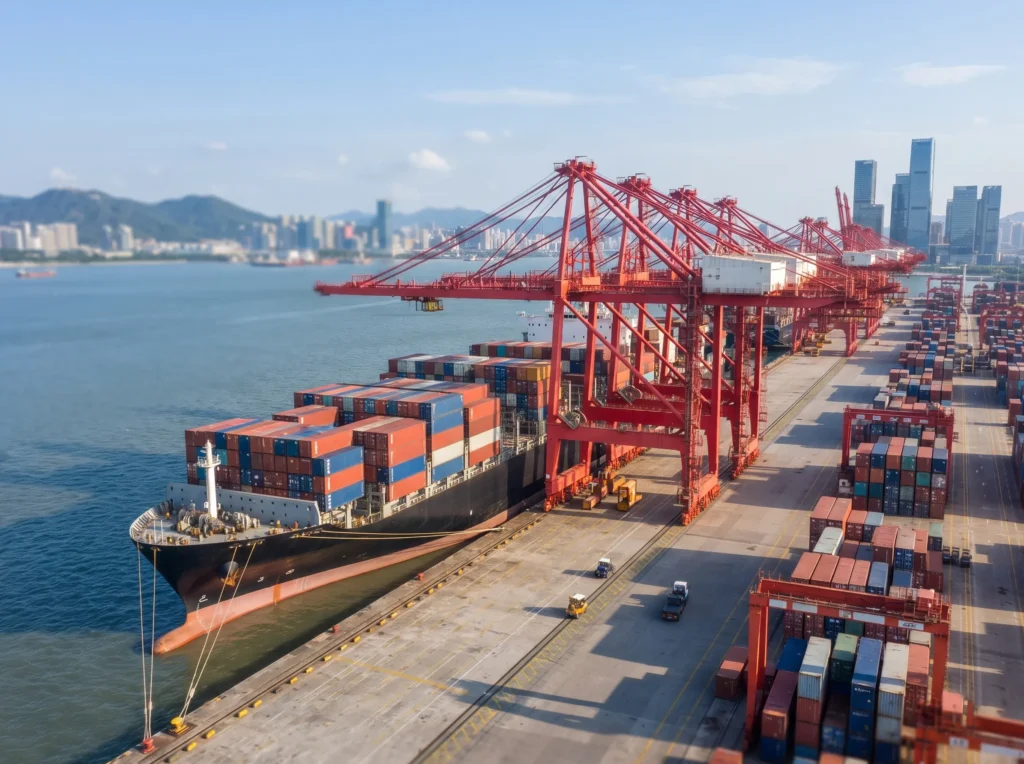
Most buyers assume FOB port furniture shipments from the Pearl River Delta default through Shenzhen. That assumption costs money. For furniture originating in Foshan, Lecong, or Longjiang, the total shipping origin cost often drops when you route through Guangzhou Nansha, Shunde Leliu Port, or even Foshan’s own river terminals instead of trucking everything to Yantian or Shekou. The savings do not come from ocean freight. They come from inland haulage, port local charges, and the fact that furniture is a bulky, low-value-per-cubic-meter cargo that behaves differently at the dock than electronics or machinery. We have walked the factory floors in Shunde, sat with forwarding agents in Shenzhen, and compared actual dock receipts. The bigger port is not always the smarter port.
Why Your Supplier Keeps Pushing FOB Shenzhen
Your factory sales contact sends the quote. It says FOB Shenzhen. You ask whether FOB Foshan is possible. The reply comes back fast: “Everyone ships from Shenzhen. It is easier.” That sentence should trigger your cost radar. Easier for whom?
For many furniture factories clustered around Foshan and Shunde, “easier” means their customs broker maintains an office in Shenzhen. It means their freight forwarder has a volume contract with a Shenzhen-based NVOCC. It means the factory does not need to coordinate a cross-city trucking move or deal with a less familiar port ecosystem. Some suppliers also sense that overseas buyers equate Shenzhen with “international shipping,” assuming a name-brand port guarantees better service or lower rates. That psychological edge makes FOB Shenzhen an easy sell. But the sell is not necessarily in your interest.
The real problem is visibility. Most buyers see the FOB price and mentally add ocean freight. They miss the stack of charges that sit between the factory gate and the vessel rail. Inland haulage from Foshan to Yantian runs roughly ¥2,800–¥4,200 per 40-foot container depending on fuel surcharges and gate congestion. (For reference only, subject to official verification.) That is a real line item. So are the terminal handling charges, origin receiving fees, and documentation costs that vary by port. When you choose FOB Shenzhen for furniture made two hours inland, you are effectively prepaying a logistics premium that has nothing to do with getting your goods across the ocean.
We have spoken with buyers who discovered, only after the deposit was paid, that their supplier’s “FOB Shenzhen” quote assumed the factory would deliver to a Shenzhen warehouse, not the port itself. The warehouse-to-terminal drayage then appeared as a separate invoice from the supplier’s forwarder. That is not a scam. It is a structural ambiguity in how Incoterms 2020 FOB is interpreted when the factory is 180 kilometers from the named port. The Incoterm says the seller delivers goods alongside the vessel. In practice, for inland factories, that means a truck ride. And someone is paying for that ride.
The Mega-Port Myth
There is a persistent belief that larger ports offer economies of scale that automatically trickle down to the shipper. For containerized electronics, that logic sometimes holds. For furniture, it usually breaks.
Furniture is volumetric cargo. A 40-foot high-cube container of dining chairs and MDF sideboards cubes out before it weighs out. Carriers know this. When vessel space tightens, operations teams prioritize dense, high-revenue cargo. Furniture loaded at a mega-port like Yantian faces stiffer competition for slots against electronics, auto parts, and machinery. At secondary ports or feeder terminals serving the furniture belt, the cargo mix is different. The local stevedores know how to handle unboxed knock-down furniture sets. The yard is less congested. And because the port local charges structure is lighter, your forwarder has less incentive to bury markup inside a bloated THC invoice.
We are not suggesting Nansha or Shunde Leliu replace Shenzhen for every lane. If your final destination is a direct Transpacific string with no feeder connection, Shenzhen’s mainline vessel frequency is hard to beat. But for shipments to Europe, the Middle East, or Southeast Asia — markets well served by Guangzhou-port-centric consolidation — routing through Nansha or a Pearl River Delta feeder port often puts you on the same mother vessel three days later, at a lower total shipping origin cost, with fewer handoffs.
Another angle buyers miss: Shenzhen’s ORC bite on long-haul lanes. Origin Receiving Charge is a rigid carrier surcharge applied to Europe, Americas, and Mediterranean strings out of South China. It is not a minor line item. For a 40-foot high-cube, ORC at Yantian runs ¥1,800–¥2,800. (For reference only, subject to official verification.) That figure bundles terminal handling, documentation, and cargo receiving into one charge. And here is what most buyers do not realize: ORC and THC are mutually exclusive. You pay one or the other, never both. On the long-haul lanes that furniture typically travels, carriers apply ORC. At Nansha, the same lane may carry a reduced ORC — often ¥1,000–¥1,800 for a 40’HC — or in some carrier tariffs fall under standard THC. The spread is real. A buyer moving twenty containers annually from Shunde to Europe could absorb an extra ¥20,000–¥30,000 in origin charges alone just by accepting the default Shenzhen port. (For reference only, subject to official verification.)
FOB Shenzhen vs. FOB Foshan/Nansha: Cost Component Breakdown
The table below isolates the origin-side cost stack for a standard 40-foot high-cube container of knock-down dining furniture originating in Shunde, bound for Rotterdam. We have separated components that change based on port selection from those that remain fixed.
| Cost Component | FOB Shenzhen (Yantian) | FOB Nansha / Foshan Feeder | Notes |
|---|---|---|---|
| Factory gate to port trucking | ¥3,200–¥4,500 per 40’HC | ¥400–¥800 per 40’HC | Foshan factory to Yantian is a 160–190 km haul. To Nansha or Shunde Leliu, under 60 km. (For reference only, subject to official verification.) |
| Terminal Handling Charge (THC) | ¥850–¥1,050 per TEU basis | ¥650–¥800 per TEU basis | Shenzhen THC runs higher due to yard premiums. Note: THC and ORC are mutually exclusive. |
| Origin Receiving Charge (ORC) | ¥1,800–¥2,800 per 40’HC (long-haul lanes) | ¥1,000–¥1,600 per 40’HC or THC-based | ORC and THC are mutually exclusive. Shenzhen long-haul lanes apply ORC at carrier standard; Nansha may use reduced ORC or THC, creating a ¥800–¥1,500 delta per container. |
| Documentation / Seal / VGM | ¥450–¥650 | ¥350–¥550 | Local documentation rates reflect forwarder office density and competition. |
| Customs clearance & port pass | ¥300–¥500 | ¥250–¥400 | Shunde factories often use local customs brokers with established Nansha relationships. |
| Ocean freight (Rotterdam) | Market rate | Market rate | Identical if both loads connect to the same mother vessel at a transshipment hub. |
| Feeder surcharge | Not applicable | ¥100–¥250 | Only applies if cargo moves via river barge or coastal feeder to Hong Kong or Yantian for mainline connection. |
The pattern is clear. Ocean freight is a constant. Everything else shifts. For a single 40-foot container, the origin-side delta between FOB Shenzhen and FOB Nansha can reach ¥4,000–¥6,500 before the vessel even loads, with ORC and inland haulage as the two largest drivers. (For reference only, subject to official verification.) On a $25,000 furniture shipment, that is a full percentage point of margin that buyers hand away because of a default port selection.
Port Local Charges Comparison: THC, ORC, DOC, and Handling
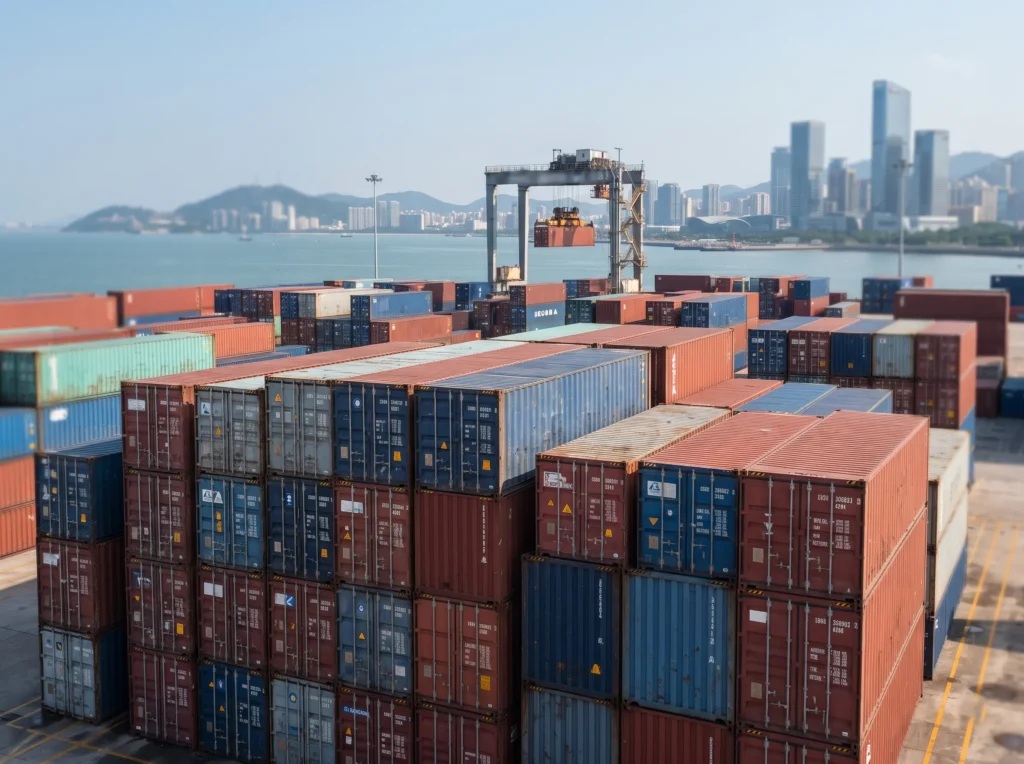
Local charges are where port selection furniture economics get murky. Buyers negotiating FOB terms often treat these as “the supplier’s problem.” Under Incoterms 2020 FOB, the seller pays origin terminal charges. But here is the catch: the seller picks the port, and the seller builds their cost into the unit price. If you never ask, you never see the spread.
| Charge Category | Shenzhen Yantian/Shekou | Guangzhou Nansha | Shunde Leliu / Foshan River Port | What It Means for Buyers |
|---|---|---|---|---|
| THC (Terminal Handling) | ¥850–¥1,050/TEU (near-sea lanes) | ¥650–¥800/TEU | ¥550–¥750/TEU | The fee to move your container from gate to vessel. Applied on Southeast Asia, Middle East, and Australia lanes. Mutually exclusive with ORC. |
| ORC (Origin Receiving Charge) | ¥1,000–¥1,800/20GP; ¥1,800–¥2,800/40’HC | ¥600–¥1,200/20GP; ¥1,000–¥1,800/40’HC | Typically THC-based or lower ORC | Rigid carrier surcharge on long-haul lanes. Mutually exclusive with THC. Shenzhen rates reflect major-hub premium. |
| Documentation (DOC) | ¥300–¥500 | ¥250–¥400 | ¥200–¥350 | Bill of lading issuance and processing. |
| Seal & VGM submission | ¥100–¥150 | ¥80–¥120 | ¥80–¥120 | Verified Gross Mass filing and physical seal. |
| Port congestion / peak season | Frequent | Moderate | Rare | Yantian experiences seasonal gate bottlenecks. Feeder ports see less surge pricing. |
One detail buyers rarely catch: Shenzhen forwarders sometimes quote FOB Shenzhen with an “all-in” local charge that bundles THC or ORC with handling and documentation into a single opaque number. That bundling makes comparison shopping impossible. When we ask Nansha-based agents to break out the same stack, the line-item transparency is usually sharper. That matters because transparency is the only weapon a buyer has against hidden markup.
We have also observed that furniture cargo, because it is often light and bulky, gets hit with different yard handling logic at Yantian. Stevedores prefer dense boxes that stack neatly. Knock-down furniture in loose cartons or unboxed sets takes more yard space per revenue ton. Some Shenzhen terminal operators apply informal yard premiums or slower gate processing to furniture-heavy flows during peak season. Nansha and Shunde yards, accustomed to the furniture trade, tend to process these units more routinely. (For reference only, subject to official verification.)
Inland Haulage Reality: Factory to Port Costs and Transit Time
Trucking is the silent killer in furniture origin economics. A 40-foot container leaving a factory in Longjiang at 8:00 AM faces a choice. Turn right toward Nansha or Shunde Leliu, and the chassis hits the terminal before noon. Turn left toward Yantian, and the driver battles Guangzhou-Shenzhen corridor congestion for four to six hours, burning diesel, driver hours, and a return-empty positioning fee.
| Route | Distance (km) | Typical Transit | Market Trucking Rate (40’HC) | Risk Factors |
|---|---|---|---|---|
| Foshan (Shunde) → Yantian | 160–190 | 4–7 hours | ¥3,000–¥4,500 | Guangzhou urban congestion; Shenzhen port gate queues; driver rest rules on long hauls. |
| Foshan (Shunde) → Nansha | 45–65 | 1.5–3 hours | ¥800–¥1,200 | Local road conditions; lighter gate traffic. |
| Foshan (Shunde) → Shunde Leliu Port | 20–40 | 1–2 hours | ¥400–¥700 | River port draft limits; barge schedule dependency. |
| Foshan → Shekou | 140–170 | 4–6 hours | ¥2,800–¥4,000 | Similar to Yantian but slightly shorter; Shekou gate can be tighter for non-booked trucks. |
Time is not just money here. It is reliability. A truck arriving at Yantian at 3:00 PM on a Friday faces a high probability of missing the cutoff window for a Saturday vessel. The container rolls to the next sailing. The factory blames the trucker. The trucker blames the gate. You eat the delay. Shorter hauls to Nansha or river ports reduce that cutoff risk because the buffer time is longer and the gate queues are shorter.
There is also a hidden cost most buyers never see: the empty return. When a Shenzhen-based trucker hauls a loaded container from Foshan to Yantian, the chassis often comes back empty. That deadhead positioning cost is baked into the rate. Local drayage around Shunde or Nansha allows the same trucker to pull a return load or reposition for the next factory pickup within the same day. The efficiency shows up in the rate. (For reference only, subject to official verification.)
During our last factory visit in Longjiang, we watched a container of dining sets load at 9:00 AM, clear the Shunde gate by 10:30 AM, and sit at Nansha yard by 11:45 AM. The same factory had a sister container bound for Yantian that left at the same time, got stuck in Guangzhou ring-road traffic, and missed the 2:00 PM cutoff by forty minutes. It rolled. That is not theory. That is Tuesday.
Vessel and Route Availability: Which Port Serves Your Destination Better
Port selection is not only about cost. It is about connectivity. If your carrier does not call Nansha directly, you are adding a feeder leg that introduces time and handling risk. So we mapped the practical vessel landscape as it stands for furniture-heavy lanes.
| Destination Region | Shenzhen Yantian/Shekou | Guangzhou Nansha | Shunde/Foshan River Port | Practical Note |
|---|---|---|---|---|
| North America West Coast | Direct mainline calls; high frequency | Limited direct; mostly feeder to Yantian/HK | Feeder to Yantian/HK then mainline | For Transpacific, Shenzhen holds the frequency advantage. |
| North America East Coast | Direct via Panama; strong schedule | Occasional direct; consolidation heavy | Not practical | USEC furniture importers often default to Shenzhen for slot security. |
| Northern Europe (Rotterdam/Hamburg) | Direct and transshipment options | Direct strings available; competitive | Feeder to Nansha or HK | Nansha has grown its Europe direct call portfolio significantly. |
| Mediterranean | Direct and transshipment | Direct calls to Barcelona, Genoa corridor | Feeder only | Nansha is increasingly viable for Med furniture lanes. |
| Middle East (Jebel Ali/Dammam) | Strong direct network | Direct and feeder mix | Feeder only | Comparable; Nansha sometimes wins on local charge savings. |
| Southeast Asia | Extensive direct | Extensive direct | Limited direct, mostly feeder | Both ports serve ASEAN well; Nansha has geographic proximity advantage. |
The takeaway: if you are shipping to Los Angeles or New York, Shenzhen’s vessel density is hard to ignore. The feeder leg from Nansha to Yantian or Hong Kong adds a handling touch and two to four days. For those lanes, the haulage savings may not offset the added complexity. But if you are distributing to Europe, the Mediterranean, the Middle East, or Southeast Asia, Nansha increasingly offers direct mainline access with lower local charges and shorter inland legs. The math flips.
One nuance on feeder logistics: cargo moving from Shunde Leliu to Hong Kong or Yantian by barge is not unusual. The Pearl River Delta has an established feeder network. Barges depart daily. The risk is not availability. It is scheduling alignment. If your barge misses the mother vessel connection window, you wait for the next string. That is why we advise buyers using feeder ports to build in a two-day buffer for mainline connections, especially during the pre-Lunar New Year rush when barge space tightens. (For reference only, subject to official verification.)
Red Flags: When “FOB Shenzhen” Becomes a Trap
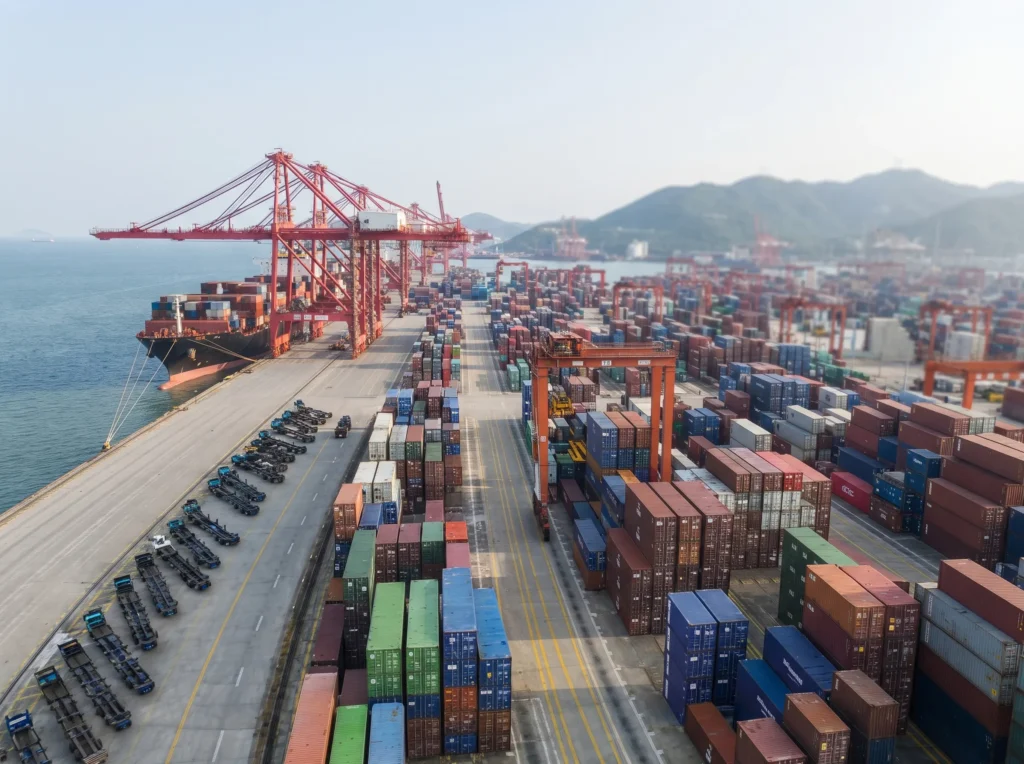
We have seen enough purchase orders to know where buyers get hurt. The damage is rarely catastrophic. It is death by a thousand yuan in hidden fees and missed sailings.
Do not accept an absolute declaration that cargo “can only ship from Shenzhen.” That is almost never true. Any factory in Foshan or Shunde can deliver to Nansha, Leliu, or even Huangpu. The refusal usually signals convenience for the seller, not a physical constraint.
Watch for the inland haulage blind spot. If your supplier quotes FOB Shenzhen, ask whether the trucking from factory to port is included. Some factories quote FOB Shenzhen but mean “delivered to our Shenzhen forwarder’s warehouse,” which triggers a secondary warehouse-to-terminal move you did not budget.
Be careful with feeder timing. Shipping from Shunde Leliu via river barge to Nansha or Hong Kong adds a leg. Barge schedules slip. Weather on the Pearl River delta delays feeder connections. If you have a hard delivery window, model the barge transit as 2–4 days, not “same day.”
Always model total landed cost at the quote stage, not after the bill of lading is cut. That means adding factory price, inland haulage, port local charges, ocean freight, insurance, and destination fees. Buyers who compare only factory unit prices or only ocean freight rates miss the full picture. The port selection furniture decision happens in the middle of that stack, and it is where suppliers hide margin.
Another red flag: the “Shenzhen premium” on documentation. We have seen Shenzhen forwarders charge ¥600 for a bill of lading amendment that Nansha agents handle for ¥300. The difference is not the carrier. It is the forwarder’s markup culture in a higher-rent logistics market. When you control the forwarder, you control the markup.
Decision Matrix: Which Port for Which Buyer
Not every buyer faces the same constraints. Here is how we split the advice.
For Bulk FCL Importers and Wholesalers
If you move five to twenty containers monthly from the same factory cluster, you have leverage. Negotiate ExW Foshan or FCA Shunde, then appoint your own forwarder to route through Nansha or the most efficient feeder port. The volume justifies the coordination overhead. Over a twelve-month program, the origin-side savings on a ten-container-per-month flow can fund a full product development cycle. (For reference only, subject to official verification.)
Push your supplier for transparency. Ask for a factory-gate price separate from the logistics stack. If they resist, that resistance tells you something. It tells you the logistics stack contains margin they do not want exposed.
For LCL and Mixed-Container Buyers
If you are consolidating half a container from three different Shunde factories, FOB Shenzhen starts making more sense. LCL cargo needs a consolidation warehouse, and Shenzhen has more bonded CFS capacity than Nansha. But do not default blindly. Ask your forwarder whether they consolidate at a Nansha CFS. If the answer is yes, and your factories are all within the Foshan belt, the trucking savings still apply.
The key question for LCL is whether the CFS charge at Nansha offsets the haulage savings. Nansha CFS handling fees can run slightly higher per cubic meter than Shenzhen because of lower volume. Do the math per shipment. On a 15-cbm furniture consolidation, the haulage savings usually win. On a 3-cbm parcel, they might not.
For Small-Batch and Personal Buyers
If you are buying one container for a new store opening or a personal build, simplicity beats perfection. FOB Shenzhen is fine if your supplier has a reliable forwarder and you do not have time to manage a multi-leg origin move. But still ask for the port local charge breakdown. Even small buyers get surprised by a ¥3,000 trucking bill they assumed was “included.”
For personal buyers, we also recommend clarifying the Incoterm variant. Some suppliers quote “FOB Shenzhen” but operate on an informal ExW-plus-trucking basis. Get it in writing. Know whether the factory delivers to the port or to a truck at their gate.

Frequently Asked Questions
Is FOB Shenzhen always more expensive than FOB Foshan for furniture?
No. For cargo bound for the North American West Coast, Shenzhen’s direct mainline frequency and slot availability often justify the inland haulage premium. The cost advantage of Foshan or Nansha is most pronounced for European, Mediterranean, Middle Eastern, and Southeast Asian destinations where Nansha offers competitive direct calls and lower local charges. The correct port depends on your destination, container size, and whether you value time or money more heavily in the origin leg.
What does FOB Foshan actually mean in practice?
Rarely does a vessel load directly in downtown Foshan. In most cases, FOB Foshan means the seller delivers the goods to a named river port — often Shunde Leliu — or to a terminal in the broader Foshan municipality, with the risk transferring to the buyer at that handover point. The cargo then moves by barge or truck to Nansha, Huangpu, or Hong Kong for ocean loading. Buyers should ask their supplier for the specific terminal name and the feeder schedule to avoid ambiguity.
Why do suppliers prefer FOB Shenzhen even when the factory is in Foshan?
Supplier preference for Shenzhen usually stems from existing relationships. Their customs broker may be Shenzhen-licensed. Their freight forwarder may hold volume space commitments with carriers out of Yantian. And some suppliers believe overseas buyers perceive Shenzhen as more “international,” making the sale easier. In other cases, the supplier simply has never priced the Nansha alternative because no buyer asked. (For reference only, subject to official verification.)
Are port local charges negotiable?
Under strict FOB terms, the seller pays local charges, so the buyer does not negotiate them directly. But buyers can influence the outcome by negotiating the port of loading. If you push for FOB Nansha instead of FOB Shenzhen, the seller’s local charge stack drops, and that savings often flows back into the unit price or the total FOB quote. Alternatively, switch to ExW or FCA terms, pay the local charges yourself, and control the forwarder selection.
Can I use a freight forwarder in Shenzhen even if the cargo loads at Nansha?
Yes. Most Shenzhen-based NVOCCs and forwarders maintain Nansha desks or partner agents. The operational coordination is routine. The question is whether your forwarder passes through the Nansha local charge savings or marks up the difference. Ask for a port-to-port quote with explicit line items for THC, handling, and documentation so you can compare apples to apples.
What is the risk of rollover at Nansha versus Yantian?
Rollover risk — having your container bumped to the next sailing due to overbooking — exists at every port. Yantian sees more rollover during peak season because the cargo volume is massive and carriers prioritize high-revenue dense cargo. Nansha experiences less overall congestion but has fewer direct sailings on some lanes, meaning a missed cutoff can delay you by a full week rather than three days. Feeder ports add barge schedule risk. There is no zero-risk option, only different risk profiles. (For reference only, subject to official verification.)
What is your experience?
Have you shipped furniture from the Pearl River Delta? Did your supplier default to FOB Shenzhen, or did you push for an alternative port? Drop your origin cost story or a specific port fee scenario in the comments — we read every one, and we use buyer feedback to keep these guides grounded in what is actually happening on the ground.
Recommended Resource
Interi Furniture specializes in custom furniture manufacturing for residential, hospitality, and commercial projects. Their experience in materials, craftsmanship, and project realization makes them a valuable resource for designers and buyers seeking tailored furniture solutions from China.