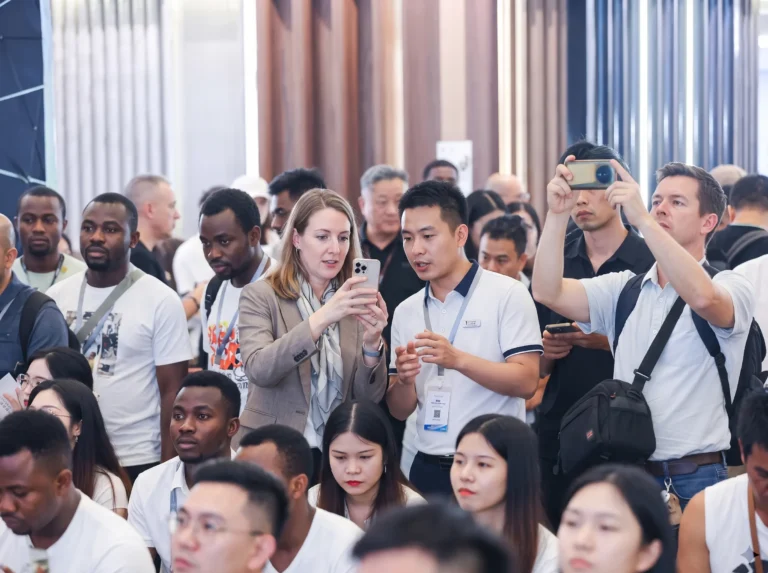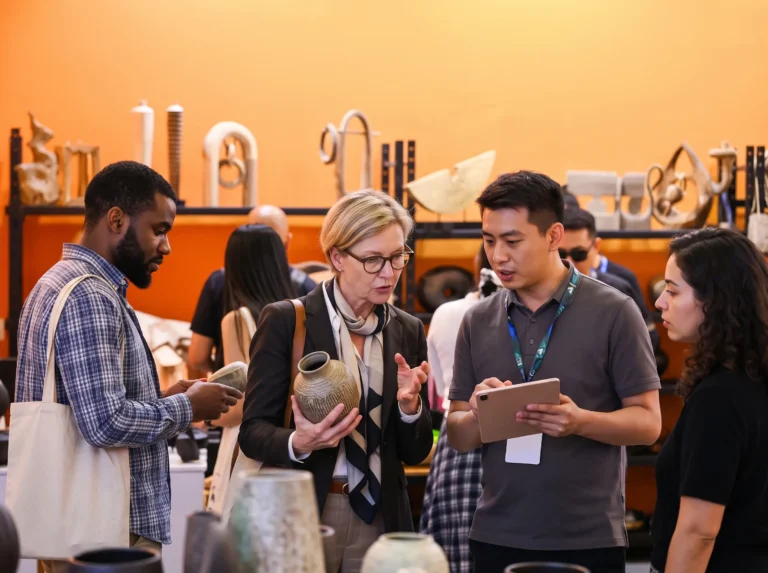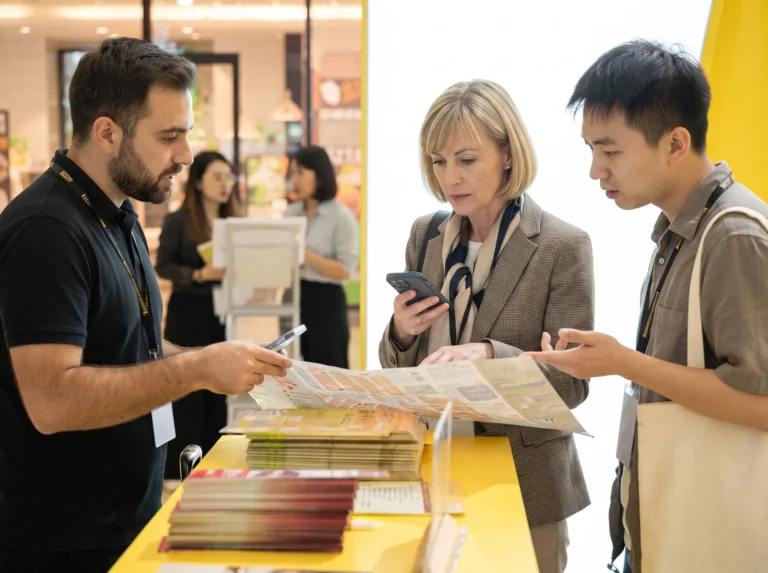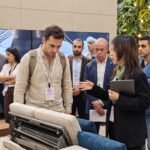



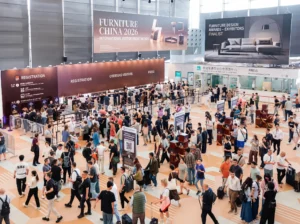


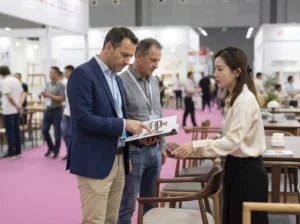


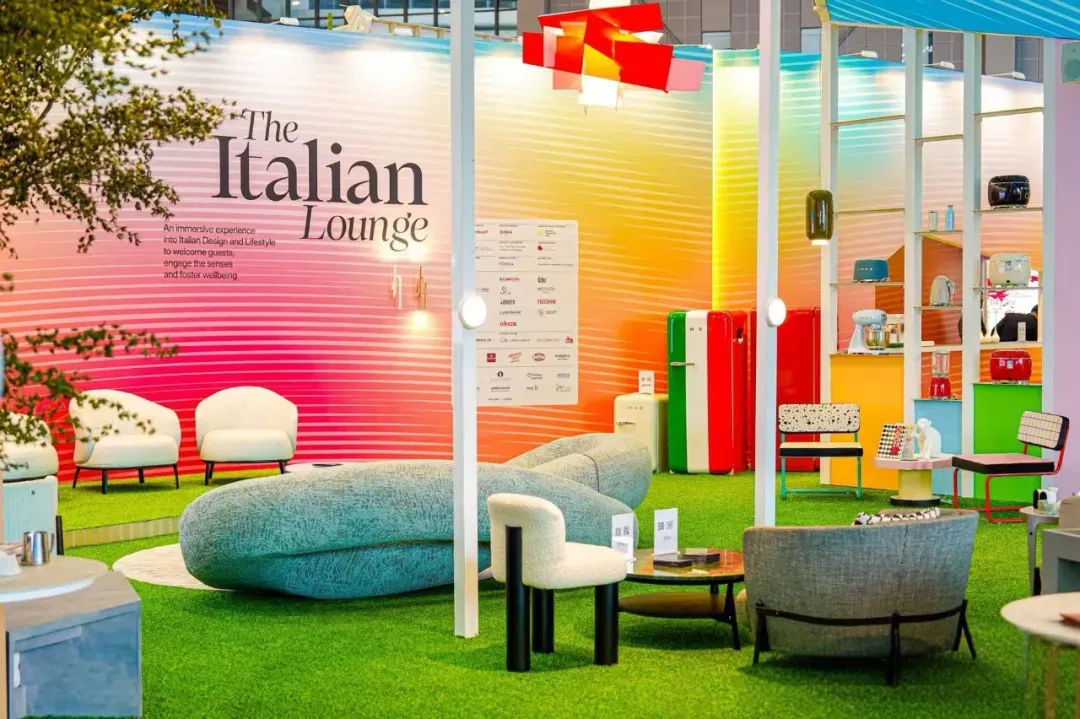
CIFF Shanghai 2026 (September 5–8, NECC Hongqiao) arrives with a sharpened strategic vision built on three pillars — design, digital intelligence, and sustainability. The 58th edition introduces an expanded Design Eden (50,000 sqm of contemporary design), the fourth edition of The Italian Lounge (featuring Laminam, Natuzzi Italia, Arflex, Foscarini, Smeg and others), and the brand-new Golden Creation Award — all curated to feel more like Milan’s Salone del Mobile than any previous year. For the first time, CIFF Shanghai also co-hosts the China Building Decoration Fair, pushing the combined footprint beyond 220,000 sqm and 1,400 brands. But here is the uncomfortable truth: the “Milanization” is mostly scenography. The factories underneath remain largely unchanged, and the gap between booth aesthetics and production reality is where buyers lose money.
The Three Pillars of CIFF Shanghai 2026’s “Milanization”
Design Eden — The 50,000-Square-Metre Design Theater
The centerpiece of the 2026 design push is Design Eden · Contemporary Design Trade Fair — a 50,000-square-metre zone dedicated to design brands, creative studios and independent designers, complete with exhibitions, forums, awards and product launches. If that sounds like SaloneSatellite, Milan’s famous platform for emerging designers, that is not a coincidence. The curatorial logic is borrowed almost directly: scenographic storytelling, designer-led narratives, and “discovery” as a visitor experience.
The counterintuitive observation: Design Eden’s “internationalization” is heavily curated with foreign design-language frameworks, yet the share of genuinely original design coming from the participating Chinese factories remains low. Most exhibitors in the zone are brands and studios, not manufacturers — which matters enormously once you start asking about tooling ownership, MOQs and lead times.
The Italian Lounge — Milan Brands Landing in Shanghai
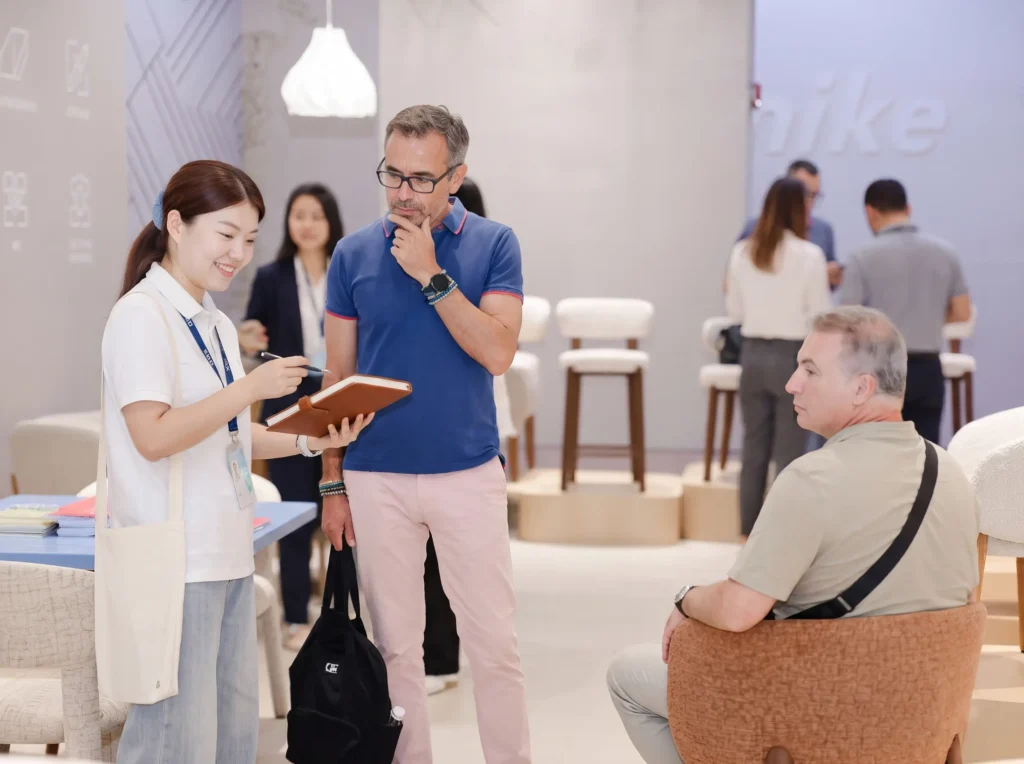
The Italian Lounge is the most explicit Milan reference at the fair. Organized by Italian marketing specialist Edimotion, with the space designed by Davide Pavanello Lab and an academic program coordinated by Professor Francesco Scullica of the Politecnico di Milano, the Lounge functions as a curated “business leisure” environment — part networking club, part sensory installation, part Italian design showcase.
For 2026, the confirmed participating brands include: Laminam, Natuzzi Italia, Arflex, Bertone Design, Bialetti, Covema Group, ErreLab, Foscarini, Oikos, Oluce, Seletti, Smeg, Tabu and Zafferano.
Note the brand rotation: the 2025 edition featured Kartell, Delvis, L&G, Dedar, Opinion Ciatti and Slide — names that do not appear on the 2026 list. The Lounge is a genuine Italian design outpost, and its presence makes the fair feel dramatically more international. But that is precisely the risk: the Lounge exists so that Chinese factory booths can borrow its atmosphere. Sharing a hall with Natuzzi Italia does not transfer Italian quality control to the factory three aisles over. These are two different universes under one roof — a brand-anchored import showcase versus a manufacturing-driven export floor.
Golden Creation Award — The Milan-Style Design Prize
New for 2026, the Golden Creation Award is positioned as dedicated to product innovation and “the new benchmarks of design.” Milan’s Salone has long used awards — the Compasso d’Oro ecosystem, SaloneSatellite prizes — to convert design merit into commercial credibility. CIFF is now building the same machinery.
The award also arrives alongside a new Green Sustainability Award, reinforcing the sustainability pillar of the 2026 theme. The industrial reality, however: award-winning pieces in China are frequently prototype-stage objects that have never survived a production-line QC check. There is a well-documented “exhibit ≠ product” gap in Chinese furniture awards — the piece that wins in September may be unmanufacturable at scale by December.
What “Milanization” Actually Changes (And What It Doesn’t)
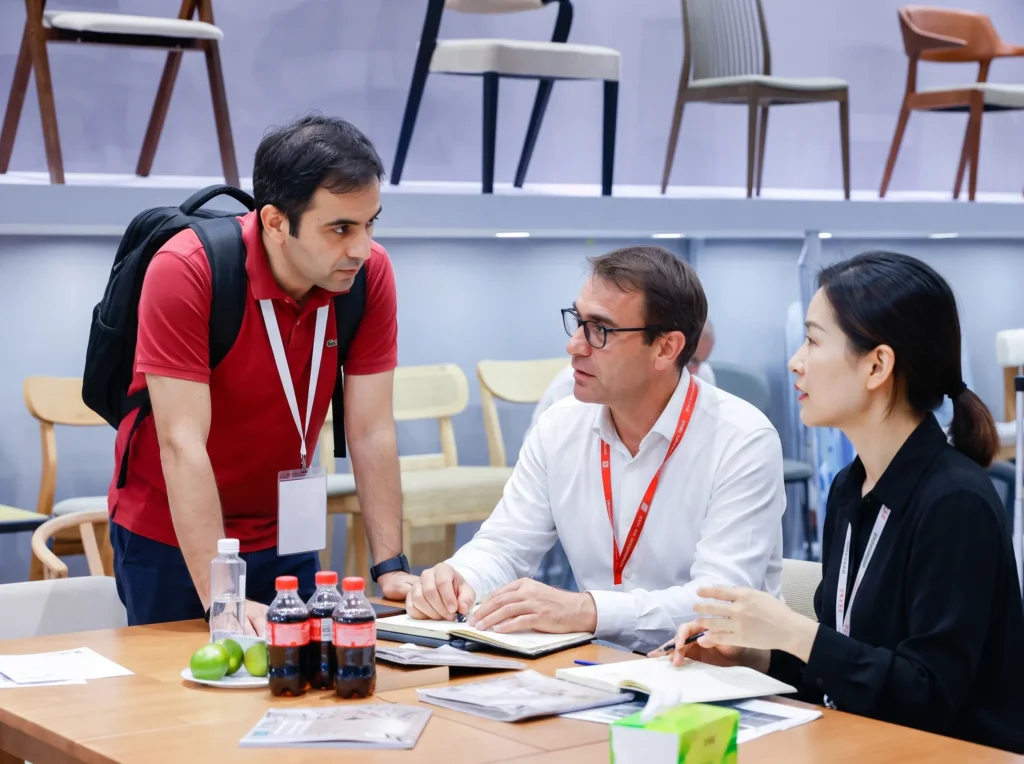
The headline numbers are real: the fair’s official estimates stand at 210,000 sqm, 1,200+ brands and 100,000 visitors — and the co-located China Building Decoration Fair lifts the combined event past 220,000 sqm and 1,400 brands. As of late August, 7,465 overseas buyers from 152 countries had pre-registered, up more than 41.7% year-on-year. What does all this Milan-flavored investment actually change for a buyer?
| Upgrade Dimension | What’s New in 2026 | What Hasn’t Changed Underneath |
|---|---|---|
| Curatorial aesthetics | Design Eden’s scenographic storytelling; The Italian Lounge’s immersive “business leisure” environment | The majority of booths remain catalog-style product displays with price-driven sales conversations |
| Design discourse | Golden Creation Award; CIFF Shanghai Design Conference; Politecnico di Milano-curated forums | Factory new-product development still runs on fast-following Milan and DTC trends rather than original research |
| Digital experience | VR/AR immersive sampling; “CIFF智伴” AI concierge; embodied-AI robot experience zone; Douyin Mall’s first on-site presence | A persistent information gap between what digital demos show and what factory lines can actually produce |
| Brand narrative | “Design · Digital Intelligence · Sustainability” as official theme | Most exhibitors still cannot produce third-party ESG documentation or design-provenance paperwork on request |
The New Retail Hall — Digital Theater vs. Factory Floor
The 8,000-sqm New Retail Hall gathers 15 leading brands demonstrating integrated online-offline retail scenarios with data-driven management. It is slick, and it is useful — but be clear about what it demonstrates. This is a showcase of how to sell furniture, not how to make it. Retail theater tells you nothing about a supplier’s cutting accuracy, panel quality, or container-loading discipline.
The Factory Reality Behind the Booth Aesthetics
Design Eden Exhibitors vs. Production Belt Capabilities
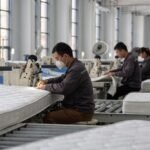
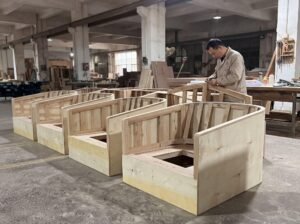
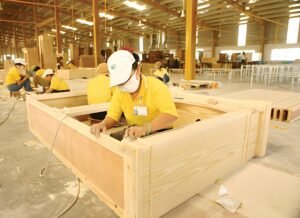
Walk through Design Eden and ask one question repeatedly: do you own your factory? A meaningful share of design-zone exhibitors are brand operators and studios that outsource production to third-party plants — often perfectly competent ones, but not the romantic “designer atelier” the scenography implies. Meanwhile, in Foshan Longjiang and Dongguan Houjie — the actual production belts that supply much of what you see on the floor — the attitude toward Design Eden-style narratives is pragmatic: nice for photos, irrelevant to a purchase order.
This is not an argument against the design zone. It is an argument for routing every attractive design-zone discovery back to a factory audit before any money moves.
The “Milan Veneer” Trap
We define the Milan Veneer Trap as: a factory allocating disproportionate budget to booth scenography and lifestyle packaging rather than to structural and material innovation in the product itself. In 2026, the trap has a specific flavor. Under continued US tariff pressure, many export factories have accelerated material substitution — less solid wood, more metal and panel-based structures — while marketing the result as “modular design” and “sustainable innovation.” Sometimes that is true. Often it is a cost-down dressed in Milan vocabulary. The booth looks like Brera; the bill of materials looks like a spreadsheet.
Buyer Impact: What Changes and What Does Not
| Buyer Type | What 2026 “Milanization” Offers | The Trap to Stay Alert To |
|---|---|---|
| Bulk B2B importers | The Italian Lounge as a direct channel to European brands; VVIP matchmaking via the upgraded Trade Premium Club (40,000+ members, with new Major Buyer and Designer VVIP tiers) | Do not equate a Chinese factory’s “Milan-style” booth with Italian-grade quality — the supply chains are unrelated |
| Small retailers / e-commerce | Genuine curation inspiration from Design Eden; mature design-led product lines at the autumn edition | Launch premiums plus scenographic packaging inflate first-order costs — verify the SKU’s real BOM before paying the design premium |
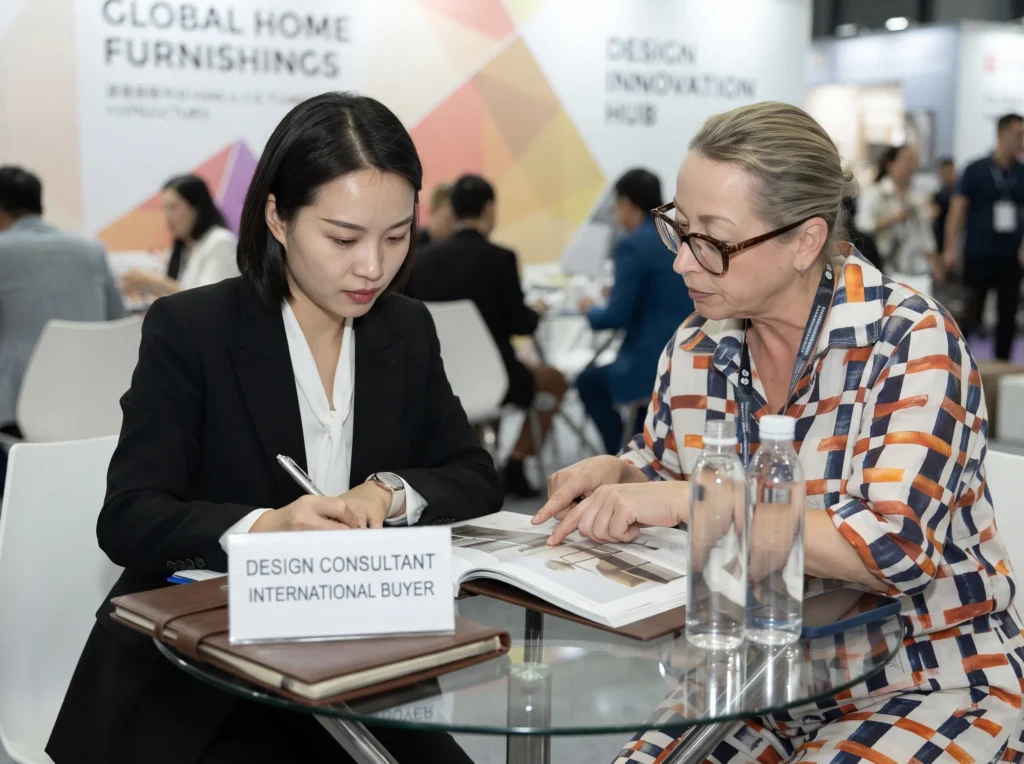
| Interior designers / project procurement | Scenographic storytelling you can lift directly into client presentations | The gap between showroom effect and factory delivery can destroy a project timeline — insist on production samples, not showroom samples |
| Individual buyers | Friendlier international signage, multilingual AI concierge, more polished visitor services | It is easier than ever to overpay for “design feeling” — compare against the same category in conventional halls before committing |
Red Flags: When “Milan at CIFF” Is Just Marketing
1.The booth claims an Italian designer collaboration but cannot produce the design contract or clarify tooling ownership. A real collaboration has paperwork.
2.“Sustainable materials” claims without third-party certification (FSC, SVLK, CARB Phase 2, or equivalent). A theme on the fair poster is not a certificate.
3.Scenographic-hall pricing that conventional-hall BOMs cannot justify. If the same category costs 40% more under mood lighting, ask which line item moved.
4.Sales language emphasizing “Design Eden** exclusive” while refusing to disclose mass-production MOQ and lead time.** Exclusivity talk is the classic smokescreen for prototype-stage products.

FAQ
Is CIFF Shanghai 2026 actually becoming a global design destination?
In scale, yes — 210,000 sqm, 1,200+ brands, 100,000 expected visitors, and a 41.7% jump in overseas pre-registrations. But design authority still concentrates in Milan. CIFF Shanghai remains, structurally, a manufacturing-side platform that is rapidly acquiring Milan’s surface language. That is not a criticism — it is a positioning statement that should shape how much “design premium” you are willing to pay.
Should I pay a premium for Design Eden exhibitors?
Only after verifying that the exhibitor owns — or has contractual control over — the production that delivers the design. Pay for the factory underneath the booth, not the booth itself.
How does The Italian Lounge change my sourcing strategy?
Treat it as a brand-anchored import showcase and networking venue, not a factory-direct sourcing channel. The Lounge’s price structures, lead times and order minimums follow European brand logic, completely different from the domestic exhibitor floor two aisles away. Note also that the Lounge’s brand lineup rotates year to year — the 2025 edition’s Kartell, Delvis and Dedar are not on the 2026 list.
Are the Golden Creation Award winners actually manufacturable?
Assume prototype stage until proven otherwise. Ask for production-line photos of the awarded piece, not just the trophy. If the piece cannot survive your own pre-shipment inspection at scale, the award is decoration.
Is the autumn edition (Sept 5–8) better for design-focused buyers than spring?
The autumn edition has a higher density of design-led and brand-oriented exhibitors, but a lower share of true new-product launches than the spring Guangzhou edition. It suits buyers seeking mature, design-forward lines; it is the wrong hunting ground if your goal is to catch next year’s trends first. (Practical note: on the final day, September 8, the fair closes at 15:00.)
Recommended Resource
Interi Furniture specializes in custom furniture manufacturing for residential, hospitality, and commercial projects. Their experience in materials, craftsmanship, and project realization makes them a valuable resource for designers and buyers seeking tailored furniture solutions from China.