







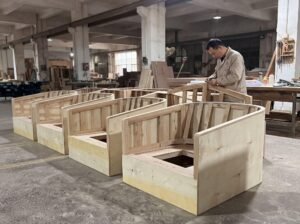

A complete custom furniture inquiry needs nine things: drawings or dimensioned references, material specifications, quantity with tiered breakpoints, target price or budget logic, delivery timeline, quality standard, packaging and shipping terms, destination and compliance requirements, and payment terms. The quality of your brief directly determines the quality of your quotes — a detailed brief lowers prices because it removes the risk premium factories add to cover unknowns. The counterintuitive truth: the more information you give, the less you pay. Quote chaos is almost never a factory problem. It is an input problem.
If you have ever sent a sketch with the caption “how much?” and received five quotes ranging from surprisingly cheap to absurdly expensive, you already know the frustration. Most buyers blame the market. After years of reviewing custom inquiries on both sides of the table — reading incoming furniture RFQ China files for export manufacturers and advising overseas buyers — we can tell you the market is rarely the problem. The inquiry is.
Why Vague Inquiries Produce Wild Quotes
A factory quoting custom work is pricing risk as much as materials. And materials are the dominant risk: across the industry, direct materials account for roughly 77–80% of total furniture manufacturing cost, with direct labor near 14% (figures vary by category and region; subject to verification). Every piece of missing information — exact fabric grade, foam density, drawer mechanism, carton spec — is a variable the factory cannot control, and most of those variables sit inside that 77–80%.
Factories do not absorb unknowns. They price them. When your brief is thin, the factory fills the gaps with the most conservative assumption available: the more expensive material, the longer production buffer, the safer margin. Five factories looking at the same vague request will make five different sets of assumptions, and their quotes will scatter accordingly. A five-fold spread between quotes does not prove the market is chaotic. It proves five factories guessed five different products.
This is why asking “what to include in furniture inquiry to factory” is the wrong first question. The right question is what information removes pricing risk. That is the entire logic behind the custom furniture specification sheet and the brief built around it.
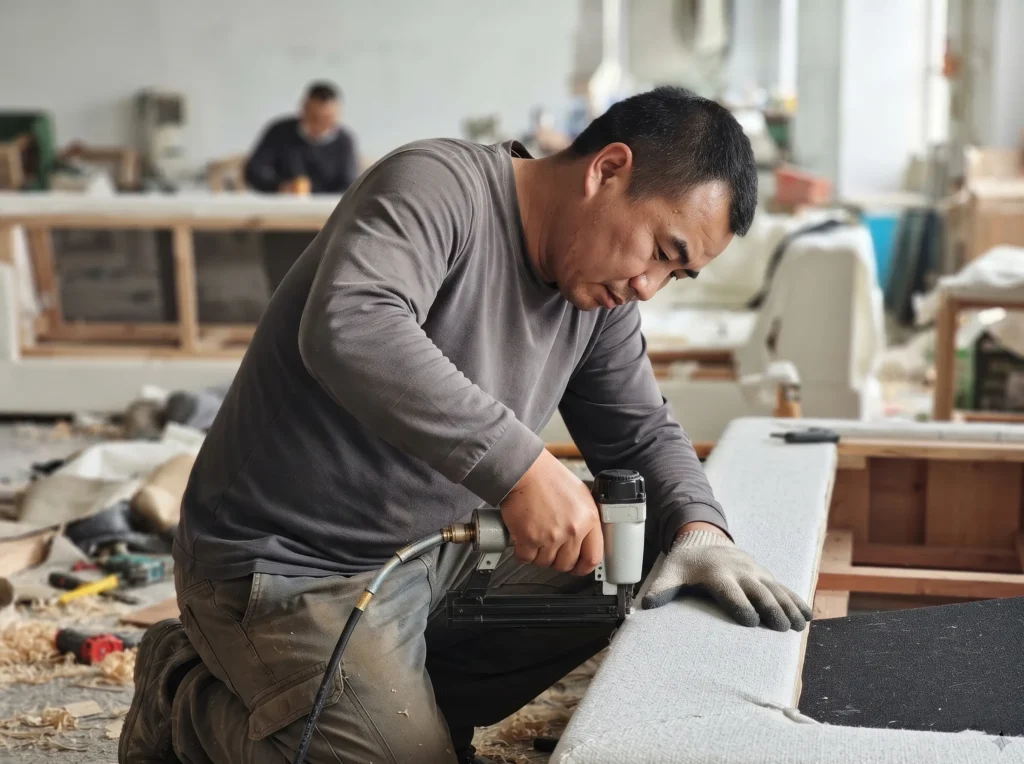
The Nine Modules of a Complete Brief
The table below reflects industry convention across China’s furniture manufacturing clusters — Foshan, Dongguan, Guangzhou, Nankang, Anji — subject to verification for any specific factory or product category. Treat it as the structural backbone of any serious inquiry.
| Module | What it must contain | Why the factory needs it |
|---|---|---|
| Drawings & dimensions | Dimensioned drawings, 3D renders, or annotated photos with clear measurements; tolerances where critical | Defines the product geometry the quote is built on |
| Material specifications | Wood species/grade or board type, fabric/leather type and grade, foam density, hardware brand, finish type | Direct materials drive roughly 77–80% of total cost; labor adds most of the rest at ~14% — this module is where the money lives |
| Quantity & tiers | Exact order quantity plus projected tiers, benchmarked against typical MOQ ranges: upholstered sofas 30–50 units, dining chairs 100–200, office desks 50–100 | Unlocks tiered pricing; MOQ logic differs sharply by product type |
| Target price & budget logic | Target unit price or budget range, with cost priorities stated | Lets the factory engineer to your number instead of guessing |
| Delivery timeline | Required delivery date, acceptable production window, port of loading preference | Determines line scheduling, overtime cost, and shipping mode |
| Quality standard | Target market, expected grade (e.g., residential vs. contract), inspection standard reference | Contract-grade vs. residential builds are materially different products |
| Packaging & shipping | Flat-packed or assembled, carton spec requirements, FOB/CIF/DDP preference | Packaging labor and carton cost are real line items |
| Destination & compliance | Destination market stated precisely — EU and US requirements differ fundamentally — plus required certifications and labeling | Compliance testing and documentation add cost and lead time; a US standard cited on an EU order is a wasted line item |
| Payment terms | Preferred structure (deposit percentage, balance trigger, instrument type) | Affects pricing through financing and risk assessment |
What Happens When Each Module Goes Missing
| Missing module | How the factory fills the gap | Typical price consequence |
|---|---|---|
| Drawings & dimensions | Quotes against the most buildable interpretation, or adds engineering buffer | Engineering fee risk premium; rework after sample |
| Material specifications | Defaults to mid-to-high grade to avoid complaints | Unit cost inflated beyond what you actually need — and this is 77–80% of the product’s cost base |
| Quantity | Quotes at MOQ economics or assumes low volume | You lose tier pricing you were entitled to |
| Target price | Prices against the most conservative configuration | Quote lands far above your real budget; negotiation starts from fiction |
| Delivery timeline | Adds schedule buffer or declines the order | Rush premiums you could have avoided |
| Quality standard | Builds to residential default; inspection protocol undefined | Contract-grade buyers under-specified; no agreed AQL reference to enforce at inspection |
| Packaging & shipping | Assumes assembled export cartons, most conservative spec | Freight damage risk or inflated packaging cost |
| Destination & compliance | Excludes certification cost, or prices worst-case | Surprise testing fees post-PO; wrong-market standards quoted and paid for |
| Payment terms | Prices financing risk into the unit cost | Hidden risk loading — the standard 30% deposit / 70% before shipment already protects the factory, and silence invites a wider buffer |
Core Definitions
Risk Premium
The markup a factory embeds in a quote to cover information it does not have. It is invisible on the quotation sheet but real in the number. Every missing module adds a slice of premium; a complete brief removes most of it.
Budget Logic
Not simply a number, but the reasoning you share: which costs matter most, where you can flex, and what the end-market retail price requires your landed cost to be. Factories engineer to constraints; give them the real ones.
Comparable Quotes
Quotes that can be evaluated side by side because they describe the same product, the same materials, the same terms. Comparability is a property of the brief, not of the factories responding to it.
Acceptance Quality Limit (AQL)
The maximum percent defective at which a lot is accepted under sampling inspection, governed by ANSI/ASQ Z1.4. In furniture practice the common buyer-side reference is AQL 2.5 for major defects and 4.0 for minor defects, stated in the brief so both sides enforce the same numbers at pre-shipment inspection. Specific limits are subject to agreement between buyer and supplier.
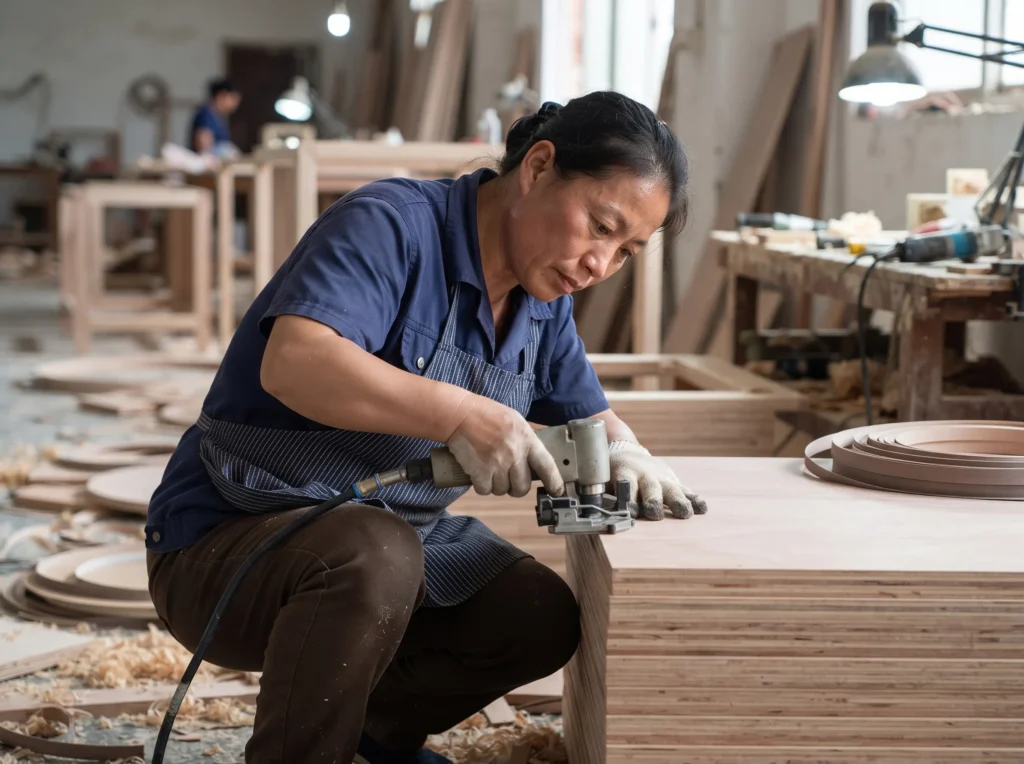
The Complete Custom Furniture Brief Template
This custom furniture brief template is written to be copied. Replace the example column with your own details. All figures below are illustrative placeholders, not market data — subject to verification against current material and labor conditions.
| Brief field | What to write | Filled example |
|---|---|---|
| Product name & category | Plain name plus category for factory routing | “Aurora 3-seat fabric sofa, living room” |
| Drawings / references | Attach files; state format and revision | “2D dimensioned drawing + 3D render, Rev B attached” |
| Overall dimensions | W × D × H in mm or inches, stated unit system | “2200 × 950 × 850 mm” |
| Frame material & grade | Species/grade or board spec, with alternatives allowed or not | “Kiln-dried rubberwood frame; birch acceptable if quoted separately” |
| Upholstery spec | Material, grade, rub count, color reference | “Polyester linen-look, ≥25,000 Martindale, Pantone 16-5806” |
| Foam spec | Density and hardness by seat zone | “Seat 35D high-resilience, back 25D” |
| Hardware & mechanisms | Brand, model, or performance spec | “Soft-close drawer slides, full extension, rated 45 kg” |
| Finish / color | Process and reference standard | “NC matte lacquer, RAL 9005; color card to follow” |
| Order quantity & tiers | Firm quantity plus forecast tiers, checked against typical MOQ ranges for the category (sofas 30–50, dining chairs 100–200, office desks 50–100) | “PO: 300 units; quote 300 / 800 / 1,500” |
| Target price & logic | Target or range, with cost priorities | “Target FOB ≤ USD 285; prioritize frame durability over packaging upgrades” |
| Delivery requirement | Date or window, incoterm, port | “FOB Shenzhen, first shipment by 20 May, 2027” |
| Quality standard & inspection | Grade and inspection protocol with explicit AQL | “Residential EU market; pre-shipment inspection by buyer’s QC per ANSI/ASQ Z1.4, AQL 2.5 major / 4.0 minor” |
| Compliance & destination | Market-specific standards — keep EU and US references separate | “Destination Germany — EU: EN 12520 seating strength; formaldehyde per EU limits; FSC available. (US orders would cite CAL TB 117 instead.)” |
| Packaging | Structure, carton, marking | “KD flat-pack, 5-ply export carton, ISPM-15 pallet; drop-test proof” |
| Payment terms | Deposit, balance trigger, instrument; note the variant | “30% T/T deposit, 70% against B/L copy (buyer-favorable variant — expect to negotiate; industry default is 70% before shipment)” |
| Submission instructions | Quote format, validity, contact | “Quote per tier with validity 30 days; itemize materials and packaging” |
The Mistakes That Keep Costing Buyers Money
| Mistake | Why it happens | What it costs you |
|---|---|---|
| Sending a photo with no measurements | Feels faster than drafting | Factory prices the photo it imagines, not your product |
| Hiding the budget to “keep negotiating room” | Old procurement reflex | Factory prices conservatively; your real budget never gets engineered toward |
| Omitting quantity tiers | Only the first PO feels real | You forfeit tier pricing that justifies tooling and setup |
| Mixing inches and millimeters casually | Legacy drawings from different sources | Dimensional errors discovered at sampling, not quoting |
| Vague quality language (“good quality,” “high end”) | No shared vocabulary; no AQL reference | Every factory defines it differently; quotes diverge and inspection disputes follow |
| Stating one compliance market and citing another’s standards | Standards lists copied between markets | Paid-for certifications that don’t clear customs in your destination |
| Copying payment terms between deals without negotiating the balance trigger | Assumes 30/70 is a fixed formula | You pay 70% before shipment by default when the B/L-copy variant was negotiable |
| No quote format instructions | Assume quotes are self-explanatory | Incomparable formats force manual reconciliation and hide padding |
How Brief Quality Shapes Your Quote Quality
| Brief quality | Factory behavior | Quote outcome | Your negotiation position |
|---|---|---|---|
| Photo plus “how much” | Guesses the spec; maximum risk premium | Widely scattered, inflated quotes | Weak; quotes cannot even be compared |
| Basic spec list, no budget or tiers | Engineers mid-range; adds buffers | Moderately scattered quotes | Moderate; you negotiate blind on cost drivers |
| Complete brief with budget logic, tiers, AQL, market-specific compliance, and payment variant stated | Engineers to your constraints | Tight cluster, cost itemized, same standards across factories | Strong; you negotiate line items, not lump sums |
A brief written to professional standard changes the interaction before any negotiation begins. Factories quote professional buyers more honestly because the information asymmetry that justifies padding is gone. In that sense, a strong buyer has already won the negotiation at the moment of sending the file.
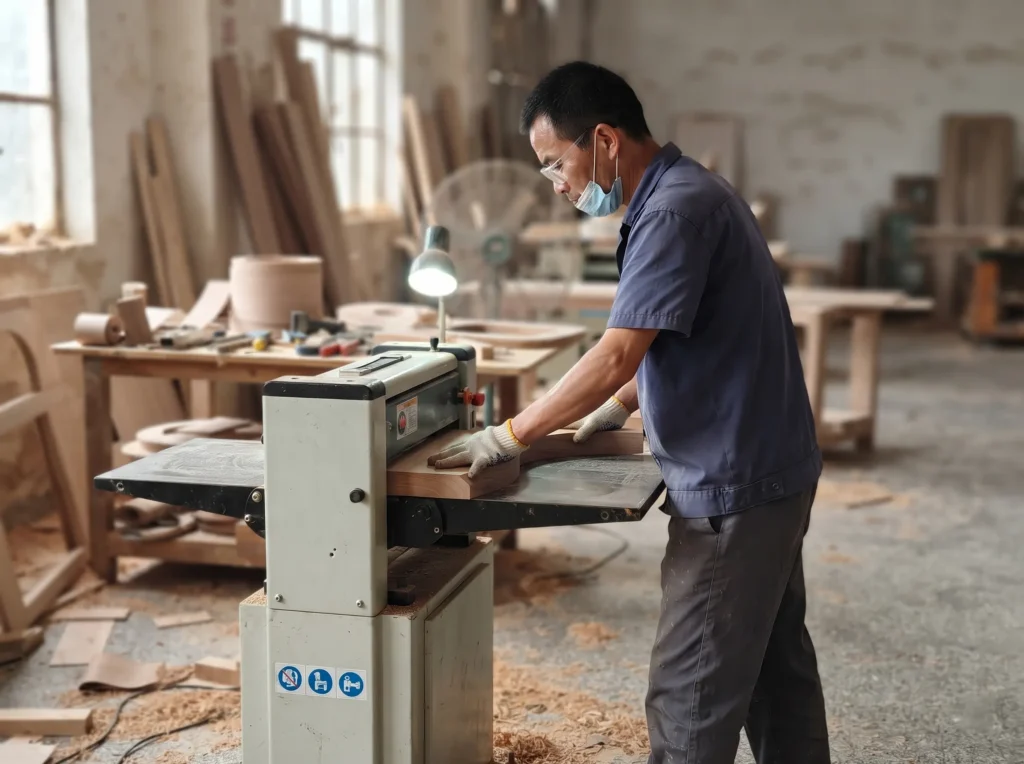
High-Risk Warnings
Budget secrecy backfires on custom orders. In off-the-shelf buying, concealing budget can preserve leverage. In custom manufacturing, the factory must choose materials, construction methods, and hardware within your price reality. Deny it that information and it will choose the safest path — which is rarely the cheapest honest one. Sharing a target price does not weaken you. It converts the factory from a guessing adversary into an engineering partner, subject to verification that the resulting spec actually matches your target.
Photos are references, not specifications. A photo communicates appearance; a brief communicates standards. “Looks like this” leaves build method, material grade, and internal construction entirely open — and with direct materials at 77–80% of cost, those open items are where your entire budget is decided.
No quantity tiers means no tier pricing. Factories price the volume they can see. Know the category’s typical MOQ floor — 30–50 units for upholstered sofas, 100–200 for dining chairs, 50–100 for office desks — so your first order doesn’t strand you below it, and your forecast tiers change what the factory will do at your real volume.
Payment terms deserve one line of care. The industry default is 30% deposit with 70% settled before shipment, which protects the factory, not you. Paying the balance against a copy of the bill of lading is the buyer-favorable variant — legitimate and common, but you have to ask for it in the brief. If your payment terms field is silent, you have already accepted the default.
Segment Playbooks
For brand owners and private-label buyers, the brief is your product definition document. Add your golden sample protocol and packaging brand requirements from day one, and treat the brief as version-controlled — every spec change gets a revision number that travels into the PO. Cite the destination market’s exact standard per SKU: EN 12520 for EU seating, CAL TB 117 for US upholstered goods. Mixing them up is a paperwork error that customs will not forgive.
For wholesalers and importers, comparability is the entire game. Standardize one brief format across all suppliers and all categories, so a sofa from Foshan and a chair from Anji arrive in the same structure. State AQL 2.5 major / 4.0 minor under ANSI/ASQ Z1.4 identically in every file, and your inspection team can enforce one standard across the whole book of business.
For e-commerce sellers and small B2B, your advantage is speed and honesty about volume. State your realistic first quantity — and check it against the MOQ floor for your category before you ask — attach the tier you hope to reach, and name the marketplace you sell on. Factories that know an Amazon seller needs drop-test-grade packaging will quote that in instead of letting damage claims land on you later.
For individual buyers and one-off projects, you still send a structured brief. One well-organized page with dimensions, material preferences, photos, and a target budget will get you more serious engagement from factories (many of which accept small custom runs) than ten casual messages ever will.

FAQ
Can I send an inquiry with only a sketch?
Yes, and many projects start exactly there — but expect a quote that carries engineering risk premium, or expect the factory to come back with questions before quoting. If you want a firm number early, invest in one dimensioned drawing first. It is the single highest-leverage document in the entire inquiry.
How many units do I need to write in the brief?
Write three numbers: your firm first-purchase quantity, your twelve-month forecast, and your stretch tier — and sanity-check them against typical MOQ floors: upholstered sofas 30–50 units, dining chairs 100–200, office desks 50–100. Factories price what they can see; a credible growth path often improves the quote on the quantity you are actually ordering now.
Should I reveal my target price?
Yes, as a range with logic attached. State which cost drivers matter most and what your landed cost needs to support. This is not a concession — it is how you make the factory’s engineering work for you rather than against you.
How precise do drawings need to be?
Dimensioned enough that two different factories would build the same object. Critical tolerances, joinery points, and hardware locations matter more than cosmetic rendering quality. An annotated photo with real measurements often beats a beautiful render with none.
How many factories should receive my brief?
Three to five is the practical window. Fewer and you lack comparison; more and you cannot evaluate properly, and word travels in manufacturing clusters. Send the identical brief to all of them — comparability dies the moment you customize the file per factory.
Your Turn
Which module has been missing from your inquiries — and what did it cost you? Send us the brief you wish you had written, and tell us what happened when you did.
Recommended Resource
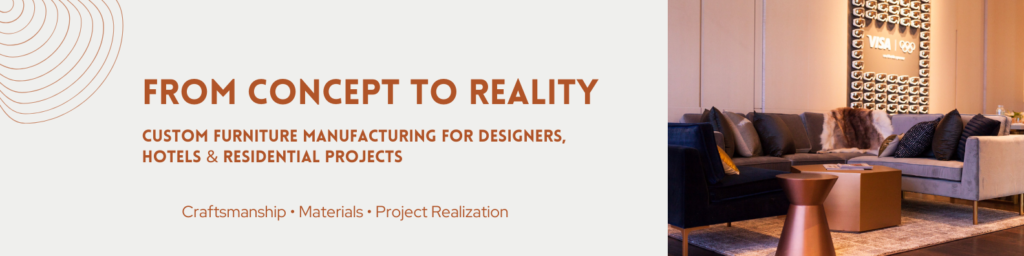
Interi Furniture specializes in custom furniture manufacturing for residential, hospitality, and commercial projects. Their experience in materials, craftsmanship, and project realization makes them a valuable resource for designers and buyers seeking tailored furniture solutions from China.