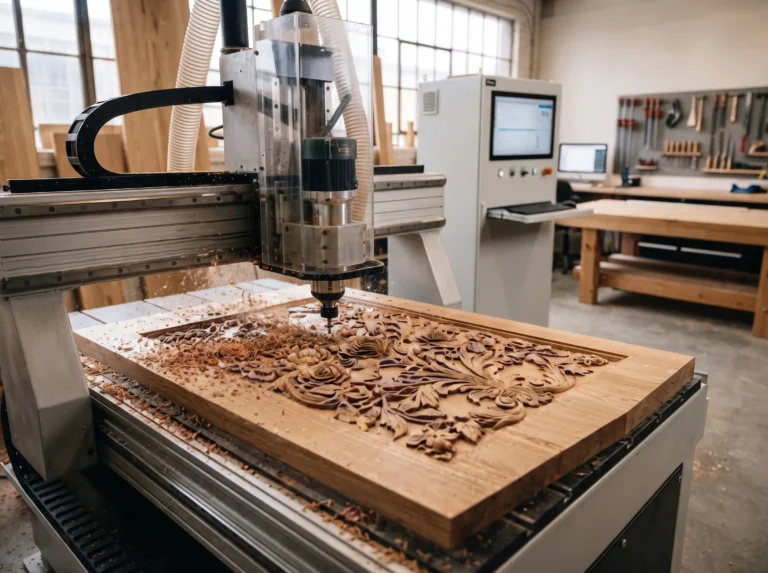













An inspection is only as good as the checklist behind it, and most buyers don’t have one. This furniture QC checklist gives you 89 checkpoints across six modules — appearance, dimensions, structure, function, materials & craftsmanship, and packing & container loading. You will almost never run all 89 points on one order. The professional move is to trim it to the 20–30 points that carry the most risk for your product, then use the pass/fail result as the contractual trigger for releasing your balance payment. That decision chain — checklist → inspection report → payment — is the entire reason this document exists.
Why Most Furniture Inspections Are Theatre
Most buyers inspect on gut feeling. Most inspectors inspect on memory. Neither party is working from a written list that covers the full risk surface of a furniture order, so the inspection becomes a walk-through: open a few cartons, wiggle a few drawers, take photos, write “pass.”
The problem is not laziness. The problem is that furniture quality control China style — factory-floor, order-driven, deadline-pressured — rewards speed over coverage. A typical 2,000-piece order inspected by one person in a day cannot be fully verified. Something gets skipped. Usually it is the things that matter most at the destination: carton strength, moisture, container condition.
A checklist does not make inspection perfect. It makes omission visible. That is a much more realistic promise, and it is enough.
What “Pass” Actually Means — and What It Doesn’t
A pre shipment inspection furniture report that says “pass” means one thing: the sampled units, checked against the agreed criteria, fell within the agreed AQL acceptance limits. It does not mean every piece in the container is perfect. It does not mean the goods will arrive undamaged. Transport damage, container rain, and rough loading are not covered by a factory-gate inspection.
This distinction matters because buyers routinely release 70–80% of an order’s value based on a word on a PDF they don’t fully understand. The correct mental model is a gate, not a guarantee: the report gives you the right — contractually, if you wrote the checklist in — to hold, rework, or reject before the balance leaves your account.

Inspection Timing: When to Book the Visit
| Inspection Type | When It Happens | What It Catches | What It Misses |
|---|---|---|---|
| During-production (DUPRO) | Around 20–60% of production | Raw material swaps, process drift, structural issues baked in early | Final finishing defects |
| Pre-shipment inspection (PSI) | 100% packed, ≥80% ready | Finished-product defects, packing, quantity, labeling | In-transit damage, loading damage |
| Container loading check | At loading, carton by carton | Wet/damaged cartons, poor stacking, container defects, seal records | — |
For most furniture orders, PSI plus a loading check is the minimum serious configuration. DUPRO is worth the money on upholstered goods and large solid wood programs where rework after packing is expensive.
Defect Grading: How Inspectors Classify What They Find
| Grade | Definition | Furniture Examples | Typical Acceptance Logic |
|---|---|---|---|
| Critical | Safety hazard or regulatory failure | Sharp exposed metal, unstable structure, failed flammability documentation, wrong wood species vs. contract | Zero tolerance; lot rejected or 100% sorted |
| Major | Functional failure or obvious appearance failure at arm’s length | Wobbly frame, broken drawer slide, wrong color vs. approved sample, split panel | Limited by AQL (commonly 2.5 for major) |
| Minor | Small flaw unlikely to trigger returns | Slight stitch deviation, faint scratch on hidden surface, minor packaging print error | Limited by AQL (commonly 4.0 for minor) |
AQL is a sampling system, not a full inspection. A result of “2.5 major / 4.0 minor, pass” under a given sample size means the defect count in the sample stayed inside acceptance limits — subject to official verification against the current ANSI/ASQ standard. It is a statistical statement about the lot, not a certificate of perfection.

The 89-Point Checklist: Six Modules
The full furniture QC checklist follows, organized by inspection flow. Use it as a master document — the trimming logic comes after. If you want this as a working document, this page is your furniture QC checklist PDF download reference: copy the tables below into your order contract as-is.
Module 1: Appearance (Points 1–18)
| No. | Check Point | Acceptance Criteria | Common Failure Scenario |
|---|---|---|---|
| 1 | Overall visual consistency | Units match approved sample and golden sample | Visible color drift between production batches |
| 2 | Color match | Within agreed tolerance vs. approved sample under agreed lighting | Gloss or shade shift under daylight vs. showroom light |
| 3 | Surface finish | Uniform sheen, no orange peel, no runs or sags | Spray lines and dust inclusions on tops |
| 4 | Visible surfaces scratch check | No scratches on all surfaces visible after assembly | Scratches on table tops and door fronts |
| 5 | Dents and press marks | None on visible faces | Carton-handling dents found at final stage |
| 6 | Veneer grain match | Grain direction consistent, book-matching per sample | Random grain on paired doors |
| 7 | Veneer integrity | No bubbling, lifting, or overlap seams | Bubbling near edges from weak glue pressing |
| 8 | Upholstery pattern alignment | Patterns centered and aligned per sample | Off-center plaids on sofa backs |
| 9 | Fabric color consistency across pieces | No visible lot difference on one order | Two dye lots mixed in one container |
| 10 | Leather surface | Scar and wrinkle level within declared grade | Higher-grade label on lower-grade hides |
| 11 | Stitching quality | Straight, even stitch length, correct thread color | Wavy seams on cushions and arms |
| 12 | Seam puckering | No puckering when fabric is stretched | Puckered cushion seams after stuffing |
| 13 | Metal finish | Plating/powder coat uniform, no discoloration | Tarnished spots on chrome legs |
| 14 | Weld cosmetics | Visible welds ground smooth, no spatter | Rough weld beads on exposed frames |
| 15 | Insert materials | Glass, stone, ceramic inserts clean and chip-free | Chipped corners hidden by foam |
| 16 | Hardware appearance | Handles/knobs consistent in color and finish | Mixed batches of “same” handle |
| 17 | Odor check | No strong chemical or musty odor | High-VOC lacquer smell on unboxed panels |
| 18 | Cleanliness | No glue residue, pencil marks, or labels on product | Factory markings on light-colored fabric |
Module 2: Dimensions (Points 19–28)
| No. | Check Point | Acceptance Criteria | Common Failure Scenario |
|---|---|---|---|
| 19 | Overall dimensions | Match spec drawing, within agreed tolerance (commonly ±3–5 mm, subject to official verification) | Sofa 4 cm short on depth |
| 20 | Component dimensions | Top thickness, leg section per spec | 25 mm top sold as 30 mm |
| 21 | Tolerance audit | Sample measured against tolerance table in PO | Tolerance “within range” only on easy axes |
| 22 | Diagonal/squareness | Diagonals equal within agreed tolerance | Parallelogram cabinet bodies |
| 23 | Functional heights | Seat height, counter height, mattress platform per spec | Bar stools 5 cm too low |
| 24 | Hole and fixing positions | Shelf-pin, hinge, cam positions per drawing | Misaligned shelf holes |
| 25 | Panel gap uniformity | Even gaps on doors and fronts per sample | Gaps varying 2–6 mm on one unit |
| 26 | Drawer front alignment | Flush and level across the bank | Stepped drawer fronts |
| 27 | Panel flatness | No visible warping on tops and doors | Warped MDF doors in humid season |
| 28 | Unit weight | Within declared range for freight planning | Undeclared weight jump from material swap |
Module 3: Structure (Points 29–42)
| No. | Check Point | Acceptance Criteria | Common Failure Scenario |
|---|---|---|---|
| 29 | Stability | No rocking on a flat floor under normal load | Wobbly dining table out of the carton |
| 30 | Leveling tolerance | Acceptable behavior on slightly uneven floors | Rocking that “fixing screws” can’t cure |
| 31 | Joint tightness | No visible gaps at mortise, dowel, or corner joints | Open joints from dried glue |
| 32 | Joint construction | Dowels/tenons present per sample spec | Fewer dowels than the approved sample |
| 33 | Screw joints | Fully seated, correct count, no stripped heads | Loose cam locks on RTA panels |
| 34 | Corner blocks | Present where specified, glued and screwed | Blocks present on sample, absent in production |
| 35 | Case squareness | Body diagonals equal within tolerance | Twisted carcass from rushed assembly |
| 36 | Load-bearing test | Rated load applied per agreed method, no failure | Shelf sagging under declared load |
| 37 | Back panel strength | Properly attached, not just stapled decoratively | Thin HDF back stapled on 8 points |
| 38 | Frame integrity | No cracks at stress points under load | Cracked leg joints on solid wood chairs |
| 39 | Racking resistance | No significant side sway under lateral force | Loosely doweled frames that rack |
| 40 | Leg/fixing strength | Legs resist torque and pull per agreed test | Legs loosening after minimal force |
| 41 | Drawer slide function | Smooth, full extension where specified, no sag | Ball-bearing slides replaced with roller slides |
| 42 | Hardware holding strength | Hinges and plates stay fixed under cycling | Screws pulling out of particleboard |
Module 4: Function (Points 43–58)
| No. | Check Point | Acceptance Criteria | Common Failure Scenario |
|---|---|---|---|
| 43 | Door operation | Opens/closes fully without rubbing | Doors hitting frames or shelves |
| 44 | Soft-close / self-close | Works as specified | Mechanisms present but non-functional |
| 45 | Drawer operation | Smooth open/close, stays closed | Drawers drifting open on level floor |
| 46 | Drawer capacity | Holds declared load without binding | Bottoms flexing at half the rated load |
| 47 | Locking function | Locks engage; keys supplied and match | Keys missing or mismatched |
| 48 | Recline / extension mechanisms | Full cycle, smooth, locks in positions | Recliners jamming mid-cycle |
| 49 | Gas lift / height adjust | Holds position, no sinking | Gas cylinders leaking down |
| 50 | Swivel and casters | Smooth movement, locks engage | Casters flat-spotted or missing brakes |
| 51 | Folding mechanisms | Locks securely in open position | Drop-leaf supports slipping under load |
| 52 | Adjustable shelves | Reposition correctly, stable | Peg holes misdrilled so shelves tilt |
| 53 | Electrical components | Function with certificates per destination rules | Lamps shipped without required certification |
| 54 | USB / charging ports | Output per spec | Ports dead or loose in housing |
| 55 | Bed slat system | Correct spacing, proper support, quiet | Slats spaced 15 cm on a “platform” bed |
| 56 | Sofa-bed conversion | Complete cycle without fabric snagging | Mechanism tearing fabric at hinge |
| 57 | Hardware fit | Handles aligned, no looseness | Knobs rotating freely after a week |
| 58 | Assembly logic | Assembles per instructions with supplied hardware | Missing steps in manual, wrong bolts |
Module 5: Materials & Craftsmanship (Points 59–74)
| No. | Check Point | Acceptance Criteria | Common Failure Scenario |
|---|---|---|---|
| 59 | Wood species | Matches contract declaration | Rubberwood sold as oak |
| 60 | Moisture content | Within agreed range for destination (commonly 8–12%) | 16% MC lumber shipped to dry climates |
| 61 | Veneer spec | Species and thickness per order | Paper-thin veneer on “thick veneer” PO |
| 62 | Board grade | Declared grade and formaldehyde class documented | Lower-grade particleboard substitution |
| 63 | Foam density | Seat/ back foam density per spec | 25D foam in a 35D seat |
| 64 | Foam resilience | Recovers after compression test | Seat cushions permanently dented |
| 65 | Fabric composition | Matches order declaration (sample verification) | Polyester declared as linen blend |
| 66 | Fabric abrasion grade | Meets declared rating for intended use | Residential fabric on a “contract” chair |
| 67 | Leather spec | Type and thickness per order | Split leather sold as top grain |
| 68 | Spring system | Type and count per spec | Sinuous springs replaced with webbing |
| 69 | Webbing tension | Firm, correctly woven, anchored | Loose webbing causing sag |
| 70 | Zipper quality | Smooth, accessible, matching color | Jamming zippers on cushion covers |
| 71 | Glue application | Full bond lines, no excess squeeze-out | Starved joints on veneered panels |
| 72 | Edge banding | Full adhesion, no gaps or chips | Peeling banding on cabinet edges |
| 73 | Fastener grade | Correct grade, anti-corrosion treated | Plain steel bolts in humid-market orders |
| 74 | Coating compliance | Documentation for destination chemical rules | Declarations requested but never provided |
Module 6: Packing & Container Loading (Points 75–89)
| No. | Check Point | Acceptance Criteria | Common Failure Scenario |
|---|---|---|---|
| 75 | Inner protection | Foam/pearl cotton coverage on all contact faces | Corners of tops left bare |
| 76 | Corner protection | Rigid protectors on all carton corners | Protectors on front corners only |
| 77 | Moisture barrier | Polybag or wrap per spec | Bare upholstered items in coastal humidity |
| 78 | Carton strength | Bursting/ECT values per PO (subject to official verification) | Downgraded board to cut cost |
| 79 | Carton marking | Model, PO, quantity, handling marks correct | Wrong PO numbers mixed on pallets |
| 80 | Assembly instructions | Correct version included in every carton | Old-version manuals with new hardware |
| 81 | Hardware kit | Count complete, bagged and labeled | Missing wall anchors in 10% of cartons |
| 82 | Spare parts | Per contract | Spares promised but not shipped |
| 83 | Sealing method | Adequate tape width, H-seam sealing | Single strip on 30 kg cartons |
| 84 | Pallet spec | Size, condition, and ISPM-15 marking where required | Unstamped pallets held at destination |
| 85 | Stacking test | Passed per agreed method for stacked shipments | Crush marks on lower cartons |
| 86 | Desiccant placement | Correct quantity and position | Two sachets in a 40HQ high-humidity load |
| 87 | Container condition | Dry, odor-free, no holes or leaks before loading | Wet floor stains loaded over |
| 88 | Loading plan | Weight distributed, no excessive tilt/stacking crush | Heavy cartons atop light, fragile ones |
| 89 | Seal and records | Seal number recorded, loading photos complete | No photographic record of the last rows |
How to Trim 89 Points to a Working 20–30
The most common misuse of a long checklist is trying to run all of it. On a one-day inspection of a full container order, you cannot. Instead, trim by risk weight:
| Category | Keep From | Skip or Reduce | Why |
|---|---|---|---|
| Upholstered (sofa, bed, chair) | Appearance 8–12, foam 63–64, springs 68–69, function 44–58, packing 75–77 | Fine dimension checks 21–24 | Comfort and durability failures dominate; dimensional drift is rare |
| Solid wood (table, cabinet) | Moisture 60, structure 29–42, joints 31–35, materials 59 | Function points not applicable | Cracking and joint failure are the killers |
| Panel/RTA (melamine, flat-pack) | Hardware 33, edge banding 72, instructions 80, kit 81, holes 24 | Wood-specific points 59–61 | Assembly failure is the return driver |
| Metal (frame, outdoor) | Welds 14/40–42, coating 13/73, stability 29–30 | Upholstery/veneer points | Corrosion and weld failure drive claims |
Trim by cutting points, never by weakening criteria on kept points.

Auditing a Third-Party Inspection Report
| Report Section | What to Check | Red Flag |
|---|---|---|
| Sampling basis | Sample size matches AQL level and lot size | Sample size not stated |
| Defect list | Each defect photographed, graded, and located | Vague entries like “some scratches” |
| Testing section | Tests actually performed (stability, load) listed | “N/A” on everything |
| Packing section | Carton specs and loading photos included | Packing check skipped |
| Seal record | Container and seal numbers logged | No loading evidence at all |
| Conclusion | Pass/fail tied to stated AQL limits | “Pass” with critical defects unaddressed |
If the report says pass but lists major defects, read the numbers, not the word. A pass with major defects near the limit means the lot is marginal — negotiate a discount or a sorted rework before releasing the balance.
Who Should Use This How
Large importers running multi-container programs should embed the trimmed checklist into the PO as the acceptance annex, with defect grading and AQL levels written out. That single move converts a reference document into a contractual right.
Small B buyers and individual buyers doing self-inspection can cover the big four: overall stability, drawer and door function, color match against the approved sample, and carton corner protection. A phone video running through these four will catch catastrophic failures — though it will not catch systematic small defects, because you only see what you know to look for. That is the honest limit of DIY inspection, and it is exactly the gap a written checklist closes.

FAQ
How long does an 89-point furniture inspection take?
A full 89-point run on a multi-carton order can take two inspectors most of a day, which is why professionals trim to 20–30 core points per category. A focused pre shipment inspection on one sofa SKU typically takes two to four hours including unpacking, testing, and repacking.
What do AQL 2.5 and 4.0 actually mean?
They are acceptance limits for major and minor defect counts within a sampled lot under an AQL sampling plan. A “2.5/4.0 pass” means the defect counts found stayed inside the acceptance numbers for your sample size — a statistical statement, not a guarantee every unit is clean. Verify against the current official ANSI/ASQ standard, subject to official verification.
The report says “pass” but lists minor defects. Should I release the balance?
Read the defect count against the AQL limit before deciding. If minor defects are at or near the limit, the lot is marginal; negotiate a discount or require sorting. Also confirm the loading photos and seal record exist — a pass on product means little if cartons were crushed during loading.
What does a container loading check actually cover?
Container condition before loading (dry, intact, odor-free), carton condition as it goes in, weight distribution and stacking, desiccant placement, and the final seal number with photographic records. It is the most-skipped and most valuable part of the process, because factory inspection cannot catch damage that happens at the dock.
How do I write the checklist into my contract?
Attach the trimmed checklist as an acceptance annex to the PO, state the inspection type and AQL levels, name the inspection standard for dimensions and cartons, and specify that balance payment is released only after a passed inspection and documented loading. Without that last sentence, the checklist remains advice rather than leverage.

Your Move
Which module would sink your business fastest if it failed — structure, materials, or the container itself? Tell us your category and order size in the comments, and we will suggest which 25 points to keep.
Recommended Resource
Interi Furniture specializes in custom furniture manufacturing for residential, hospitality, and commercial projects. Their experience in materials, craftsmanship, and project realization makes them a valuable resource for designers and buyers seeking tailored furniture solutions from China.