





Foshan is the single most concentrated China furniture buying hub on the planet, and yes — a first-time buyer can source here safely and profitably, even without speaking Chinese. But only if you understand one thing before you land: this city runs on two completely different systems. Lecong is a trading and showroom district where you browse, compare, and get inspired. Longjiang, ten minutes away, is where the furniture is actually made. Confuse the two, and you’ll pay showroom rent for factory goods. This Foshan sourcing guide walks you through preparation, geography, the full buying process, and the ten traps that catch almost every newcomer — the good, the bad, and the negotiable.
Before You Fly: Prep Work That Saves You Money
Pick the right weeks
March and September are the twin peaks of the Foshan furniture calendar. Longjiang’s “Dragon” furniture fair runs in both months, and CIFF in Guangzhou — about an hour away — opens every March. Hotel prices spike, but supplier attention is at its highest.
Avoid Chinese New Year entirely. Factories shut for weeks, and the market feels like a ghost town.
Set up your digital toolkit
WeChat is not optional. It’s how every salesperson, factory owner, and truck driver in Foshan communicates, and its built-in translation carries you through most conversations. Link an international card to WeChat Pay or Alipay before departure — mobile payment is the default here.
Bring a tape measure, a power bank, and photos of your target styles with rough dimensions. If you’re wondering whether you can buy furniture in China without speaking Chinese, this setup is what makes the answer yes.
Pre-contact the factories
Longjiang workshops are production sites, not walk-in showrooms. Email or message two weeks ahead. An appointment signals you’re a serious buyer, not a tourist with a suitcase — and it changes the prices you’re quoted.
Budget honestly
Mid-range hotels near Lecong run roughly USD 40–80 per night, and a freelance interpreter costs about USD 50–100 per day. (For reference only, subject to actual verification.)
The Geography Lesson Nobody Gives You
Two terms you must not mix up
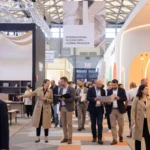
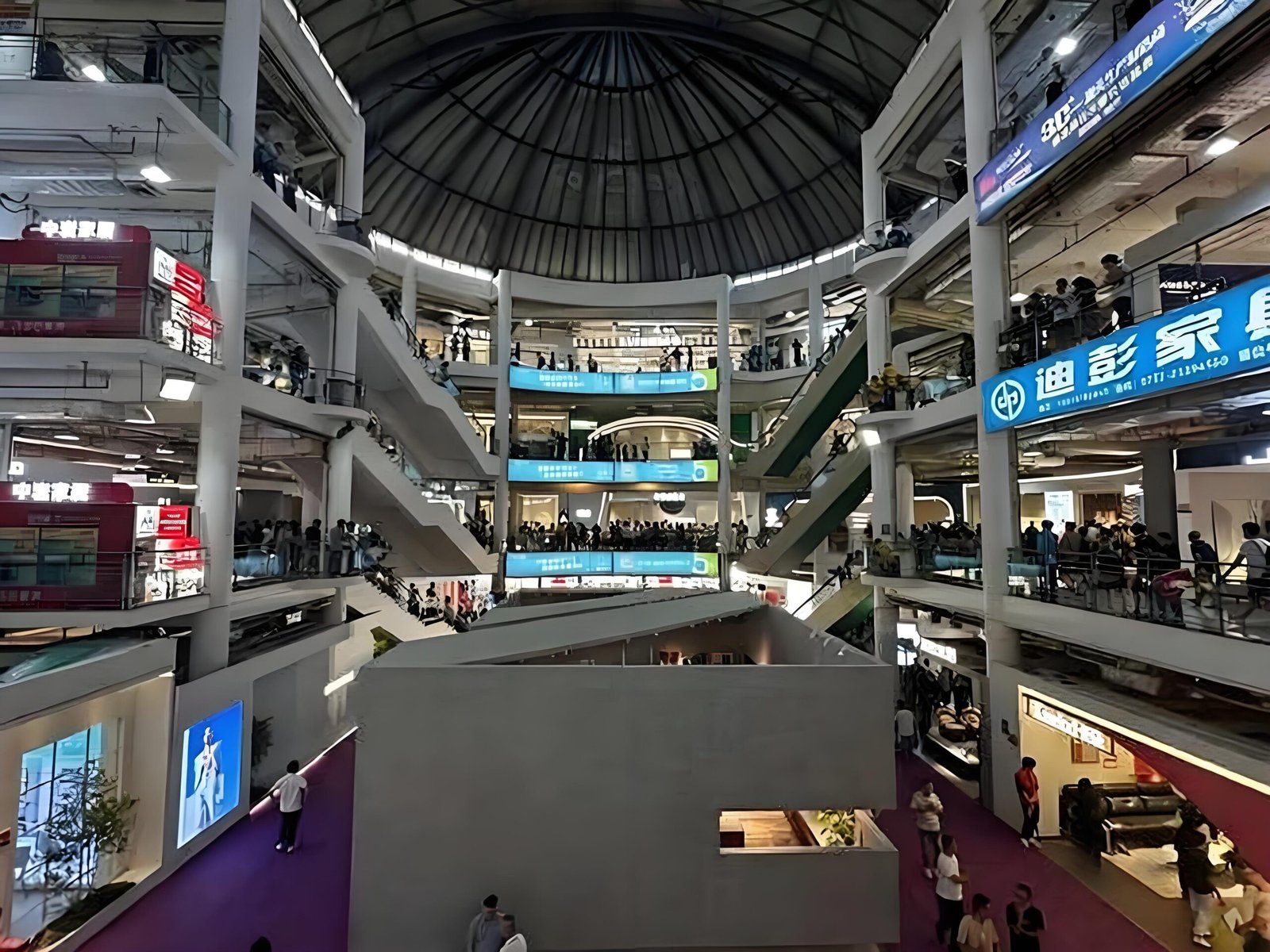
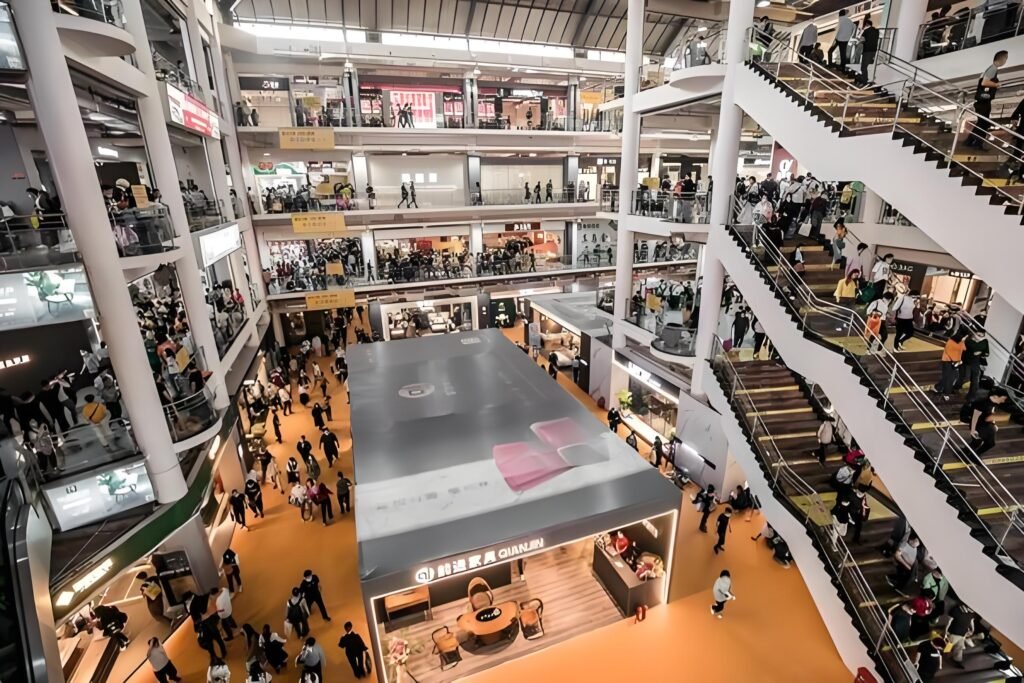
Lecong (乐从) refers to Foshan’s furniture trading and exhibition district. Its core feature is density of showrooms, dealers, and trading companies; its best use case is browsing, style comparison, retail, and small mixed orders.
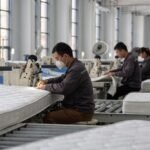
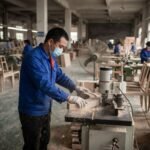
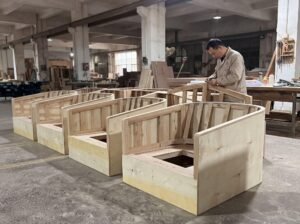
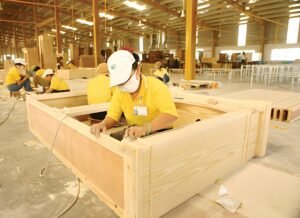
Longjiang (龙江) refers to the manufacturing cluster ten minutes away. Its core feature is 2,000+ production factories plus dedicated raw-material markets; its best use case is bulk orders, customization, and factory-direct pricing.
Lecong: the world’s biggest showroom
Lecong stretches over ten kilometers along Highway 325, with 180+ furniture malls and more than 4 million square meters of exhibition space. It was named “China Furniture Trade Capital” in 2004, hosts thousands of dealers, and ships to over 100 countries. (Source: Shunde district government and industry association public data, updated July 2026.)
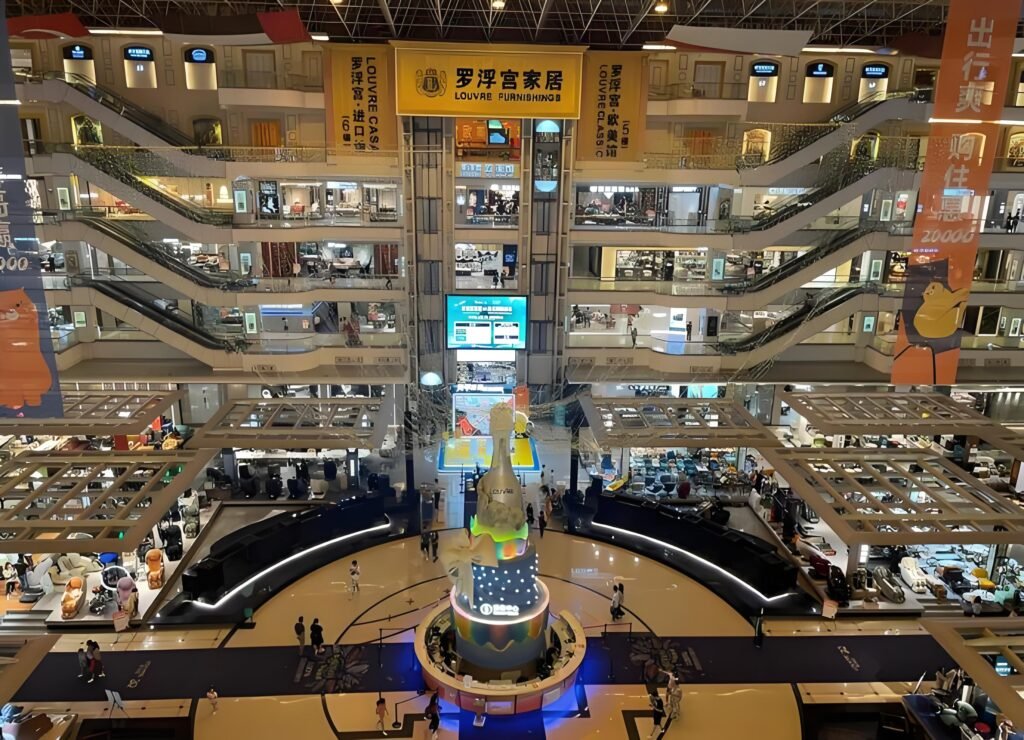
The malls have clear tiers. The Louvre is the premium showcase — a national 4A-rated attraction with 2,000+ brands, where the upper floors carry international luxury labels. Sunlink North is mid-range retail, often with similar styles at noticeably lower prices. Sunlink South, Empire, Dongheng, Nanhua, and Dongming lean wholesale and budget. Red Star Macalline’s Lecong branch operates as a wholesale platform, with most stores backed by their own Longjiang factories.
Here’s the part the industry won’t put on a billboard: local sourcing professionals commonly report showroom markups of 30–50% over factory pricing at premium malls. (For reference only, subject to actual verification.) Treat Lecong as your catalog — touch the fabrics, test the comfort, shortlist the styles. Don’t assume the price tag is the price.
Longjiang: the muscle behind the face
Longjiang holds two official titles from the China National Furniture Association: “China Furniture Manufacturing Hub” and “China Furniture Materials Capital.” Locals call it China’s sofa hometown. Its materials markets — Haojun, Longshan, and the Asia-Pacific International Wood City — mean almost every component of a sofa or bed can be sourced within town limits. (Source: industry association public data.)
Comparable goods here typically quote 20–30% below Lecong showroom prices. (For reference only, subject to actual verification.)
The myth to kill right now
“Everything in Foshan is a source factory, so everything is factory price.” Wrong. Most Lecong booths are dealers or trading companies. Nothing wrong with that — traders consolidate categories and simplify logistics — but you should know exactly who you’re paying, and for what.
Foshan Core Sourcing Zones at a Glance
| Zone | Role | Best For | Price Position | Watch Out For |
|---|---|---|---|---|
| Louvre | Premium showcase | Style research, luxury projects | Highest in Foshan | Mall rent baked into quotes |
| Sunlink North | Mid-range retail | Personal buyers, small B2B orders | Mid | Similar designs as Louvre — verify materials |
| Sunlink South / Dongheng / Nanhua | Budget wholesale | E-commerce resellers, cost-driven bulk | Low | Inconsistent QC; inspect every piece |
| Longjiang factory zone | Manufacturing | Bulk orders, OEM, customization | 20–30% below Lecong | Appointments required; MOQ applies |
Price positions are indicative ranges, for reference only, subject to actual verification.
The Buying Process, Step by Step
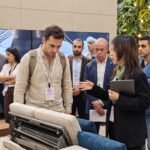
Step 1 — Spend day one on reconnaissance, not orders. Walk the malls, photograph everything, collect business cards. The single most revealing question you can ask is: “Can I visit your factory?” The answer sorts factories from traders in one second.
Step 2 — Shortlist and verify. Ask for the business license and export records. A genuine factory answers technical questions — foam density, frame timber, joinery — without hesitation. If you can’t visit, video-call the workshop floor.
Step 3 — Negotiate specs first, price second. Lock a written spec sheet: dimensions, materials, foam density, fabric code, hardware brand, packaging. Displayed prices in Lecong are domestic retail or small-wholesale; container-quantity buyers commonly negotiate 20–40% below them. (For reference only, subject to actual verification.)
Step 4 — Sign a real contract, pay a standard deposit. Thirty percent is the market norm. The proforma invoice must state specs, lead time, penalties, and Incoterms — stamped, not just a WeChat message.
Step 5 — Follow production. Ask for mid-production photos and videos. Better yet, visit or hire third-party QC for a mid-line check.
Step 6 — Inspect before the balance, always. Never wire the final payment before goods pass pre-shipment inspection. Once the container door closes, your leverage is gone.
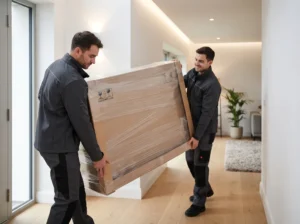
Step 7 — Consolidate and ship. Consolidation warehouses in Lecong merge orders from multiple suppliers into one container. Confirm EXW, FOB, or CIF in writing — this single line decides who pays for what when something goes wrong.
Ten Traps That Catch First-Time Buyers
1. The curbside touts. Friendly “guides” outside the malls earn commission from the shops they steer you to — and that commission hides inside your quote. Decline politely and walk your own route.
2. The newbie questions. Asking “How much for just one piece?” on the spot marks you as retail instantly, and quotes drift upward. Note your questions; ask them later over WeChat.
3. Showroom ≠ factory. Many Lecong booths are traders. Not a sin — but know who you’re paying.
4. The walk-in foreigner price. First quotes to foreign walk-ins routinely carry a premium. (For reference only, subject to actual verification.) Counter calmly, around 50–60% of the opening ask, and settle somewhere sane.
5. Material swaps. “Leather” may be bonded leather; “solid wood” may be veneer over MDF. Write the exact material grade into the PI — the vocabulary matters more than the discount.
6. The MOQ ambush. That attractive sofa price assumed 20 pieces per model. Clarify MOQ per SKU before you fall in love with a number.
7. “Free shipping” that isn’t. If logistics terms aren’t in the contract, expect surprise charges at the port.
8. The vague deposit. Thirty percent against a one-line chat message is a donation, not an order. Get a stamped PI.
9. Skipping inspection. Scratched leather, crooked stitching, wobbly legs — all become your problem the moment the container closes.
10. The vanishing after-sales. Warranties mean little without leverage. Hold the balance until inspection passes, and archive every chat.
First-Timer’s Anti-Trap Checklist
| Checkpoint | What to Do | Why It Matters |
|---|---|---|
| Supplier identity | Ask “Can I visit your factory?” | Separates factories from traders |
| Specs | Written spec sheet before price talk | Kills material-swap risk |
| MOQ | Confirm per SKU, per color | Prevents “sample price” surprises |
| Payment | 30% deposit against stamped PI | Creates legal leverage |
| QC | Pre-shipment inspection before balance | Defects found late are yours |
| Logistics | Incoterms written into contract | Decides who pays when things break |
Two Routes: Business Buyers vs. Personal Buyers
For B2B buyers — cross-border e-commerce sellers, small importers, independent designers, startup brands: spend one day in Lecong mapping styles, then move to Longjiang for factory visits and bulk negotiation. Your priorities are factory verification, MOQ per SKU, material certificates, and mid-production QC. A mixed container of 5–10 SKUs is the realistic entry point for furniture sourcing Foshan at factory level. (MOQ patterns vary; for reference only.)
For personal buyers — homeowners and expats furnishing one apartment or villa: stay in Lecong. Sunlink North and the wholesale-oriented markets handle single orders happily, and consolidators will merge your pieces with other cargo for LCL sea freight. Your priorities are simpler: written specs, a stamped invoice, and inspection before final payment. The survival rules are identical; only the scale changes.

Frequently Asked Questions
Is Foshan safe and practical for first-time furniture buyers?
Yes. Foshan is a mature, export-oriented market that hosts thousands of foreign buyers year-round, and a prepared first-timer following a standard process can complete a purchase safely.
What is the difference between Lecong and Longjiang?
Lecong is the trading and showroom district for browsing and small orders; Longjiang is the manufacturing cluster for bulk orders and factory-direct pricing.
How much can I save buying furniture in Foshan?
Buyers commonly report 40–60% savings versus Western retail for comparable mid-range pieces, before shipping and duties. (For reference only, subject to actual verification.)
Do I need a sourcing agent in Foshan?
No — agents and local guides add convenience and local knowledge, and a well-prepared buyer can also work independently; choose based on your order size and experience. As an independent third-party platform, we take no commissions and no paid rankings — our only stake is your information advantage.
What is the typical MOQ in Longjiang factories?
Upholstery factories often accept around 5 sets per model in mixed containers, while office chairs typically start at 50–100 pieces. (For reference only, subject to actual verification.)
How do I ship furniture from Foshan?
Orders go to a Lecong consolidation warehouse and ship by sea via nearby South China ports; personal buyers typically use LCL (less-than-container-load) service.
Recommended Resource
Interi Furniture specializes in custom furniture manufacturing for residential, hospitality, and commercial projects. Their experience in materials, craftsmanship, and project realization makes them a valuable resource for designers and buyers seeking tailored furniture solutions from China.