






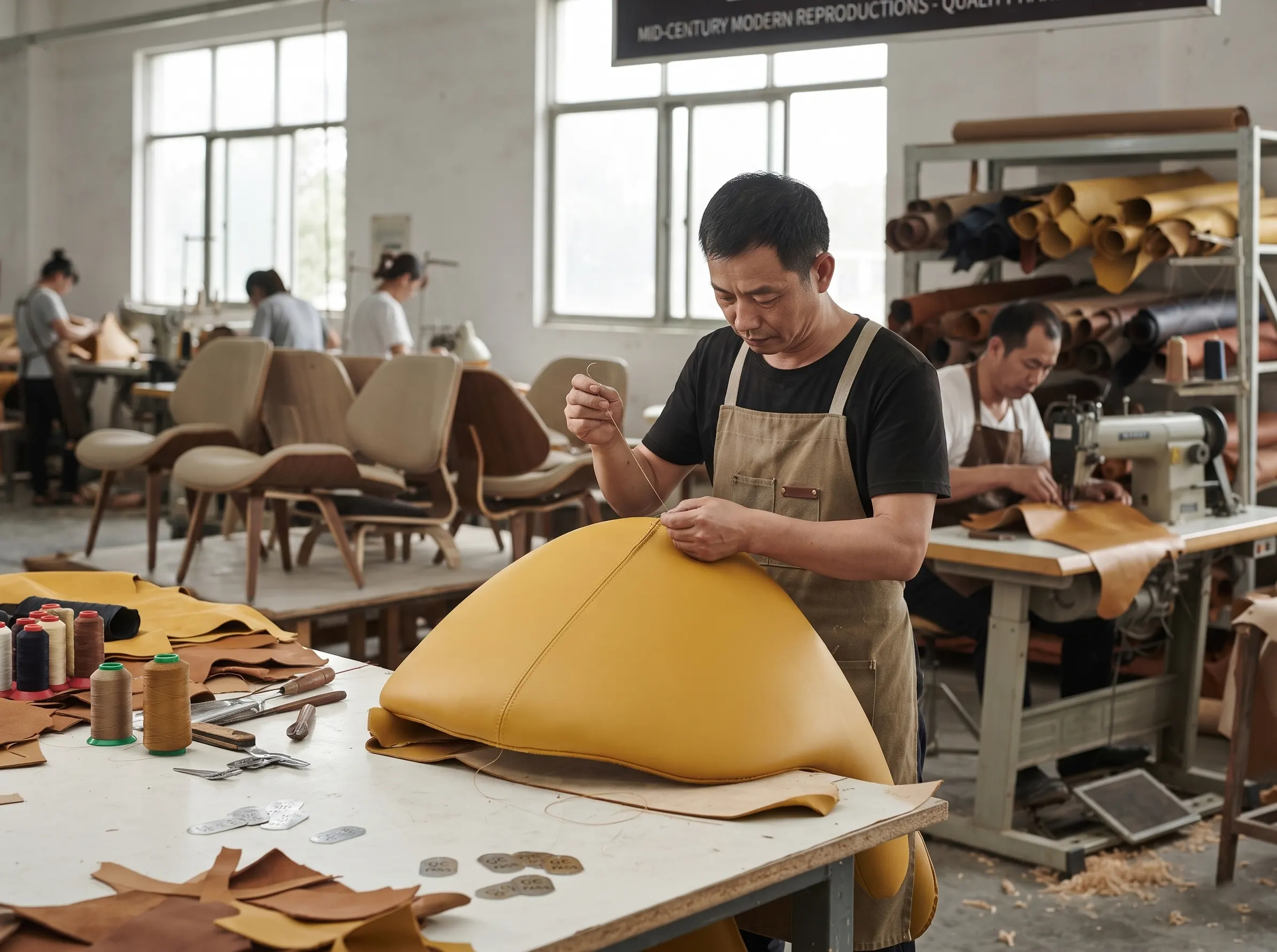
That “designer replica” sofa in your cart? The photos lie. The frame hiding under the upholstery is probably rubberwood with a 20-percent moisture variance, not kiln-dried beech. The foam is 25D junk that will pancake within a year. The hardware? Zinc alloy that rusts if you look at it wrong. We have spent ten years walking the factory floors of Longjiang, Foshan, and Houjie, Dongguan — and the shell game is always the same. Outside: 90 percent identical. Inside: stripped to the bone. This piece unpacks where the bones get picked clean, why your camera cannot see it, and whether that “bargain” price tag is fool’s gold.
The Photo Promise vs. The Box Reality
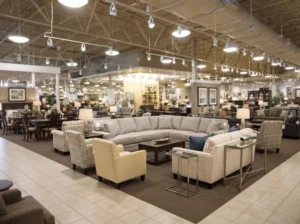
You saw it on Instagram. Maybe a Barcelona chair, maybe a Togo sectional. The original costs more than your car payment. Then the algorithm serves up a “1:1 replica” at one-fifth the price. Lighting is warm. Leather catches the light. Angles flatter every curve. You buy the story — if it looks identical, it must be built identical, right?
Wrong. Brutally wrong.
Six months later the seat cushion has the structural integrity of a deflated basketball. The frame creaks like a haunted house door. The leather — which looked rich and buttery in the showroom — is now cracking along stress lines that no conditioner can save. The piece still looks like the design icon from across the room. Up close, it is a slowly collapsing monument to false equivalence.
Here is the uncomfortable truth nobody in the replica trade wants to spell out: design democratization is not the enemy. Price tiers serve real people with real budgets. The enemy is information asymmetry. Sellers toss around phrases like “1:1 replica” or “same factory, different label” to imply quality parity that simply does not exist. You assume equivalence. They know the BOM got gutted. That gap — between what you believe you bought and what actually showed up — is where the knockoff furniture quality problem lives.
Why the Outside Copies Faster Than the Inside
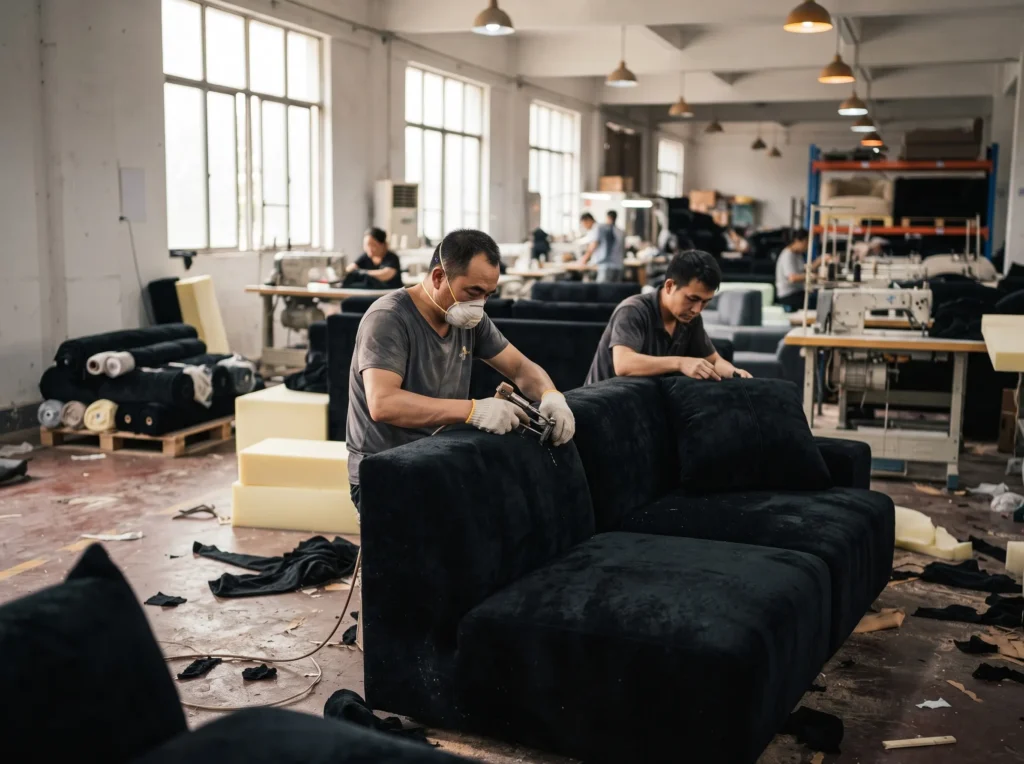
Modern CNC routers can clone a frame profile to half a millimeter. Vinyl wraps mimic walnut grain well enough to fool your mother-in-law. Automated spray booths lay down finishes that photograph like hand-rubbed oil. The visual layer? Solved. Done. Easy money.
What does not copy is what holds the thing together.
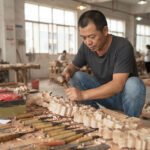
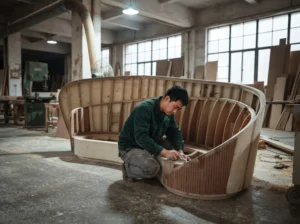
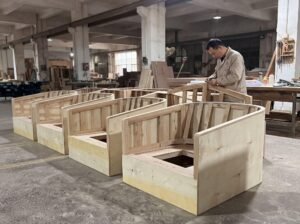
Last March in a Longjiang factory, we watched a “Barcelona-style” chair frame get assembled. Original spec calls for solid 304 stainless, hand-buffed to a mirror finish, with a static load rating pushing 300 kg. This factory used 201-grade stainless — the stuff that discolors when your sweaty palm touches it — machine-polished in ninety seconds. No handwork. No stress test. Just wrap it in foam, slap on the cushions, and ship it to a warehouse in LA where a dropshipper will call it “premium replica.”
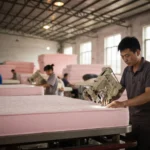
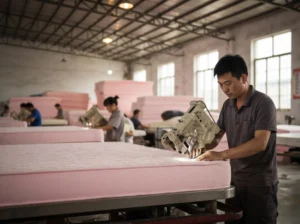
Same story with foam. Original manufacturer specs 45D high-resilience polyurethane with an ILD calibrated for actual human spines. The replica factory pulls 25D block foam off a pallet — the kind that feels plush on day one because it is basically air held together by wishful thinking — and calls it a day. The original suspends the seat on elastic webbing rated for 100,000 cycles. The replica stretches a plywood sheet across the frame. From the outside, wrapped in the same fabric, both look like furniture. From the inside, one is engineered. The other is packaged.
Surface vs. Structure: Where Lookalikes Cut Corners
| Component | What the Original Actually Uses | What the Replica Factory Swaps In | What Breaks First |
|---|---|---|---|
| Frame material | Kiln-dried beech or oak, MC locked below 12% | Rubberwood, pine, or MDF, MC wandering between 15–20% | Joints loosen, frame warps, you hear creaking inside 18 months |
| Seat suspension | Sinous springs + elastic webbing, 100K cycle tested | Plywood panel or bargain-bin springs, zero cycle data | Sagging. Always sagging. Sometimes actual collapse. |
| Foam core | 35D–45D HR foam, ILD matched to the design intent | 20D–25D generic foam, whatever is cheapest this week | Permanent compression set within 6–12 months. Sit on a board. |
| Leather | Full-grain or top-grain, 1.2–1.4 mm, Martindale > 40,000 | Bonded leather, 0.6–0.9 mm, Martindale often under 15,000 | Cracking, peeling, color transfer — starts in month three. |
| Fabric | High-rub wool or performance velvet, 80,000+ Martindale | Polyester blend, 20,000–30,000 Martindale | Pilling on the armrests, fading by the window, threadbare in a year. |
| Hardware | 304 stainless, 48-hour salt-spray pass | 201 stainless or zinc alloy, no salt-spray data exists | Corrosion in humid climates. Bolts loosen. Structural failure follows. |
| Finish / coating | 5–7 layer system, hand-sanded between coats, solids > 45% | 2–3 layer spray, no sanding between, solids maybe 25% | Chipping at edges, UV degradation, finish checks within a year. |
| Structural testing | Static load, dynamic fatigue, tip-over where required | Visual QC only. Maybe a guy kicks it once. | Safety risk. Especially on shelving and anything that holds your weight. |
For reference only, subject to official verification. Specs vary by brand and by how honest your factory contact is.
Original vs. Replica: Material Specifications Side-by-Side
The BOM downgrade is the single biggest cost cutter in lookalike production. It is also completely invisible until the thing falls apart. When we ask to see the cutting sheet at a Longjiang replica factory, the numbers tell a story no marketing photo ever will.
Take the Knoll Barcelona chair. Original uses hand-buffed solid 304 stainless. Cushions are 40 individual panels of full-grain leather, each cut and sewn by hand, filled with high-density PU foam and dacron wrap. Straps are leather-backed with reinforced stitching. Factory-gate material cost runs roughly $800–$1,200 per unit depending on leather grade.
A typical Foshan high-end replica? 201-grade stainless with a machine polish. Leather-match — bonded leather with a PU top coat — in 12 pre-cut panels. 25D foam. No dacron. Straps are PU leather with heat-sealed edges. Factory-gate material cost: roughly $120–$180. The retail price reflects that gap. The AliExpress listing rarely mentions it.
| Specification | Original (Knoll Barcelona) | High-End Replica (Foshan Tier-1) | Budget Replica (Run-Rate Factory) |
|---|---|---|---|
| Frame material | Solid 304 stainless, hand-polished | 201 stainless, machine-polished | Chrome-plated steel tube |
| Leather type | Full-grain, 1.2–1.4 mm | Bonded leather, 0.8 mm | PU leather, 0.6 mm |
| Foam grade | 35D HR foam + dacron wrap | 25D foam, no wrap | 20D foam, no wrap |
| Strap material | Full-grain leather, hand-stitched | PU leather, heat-sealed | PVC strap, glued |
| Panel count | 40 individual cut-and-sew panels | 12 pre-cut panels | 8 pre-cut panels |
| Estimated factory material cost | $800–$1,200 | $120–$180 | $60–$90 |
| Typical retail price (US/EU) | $7,000–$10,000 | $800–$1,500 | $300–$600 |
For reference only, subject to official verification. Pricing shifts with leather markets and how desperate the factory is for cash flow.
Process Comparison: What Steps Get Skipped
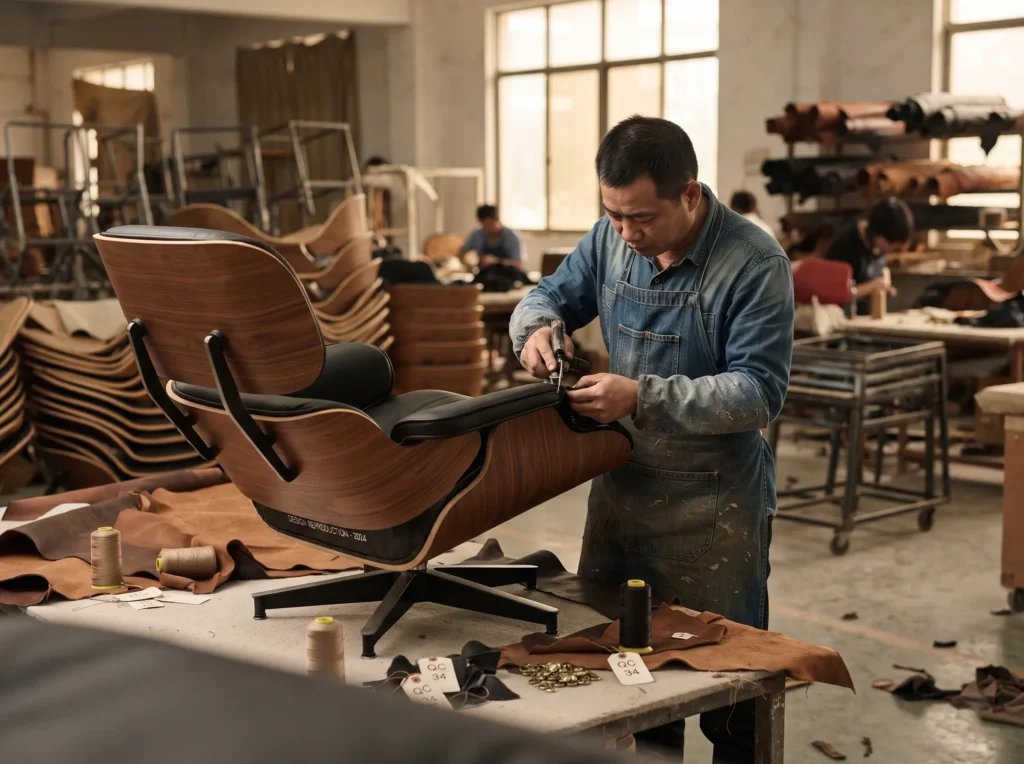
Material swaps are only half the theft. The other half is process deletion — steps that add cost but add years. Replica factories delete them to hit price points that make your eyes water.
In a premium Danish factory, a solid wood chair frame goes through seven stages: rough cut, kiln drying, CNC shaping, hand-sanding from 80 grit to 320, stain, sealer, topcoat with UV inhibitors, final buff. Each stage adds a day. Finish solids stay above 40 percent. The piece gets humidity-conditioned before boxing.
In a run-rate replica factory? Laminated rubberwood. One pass with 120-grit paper. Two coats of nitrocellulose at maybe 25 percent solids. Pack it while it is still tacky. Looks fine under 2700K spotlights. Six months in your heated apartment, the finish starts checking like a dried riverbed.
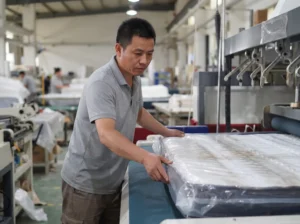
Same deal in upholstery. Original factories layer foam densities — firm base, medium transition, soft top — each cut on a bandsaw and hand-assembled. Replica factories buy pre-formed block foam, wrap it in polyester batting, and call it craftsmanship. The sit test in the showroom feels right because the foam is factory-fresh. Year two tells the real story. Your tailbone knows.
| Process Stage | Original Manufacturer | Replica Factory | Visual Impact | Functional Impact |
|---|---|---|---|---|
| Wood drying | Kiln-dried to 8–12% MC, conditioned 30 days | Air-dried or half-baked kiln, 15–20% MC | None on day one | Warping, joint failure, the whole thing goes wobbly |
| Frame joinery | Mortise-and-tenon or dowel + corner block | Staple gun + glue, corner blocks optional (read: absent) | None | Loosening, creaking, eventual collapse |
| Sanding / prep | Progressive hand-sanding, 3–5 grit stages | Single machine sanding, done | Slightly rougher under your hand | Finish adhesion fails, chips early |
| Finish system | 5–7 coats, hand-rubbed, UV inhibitors | 2–3 coats, spray-only, zero UV protection | Identical in showroom | Fading, checking, peeling — 6 to 12 months |
| Foam assembly | Multi-density layering, hand-cut and wrapped | Single-density block, machine-cut | Identical when new | Rapid compression, you sit on wood |
| Upholstery tension | Hand-tacked, stress-relieved stitching | Machine-stapled, no relief points | Identical in photos | Seam tearing, fabric puckering |
| Quality testing | Static load, fatigue cycle, salt spray, drop test | Visual inspection. That is it. | None | Safety and durability failures waiting to happen |
For reference only, subject to official verification. Process details vary by factory and by whether the owner is trying to make rent this month.
The Visual Deception Playbook
Replica sellers do not rely on product quality to close the sale. They rely on a toolkit of visual tricks that bridge the gap between what you see and what you get.
Showroom lighting is the first trap. Warm 2700K spotlights with high CRI make low-grade leather look like it belongs in a private jet. Thin fabric looks plush. Under natural daylight? The dye looks flat. The weave looks cheap. The whole thing loses its magic.
Photography angles are the second trap. Wide-angle lenses at knee height make a sofa look deeper and more imposing. Tight crops hide thin armrests and shallow seat depth. Post-production smooths out texture irregularities that would scream “budget” in person.
Then there is the hero sample — the dirtiest trick in the book. Many factories keep one meticulously built sample for showroom display and photography. Full-grain leather. Corner blocks. Hand-stitched straps. Then they ship production units built to a looser spec sheet. The sample gets the good stuff. You get the leftovers. You never see the production line. You just get the box.
This is why we tell buyers: demand an unedited video of the actual unit — not the sample — under neutral light. Put a ruler against the frame. If the seller refuses, you have your answer.
True Cost of Ownership: Purchase Price vs. Replacement Cycle
The replica pitch is upfront savings. One thousand dollars versus six thousand. Looks like a five-grand win. Run the math over the lifecycle, and the picture changes.
Assume the original sofa lasts 10–12 years. Assume the replica lasts 2–3 years before it is structurally embarrassing. One purchase versus four. Plus disposal fees — $100–$200 per item in most cities. Plus delivery and assembly — $150–$300 each time. Plus the sheer hassle of coordinating all of it.
| Cost Factor | Original Sofa (10-year horizon) | Replica Sofa (10-year horizon, 3 replacements) |
|---|---|---|
| Initial purchase | $6,000 | $1,000 × 3 = $3,000 |
| Delivery / assembly (per unit) | $250 (once) | $250 × 3 = $750 |
| Disposal fees (per unit) | $150 (once) | $150 × 3 = $450 |
| Upholstery refresh / refoam (Year 6–8) | $800 | Not worth it — buy another cheap one |
| Total 10-year cost | ~$7,200 | ~$4,200 |
| Functional condition at Year 10 | Still solid | On your fourth unit, probably already sagging |
| Residual value | $500–$1,000 (secondary market) | $0 (landfill fodder) |
For reference only, subject to official verification. Costs vary by region and by how much your building charges for bulk pickup.
The replica still costs less over a decade — but the gap narrows from $5,000 to about $3,000. Is that $3,000 worth living with progressively degrading furniture, repeated delivery days, and three sofas in a landfill? For a homeowner, maybe. For a commercial operator — hotels, Airbnb hosts, co-working spaces — the math often flips. One guest complaint about a collapsing sofa costs more in review damage than the original price delta ever would.
High-Risk Scenarios: When a Replica Becomes a Liability
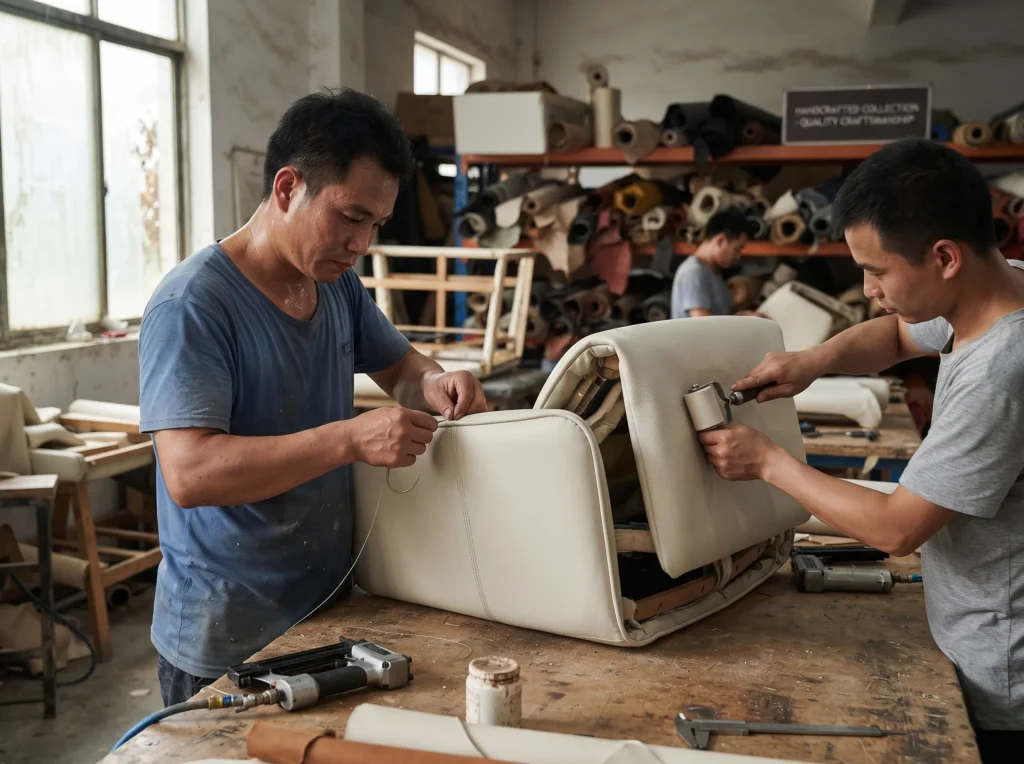
Some downgrades are merely disappointing. Others are actively dangerous. Treat these categories with extreme caution.
Cantilevered or floating-frame seating. Lookalikes of designs like the Floating Chair rely on precise cantilever engineering. Originals use aerospace-grade adhesives and internal steel reinforcement tested past 300 kg dynamic load. Replicas skip the reinforcement and use standard wood glue. Result? A chair that can collapse under a normal adult. We have seen it happen.
Shelving with stated load ratings. A replica modular shelf may look identical, but swap 12-gauge steel for 16-gauge — or plywood for particleboard — and load capacity drops 50 percent or more. The shelf holds books in the showroom. Under real loading, it bows. Then it fails.
Outdoor furniture without real weather testing. Original outdoor pieces use powder-coated aluminum with a 1,000-hour salt-spray rating and solution-dyed acrylic with a 5-year UV warranty. Replicas use spray-painted steel and polyester that fades in one season and rusts in two. Failure often happens during a storm — a gust catches a weakened frame, and your patio set becomes projectiles.
Anything intended for children. This is a hard red line. Cribs, high chairs, kids’ storage — these must meet ASTM F1169, EN 716, GB 28007. Replica factories almost never test to these standards. Entrapment, tipping, toxic off-gassing — these are not theoretical risks. They show up in recall databases with depressing regularity.
Buyer Playbooks: How to Evaluate a Lookalike
Different buyers, different risk appetites. Here is how we break it down in the field.
For the Personal Homeowner
You found a replica of a design you love. Fine. Start by asking for the actual BOM — not the marketing fluff, the cutting sheet. Foam density. Wood species and moisture content. Fabric Martindale rating. Hardware grade. If the seller cannot produce these in writing, that is a signal. A loud one.
Next, demand an unedited video of the production unit under natural light. Tape measure against the frame. Check seat depth, arm height, cushion thickness. Compare against original dimensions. Many replicas are subtly scaled down — 5 percent smaller in every dimension saves real material cost. You will not notice in the photo. You will notice when it arrives.
Finally, budget honestly. An $800 replica sofa is a 2–3 year product. If you are okay with that trade-off and you refresh decor frequently, the replica can be a rational choice. If you want something that ages with you, save for the original. Or find a premium Chinese manufacturer building to original-equivalent specs without the brand tax.
For the Small Retailer or Airbnb Operator
Your risk multiplies by unit count. One failed sofa at home is an annoyance. One failed sofa in a rental is a one-star review that lives forever. For commercial use, avoid budget-tier replicas entirely. If you must use lookalikes, source from Tier-1 factories in Foshan or Dongguan that offer a 12-month commercial warranty and third-party test reports for frame load and foam density.
Inspect the first article in person before authorizing mass production. Check stitching tension. Check frame joints. Check finish consistency. Budget 15–20 percent annual replacement for replica furniture in high-turnover settings. If that exceeds the cost of buying original or premium-grade pieces, the math is telling you something.
For the Interior Designer or Project Procurement
Your reputation rides on every spec. When a client asks for a “budget-friendly version,” document the deltas in writing. Do not let them assume equivalence. Provide a side-by-side comparison of original BOM versus proposed replica BOM, with explicit notes on lifespan compromise.
If the project is commercial — hospitality, office, healthcare — do not specify replicas for any piece subject to public liability. The insurance exposure is not worth the savings. For residential projects where the client insists, specify Tier-1 replicas only, with a written disclaimer of expected lifespan and a maintenance schedule that assumes earlier replacement.
FAQ: What Buyers Ask Us Most
How can I tell if a replica uses the same materials as the original?
You cannot tell from photos. Period. You need the BOM — foam density, wood species and moisture content, fabric test ratings, hardware grade. If the seller will not provide these in writing, assume they are cutting every corner they can. Visual inspection of the actual production unit under natural light is the only reliable backup.
Are there any replicas actually built to original quality?
Rarely. And never at a 70–80 percent discount. A handful of Tier-1 factories in Foshan and Dongguan build “original-equivalent” pieces with comparable materials and processes, but their factory-gate prices are typically 40–60 percent of original retail — not 20 percent. At a 20-percent price point, the BOM has been gutted somewhere. Usually the frame, the foam, or the finish.
Why do replicas look so good in showroom photos if the quality is lower?
Showroom lighting, wide-angle lenses, and hero samples. Warm spotlights with high CRI make cheap materials look expensive. Tight camera crops hide thin profiles. The sample on display is often built to a higher spec than the production units. Always demand photos of the actual unit you will receive.
Is buying replica furniture illegal?
Depends on your jurisdiction and the specific IP involved. Design patents, trademarks, and copyrights are enforced differently across markets. In the EU and US, selling replicas of patented designs can expose both buyer and seller to legal action. In China, enforcement leans heavier on trademark infringement than design patents. This is not legal advice — consult qualified counsel in your jurisdiction. For reference only, subject to official verification.
What is the safest category to buy as a replica?
Non-structural decorative pieces — side tables, mirrors, lighting fixtures without moving parts. Lower risk of safety hazard, and replacement is less disruptive. Avoid replicas of anything that supports body weight, stores heavy loads, or is used by children.
Can I negotiate better specs with a replica factory?
Yes, if you are buying volume. A factory building 50 units for a hotel project can often upgrade foam, add corner blocks, or switch to a higher-grade finish for a marginal bump — sometimes just 10–15 percent above base price. The key is specifying the upgrades in the purchase order. Never assume the factory will build to a higher standard out of goodwill. They will not
What Is Your Experience?
Bought a replica that surprised you — in a good way or a bad one? Found a Tier-1 factory that actually delivers? Sworn off lookalikes after a project went sideways? Drop your story or your specific original-vs-replica question below. We read every comment, and we use them to guide our next factory deep-dives.
Recommended Resource
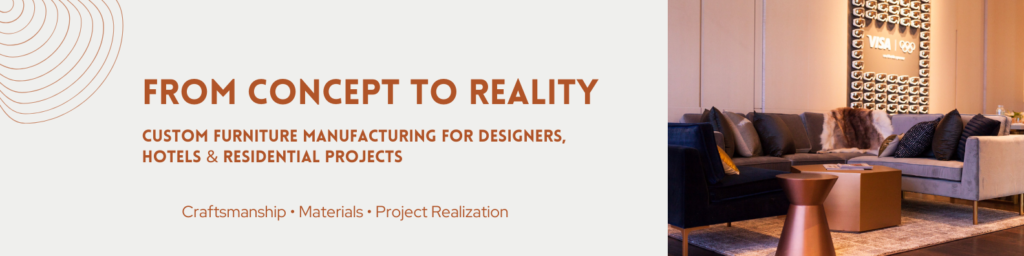
Interi Furniture specializes in custom furniture manufacturing for residential, hospitality, and commercial projects. Their experience in materials, craftsmanship, and project realization makes them a valuable resource for designers and buyers seeking tailored furniture solutions from China.