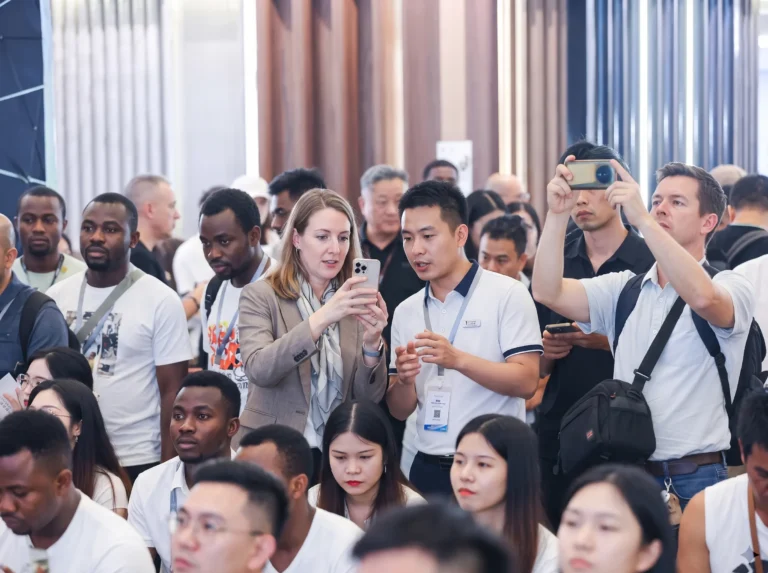



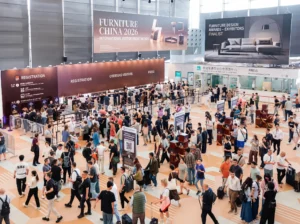





Design Shanghai 2026 showed one clear signal: the next global interior trend 2026 is moving from “decorated minimalism” toward material experiment design with real texture, irregular surfaces, softer bio-based materials, and craft logic translated into repeatable form. The uncomfortable truth is that many of the most photographed pieces are still prototypes, not purchasable specification items. Based on the fair’s public materials, exhibitor releases, and the way Shanghai, Foshan, and Guangzhou suppliers we visited during the same period talked about sampling, we read Design Shanghai less as a shopping list and more as a 12–18 month early-warning system for CMF, bio-materials, and craft revival.
If your job is to specify materials, you should leave the fair with questions, not invoices. Some work is genuinely close to production. Some is beautiful theater. The difference is rarely visible under fair lighting.
Why Designers Keep Getting Burned by Material Experiments
A hotel FF&E buyer sees a bioplastic lamp, a paper pendant, or a “low-carbon” cement chair and asks the natural question: can we put this in 180 rooms? The designer often says yes because the booth looked resolved. Then procurement finds the real gap: the sample was hand-built, the color drifts between batches, the material has not passed abrasion, UV, flame, or humidity testing, and the price only works at artisan volume.
That gap is where budgets die. It is also where sustainability claims start to wobble, because a material can be low-carbon in a lab narrative and still lose credibility after coating, backing, adhesives, freight, and premature replacement are counted. For reference only, subject to official verification: from our sourcing work across Guangdong and Zhejiang supplier conversations in 2025–2026, concept-stage material objects shown at design fairs often sit 12–18 months away from stable specification, with cost variance of 30–120% between prototype and repeatable SKU.
The anxiety is rational. You are not anti-innovation if you ask for a test report. You are doing your job.
The Big Misread: Exhibition Material Is Not Automatically Project Material
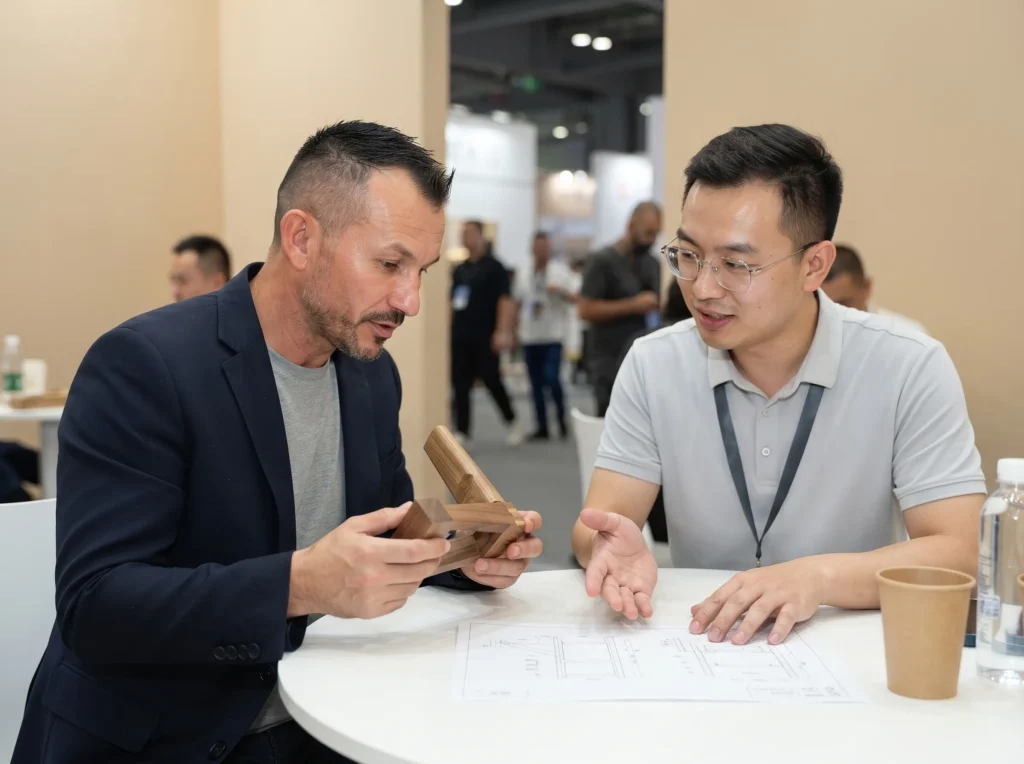
The most common mistake is treating a Shanghai design trend as a procurement category. Design Shanghai is excellent at compressing taste into one venue: warmer neutrals, tactile matte surfaces, softer geometries, repaired-looking finishes, and materials that carry process marks. That is useful. But a trend signal is not a supply chain.
A fair object can be made from four materials while the production version needs eight. A lamp can look fragile and still be durable if engineered properly; another can look solid and fail because the resin network was never stabilized. The correct question is not “is it beautiful?” It is “what changed between the hero sample and the fifth hundred units?”
This is where material experiment design becomes commercially meaningful. It is not the object on the pedestal. It is the documented path from that object to drawings, tolerances, coatings, sub-suppliers, packaging, replacement parts, and claims that survive a skeptical architect’s review.
Design Shanghai 2026 Five Material Experiments: Concept vs. Production Reality
The fair’s public programming, including Materials First curated by material expert Chris Lefteri with Digital Speckles, Colour Distortion, and Pattern Twist, plus TALENTS, Beyond Craft, and Made in JDZ, gave us a useful map. The names below reflect exhibitor and fair-facing descriptions seen around the March 19–22, 2026 edition at Shanghai Exhibition Centre.
| Material or form experiment | What the fair object signals | Production reality check | Buyer verdict |
|---|---|---|---|
| Bio-plastic and bio-resin lighting, including TALENTS-style experimental table lamps | Softness, lower fossil-content story, translucent warmth | Batch color control, heat near bulbs, UV yellowing, and “bio” claim boundaries need documentation | Specify only with test data and a defined resin system |
| Bio-cement seating and accessories, echoing Friedrich Gerlach’s Biocement Chair type | Mineral tactility, low-clinker ambition, sculptural weight | Compressive strength, water absorption, sealing, freeze-thaw behavior, and reinforcement details are rarely booth-ready | Treat as art-plus-material research unless engineering data exists |
| Washi paper, paper laminate, and gold-leaf composite surfaces, including Yamato washi and Kubo Paper Studio’s 1,300-year craft narrative | Light diffusion, repair culture, luxury craft without plastic gloss | Tearing, edge fraying, fire rating, backing, adhesive outgassing, and humidity response decide viability | Strong for hospitality accents when factory-backed and fire-rated |
| Ceramic with marbleized or marbleized twisted-clay patterning, including Hong Zhangliang’s stone-vein ceramic direction and Made in JDZ context | Veins through the body rather than printed on top, Jingdezhen credibility | Warping in large formats, glaze consistency, lead/cadmium compliance, lead time, and breakage logistics | Highly specify-able for tiles, tabletops, and vessel pieces with strict QC |
| Reimagined Chinese joinery and metal-wood hybrid structures, including Yin Dahua’s copper-oak coffee table logic | Precision craft as visible joinery, warmer metal patina, less hidden hardware | Seasonal wood movement, metal corrosion, disassembly for freight, and tolerance stack in knock-down construction | Good for high-end residential and boutique hotel if knock-down is engineered |
For reference only, subject to official verification: the share of objects at leading Chinese design fairs that remain concept, limited edition, or pre-production rather than specification-ready is often estimated by sourcing teams at roughly 40–50%. Use that as a working assumption, not a court exhibit.
Materials First Lab: What Digital Speckles, Colour Distortion, and Pattern Twist Actually Mean
Chris Lefteri’s Materials First format matters because it translates CMF language into something designers can touch. The three themes are easy to misread as surface decoration. They are better read as pressure tests for how surfaces behave under light, wear, and digital reproduction.
| Materials First theme | Literal surface effect | Deeper design meaning | Sourcing implication |
|---|---|---|---|
| Digital Speckles | Pixel-like particles, mineral noise, dispersed pigment | Surfaces are becoming less uniform; the eye wants evidence of process | Digital printing can fake this, but pigment-through-body materials age better |
| Colour Distortion | Iridescence, interference color, shade shift by angle | Color is treated as an experience, not a fixed Pantone code | Require light-booth viewing and batch retained samples |
| Pattern Twist | Warped geometry, off-register pattern, controlled irregularity | Repetition is loosening; perfect symmetry feels colder | Pattern alignment tolerances must be written into POs, not left to QC taste |
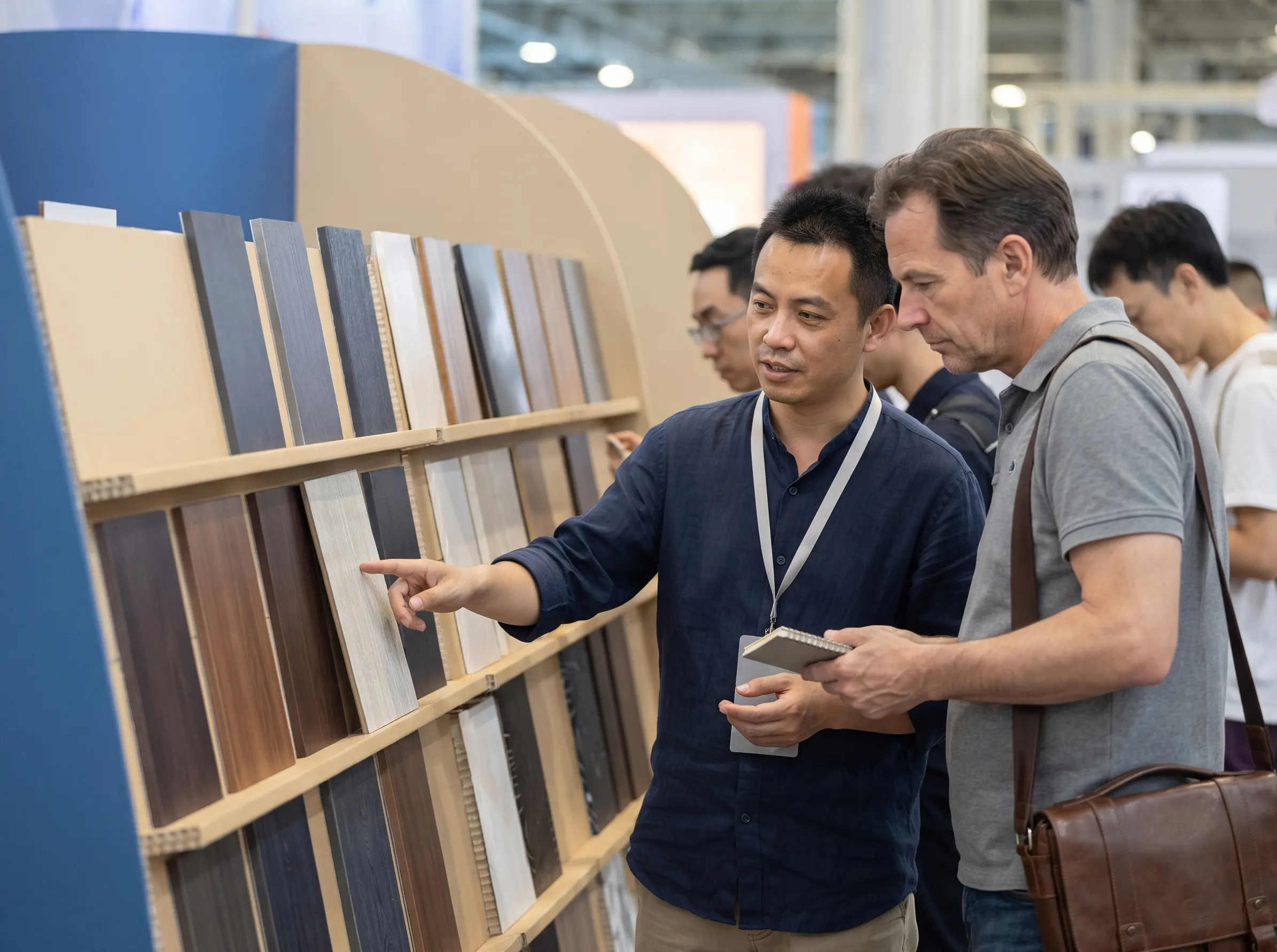
The practical translation is simple: specify viewing distance, light temperature, gloss band, abrasion class, cleaning chemistry, and replacement panel availability before you fall in love with a swatch. A Shanghai design trend only becomes useful when those variables are boring.
Traditional Craft Contemporary Transformation: Beyond Craft and Made in JDZ
The most commercially interesting work at Design Shanghai 2026 was not the loudest bio-claim. It was craft logic made repeatable: washi paper with modern backing, gold leaf sealed for touch, Jingdezhen ceramics moving from vase to architectural surface, joinery designed for freight, and weaving used as structure rather than ornament.
| Craft or traditional material | Contemporary transformation seen in the fair context | Real constraint | Where it works in 2026–2027 projects |
|---|---|---|---|
| Washi paper and paper cord | Backed panels, laminated shades, acoustic-soft wall treatments | Fire rating, humidity, edge sealing, and repair visibility | Hotel lobbies, tea rooms, wellness spaces, restaurant pendants |
| Gold leaf and metallic leaf | Sealed leaf over paper, ceramic, lacquer, and composite board | Touch durability, tarnish, adhesive chemistry, cleaning agents | Boutique retail, bar fronts, ceiling medallions, object lighting |
| Jingdezhen ceramic and marbleized ceramic | Larger slabs, carved relief, veined body clay, mixed matte/gloss | Flatness, warpage, shade sorting, export breakage, lead time | Feature walls, vanity tops in low-abrasion zones, art tables |
| Chinese joinery and copper-oak hybrids | Exposed tenon logic with modern machining and patinated brass | Wood movement, patina change, knock-down tolerance, labor cost | High-end residential casegoods, gallery-style consoles |
| Woven natural structures and indigo-toned fiber work, including Hu Yuehua-style natural weaving installations | Fiber as partition, acoustic skin, and spatial installation | UV fade, dust, insects, flame spread, maintenance access | Statement ceilings, partition screens, wellness and retail set pieces |
The honest premium is craft plus engineering. If a supplier cannot explain how the traditional step is stabilized for export, you are buying a story, not a product.
Bio-Materials vs. Traditional Materials: Performance and Sustainability Comparison
Sustainable language at Design Shanghai 2026 was more disciplined than in 2023–2024, but still uneven. Our rule: a claim must be specific enough to be wrong. “Bio-based” can mean 12% or 62%. “Low carbon” can exclude freight and coating. “Compostable” may only apply in industrial facilities your client does not have.
| Decision factor | Bio-plastic or bio-resin | Bio-cement type material | Traditional ceramic, wood, metal, glass |
|---|---|---|---|
| Best near-term use | Lighting shades, small accessories, decorative panels | Sculptural seating, objects, non-structural surfaces | Broad FF&E backbone; mature repair and testing ecosystems |
| Key performance risk | Heat, UV yellowing, scratch, additive migration | Brittleness, moisture uptake, sealing, inconsistent cure | Weight, cost, provenance, but fewer unknowns |
| Sustainability risk | Feedstock land use, partial bio content, coating chemistry | Binder chemistry, curing energy, limited standards | Higher embodied impact in some categories, but durable and recyclable pathways exist |
| Documentation to demand | Resin content, VOC, flame, UV, food-contact where relevant | Compressive and flexural data, absorption, freeze-thaw where relevant | FSC where relevant, heavy metals, emissions, regional compliance |
| Specifying stance | Pilot in low-abrasion decorative zones | Avoid high-traffic load paths until data matures | Use as baseline and add experimental materials where they earn place |
For reference only, subject to official verification: many bio-based resins are blends, not pure biopolymers; some bio-cement mixes reduce clinker but still rely on conventional binders; washi and gold leaf can be highly durable when factory-sealed, and less durable when sold as unsealed craft. The carbon answer depends on boundaries.
Red Flags Before You Pay a Deposit
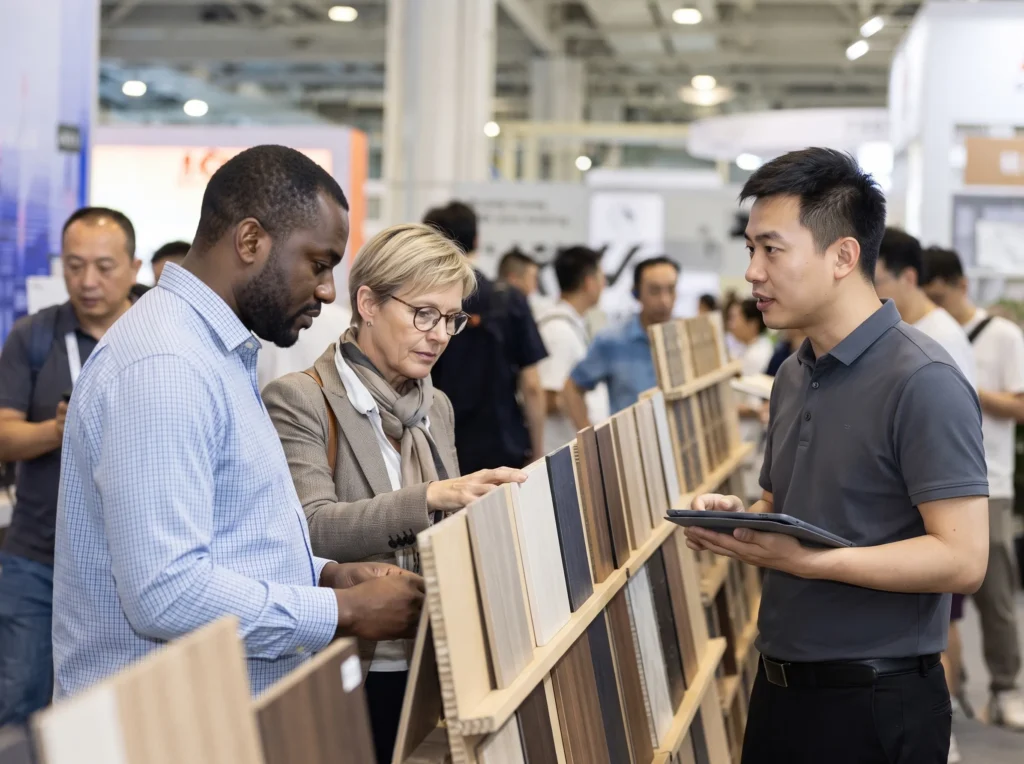
Do not wire money because a booth was photogenic. Put these conditions in writing.
| Risk | Why it is dangerous | Contract language to use |
|---|---|---|
| Concept piece sold as production-ready | Hero samples hide tooling, batch variation, and failure modes | Sample approval plus golden sample, production pilot lot, and third-party inspection before balance |
| No material test report | Sustainability and durability claims become marketing | Applicable ASTM, EN, ISO, GB/T or project-specific tests by named lab |
| Bio claim without boundary | “Bio” may refer to a minor additive, not the whole mass | Percentage bio-based content, feedstock, exclusions, and certification body |
| Traditional craft with unstable process | Beautiful first article, inconsistent container number two | Shade/vein sorting limits, repair policy, lead-time buffer, rejected-goods remedy |
| No replacement logic | One broken shade or tile becomes a custom re-order | Stocked spare percentage, component interchangeability, and maximum re-order window |
A serious supplier will not be offended by these terms. The offended ones are telling you something.
What Each Audience Should Do Next
Interior designers and architects should build a two-layer palette: a durable base of ceramic, wood, metal, glass, and contract textile, then a controlled layer of experimental material in low-abrasion zones. Require a one-page material passport for each experimental finish.
Hotel and commercial FF&E buyers should separate guest-facing durability items from art and lighting. Use the fair for directional CMF, then run pilot lots through housekeeping chemistry, luggage impact, humidity cycling, and cleaning protocol before roll-out.
High-end furniture retailers should ask for line-plan economics, not only a beautiful SKU. One-off craft can be a gallery story; repeatable retail needs carton logic, damage rates, spare parts, and a margin that survives ocean freight.
Materials researchers and brand teams should publish boundaries with the innovation. If a bio-material only works sealed indoors, say so. If the first production run is artisan scale, say that too. Credibility is a supply-chain asset.
For reference only, subject to official verification: premium craft-transformation pieces often carry meaningful labor and QC premiums over standard contract goods; the exact spread varies widely by format, finish, and export market. Treat every premium as negotiable only after yield loss is known.

Frequently Asked Questions
Can I buy Design Shanghai 2026 material experiments directly for a project?
Sometimes, but you should assume the piece is a prototype unless the exhibitor can show drawings, production tolerances, test reports, packaging, lead time, and a pilot-lot path. A direct purchase makes sense for small decorative quantities, art pieces, and hospitality accents. It does not make sense for high-cycle guestroom casegoods until the material has passed real use conditions.
Which Design Shanghai 2026 material signals look most relevant for global interiors in 2026 and 2027?
The durable signals are tactile matte surfaces, mineral and paper-light materials, irregular veining through ceramic rather than printed imitation, warmer metals with controlled patina, visible joinery, and softer geometric forms. Digital speckle and pattern distortion translate well when they are engineered as material behavior, not only as a printed graphic.
Are bio-plastics and bio-cement sustainable enough to specify now?
Use them where performance risk is low and documentation is strong. Bio-based content, curing chemistry, coating, freight, lifespan, and end-of-life path matter more than the label. If the supplier cannot state percentages, test standards, and boundaries, treat the sustainability claim as incomplete.
How should I use washi paper, gold leaf, Jingdezhen ceramic, and Chinese joinery in an international project?
Use them as engineered craft, not nostalgia. Back washi for fire and humidity, seal gold leaf for touch, write ceramic shade and flatness tolerances into the PO, and design joinery for freight and wood movement. These materials can carry a project emotionally, but only when the invisible engineering is specified.
What is the safest way to move from fair sample to purchase order?
Approve a fair sample, then a production pilot lot, then third-party inspection against a golden sample. Put test reports, spare parts, replacement windows, and remedy terms in the contract. Pay in milestones that keep leverage until cartons are closed and documents are correct.
Your Turn
Which material from Design Shanghai 2026 would you actually specify first, and what is the project constraint—budget, fire rating, humidity, cleaning, lead time, or sustainability audit—that would decide the answer?
Recommended Resource
Interi Furniture specializes in custom furniture manufacturing for residential, hospitality, and commercial projects. Their experience in materials, craftsmanship, and project realization makes them a valuable resource for designers and buyers seeking tailored furniture solutions from China.