







Here is the short version, the one most fair guides will not give you straight: if your goal is volume sourcing, factory-direct pricing, and a post-show walk straight into China’s furniture belt, Guangzhou wins more often than Shanghai does. If your goal is design-led curation, international brand scouting, or high-spec custom projects, Shanghai is the stronger bet. The two cities are not competitors. Guangzhou is China’s manufacturing gateway; Shanghai is its design window. Choosing wrong rarely ruins a trip, but it quietly taxes your travel ROI every single day. This China furniture fair city comparison is built on a decade of walking both floors and both belts — here is what actually matters.
The Decision Anxiety Behind the City Choice
Every year, roughly from January onward, our inbox fills with the same question from first-time and even fourth-time buyers: which city do I fly into? The anxiety behind it is real. A China fair trip is not a cheap weekend. Flights, hotels, visas, sample shipments, and a week out of the office stack up fast, and buyers know — instinctively — that the city choice acts as a filter on everything downstream: which exhibitors they will see, which factories they can reach, and how far their budget stretches.
The confusion is fed by two half-true narratives. The first says Shanghai is the default, the “international” option, the safe choice. The second says Guangzhou is simply the cheaper one. Both are lazy. After walking Furniture China at SNIEC, CIFF Shanghai at NECC, Design Shanghai, and the twin-phase CIFF Guangzhou at Pazhou year after year, we can tell you the differences are structural, not cosmetic. They show up in exhibitor density, hotel premiums, subway connections to factory towns, and the ratio of trading companies to actual manufacturers on the floor.
This article replaces the two lazy narratives with a working framework: match the city to your budget, your product mix, and your sourcing stage.
The Truth About Two City Clusters
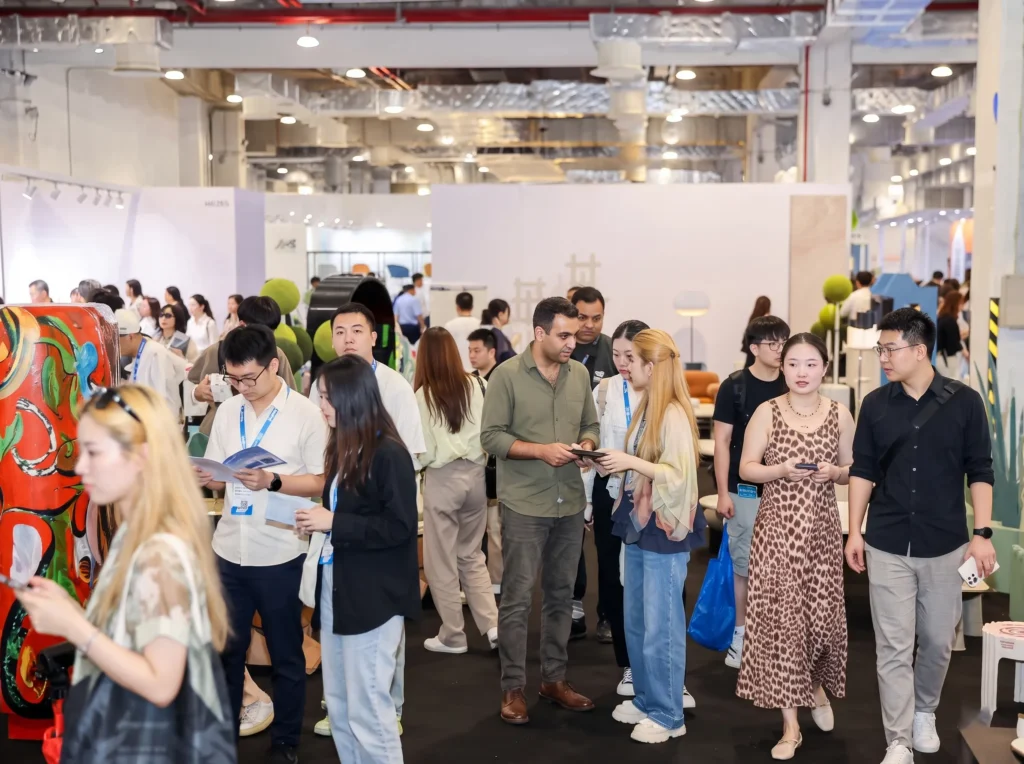
The single most useful mental model we give buyers is this: Guangzhou’s fair ecosystem is built around the factory; Shanghai’s is built around the buyer’s eye. Neither framing flatters one city over the other — they are simply optimized for different outcomes.
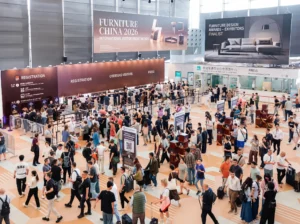
A few hard numbers anchor the picture. CIFF Guangzhou, run in two phases every March at the Pazhou complex, has an official gross exhibition area in the neighborhood of 700,000 m² across both phases. Furniture China, every September at SNIEC, runs around 350,000 m², with CIFF Shanghai adding a second September show at NECC. For reference only, subject to official verification — floor areas shift slightly year to year, and official CIFF and Furniture China materials should be checked for the edition you are attending.
Scale, however, is not the story. The story is what the scale is made of.
Manufacturing Gateway
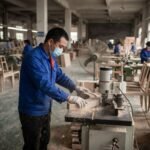
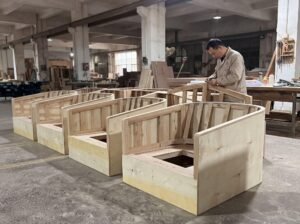
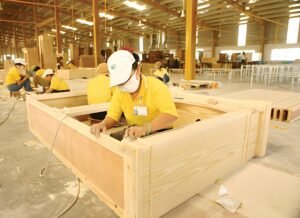
A manufacturing gateway is a fair ecosystem where the exhibitor base leans toward factories, OEM/ODM producers, and export-volume suppliers, and where the surrounding geography connects directly to production clusters. Guangzhou fits this definition almost perfectly. The Pazhou halls sit inside the orbit of the Pearl River Delta furniture belt, and a large share of CIFF exhibitors are manufacturers rather than brand licensors. When we walk CIFF Guangzhou with buyers and scan booth backwalls, we see production lines, export license numbers, and container-loading photos — the visual grammar of the factory floor.
Design Window
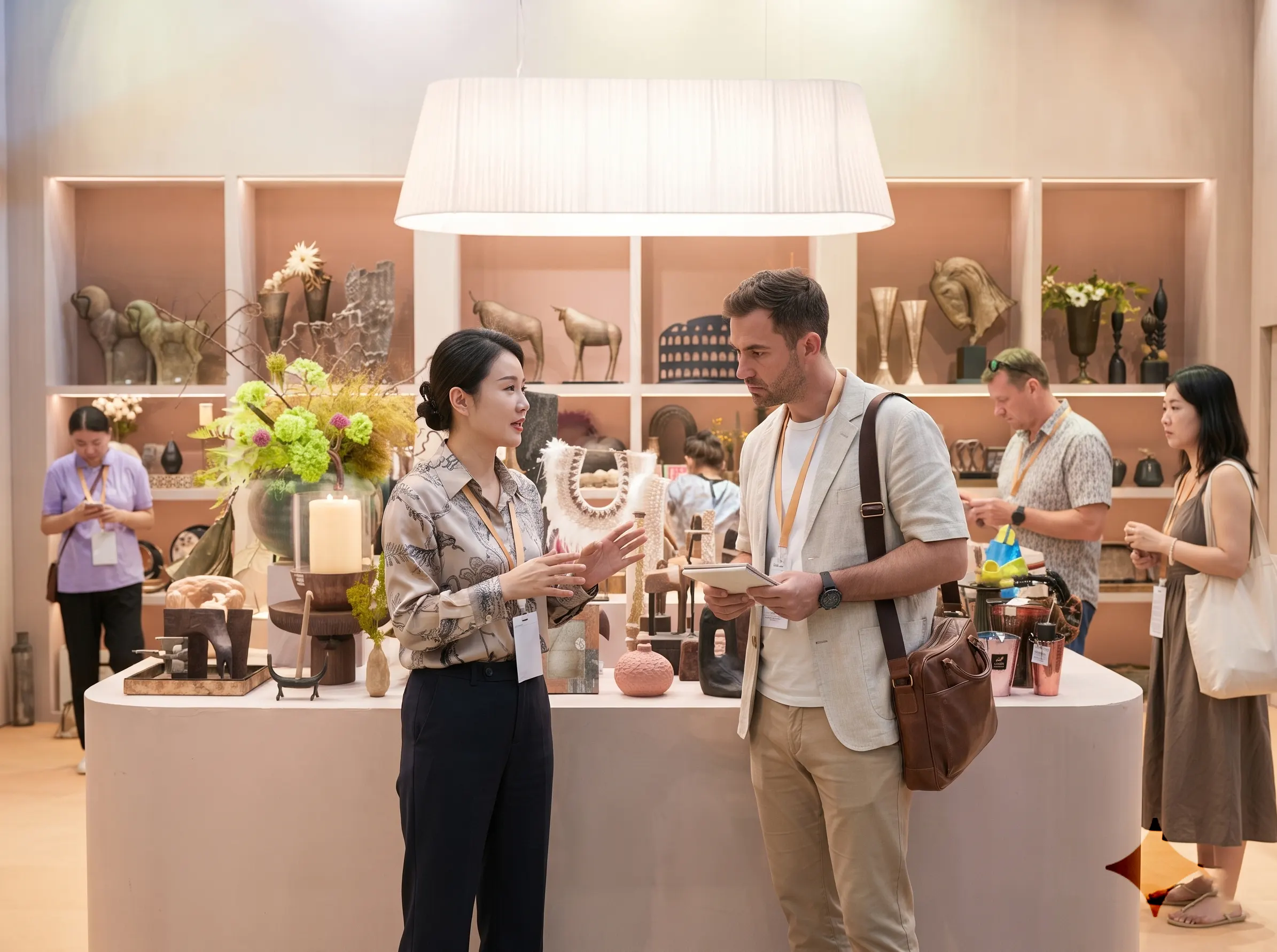
A design window is a fair ecosystem optimized for trend discovery, brand representation, and specification-grade products, where international exhibitors and curated design events cluster. Shanghai owns this role. Design Shanghai every March, the E1 international hall dynamics at Furniture China, and the Maison Shanghai programming create a density of international brands and original-design Chinese labels that no Guangzhou hall replicates. If your buying thesis is “find what my market will want in 2027,” Shanghai is where that thesis gets tested.
Industry Belt Proximity
Industry belt proximity is the door-to-door time and money cost between the exhibition venue and the production clusters you would actually audit. This metric, more than any keynote or exhibitor list, determines your total sourcing cost. We will break it down properly below, because it is where Guangzhou’s advantage becomes very concrete and where Shanghai buyers quietly pay a tax they never budgeted for.
Shanghai vs. Guangzhou: Fair Ecosystem at a Glance
| Dimension | Shanghai Cluster | Guangzhou Cluster |
|---|---|---|
| Anchor fairs | Furniture China (SNIEC, Sept 8–11), CIFF Shanghai (NECC, Sept 5–8), Design Shanghai (March) | CIFF Guangzhou (Pazhou, March 18–21 / March 28–31, two phases) |
| Core orientation | Design-led, export-oriented, brand-driven | Manufacturing-led, volume-driven, factory-direct |
| Floor scale | ~350,000 m² at Furniture China | ~700,000 m² across two CIFF phases |
| Exhibitor DNA | Brands, designers, trading houses, international pavilions | Factories, OEM/ODM, material and machinery suppliers |
| Buyer profile fit | Retail curators, designers, brand agents, premium importers | Volume importers, wholesalers, e-commerce sellers, project buyers |
| Secondary value | Trend forecasting, international networking | Machinery halls, material markets, one-stop supply chain |
Dates and floor figures should be verified against official CIFF and Furniture China announcements for your edition. For reference only, subject to official verification.
Cost Reality: Hotel, Flight, Ground Transport, and Time
Budget buyers ask us about airfares first. Experienced buyers ask about hotels and ground time first, because that is where the asymmetry actually lives.
Guangzhou’s Pazhou complex sits in Haizhu district, where a deep stock of mid-range business hotels competes hard during fair weeks. Shanghai’s SNIEC is in Pudong’s Chuansha area, where the hotel base is thinner and fair-season pricing bites harder; NECC at Hongqiao is better served but still carries a premium. Based on our year-over-year bookings around both shows, comparable rooms near Pazhou typically run 30–40% below comparable rooms near SNIEC during fair week. For reference only, subject to official verification — hotel pricing fluctuates daily, and booking 6–8 weeks out changes the picture dramatically.
| Cost Line | Shanghai | Guangzhou | Working Takeaway |
|---|---|---|---|
| Fair-week hotel near venue | Higher premium, thinner supply near SNIEC; NECC somewhat better | Typically 30–40% lower near Pazhou (reference only) | Guangzhou stretches a budget buyer’s dollar meaningfully |
| International flight access | Pudong + Hongqiao; dense long-haul connectivity | Baiyun; strong, Canton Fair-era network | Shanghai edges long-haul convenience; Guangzhou is rarely a problem |
| Venue-to-belt ground time | Add a separate trip to Anji, Haining, or Nantong | Metro/intercity links into Foshan’s Lecong and Longjiang | Guangzhou folds factory audits into the same trip far more easily |
| Daily food/local transport | Comparable | Comparable | A wash — do not over-weight this line |
Exhibitor Density and Product Mix: What Each City Actually Delivers
Walking both floors in the same season teaches you something the marketing decks never mention: the two cities are dense in different places. For reference only, subject to official verification — exact exhibitor counts change each edition.
| Product / Buyer Need | Where Density Concentrates | Why |
|---|---|---|
| Upholstery, sofas, mass-market casegoods | CIFF Guangzhou | Foshan belt factories exhibit at home; scale economics favor volume categories |
| Mattresses and bedding | Split: CIFF Guangzhou for OEM scale; Shanghai for branded lines | Guangdong and Jiangsu both host mattress clusters; brand HQ logic pulls some to Shanghai |
| Office and commercial furniture | Furniture China / CIFF Shanghai | Export-oriented commercial producers cluster around the Yangtze Delta |
| Original design, designer brands | Design Shanghai, Furniture China’s international halls | Curated programming and buyer expectations pull design forward |
| Furniture machinery, components, materials | CIFF Guangzhou machinery and material halls | One-stop supply chain logic; machinery buyers rarely need the design circuit |
| Hotel / FF&E project sourcing | Viable in both; Guangzhou for price engineering, Shanghai for spec-grade | Match the city to whether the project is budget-driven or design-driven |
The practical read: if your container strategy is built on three or four volume categories, Guangzhou compresses your search. If your margin lives in differentiated, spec-driven products, Shanghai’s density earns its premium.
Post-Show Factory Access: Which City Puts You Closer to the Belt
This is the dimension buyers most consistently underweight, and the one that most often flips a city decision. Exhibitors can be visited in any city; factories must be reached.
| Factory Destination | From Guangzhou | From Shanghai | Reality Check |
|---|---|---|---|
| Lecong furniture market, Foshan | Roughly an hour door-to-door via metro/intercity links from Pazhou | Not practical in the same trip | Guangzhou’s killer advantage; the world’s densest furniture trading town sits next door |
| Longjiang (sofa manufacturing core), Foshan | Same-day trip from Pazhou | Requires separate itinerary | Sofa and upholstery buyers should treat this as Guangzhou territory |
| Nankang (solid wood hub, Ganzhou) | High-speed rail from Guangzhou, a few hours | Impractical without a dedicated multi-day leg | Not adjacent to either city; Guangzhou is merely the saner launch point |
| Anji (chairs, seating), Zhejiang | Long transfer | Regional drive from Shanghai; still a dedicated day | Shanghai-adjacent on paper, not in practice — budget a day each way |
| Haining / Nantong | Not relevant from Guangzhou | Dedicated day trips or overnight | Textile and functional-furniture clusters serve Shanghai-side buyers |
For reference only, subject to official verification — transfer times depend on train schedules and traffic, which move. The structural point does not move: Guangzhou’s venue-to-belt geometry is tight, Shanghai’s is scattered.
The Hidden Cost of Doing Both Cities in One Trip
Every season we meet buyers attempting the double-header: Guangzhou in March, Shanghai in September, or worse, both in the same month. Some have a genuine reason — a mixed product portfolio, a brand launch plus a volume line. Most do not.
What we observe, consistently, is information overlap. The same factory groups exhibit at both CIFF phases and at Furniture China; the same trading companies staff multiple halls. A buyer doing both cities in one trip typically pays duplicate hotel premiums, duplicate flights, and duplicate days on the floor — to see 70–85% of the same supplier universe. For reference only, subject to official verification, but this overlap estimate matches what we hear from buyer after buyer on the ground.
There is also the fatigue tax. By day four of a mega-show, buyers stop opening catalogs, stop asking about MOQs, and start defaulting to whoever has a free chair and decent espresso. Splitting attention across two cities in one trip compounds that effect. Our working rule: one city, one show, deep — unless your product mix genuinely spans both ecosystems.
Buyer-Specific Playbooks
| Buyer Type | City Call | Why | Playbook |
|---|---|---|---|
| Volume B2B importer (full containers, price-driven) | Guangzhou | Factory density, Foshan proximity, lower hotel burn | CIFF phase one, then two days in Lecong and Longjiang |
| Mid-size retailer / e-commerce seller (Amazon, Wayfair, DTC) | Guangzhou first; Shanghai if design differentiation is the moat | Volume SKUs and OEM flexibility dominate; design line can be scouted later | Guangzhou with a pre-built SKU target list |
| Interior designer / FF&E project buyer | Shanghai, or both in one year if budget allows | Spec-grade products, international brands, trend signal | Furniture China + Design Shanghai; factory trips by exception |
| Brand agent / distributor seeking labels | Shanghai | Contracting happens where brands and design concentrate | Design Shanghai plus Furniture China meetings, booked weeks ahead |
| Personal / first-time exploratory buyer | Neither as a buying event — use digital sourcing first | Fair ROI for single-container buyers is thin | Shortlist factories online, then visit one belt, one city |
If you are weighing this decision against the full 2026 calendar, our which city furniture fair framework and the September show showdown analysis are worth reading before you book anything. This is the same logic we run when advising buyers on a shanghai guangzhou trade show itinerary — city first, fair second, dates third.

FAQ
Is Shanghai or Guangzhou better for a first-time China furniture fair visit?
For most first-timers, Guangzhou, if the goal is buying. The floor is bigger, the exhibitor base skews toward actual manufacturers, and you can walk from the fair into the Foshan belt without engineering a second trip. Shanghai is the better first visit only when the goal is learning the design landscape or meeting brand principals.
How much cheaper is Guangzhou than Shanghai during fair week?
Based on our year-over-year hotel bookings around both shows, comparable rooms near Pazhou typically run 30–40% below comparable rooms near SNIEC during fair week. For reference only, subject to official verification — rates swing with timing, and booking early compresses the gap. Flights and local transport are roughly a wash.
Can I visit both cities’ fairs in one trip?
You can, but count the cost honestly. Beyond the obvious duplicate travel spend, expect heavy exhibitor overlap — the same factory groups tend to appear at both CIFF and Furniture China. We see most dual-city buyers get better results from one city, deep, with a factory-belt extension. Mixed-portfolio buyers are the exception.
Which city is better for finding furniture factories directly?
Guangzhou, structurally. CIFF’s exhibitor base leans manufacturing, and the venue sits inside the Pearl River Delta belt — Lecong and Longjiang are same-day territory. Shanghai works for factory contact collection, but serious production audits around Shanghai mean adding Anji, Haining, or Nantong legs to your itinerary.
When should I book hotels and flights for these fairs?
As early as the booking window allows — for March shows, we advise locking rooms by early January; for September shows, by early July. Fair-week hotel premiums compound fast near SNIEC in particular, and the best-value business hotels near Pazhou fill with returning buyers who rebook year to year.
Do I need a visa, and does the city choice affect it?
Both cities are covered by standard Chinese business or tourist visa processes, and fair organizers typically issue invitation letters to registered buyers. City choice does not change visa mechanics, but allow several weeks of processing time. Verify current requirements with official consular sources before booking non-refundable travel.
Your Move
The city question is really a budget question wearing a geography costume. Tell us your product mix, your monthly container count, and your real travel budget — or share your own Shanghai or Guangzhou fair experience in the comments — and we will tell you where we would put your money.
Recommended Resource
Interi Furniture specializes in custom furniture manufacturing for residential, hospitality, and commercial projects. Their experience in materials, craftsmanship, and project realization makes them a valuable resource for designers and buyers seeking tailored furniture solutions from China.