


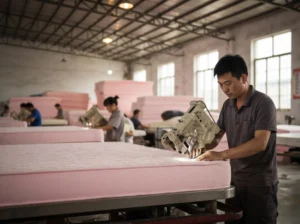








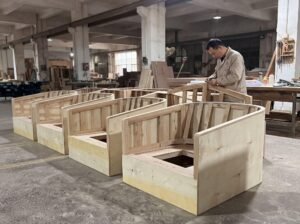
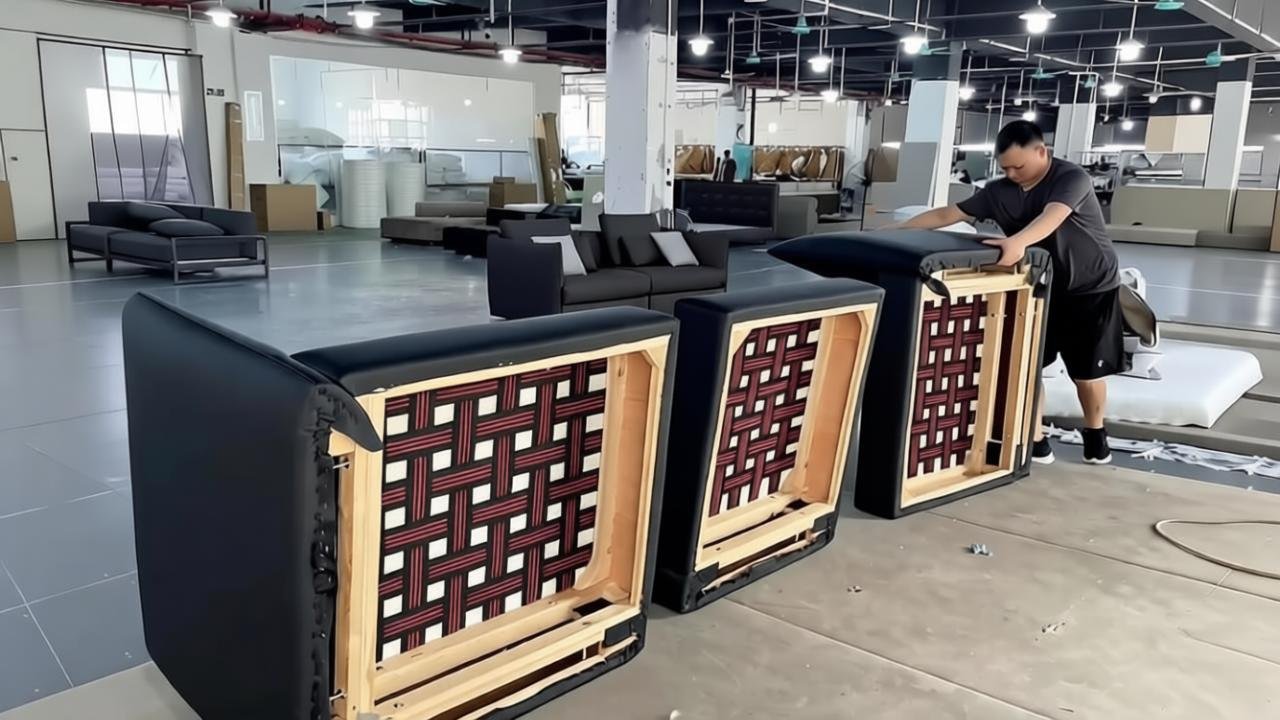
Sofa frame inspection is the step most buyers skip during pre-shipment checks. Not because they do not care, but because they cannot see it. The frame is buried under foam, non-woven fabric, and upholstery. You cannot inspect it without tearing open the bottom dust cover. And factories are rarely eager to let you do that. This “out of sight, out of mind” attitude makes the frame the safest hiding spot for corner-cutting across China’s sofa manufacturing sector.
Last year, an American buyer received a shipment that looked fine at arrival. Three months later, the seat began to sag. When they finally cut open the bottom, the main beam had shrunk from 40 mm to 30 mm, and every joint was held together by pneumatic staples. The FOB value was $120,000. By the time they finished handling after-sales claims and rework, nearly $80,000 had evaporated. The problem was in the frame. They found out too late.
The State Administration for Market Regulation of China’s 2024 national product quality inspection report shows an overall 14.3% non-conformity rate across 25,250 batches. The e-commerce channel hit 23.5%, while production floors scored only 6.7%. In sofa-specific inspections, non-conformity rates over the past three cycles were 10.8%, 17.5%, and 12.0%. Behind these numbers, structural frame issues—excessive wood moisture content, undersized load-bearing members, and staple joints replacing mortise-and-tenon—consistently rank among the top non-conformity causes. Yet they rarely surface in routine inspections.
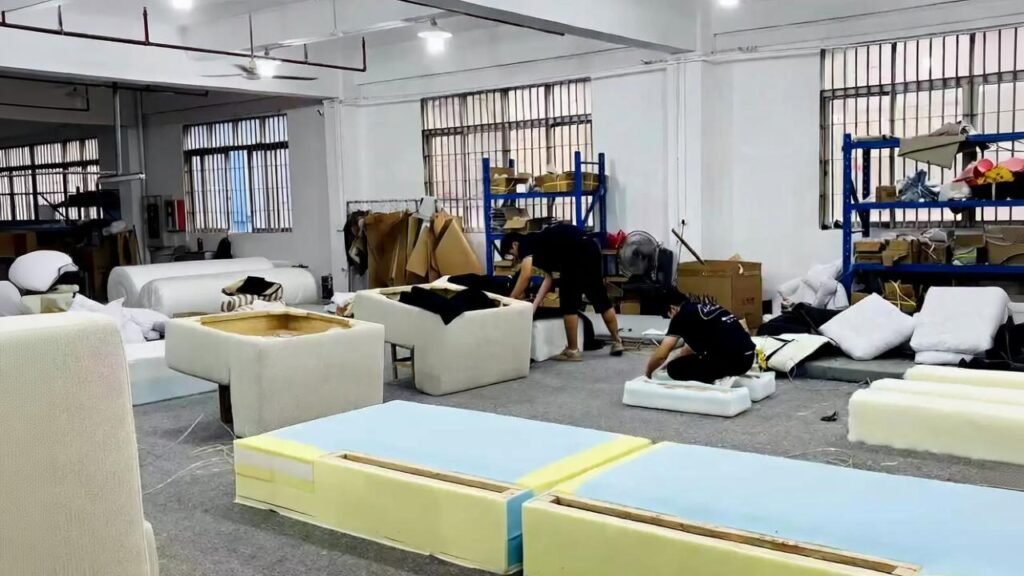
Why Factories Take the Risk on Frames
The reason is simple: the frame is the safest place to cut corners.
In a typical sofa BOM, frame timber and hardware account for roughly 12% to 15% of cost, while foam and upholstery take 45% to 55%. Cutting foam density or fabric weight is risky—buyers can feel the difference within minutes. But swapping a main beam from 40 mm × 40 mm to 30 mm × 30 mm, or replacing dovetail joints with pneumatic staples, leaves no trace on the surface.
This invisibility makes the frame the preferred target for cost compression. A common industry practice, rarely discussed openly, runs on two tracks: showroom samples use genuine specifications to pass all tests, while bulk production quietly switches to lower-grade timber. Buyers receive a compliance report tied to the sample, then receive a product built to a different material standard.
The timing makes it worse. Frame issues typically emerge 6 to 18 months after delivery. Wood with excessive moisture content shrinks gradually in dry climates, loosening mortise joints. Stapled connections pull out under repeated seating loads. By then, the standard procurement warranty (usually 3 to 6 months) has expired, and payment has long been settled. Factories can deflect blame toward “improper use” or “environmental conditions.” Buyers have little leverage to prove a factory-floor quality issue.
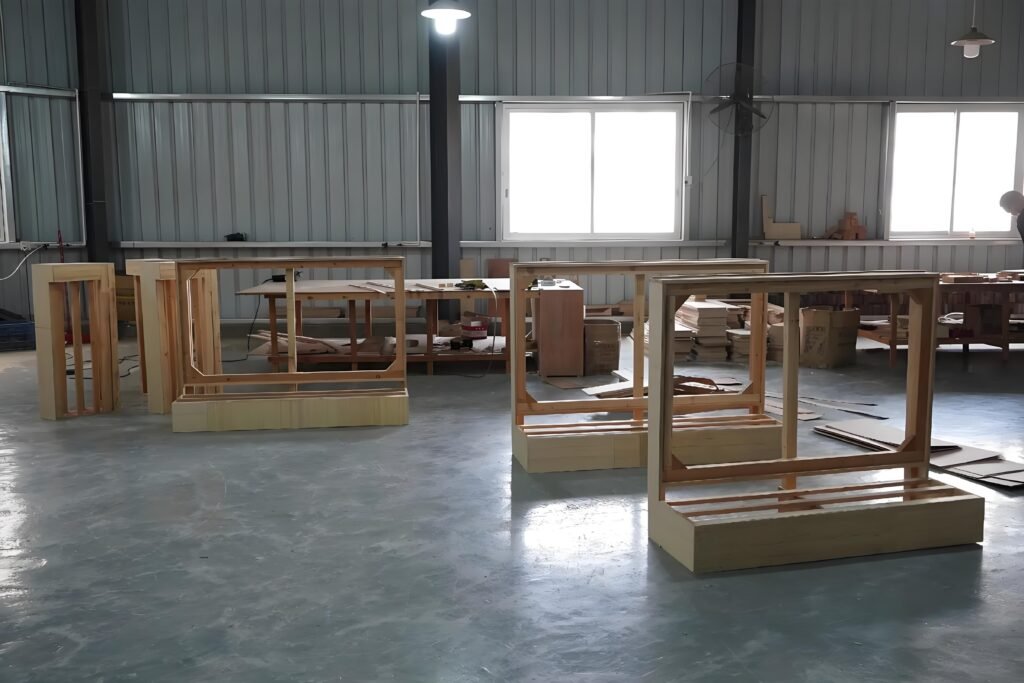
Moisture Content Exceedance: The Longest Incubation Period
QB/T 1952.1-2023 tightens moisture-content rules significantly versus the 2012 edition: wood moisture content must sit between 6% and the local annual average wood equilibrium moisture content plus 1%. In South China, where the annual equilibrium moisture content averages roughly 15.5%, the statutory upper limit becomes 16.5%. Export-tier factories, however, typically hold moisture content within 8% to 12% to cover global climate variations during shipping and end-use.
The damage does not show up immediately. For every 1 percentage point above the statutory limit, wood modulus of rupture drops roughly 3% to 5%, and compressive strength falls about 2% to 4%. When moisture content rises from a compliant 10% to 14%, free water in cell cavities begins to evaporate, causing irreversible shrinkage. If a single component carries a moisture gradient exceeding 2 percentage points—say, 10% at the core and 14% at the surface—internal stress concentration develops during service, ultimately producing cracks or loose joints.
Most buyers arrive at inspection without a pin-type moisture meter (accuracy ±0.5%, probe length ≥20 mm). This leaves the check essentially blank at the factory gate. On the production side, problems often originate in the drying kiln. Published research shows that when fully loaded, temperature differentials at the kiln bottom can reach 4.7°C, pushing moisture content roughly 0.9 percentage points higher on lower layers. If the factory skips final conditioning, moisture deviation across a single batch can easily exceed the standard tolerance.
Undersized Structural Members: Hidden Shrinkage Inside
Some factories reduce main load-bearing timbers from the standard 40 mm × 40 mm to 30 mm × 30 mm, or substitute solid hardwood with “core-filled” stock whose center comprises inferior softwood. QB/T 1952.1-2023 explicitly prohibits bark inclusions in internal materials and requires load-bearing zones to pass durability testing.
Such size reductions are entirely invisible during external inspection. They are identifiable only through destructive disassembly or X-ray imaging. A more subtle tactic: main beams meet specification, while secondary load-bearing members—back-panel cross rails, inner arm supports—are quietly downsized. These areas hold up fine in the short term but develop structural looseness after 2 to 3 years.
Here is an industry trick worth remembering: hardwoods such as birch, beech, or rubberwood show dense grain. Run a fingernail across the side of a timber member. Hardwood leaves only a shallow mark, while softwood may gouge noticeably. If you see obvious resin canals after removing the bottom cover, you are almost certainly not looking at hardwood.
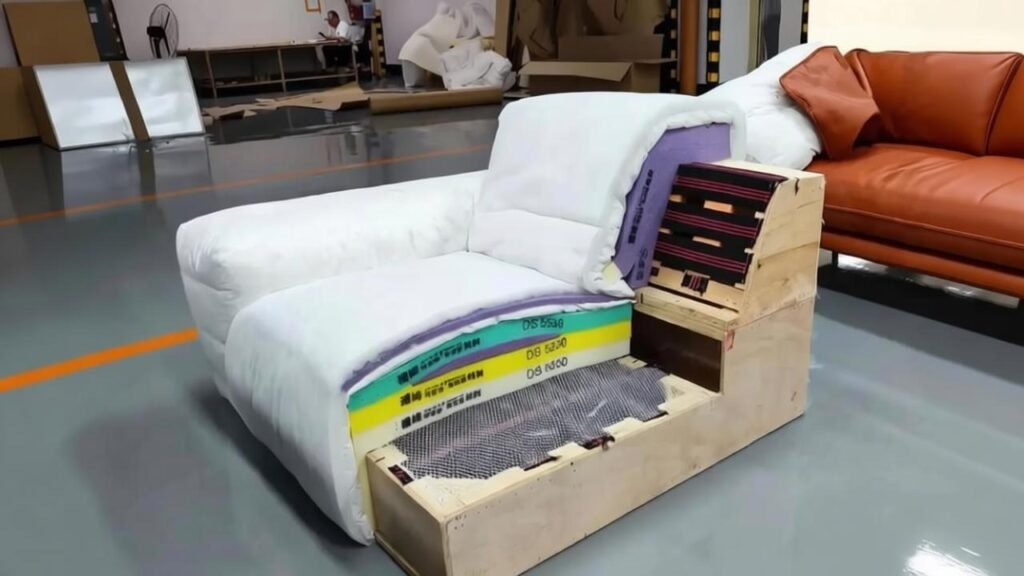
Corner-Cutting in Joinery: The Industry’s Open Secret
Joinery method governs the reliability of load-transfer paths. Industry standards require primary frames to use mortise-and-tenon joints or metal connectors of equivalent strength. Yet pneumatic stapling in place of joinery, and ordinary self-tapping screws in place of engineered metal brackets, are not uncommon in small and mid-sized plants.
Staple withdrawal resistance is only 15% to 20% that of mortise-and-tenon joints. Under QB/T 1952.1-2023 durability testing, Grade A requires 60,000 cycles and Grade C requires 20,000. Stapled joints typically loosen after 8,000 to 12,000 cycles.
What does this mean in practice? A stapled frame may last 2 to 3 years of residential use, while a compliant mortise-and-tenon frame reaches 8 to 10 years. Buyers therefore receive only 30% to 40% of the nominal value.
Core Data Comparison: Where Frame Defects Rank
| Defect Type | Public Inspection Detection Rank | Severity | Concealment | Long-Term Impact | Applicable Standard |
|---|---|---|---|---|---|
| Structural Frame Defects (moisture/ sizing/ joinery) | 1 | High | Fully Concealed | Service life shortened 60%–70% | QB/T 1952.1-2023, GB/T 3324-2017 |
| Insufficient Foam Density | 2 | Medium | Semi-Concealed | Seat sag, comfort loss | QB/T 1952.1-2023 Annex B |
| Fabric Abrasion/ Color Fastness Failure | 3 | Medium | Visible | Surface wear, aesthetic degradation | GB/T 3920, GB/T 21196.2 |
| Formaldehyde / VOC Exceedance | 4 | High | Semi-Concealed | Health risk, compliance risk | GB 18584-2024, QB/T 1952.1-2023 Annex C/D |
| Base Stability Deviation | 5 | Low | Visible | Poor user experience | QB/T 1952.1-2023 6.3 |
On-Site Inspection: No Special Tools Required
Ask the factory to open the bottom dust cover. Factories often resist, claiming “it will not go back properly” or “it affects resale.” Buyers should insist this be part of the inspection routine. Specify it in the contract if necessary.
Three things to check after removing the cover:
Bark inclusions. QB/T 1952.1-2023 prohibits bark on internal materials. If bark or insect holes are visible on timber members, mark the unit as non-conforming.
Grain density. Hardwoods show dense grain. Pine or poplar display loose grain with visible resin canals. Run a fingernail across the side of a timber member: hardwood leaves only a shallow mark, while softwood may gouge noticeably.
Connection nodes. Mortise-and-tenon joints should show clear tenon-and-mortise engagement. If primary load-bearing nodes show only a row of staples or a few self-tapping screws, the construction fails the standard.
Three hands-on tests:
Torsion test. Grasp one armrest with both hands and apply roughly 50 N·m torque in opposite directions. A compliant frame produces no creaking or visible twisting. If you hear metal-on-metal friction or feel the frame “wringing,” joint clearances are excessive.
Single-leg drop. Lift one leg roughly 5 cm and release. The frame should remain rectangular with diagonal distortion ≤3 mm. Anything beyond that signals insufficient rigidity or loose connections.
Knock test. Tap leg posts and cross rails with a knuckle. Solid hardwood produces a crisp, short resonance. Hollow, soft, or internally cracked members yield a dull, prolonged tone.
Three parameters to verify with instruments:
Moisture content. Use a pin-type meter at three unpainted points; average value should be ≤12% for export-grade product, with intra-component deviation ≤2%.
Timber dimensions. Main load-bearing members should measure at least 35 mm × 35 mm for three-seat sofa base rails, and 30 mm × 30 mm for arm posts.
Metal fitting thickness. Connector wall thickness must be ≥1.2 mm per QB/T 1952.1-2023.
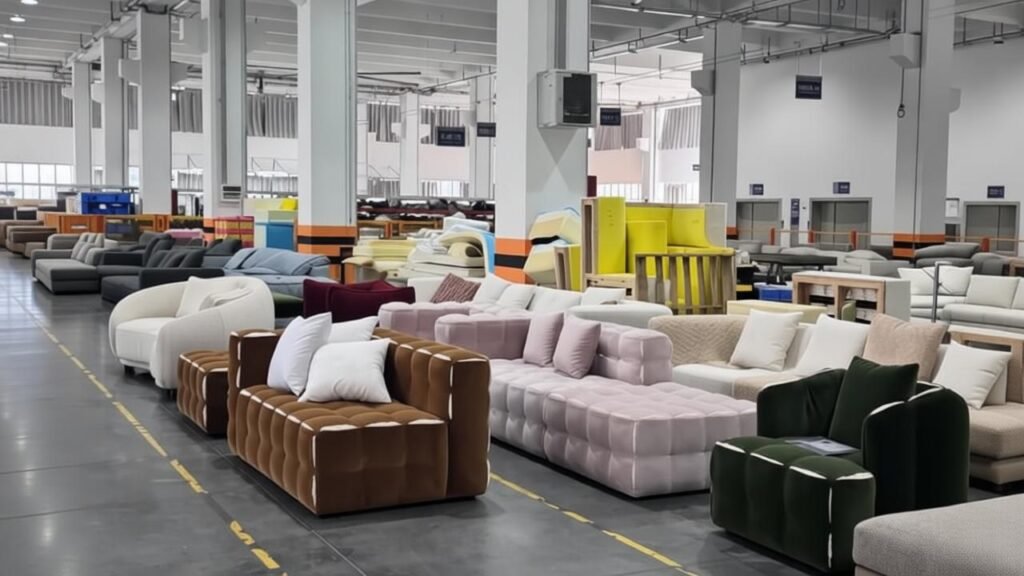
The Commercial Price of Concealed Defects
Frame problems do not explode on day one. SAMR data show e-commerce furniture non-conformity (23.5%) far exceeds production-floor non-conformity (6.7%), indicating severe information asymmetry in distribution channels. When frame defects surface 6 to 18 months after delivery, buyers absorb:
Overseas after-sales costs. Repair or replacement logistics for a single sofa run 80% to 120% of FOB value.
Brand reputation loss. Frame squeaks and collapse account for roughly 18% to 22% of negative e-commerce reviews, based on published third-party inspection agency statistics on cross-border return causes.
Recall exposure. In the EU RAPEX notification system, frame breakage and stability deficiencies represent 34% of furniture product recalls for structural safety.
Furniture Discover Exclusive Insight: Underlying Logic and Risk Mitigation
Let us be direct. The essence of sofa frame defects is quality arbitrage under information asymmetry. Factories are betting that buyers will not cut open the bottom cover.
Why small plants are the epicenter
SAMR inspection data reveal a clear gradient: small manufacturers record a 15.2% non-conformity rate, medium enterprises 4.5%, and large enterprises only 2.5%. Low-price orders flow to small plants, where kiln temperature control, timber grade sorting, and joinery training are often inadequate. Buyers who push price too hard are effectively paying for frame defects.
The gap against international standards
U.S. BIFMA X5.4 (Lounge and Public Seating) prescribes structural durability testing simulating ten years of single-shift service. EU EN 1728:2012 requires frames to pass vertical static load and horizontal fatigue testing. Some domestic factory samples pass QB/T Grade C (20,000 cycles) yet fail prematurely under BIFMA equivalent testing. Relying solely on domestic compliance reports for export orders can lead to after-sales failures in target markets.
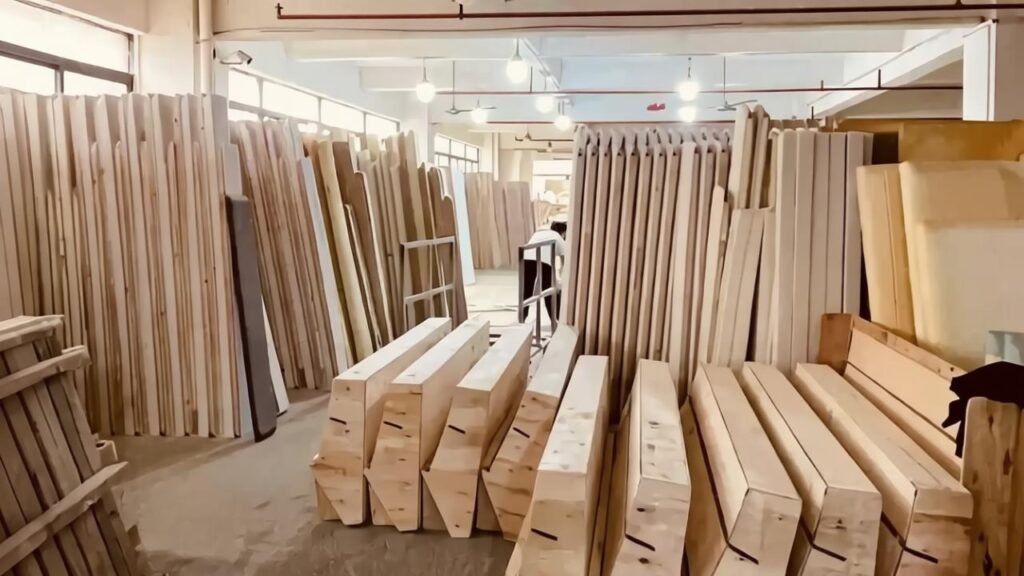
Risk-mitigation screening logic
Factory pre-qualification. Prioritize plants with BIFMA X5.4 or EN 1728 test capability. Request frame-durability third-party reports from the last six months. Do not settle for fabric and foam reports only.
Contractual constraints. Specify moisture-content ceiling (recommend ≤12%), minimum main-beam cross-section, joinery requirements (mortise-and-tenon or equivalent metal), and a six-month latent-defect recourse period. This extended period is necessary because frame issues incubate longer than standard warranty terms.
Inspection upgrade. Sample each batch at AQL 2.5, with at least one unit undergoing bottom-fabric removal. For first orders or new suppliers, perform one full disassembly. The disassembly cost can be amortized into unit pricing. Compared to overseas after-sales costs (80% to 120% of FOB value for a single sofa), this is negligible.
Long-term monitoring. Maintain a supplier frame-quality dossier correlating moisture content, disassembly findings, and after-sales claims. Suspend cooperation after two frame incidents within six months.

Questions Buyers Ask Most Often
Is destructive disassembly mandatory for sofa frame inspection?
Destruction of one unit is recommended for first orders to establish a baseline. Subsequent batches can rely on bottom-fabric removal combined with moisture-meter readings.
What accuracy is required for a wood moisture meter?
Portable pin-type meters should offer accuracy no worse than ±0.5%, with probe length ≥20 mm to reach the wood substrate. Calibrate before use; take three readings and average them.
Are stapled frame joints automatically non-compliant?
QB/T 1952.1-2023 requires primary frames to use mortise-and-tenon or equivalent-strength metal connectors. Staples may serve only as auxiliary fixation, not as primary load-bearing connections. If main nodes rely solely on staples, the product fails the standard.
What causes squeaks when moisture content is within spec?
Likely causes include uneven drying (intra-component gradient >2 percentage points) or loose joint clearances. Check tenon fit tightness and whether metal fasteners include anti-loosening washers.
How can I verify that a factory’s durability report covers the bulk batch?
Require the report to state the production batch number, sample ID, and test date; cross-check wood species and joinery method against the bulk specification. Commission witness testing by a third party if necessary.
Should moisture-content limits vary by destination climate?
Yes. For Nordic markets (indoor heating humidity 20%–30%), target 8% to 10%; for Southeast Asia (70%–90% humidity), target 10% to 12% to balance shrinkage and swelling risk.
Can undersized frame members be accepted if they pass durability testing?
Not recommended. Undersized members may survive short-term testing but fail prematurely under long-term creep loading. The standard test is a floor, not a ceiling; demand a 20% safety margin above standard requirements.
What is the strongest negotiation leverage when frame defects are found?
Anchor discussions to specific standard clauses (QB/T 1952.1-2023 article numbers) and third-party test reports, avoiding subjective descriptions. Demand corrected material lists, moisture-control records, and re-test reports.
Practical Toolkit: Sofa Frame On-Site Inspection Checklist
Usage: This checklist is designed for buyer QC, third-party inspectors, and brand quality managers during pre-shipment or inbound inspection. Print and carry; complete each item with measured data.
Visual Inspection (Post-Disassembly)
| Check Item | Acceptance Criteria | Measured Result | Pass/Fail |
|---|---|---|---|
| Timber Species | Hardwood (birch / beech / rubberwood); no pine / poplar / basswood | □ Pass □ Fail | |
| Bark Inclusions | Internal materials free of bark (QB/T 1952.1-2023) | □ Pass □ Fail | |
| Decay / Infestation | No rot spots, worm holes, or live insect eggs | □ Pass □ Fail | |
| Timber Section | Main rail ≥35 mm × 35 mm; arm post ≥30 mm × 30 mm | □ Pass □ Fail | |
| Joinery Method | Primary nodes: mortise-and-tenon or metal bracket + bolt; no staple-only primary joints | □ Pass □ Fail |
Structural Test (No Tools)
| Check Item | Acceptance Criteria | Measured Result | Pass/Fail |
|---|---|---|---|
| Torsion Test | Apply 50 N·m torque; no creaking, no visible deformation | □ Pass □ Fail | |
| Single-Leg Drop | Lift one leg 5 cm and release; diagonal distortion ≤3 mm | □ Pass □ Fail | |
| Overall Stability | Press all four seat corners by hand; no wobble, no abnormal noise | □ Pass □ Fail |
Parameter Verification (Portable Instruments)
| Check Item | Acceptance Criteria | Measured Result | Pass/Fail |
|---|---|---|---|
| Wood Moisture Content | ≤12% (export grade); intra-component deviation ≤2% | Pt 1: % Pt 2: % Pt 3: % Avg: % | □ Pass □ Fail |
| Metal Fitting Thickness | ≥1.2 mm (QB/T 1952.1-2023) | □ Pass □ Fail | |
| Seat Compression | 55 mm–110 mm (QB/T 1952.1-2023) | □ Pass □ Fail |
Inspection Conclusion: □ Batch approved for shipment □ Batch rejected; trigger corrective action / return
The essence of sofa frame defects is quality arbitrage under information asymmetry. Buyers can only convert frame risk from “unknowable” to “controllable” by making concealed inspection visible and standardizing empirical judgment. FURNITURE DISCOVER continues to track publicly available inspection data and standard evolution across China’s furniture supply chain, providing global buyers with a verifiable, actionable, and traceable quality-cognition infrastructure.

Recommended Resource
Interi Furniture specializes in custom furniture manufacturing for residential, hospitality, and commercial projects. Their experience in materials, craftsmanship, and project realization makes them a valuable resource for designers and buyers seeking tailored furniture solutions from China.