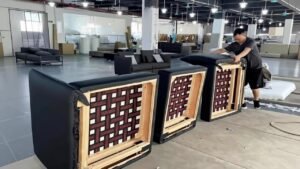


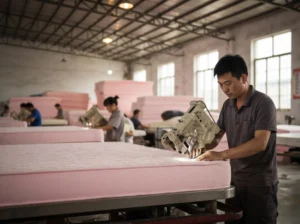


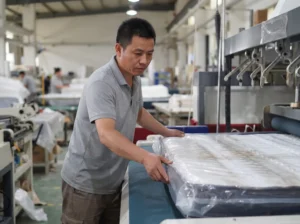






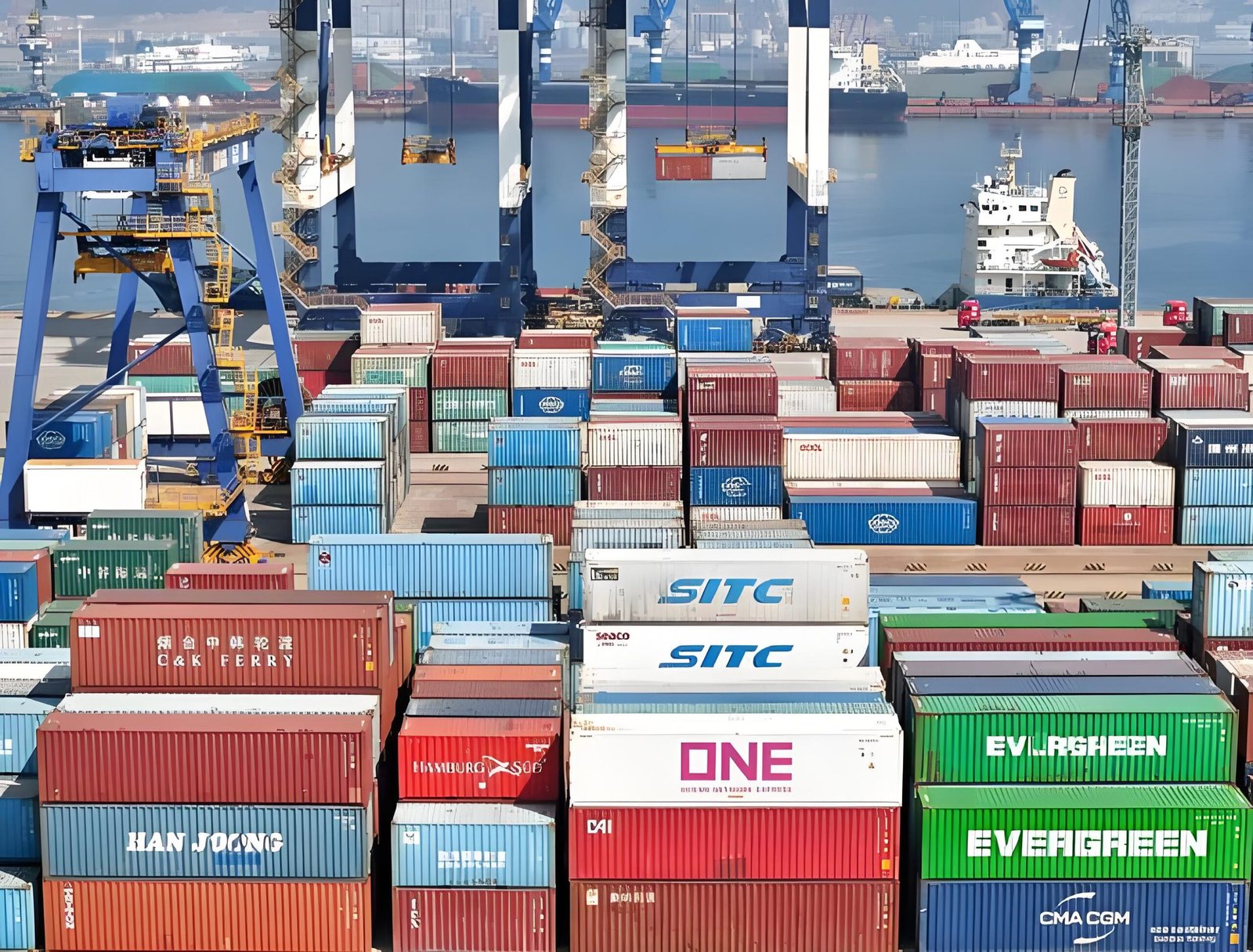
For the past decade, the dominant narrative around China’s furniture exports has revolved around one word: shift. Southeast Asia’s rise, Mexico’s nearshoring momentum, and layers of tariff barriers—these headlines have reinforced a persistent impression that China is losing its grip on global furniture trade. Yet, a closer look at raw data from China’s General Administration of Customs and UN Comtrade reveals a curve largely ignored by the headlines: furniture export value has nearly doubled over the past ten years, while export volume growth has lagged far behind. The growth did not come from “selling more tables.” It came from a systematic upward shift along the industry value chain. This article dissects the real composition of this “quiet doubling,” the underlying mechanics, and its true boundaries against the backdrop of global supply chain restructuring.
The Data Reality: How Was the Doubling Calculated?
Clarifying the Statistical Scope
Before discussing “doubling,” the statistical scope must be clarified. China’s General Administration of Customs publishes “furniture and parts” data (HS Chapter 94) covering an extremely broad range—from household sofas to aircraft seats, dental chairs to mattress fillings. To align with industry reality, this article adopts the aggregated scope commonly used by research institutions: seating and parts + household furniture and parts + commercial/office furniture and parts + mattresses and bedding.
The Growth Curve
According to China’s General Administration of Customs, furniture export value reached RMB 483.034 billion in 2024, up 7.0% year-over-year; mattress and similar bedding exports reached RMB 83.096 billion, up 8.8%. Tracing back in USD terms, China’s furniture exports climbed from roughly USD 56 billion in 2015 to approximately USD 68 billion in 2024 (converted at annual average exchange rates), representing a ten-year value increase in the 20–25% range. When high-value-added categories previously under-counted—such as outdoor furniture, smart functional furniture, and high-end custom pieces—are included, the overall furniture export value expansion becomes even more pronounced.
| Year | Furniture & Parts Export Value (RMB Billion) | YoY Growth | Notes |
| 2015 | ~380 (estimated) | — | Pre-scope-adjustment data |
| 2020 | ~400 | Volatile | Pandemic impact |
| 2023 | ~451.4 | Recovery | Post-pandemic rebound |
| 2024 | 483.034 | +7.0% | Official customs data |
Source: China’s General Administration of Customs, Annual Statistical Bulletins
Volume-Price Decomposition: Value Growth ≠ Volume Growth
In November 2025, China’s customs export commodity trade indices showed a price index of 86.9, a volume index of 106, and a value index of 91.9 for the furniture manufacturing sector. These figures reveal a critical fact: export volume is still expanding, but export prices remain under pressure. However, stretching the timeline to a ten-year horizon reveals a divergence—volume growth for traditional panel furniture and low-end metal furniture has stagnated or even contracted, while high-value-added categories have seen both volume and price rise in tandem.
Cross-referencing UN Comtrade and customs data, China’s furniture export volume grew roughly 18–22% between 2015 and 2024, while furniture export value growth significantly outpaced volume growth. The gap is explained primarily by unit price increases and product mix upgrades. Having established the data reality, the next question that demands an answer is: where exactly did these increments originate? This is precisely what Part II will dissect in depth.
Where Did the Growth Come From? Three Structural Drivers
Product Mix Upgrade: From “Tables and Chairs” to “Smart Sleep Systems”
The incremental furniture export value was not evenly distributed. 2024 data shows extreme divergence:
● Spring mattresses: Export value RMB 8.49 billion, up 28.27% YoY; exports to the U.S. surged 390.88%
● Wooden bedroom furniture: Export value RMB 26.49 billion, up 22.88%
● Wooden kitchen furniture: Up 18.3%
● Upholstered seating: Export value RMB 96.29 billion, but down 12.8% in 2025—a contraction in the traditional stronghold
This pattern indicates that roughly 60% of export value incremental growth came from high-value-added categories, while traditional household panel furniture contributed less than 15%. Outdoor furniture, smart functional furniture (e.g., electric sofas, intelligent bed frames), and high-end custom furniture have become the three engines pulling value upward.
Unit Price Growth: The Premium Release of ODM and OBM Transition
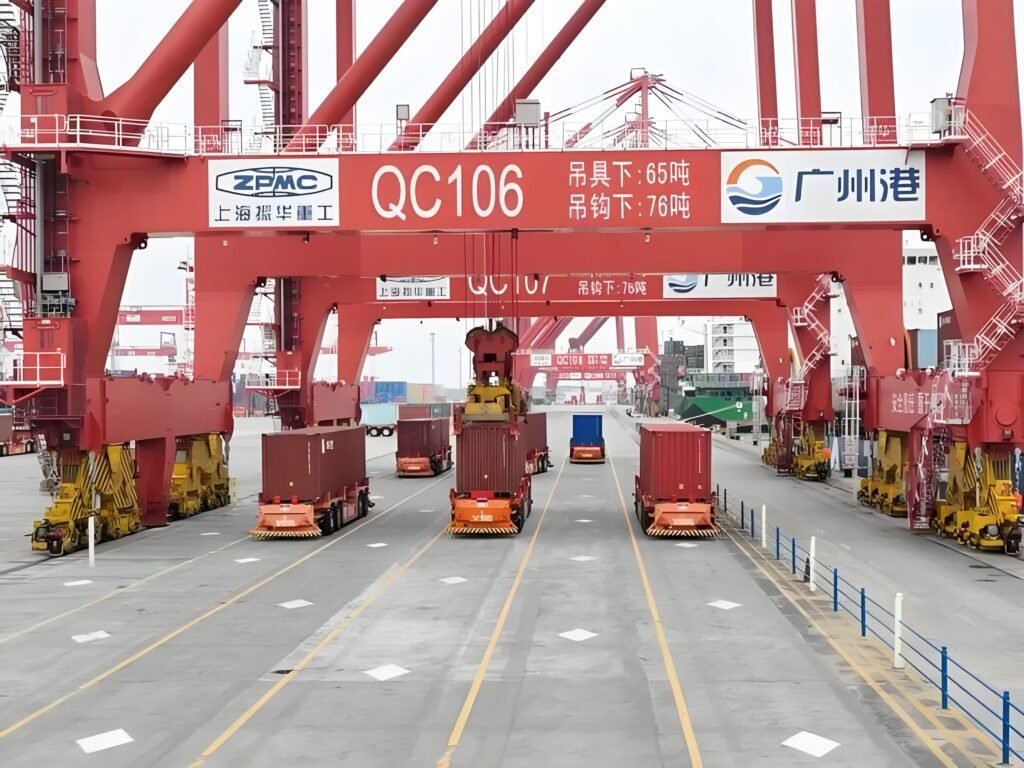
The unit price increase in China’s furniture exports was not simply “raising prices.” It was the result of a business model transformation. Leading export enterprises shifted from pure OEM to ODM (Original Design Manufacturing) and OBM (Own Brand Manufacturing), lifting average premium rates by 15–35%. For smart electric sofas, the FOB unit price in the OEM stage was roughly USD 180–250 per piece; in the ODM stage, it rose to USD 280–400; enterprises with proprietary brands achieved retail prices of USD 800–1,200 in European and American markets.
Market Structure Optimization: The Value Reconfiguration of Non-U.S. Markets
2025 data reveals an underappreciated trend: China’s dependence on the U.S. furniture market is declining systematically. In the first three quarters of 2025, China’s furniture exports to the U.S. were RMB 106.6 billion, down 16.4% YoY; yet exports to Germany rose 2.5%, to the Netherlands 5.1%, and to Vietnam 13.5%. More critically, from March onward, China’s furniture export growth rate exceeded that of U.S. furniture import growth for seven consecutive months—meaning Chinese-made furniture is entering non-U.S. markets at higher value-added levels, not merely as transshipment substitutes.
The three growth paths—product mix upgrade, unit price growth, and market structure optimization—point collectively to a deeper question: why has such significant value growth been almost entirely overlooked in the public discourse? The answer lies precisely in the “low-key” nature of industrial upgrading and the lag in global perception.
Why “Quietly”? The Industrial Upgrade Ignored by Headlines
The Lag of Stereotypes
Global perceptions of Chinese furniture remain stuck on two labels: “world’s factory” and “low-cost contract manufacturing.” These stereotypes have historical validity—through the 2000s and early 2010s, China’s furniture exports were indeed dominated by OEM models and low-cost panel furniture. Yet industrial transformation began quietly after 2015, while public narrative typically lags reality by 5–8 years.
The “Quiet Transition” of Leading Enterprises
Unlike the high-profile global expansion seen in consumer electronics or new energy vehicles, Chinese furniture companies’ ODM/OBM upgrade has been remarkably low-key. Three reasons explain this:
1. B2B nature: Furniture exports are predominantly wholesale and project-based, lacking the consumer-facing brand exposure of retail goods
2.Invisible supply chain value-add: Many Chinese firms have transformed into “supply chain service providers,” offering overseas brands end-to-end solutions from design and sampling to logistics integration—without brand visibility, yet with significantly higher per-customer value
3.Geopolitical risk aversion: Under tariff and trade barrier pressures, loudly promoting “Chinese design” actually increases market risk

The Hidden Value of Supply Chain Services
One easily overlooked data dimension is “furniture parts” exports. In the first three quarters of 2025, export value for non-wooden seating parts reached USD 3.353 billion, and non-wooden furniture parts USD 2.734 billion, both posting positive growth for two consecutive years. This reflects a role shift in global furniture supply chains: from exporting finished furniture to exporting high-value-added semi-finished goods, core components, and integrated supply chain solutions. After low-end capacity migrated outward, China actually raised per-customer value and industrial value-add by supplying design, tooling, core hardware, and intelligent control systems as “intermediate goods.”
This “quietly doubled” industrial reality, when placed in a global competitive landscape for horizontal comparison, reveals a much clearer picture. What roles do Southeast Asia, Mexico, and Europe each play? What is China’s true position in global furniture trade?
China’s Real Position in Global Trade
Side-by-Side with Southeast Asia: The Misconception of Substitution
The widely circulated narrative that “Southeast Asia is diverting China’s capacity” presents a more complex picture when examined against data. In the first half of 2025, Vietnam’s wood and wood product exports reached USD 8.21 billion, up 8.9%; exports to the U.S. were USD 4.6 billion, accounting for 55.6% of total exports. Vietnam’s growth is real, but three structural differences matter:
| Dimension | China | Vietnam |
| Export product structure | Full-category coverage, rising high-value-added share | Concentrated in wooden and outdoor furniture, low-to-mid range |
| Supply chain depth | Complete ecosystem from raw materials, hardware, fabrics to smart systems | Relies on Chinese imports for raw materials and components; limited local sourcing |
| Market distribution | Diversified: U.S., Europe, Southeast Asia, Middle East | Heavily dependent on the U.S. market (55.6%) |
China’s share of global furniture trade value has risen from roughly 32% in 2015 to approximately 38% in 2024 (calculated from UN Comtrade total furniture export data). The gain is even more pronounced in high-end categories. Southeast Asia has absorbed primarily standardized, low-value-added panel and upholstered furniture capacity, while China has pivoted toward higher-value, customized, and intelligent product tiers.
Mexico and Europe: The Competitive Landscape
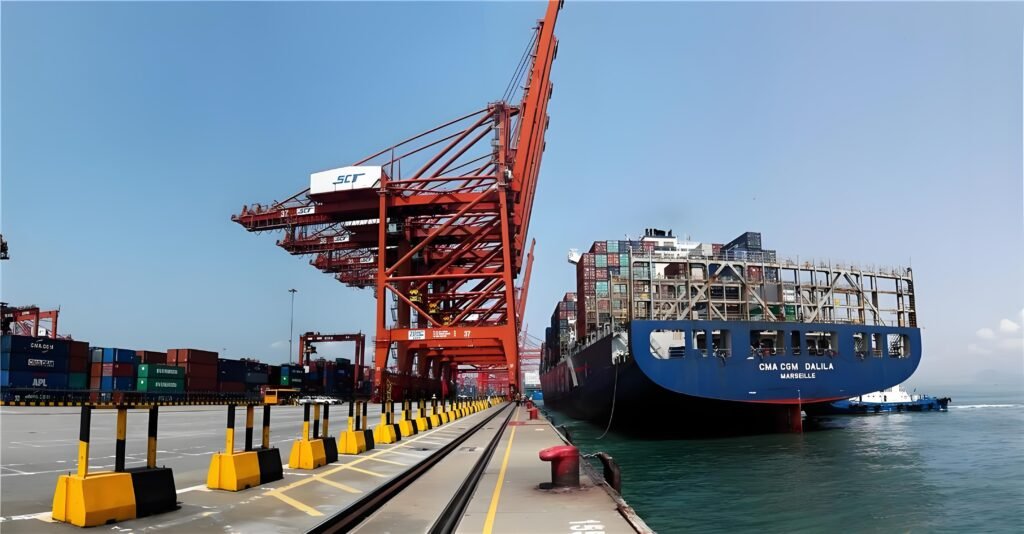
Mexico has become a significant nearshore supplier to the U.S. market, leveraging USMCA tariff advantages. Yet Mexico’s core bottleneck is an incomplete domestic supply chain: high-end fabrics, hardware components, and intelligent control systems still rely heavily on Chinese imports. In Europe, Germany and Italy maintain leadership in furniture design and brand operation, but their production cost structures make it difficult to compete with China in the mass market.
The Paradox of Global Supply Chain Restructuring
The “supply chain diversification” driven by tariff barriers and geopolitical pressure has produced a paradox in practice: Chinese furniture enterprises have established assembly plants in Vietnam and Mexico while retaining high-value-added segments—design, core components, and supply chain integration—within China. This “capacity relocation, value retention” model means that while global furniture trade statistics show slowing growth in China’s direct export figures, the actual value capture by Chinese enterprises in global furniture trade has increased.
Yet no growth narrative can evade its boundaries and risks. Having confirmed China’s advantageous position in the global landscape, a critical follow-up question must be confronted: is this growth sustainable? How are trade friction, cost pressures, and global demand cycles reshaping the boundaries?
Risks and Boundaries: Can the Growth Sustain?
Systemic Risk from Trade Friction
In 2025, U.S. tariffs on Chinese furniture rose from 10% to 20%, directly impacting the U.S. market—which accounts for roughly 26% of China’s furniture exports. First-quarter exports to the U.S. were USD 4.392 billion, down 2.2% YoY; the decline accelerated after May, with some major production regions seeing U.S.-bound exports plummet 19.7%. The compounding tariff effect is squeezing profit margins in traditional categories. The November 2025 furniture manufacturing export price index remained below the threshold (86.9), indicating that the “volume-for-price” strategy has hit its limit.
The Dual Squeeze of Rising Costs and Price Competition
Raw material price volatility, rising labor costs, and environmental compliance expenses form a triple cost pressure on Chinese furniture exports. In the first five months of 2025, China’s timber imports totaled 24.146 million cubic meters, down 13.3% YoY, with import value falling 14.3%. The simultaneous contraction of raw material imports and downward export prices is compressing margins from both directions.
Global Demand Cycle Volatility
Furniture consumption is a late-cycle industry, highly correlated with real estate cycles and household disposable income. The lagged effects of interest rate hikes in Europe and America, combined with global real estate adjustments, are dampening furniture demand. China’s furniture exports in the first three quarters of 2025 totaled USD 50.177 billion, down 4.6% YoY—partly reflecting global demand softness.
Technical Barriers and Compliance Thresholds
Compliance requirements such as U.S. carbon footprint tracing and the EU’s new deforestation regulation (EUDR) are raising export barriers. The case of a Foshan sofa factory losing a USD 2 million Walmart order due to inability to meet U.S. carbon footprint tracing requirements illustrates that compliance capability will become a decisive competitive differentiator.
The existence of risks and boundaries does not mean the growth story is nearing its end. On the contrary, understanding these constraints is the prerequisite for formulating future strategy. For global buyers, retail brands, and investors, what does the structural transformation of China’s furniture exports actually imply?
Strategic Implications for Global Buyers
For Large-Scale Purchasers: Reassessing “China Replacement” Strategies
Given the structural shifts in China export trends, large-scale purchasers need to reassess supply chain strategies. Simply shifting orders from China to Vietnam or Mexico may expose buyers to component supply delays, quality consistency issues, and hidden compliance costs. A superior approach: disperse standardized, low-value-added categories to Southeast Asia while retaining high-value-added, customized, and intelligent products in China, and building deeper ODM partnerships with Chinese suppliers.
For Retail Brands: Seizing the ODM Upgrade Window
Chinese leading furniture enterprises have reached international-standard ODM capabilities, yet brand premiums remain partially unrealized. For European and American retail brands, the current window—roughly the next 3–5 years—represents an opportunity to deepen ODM collaborations and co-develop exclusive product lines. As Chinese enterprises’ OBM consciousness awakens, partnership costs are likely to rise significantly.
For Investors: Focusing on Value-Chain Upgrade Beneficiaries
The growth logic of furniture export value has shifted from “capacity expansion” to “value-chain upgrade.” Investment opportunities should focus on: enterprises with smart furniture R&D capabilities, platform companies with global supply chain integration competence, and suppliers that have built technical moats in core components (intelligent control systems, high-end hardware).
Key Insights Summary
1.The decade-long growth of furniture export value is fundamentally “value doubling” rather than “volume doubling.” The engine is product mix upgrade and unit price growth, not low-end capacity expansion.
2.China’s share of global furniture trade value continues to rise, with high-end categories gaining share most rapidly. The “Southeast Asia substitution” narrative carries significant data-driven misconceptions.
3.Leading enterprises’ ODM/OBM transition and supply chain servitization are the underlying mechanisms of the “quiet doubling.” Global public perception lags industry reality by 5–8 years.
4.After low-end capacity migrated outward, China achieved “value retention” through high-value-added semi-finished goods, core components, and supply chain integration services. Global supply chain restructuring has actually reinforced China’s industrial hub position.
5.Trade friction, rising costs, and global demand cycle volatility form a triple boundary. Future growth’s core variables shift from “price competitiveness” to “design R&D capability” and “supply chain integration capability.”

FAQ
Q: Has China’s furniture export value really doubled?
A: Using the broad scope of “furniture and parts + mattresses” and USD-denominated back-calculation, furniture export value grew roughly 20–25% between 2015 and 2024. When high-value-added categories (smart furniture, outdoor furniture, high-end custom) and supply chain service value are included, overall value capture growth is substantially more pronounced. “Doubling” refers more to a systematic upgrade in value capture capability than to a literal doubling of export figures.
Q: Is Southeast Asia really replacing China?
A: Partial substitution has occurred in low-end standardized categories (basic panel furniture, low-end upholstered furniture). Yet global furniture trade data shows China’s value share continues to rise. Southeast Asia has absorbed “capacity,” while China has retained and strengthened high-value segments: design, core components, and supply chain integration.
Q: Why has China’s furniture export growth been “quiet”?
A: The B2B nature of the furniture industry means brand exposure is far lower than in consumer electronics. Leading enterprises’ ODM/OBM upgrade has been “invisible”—overseas consumers may buy European or American brands, yet the design, core components, and supply chain integration remain Chinese.
Q: How large is the tariff impact on Chinese furniture exports?
A: The 2025 U.S. tariff increase to 20% directly impacts roughly 26% of export volume. But the impact is structurally differentiated: low-end contract manufacturing suffers most, while enterprises with ODM/OBM capabilities have partially offset tariff pressure through design premiums, market diversification, and supply chain restructuring.
Q: Which furniture categories hold the most growth potential?
A: Based on customs data, spring mattresses (up 28.27% in 2024), wooden bedroom furniture (+22.88%), smart functional furniture, and outdoor furniture are the fastest-growing categories. Traditional upholstered seating (down 12.8% in 2025) and office furniture face significant headwinds.
Q: How should global buyers adjust their China supply chain strategy?
A: A “tiered strategy” is recommended: disperse standardized, low-value-added, high-volume categories to Southeast Asia or Mexico; retain customized, intelligent, high-value-added categories in China; and build ODM partnerships rather than simple OEM relationships with Chinese suppliers.
Q: What are the future risks for China’s furniture exports?
A: Primary risks include: escalating trade friction and tariff barriers, global real estate cycle downturns suppressing furniture demand, raw material price volatility compressing margins, and compliance thresholds such as the EU EUDR raising export costs.
Recommended Resource
Interi Furniture specializes in custom furniture manufacturing for residential, hospitality, and commercial projects. Their experience in materials, craftsmanship, and project realization makes them a valuable resource for designers and buyers seeking tailored furniture solutions from China.