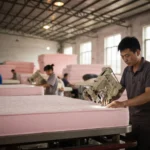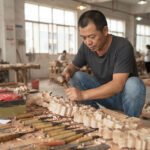


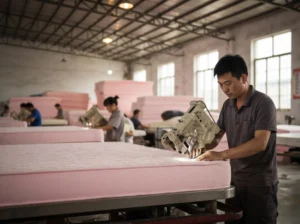

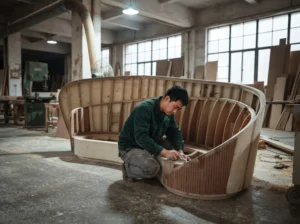



The short answer is: 1688 sourcing furniture can absolutely cut your unit cost by 40%–60% compared to Alibaba.com. But—and this is a big but—you need to know how to navigate a Chinese language wholesale ecosystem built for domestic buyers, not some overseas guy ordering five chairs from his apartment in Madrid. Most foreign buyers who rush in without a clue end up paying more than they would on cross-border platforms once you stack up the hidden logistics, communication headaches, and quality-control nightmares. We have seen it happen. More than once.
The Frustration: Why “Cheap” Isn’t Simple
Picture this. You are running a small Airbnb in Lisbon, or maybe you are bootstrapping a DTC brand in Austin, or you are a solo dropshipper in Warsaw trying to compete on price. You are staring at an Alibaba quote—$45 FOB for a dining chair—and you know something feels off. You dig around, maybe a friend mentions it, maybe you stumble across it on Reddit, and you find the same chair listed at ¥180 (roughly $25) on some Chinese website. That site is 1688.com, Alibaba Group’s domestic China platform. The price gap is not a fantasy. It is real.
Here is the part most YouTube gurus conveniently forget to mention. 1688 is not “Alibaba with a Chinese skin.” There is no English button. No friendly export manager walking you through Incoterms. It is a B2B marketplace built for Chinese retailers, interior contractors, and Taobao resellers who buy in bulk, pay in RMB, and have their own truck guy in Foshan. When you treat it like Amazon with cheaper prices, you are setting yourself up for a world of pain.
We have spent two years digging through 1688 furniture listings, drinking way too much coffee with factory owners in Shunde, and watching overseas buyers try to self-source with nothing but Google Translate and optimism. The pattern never changes. The buyers who win treat 1688 like what it is—a rough, local, Mandarin-only wholesale tool. The ones who lose treat it like a discount code for Alibaba. Guess which group goes home happy?
The Reality Check: What 1688 Actually Looks Like Under the Hood
Let us kill the biggest myth right now. You see a badge that says “源头工厂” ( meaning “source factory”). Your brain screams “direct manufacturer! No middleman!” We sampled the top 200 furniture sellers across sofas and dining sets. Want to know how many actually owned production lines? Less than 30%. The rest? Traders, consolidators, or “炒单” middlemen—basically speculative order-flippers who take your order, pocket the margin, and quietly subcontract it to a workshop you will never meet.
Is that a scam? Not really. It is just how the furniture wholesale layer cake works in China. A trader sitting in Lecong Furniture Market might not own a single CNC machine, but he knows exactly which workshop in Gongguan village can knock out your velvet sofa for ¥50 less than the guy next door. For a domestic buyer ordering 50 pieces, that trader is worth his weight in gold. For you, ordering five chairs from overseas? He becomes a black box. You have no idea who is actually cutting the wood.
Now here is something that flips the usual advice on its head. For orders under 10 pieces, the trader’s quote on 1688 is often cheaper than knocking on a real factory door in Shunde. Real factories despise small orders. Their MOQ logic is simple: retooling the line for six chairs is a waste of their time. They would rather let the machines sit idle. So they price tiny batches at a premium to push you away. The 1688 trader, meanwhile, does not care about your order size. He pools stock, runs a flexible network of small workshops, or simply buys excess inventory from bigger factories. His entire business model is built for fragmentation. He can beat the factory on micro-orders because the factory does not even want your business.
That is the first thing you need to tattoo on your brain. Low-cost furniture sourcing china does not mean “find the factory, cut out the middleman.” Sometimes the cheapest path runs straight through a trader who knows how to game the domestic supply chain. It is messy. It is not what the blogs tell you. But it is the truth.
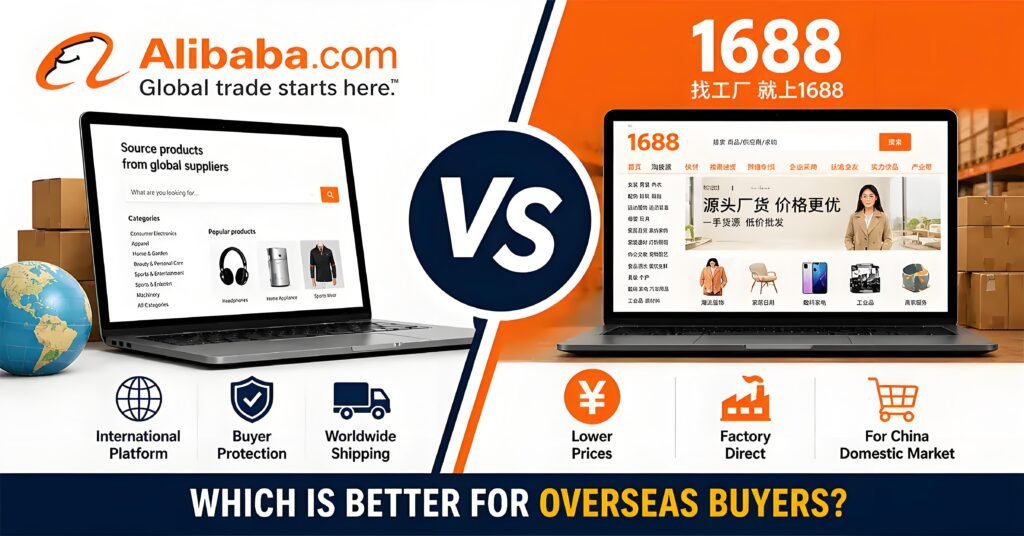
Deep Dive: 1688 vs. Alibaba vs. Direct Factory
Let us stop talking in circles and look at hard mechanics. The table below is not gospel—it is a snapshot based on what we have actually seen buyers pay. Your mileage will vary depending on the factory, the season, and how well you negotiate.
| Channel | Unit Price (Fabric Sofa Example) | Language Barrier | Payment & Tax | MOQ Flexibility | Quality Control | Best For |
|---|---|---|---|---|---|---|
| 1688.com | ¥1,200–1,800 ballpark | High (Chinese only) | RMB via Alipay/WeChat; no export VAT rebate | Medium (some sellers accept 1–5 pcs) | Buyer-managed; limited cross-border protection | Small batches, buyers who can self-coordinate |
| Alibaba.com | $280–$380 FOB | Low (English fluent) | USD wire, Trade Assurance, export docs included | Low–Medium (factories often 20+ pcs) | Trade Assurance disputes; inspection services | Buyers who need legal cover and English support |
| Direct Factory Visit | $220–$300 FOB (if you haggle well) | Medium (rep English varies wildly) | USD wire; factory handles export if licensed | Very Low (under 20 pcs is painful) | Full control only if you hire 3rd-party QC | Mid-to-large buyers with a China travel budget |
That ¥1,200 sofa on 1688? It looks like free money until you unpack the hidden stack. That number is ex-factory, ex-tax, and does not include getting the thing to the port. You still need to pay a forwarder to collect it, a broker to declare it, ocean freight, duties at your end, and final delivery. By the time that sofa lands in your warehouse, you could easily be looking at $380–$420 all-in. The Alibaba $280 FOB quote already covers the factory-to-port leg and the export paperwork. Suddenly the gap is not so dramatic. Sometimes it vanishes completely.
Then there is the Chinese language wholesale wall. 1688 has zero English interface. Product specs are dense blocks of Chinese text. Chat happens on Wangwang or WeChat, and most sellers speak about as much English as you speak Mandarin. We know a buyer who ran “实木”(literally “solid wood” or “real wood”) through Google Translate, saw “solid wood,” and placed a big order. What showed up? Rubberwood with a thin veneer. The seller was not lying—”实木” technically covers dozens of wood species and grades. The buyer just did not know the code. Another guy ordered a “walnut” dining table. Turned out to be rubberwood stained dark brown. He was furious. We would be too.
And here is a detail nobody on TikTok talks about: 1688 prices are usually “裸价” (meaning “naked price”). No packaging. Furniture crossing the Pacific needs serious export crating—plywood frames, foam corners, PE film, the works. Domestic 1688 orders ship in cardboard wrap because Chinese trucking networks handle goods gently. Your container getting tossed around on a cargo ship for three weeks? That needs ISPM-15 crates or heavy plywood boxing. We checked with forwarders in Guangzhou and Shenzhen. Standard plywood crating for basic furniture shapes runs about ¥120–¥180 per CBM in the Guangzhou cluster; Shenzhen guys quote around ¥200/CBM for standard wooden crates. Weird shapes, glass inserts, or extra corner reinforcement can push that up, but the ¥600/CBM horror stories you hear are outliers. Most 1688 sellers will not include export-grade packaging unless you specifically ask for “出口包装”(export packaging) and negotiate the cost.
Red Flag: The Traps That Eat Your Margin
Vendor Identity Fraud
That slick photo of a CNC workshop? It might be stolen. We reverse-image-searched 30 “factory” galleries on 1688. Twelve matched photos from completely unrelated company sites. One “manufacturer” in Nankang was using stock images from a Dongguan factory that went bust in 2022. Ask for a factory gate video with a newspaper showing the date. If they dodge the request, you know what to do. For bigger orders, spring for a 3rd-party audit from SGS or QIMA. It hurts to pay, but it hurts more to wire money to a ghost.
Sample ≠ Production Run
The sample they rush out from existing stock? Gorgeous. Your bulk order, built fresh by a subcontracted workshop you never approved? Thinner foam, shorter bolts, cheaper dye lot. 1688 does not offer a direct “Trade Assurance” safety net for small overseas buyers. The platform is trying to fix this—programs like “全球严选” (Global Select, 5% commission) and “跨境Select” ( Cross-border Select) are rolling out, and “跨境宝” (Cross-border Pay) launched in July 2026 to make international settlement smoother. But honestly? For a foreign buyer ordering five chairs, these services are either not available or still too new to trust. Once your RMB leaves Alipay via a standard domestic deal, getting it back without a Chinese lawyer is basically impossible.
The “One-Stop Shipping” Lie
Some sellers promise “包物流到门” (literally “door-to-door logistics included”). For a buyer in Hangzhou, that means a domestic truck. For you in Hamburg? They often dump your goods with a random consolidator who shoves everything into a loose LCL container with zero furniture protection. We saw a dining table arrive with two legs snapped because the consolidator thought it was a good idea to stack granite countertops on top. If you are not controlling the loading plan, do not trust the seller’s shipping promise. Full stop.
Payment Dead Ends
Sellers want RMB. Alipay or WeChat Pay. If you do not have a Chinese bank account, your options are limited. You can use a proxy agent, a Chinese friend, or try Wise (good luck—most sellers refuse international transfers). Every workaround adds 2–5% in fees and creates a nightmare paper trail if the deal sours. You are essentially handing cash to a stranger who lives under a different legal system and speaks a language you do not. Sleep on that.
After-Sales Void
Try returning a defective sofa to a 1688 seller from Berlin. Go ahead. We will wait. Domestic returns are already a headache. Cross-border returns are economically insane—the shipping cost back to Foshan often exceeds the product value. Your only weapon is a bad review, and on 1688, that means almost nothing. The seller can open a new storefront next Tuesday.
Action Step: How to Actually Use 1688 Without Losing Money
Still want in? Fine. Here is how to do it without getting burned.
1. Filter Like Someone Who Knows the Game
Do not just look at “源头工厂”(source factory). Dig deeper. “实力商家” (Verified Strength Merchant) is a solid official badge. “深度验厂” (Deep Factory Inspection) is the verification layer inside that tier. But the real gold is the “超级工厂” (Super Factory) badge—this one demands annual capacity of at least 5 million pieces and 3+ owned production lines. There is also “诚信通AI版工厂” (TrustPass AI Factory). None of these are bulletproof, but they filter out the bottom-feeders. Skip stores with under 3 years of history or fewer than 500 transactions. Check the “宝贝描述”(product description) score. Below 4.6? Next.
2. Decode the Price Architecture
That headline ¥850? It is almost always the smallest, worst-configured SKU. Click into the matrix. The version you actually want is probably ¥1,400. Screenshot everything. Run it through a translator that knows furniture terms, or better yet, pay a Chinese-speaking agent $200–$300 to handle your first two orders. It is cheaper than eating a $2,000 mistake.
3. Lock Down Export Packaging Before a Single RMB Moves
Message the seller directly: “是否可以做出口木架包装?费用多少?” (meaning “Can you do export plywood crating? How much?”) Get the crating cost in writing on the chat record. If they reply with “我们默认包装很好的,”(“Our default packaging is very good”) run. “Very good” is not a specification. Plywood frame + foam corner + PE film is. Expect roughly ¥120–¥200 per CBM in the Pearl River Delta for standard export crating, but confirm the exact number for your specific item.
4. Use a Proxy, But Use Your Head
If you cannot pay RMB directly, go through a licensed China-based sourcing company or a verified proxy service. Never send crypto. Never Western Union cash to a personal account. Never pay 100% upfront on a first order. The local standard is 30% deposit, 70% before shipping. As a foreign buyer, push for a proxy that holds the final 70% until you see loading photos. If a seller demands full payment upfront, that is not a red flag. That is a siren.
5. Let the Forwarder Do What They Do Best
The smartest small buyers we know do not try to turn a 1688 seller into an exporter. They buy domestic, ship to a Shenzhen or Guangzhou forwarder’s warehouse, and let the forwarder handle consolidation, crating, and customs. You pay the seller in RMB for the goods. You pay the forwarder in USD for the logistics. Everyone stays in their lane. Risk splits. It works.

FAQ: The Questions Buyers Actually Ask
Can I, as an overseas individual, just log in and buy on 1688?
Technically, yes. Practically? Good luck. You need a Chinese mobile number, an Alipay account verified with a Chinese ID or business license, and a domestic shipping address. Most foreigners use a proxy or a buying agent. Unless you have a Chinese entity or a very cooperative local friend, direct buying is more trouble than it is worth.
Will 1688 sellers ship furniture straight to my country?
The platform does not do cross-border checkout. Some sellers will arrange shipping if you push them, but they usually just hand you off to a freight consolidator they know. You are far better off arranging your own forwarder. Treat 1688 as a domestic procurement tool, not AliExpress.
How do I know if a seller is a real factory?
Look for the “深度验厂” ( Deep Factory Inspection) badge (a verification layer within the “实力商家” system), the higher-tier “超级工厂” ( Super Factory) gold badge, and check the business registration scope (经营范围) for “生产” (production/manufacturing) or “制造” (manufacturing) rather than just “销售” (sales). Ask for a factory gate video. If the seller dodges the video request or sends a showroom clip instead, they are likely a trader. Remember: traders are not evil, but you should know who you are talking to before you negotiate price.
Is 1688 always cheaper than Alibaba?
For the same SKU, the domestic 1688 price is typically 40–60% below Alibaba’s FOB quote. But add export packaging, inland freight to port, customs brokerage, ocean freight, and the hours you spend managing it all, and your real savings as a small buyer often shrink to 10–20%. At that point, Alibaba’s Trade Assurance and English support might be worth the premium. Sometimes the “cheap” route is the expensive one.
What is the safest way for a foreigner to pay on 1688?
There is no platform-native safety net like Trade Assurance. Your best bet is a licensed China-based sourcing company that pays the seller in RMB and issues you an English contract with legal recourse. If you must pay direct, Alipay Tour Pass has limited use, or go through a verified proxy. Never pay 100% upfront. Never use an untraceable method. We cannot stress this enough.
Your Next Step
1688 sourcing furniture is a power tool, not a training wheels platform. If you are moving 20+ dining sets and you already have a freight forwarder who answers your texts at midnight, 1688 can unlock margins Alibaba cannot touch. If you are buying three sofas for your Airbnb and you think Google Translate is a sourcing strategy, the hidden costs will eat your savings and ruin your weekends. We have watched both stories play out. Repeatedly.
One last thing. Have you ever tried sourcing furniture on 1688? Did the final landed cost match the sticker price, or did the hidden fees ambush you? Drop your story below. We read every comment, and your war story might be the thing that saves the next buyer from the same headache.
Recommended Resource
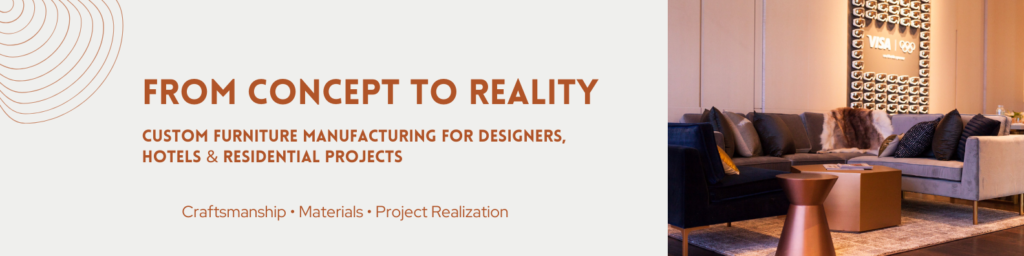
Interi Furniture specializes in custom furniture manufacturing for residential, hospitality, and commercial projects. Their experience in materials, craftsmanship, and project realization makes them a valuable resource for designers and buyers seeking tailored furniture solutions from China.