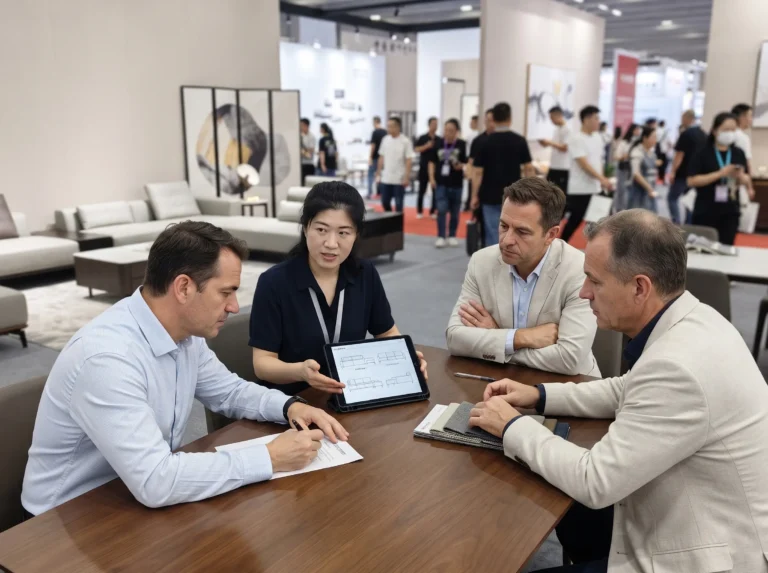








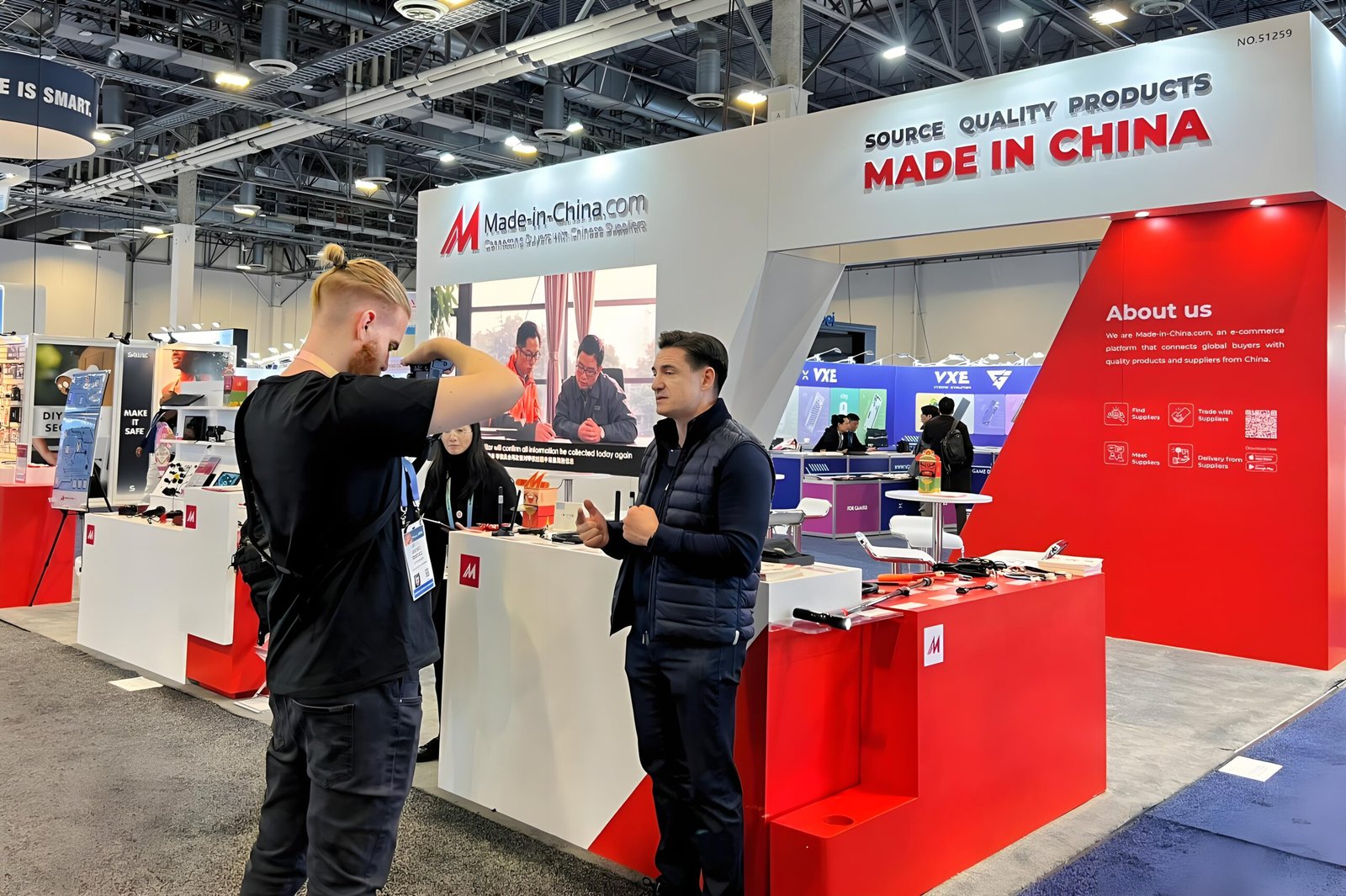
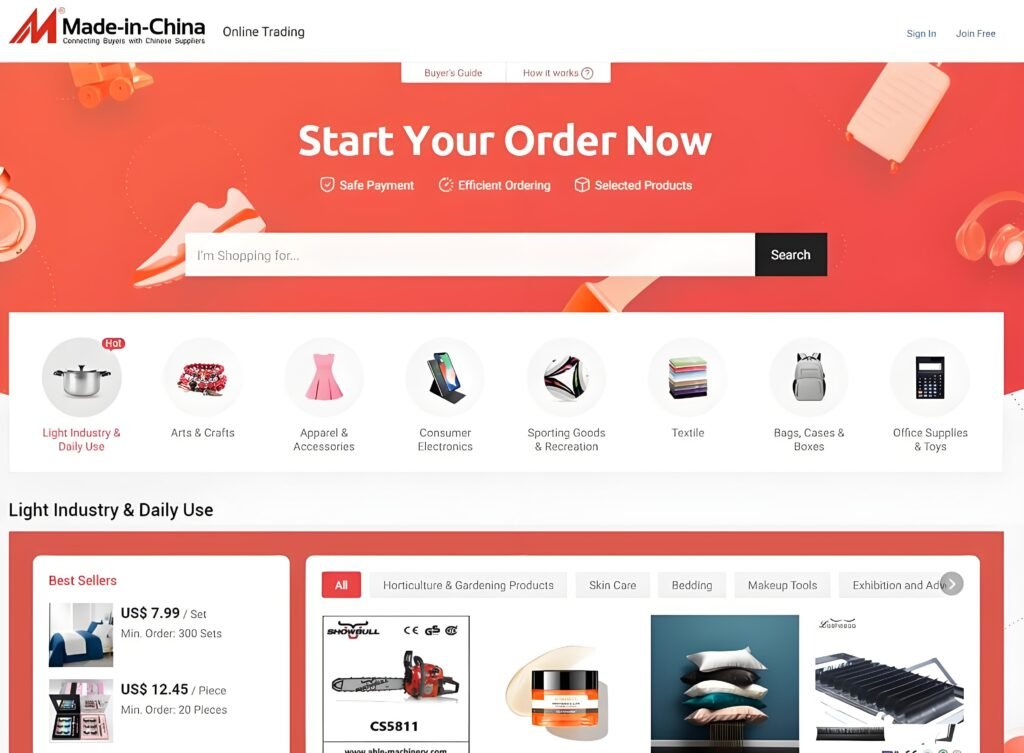
Made in China platform is not a pure factory directory. It is a paid B2B marketplace where manufacturers, trading companies, and service providers compete for buyer attention. In the furniture category, a significant portion of “factory” listings are actually intermediaries renting credibility. That is the MIC sourcing reality buyers must understand before sending their first inquiry.
One structural advantage is worth noting upfront. MIC pages often rank organically on Google for queries like “china + [product name]” or “factory + [product name].” This visibility drives substantial buyer traffic without the platform relying solely on paid ads. For suppliers, this SEO footprint is a major reason to maintain a storefront. For buyers, it means the first page they land on may look like a direct factory channel when it is actually a paid membership layer.
What Made-in-China.com Actually Is
Made-in-China.com (MIC) operates as an online manufacturer directory on the surface. Vendors upload product catalogs, apply for certifications, and receive RFQs from global buyers. The platform’s official positioning emphasizes “connecting buyers with Chinese suppliers.” Data updated as of July 2026.
However, the entry barrier is financial, not industrial. A trading company with a registered business license and an annual fee of approximately 4,300 to 8,300 USD (31,100 to 59,800 RMB per year, depending on the membership tier) can obtain the same storefront privileges as a 500-worker factory in Shunde. The platform does not independently verify production capacity at the moment of signup. It verifies business registration and payment.
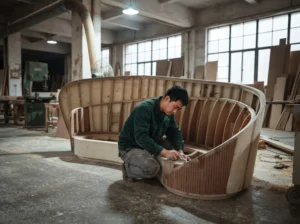
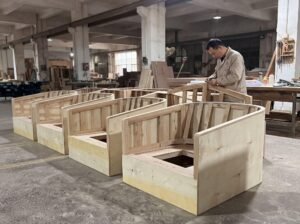
This distinction matters for furniture buyers. A sofa frame requires welding jigs, foam-cutting tables, and upholstery lines. A trader’s office in Guangzhou Tianhe District has none of these. Yet both can display identical showroom photos.
The Platform’s Business Model: Why Middlemen Thrive
MIC generates revenue through membership tiers, keyword bidding, and featured placements. The “Audited Supplier” badge does not guarantee factory ownership. It guarantees that the vendor paid for enhanced visibility and passed a third-party business registration check. For reference only, subject to actual verification.
Here is where the audit rules get more nuanced than a simple “pay and play” summary. Document-only suppliers must complete an on-site audit within 12 months of activating transaction privileges. If they fail to do so, the platform closes their transaction functionality. Additionally, suppliers must undergo a physical re-audit every three years. These rules mean MIC does push toward real-world verification, but the timeline is not immediate. A trading company can launch a storefront, receive RFQs, and close deals for months before an inspector ever walks through the door.
The incentive structure rewards volume, not transparency. A trading company representing five small workshops can list 2,000 SKUs across multiple sub-categories. A single factory specializing in solid wood dining tables might list 80. The trader appears more “comprehensive” in search results. The algorithm favors breadth.
Furniture is particularly vulnerable to this dynamic. Upholstery, metal frames, glass tops, and marble bases often come from different industrial clusters. A trader in Foshan can assemble a “full-service” catalog without owning a single CNC machine. Buyers searching for “hotel furniture sets” encounter these aggregators first.
Furniture Category: Factory vs. Trader Reality
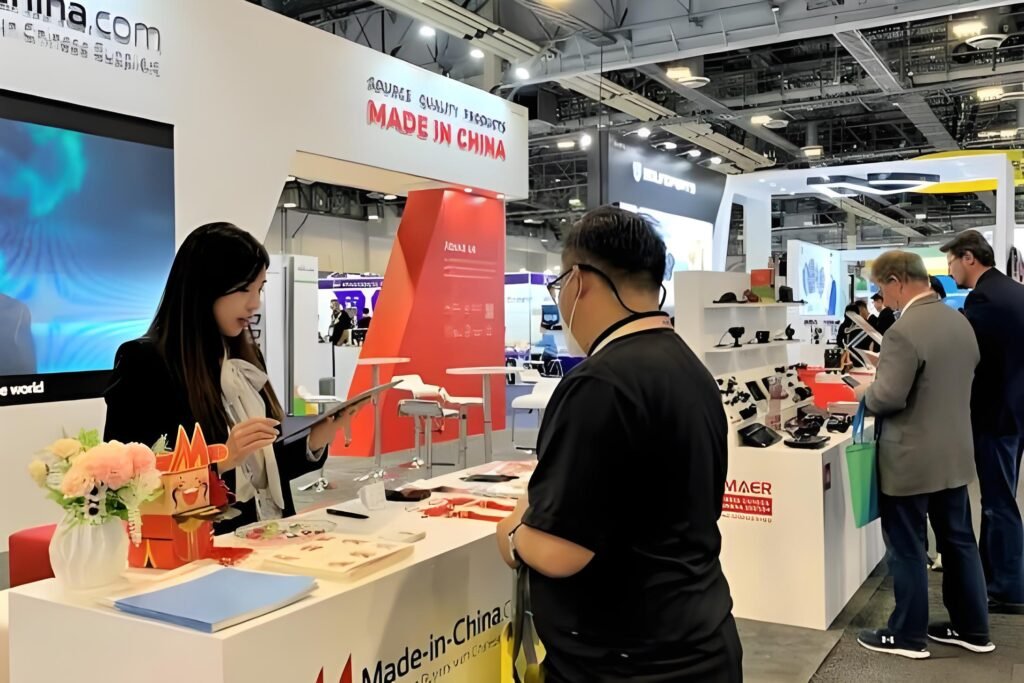
In the furniture vertical, the line between factory and trader blurs intentionally. Many legitimate manufacturers maintain trading subsidiaries for export documentation. Conversely, traders rent factory space for one-day photo shoots. Both scenarios create confusion.
A common pattern: a trader registers a company name containing “Furniture Co., Ltd.” and uploads photos from a cooperative factory’s workshop. The actual factory has no direct MIC presence. The trader marks up prices 15–35% and handles communication in fluent English. Buyers assume they are talking to the source.
Another pattern involves multi-company registrations. For tax optimization or regional licensing, one production group may control three to five legal entities. Two sell domestically; one targets overseas buyers via MIC. This is legal and common. It does not indicate deception, but it complicates the buyer’s effort to identify the true production asset.
Platform Real Factory vs. Trading Middleman: Identification Table
| Verification Dimension | Real Factory Indicators | Trading Company Indicators |
|---|---|---|
| Business Scope | Includes “manufacturing” or “production” in registered scope | Scope limited to “sales,” “trading,” or “import/export” |
| Product Range | Narrow, deep catalog within one material/category (e.g., only rattan furniture) | Broad, shallow catalog spanning unrelated materials (rattan + metal + glass + upholstery) |
| MOQ Flexibility | Higher MOQs (20–50 pieces per item); resistant to tiny orders | Low MOQs (1–5 pieces); eager to accommodate sample-sized requests |
| Technical Depth | Can explain foam density grades, wood moisture content, or veneer matching processes | Generic descriptions; defers technical questions to “our engineer” |
| Video/Photos | Shows raw material storage, semi-finished goods, and specific workshop corners with company signage visible | Polished showroom shots only; workshop photos look staged or reused |
| Response Patterns | Slower RFQ replies; English may be functional but not fluent | Instant replies; polished English; offers to “handle everything” |
| Customization | Discusses tooling costs, lead-time extensions, and material constraints honestly | Promises unlimited customization without lead-time penalties |
Platform Sourcing: Core Advantages and Risks
Made in China platform offers genuine utility for certain buyer profiles. The RFQ system aggregates options quickly. Escrow payment tools reduce wire-transfer anxiety. Dispute channels exist, though resolution speed varies. For buyers who lack China ground presence, this infrastructure has value.
The platform’s organic Google presence is a genuine, often overlooked asset. When overseas buyers search “china dining chair factory” or “wooden bed manufacturer,” MIC product pages frequently appear on the first page. This is not accidental. The platform has invested heavily in long-tail SEO, creating landing pages that intercept buyer intent before the buyer ever reaches a supplier’s independent website. For buyers, this means discovery speed. For suppliers, it justifies the membership cost. For transparency, it means the “directory” label is partly a search-engine play.
The risks are equally concrete. Paid ranking distorts search results. A factory with superior equipment but a basic membership appears on page three. A trader with a premium package dominates page one. Buyers relying solely on platform search miss the full market picture.
Cost transparency is another friction point. Traders on MIC often quote DDP prices that bundle factory cost, their margin, and logistics. Disaggregating these components requires direct factory contact—which the platform structure discourages. Data updated as of July 2026.
Quality consistency suffers when the seller is not the maker. A trader might switch subcontractor factories between orders to chase lower bids. The buyer receives Batch A from a decent workshop and Batch B from a corner-cutting replacement. Same SKU, different skeleton.
Platform Sourcing Pros and Cons Summary Table
| Dimension | Advantage | Risk |
|---|---|---|
| Supplier Discovery | Large pool; fast RFQ distribution; category filtering; strong Google organic reach for “china + product” queries | Paid ranking hides better suppliers; trader saturation |
| Communication | Built-in messaging; some vendors offer fluent English | Fluent English often signals trader, not factory |
| Payment Security | Escrow and trade assurance options available | Dispute resolution can be slow; coverage limits apply |
| Cost Structure | Convenient bundled quoting | Opaque margin stacking; hard to audit true factory price |
| Quality Control | Some certified suppliers offer pre-shipment inspection | No guarantee the certifying body inspected the actual production line |
| Scalability | Easy to source multiple categories simultaneously | Cross-category sourcing often means dealing with traders, not direct makers |
Six Verifiable Methods to Spot Real Factories
Method 1: Check the Business License Scope.
Request the business license. If the registered scope says “wholesale and retail” or “trading,” you are not talking to a manufacturer. Real factories list “production” or “processing.”
Method 2: Request a Video Call Inside the Workshop.
Ask for a live video walkthrough on WeChat or Zoom. Demand to see the company name painted on the wall or hanging as a banner. Traders cannot fake this in real time without factory cooperation, and most factory owners refuse to play along for free.
Method 3: Analyze the Product Catalog Depth.
A real factory has production constraints. If a vendor sells solid wood beds, MDF wardrobes, metal bar stools, and glass coffee tables under one roof, they are a trader. No single furniture plant runs wood, metal, and glass fabrication lines profitably at small scale.
Method 4: Ask Technical Questions That Require Shop-Floor Knowledge.
Query the drying time for rubberwood before cutting. Ask about the difference between 35D and 45D high-resilience foam. A factory technician answers in specifics. A trader copies and pastes catalog text.
Method 5: Verify the Factory Address Against Industrial Cluster Maps.
Foshan Shunde for upholstery, Dongguan Dalingshan for board furniture, Hangzhou Lin’an for bamboo chairs. If the registered address is a high-rise office in Guangzhou Tianhe or Shenzhen Nanshan, it is not a production facility. Cross-check on Baidu Maps satellite view.
Method 6: Request a Sample with Custom Markings.
Ask the supplier to engrave or print your initials on the underside of a sample chair leg. A factory with active production lines can do this in 48 hours. A trader must forward the request to a subcontractor, adding 5–7 days and creating email trail gaps.
Who Should Use MIC and Who Shouldn’t
Made in China platform suits buyers who prioritize speed over unit cost. If you need five different furniture categories sourced within two weeks, MIC’s trader ecosystem is actually efficient. Traders aggregate supply. You pay for the convenience.
It also suits first-time importers testing minimum order quantities. Real factories rarely entertain 10-piece orders. Traders do. Use MIC for market testing, then switch to direct factory relationships for scaling.
Do not use MIC if your priority is design confidentiality. Every RFQ circulates through the platform’s messaging system. Your product concept becomes visible data. For original designs or patent-sensitive furniture, direct factory engagement under NDA is safer.
Individual buyers and small residential projects face a specific hurdle. MIC is structurally B2B. Many vendors ignore inquiries below $5,000. Some list MOQs that exclude single-apartment furnishers. The platform has experimented with B2C features, but furniture remains a bulk-purchase domain. Personal buyers should expect limited attention unless they consolidate orders or accept trader-mediated retail pricing.
Procurement Scenario Fit Assessment Table
| Buyer Profile | MIC Suitability | Better Alternative | Reasoning |
|---|---|---|---|
| E-commerce seller testing SKUs | High | — | Low MOQ flexibility; fast sample turnaround via traders |
| Hotel/FF&E project (100+ rooms) | Medium | Direct factory + audit | Scale justifies direct negotiation; margin savings significant |
| Independent designer (custom pieces) | Low | Direct factory or design agent | Platform RFQs leak design intent; customization depth insufficient |
| Startup brand (first container) | Medium | Hybrid: MIC for samples, then direct | Use MIC for validation, then bypass for production |
| Personal buyer (home furnishing) | Low | Local retailer or consolidated group buy | MOQ barriers; shipping complexity; no after-sales support |
| Established importer (volume repeat) | Low | Direct factory contracts | Margin stacking unacceptable at scale; QC consistency critical |

Frequently Asked Questions
Is every supplier on Made-in-China.com a factory?
No. The platform hosts manufacturers, trading companies, and service providers. In furniture, a substantial share of listings belongs to intermediaries. The platform does not filter by production ownership.
Does the Audited Supplier badge mean I am buying directly from a factory?
Not necessarily. The badge indicates a paid membership tier and a business verification check. It does not confirm factory ownership or production capacity. For reference only, subject to actual verification.
What is the difference between a document-only supplier and an audited one on MIC?
Document-only suppliers have submitted business licenses but have not yet completed an on-site inspection. MIC requires them to finish a physical audit within 12 months of activating transactions, and every three years thereafter, or lose transaction privileges.
Can I negotiate prices directly on MIC?
You can negotiate, but the quoted price may already include a trader margin. Real factory pricing usually requires moving off-platform to direct communication, which some vendors resist to protect their MIC fee structure.
Is it safe to pay through the platform?
MIC offers escrow and trade assurance tools that reduce wire-fraud risk. However, they do not guarantee product quality or prevent subcontractor switching. Payment safety and product compliance are separate issues.
Why do some “factories” have perfect English and instant replies?
Fluency and speed often indicate a trading company with dedicated sales staff. Real factory owners in industrial towns like Longjiang or Guanlan may reply slowly in functional English. Language polish is a red flag, not a green light.
Can individual buyers purchase single furniture pieces on MIC?
Technically possible, but practically difficult. Most furniture vendors set MOQs at container-load or pallet levels. Individual buyers face high shipping costs and limited seller attention. The platform remains optimized for B2B volume.
Final Note
Made in China platform is a tool, not a truth machine. It accelerates supplier discovery—and its Google SEO footprint genuinely helps buyers find Chinese suppliers quickly—but it obscures supply-chain identity. For furniture buyers, the critical skill is not platform navigation. It is vendor archaeology. Dig past the storefront.
Recommended Resource
Interi Furniture specializes in custom furniture manufacturing for residential, hospitality, and commercial projects. Their experience in materials, craftsmanship, and project realization makes them a valuable resource for designers and buyers seeking tailored furniture solutions from China.