








The short answer is: Amazon seller factory photo leak happens through outsourcing channels you never contracted with—photography studios, freelance renderers, and internal reselling departments—not the factory you shook hands with. An English-language NDA is practically unenforceable in China. The real protection comes from a China-governed NNN agreement, segmented image release, and invisible forensic watermarking embedded in files before they leave your control.
The Anxiety Every Seller Knows
You spent eight weeks on product development. Hired a designer in Los Angeles for $4,200. Shot lifestyle images in a rented Airbnb in Austin. Your listing goes live on Amazon. Sales hit 17 units a day by week three.
Then it happens.
A seller in Shenzhen lists the exact same sofa frame. Same angle. Same throw pillow placement. Their price? Thirty percent lower. Within ten days, four more sellers appear. Your Buy Box share drops from 78% to 34%. You fire off a DMCA takedown. Amazon responds in 72 hours: “We need additional evidence of copyright ownership.”
This is not a horror story. This is Tuesday for Amazon home goods sellers sourcing from Foshan.
The Reality Check: What Actually Happens in Foshan
Let’s kill the myth first. The factory owner is rarely the villain.
In our work with over 200 cross-border sellers and multiple walks through Foshan’s Longjiang and Lecong industrial clusters, the pattern is consistent. The factory making your product wants to keep making it. Your repeat orders pay wages. The leak almost always comes from somewhere else in the ecosystem.
Here’s the breakdown:
The photography studio channel. Most Foshan factories outsource product photography to local studios or individual shooters. These studios keep raw files. When business gets slow, some sell archived image packages to trading companies. One Shenzhen-based Amazon seller sent three product renderings to a Longjiang sofa factory for sampling. Three months later, 11 identical listings appeared. The source? A studio employee who packaged the files and sold them to five trading companies. The factory manager claimed he never saw the images leave his WeChat.
The freelance renderer / CAD drafter channel. Factories increasingly hire remote freelancers for 3D rendering and technical drawings. These freelancers work from home, use personal laptops, and keep source files on Baidu Cloud. No employment contract with your factory. No NDA with you. When they switch clients, your files travel with them.
The internal reselling department. Larger Foshan factories often have unofficial “side sales” teams—employees who run parallel businesses selling factory output through 1688, Alibaba, or directly to Amazon sellers. They have access to production schedules, product specs, and yes, your images. They don’t steal from the factory. They are the factory, just operating on personal accounts.
The departing employee channel. Turnover in Foshan furniture factories runs high. A designer or sales rep leaves with a hard drive of past projects. They join a competitor. Or start their own trading company. Your product photos are now their portfolio.
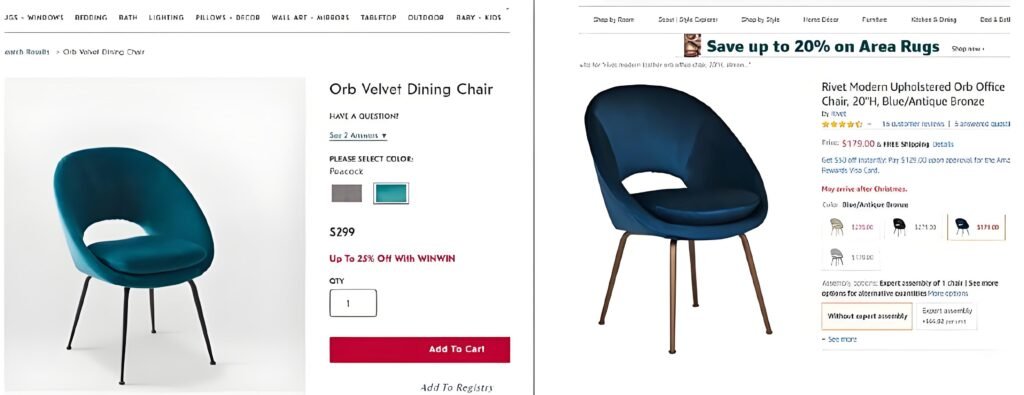
The mold-copy-rephotograph method. This is the most insidious. The factory uses your product to create a mold, then produces a visually identical item, re-shoots it with different lighting and staging, and lists it as their own “original design.” Amazon’s systems cannot detect this. DMCA complaints fail because the images are technically different files. The product is the same. The photos are not.
The counter-intuitive truth: Small workshops often leak less than large factories. They lack the trading connections, the photography budgets, and the Amazon seller network to monetize stolen images. Your risk scales with the factory’s sophistication, not its size.
The Leakage Chain: From Your Laptop to 10 Copycats
| Leakage Channel | How It Happens | Probability | Damage Level | Detection Difficulty |
|---|---|---|---|---|
| Photography studio sells archived files | Studio employee packages client images for trading companies | Medium | High—identical photos appear | Easy—reverse image search |
| Freelance renderer keeps source files | Remote worker stores files on personal cloud, reuses for next client | Medium-High | High—identical or near-identical renders | Medium—requires metadata analysis |
| Internal reselling department | Factory employee runs parallel sales using factory resources | High | Severe—same product, same factory, lower price | Hard—appears as “factory direct” listing |
| Departing employee takes files | Designer/sales rep leaves with hard drive, joins competitor | Medium | High—images appear at unrelated factory | Very hard—no digital trail |
| Mold-copy with re-photograph | Factory copies product, shoots new photos, claims original design | High | Severe—DMCA fails, product identical | Very hard—new image files, same physical product |
| WeChat / QQ group sharing | Factory staff shares images in industry chat groups for “feedback” | Medium | Medium—images spread to multiple parties | Hard—private groups, no logs |
Red Flag: 5 Scenes That Guarantee Trouble
First contact, full-resolution files. You send 4K uncompressed lifestyle images for a quote on a 50-unit test order. The factory now owns your entire visual asset library before you’ve verified they can produce a single acceptable sample.
No IP management at small workshops. The factory has no designated IP contact, no image handling SOP, and no record of who accessed your files. Your photos live on a shared office computer with a password taped to the monitor.
Pricing 30% below market. If a factory’s quote seems too good for the craftsmanship claimed, they’re often planning to recover margin through side sales. Lowball pricing correlates with image leakage in our field observations.
“Send us your full listing package.” Any factory that asks for your Amazon A+ content, infographic templates, or brand story deck before a purchase order is signed is fishing for assets. Legitimate factories need product specs, not marketing materials.
All communication on WeChat, nothing in writing. Every image sent, every spec shared, exists in a chat log that can be screenshotted, forwarded, and uploaded to group chats with a single tap. Without a written agreement governed by PRC law, you have no enforceable record.
Action Step: What Actually Works
1. Replace Your NDA with a China NNN Agreement
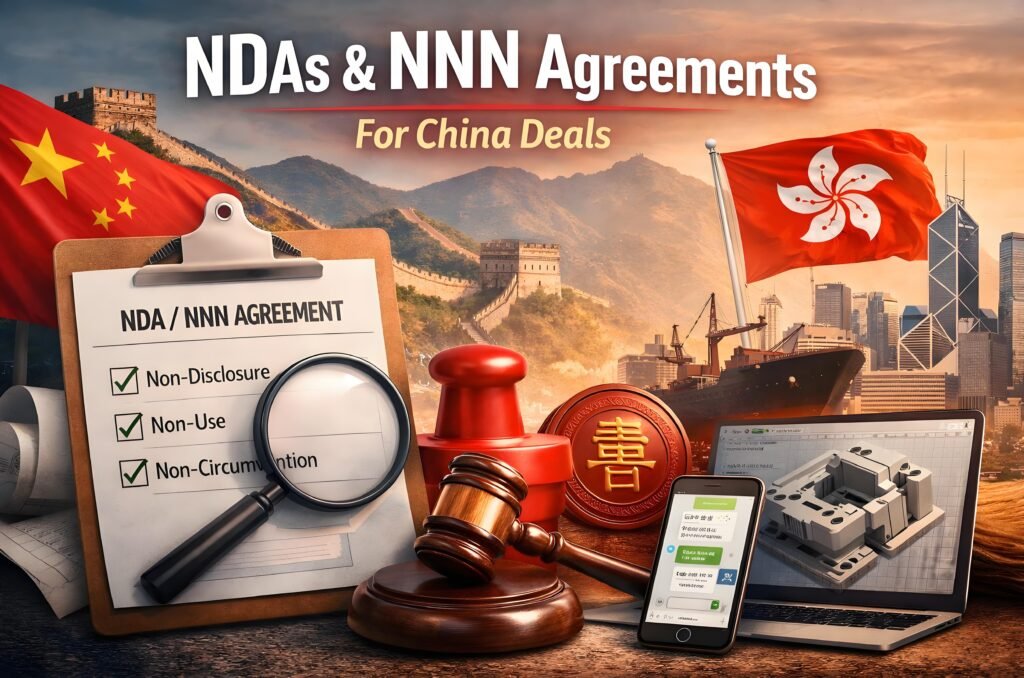
A standard English-language NDA is “worthless or worse” in China, as China IP lawyers have consistently documented. It is governed by foreign law, enforceable only in foreign courts, and fails to cover the real risk: the factory using your information, not merely disclosing it.
You need a NNN Agreement (Non-Use, Non-Disclosure, Non-Circumvention) governed by PRC law, written in Chinese as the controlling language, and enforceable in a Chinese court with jurisdiction over the factory. It must cover subcontractors, affiliates, and related parties. It should include liquidated damages that are serious enough to deter breach.
Cost: $800–$2,500 for proper drafting. This is not a template job. A bad contract is worse than no contract.
2. Segment Your Image Release
Never send full-resolution lifestyle images for quoting. Use this tiered system:
| Stage | Images Sent | Resolution | Protection Method |
|---|---|---|---|
| Initial quote | 2–3 compressed angles only | 72 DPI, 800px longest side | Heavy visible watermark “SAMPLE—[YOUR BRAND]” — never for Amazon main image use |
| Sample approval | 5 angles, compressed | 150 DPI, 1200px longest side | Light visible watermark |
| Production order | Full resolution, all angles | 300 DPI, original files | Invisible forensic watermark embedded + metadata registration |
| Post-production | A+ content, infographics | Original files | Invisible forensic watermark + metadata registration |
Critical distinction: Amazon strictly prohibits any visible text, logos, badges, or watermarks on the main product image. A compliant main image must show only the product on a pure white background (RGB 255,255,255), with the product filling 85% or more of the frame. Any visible watermark on an Amazon main image will trigger Error 18027 and result in listing suppression. The invisible forensic watermark referenced above is embedded in the image’s frequency coefficients—completely imperceptible to the human eye and undetectable by Amazon’s systems—serving solely for post-leakage tracing and evidence collection.
3. Embed Invisible Forensic Watermarks (Not Visible Watermarks)
This is where most sellers get it wrong. They slap a visible “© MY BRAND” across the image and call it protected. Two problems: one, copycats crop it or clone it out in minutes; two, if you upload that to Amazon, your listing gets suppressed immediately.
Invisible forensic watermarks are an entirely different technology. They embed identifying data in the image’s frequency coefficients—mathematically invisible to the human eye, undetectable by Amazon’s image review systems, and surviving compression, resizing, and format changes. If your image leaks, you can extract the watermark and prove which specific file was stolen.
Tools like Steg.AI and Imatag offer this for $50–$300/month. For high-volume sellers, this pays for itself in one avoided copycat. These watermarks are for pre-factory file protection and post-leakage forensics only—they do not appear on any customer-facing image, including Amazon main images.
4. Register Copyright Before Listing
In the U.S., copyright exists at creation. But to sue for statutory damages, you need registration with the U.S. Copyright Office. Cost: $45–$85 per application. Timeline: 3–8 months. Do this before you send images to any factory.
Amazon’s Brand Registry accepts pending trademarks but copyright registration strengthens DMCA enforcement significantly.
5. Factory IP Due Diligence
Before sending images:
● Ask: “Who has access to client files?” Legitimate factories have an answer.
● Request: “Show me your image handling SOP.” If they blink, walk.
● Verify: Search the factory’s name + “Alibaba” + your product category. If they’re already selling similar items under their own brand, your images will join their library.
When It Happens: Your Enforcement Path
Immediate (0–24 hours):
● Screenshot everything. Use the Wayback Machine to archive infringing listings.
● File Amazon Report a Violation through Brand Registry. Include your copyright registration number.
● If the images are identical, file DMCA takedown. DIY success rate: 60–80%. Professional service: 95–98%.
Short-term (1–2 weeks):
● If DMCA fails (mold-copy with re-photograph), you need a test purchase. Document the physical similarity.
● Send cease-and-desist letter through Chinese counsel. Often effective against factories with export licenses to protect.
Long-term (ongoing):
● Build reporting accuracy to qualify for Amazon Project Zero (requires 90%+ acceptance rate on past reports).
● For repeat offenders, consider Schedule A lawsuit grouping multiple infringers. One seller recovered $100,000+ over 12 months using this approach.

FAQ
Q: I signed an NDA with my factory. That protects me, right?
A: Probably not. Most NDAs used by foreign sellers are English-language, governed by U.S. or EU law, and unenforceable in Chinese courts. The factory can use your designs internally without technically “disclosing” them to third parties. You need a China-specific NNN agreement governed by PRC law.
Q: What’s the fastest way to get copycat listings removed?
A: If you’re enrolled in Amazon Brand Registry with a registered trademark, use the Report a Violation tool. For confirmed counterfeits with clear evidence, Project Zero allows instant self-service removal. For identical image theft, DMCA takedown is fastest but requires copyright registration for strongest leverage.
Q: Can I use watermarks to protect my Amazon product images?
A: Not visible watermarks. Amazon strictly prohibits any text, logos, graphics, or watermarks on the main product image. Adding a visible watermark will result in listing suppression (Error 18027). The effective approach is invisible forensic watermarking—embedded in the file’s data layer, completely invisible to shoppers and Amazon’s review systems, used solely for tracing leaks after they occur. Apply this to files before sending them to factories, not to customer-facing listing images.
Q: How do I prevent mold-copying with re-photograph?
A: You can’t fully prevent it, but you can make it traceable and legally risky. Use invisible forensic watermarks on source files. Include product-specific identifiers in your NNN agreement. Register design patents where applicable. And diversify—no single factory should hold your entire product line.
Your Next Step
If you’ve read this far, you already know the “sign an NDA and hope” approach is broken.
What’s your experience? Have you had product photos leaked by a Foshan factory? Did a DMCA takedown work, or did the copycat reappear under a new seller account? Drop your story in the comments—anonymously if needed. We read every one, and your experience shapes our next deep-dive.
Recommended Resource
Interi Furniture specializes in custom furniture manufacturing for residential, hospitality, and commercial projects. Their experience in materials, craftsmanship, and project realization makes them a valuable resource for designers and buyers seeking tailored furniture solutions from China.