










To vet furniture sourcing agent candidates effectively is the single most critical risk-control step in any China furniture procurement workflow. A legitimate agent compresses months of supplier mapping into days, negotiates factory-floor pricing that outsiders never see, and catches quality failures before containers seal. The counterfeit version drains your budget, feeds you fabricated factory data, and vanishes the moment your deposit clears. China maintains no licensing regime for sourcing agents. Anyone with a smartphone and a WeChat account can claim decades of experience. This checklist is built from direct observation across Foshan Lecong, Dongguan Houjie, and Anji chair manufacturing clusters. It exists because the damage from a bad agent is rarely recoverable.
What a Real Sourcing Agent Actually Does (vs. What Scammers Pretend to Do)
The Professional Agent’s Real Job Description
A genuine furniture sourcing agent functions as your embedded procurement department inside China. The core mandate spans supplier identification within specific manufacturing belts, on-site factory audits using standardized checklists, real-time price benchmarking against current material cost indices, production monitoring at critical milestones, pre-shipment quality control with photographic evidence, and logistics coordination from factory gate to port. The agent does not own inventory, does not operate as a trading company in disguise, and does not accept factory-side commissions that create divided loyalty. Professional agents bill the buyer directly for transparent fees and treat factory kickbacks as a conflict of interest that destroys long-term client trust.
The Three Types of Fake Agents
| Dimension | Professional Agent | Factory Shill | Shell Company / Ghost Agent | Kickback Broker |
|---|---|---|---|---|
| Primary income | Buyer commission or service fee | Factory salary or sales commission | Upfront deposit theft | Hidden factory rebate |
| Physical presence | Verified office in furniture belt | Factory sales desk, no independent office | No verifiable address | Shared coworking space or virtual address |
| Factory visit | Real-time video, geo-tagged photos | Staged visit to employer factory only | Stock footage or stolen videos | Occasional visits to high-rebate partners |
| QC capability | Own staff, inspection equipment, written protocols | None; defends factory quality blindly | None; may forge Word templates | Minimal; prioritizes rebate over defect detection |
| Client references | Multiple verifiable overseas clients | None independent; poses as agent | Fake testimonials or none | Rotating aliases, no long-term references |
The 10-Point Vetting Checklist
Verifiable Business Registration and Legal Entity
Demand the agent’s unified social credit code and business license. Cross-check against the National Enterprise Credit Information Publicity System. A legitimate entity registers as a business service, trading, or consulting company with a physical address matching their claimed location. Be wary of agents who provide only a passport copy or personal ID. China does not issue special sourcing agent licenses, so standard business registration is the only legal anchor you have. If the registered capital is suspiciously low or the company was formed within the last six months, treat this as an elevated-risk signal.

Physical Office and Team Presence in the Furniture Belt
An agent claiming Foshan expertise should be able to show you their office exterior on Baidu Street View or via live video call within minutes. The furniture manufacturing corridor runs from Foshan through Dongguan to Shenzhen’s periphery, with Anji dominating office seating and Yunfu specializing in stone tabletops. A real agent knows the difference between Lecong’s wholesale market and Shunde’s OEM factory zones without checking a map. Ask for a video walkthrough of their office during local business hours. Look for sample libraries, QC workstations, and local staff. Agents who refuse live video verification or claim to be traveling constantly often operate from another province entirely.
Transparent Commission Structure Without Hidden Factory Kickbacks
The standard professional fee model charges the buyer a percentage of order value, typically ranging from five to ten percent for furniture, or a flat daily rate for inspection and sourcing services. For reference only, subject to official verification: some agents add a modest markup to factory prices instead of visible commission. The dangerous model is the invisible one: the agent quotes you a price ten to twenty percent above the factory’s real rate and pockets the spread as a factory kickback. This is an open secret in the industry. A trustworthy agent discloses all revenue streams in writing. If an agent claims to work for free or charges implausibly low fees, they are almost certainly monetizing through factory-side rebates that incentivize them to push you toward high-margin, not high-quality, suppliers.
Independent Quality Control Capability and Equipment
Real quality control requires more than a clipboard and a camera phone. Professional agents maintain calibrated measurement tools, moisture meters for wood products, color-matching lamps for upholstery, and load-testing rigs for seating. They produce dated, signed inspection reports with defect photos, AQL sampling references, and corrective action deadlines. Many fake agents generate inspection reports in Microsoft Word with no inspector signature, no company stamp, and no traceable testing methodology. Ask which AQL standard they follow and whether they accept third-party QC validation. Agents who resist independent verification of their QC work are protecting a system that relies on your ignorance.
Documented Factory Visit Evidence with Real-Time Verification
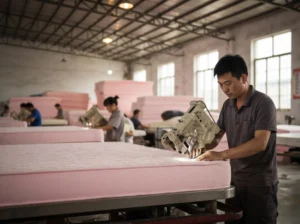
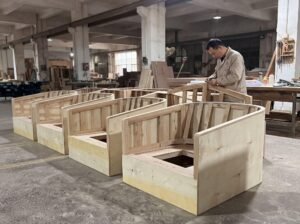
A factory visit report should include timestamped photographs of the production floor, the factory’s business license displayed on their wall, active machinery with workers present, and raw material storage areas. The report should note the factory’s exact address and match the coordinates you can verify independently. Professional agents welcome real-time video calls during visits. Scammers send photo albums that could have been downloaded from any factory’s marketing materials. One reliable verification method is to request a photograph of a specific object you designate, such as a handwritten note with your name placed on the factory manager’s desk. If the agent cannot produce this within the claimed visit window, they were never there.
Client References You Can Actually Contact
Legitimate agents maintain a portfolio of verifiable clients who have placed repeat orders. Request contact details for two to three clients in your home country or region. A professional agent connects you directly without filtering the conversation. Red flags include agents who provide only first names, refuse to share contact information citing privacy concerns, or offer to relay your questions through them. When you speak with a reference, ask specifically about how the agent handled quality failures, whether pricing remained consistent across multiple orders, and if the agent ever requested payment to a personal account.
Written Service Agreement with Clear Scope and Deliverables
Never commence work without a signed contract that defines the exact scope of services, fee structure, payment milestones tied to deliverables, liability clauses for misrepresentation, and termination conditions. The agreement should specify who holds responsibility when factory defects are missed, how disputes are resolved, and which jurisdiction governs the contract. Oral promises and WeChat assurances carry no enforceable weight in cross-border disputes. A professional agent presents their standard service agreement early in the relationship and does not resist reasonable revisions. Agents who pressure you to skip the contract and trust the process are preparing a process that benefits only themselves.

Secure Payment Handling (Never Personal Accounts)
This is non-negotiable. All service fees and order payments must flow to the agent’s registered corporate bank account. Personal Alipay accounts, Western Union transfers to individual names, or cryptocurrency requests are immediate disqualifiers. For the actual product purchase, the safest hybrid model routes your payment directly to the factory under the agent’s supervision, rather than pooling funds in the agent’s account. When an agent insists on collecting your entire order value and then paying the factory themselves, you lose visibility into the true factory price and expose yourself to embezzlement risk. The only exception is when the agent operates as a licensed trading company with proper export rights and provides a formal proforma invoice and customs documentation.
Industry Specialization (Furniture Focus, Not Generalist)
Furniture is not electronics. It involves moisture content control, veneer matching, foam density grading, upholstery flame-retardancy standards, and container loading optimization for bulky items. A generalist sourcing agent who claims to handle everything from textiles to machinery rarely possesses the technical depth to spot a substandard plywood substrate or a corner joint that will fail in transit. Verify that the agent’s recent work history centers on furniture categories relevant to your project. Ask technical questions about CARB Phase II compliance, FSC chain-of-custody documentation, or the difference between PU and lacquer finishes. Vague answers reveal a generalist masquerading as a specialist.
Realistic Claims and Absence of Pressure Tactics
Professional agents set realistic timelines. They tell you when a twenty-day production schedule is impossible. They warn you that custom upholstery sampling requires two weeks. Scammers promise whatever you want to hear: impossible speeds, guaranteed lowest prices, zero defect rates. They create artificial urgency with claims that factory slots are disappearing or that a special discount expires tonight. A legitimate agent educates you on constraints. A fraudulent agent exploits your urgency. If the sales pitch feels closer to a timeshare presentation than a procurement consultation, terminate the conversation.

The Scam Playbook: How Fake Agents Operate
The Deposit-and-Disappear Model
The agent cultivates trust through responsive communication and professional-looking websites. They request an upfront sourcing fee or factory deposit. For reference only, subject to official verification: these deposits often range from five hundred to several thousand dollars. Once the transfer clears, communication slows, then stops. The website remains live. The email auto-responder still functions. But the person behind the operation has moved to a new domain and a new alias. Recovery is nearly impossible because the amount often falls below the threshold that justifies international legal action.
The Factory Shill Disguised as Independent Agent
A factory sales representative creates a separate website and email identity posing as an independent buyer’s agent. They steer every client to their employer factory regardless of fit. The agent conducts a theatrical factory tour that never reveals better-capable competitors. Pricing appears competitive because the factory offers the agent an insider rate, but the buyer never learns that superior factories exist at lower prices just kilometers away. The buyer believes they received independent advice while actually receiving a factory-directed sales pitch.
The Inflated Invoice and Kickback Scheme
The agent obtains the true factory price of one thousand dollars per unit. They invoice the overseas buyer at one thousand three hundred dollars, remit one thousand to the factory, and split the three-hundred-dollar surplus with the factory owner or pockets it entirely. The buyer believes the agent negotiated a good deal. The factory gains volume without direct price cutting. The agent earns more from the markup than from any declared commission. This model is particularly common with first-time buyers who lack independent price benchmarks for their specific product category.
The Fake Report and Never-Visited Factory
The agent claims to have visited and approved a factory. They provide a generic inspection report with stock photos. Production proceeds. The actual factory turns out to be a subcontractor with no export license, or the goods are produced at a quality level far below the agreed specification. When problems surface after shipment, the agent blames the factory and the factory blames the agent. The buyer holds the defective inventory and has no recourse. This scheme flourishes because few buyers verify that the agent’s feet actually touched the factory floor.
Red Flags That Should Make You Walk Away Immediately
Warning Signs in Communication
| Red Flag | What It Means |
|---|---|
| Refuses live video calls or always has camera broken | Likely operating from outside the furniture belt or using stolen identity |
| Communication only through WhatsApp or WeChat with no formal email domain | Professional infrastructure missing; easy to abandon |
| Promises access to secret factories no other buyer can reach | Marketing fiction; all capable factories welcome qualified buyers |
| Uses excessive flattery and urgency simultaneously | Sales manipulation, not procurement consulting |
Warning Signs in Payment Requests
| Red Flag | What It Means |
|---|---|
| Requests payment to personal bank account or mobile wallet | No corporate accountability; funds untraceable |
| Demands full order value paid to agent before production begins | Maximum embezzlement exposure; you become the agent’s creditor |
| Offers discount for wire transfer instead of secure payment method | Incentive structure aligned against your security |
| Refuses to provide formal invoice with tax registration number | Unregistered operation; no legal standing |
Warning Signs in Pricing and Promises
| Red Flag | What It Means |
|---|---|
| Quotes significantly below market for your specification | Quality substitution or bait-and-switch incoming |
| Guarantees one hundred percent defect-free production | Physically impossible in mass manufacturing; signals dishonesty |
| Claims to handle every product category with equal expertise | Generalist without technical depth |
| Offers free sourcing services | Revenue hidden in factory kickbacks or future price inflation |
What to Expect from a Professional Agent Relationship
For Personal Buyers: When an Agent Adds Value and When They Don’t
Personal buyers purchasing one container or less for residential use face a difficult calculus. The agent’s commission on a five-thousand-dollar order may add five hundred dollars in fees, while the value created through factory access and QC oversight may or may not exceed that cost. For standard items available through established export-ready factories with Alibaba Trade Assurance, an agent adds limited value. For custom upholstery, mixed-container purchases across multiple Foshan showrooms, or buyers who cannot travel to China, an agent becomes essential. Personal buyers should avoid agents who specialize in bulk hospitality or retail procurement, as these agents often refuse small orders or deprioritize them against larger clients.
For B2B Buyers: Building a Long-Term Agent Partnership
B2B buyers operating hotels, rental portfolios, or retail channels need agents who function as offshore supply chain managers. The relationship should evolve from transactional sourcing to strategic partnership. This means the agent maintains running knowledge of your quality standards, pre-qualifies new factories before you request them, and provides quarterly market intelligence on material cost shifts. Long-term partnerships reduce per-order costs because the agent amortizes learning curve investment across multiple shipments. The best agent relationships include annual face-to-face meetings in China, joint factory audits, and shared QC protocols that both parties continuously refine.
The Hybrid Model: Agent for Sourcing, You Handle Payment Directly
The lowest-risk engagement model separates sourcing authority from payment control. The agent identifies factories, negotiates terms, and manages QC. You pay the factory directly using verified corporate banking details, with the agent’s fee invoiced separately. This eliminates the agent’s incentive to inflate factory prices and removes the single largest fraud vector: an agent holding your production capital. Many professional agents prefer this model because it demonstrates their fee transparency and removes the administrative burden of handling client funds. If an agent resists direct factory payment, ask specifically why. Legitimate reasons are rare.

FAQ: Furniture Sourcing Agents in China
How much should a furniture sourcing agent charge?
For reference only, subject to official verification: most professional furniture sourcing agents in China charge between five and ten percent of the order value for full-service procurement, or a flat daily rate of approximately two hundred to four hundred dollars for inspection and factory visit services. Some agents use a hybrid model combining a lower percentage with per-day sourcing fees. Personal buyers with small orders may face minimum fees regardless of order size. Agents quoting below three percent or claiming zero commission typically monetize through hidden factory rebates.
Can I trust sourcing agents on Alibaba or Fiverr?
Alibaba’s service provider certifications and Fiverr seller ratings indicate platform membership and transaction volume, not verified field capability. A highly rated agent on either platform may never have visited a Foshan factory. Treat platform badges as a starting point, not a substitute for the ten-point checklist. Request independent verification of factory visit evidence and client references regardless of platform credentials. Platform reviews can be purchased or incentivized.
Should I pay an agent before they start working?
Professional agents typically require a modest retainer or initial sourcing fee to begin work, ranging from a few hundred to one thousand dollars depending on project complexity. This is standard practice. However, this payment should go to a corporate account, be governed by a written agreement specifying deliverables, and represent a fraction of the total expected service cost. Never pay the full projected commission upfront. Never pay membership fees or registration charges before any work product is delivered.
How do I know if an agent is getting kickbacks from factories?
Direct proof is difficult because kickback agreements are verbal and undocumented. Indicators include an agent who consistently pushes one or two factories despite poor fit, refuses to disclose factory names before you commit, or becomes defensive when you request direct factory contact. Another warning sign is pricing that remains suspiciously uniform across multiple supposedly different factories. The most reliable protection is a contractual clause requiring the agent to disclose any financial relationship with recommended suppliers, combined with your own independent price benchmarking.
Is it safer to work with a Chinese agent or a foreign agent based in China?
Neither nationality guarantees integrity. Foreign agents sometimes exploit their shared language and cultural background to build trust they have not earned, while some Chinese agents leverage local knowledge without transparency. The critical factors are verifiable physical presence in the furniture belt, documented client history, and transparent fee structures. A foreign agent who has lived in Foshan for a decade and built a local team may outperform a Chinese agent operating remotely from another province. Judge the operation, not the passport.

Recommended Resource
Interi Furniture specializes in custom furniture manufacturing for residential, hospitality, and commercial projects. Their experience in materials, craftsmanship, and project realization makes them a valuable resource for designers and buyers seeking tailored furniture solutions from China.