






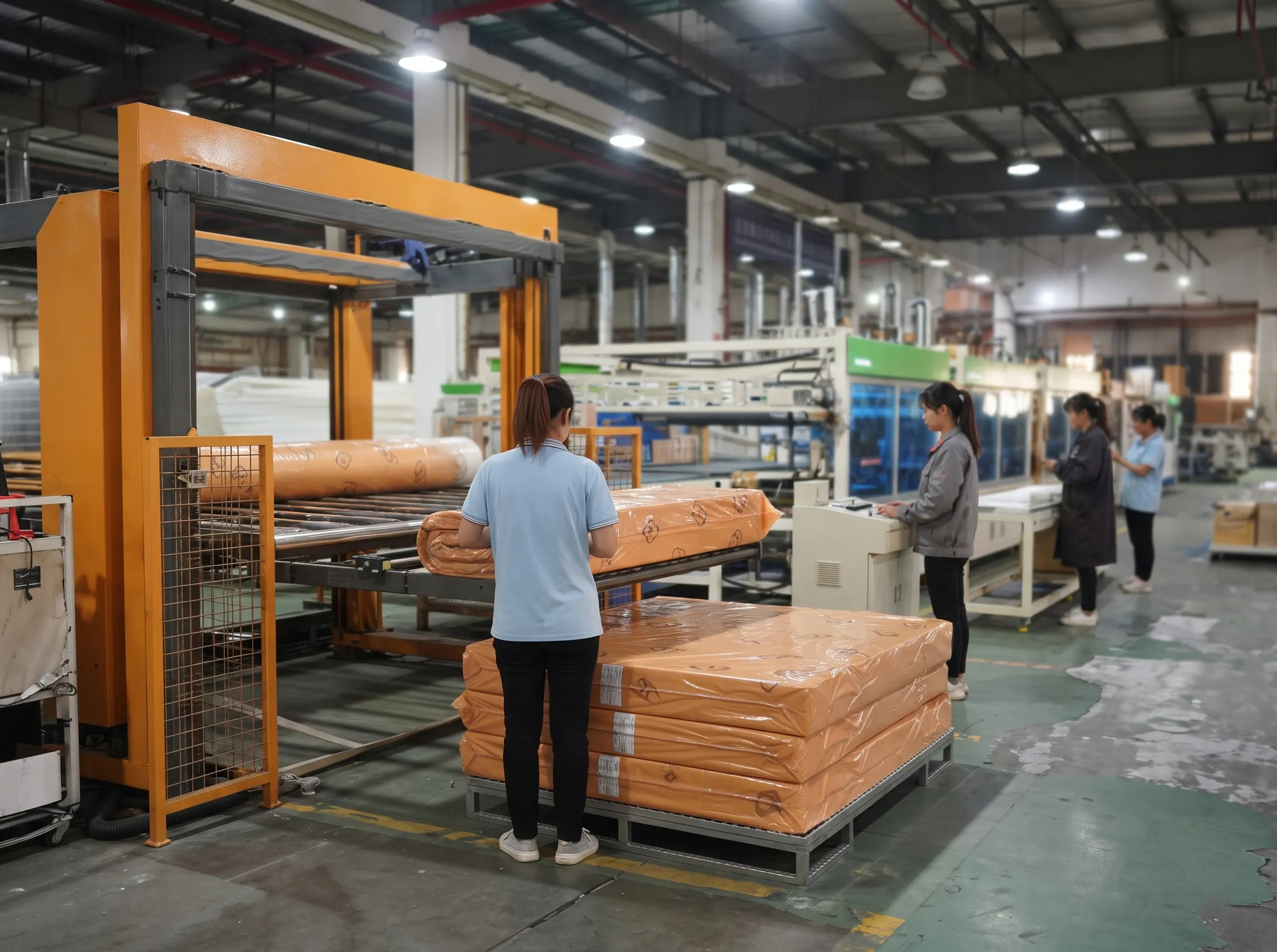
Here is the straight answer: US anti-dumping and countervailing duties on Chinese mattresses do not apply to sofas under current HTS classifications. Sofas enter under 9401.61.60; mattresses fall under 9404.21.00. Yet the 1,732% headline rate has set off a chain reaction across the soft goods supply chain that is already surfacing in your landed costs. Factory floors in Foshan Longjiang and Dongguan Houjie are reallocating capacity. Importers are baking risk premiums into sofa purchase orders. The pass-through is indirect, lagged, and nonlinear—but it is real. If you are sourcing upholstered furniture from China in 2026, you are already paying for mattress tariffs, just not through the duty line on your customs entry.
The Anxiety on the Buyer’s Desk
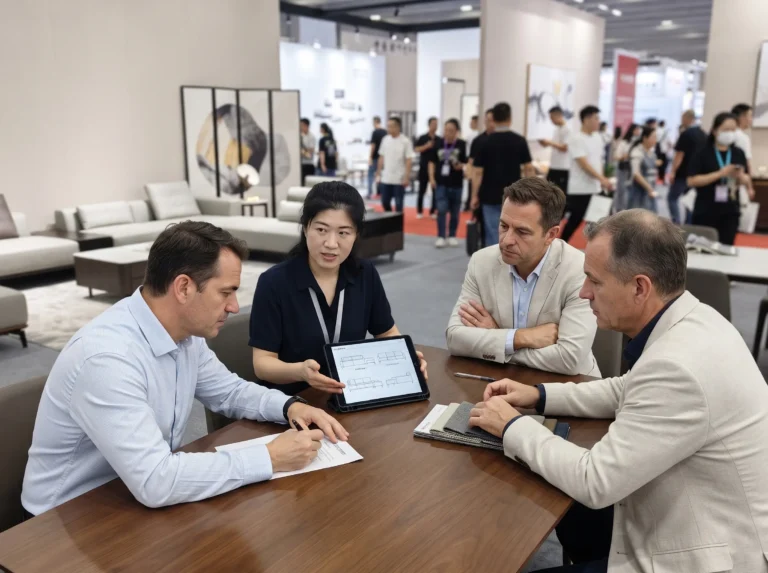
That 1,732% figure hit the trade press like a freight train. Within days, we were fielding calls from American importers who had immediately emailed their China sofa suppliers demanding explanations. Procurement managers at mid-size wholesalers are seeing factory quotes climb 8% to 14% with a one-line justification: “mattress tariff impact.” E-commerce sellers running lean FBA operations worry their best-selling sectional is about to get priced out. Hospitality FF&E specifiers with 2027 timelines are scrambling to lock upholstery budgets. Even seasoned category buyers are asking whether it is time to pull out of China entirely. The anxiety is not irrational. But it is being exploited by factories who know that American buyers lack the granular cost visibility to call bluffs.
What the Headlines Will Not Tell You
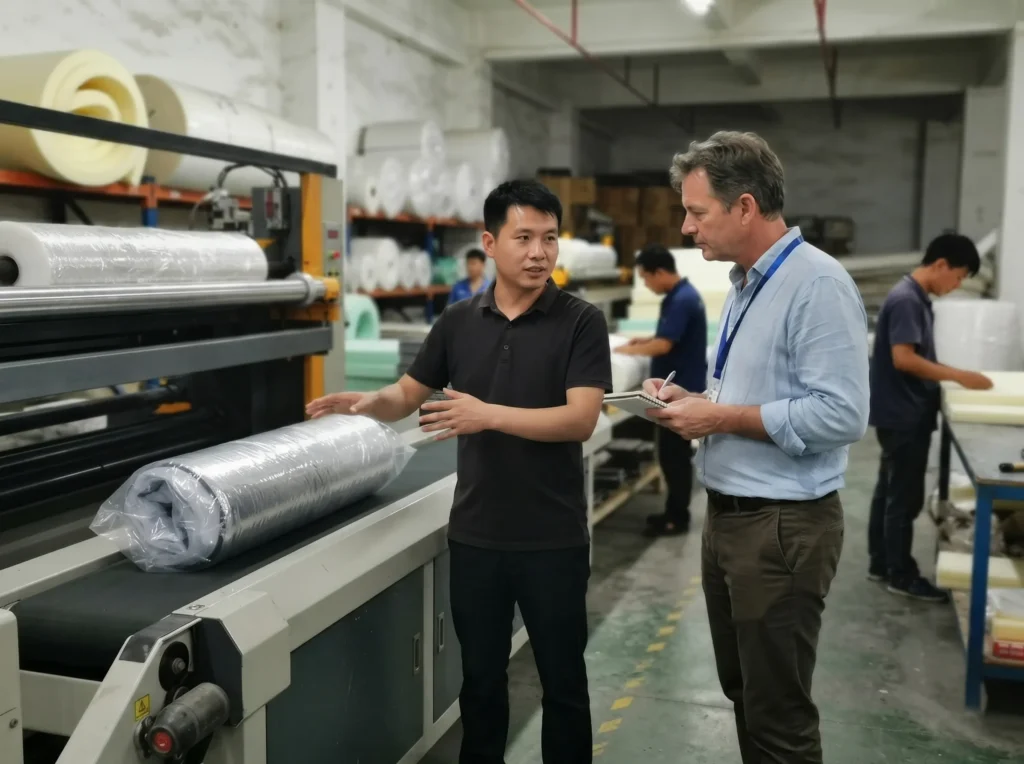
Let us be blunt. That 1,732% applies to specific Chinese mattress producers that refused to cooperate with the US Department of Commerce investigation in Cases A-570-106 and C-570-107. It is an outlier by design—a punitive default rate meant to compel participation. Companies that responded to Commerce’s questionnaires typically face weighted average margins in a completely different universe. For reference only, subject to official verification: industry data suggest the cooperative weighted average hovers in the mid-to-high double-digit range, though the exact figure shifts with each administrative review and Commerce publishes definitive numbers in the Federal Register. The media loves the extreme number because it drives clicks. Your supplier loves it even more when justifying a price hike.
Here is the HTS reality that gets buried. Mattresses classify under 9404.21.00. Sofas classify under 9401.61.60. The AD/CVD orders on mattresses have zero statutory reach into sofa entries. If your customs broker is doing their job, your sofa container is not paying mattress duties at the port. The price pressure arrives through side doors—shared raw material markets, labor pool competition, and risk psychology—not through the front gate of customs assessment.
The Machinery of Pass-Through
The soft goods ecosystem in China’s Pearl River Delta and Yangtze River Delta does not operate in neat silos. A factory in Longjiang might pour foam for mattresses on Monday and cut sofa cushions on Tuesday using the same polyurethane formulation. The textile mill supplying quilted mattress ticking also weaves the performance velvet on your sectional. When US-bound mattress orders collapsed under duty weight, that shock rippled through every shared input.
We see this most clearly in polyurethane foam. Mattress production consumes enormous volumes of high-density polyether polyol. When US-bound mattress orders dropped off in late 2024 and early 2025, foam producers chased sofa factory volume to keep utilization up. In the short term, that created a buyer’s market for sofa cushions. But as mattress lines stayed idle and foam producers rebalanced their mix, pricing power shifted. By mid-2026, foam suppliers are tightening credit terms and pushing through increases on slabstock—not because of tariffs directly, but because the industry’s demand profile has been distorted.
US Mattress AD/CVD Rate Structure: Extreme Cases vs. Weighted Averages
| Rate Category | Applicable Entities | Approximate Margin | Legal Source |
|---|---|---|---|
| Non-Cooperative Extreme Rate | Select Chinese mattress producers that declined Commerce participation | Up to 1,731.75% | Commerce Final Determination, Cases A-570-106 / C-570-107 |
| Weighted Average (Cooperative) | Participating producers subject to administrative review | Significantly lower; mid-to-high double-digit range typical* | Commerce Administrative Review Results, Federal Register |
| Separate Rate | Eligible separate-rate respondents | Case-specific; generally well below extreme outlier | Commerce Final Determination |
*For reference only, subject to official verification.
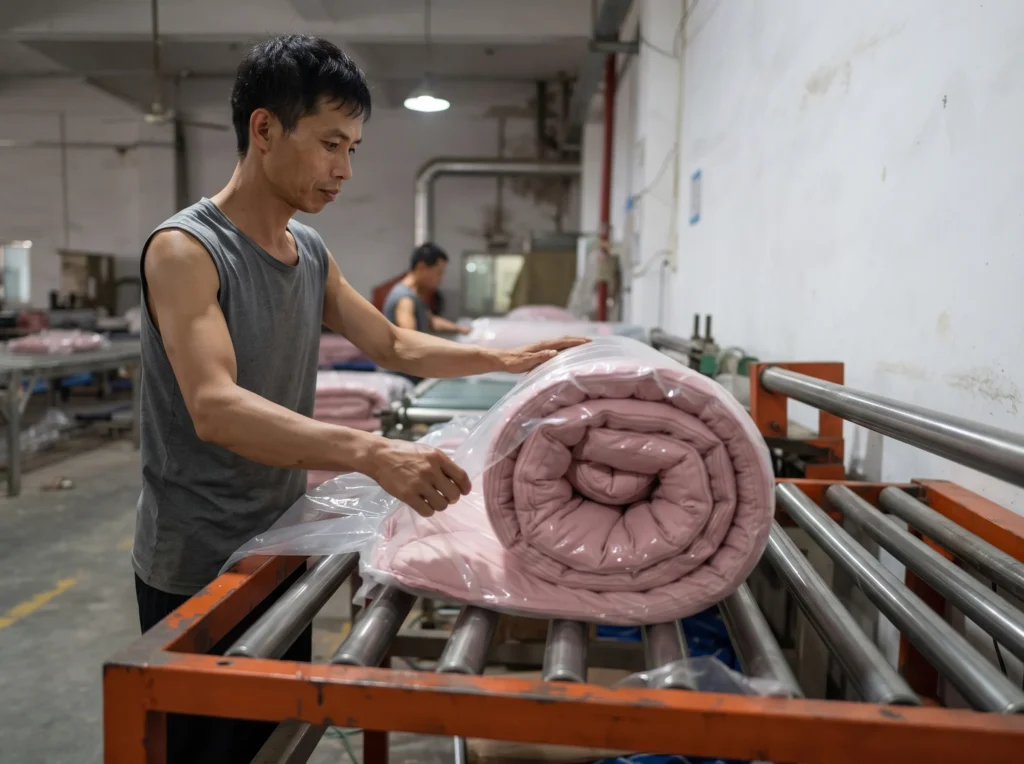
Mattress vs. Sofa: Supply Chain Overlap and Divergence
| Dimension | Mattress (HTS 9404.21.00) | Sofa (HTS 9401.61.60) | Overlap Impact on Sofa Pricing |
|---|---|---|---|
| Core Foam/Sponge | High-density polyurethane, memory foam | Seat cushions, back padding, armrest fill | Shared chemical feedstock; foam allocation shifts distort cushion costs |
| Upholstery Fabric | Knitted ticking, quilted covers | Woven upholstery, performance fabrics, velvet | Same textile mills; competing MOQs and dye lots |
| Spring Systems | Innerspring units, pocket coils | Sofa sleeper mechanisms, sinuous wire | Wire and coil capacity reallocation; metal price correlation |
| Frame Material | Wood foundations, metal bases | Hardwood frames, plywood, engineered wood | Shared timber sourcing; plywood price correlation |
| Factory Labor Pool | Sewing, quilting, foam pouring, tape-edging | Cutting, sewing, upholstery, tufting | Same skilled workers; wage pressure transfers in peak seasons |
| Production Floor | Same factory complex or adjacent workshops | Adjacent lines under same roof or industrial zone | Direct capacity reallocation when mattress lines shut |
Tariff Pass-Through Mechanisms: Direct, Indirect, and Behavioral
| Mechanism Type | Transmission Pathway | Typical Time Lag | Observable Impact on Sofas |
|---|---|---|---|
| Direct Statutory | Duty on mattress HTS at US entry | Immediate upon entry | Zero; sofas out of scope unless misclassified |
| Input Cost Pass-Through | Foam, fabric, timber inflation from demand shifts | 2–4 months | Moderate; raw material indices track FOB movement |
| Capacity Reallocation | Mattress lines idled; sofa output expanded | 1–3 months | Mixed; short-term oversupply, then consolidation |
| Labor Market Shift | Sewers and upholsterers move or demand premiums | 1–2 months | Wage pressure in peak seasons |
| Behavioral Risk Premium | Importers pre-buy; factories hedge material and currency | Immediate in new POs | 5%–15% markup baked into first-half 2026 quotes* |
| Anticipatory Diversion | Fear of future sofa AD/CVD scope inquiry | Ongoing | Inventory carrying cost inflation; accelerated non-China sourcing |
*For reference only, subject to official verification.
The Factory Floor Reality
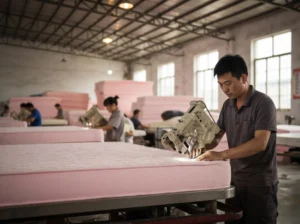
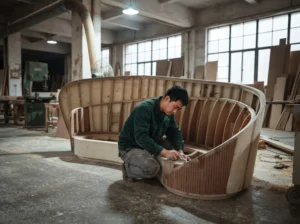
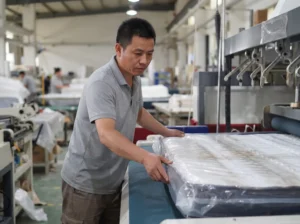
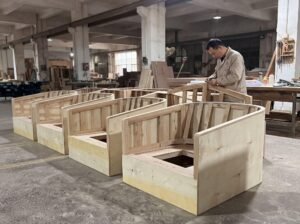
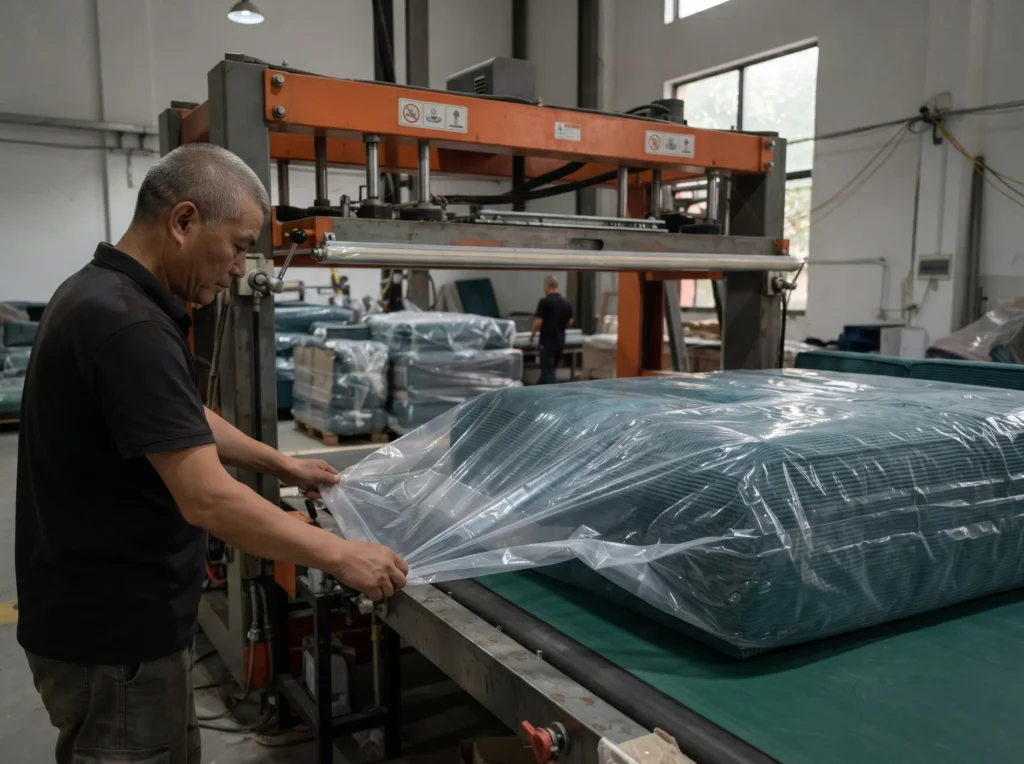
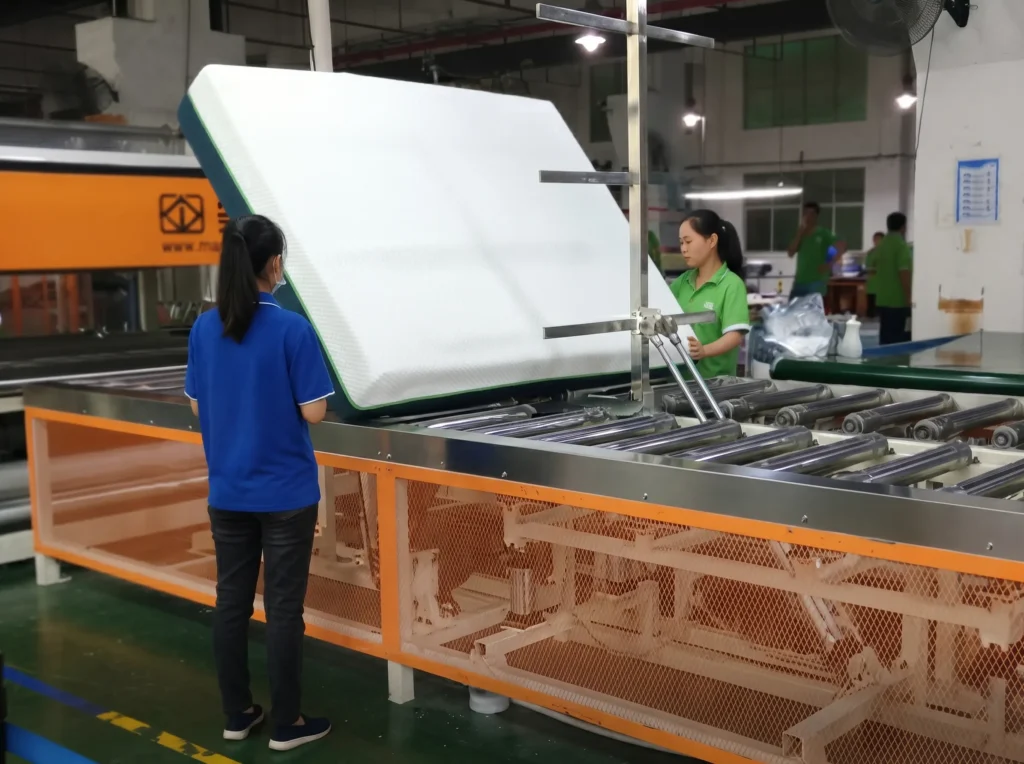
We walked production floors in Longjiang and Houjie this spring. The pattern is consistent. A 200-worker facility that ran two mattress lines and one sofa line in 2024 has flipped to three sofa lines and a skeleton mattress crew serving domestic or Southeast Asian markets. The US-bound mattress business rerouted to Vietnam, Mexico, or Indonesia. The sewing stations got reassigned. The foam schedule got rebalanced.
Here is the counterintuitive twist the headlines miss. In the short run, that extra sofa capacity created bidding competition among factories hungry for orders. Some American buyers got better quotes in Q1 2026 than in late 2025. The squeeze comes later, when inefficient factories exit and survivors regain pricing discipline. We are already seeing early consolidation. Two mid-size Longjiang operations shuttered their sofa divisions in May 2026, citing inability to source foam competitively against larger rivals who locked annual polyol contracts. The survivors are now quoting with firmer price floors.
2026 Sofa Price Outlook
The trajectory depends heavily on whether Commerce opens a new front. The mattress duties have already damaged the supply base. What matters now is expectation management.
2026 Sofa Price Outlook by Scenario
| Scenario | Key Assumptions | FOB China Impact | Landed US Impact |
|---|---|---|---|
| Status Quo | No new sofa AD/CVD; stable freight and USD/CNY | +3% to +6% on foam-intensive models | +5% to +9% after margin stacking |
| Escalation | Commerce initiates sofa scope inquiry or new AD/CVD petition | +15% to +25% if duties attach | +20% to +35% with panic buying |
| Supply Rebalance | Major factory consolidation; Vietnam capacity ramps | Flat to -5% in Q2–Q3; rebound in Q4 | Flat early; +8% late year |
| Currency Shock | RMB appreciation vs USD beyond 7.00 | Additional +4% to +7% | Compounded with freight and duty |
*For reference only, subject to official verification.
Red Flags and Compliance Traps
Do not let your supplier claim they are paying mattress duties on your sofa. That is a category error—unless they are misclassifying goods, in which case you have a bigger problem. HTS misclassification—importing mattress cores as sofa cushions, or shipping disassembled mattresses as “components”—constitutes customs fraud. Penalties run far deeper than duty savings, and CBP’s growing soft goods enforcement focus means audit risk is real.
The transshipment risk is equally serious. Some operators route Chinese-origin mattresses through Vietnam or Malaysia for minor transformation to claim non-China origin. Commerce has signaled aggressive anti-circumvention enforcement under 19 CFR 351.225. If your sofa supplier also runs a mattress transshipment scheme, your entire vendor relationship could end up under CBP scrutiny.
Watch for the lazy tariff pass-through. A factory raises your sofa price 12% and blames “US mattress tariff.” Ask for the math. If they cannot show how foam, fabric, and labor costs moved proportionally, you are looking at a margin grab dressed in trade policy. Push back. The market remains competitive enough that an informed buyer can negotiate.
Panic buying is the final trap. Several mid-size wholesalers locked six months of inventory in late 2025 on fears of 2026 duty expansion. Those containers landed in a softening retail market. Now they are sitting on depreciating stock in New Jersey and Dallas warehouses, paying storage fees on goods they cannot move at planned margins. Navigating US tariff furniture sofa dynamics requires informed patience, not herd behavior. The mattress duty is already priced in. Chasing rumors with cash flow invites inventory write-downs.
Playbooks by Buyer Type
For the large-volume importer moving forty to a hundred containers annually: diversify your factory base now. Keep 60% in China for margin, 20% in Vietnam for hedge, 20% in Mexico for speed. Negotiate quarterly price reviews with raw-material indexation clauses tied to published polyol and plywood indices. Refuse blanket “tariff surcharges” that are not itemized. Build AD/CVD contingency language into supply agreements—trigger points that allow renegotiation if new duties hit 9401.61.60.
For the e-commerce seller: your MOQs are too small to move factory capacity, but you are most exposed to landed-cost swings because you compete on thin margins. Lock forward freight where possible. Avoid long-tail SKUs relying on single-source foam formulations. Consider bonded warehouse strategies to delay duty exposure on mixed containers. Monitor competitor pricing closely—if they panic-buy and inflate their cost basis, you may gain temporary margin advantage by staying rational.
For the hospitality FF&E specifier: your timelines run 12 to 18 months. Build 8% to 12% contingency into upholstery line items, separate from general construction contingency. Specify dual-source approval for performance fabrics so you are not captive to one mill’s allocation decisions. Demand transparency in factory cost breakdowns; your volume should command it. Consider specifying domestic or nearshore upholstery for high-visibility public-area pieces while sourcing guest-room seating from China to balance budget and risk.

FAQ
Does the mattress AD/CVD duty apply directly to sofas?
No. The orders in Cases A-570-106 and C-570-107 apply to merchandise under HTS 9404.21.00. Sofas enter under 9401.61.60 and are outside the statutory scope. Any price impact arrives through indirect supply chain channels, not customs duty assessment. Your broker should classify correctly; if there is ambiguity about mattress components, seek a binding ruling before shipment.
What is the real difference between the 1,732% rate and the weighted average?
The 1,731.75% figure is Commerce’s penalty rate for non-cooperative respondents—assigned when producers refuse data requests or block verification. Participating producers receive individually calculated rates or a weighted average typically far lower, often in the double-digit or low-triple-digit range. The exact average fluctuates with each administrative review; Commerce publishes definitive figures in the Federal Register. Treat 1,732% as a deterrent headline, not a market-wide rate.
How long does it take for mattress tariff costs to show up in sofa pricing?
There is no fixed timeline because transmission is not statutory. Input cost pass-through—foam, fabric, timber—typically surfaces within two to four months. Behavioral pass-through appears immediately in new purchase orders. Capacity reallocation is most volatile; it can temporarily depress prices as hungry factories chase volume before tightening supply later. Expect a six-month lag for the full picture.
Is a sofa-specific AD/CVD investigation likely in 2026?
We have no crystal ball. Commerce initiates investigations based on domestic industry petitions. The American furniture manufacturing lobby has been vocal about upholstered goods competition, and the political environment remains hawkish. A scope inquiry or new petition targeting sofas is not impossible. For reference only, subject to official verification: trade counsel we have spoken with put the probability of expanded soft goods trade action in 2026 at moderate to elevated levels. Monitor the Federal Register and ITC dockets closely.
How can I verify whether my supplier’s sofa price increase is justified?
Demand a granular cost breakdown. If the factory cites mattress tariffs, ask which specific inputs moved—polyether polyol prices, fabric dye lots, spring wire, or labor rates. Cross-check against published indices. If the increase is a flat percentage with no itemized justification, treat it as a negotiation point. Your sofa carries no mattress duty at the border; any pass-through is economic, not legal. A factory that cannot explain its math is testing your sophistication.
What HTS codes should I watch for soft goods imports?
For sofas with wooden frames: 9401.61.60. For mattresses: 9404.21.00. For upholstered chairs with metal frames: 9401.71.00. For sofa beds with metal frames: 9403.60.80. For parts of seats: 9401.90.60. Always confirm classification with a licensed customs broker, and seek a binding ruling from CBP if your product sits near a classification boundary.
Closing Question
What is your current experience with sofa pricing out of China? Are factories using mattress tariffs as leverage, or are you finding genuine competitive pressure from capacity shifts? Drop your situation below—or ask us a specific HTS or duty scenario. We read every comment, and we do not sugarcoat the answer.
Recommended Resource
Interi Furniture specializes in custom furniture manufacturing for residential, hospitality, and commercial projects. Their experience in materials, craftsmanship, and project realization makes them a valuable resource for designers and buyers seeking tailored furniture solutions from China.