







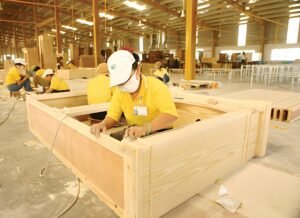

Bottom line upfront: A sliver of Chinese furniture parts—bench frames, chair foot assemblies, a few niche items—still slip through under HTSUS 9903.88.69 until November 9, 2026. Everything else? You’re paying the full stack. And that “stack” is uglier than most importers realize.
I sat in on a call last month with a Guangdong factory owner who swore his KD sofas “qualify as parts.” They don’t. CBP classifies knock-down furniture as finished goods under Chapter 94, not parts. He’d already shipped three containers based on bad advice from a Shenzhen forwarder. That’s the kind of expensive optimism this article is designed to kill.
What 301 Actually Means on Your Freight Bill
Section 301 isn’t a “tariff negotiation.” It’s a penalty layer that sits on top of normal duty. A wooden dining chair from Dongguan might carry zero MFN duty—nice, right?—but then 301 List 3 tacks on 25% via Chapter 99 code 9903.88.03. No sunset clause. No expiration. Just 25% extra until USTR decides China’s trade practices have changed, which hasn’t happened since 2018.
Here’s where it gets personal for furniture people. Since October 2025, upholstered wooden furniture and kitchen cabinets also carry Section 232 duties. That started at 25%, bumped to 30% on January 1, 2026. And 232 doesn’t replace 301—they run parallel. Both hit the same customs value. So a softwood upholstered chair from China pays 25% (301) + 30% (232) = 55% in additional duties before you even look at AD/CVD or the temporary Section 122 layer.
Speaking of which: Section 122. The 10% global surcharge under Proclamation 11012, effective February 24, 2026, expiring July 24, 2026. Yes, Trump tweeted about raising it to 15%. No, it never happened. CBP has collected 10% the entire run. The 15% figure is the statutory ceiling, not the collected rate. If your broker quoted you 15%, find a new broker.
The 2026 Exclusion List: What’s Actually Still In
USTR’s FR Doc 2025-21671 extended 178 exclusions through November 9, 2026. Furniture-adjacent items? Maybe ten. The rest are industrial components, medical gear, semiconductor parts. Here’s what matters for our industry:
| Item | HTS (Advisory) | What It Actually Is | Expires |
|---|---|---|---|
| 20(ttt)(iii)(175) | 9401.99.9081 | Cast aluminum bench frames, 42–79 cm tall, 52–62 cm wide | Nov 9, 2026 |
| 20(ttt)(iii)(176) | 9401.99.9081 | Metal chair frames with built-in bookshelf, stackable | Nov 9, 2026 |
| 20(ttt)(iii)(177) | 9401.99.9081 | Foot assemblies (metal + rubber) for folding chairs | Nov 9, 2026 |
| 20(ttt)(iii)(178) | 9403.20.0050 | Metal/bamboo laminate household furniture (no beds, no kids’ stuff) | Nov 9, 2026 |
| 20(ttt)(iii)(180) | 9403.20.0082 | Powder-coated steel display racks, specific dimensions with slanted shelves | Nov 9, 2026 |
| Annex A | 9401.61.6011 | Upholstered wooden-frame seating (non-chair), 144–214 cm wide | Nov 9, 2026 |
| Annex A | 9401.71.0031 | KD upholstered metal-frame chairs, non-household, 48–61 cm wide | Nov 9, 2026 |
| Annex A | 9401.79.0035 | Hunting stands—ladder, pod, hang-on, climbing variants | Nov 9, 2026 |
| Annex A | 9401.91.9090 | Unfinished plywood chair parts (bodies, legs, arms) | Nov 9, 2026 |
| Annex A | 9403.99.5005 | Baby crib liner mesh, multi-layer polyester knit | Nov 9, 2026 |
Source: USTR FR Doc 2025-21671, Annex A. Descriptions summarized from available Federal Register text—importers must verify exact wording against official attachments before claiming.
The catch that kills most claims: The HTS code is advisory. CBP audits against the Annex A product description, word for word. Your bench frame is 80 cm tall? Exclusion dead. Missing the integral bookshelf on those chair frames? Dead. I know a Tampa importer who lost a $40,000 exclusion claim because his “slanted shelf lip” measured 2.8 cm, not the required 3 cm. CBP doesn’t round.
Also note: HTS 9401.99.9081 had a partial carve-out in August 2025 when certain aluminum products were removed from Section 232 scope. This changes the duty math for aluminum frames—232 no longer applies to those specific lines, but 301 and Section 122 (where applicable) still do. Your broker needs to model this line-by-line, not category-by-category.
How to File the Exclusion (Without Getting a CF-28)
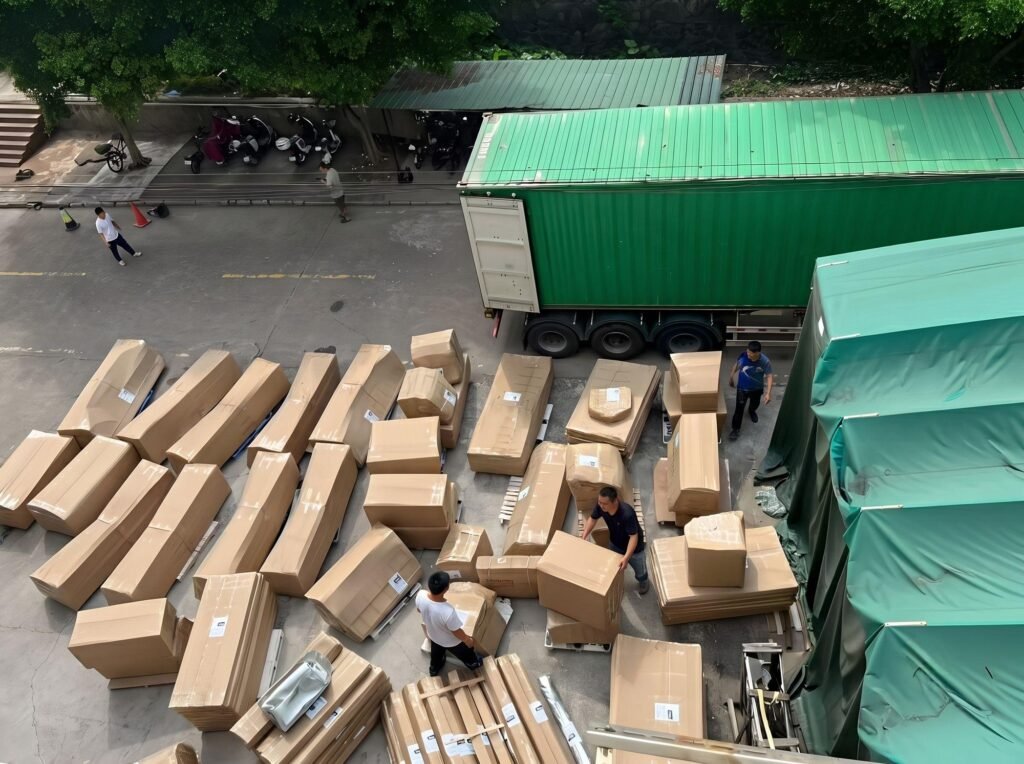
If your product actually matches an Annex A description, your broker files through ACE with a two-code structure:
● Primary: The real HTS (e.g., 9401.99.9081 for bench frames)
● Secondary: 9903.88.69
Do NOT also report the original List code (9903.88.01, .02, .03, or .15) on the same line. That’s a rookie mistake that triggers CBP’s “explain yourself” letter. I’ve seen brokers with twenty years of experience slip on this because they were rushing entries before a long weekend.
Documentation: Keep a product spec file with dimensional drawings, material breakdowns, and photos. CBP’s audit window is five years. That container you cleared in March 2026? They can challenge it in 2031.
Eight Traps That Keep Catching Furniture Importers
1. “Furniture is exempt.” No. Most finished furniture under 9401–9403 pays full 301. The exclusions are parts and oddities.
2. HTS-only matching. The description controls. Period.
3. Trusting old certificates. A 2023 exclusion cert is worthless in 2026. USTR narrows descriptions every cycle.
4. Missing the November 9 entry deadline. It’s entry date, not ship date. A November 12 entry pays the snap-back rate even if you signed the PO in July.
5. Ignoring the 232 bump to 30%. Since January 1, 2026, upholstered wooden furniture and cabinets pay 30% under 9903.76.02–.03. This runs parallel to 301, not on top of it. Same customs value, two separate surcharges.
6. The Hong Kong fantasy. “We’ll ship through Hong Kong, avoid 301.” Wrong. CBP determines origin by where substantial transformation happened, not export port. Made in Shenzhen, transshipped through Hong Kong? Still Chinese origin, still 301. I’ve watched three importers learn this the hard way during CBP audits. The only thing Hong Kong routing avoids is the “Made in China” physical marking requirement under EO 13936—and that’s a separate compliance issue, not a tariff break.
7. AD/CVD blind spots. Chinese wooden bedroom furniture carries AD/CVD rates up to 216.01%—but that’s the China-wide rate for non-cooperative exporters. Cooperative exporters with established separate rates pay far less. Know your supplier’s rate before you quote landed cost. Stack it with 25% (301) + 30% (232) + 10% (Section 122 through July 24) and you’re looking at 271%+ for uncooperative parties.
8. The Section 122 confusion. It’s 10%, collected through July 24, 2026. Not 15%. Not permanent. And it stacks on 301 but not on 232—where 232 applies, Section 122 drops off that portion. Your broker should be modeling this with a spreadsheet, not a gut feeling.
B2B vs. C2C: Different Worlds
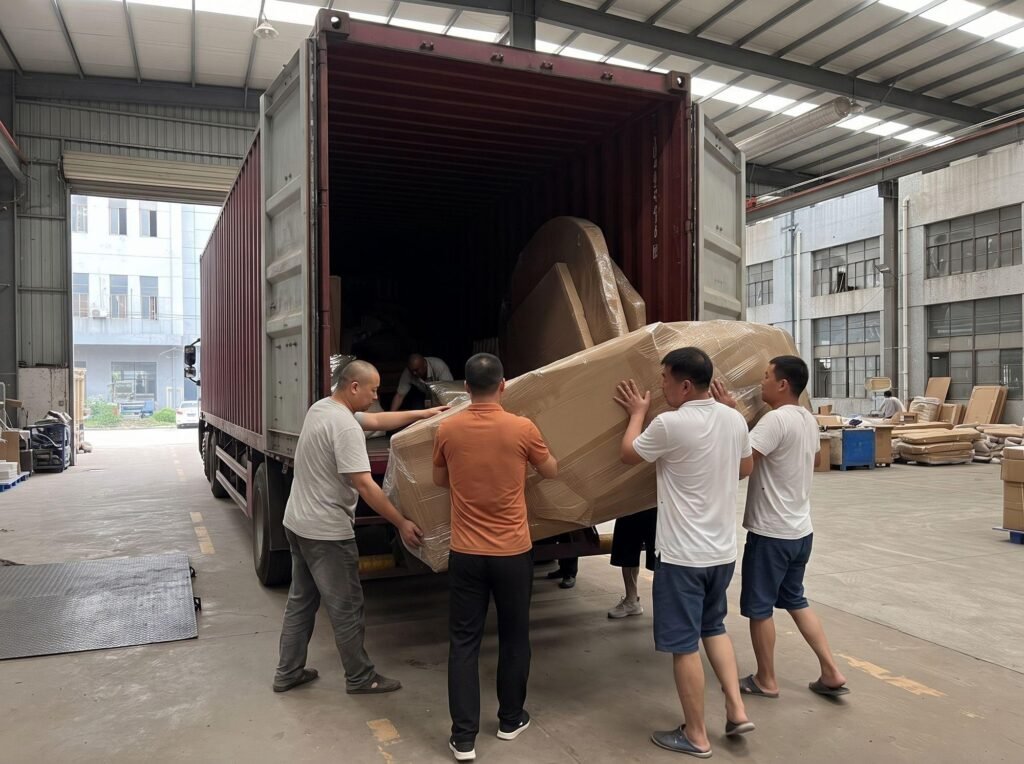
Container buyers: Your landed cost model needs five columns now—MFN, 301, 232, Section 122 (through July 24), AD/CVD. A $50,000 CIF shipment of non-exempt wooden office furniture runs 25% (301) + 0% MFN + 0.3464% MPF + 0.125% HMF = ~$12,735. Add 30% (232) if it’s upholstered = another $15,000. Add 10% (Section 122) through July 24 = another $5,000. That’s $32,735 in duties and fees on a $50,000 shipment—before freight, before broker fees, before your margin.
Small parcel buyers: The $800 de minimis exemption still exists but CBP has tightened enforcement on split shipments. A single sofa via air courier almost certainly exceeds $800 and requires formal entry. Section 301 applies at the item level—buying one chair or a hundred doesn’t change the rate.
What to Do Before November 9
1.Audit your SKU list against Annex A now. Assume no match unless every dimension, every material, every qualifier fits.
2.Model post-November costs. If your exclusion dies, add 25% to your landed cost. If it’s upholstered or cabinets, add 30% (232) too. Pass this through to pricing today or eat it later.
3.Verify alternative supply. Vietnam, Mexico, Malaysia have absorbed furniture manufacturing. But “assembled in Vietnam” isn’t enough—rules of origin require substantial transformation. I’ve seen factories try to pass off Chinese-origin components with a Vietnamese screw-driver assembly. CBP has seen it too.
4.File binding rulings for gray areas. Mixed-material seating, modular storage, “is this a part or finished good?”—a CBP binding ruling eliminates guesswork and protects against post-entry liability. Costs a few hundred dollars, saves tens of thousands in back duties.
5.Watch USTR in Q3/Q4 2026. The extension decision (or non-decision) typically drops 60–90 days before expiration. If you’re going to pull inventory forward to exploit the final months, start planning now.

FAQ—The Questions People Actually Ask
Q: Are all Chinese furniture products exempt from 301 in 2026?
A: No. The vast majority of finished furniture pays 25% List 3. A handful of parts and niche items qualify for 9903.88.69 exclusions.
Q: When do current exclusions expire?
A: 11:59 p.m. ET on November 9, 2026. Entries on or after November 10 lose the exclusion unless USTR extends.
Q: Can I apply for a new exclusion?
A: USTR hasn’t opened a new request window since 2020. Current 9903.88.69 only covers previously granted exclusions that got extended. No new grants as of July 2026.
Q: Does 9903.88.69 remove all tariffs?
A: No. It only removes the 301 layer. MFN, 232, AD/CVD, MPF, HMF all still apply.
Q: How do I know if my product matches?
A: Compare your spec sheet against Annex A in FR Doc 2025-21671. The description is dispositive; HTS is advisory. When in doubt, get a binding ruling.
Q: What if CBP disagrees with my exclusion claim?
A: CF-28 or CF-29. Back duties plus interest. Fraud referrals in bad cases. Keep documentation proving description match.
Q: Are parts cheaper to import than finished goods?
A: Often yes—if they qualify for 9903.88.69. But KD furniture is classified as finished goods under GRI 3, not parts. Don’t assume unassembled = parts.
Q: Will November 9 be extended?
A: Unknown. Plan for expiration as default.
The honest takeaway: The furniture tariff exemption us landscape in 2026 isn’t a landscape—it’s a tightrope. A few furniture parts and oddities still dodge the 25% 301 hit through November 9. Everything else pays the full stack, which now means 25% (301) + 30% (232 for upholstered/cabinet categories) + 10% (Section 122 through July 24) for many Chinese-origin shipments. If your supply chain still runs through Guangdong or Zhejiang, the math is brutal: qualify for a razor-specific exclusion, absorb the duty stack, or move production. We’ll keep tracking USTR announcements and update as the November deadline approaches.
Recommended Resource
Interi Furniture specializes in custom furniture manufacturing for residential, hospitality, and commercial projects. Their experience in materials, craftsmanship, and project realization makes them a valuable resource for designers and buyers seeking tailored furniture solutions from China.