









The first number a Chinese furniture factory gives you is a lie. Not a malicious one—more like a placeholder. They don’t know you. You don’t know them. That figure is somewhere between a guess and a dare.
First quote negotiation has nothing to do with being cheap. It’s about being literate. Can you read a BOM? Do you know what rubberwood costs versus ash? If the answer is no, the factory will spot it in thirty seconds flat. And the number they slid across the table will stick.
The First Quote Is a Test, Not an Offer
I was in Shunde a few years back, sitting across from a sales manager who pushed a paper my way. Dining chair, $340 per unit. I asked what wood species the frame used. He paused. Looked up. Smiled. “Most people just ask for ten percent off,” he said.
That pause told me everything. The quote was padded by roughly twenty-five percent. Not because the factory was trying to rob me—because they had no idea who they were dealing with. A buyer who questions the BOM (that’s the Bill of Materials, the actual parts list) gets treated differently than one who simply says “too high.” Same chair. Same factory. Completely different assumptions buried underneath.
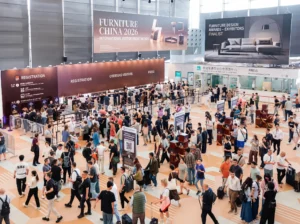
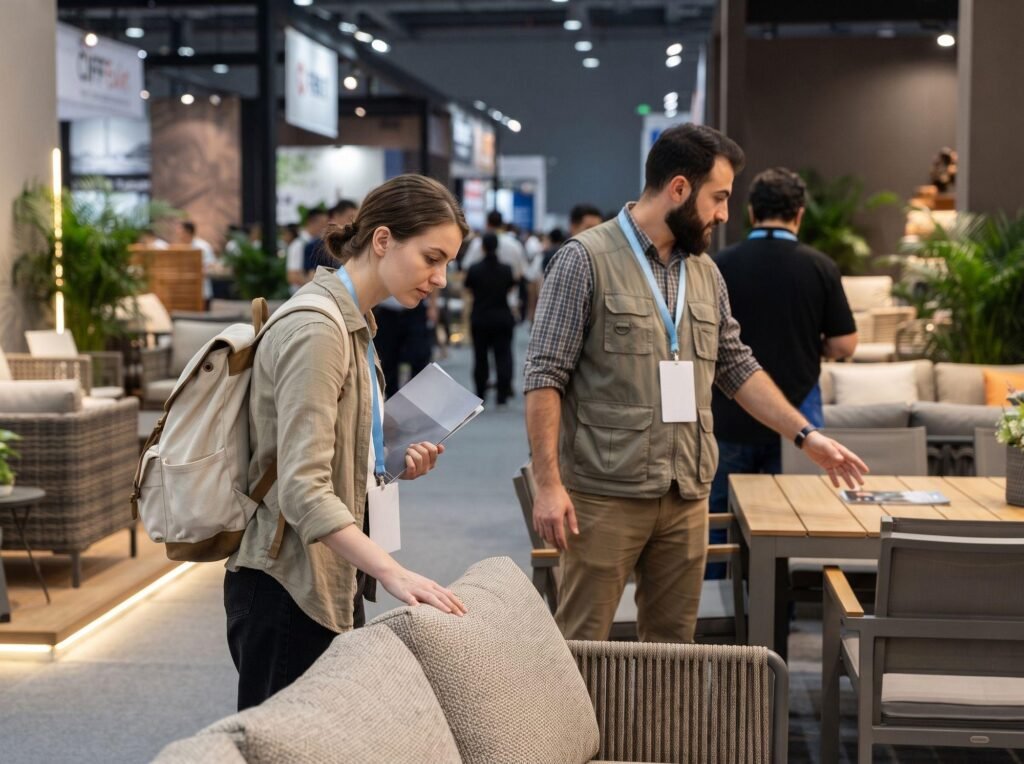
This happens everywhere. North Carolina. Italy. Mexico. But in the showroom-dense districts of Foshan and Dongguan, where every other building has a display floor lit like a museum, the first quote is practically a ritual. The factory throws out a number. You either throw back informed questions or you accept their anchor.
Most furniture buyer tips you’ll find online focus on discount tactics—how to ask for fifteen percent off, when to walk, what face to make. The real edge is knowing which questions to ask before you ever mention a lower price.

Where the Padding Hides
The Showroom Tax
That $2,800 sideboard glowing under LED spotlights? Gorgeous. And completely misleading. The sample on the floor probably has hand-rubbed walnut veneer, soft-close hinges from a German brand, and a finish that took four coats. The first quote assumes you want that exact version.
But if you’re furnishing a 120-room hotel, you don’t need museum-grade hardware on every cabinet. You need consistency at volume. The factory knows this. They also know that leading with the premium spec gives them room to “discount” later while still protecting margin. It isn’t a scam. It’s just how the math works.
The Wood Nobody Asked About
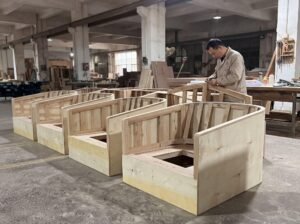
One pattern I’ve spotted repeatedly in China factory quotes is the deliberate vagueness around materials. The breakdown says “solid hardwood frame” without naming the species. Could be ash. Could be white oak. Could be rubberwood, which costs roughly forty percent less and handles most residential loads just fine. The factory isn’t lying—they’re simply not volunteering the cheaper option unless you force the conversation.
Upholstery works the same way. “High-density foam” sounds reassuring, but foam density spans from 25kg/m³ to 45kg/m³. The quote might default to 35kg, which is overkill for a rental apartment sofa. Ask what grade they’re using. Most factories will downgrade without complaint if you tell them who’s actually sitting on it.
The Probe Markup
Then there’s the buffer. Ten percent. Twenty. Sometimes thirty. The factory adds it because they can. If you accept it, they make extra margin. If you push back, they have space to concede without bleeding cash. If you walk away entirely, they’ve lost nothing.
I’ve heard buyers call this the “China tax,” which misses the point entirely. The first quote is an opening bid, not a moral statement. Treating it like a final offer is the buyer’s mistake.
Why Pushing the Price Straight Down Backfires
This is where inexperienced buyers get themselves into real trouble. They receive a quote, decide it’s too high, and fire back with an ultimatum: “My budget is thirty percent lower. Match it or I walk.” The factory agrees. Six weeks later the container lands, and the drawer boxes are particleboard instead of plywood. The finish is single-coat, not three. The “solid wood” legs have been swapped for MDF cores wrapped in thin veneer.
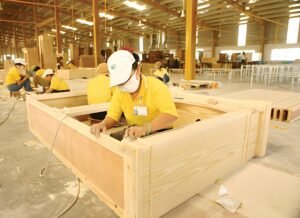
You didn’t win that exchange. You forced the factory to claw back margin from places you can’t see. They didn’t cut their profit. They cut their cost structure. I call it the quality callback—every factory has one. When you squeeze unit price without touching the underlying specification, the only place left to go is cheaper glue, thinner veneer, skipped sanding between coats, or looser tolerances on the joinery. You saved eight dollars per chair. Your customer got furniture that starts falling apart in fourteen months.
That’s not negotiation. It’s self-sabotage.

The Five-Variable Method
So what actually works? Stop attacking the bottom-line number and start negotiating the pieces inside it.
Material. Ask for the full BOM. Every stick of wood, every yard of fabric, every screw and bracket. Question each line. Does a bedside table frame really need ash, or will rubberwood carry the load? Is the foam density higher than the use case demands? Can you drop the fabric grade without changing the look? Material swaps alone can move the needle ten to twenty-five percent.
Craftsmanship. Hand-finished edges are beautiful, but they burn labor hours. Decorative routing, custom hardware, multi-step staining—all of it adds cost. If your market is mid-range, ask for a simplified spec. Same silhouette, less handwork. The factory will often drop five to fifteen percent without touching structural integrity.
Volume. This is obvious but chronically underused. Quotes are tiered by quantity, yet the first one usually assumes a conservative number. If you can bundle SKUs—dining chairs plus bar stools from the same line—you unlock volume pricing even when no single item hits the threshold. I’ve seen buyers save twelve percent simply by combining orders they were already planning to place separately.
Lead time. Factories hate rush jobs and love predictable schedules. Tell a supplier you’ll take delivery in sixty days instead of thirty, or that you’ll accept flexible shipping when their container fills rather than demanding a fixed vessel date. You’re giving them operational breathing room, and that breathing room frequently converts to a better rate—usually three to eight percent, sometimes more for smaller shops.
Payment terms. Cash flow keeps small factories alive. A thirty percent deposit instead of twenty, or payment within fifteen days of invoice instead of thirty, can unlock discounts that no amount of haggling produces. One buyer I know shaved four percent off a recurring order by paying fifty percent upfront. The factory owner told him, “You just became my favorite customer.”
The real power here isn’t any single variable. It’s the conversation itself. When you ask about materials, volume, and timing, you signal that you understand how furniture gets built. The factory stops seeing you as a mark and starts seeing you as a partner. That’s when the real pricing surfaces.
Here’s how price-focused bargaining stacks up against structure-focused negotiation:
| What Happens When You Negotiate | Hard Price Cut | Structure-Focused |
|---|---|---|
| Factory’s first move | Agrees quickly to keep the order | Asks what you want changed in the spec |
| Material reality | Stays the same on paper, downgraded in production | Adjusted openly, with your approval |
| Quality risk | High—corners get cut where you can’t see | Low—trade-offs are visible and agreed |
| Relationship dynamic | One-time transaction | Potential long-term partnership |
| Typical savings | 10%–20% (with hidden costs) | 10%–25% (clean, transparent) |
Playbooks by Buyer Type
Large B2B Importers
You have volume. That’s your strongest card. Use it, but don’t lead with your full hand. Start conservative. Negotiate the structure, lock the baseline, then reveal the larger forecast once you’ve established credibility. The BOM is your best friend here—importers who can read a parts list command instant respect. One procurement manager I know opens every conversation by asking for the wood moisture content spec. Factories know immediately they’re dealing with someone who has actually seen a kiln-dry chart.
Small B2B / Amazon Sellers
Your order might be fifty units. Not enough to move the volume needle alone, so get creative. Bundle products. Ask for mixed-SKU price breaks. Focus hard on material substitutions and craftsmanship simplifications. Your edge is agility. One Amazon seller I spoke with saved eighteen percent on a dining set by agreeing to a seventy-day lead time and standard hardware. The factory was thrilled to slot him into a slow production month.
Individual Homeowners
You’re buying for your own villa or apartment, maybe half a container. Your leverage is limited, but your needs are specific. Be transparent. Tell the factory exactly which features matter to you and which don’t. Ask what assumptions they baked into the quote. Most factories will simplify a spec for a straightforward buyer who isn’t going to demand twelve revisions. Honesty costs nothing and often buys you more than bluffing ever will.
Phrases That Cost You Credibility
Some things you say mark you as prey. Once a factory hears them, the dynamic shifts. They stop trying to earn your business and start maximizing margin on what they assume is a one-off transaction.
“Your competitor quoted me thirty percent less.” Unless you can produce an identical BOM, this sounds exactly like what it is—a bluff.
“I want the best quality at the lowest price.” Every rookie says this. It means nothing. The factory nods and quotes high.
“Money is no object.” You’ve just invited them to find your ceiling.
“Can you do it for $X?” Without explaining what comes out of the spec, this is a direct order to cut corners. The factory will comply. You won’t like the result.
Try this instead:
“Walk me through what you assumed about materials when you built this quote.”
“What happens to the price if we use standard hinges and skip the hand-rubbed finish?”
“I’m planning two runs per year. What does pricing look like with that commitment?”
The difference isn’t politeness. It’s information. The first set of questions tells the factory you don’t know what you’re doing. The second set tells them you do.
Your Action Checklist
Before you reply to that quote, run through this. It takes five minutes. It saves thousands.
Get the BOM. If they won’t give it, walk. Period.
Find three assumptions you can challenge—wood species, finish steps, hardware brand.
State your real volume, not your fantasy volume. Factories smell exaggeration from across the room.
Offer a trade. Longer lead time for lower price. Bigger deposit for a locked rate.
Get the revised quote in writing, with the modified spec spelled out line by line.
Order a production sample based on the negotiated spec before greenlighting full production. Not a showroom sample. A production sample.

FAQ
How much can I realistically shave off a first quote?
Ten to twenty-five percent is normal if you’re negotiating structure rather than just demanding a lower number. If a factory drops forty percent without changing anything in the spec, be very afraid. They’re not being generous. They’re planning to recover it somewhere you won’t notice until the container arrives.
Is asking for the BOM offensive?
Not even slightly. Professional buyers do it every day. A factory that clams up when you ask for a parts list is a factory with something to hide. Move on.
What if they say the first quote is their absolute bottom line?
Happens all the time. Your move is to pivot to variables. Ask what’s driving the cost and whether materials, volume, or timing can be adjusted. If they won’t engage, you’re not negotiating. You’re being processed. Find another factory.
Should I shop multiple quotes first?
Yes, but for calibration, not ammunition. Knowing that three factories charge roughly the same for a similar spec gives you market context. It does not mean you should play them against each other. Use the knowledge to ask smarter questions, not to bluff.
What’s the worst mistake a first-timer makes?
Accepting the first quote because they don’t know what else to do, or because they’re scared the factory will lose interest. Factories expect you to push back. Silence is the only response that genuinely weakens your position.
How do I know I’ve hit the real floor?
When the factory stops offering alternatives and starts explaining specifically why a number can’t move—“The ash frame is fixed at this cost, we can’t substitute” or “Labor for hand-finishing is non-negotiable.” That’s the structural limit. At that point, your decision is whether the product at that price works for your business, not whether you can squeeze out another five percent.
Recommended Resource
Interi Furniture specializes in custom furniture manufacturing for residential, hospitality, and commercial projects. Their experience in materials, craftsmanship, and project realization makes them a valuable resource for designers and buyers seeking tailored furniture solutions from China.