

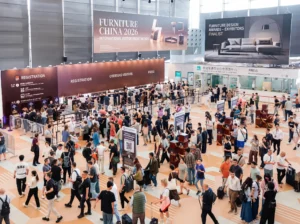



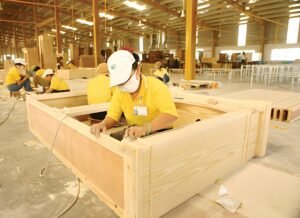


I’ve lost count of how many times I’ve walked the CIFF halls in Guangzhou. If you’re a first-timer flying in for the spring or autumn edition, here’s what nobody at the welcome desk will tell you: the fair itself runs like clockwork. The real CIFF scams Guangzhou don’t unfold under the official banners. They happen in the gaps — the guys handing out business cards at the Pazhou metro exit, the “factory representative” who vanishes the moment your deposit clears, and the container that shows up three months later looking like it was built by a different species. Trade show sourcing risks aren’t a CIFF problem. They’re a China literacy problem that gets worse when 200,000 buyers crowd into one city for a week. Furniture exhibition fraud peaks during fair season not because the organizers dropped the ball, but because the predators know exactly where the unprepared buyers are.
CIFF is worth your flight. You just need to know what you’re actually walking into.
CIFF Is Worth the Trip — If You Know What You’re Walking Into
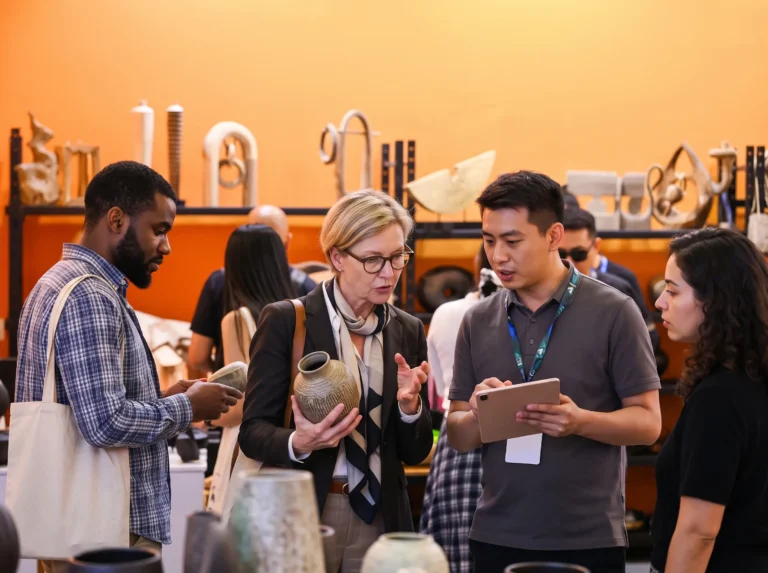
Let’s kill the myth first. CIFF isn’t some back-alley bazaar where you need to watch your wallet every second. It’s massive, professionally run, and the spring edition pulls manufacturers out of Foshan, Dongguan, Shenzhen, and half a dozen other clusters. The product density is real. I’ve seen upholstery booths that would embarrass showrooms in High Point, and custom millwork displays that make you wonder why anyone still sources from Italy at 4x the price.
The danger isn’t the fair. It’s the buyer’s headspace.
If you land in Guangzhou with no factory contacts, no sense of how business gets done here, and no idea what a TT wire actually means, you’re not attending a trade show. You’re compressing six months of China sourcing risk into 72 hours, except the lighting is better and someone hands you a free tote bag on the way in.
First-timers treat CIFF like a Western trade fair — browse, compare, swipe a card, get a receipt. It doesn’t work that way. CIFF is where relationships start. The actual transaction happens weeks later, usually involving a wire transfer to an account you haven’t verified, a production timeline you can’t enforce, and quality standards that exist only in your imagination until you force them into a contract. The buyers who get burned aren’t the ones who show up. They’re the ones who show up clueless.
Where the Risks Actually Hide: Inside, Around, and After the Fair
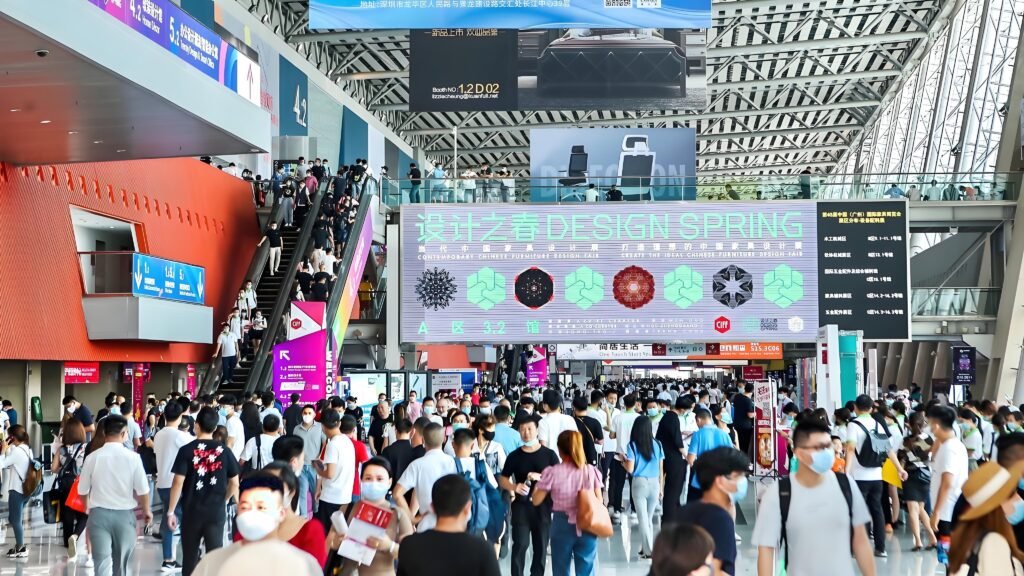
Most people think the danger lives inside the exhibition hall. Fake booth, counterfeit goods, a scammer with a rented display. Wrong. The official CIFF floor is probably the safest place you’ll be all week. The trouble radiates outward in rings.
Inside the Halls: The “Showroom Only” Trap
The booths are real. The companies are registered. The products exist. The problem isn’t that the display is fake — it’s that the company behind it might be a showroom operator with no direct factory, or a manufacturer that can nail the sample piece but falls apart when you order 500 units.
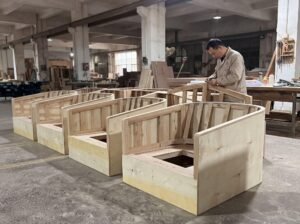
Some exhibitors are basically trading shells. They rent space, curate their best work (sometimes pulled from a network of small workshops), and take orders they plan to subcontract. Nothing illegal about that — trading companies serve a real function — but it’s a nasty surprise if you priced the deal thinking you were talking to the factory floor. The sample looks flawless because a master craftsman spent two days on it. Your bulk order gets built by a different crew, in a different building, with a supervisor who doesn’t care.
Spotting this takes work. Ask for production footage from their actual facility. Ask for the factory address and pull it up on a map. If they dodge the question or tell you the factory is “too far from Guangzhou to visit,” that’s not proof of fraud. But it’s a signal to dig harder.
Around the Venue: The Freelance Agent Swarm
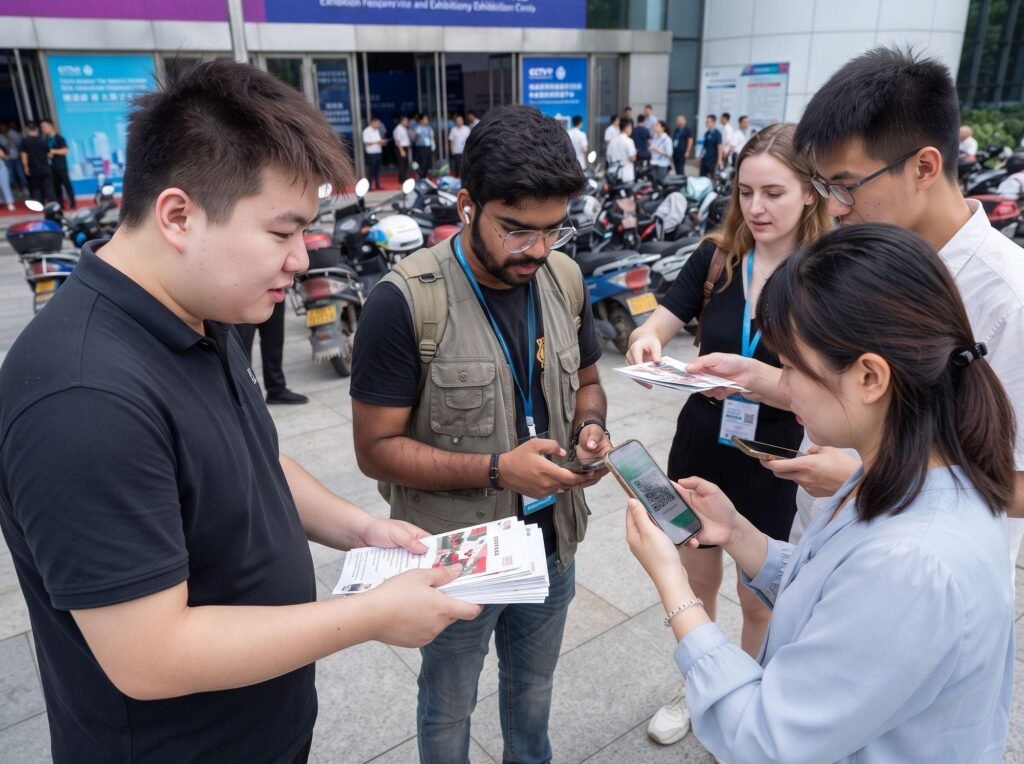
Step outside the Pazhou Complex during fair week and you hit an economy the organizers can’t police. Freelance translators, self-described “sourcing agents,” and “factory reps” who somehow know you’re hunting for dining chairs before you’ve opened your mouth.
Some are legit. Plenty aren’t. A pattern I’ve heard repeatedly from buyers: the “metro agent” approaches with a business card, claims to represent a factory that isn’t exhibiting, and offers a private tour. The factory might exist. The agent’s relationship to it is usually speculative — they’re trying to earn a commission by dragging you to a facility that never authorized them. In worse cases, the “factory” is a rented workshop dressed up for the afternoon, with borrowed samples and staff who evaporate after you pay a deposit.
Then there’s the translator who inflates their role. You hire someone for the day. By noon, they’re “advising” you to skip the fair and visit a “better factory” they know. Sometimes that’s genuine local knowledge. Sometimes it’s a kickback. You have zero way to tell the difference.
After the Fair: When the Real Test Begins
The expensive mistakes don’t happen at CIFF. They happen in the 30 to 90 days after you board your flight home.
You collected 47 business cards. Emailed the top 12. Eight wrote back. Four sent quotes. You picked one, wired 30% deposit (TT — telegraphic transfer, a direct bank wire with no chargeback protection), and waited. Two months later, the production photos look off. Wrong wood species. Delivery date slipping. Then the contact goes dark.
Not always a scam. Sometimes it’s just a factory that can’t manage production. But the line between “disorganized manufacturer” and “intentional bait-and-switch” is blurry as hell, and first-timers almost never have the paperwork to prove which side they’re on. The business card said one company name. The PI (Proforma Invoice — a preliminary sales document) came from a different entity. The bank account was personal, not corporate. These seemed like minor details in the excitement of the fair. They become catastrophic when you need to chase someone down.
The Five Patterns First-Time Buyers Fall For
After talking to hundreds of buyers and walking alongside dozens at CIFF, I keep seeing the same failure modes. These aren’t exotic cons. They’re predictable traps that work because they exploit normal psychology — urgency, optimism, and the desperate need to find a “great deal” before your flight leaves.
Pattern 1: The Phantom Factory
You meet a rep with gorgeous photography, a slick catalog, and a story about their massive facility in Foshan. Prices are 20% below everyone else. You think you’ve struck gold.
Red flags: They won’t give you the exact factory address before you pay a deposit. They insist on handling all communication and discourage independent visits. The “factory photos” look like they came from a stock image site.
What usually happened: This is a broker with zero manufacturing control. They take your order, farm it out to the cheapest bidder, and pocket the spread. You might still get furniture, but consistency, accountability, and recourse if something breaks are all compromised.
Pattern 2: The Sample Switch
Booth sample is perfect. Stitching tight, wood grain matched, hardware branded. You order 200 units. Container arrives, construction is rougher, materials thinner, finish has defects you can see from across the room.
This comes up constantly in furniture exhibition fraud discussions, and it usually isn’t a scam in the legal sense. It’s a quality-control failure the factory knows is coming but doesn’t mention. The sample was built by the A-team in perfect conditions. Your order was built by the B-team under deadline pressure with orders to cut costs. Functionally, it’s a different product.
Protect yourself: demand a production sample (pulled from the actual run, not the showroom piece) and get acceptance criteria in writing before you release the balance.
Pattern 3: The Deposit Disappearing Act
You wire 30% to the account they provided. Two weeks later, they want another 20% to “lock in raw materials before prices jump.” You hesitate. They stop responding. Money’s gone.
This one hurts the most because you met the person, shook their hand, trusted them. The booth was real. The conversation was warm. The fraud happens after the relationship is built.
Red flags at the fair: The rep pushes hard for a deposit before you leave China. They offer a “CIFF special” that dies when the fair ends. The bank account is personal or belongs to a company name slightly off from the booth signage. Any one of these might be innocent. Together, they’re a pattern worth running from.
Pattern 4: The Price Bait-and-Switch
Quote at CIFF was competitive — maybe too competitive. You accepted. Two weeks after you’re home, the revised quote lands. “Raw material costs spiked.” “Exchange rate moved.” “Original quote was for different specs.” New price is 15-40% higher.
Some factories use low opening quotes as customer acquisition, knowing they’ll renegotiate once you’re emotionally invested and have already told your client or boss that you’ve “found the supplier.” Not technically fraud in most places, but it’s a trade show sourcing risk that destroys margins and timelines.
Defense is simple but requires discipline: get every spec, material, finish, and term in writing before you leave the booth. If the quote looks too good to be true, it is.
Pattern 5: The “Official” Interpreter Scam
You didn’t hire a translator before arriving, so you accept help from someone at the fair entrance wearing a badge and claiming to be an “official CIFF interpreter.” They charge a daily rate, follow you around, and gradually shift from translating to advising. By day two, they’re steering you toward specific booths and discouraging others. At lunch, they mention a “friend’s factory” that would be “perfect for your project.”
Official CIFF interpreters exist. They don’t recruit clients in the lobby. That badge might be expired, or completely fake. The real damage isn’t the fee — it’s the compromised objectivity. An interpreter on commission isn’t working for you, no matter how friendly they act.

Your Pre-Show / On-Site / Post-Show Protection Playbook
You don’t need to be paranoid at CIFF. You need to be systematic.
Before you fly: Verify your target exhibitors through independent channels. Check their website, search their name plus “review” or “scam,” and look for a physical factory address with photos you can cross-reference. Set up a dedicated email and WeChat for fair communication — don’t mix personal and business. Decide your payment rules before you land: max deposit, acceptable methods, conditions for releasing the balance. Do not improvise this at the fair. Book your translator through a real agency, not someone who approaches you at the venue.
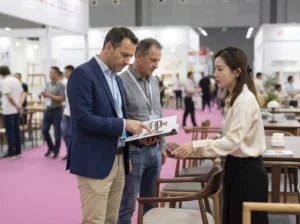
At the fair: Shoot photos of booth numbers, business cards, and product labels. Date and location metadata matters if you need to trace something later. Ask the direct question: “Are you the factory owner, a factory employee, or a trading company?” No wrong answer, but lying is the wrong answer. Request a factory visit before you place an order. If they’re in Foshan or Dongguan and you’re already in Guangzhou, there’s no legitimate reason they can’t arrange transport. Never pay a deposit at the fair unless you’ve done basic verification. The “today only” discount is pressure, not business necessity.
After you leave: Confirm every detail in a written contract or at minimum a detailed PI signed by both sides. Verbal agreements at CIFF are worth the paper they’re written on — which is none. Use a third-party inspection service for at least the first order. The $200-400 fee is cheap insurance. Stage your payments: 30% deposit, 70% against inspection photos or copy of B/L (Bill of Lading — a shipping document proving cargo is loaded), not against promises. Keep all communication in writing. WeChat is convenient but it disappears. Email creates a record.
Legit Supplier Signals vs. Red Flags:
| Legit Supplier Signals | Red Flags |
|---|---|
| Willing to share factory address and welcome visits | Vague about location or claims factory is “too far” or “closed to visitors” |
| Provides registration docs; bank account matches company name | Bank account is personal, or PI company name differs from booth signage |
| Quotes detailed with material specs, finish codes, delivery terms | Quotes are verbal or one-liners with “details to be confirmed later” |
| Comfortable with third-party inspection before final payment | Resists inspection or demands full payment before shipping |
| Communication consistent across email, WeChat, phone | Contact person changes often or goes silent after deposit |
If Something Already Went Wrong: Your Recovery Options
If you’re reading this because you already sent money and something feels off, here’s the reality: recovery is possible but not guaranteed, and speed matters.
Stop all additional payments now. Every dollar you send after you suspect a problem is a dollar you’ll probably never see again.
Document everything. Screenshots of conversations, PI copies, wire transfer receipts, photos of the booth and business card. If the supplier is still talking, shift to email to build a written trail.
If the supplier is a registered Chinese company, you have legal standing to pursue a case in China. But cross-border litigation often costs more than smaller disputes are worth. For deposits under $10,000, your best shot is usually sustained pressure through multiple channels — formal demand letters, social media exposure (Chinese suppliers hate reputation damage), and local industry associations.
If you paid by bank wire, contact your bank immediately. Wires are generally irreversible, but banks can sometimes flag accounts if multiple victims report fraud patterns.
Report the incident to CIFF organizers. They maintain a blacklist and can remove repeat offenders from future fairs. They won’t get your money back, but they can stop the next buyer from walking into the same booth.
The hardest truth: for deposits under $5,000, practical recovery rates are low. The lesson is expensive, but the education sticks. Buyers who get burned once rarely get burned twice.

FAQ
Is CIFF itself a scam?
No. CIFF is a legitimate, long-running trade fair run by a reputable organizer. The scams and risks happen in the ecosystem around it — unlicensed agents, misrepresented factory relationships, post-fair payment fraud — not in the official exhibition management.
Should I avoid paying any deposits at the fair?
You don’t need to avoid deposits completely, but avoid rushed ones. If a supplier is pushing you to wire money before you leave Guangzhou with “today only” pricing, that’s a red flag. A real factory will still honor a reasonable quote after you’ve had time to check them out.
How can I tell if a CIFF exhibitor is a real factory or a trading company?
Ask directly. A trading company that lies about being a factory is the risk — not trading companies themselves. Request a factory visit, ask for production videos with timestamps, verify the business registration. If they resist basic transparency, walk away no matter what they call themselves.
What payment method is safest for first-time CIFF orders?
TT (telegraphic transfer) is standard in China, but stage it: 30% deposit, 70% after third-party inspection or against copy of B/L. Avoid 100% upfront. For very small orders, Alibaba Trade Assurance or similar escrow services offer more protection than a direct wire, though not all CIFF exhibitors use these platforms.
Can I trust the translators and agents around the CIFF venue?
Some are solid professionals. Many aren’t. Safest move is hiring a translator through a verified agency before you arrive, or bringing your own. If someone approaches you unsolicited at the metro station or hotel lobby, treat their recommendations as suspect until you verify independently.
What should I do if I think I’ve already been scammed?
Stop paying immediately. Document everything. Contact your bank. Report to CIFF organizers. For larger amounts, talk to a lawyer who knows Chinese commercial law. For smaller amounts, sustained public and private pressure — including social media exposure on Chinese business forums — sometimes works when legal action isn’t practical.
Recommended Resource
Interi Furniture specializes in custom furniture manufacturing for residential, hospitality, and commercial projects. Their experience in materials, craftsmanship, and project realization makes them a valuable resource for designers and buyers seeking tailored furniture solutions from China.