





If you’re a personal buyer Dongguan hunting for furniture, here’s the truth upfront: most factories in this city don’t want your business. Not because your money is fake. Not because they hate foreigners. They simply run a different game.
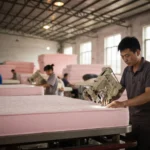
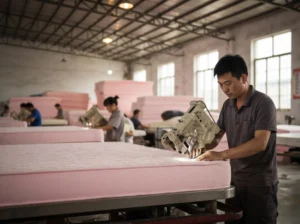
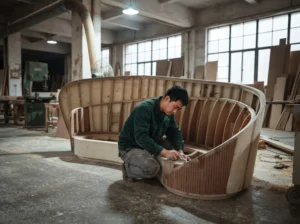
Dongguan built its reputation on export OEM and high-end contract manufacturing. Houjie pumps out leather sofas for hotel chains. Dalingshan cranks solid wood frames for European labels. Chang’an ships precision hardware to German distributors. These lines run at full capacity, booked out months ahead. A guy in Sydney wanting three sectional sofas and a dining set? That’s noise, not signal.
But here’s the twist — and it’s important — individual buyers Dongguan can win here. You just need to know which factories to knock on, what volume gets you through the door, and which product categories make the headache worthwhile. This article maps exactly that. No sugarcoating. No factory tours that end in tea ceremonies and inflated quotes.
The Dongguan Myth: What Most Buyers Get Wrong
Walk into any furniture forum and you’ll hear the same line: “Dongguan makes the best stuff in China. Skip Foshan, go straight to the source.” We hear this weekly from personal buyer Dongguan prospects who found us through Google or a YouTube “sourcing guru.”
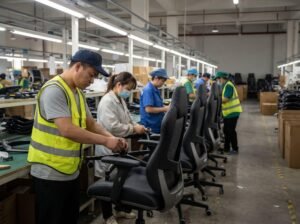
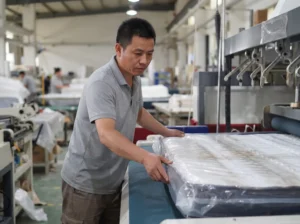
Here’s what they don’t tell you. “The best stuff” in Dongguan is engineered for B2B. A factory in Dalingshan might produce 800 dining tables a month for a Dutch retailer. Their QC protocol, their packaging line, their shipping consolidation — everything assumes container loads. Drop a request for six chairs and a console table into that system, and you break the rhythm.
Most people assume Dongguan high MOQ is just a pricing issue. “If I pay more per unit, they’ll take my order.” Wrong. The MOQ isn’t a price wall. It’s a production-culture wall. These factories measure efficiency by line utilization and batch consistency. A small order forces them to reset jigs, retrain workers on a one-off spec, and hand-hold QC for pieces that don’t match their usual run. The real cost isn’t materials. It’s disruption.
We’ve walked floors where a factory owner laughed — not unkindly, just honestly — when we mentioned a 12-piece residential order. “That’s a sample run for us,” he said. And he meant it.
Why Dongguan Factories Don’t Want Your “Small” Order
The MOQ Reality
Let’s talk numbers, because this is where personal buyer Dongguan dreams hit concrete.
A mid-size soft-goods factory in Houjie typically sets MOQ at one 40-foot container per SKU. For sofas, that means 20 to 30 units minimum. For dining chairs, 50 to 100 pieces. These aren’t suggestions. They’re hard stops programmed into the sales team’s CRM.
Now, some factories advertise “low MOQ” on Alibaba or at trade shows. Be careful. That usually means they’ll accept a smaller container mix — maybe 200 pieces total across five SKUs — but the per-unit price jumps 40% to 60%. At that point, you’re paying boutique rates for factory goods, and the quality often slips because you’re getting B-stock or leftover materials.
Dongguan high MOQ isn’t a scam. It’s a structural feature of an ecosystem designed for scale.
Production Scheduling Hell
Here’s something the sourcing blogs never mention: Dongguan factories operate on seasonal waves. March through June, they’re slammed with European and North American pre-holiday orders. July and August? South American and Middle Eastern buyers flood the lines. September to November? Everyone’s racing to beat Chinese New Year shutdowns.
We checked with three factories in Chang’an last October. Lead times for new clients? Fourteen to eighteen weeks. For existing B2B clients with annual contracts? Six to eight weeks. Guess which queue a personal buyer Dongguan lands in.
The “cold treatment” isn’t personal. It’s arithmetic. A factory manager staring at a full order book sees your small residential order as a scheduling headache with high communication overhead. So they quote slowly. They inflate sampling fees. They push your delivery date into next quarter. They’re not being rude. They’re being rational.
Industry Truth: The Quality Trap
Most individual buyers Dongguan assume that paying more equals getting better. In Dongguan, this logic backfires.
Because these factories optimize for bulk consistency, their best workers, best materials, and best QC attention flow to the big runs. Your small order? It might get bumped to the night shift. It might use leather from a secondary supplier because the prime stock is reserved for the 500-sofa contract. It might skip a finishing step because the foreman knows no one’s watching as closely as the German client’s inspector.
We’ve seen $4,000 custom sofas from Dongguan arrive with frame joints that wouldn’t pass a Foshan factory’s basic QC. Not because Dongguan can’t build better. Because your order wasn’t big enough to matter.
This is the dirty secret: should I buy from Dongguan isn’t a quality question. It’s a relevance question.
When Dongguan Actually Makes Sense for Individual Buyers
Okay, enough doom. Let’s talk about when Dongguan is genuinely the right call.
The Sweet Spot Categories
There are four product types where Dongguan’s capabilities crush Foshan’s, even for smaller buyers:
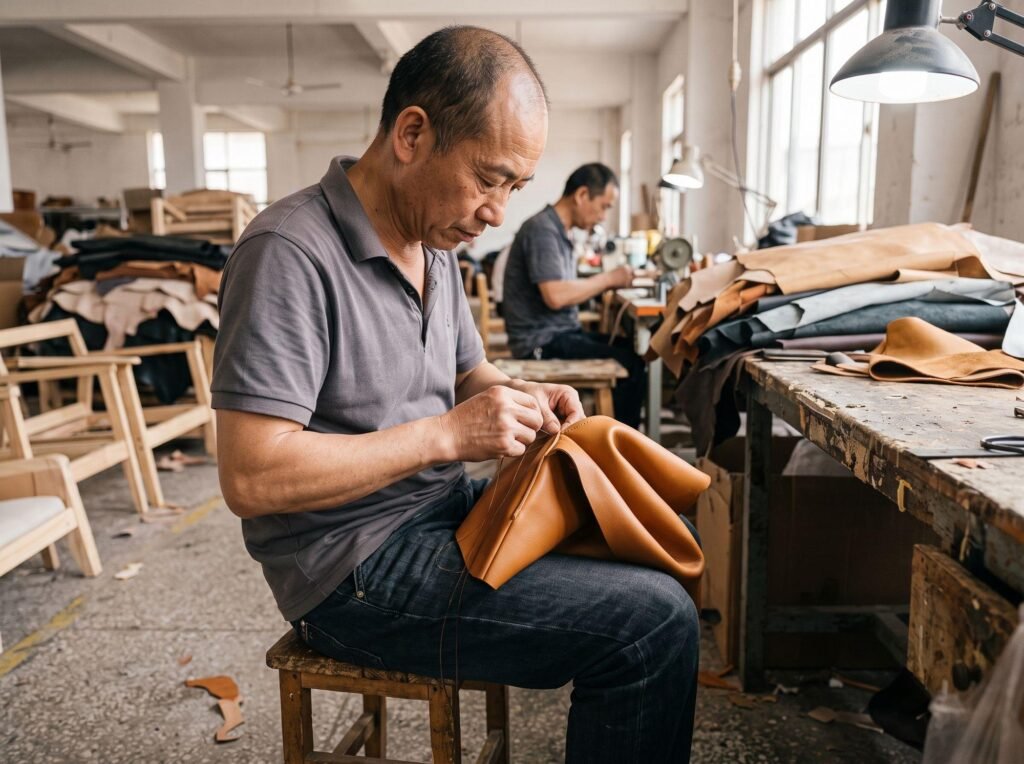
High-end genuine leather sofas. Houjie’s tannery-to-sofa pipeline is unmatched. If you want Italian-grade full-grain leather with precise stitching and custom dimensions, Foshan factories will either refuse or outsource the leather work to… Dongguan. Cut the middleman.
Metal-frame and precision hardware furniture. Chang’an’s CNC machining and powder-coating infrastructure serves the automotive and electronics sectors too. That cross-pollination means tighter tolerances and better finishes than you’ll find in Foshan’s more woodworking-centric ecosystem.
Hotel-grade upholstery and commercial seating. If you’re an interior designer sourcing for a boutique hotel or high-end rental portfolio, Dongguan factories speak your language. They understand fire-retardant standards, commercial-grade foam densities, and contract packaging. Foshan factories often don’t.
Precision hardware and fittings. Custom hinges, sliding mechanisms, adjustable bases — Chang’an suppliers engineer these for global brands. A personal buyer Dongguan sourcing custom bed hardware or modular shelving systems gets access to tooling that Foshan simply doesn’t have.
The Volume Threshold
Here’s the counterintuitive part. Dongguan starts making sense when your order crosses a tipping point — not in dollars, but in coordination complexity.
If you’re buying a full-home package — say, 20 to 25 pieces across living, dining, and bedroom — and you need everything to match in finish, fabric, and hardware? Dongguan’s integrated supply chain wins. A single factory or factory group can coordinate leather, wood, metal, and upholstery under one roof. In Foshan, you’d be stitching together four different suppliers, four different QC standards, and four different delivery schedules.
We’ve guided individual buyers Dongguan through exactly this scenario. An expat in Singapore furnishing a 3,000-square-foot apartment. A Shopify seller building a cohesive private-label collection. In both cases, the total piece count justified the MOQ stretch, and the coordination savings offset the higher per-unit cost.
Dongguan vs. Foshan: A Head-to-Head for Personal Buyers
| Factor | Dongguan | Foshan (Longjiang/Lecong) |
|---|---|---|
| Typical MOQ | 1 container per SKU, or 200+ mixed | 5–20 pieces per SKU, sometimes 1 |
| Best for | Leather sofas, metal frames, hotel-grade goods, full-home packages | Standard sofas, dining sets, beds, small mixed orders |
| Average lead time | 14–20 weeks for new small buyers | 6–10 weeks |
| Sampling cost | $800–$2,500 (high setup cost) | $200–$800 |
| Price per unit (comparable spec) | 15–30% higher at low volume | Lower, more negotiable at small qty |
| QC consistency on small orders | Variable; risk of night-shift production | More stable; small orders are their bread and butter |
| Communication style | Formal, slower, heavily NDA-focused | Faster, more flexible, relationship-driven |
| Best buyer fit | 20+ pieces, designer-grade specs, commercial use | 1–10 pieces, standard specs, residential use |
This table isn’t theory. We built it from purchase orders we’ve placed on behalf of clients over the past four years.
How to Negotiate with Dongguan Factories as a Small Buyer
So you’ve decided should I buy from Dongguan is yes — for your specific situation. Here’s how to not get ignored.
Factory Type Matters
Dongguan has three factory archetypes, and only one makes sense for personal buyer Dongguan clients.
The OEM Giants. These supply IKEA-level retailers. They won’t talk to you. Don’t waste your time.
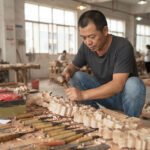
The Boutique Workshops. Ten to thirty workers, family-run, often hidden on the upper floors of industrial buildings. They take small orders. But their capacity is limited, their QC is inconsistent, and their export experience is thin. Risky.
The Mid-Tier Flexible Manufacturers. Fifty to 150 workers, multiple production lines, some direct export experience, but not locked into exclusive contracts with massive brands. These are your target. They have enough scale to handle custom work, but enough slack in the schedule to entertain a smaller run — if you approach them right.
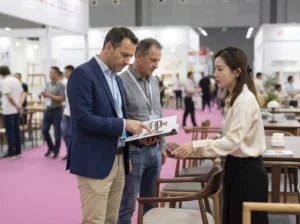
How do you find them? Skip the front-page Alibaba listings. Look for factories that exhibit at CIFF Guangzhou but don’t have massive booth displays. Check who supplies the smaller European boutique brands. Or hire a sourcing agent who knows which buildings in Houjie have the real operators on floors three and four, not the showroom on the ground level.
Timing Is Everything
If you’re a personal buyer Dongguan, your best window is January to early February — right before Chinese New Year. Factory owners are closing books, clearing pipelines, and sometimes hungry for cash to pay year-end bonuses. A small order that lands in this gap gets attention it wouldn’t receive in May.
Late August to early September is another soft spot. The summer rush is ending, and the pre-Christmas wave hasn’t fully hit yet.
We once placed a 15-piece custom leather order in late January. The factory quoted in 48 hours, delivered in nine weeks, and assigned their day-shift foreman to the job. Same factory, same product category, quoted in July? Eighteen weeks, and the sample fee doubled.
The Group-Buy Hack
This is the single most effective tactic for individual buyers Dongguan. Don’t go alone.
If you’re an expat community member, a small-scale interior designer, or a micro-seller with a network, pool orders. Three buyers each needing eight to ten pieces suddenly present a 24-to-30-piece package. That crosses the mental threshold from “nuisance” to “real order” for a mid-tier factory.
We’ve facilitated group buys for clients in Australia, Canada, and the UAE. The savings aren’t just in per-unit pricing — though that’s real. The bigger win is priority scheduling, better QC attention, and access to the factory’s A-grade material suppliers.
One caveat: pick your co-buyers carefully. Shared specs, shared timelines, and shared shipping are non-negotiable. A group buy where one person changes their fabric choice mid-production is a disaster.
The Hidden Costs Nobody Talks About
Beyond the quoted FOB price, individual buyers Dongguan face cost landmines that don’t show up on the proforma invoice.
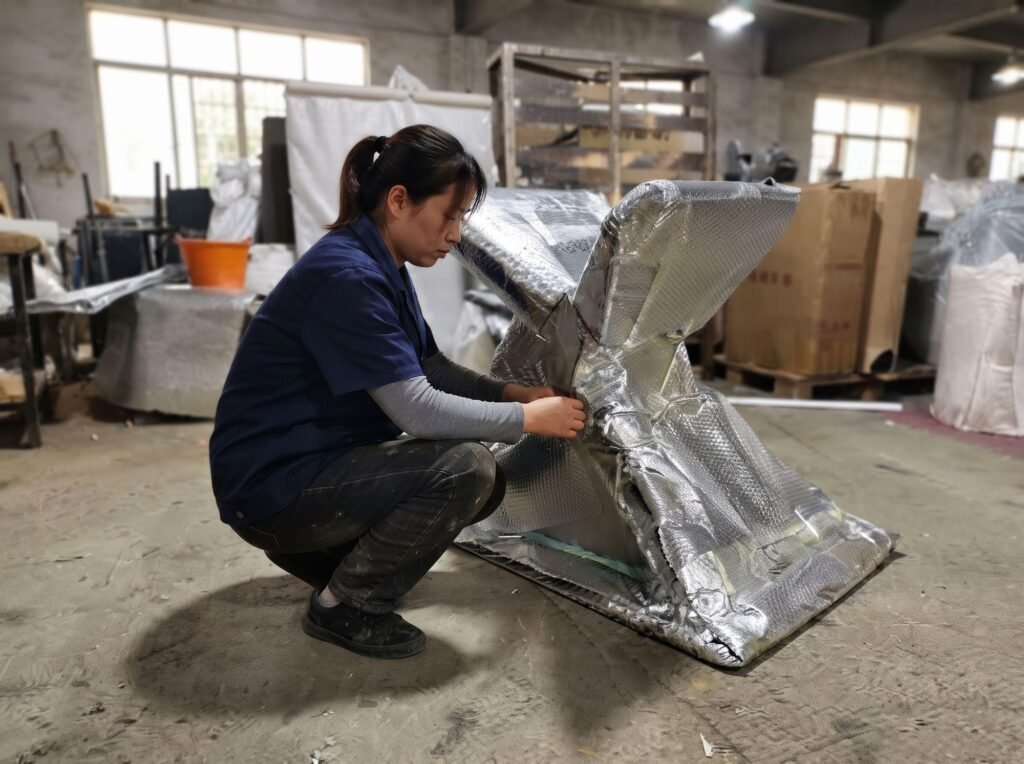
Consolidation and warehousing. Dongguan factories rarely hold finished goods. They expect you to pick up immediately. If your shipping agent can’t consolidate a partial container, you’re paying for storage or air freight. We’ve seen storage fees eat 8% to 12% of a small order’s value.
Sampling roulette. That $1,500 sample fee? It often doesn’t include revisions. Want to change the arm height after the first prototype? That’s another round. And another fee. Foshan workshops usually build sampling into the relationship. Dongguan factories treat it as a profit center.
Communication overhead. Because Dongguan sales teams are trained on B2B protocols — POs, LC payments, inspection schedules — a personal buyer Dongguan asking “Can you send me a photo of the foam before you cut it?” triggers confusion and delay. The time you spend hand-holding the process has a cost. If you’re billing your own hours, factor that in.
Compliance documentation. Need fire certificates for a commercial project? CARB Phase 2 compliance for California? REACH documentation for the EU? Big factories have these on file. Small workshops in Dongguan often don’t, and generating them for a one-off order is expensive or impossible.
So, Should You Buy from Dongguan?
Let’s bring this home.
If you’re buying one sofa, five chairs, and a bed for your new apartment? Probably not. Foshan will treat you better, quote faster, and deliver sooner. The Dongguan high MOQ barrier is real, and crossing it for a small residential order is like using a freight train to move a suitcase.
But if you’re sourcing 20+ pieces with custom specs, need hotel-grade materials, or want metal-and-leather combinations that Foshan factories subcontract out anyway? Dongguan is worth the fight. The key is knowing which factories to approach, when to approach them, and how to package your order so it doesn’t look like a charity case.
Should i buy from Dongguan? The honest answer: it depends on what you’re buying, how much you’re buying, and whether you’re willing to play by their rules.

FAQ
Should I buy from Dongguan if I only need 5 to 10 pieces?
Honestly? No. Unless those pieces are ultra-specialized — like custom metal frames or full-grain leather with specific tanning — Foshan or even a reputable trading company will serve you better. The Dongguan high MOQ structure isn’t designed for micro-orders, and you’ll pay a premium in both money and frustration.
Why is Dongguan MOQ so much higher than Foshan?
Dongguan’s factory ecosystem evolved around export OEM and contract manufacturing. Their lines, workers, and supply chains are optimized for batch consistency at scale. Small orders break that rhythm. Foshan, particularly Longjiang, grew up serving fragmented domestic and small-export markets, so flexibility is baked into their DNA.
Can I negotiate MOQ down as a personal buyer?
Sometimes, but rarely enough to matter. A factory might drop MOQ by 20% if you pay 100% upfront or accept longer lead times. But a personal buyer Dongguan asking for a 70% reduction? That signals you’re not their customer. Better to group-buy or find a trading company that already has volume with them.
What products should I absolutely source from Dongguan?
Four categories: high-end genuine leather sofas, precision metal-frame furniture, hotel-grade commercial seating, and custom hardware mechanisms. In these areas, Dongguan’s technical infrastructure and supplier density beat Foshan by a meaningful margin — even for individual buyers Dongguan who can meet the volume threshold.
How do I avoid getting “cold-treated” by Dongguan factories?
Lead with volume, not charm. Mention your total piece count and target delivery window in the first email. Reference a specific product category they specialize in. Avoid asking for catalog browsing — it screams “small buyer.” And if possible, visit during the January or August soft windows we mentioned above.
Recommended Resource
Interi Furniture specializes in custom furniture manufacturing for residential, hospitality, and commercial projects. Their experience in materials, craftsmanship, and project realization makes them a valuable resource for designers and buyers seeking tailored furniture solutions from China.