







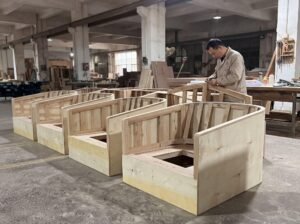
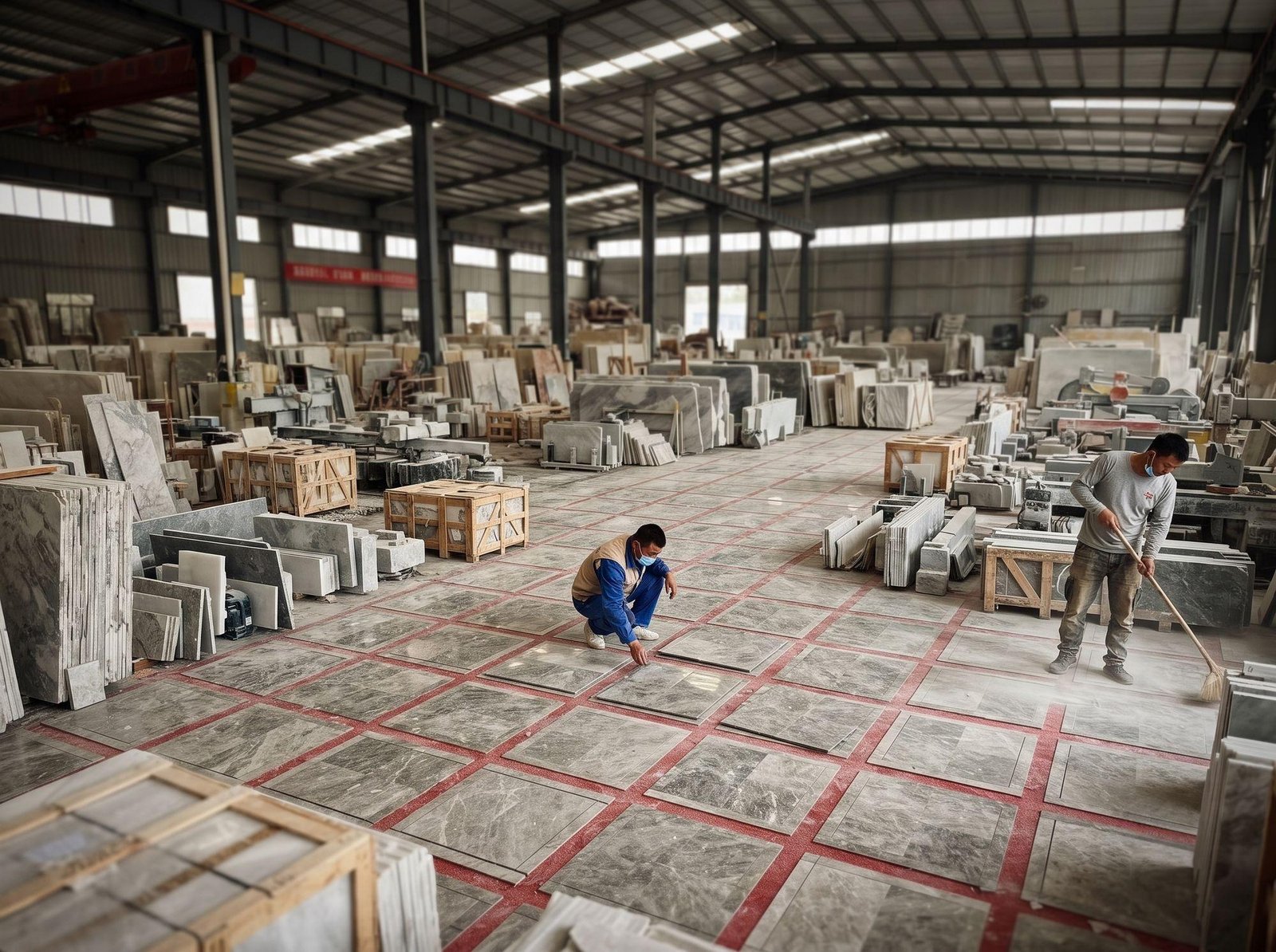
Most buyers assume their marble dining table came from Carrara or Istanbul. Here is the truth about Yunfu stone furniture capital: the stone probably did come from Italy or Turkey. But the table itself? There is a good chance it was cut, polished, and assembled in Yunfu, a small city in western Guangdong that most people outside China have never heard of. We walked factory floors there last year, and what we saw changed how we think about the global stone furniture marble supply chain entirely. If you are sourcing from this cluster or even just considering a marble table for your home, you need to understand what actually happens in this city.
This article is not a travel guide. It is a buyer’s field report. We are going to show you why Yunfu matters, how its stone industry actually works, what the “national transformation base” label means in real money, and where the hidden costs will bite you. By the end, you will know whether sourcing from here makes sense for your specific project or whether you are better off buying from a local distributor and paying the markup.
The Stone Paradox: Why a City With No Quarries Became the Global Capital
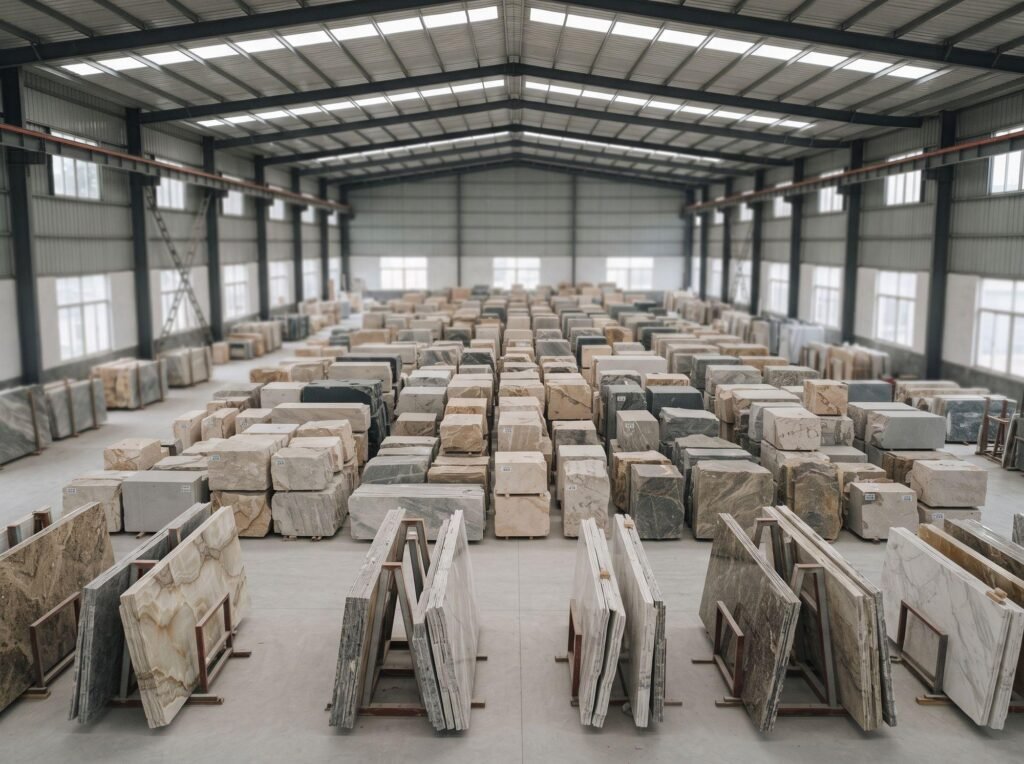
Yunfu does not have marble quarries. It does not sit on a granite deposit. The city imports raw stone blocks from Italy, Turkey, Brazil, India, and Iran, then transforms them into finished furniture. That sounds backwards, but it is exactly why Yunfu stone processing dominates the global stone furniture marble market.
The paradox is simple: stone is heavy and expensive to ship as a finished product. But raw blocks are even heavier. So why centralize processing in a city with no local stone? Because Yunfu built something more valuable than quarries. Over four decades, the city developed a dense ecosystem of cutters, polishers, resin repair technicians, and CNC operators who can turn a rough block into a dining table faster and cheaper than anyone else on the planet.
The history helps explain the present. Yunfu’s stone trade started in the 1980s with a handful of family workshops cutting tombstones and kitchen countertops. By the 2000s, the cluster had exploded into hundreds of factories. When global demand for natural stone furniture surged in the 2010s, Yunfu was already ready. The infrastructure was there. The skilled labor was there. The supply chain was there. European buyers started showing up, and they never really stopped.
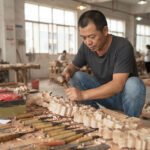
We visited a factory on the outskirts of Yunfu last March. The owner, a third-generation stone processor, showed us a 30-ton block of Calacatta marble that had arrived from Carrara two weeks earlier. Within 48 hours, his team had sliced it into slabs, run quality checks, and matched veining patterns for a 12-table hotel order. “In Italy, this would take two weeks just to schedule,” he told us. In Yunfu, the entire cluster operates on a different clock.
From Raw Block to Finished Table: How Yunfu Stone Processing Works
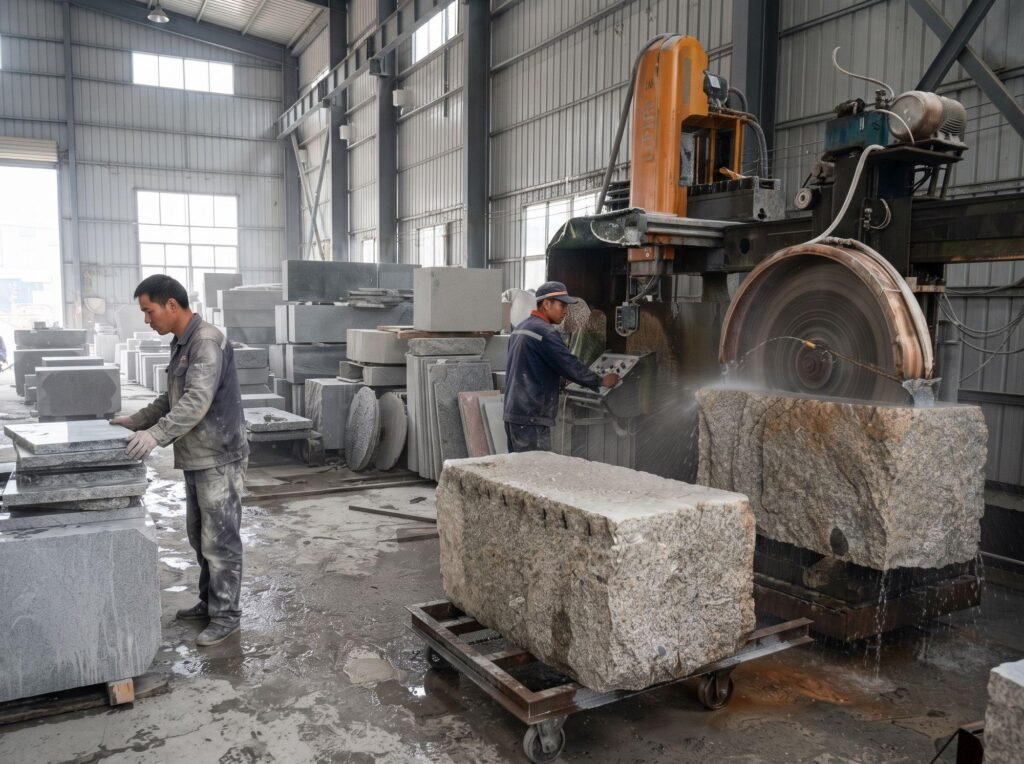
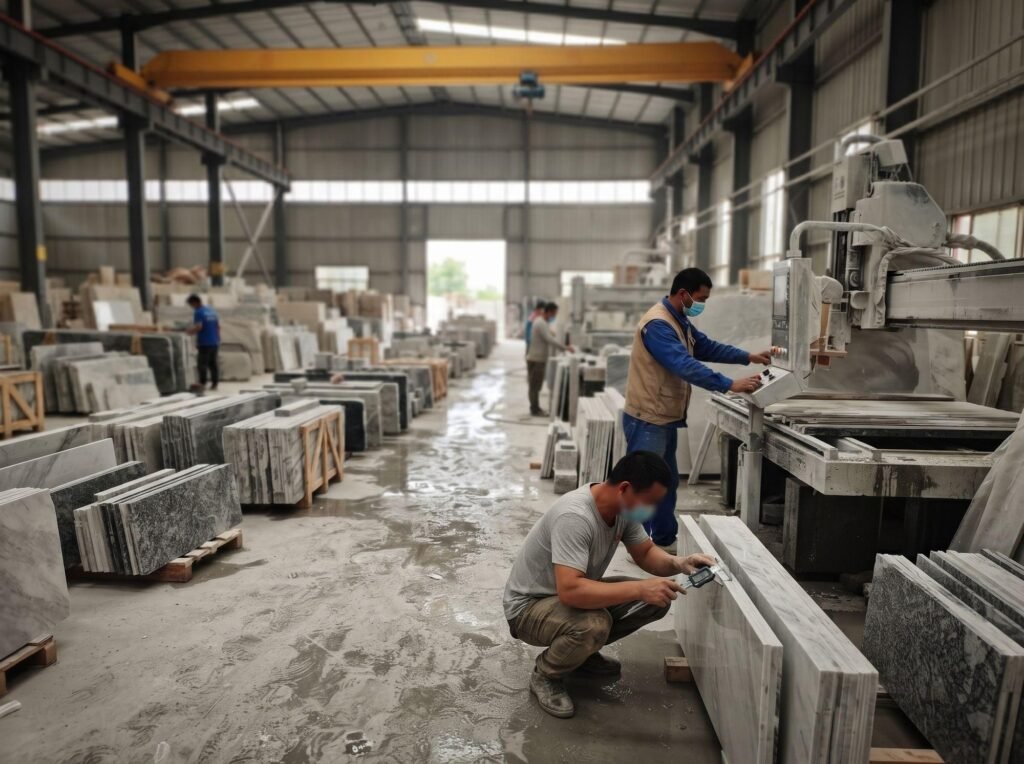
The real magic of Yunfu furniture industry is not any single factory. It is the radius. Within 50 kilometers of downtown Yunfu, you can find every step of the stone furniture production chain. Here is how it actually works:
| Stage | What Happens | Where in Yunfu | Typical Timeline |
|---|---|---|---|
| Block Import | Raw stone arrives by truck from Guangzhou port | Yunfu logistics zone | 1-3 days from port |
| Gang Saw Cutting | Block sliced into 2cm or 3cm slabs | Xinxing County workshops | Same day |
| Polishing and Resin | Surface finish, crack filling, epoxy backing | Yunfu High-Tech Zone | 1-2 days |
| Waterjet and CNC | Custom shapes, edge profiles, sink cutouts | Shiqiao Town cluster | 1-3 days |
| Furniture Assembly | Stone mounted on metal or wood bases | Mixed Yunfu-Foshan workflow | 2-5 days |
| Export Packing | Crate, foam, moisture barrier | Yunfu export packers | 1 day |
This table tells you something critical: a custom marble table can move from raw block to crated export product in under 10 days. That is not theoretical. We have seen it happen. The density of specialized vendors means no single factory needs to own every capability. One shop cuts. The next door neighbor polishes. Three blocks down, a CNC shop carves the edge profile. It is industrial symbiosis, and it explains why Yunfu stone furniture capital status is not just marketing. It is structural.
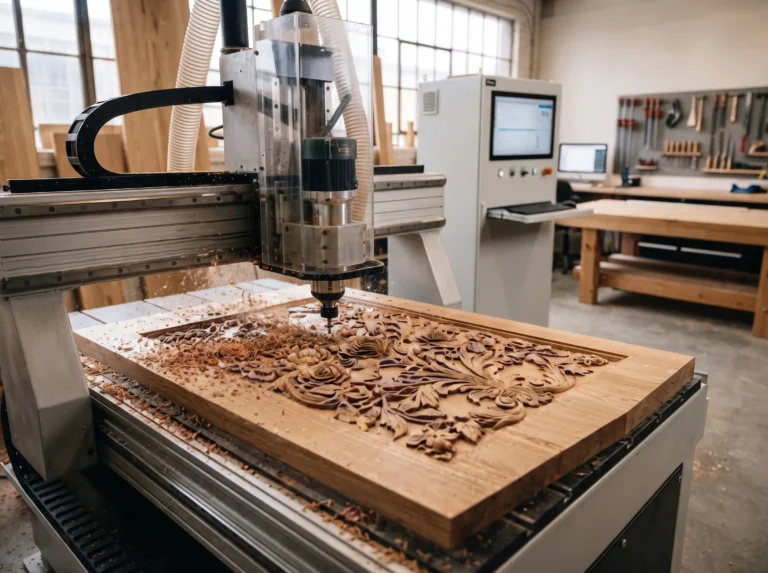
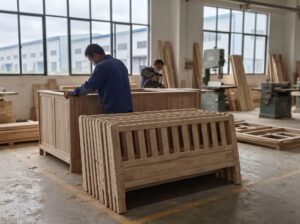
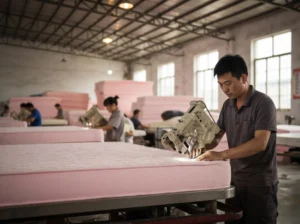
The technology inside these workshops surprised us. We expected old-school bridge saws and manual polishing. Instead, we found Italian Breton polishing lines, German CNC routers, and Chinese-made five-axis waterjet cutters that can carve a complex sink cutout in under 20 minutes. The equipment investment in a mid-sized Yunfu stone factory often exceeds $2 million. These are not backyard operations.
What “National Transformation Base” Actually Means for Buyers
You might see Chinese suppliers mention Yunfu’s status as a “National Stone Industry Transformation and Upgrade Base.” Sounds like bureaucratic fluff, right? It is not. This label carries real implications for buyers.
Between 2015 and 2020, Chinese environmental regulators cracked down hard on stone processing. Hundreds of small workshops in Yunfu got shut down for dumping slurry, running wet cutting without water recycling, or operating without dust containment. The factories that survived had to invest in wastewater treatment, dust collection systems, and sludge recycling. Many did not make it.
Here is what that means for you as a buyer: the remaining Yunfu stone processing facilities are more expensive to run than the old wild-west operations. But they are also more consistent, more traceable, and far less likely to get shut down mid-order. We have heard horror stories from buyers who placed deposits with workshops that vanished overnight during environmental inspections. That risk is lower now, but only if you are working with the upgraded tier of factories.
To be frank, the “transformation base” label is basically a filter. It separated the hobbyists from the professionals. The survivors have better equipment, cleaner facilities, and crucially more stable management. For overseas buyers, that is worth paying slightly more per square meter. We estimate the post-transformation factories charge 10-15% more than the old uncertified workshops, but their delivery reliability is easily twice as good.
The Foshan-Yunfu Axis: How Two Cities Split the Work
Most overseas buyers know Foshan as China’s furniture capital. What they do not realize is that Foshan and Yunfu operate as a single supply chain for stone furniture. The two cities are roughly 1.5 hours apart by highway, and the logistics flow between them is constant.
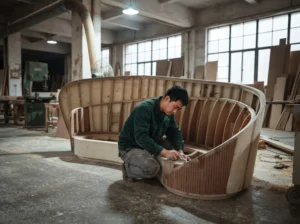
Here is the split: Foshan factories handle the soft stuff, upholstery, wood frames, metal bases, packaging design. Yunfu handles the hard stuff, stone tops, marble panels, onyx inlays. A typical stone dining table gets its base welded in Foshan, its marble top cut in Yunfu, and final assembly happens in whichever city has the better export logistics for that order.
We sat down with a Foshan-based hotel furniture manufacturer who sources 100% of his stone surfaces from Yunfu. “I do not even consider cutting stone in Foshan anymore,” he said. “The Yunfu guys have better waterjet machines, better resin technicians, and they understand export packing for stone. Why would I rebuild that capability here?”
This division of labor is why Yunfu furniture industry and Foshan’s broader furniture ecosystem are not competitors. They are partners. And for buyers, it means you can source a complete stone furniture project by tapping into both cities simultaneously. The logistics cost between them is negligible, maybe $30-50 per cubic meter of freight. For a multi-table hotel order, that is rounding error.
Industry Truth: The “Made in Europe” Illusion
Let us address the elephant in the room. When you see a $4,000 marble dining table sold by a European brand with an Italian-sounding name, where do you think it was actually made? We are not saying every European stone furniture brand sources from Yunfu. But we have walked enough factory floors to tell you this: the majority of mid-market stone furniture marble products, especially the customizable ones, have Yunfu fingerprints on them.
The stone might be Italian. The design might be European. But the cutting, the polishing, the edge profiling, and often the full assembly? That is happening in Yunfu. Some brands ship blocks to Italy for a “final polish” so they can claim Italian craftsmanship. Others do not even bother. The global stone furniture supply chain runs through this Guangdong city, whether the end consumer knows it or not.
This is not a scandal. It is economics. Yunfu has the machines, the technicians, and the cluster density. European workshops have the brand names and the retail markup. Both can coexist. But as a buyer, you should know where your money is actually going.
The Hidden Costs of Yunfu Stone Furniture Capital Sourcing
Sourcing stone furniture marble from Yunfu stone furniture capital is not all upside. There are real, painful costs that catch buyers off guard. We see the same mistakes repeated every month.
Weight kills shipping budgets. A solid marble dining table weighs 80 to 150 kilograms. That is not a typo. Shipping one table by air freight costs more than the table itself. Sea freight is the only viable option for most buyers, which means 30-45 day lead times and minimum order quantities that individual homeowners often cannot meet.
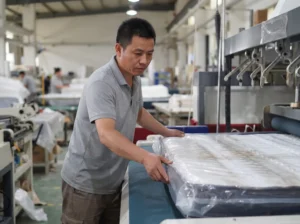
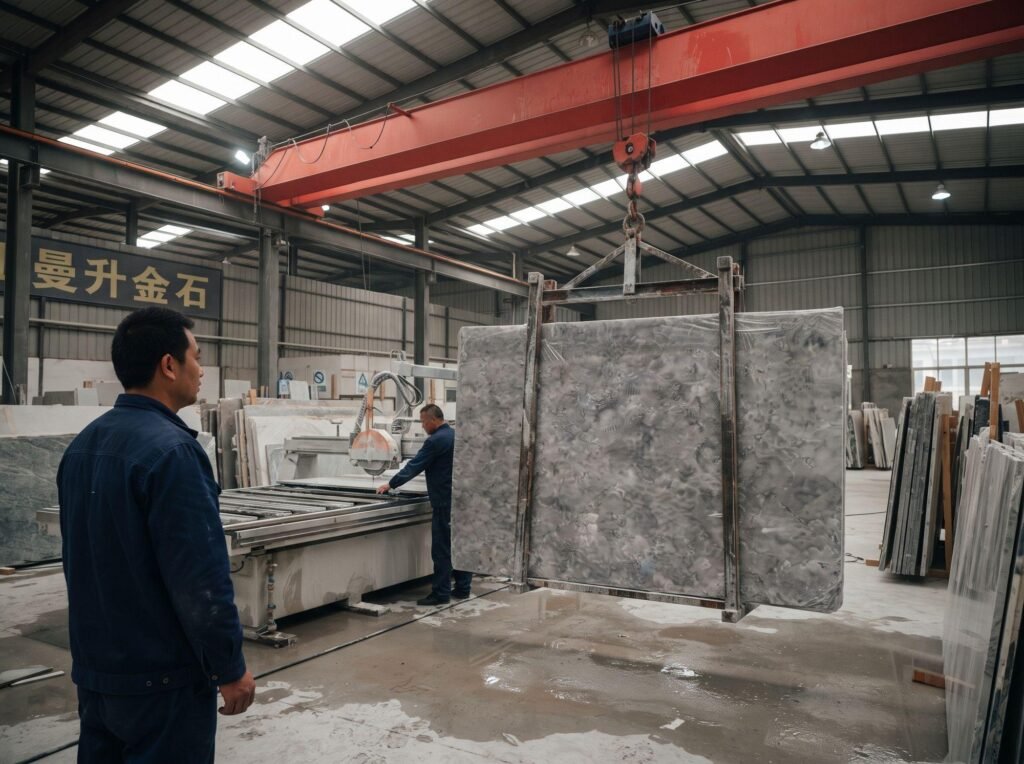
Breakage rates are higher than wood furniture. Stone does not bend. It cracks. We have seen breakage rates of 3-8% on poorly packed stone shipments, especially for tables with complex edge profiles or thin tops. Good Yunfu exporters use foam-lined wooden crates with internal bracing, but even then, a forklift operator having a bad day can destroy a $2,000 tabletop.
Natural variation is a feature and a bug. That Instagram photo of a perfect white marble table with dramatic grey veining? The table you receive might have more brown, less contrast, or a hairline fissure that the factory filled with resin. This is not a defect. It is natural stone. But many buyers, especially first-time individual purchasers, do not understand that “matching the photo exactly” is physically impossible.
Installation is a nightmare for end consumers. We get emails from homeowners who bought a marble table from a Chinese supplier and then realized they cannot get it up their staircase. 150kg of stone does not bend around corners. If you are a personal buyer, you need to solve white-glove delivery and installation before you place the order, not after.
Insurance and claims are another landmine. Most standard cargo insurance policies cover total loss, not partial damage or cosmetic issues. If your marble table arrives with a corner chip, good luck getting the insurer to pay. They will argue it is “inherent vice of natural material.” We always recommend buyers negotiate specific packing clauses and pre-shipment photo approval in their purchase contracts. A good Yunfu supplier will not blink at these requests. A bad one will try to rush you past them.
Who Should Source From Yunfu (And Who Should Not)
After years of placing buyers with Yunfu suppliers, here is our honest breakdown.
You probably should source from Yunfu if you are a hotel or apartment developer ordering 20 or more stone reception desks or vanity tops. You should if you are an interior designer who needs custom dimensions, specific stone varieties, or waterjet patterns. You should if you are a B2B seller moving volume and can absorb occasional quality variance. And you definitely should if you have a freight forwarder who understands stone packing and can handle heavy cargo.
You probably should not source from Yunfu if you are a homeowner buying one table and expecting white-glove delivery to your 4th-floor walkup. You should not if you need guaranteed color matching across multiple orders placed months apart. You should not if you are working with a tight timeline and cannot afford a 30-day sea freight window. And you should not if you are uncomfortable with the idea that natural stone will have variation, fissures, and resin repairs.
Bottom line, Yunfu is a B2B powerhouse. It can work for individual buyers, but only if you know exactly what you are getting into. The savings are real, but so are the headaches.
The Sample Order Trap: Why One Table Does Not Tell the Whole Story
Here is a mistake we see constantly. A buyer orders one sample table, loves it, then places a 50-table hotel order and receives something slightly different. The veining is heavier. The resin lines are more visible. The edge profile is close but not identical.
This happens because stone is a natural material, not engineered board. The sample came from one specific slab. Your bulk order came from a different block, possibly a different quarry batch. In Yunfu, skilled factories can minimize this variation by sourcing from the same quarry lot and doing pre-production slab matching. But they can only do that if you ask. And you need to pay for the extra sorting time.
Our advice: if color consistency matters for your project, specify it in writing. Request slab photos before cutting. Pay the 5-10% premium for matched-lot sourcing. And always order a production sample from the actual bulk material, not a separate sample piece. The best Yunfu furniture industry suppliers do this as standard practice. The mediocre ones will tell you “all stone is the same.” It is not.

FAQ
Why Is Yunfu Stone Processing the Global Standard for Stone Furniture?
Yunfu does not mine stone locally. Instead, it imports raw blocks from Italy, Turkey, Brazil, and India, then processes them through the world’s densest cluster of cutting, polishing, and CNC workshops. Within a 50-kilometer radius, a block can become a finished dining table in under 10 days. That speed and specialization simply does not exist anywhere else.
Does Stone Furniture Marble From Yunfu Match European Quality?
Not necessarily lower. The stone itself often comes from the same quarries. The difference is labor cost and cluster efficiency. Top-tier Yunfu factories use Italian Breton polishing lines and German CNC machines. The gap is not in equipment. It is in brand markup and after-sales service. For custom B2B orders, Yunfu often delivers faster turnaround and more flexible sizing.
How Much Does Shipping a Marble Table From Yunfu Cost?
Sea freight for a single marble dining table typically runs $200-$400 to US or European ports, plus destination charges. Air freight is usually $800-$1,500, often more than the product itself. Most buyers consolidate multiple pieces into a single container to spread costs. Individual buyers should budget for white-glove delivery separately, as Chinese exporters rarely handle final-mile installation.
What Are the Biggest Risks When Buying Stone Furniture From Yunfu?
The top three: shipping damage from improper packing, natural color variation that does not match your sample photos, and logistics complexity for heavy items. Always request pre-shipment photos of your actual slabs, specify crate construction standards in your contract, and confirm your freight forwarder handles stone cargo. A good Yunfu supplier will expect these questions.
How Do I Verify a Yunfu Stone Furniture Factory Before Ordering?
Ask for video walkthroughs of their cutting and polishing floors, not just showrooms. Request photos of their wastewater treatment and dust collection systems. Legitimate post-transformation factories will have these. Check if they have export packing experience specifically for stone, foam-lined crates, corner bracing. And always start with a sample order before committing to bulk production.
Recommended Resource
Interi Furniture specializes in custom furniture manufacturing for residential, hospitality, and commercial projects. Their experience in materials, craftsmanship, and project realization makes them a valuable resource for designers and buyers seeking tailored furniture solutions from China.