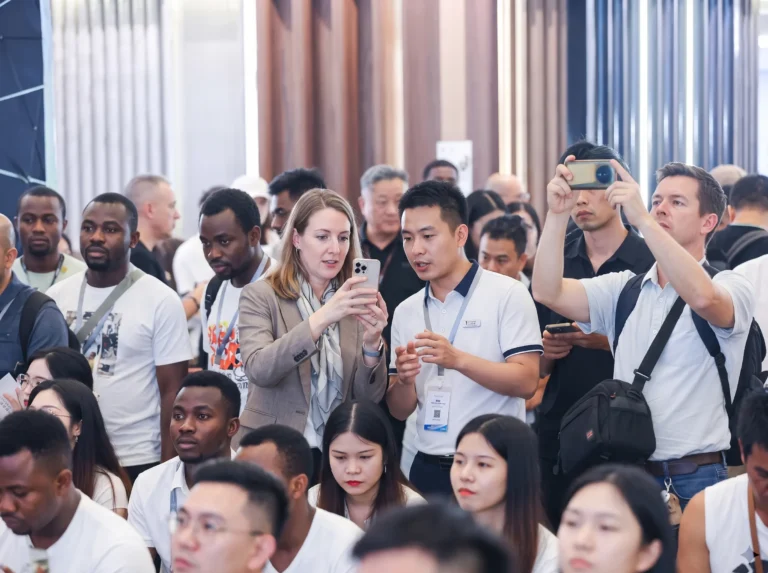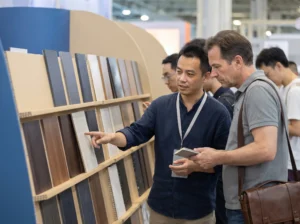



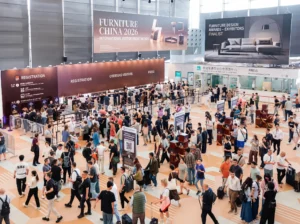



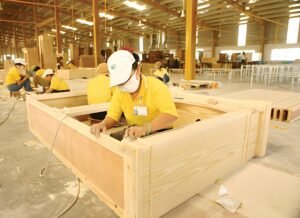

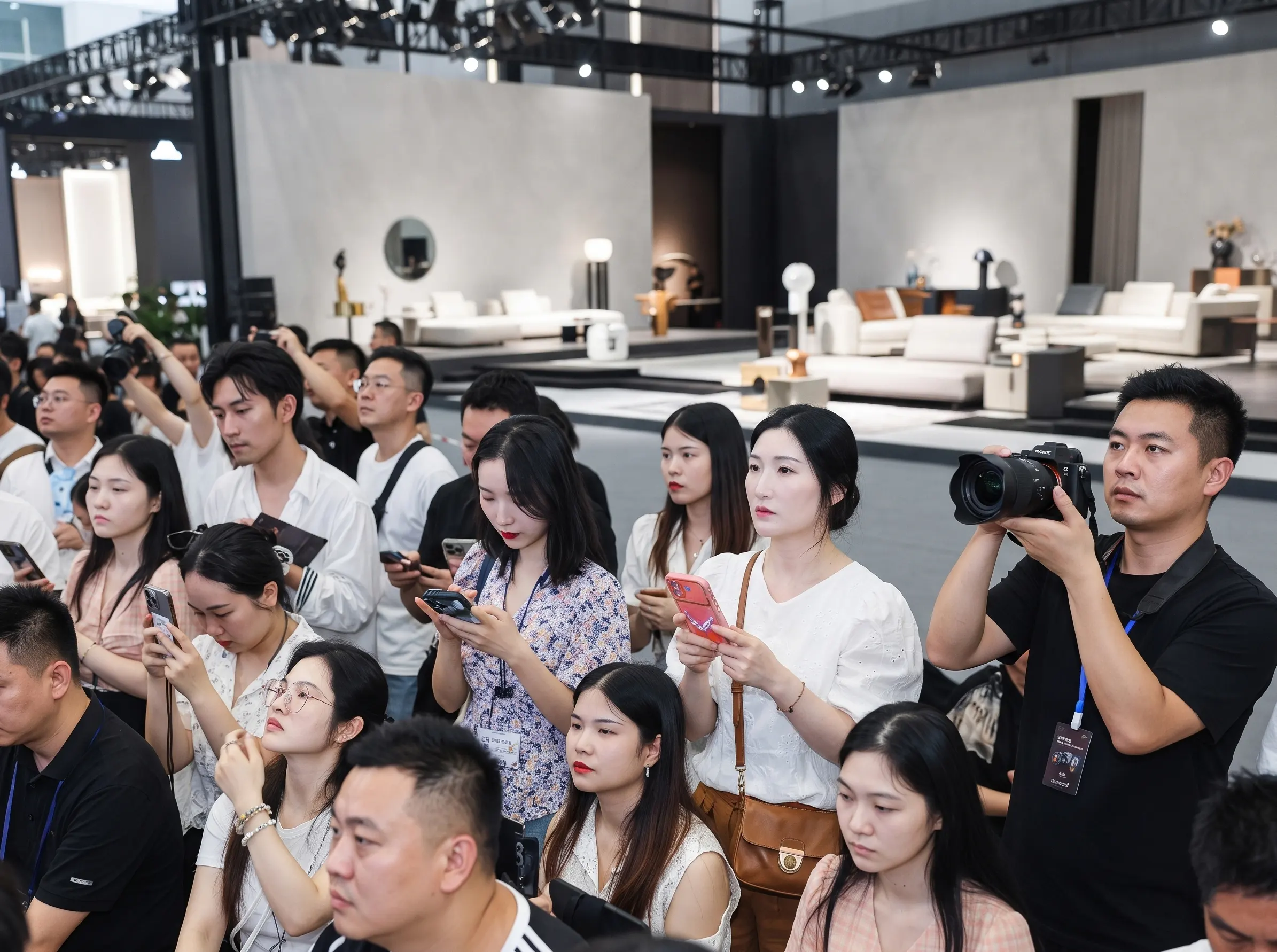
Design Shanghai 2026, running March 19–22 at the Shanghai Exhibition Centre, is not a design museum. It is a functioning marketplace where more than 500 brands from over 20 countries test whether a concept can survive contact with a purchase order. After walking this Design Shanghai Fair floor for years — talking to designers in their Shanghai and Foshan studios, not just at their booths — our conclusion is direct: Design Shanghai has quietly become one of the most efficient channels through which Chinese designer furniture brands land international orders, and the buyers who treat it as a pure aesthetic event are leaving money on the table. This article explains how the fair’s curated programmes work as a commercial funnel, which designers can actually deliver at scale, and what you must verify before signing anything.
Why Buyers Keep Leaving Design Shanghai Inspired — and Empty-Handed
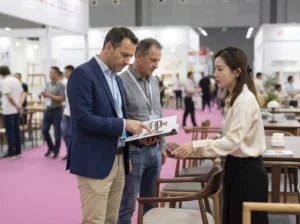
Every March, we hear the same story from importers, FF&E procurement managers, and independent designers. They walk into the Shanghai Exhibition Centre, fall hard for a sculptural lounge chair or a ceramic-topped console, ask for pricing, and hit a wall. The quote is three times their budget. The lead time is five months. The MOQ is written for a boutique hotel chain, not a design studio.
The frustration is understandable, but it is aimed at the wrong target. The problem is rarely the design itself — it is that most visitors arrive with a trade-fair playbook written for manufacturing shows, and Design Shanghai runs on a completely different logic. A booth here is not a catalog page. It is a hypothesis about what the market wants, and the fair is the stress test.
If you have ever left a China design show with a camera roll full of beautiful objects and zero actionable supplier contacts, this article is the playbook you were missing.
The Truth Most Coverage Misses: This Is a Marketplace Wearing a Gallery’s Clothes
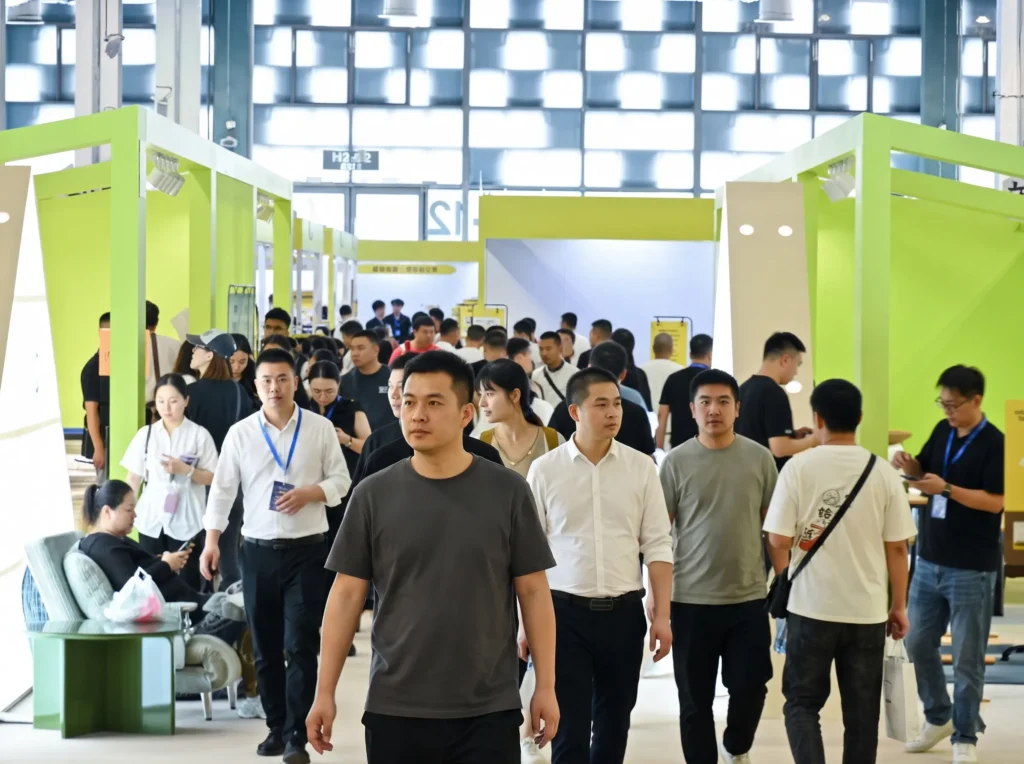
Mainstream coverage of Design Shanghai focuses on aesthetics — the installations, the material experiments, the celebrity designers. That coverage misses the commercial machinery underneath. In our conversations with exhibiting brands, a consistent picture emerges: for a meaningful share of Chinese designer furniture brands, the fair generates intent orders that represent a substantial portion of annual revenue — in some cases estimated at 30% or more. For reference only, subject to official verification. That is not an art project with a cash register attached. That is a sales channel with unusually good lighting.
What Is the Concept-to-Commerce Funnel?
In the context of design fairs, the concept-to-commerce funnel describes the staged filtering process by which a design object moves from prototype, to curated exhibition, to small-batch production, to full commercial order. Design Shanghai’s five curated programmes are essentially five entry points into this funnel, each calibrated for a different type of buyer intent. Understanding which programme a piece belongs to tells you more about its commercial reality than any conversation with a sales rep.
Here is the part almost nobody writes about: the conversion window is brutally narrow. Based on our on-site observations across multiple editions, roughly 60–70% of the concept furniture shown at Design Shanghai can eventually reach mass production — but production cycles for designer pieces typically run two to three times longer than conventional factory timelines, and cost control during scaling is a genuine risk. For reference only, subject to official verification. The fair’s fourth afternoon is often when the hardest price negotiations happen, because designers are balancing artistic positioning against very real cash-flow pressure. For reference only, subject to official verification.
Design Shanghai 2026 Five Curated Programmes: Commercial Funnel Analysis
Each curated programme at the Shanghai design exhibition 2026 serves a distinct commercial function. Treat them as a funnel, not a menu.
| Curated Programme | Curator / Origin | What It Actually Is | Buyer Value | Commercial Reality Check |
|---|---|---|---|---|
| TALENTS | Curated by Frank Chou | Launchpad for emerging Chinese and international designers | Early access to tomorrow’s signature pieces before pricing inflates | High concept, low production maturity; expect long lead times and limited finish options |
| Made in JDZ | Jingdezhen ceramic heritage | Contemporary furniture and objects built around porcelain craftsmanship | Unique, culturally grounded pieces with strong storytelling for retail and hospitality | Ceramic components complicate freight, breakage rates, and replacement logistics |
| Beyond Craft | Japanese craft traditions | High-precision handcrafted work from Japan-based makers | Reference-grade quality benchmarks; useful for calibrating expectations of Chinese ateliers | Premium pricing; limited scalability; often better as a design reference than a volume source |
| Collectible Design & Art | Gallery-led section | One-off and limited-edition collectible pieces | Investment-grade acquisitions for collectors and flagship projects | Not a sourcing channel for repeatable FF&E; verify provenance and edition documentation |
| Materials First | Material innovation focus | Experimental surfaces, composites, and sustainable materials | Early scouting for material specs you can spec into future projects | Experimental materials carry real mass-production risk; demand test data before specifying |
The funnel logic is simple. TALENTS and Materials First feed the concept pipeline. Made in JDZ and Beyond Craft feed the small-batch and bespoke tier. Collectible Design & Art sits deliberately outside the commerce funnel — beautiful, valuable, and irrelevant if your job is to furnish forty hotel rooms by Q4.
Design Shanghai vs. Furniture China / CIFF: Where Design Becomes Order
Buyers routinely conflate China’s two types of furniture events. They are not interchangeable, and treating them as such wastes plane tickets.
| Dimension | Design Shanghai | Furniture China / CIFF |
|---|---|---|
| Core logic | Design-driven curation | Manufacturing-driven trade |
| What is being sold | Concepts, brand identity, licensing potential | Catalogs, capacity, price points |
| Typical exhibitor | Designer brands, ateliers, galleries | Factories, OEM/ODM manufacturers |
| MOQ posture | Often high per SKU, inflexible | Negotiable, volume-oriented |
| Lead time expectation | 2–3× conventional factory cycles (designer pieces) | Standardized, often 30–60 days for stock programs |
| Best for | Signature pieces, brand differentiation, hotel lobbies | Container-scale volume, private-label programs |
| Buyer skill required | Design evaluation, feasibility vetting | Price negotiation, QC management |
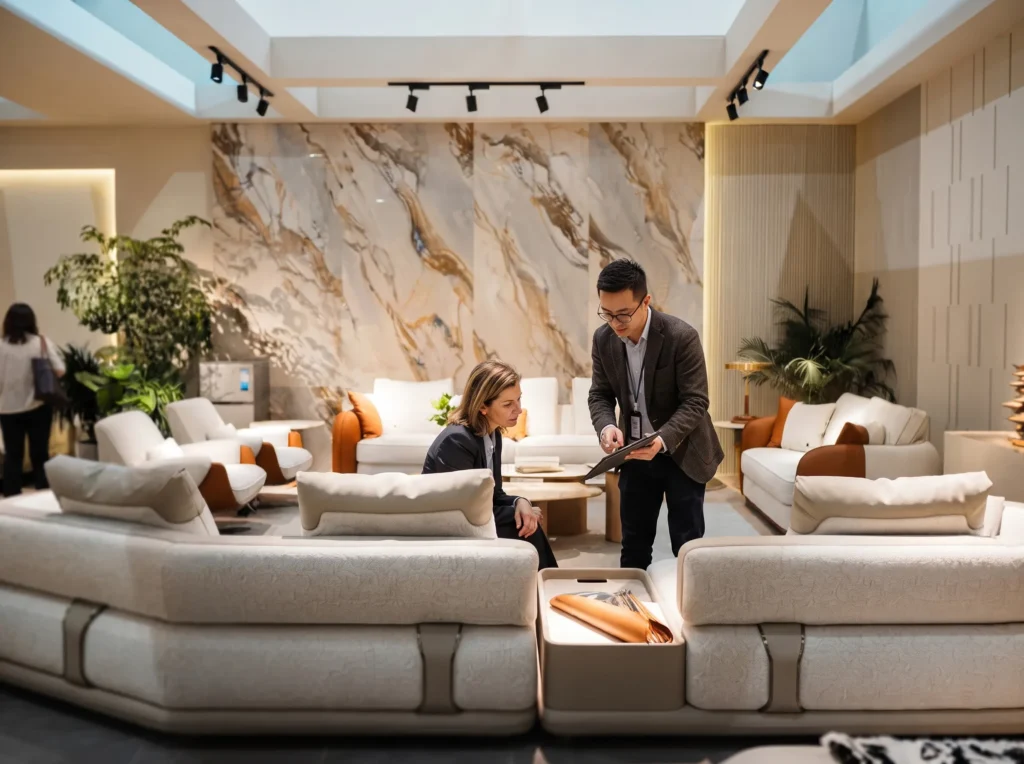
Our advice is not to choose one over the other. Use Furniture China or CIFF to fill your volume program, and use Design Shanghai to find the three or four pieces that make a project memorable. The mistake is expecting Design Shanghai to behave like a factory floor — or expecting CIFF to give you a design identity.
Concept to Commerce: Which Designers Can Actually Deliver
Not every beautiful booth belongs to a brand that can fulfill a purchase order. Here is how we classify the exhibitors we have tracked across editions, based on studio visits in Shanghai, Foshan, and beyond.
| Brand Type | Examples on the Scene | Production Maturity | Fit For | Red Flags |
|---|---|---|---|---|
| Established designer-manufacturer hybrids | U+, 12h | Own or deeply integrated workshops; proven export track record | Repeat commercial orders, hospitality projects | Premium pricing; long queues during fair season |
| Heritage-luxury houses | SHANG XIA | Corporate-backed production and retail infrastructure | Luxury retail, flagship hospitality | Brand-controlled distribution; limited customization |
| Craft-led ateliers | PUSU, Past To Now | Small-batch capable; handwork dependent | Boutique projects, collectible-tier sourcing | Scaling beyond tens of units strains quality consistency |
| Concept-stage independents | TALENTS alumni | Prototype-level; seeking licensing or first buyers | Early relationships, design licensing | Asking for deposits on unproven production; no QC framework |
The pattern we keep seeing: the brands that survive the transition from booth to container are the ones that treat production engineering as part of design, not as an afterthought. When a designer can walk you through their joinery tolerances without flinching, you are talking to a supplier. When they change the subject to their design philosophy, you are talking to an artist. Both are fine — but price and contract them differently.
Price Architecture: Concept Premium vs. Production Reality
The single biggest shock for first-time buyers is the gap between booth pricing and volume reality. The premium is not arbitrary, but it is also not always justified.
| Cost Layer | What You Are Paying For | Typical Markup Logic | Negotiation Reality |
|---|---|---|---|
| Concept premium | Original design, exhibition costs, brand positioning | Highest layer; softens after the fair closes | Most flexible in the fair’s final day window, when cash-flow pressure peaks |
| Craft premium | Handwork, ceramic or experimental material content | Justified at small batch; collapses awkwardly at scale | Insist on a batch-size price curve, not a single quote |
| Production reality | Materials, labor, QC, packaging, freight | Converges toward factory economics at volume | This is where conventional sourcing discipline applies |
| Post-delivery risk | Defects, replacement parts, finish inconsistency | Rarely priced in; falls on the buyer | Contract for spare units and finish samples before deposit |
A lounge chair quoted at a Design Shanghai booth for boutique pricing can often land at a very different number at 100 units — but only if the brand actually has a production pathway. Around 60–70% of concept pieces shown can reach production, yet a meaningful share of those face cost overruns or material supply instability during scaling. For reference only, subject to official verification. Get the batch-price curve in writing, or the “design premium” becomes a permanent tax.
The Risks Nobody Puts on the Booth Wall
We will be blunt, because this is where buyers get hurt. Design Shanghai is a genuine commercial opportunity, and these are its traps.
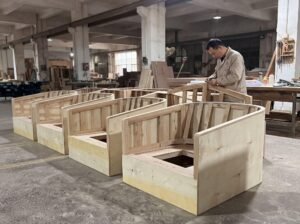
Paying a heavy deposit on a piece that cannot be mass-produced is the classic failure. A prototype built by the designer’s own hands in a Shanghai studio does not scale because the hands do not scale. Before any deposit, demand evidence of prior production runs — not renders, not fair photos, but delivered orders.
Confusing collectible positioning with commercial furniture is the second trap. A piece from Collectible Design & Art is priced for scarcity and provenance. Using it as FF&E pricing benchmark for a producible piece is comparing an auction result with a factory quote.
The third trap is ignoring the supply-chain maturity gap. Established designer-manufacturer hybrids like U+ or 12h operate differently from a two-year-old TALENTS studio. The contract structure, QC protocol, and after-sales obligations you should demand differ accordingly.
Finally, never sign a production agreement that does not define mass-production feasibility, finish tolerance standards, batch-size pricing, and remedy terms for quality failures. If a brand will not put feasibility language in the contract, the booth conversation was marketing, not commerce.
What Each Type of Buyer Should Do Differently
The funnel rewards buyers who arrive with a defined role.
High-end furniture importers should treat TALENTS and Materials First as scouting grounds and concentrate orders with established hybrids that have export documentation experience. Your core skill here is feasibility vetting, and the strongest move is commissioning a pilot batch before any exclusivity conversation.
FF&E procurement managers for boutique hotels and commercial spaces should anchor projects on proven hybrids such as U+ or 12h for repeatable pieces, then layer one or two craft-led ateliers for lobby-level signature moments. Build your specification documents around finish samples sealed at the fair, not photographs.
Independent interior designers working with overseas clients should position themselves as the bridge between concept and order. Your leverage is aggregated demand across multiple projects. Brands that will not negotiate MOQ for a single client will often restructure terms for a designer bringing three projects a year.
Brand buyers and licensing evaluators should spend disproportionate time in TALENTS, where early relationships can be structured as licensing rather than purchasing — a fundamentally different risk profile that shifts production burden to the partner with factory capacity.

Frequently Asked Questions
Is Design Shanghai 2026 worth attending for commercial buyers, or is it purely for design appreciation?
It is worth attending, provided you arrive with a sourcing mandate rather than a tourist agenda. A meaningful share of exhibiting Chinese designer brands generate substantial annual revenue from fair-period intent orders — in some cases an estimated 30% or more. For reference only, subject to official verification. The buyers who leave empty-handed are usually the ones who came to look. Come with project briefs, target price bands, and feasibility questions, and the same floor becomes a supplier development exercise.
How is Design Shanghai different from Furniture China or CIFF?
Design Shanghai is design-driven: exhibitors are brands and ateliers selling concepts, identity, and limited production, with high MOQs and long lead times. Furniture China and CIFF are manufacturing-driven: factories selling capacity and catalog programs at negotiable volume pricing. They answer different questions. If your question is “what should we make our project memorable with,” go to Design Shanghai. If your question is “who can produce 200 units at this price point,” go to CIFF.
Can the concept furniture shown at Design Shanghai actually be mass-produced?
Often, yes — but not always, and rarely quickly. Based on industry observation, roughly 60–70% of concept pieces shown can reach production, with cycles typically two to three times longer than conventional factory timelines. For reference only, subject to official verification. The determining factor is not the beauty of the prototype but the brand’s production engineering maturity. Always request evidence of prior delivered production runs and a batch-size price curve before committing a deposit.
Which Chinese designer furniture brands can handle export orders reliably?
The most reliable segment is the designer-manufacturer hybrid tier — brands like U+ and 12h that operate or deeply integrate their own workshops and have export documentation experience. Heritage-luxury houses like SHANG XIA offer corporate-grade infrastructure but tightly controlled distribution. Craft ateliers such as PUSU deliver exceptional small-batch work but strain beyond boutique volumes. Evaluate production maturity, not booth polish.
What should I verify before placing an order with a designer brand I met at the fair?
Verify five things before any deposit: prior delivered production runs with client references, a written batch-size price curve, finish tolerance standards with physical sealed samples, feasibility and remedy language inside the contract, and after-sales obligations including replacement-part commitments. If a brand hesitates at feasibility clauses in writing, treat the conversation as concept marketing and price your risk accordingly.
What Is Your Design Shanghai Story?
We have shared what we see from the floor and the factory side. Now we want to hear from you. Have you converted a Design Shanghai booth conversation into a delivered order — or paid for a concept that never survived production? Drop your experience in the comments, or send us the specific brand or piece you are evaluating, and we will give you a straight feasibility read.
Recommended Resource
Interi Furniture specializes in custom furniture manufacturing for residential, hospitality, and commercial projects. Their experience in materials, craftsmanship, and project realization makes them a valuable resource for designers and buyers seeking tailored furniture solutions from China.