









Here is the truth in the first hundred words: your order is not in a queue. A Chinese furniture factory schedules production by power, not by order date — big orders, profitable orders, and favored repeat clients jump the line every single day. The black box exists not as a conspiracy but as the factory’s self-protection against chaos. The only tool that penetrates it is written confirmation of production slot, milestones, and penalty terms. Everything below is based on frontline observation and industry convention, subject to verification, and applies to factories as a class — no individual factory is named.
The Information Despair Behind “Kuai Le” (Almost Done)
Every buyer who has been burned asks the same question: “Where is my order actually in line?” The factory’s answer is always some version of “快了” — kuai le — almost there, nearly done, very soon. It is the most expensive phrase in the import business, because it costs you nothing to say and costs the buyer weeks of reality.
The frustration is structural. You placed the order. You paid the deposit. You were given a date. And then the date moved, quietly, without any single dramatic failure you could point to. Nothing “went wrong.” The system simply ranked you lower than you assumed. To understand why, you have to understand that Chinese factory scheduling explained honestly starts with a rejection of the queue metaphor entirely.
The Core Truth: Scheduling Is a Power Order, Not a FIFO Line
Western buyers assume first-in-first-out because that is how their own warehouses and retailers operate. Chinese factories do not work this way, and not because they are careless. They work this way because furniture manufacturing is a constrained, skill-dependent, interruption-heavy process, and in such a system, rigid FIFO would bankrupt the factory within a quarter.
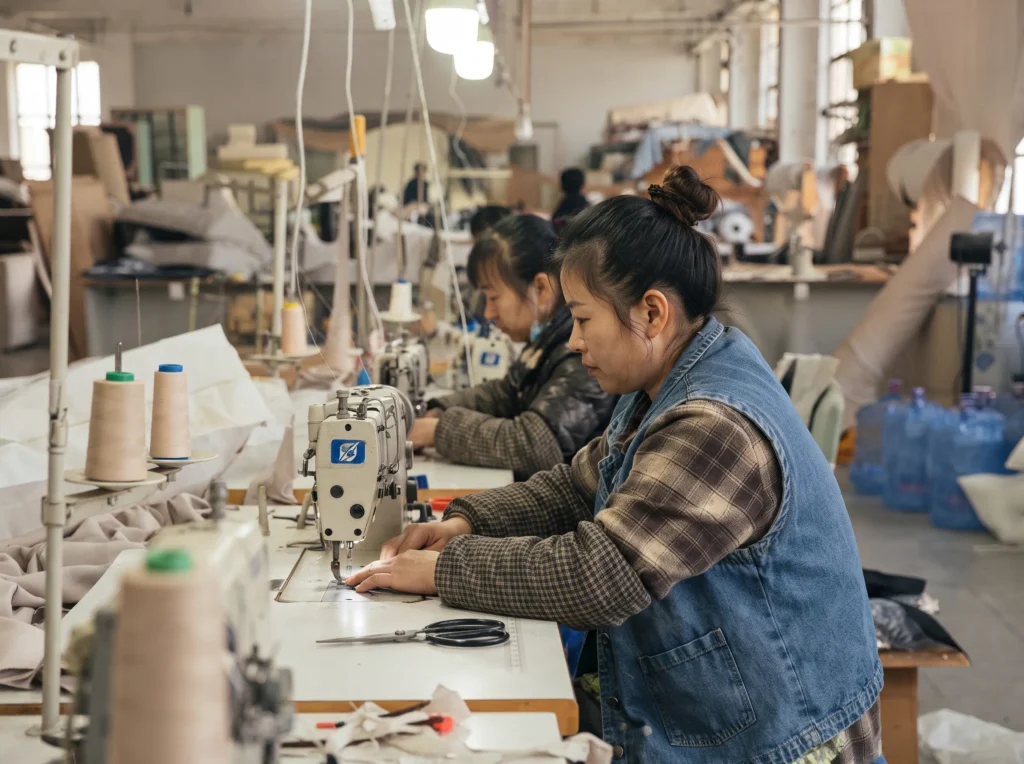
The factory’s real problem is not fairness. It is survival under uncertainty: material deliveries slip, workers quit mid-season, a container gets rolled, a 500-unit hotel order lands on the same week your 80-unit retail order was supposed to start. Every scheduling decision is a live trade-off, and the factory resolves trade-offs the way every business does — by priority.
The Four Real Priorities of Factory Scheduling
| Priority | What It Actually Means | How You Can Detect It |
|---|---|---|
| Big order first | Large-volume orders protect revenue and keep the whole line fed; a 1,000-sofa program can displace ten small orders | Ask for your order’s position relative to the factory’s largest confirmed jobs |
| Margin first | High-margin or strategically priced orders get slotted when capacity is contested | Disappointingly low quotes often correlate with low scheduling priority |
| Favored repeat client first | Buyers with multi-year relationships, clean payment records, and annual volumes get first call on capacity | New buyers and one-off buyers are structurally last in line |
| Inserted order culture | Urgent orders from important clients get physically inserted into the live schedule — controlled in well-run factories, chaotic in poorly planned ones | Your “confirmed start date” can move weekly; ask for the monthly insertion ratio and treat anything above 40% as a planning red flag |
The inserted order — cha dan, 插单 — deserves a moment, with one critical caveat. Industry diagnostic data suggests that once urgent insertions exceed roughly 40% of monthly orders, the issue is no longer flexibility — it is management. In factories running a real scheduling system, insertion is a controlled maneuver: the planner re-runs the schedule, evaluates the impact on confirmed orders, and re-confirms every displaced date. In factories without one, insertion is indistinguishable from chaos — orders are allocated by whoever pushes hardest, with no impact review and no re-confirmation of the orders pushed aside. So before admiring a factory’s flexibility, ask one question: what share of this month’s orders were inserted after the schedule was confirmed? A figure above 40% is a red flag about planning competence, not evidence of agility. Within that framing, inserting an urgent order into a running production schedule remains a genuine competence of well-run Chinese flexible manufacturing — and your own order has both inserted someone else’s and been inserted upon. Once you see the schedule as a dynamic negotiation rather than a static list, the factory’s behavior stops being mysterious and starts being predictable.
The Decision Variables Nobody Puts in the Contract
When a production manager sits down each week to rebuild the schedule, they weigh a specific set of variables. None of them appear in your proforma invoice, but all of them determine whether your date holds.
| Decision Variable | What the Factory Checks | Why It Silently Moves Your Date |
|---|---|---|
| Material readiness | Is the fabric, foam, hardware, and timber actually in the warehouse — not “ordered,” not “on the way” | Your order cannot start if one component is missing, even if everything else is ready |
| Worker skill matching | Which crews are available, and are they the right crew for your product’s construction | A skilled sofa crew reassigned to a rush hotel job pushes your start date by a week |
| Shipping cutoff | Which orders have hard vessel or container deadlines this month | Orders with unmovable freight get scheduled backward from the cutoff, displacing flexible ones |
| Rework and defect loss | How much capacity was consumed last week by repairs and quality failures | Rework is invisible to buyers but consumes the same hours as your order |
| Cash flow position | Which buyers’ payments cleared, and which receivables are overdue | Orders from buyers with outstanding balances quietly sink to the bottom |
This is why the furniture factory production schedule a factory shows you on day one is best understood as a statement of intent rather than a commitment. It reflects the variables as they stood that week. By week three, three of those variables have changed, and the schedule has changed with them.
One buyer heuristic deserves a data check: the assumption that a large factory is a safer scheduling bet. Around seasonal disruptions such as Chinese New Year, head enterprises report return-to-work rates above 95%, while small and mid-sized factories typically recover 85 to 90% of their workforce. A 500-plus-worker operation, however, does not avoid the shock — it absorbs it faster. Scale improves the slope of recovery, not the absence of disruption. The practical consequence for buyers: a written, confirmed production slot from a small factory can be worth more than verbal reassurance from a large one, because the risk you are actually buying against is recovery speed, and that risk can be contracted around.
The Hidden Territory Between “Production Complete” and “Ready to Ship”
The most consequential vocabulary gap in Chinese furniture exporting lives in the phrase “production complete.” When your sales contact tells you production is finished, here is what they typically mean: the frames are assembled. Upholstery is done. The sofa exists.
Here is what they do not mean: it has been painted or finished to final spec, it has passed inspection, it has been packed, and it is on the loading dock.
| Stage | What the Factory Counts | What You Assume | The Gap |
|---|---|---|---|
| Frame assembled | Wooden structure joined and stable | The product is nearly done | Finishing and curing alone can take 5–12 more days |
| Finished / painted | Surface treatment applied to spec | Ready for packing | Curing time alone can add days |
| Inspected | Internal QC passed | Quality is confirmed | Internal QC standard varies enormously by factory |
| Packed and staged | Cartons sealed, goods on the dock | It will ship today | Consolidation, customs docs, and truck booking still pending |
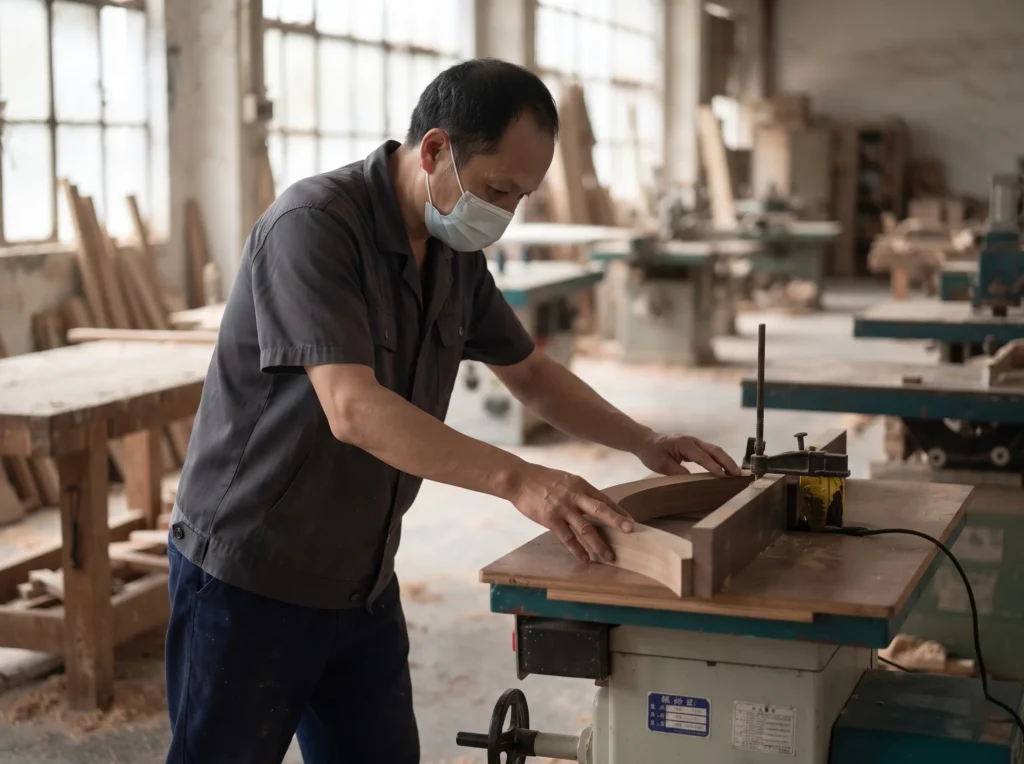
That middle ground — between “frames done” and “cartons on a truck” — is longer than most buyers are told. Industry data puts the full sequence of paint curing, quality inspection, packing, export documentation, and internal transport to the loading area at roughly 7 to 17 days — one to two and a half weeks. The commonly quoted “one to two weeks” is the optimistic floor. Buyers who do not know this territory exists will receive a “production complete” photo, book freight in good faith, and then watch the cargo cut-off sail past. If you have ever wondered why Chinese factory delays orders even when everything seemed finished, this invisible corridor is usually the answer — and it runs toward the longer end of the range more often than factories admit.

The Semantic System of Factory Delay
Factories do not lie so much as they speak a specialized dialect. Learning it saves you weeks.
| What You Hear | Literal Meaning | Operational Meaning | What You Should Do |
|---|---|---|---|
| “Next week” | Some week after this one | We have not scheduled it yet | Request the specific stage and date in writing |
| “Next Tuesday” | Tuesday is plausible | A specific person is supposed to do a specific thing | Confirm which stage completes Tuesday |
| “Almost done” | A large fraction is complete | The visible portion is complete | Ask what percentage, measured by units, is finished |
| “Arranging it” / “In the process” | Activity is occurring | We intend to begin activity | Ask what was physically completed yesterday |
| “The line is busy” | Capacity is occupied | Higher-priority orders hold the line | Ask for your order’s slot after the current job ends |
Notice the pattern: spoken language describes intentions; only written language, tied to units and dates, describes reality. A sales contact saying “帮你催” — “I’ll help you push it” — is offering sympathy, not capacity. Urging produces no additional hours on the line. It produces guilt, which costs the factory nothing and costs you more patience.
Why Urging Doesn’t Work — and What Factories Are Actually Betting On
A frank observation from years near production meetings: factories run a quiet risk calculation on every late order. They are betting, often correctly, that your delivery requirement is softer than you claimed; that you will not fly in to inspect; that you will place the next order anyway because re-sourcing costs you six months. None of this makes the factory villainous. It makes it rational. The countermove is not anger. The countermove is removing the bet.
That means a lead time delay China factory problem is, at its root, an information and incentives problem. The buyer who writes the right things into the contract does not get scheduled earlier — power still rules the line — but does get truthful information earlier, and that difference is worth more.
Penetrating the Black Box: The Buyer’s Written Toolkit
The black box is not opened by charm, friendship, or volume of messages. It is opened by paper. Specifically, by forcing the factory’s statements into formats that can be checked.
| Tool | What to Write | When |
|---|---|---|
| Production slot confirmation | Order start date, current queue position, and the two orders scheduled ahead of you | Within 48 hours of deposit payment |
| Milestone schedule | Written dates for material ready, frame complete, finish complete, inspection, packing | Before production starts |
| Unit-based progress reporting | Weekly written report: units completed by stage, not adjectives | Every week during production |
| Delay notification clause | Factory must notify any slippage in writing within 48 hours with cause and new date | In the purchase contract |
| Inspection-triggered payment | Final payment released only after passed third-party inspection of finished, packed goods | In the payment terms |
| Delay penalty or discount clause | Defined commercial consequence for each week of factory-attributable delay | In the purchase contract |
Each of these converts an unverifiable spoken claim into a checkable fact. A factory that refuses simple written milestones is telling you something important before your money is at risk.
High-Risk Scenarios: Where Buyers Lose the Most
Some combinations are reliably expensive. The pattern worth memorizing: the more you rely on verbal assurance, the more the schedule belongs to someone else.
| Risky Situation | Why It’s Dangerous | The Written Alternative |
|---|---|---|
| Verbal delivery date only | No baseline exists, so no slippage is provable | Date in contract, tied to penalty |
| Deposit paid before slot confirmation | Your cash enters the factory before your place in line exists on paper | Slot confirmation precedes payment |
| Final payment before inspection | Factory loses all incentive to prioritize your finishing and packing | Inspection gate before balance |
| Urging as the only strategy | Produces guilt, not capacity; signals a soft deadline | Written milestone escalation instead |
| Accepting “production complete” without unit counts | You inherit the invisible finishing corridor blind | Stage-by-stage unit confirmation |
Playbooks by Buyer Type
The black box does not hit every buyer equally. The pressure points differ by business model, and so should the countermeasures.
Importers and Wholesale Distributors
Your exposure is container-level: one slipped order delays a full consolidation. Lock vessel cut-off dates into the contract as a named deadline, require the milestone schedule in week one, and build one buffer week into every customer promise you make. If you manage a lead time delay China factory across a whole SKU range, track queue position by factory in a simple shared spreadsheet — factories behave better when they know you are comparing.
E-commerce Sellers
Your cash flow lives and dies on inventory arrival windows tied to ad campaigns and peak seasons. Insist on unit-count progress reporting weekly, because a marketplace launch date cannot absorb the invisible finishing corridor. Pay for a mid-production inspection when frames are done; it is the cheapest early-warning system available.
Hotel and FF&E Buyers
Project deadlines with liquidated damages upstream make you the most scheduling-sensitive buyer in the factory’s book — and paradoxically the one factories most want to serve, because your volumes are large. Use that leverage explicitly: state the FF&E installation date in writing, tie payment milestones to it, and require written notification of any inserted order affecting your slot.
First-time and Small Buyers
You are structurally last in the power order, so your protection must be front-loaded: smaller trial orders, third-party inspection as standard, and milestone schedules on every single PO. Never let a small order’s informality become the factory’s excuse for silence.
Key Definitions
Production slot. The factory’s written confirmation of the specific calendar window in which your order is scheduled to begin production, distinct from the order confirmation date. Possessing one converts your order from a hope into an appointment.
Inserted order (cha dan). An order physically inserted into a running production schedule ahead of previously confirmed work, typically at the request of a large, urgent, or long-standing client. A controlled maneuver in factories with real scheduling systems; indistinguishable from chaos in factories without one. A monthly insertion ratio above roughly 40% indicates a planning problem, not agility.
Invisible finishing corridor. The period between frame assembly completion and goods being packed, documented, and staged for shipment — including finishing, curing, inspection, packing, documentation, and internal transport — which industry data places at roughly 7 to 17 days (one to two and a half weeks), longer than the “one to two weeks” buyers are typically quoted.
Milestone schedule. A written table of dated production stages specific to your order, used as the reference against which all progress claims and delay notifications are measured.

Frequently Asked Questions
How do I know where my order actually is in the factory’s schedule?
Ask for your production slot in writing within 48 hours of paying the deposit, including the start date and the orders scheduled ahead of yours. Then require a weekly written unit-count report by stage. Verbal reassurance is not information; dated, unit-based paper is.
Why can’t the factory ship if production is already complete?
“Production complete” usually means frames are assembled and the product exists — not that finishing, curing, inspection, and packing are done. From finish to packed, documented, and staged goods, that corridor typically runs 7 to 17 days. The fix is defining completion in your contract as finished, inspected, and packed goods.
Does urging my sales contact actually help?
Rarely. Urging produces attention, not hours, and a polite “I’ll push it for you” costs the factory nothing. What changes behavior is written milestones with commercial consequences attached, because those alter the factory’s incentive calculation.
What should a written production confirmation include?
Order number and quantity, confirmed start date, current queue position, milestone dates for material readiness, frame completion, finishing, inspection, and packing, a 48-hour written delay notification obligation, and the agreed consequence for factory-attributable delay.
How do I write delay compensation that actually works?
Tie it to provable factory-attributable delay: a per-week discount or credit defined in the PO, triggered by failure to meet written milestones, with force-majeure-style carve-outs. Keep the amounts realistic — a credible, enforceable 2% is worth more than an imaginary 20%.

Your Turn
Has a factory ever told you “next week” four weeks in a row? Drop your experience in the comments — the most instructive delay stories get analyzed in a future article.
Recommended Resource
Interi Furniture specializes in custom furniture manufacturing for residential, hospitality, and commercial projects. Their experience in materials, craftsmanship, and project realization makes them a valuable resource for designers and buyers seeking tailored furniture solutions from China.