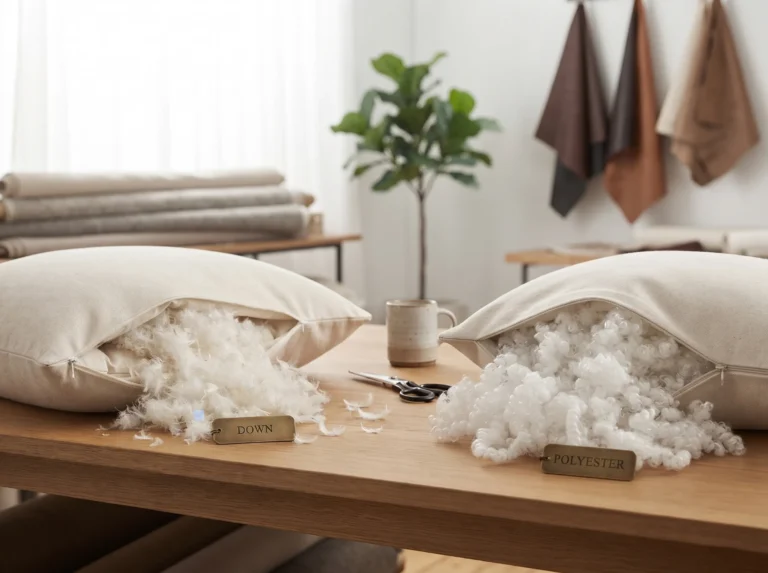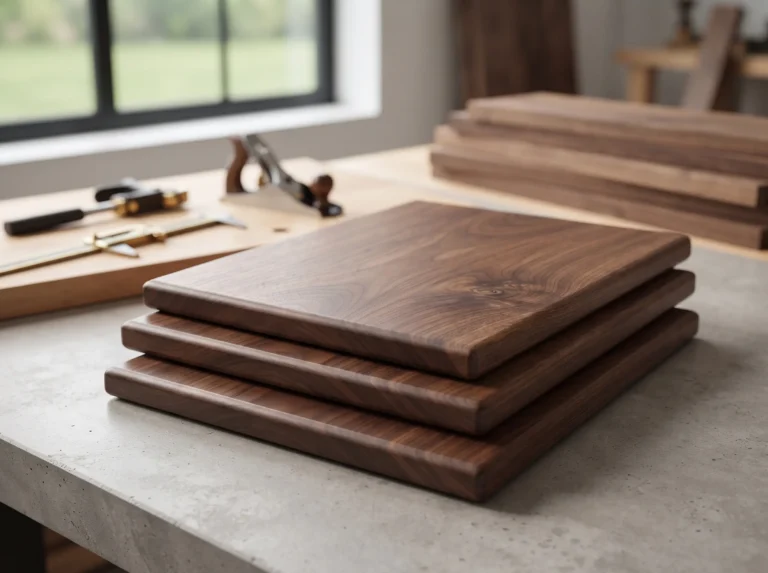











Most custom furniture China disputes filed as “wrong goods” have nothing to do with the finished product — they were decided the day both parties skimmed past material approval. The root cause of nearly every material approval failure is a mismatch of confirmation objects: you confirmed color, the factory confirmed grade and tolerance range, and neither of you realized you were answering different questions. The objects you must confirm are fabric, veneer/wood color, hardware, foam, board, coating color panels, and environmental grade. The only confirmation that holds up in a dispute is a physically sealed, signed, numbered sample held by both parties. Everything else — emails, screen photos, verbal “looks good” — is evidence ammunition for the other side.
The Background: “Wrong Goods” Disputes Almost Never Start at the Factory
Over ten years of walking factory floors in Foshan, Shunde, Dongguan, Guangzhou, Nankang, Anji, and Yunfu, one pattern repeats so consistently it has become predictable. A buyer receives a container, opens it, and immediately claims the goods don’t match. The factory responds with screenshots. Lawyers get mentioned. And buried in the file, nine times out of ten, is a two-line email with the phrase “looks good.”
The finished product is almost never where the failure happened. It is merely where the failure became visible. The actual decision point sat weeks earlier, at the moment materials were supposed to be locked — and weren’t.
Buyers call this stage “material approval.” Factories often call it “confirmation of materials.” Both parties believe they completed it. Neither party can produce a document proving what, exactly, was agreed.

Why Material Approval Breaks Down: Three Structural Causes
Most project fail stories in custom furniture share the same skeleton. The breakdown is rarely a single villain. It is usually a structural gap that both sides co-created, and it falls into three recurring categories.
| Structural Cause | What the Buyer Thinks Happened | What the Factory Actually Did | Where It Blows Up |
|---|---|---|---|
| Confirmation object mismatch | “I approved the walnut color and bouclé fabric.” | “The buyer approved color family and fabric category; grade and tolerance stayed at factory default.” | Buyer expects premium grade; factory ships standard grade within its own internal tolerance. |
| Invalid confirmation form | “I replied to their email saying it looks good.” | “We received a non-binding comment and proceeded with internal standard samples.” | Dispute arbitration: the email proves acknowledgment, not specification. |
| Confirmation timing too late | “Materials were confirmed when production started.” | “Materials were already purchased or dyed before the buyer’s approval arrived.” | Changing anything now costs money and weeks; both sides dig in. |
The Mismatch Nobody Talks About
You look at a swatch and see color. The factory looks at the same swatch and sees a tolerance band, a dye lot reference, and a cost ceiling. You are both looking at one card and confirming three different things.
This is not factory deception. It is a vocabulary gap. When you say “approved,” you mean “this is what I expect to receive.” When the factory hears “approved,” it means “the buyer has no objection to proceeding with our standard material within our standard deviation.” Same word, two contracts.
The Email Trap
A message saying “looks good, please proceed” is the most dangerous sentence in custom procurement. It feels like confirmation. In a dispute, it functions as nothing more than proof that you saw something — and that something is described nowhere.
Every project fail file we have reviewed contained an email thread both sides cited as evidence. Both were right. That is precisely the problem.
What “Material Approval” Actually Means
Material approval is the formal, documented process by which the buyer and the factory lock every material variable of a custom order into a written and physical record before bulk purchasing and production begin. The key variables are specification, grade, color reference, batch consistency rule, tolerance limits, and the technical documents that convert those approvals into production instructions.
Note the word “formal.” Approval is not a feeling of confidence. It is a paper-and-sample trail that a third party — a bank, a platform, an arbitrator — can reconstruct without calling either side to explain themselves.
If your current material approval process custom furniture China suppliers agree to does not produce a signed record, sealed samples, and a frozen technical file, you do not have a process. You have optimism.
The Complete Material Approval Checklist
The most common buyer question is deceptively simple: “What exactly do I need to confirm?” The honest answer is everything that touches the finished surface or structure — and “confirming the fabric” is not one item, it is a bundle of items.
| Object to Confirm | What Must Be Specified in Writing | Reference Standard / Benchmark | Common Failure Mode |
|---|---|---|---|
| Fabric | Exact composition, weight (GSM), Martindale abrasion rating, color reference number, dye lot rule | Contract and hospitality-grade fabrics typically require Martindale ≥30,000 cycles for commercial use; residential projects often accept 20,000–25,000 | Buyer approves color swatch; factory substitutes a cheaper weave in the “same color.” |
| Veneer / wood color | Veneer species, cut type, grade, target color panel number, open-pore vs closed-pore finish | “Walnut” spans five price tiers; the word alone confirms nothing | Factory delivers a lower veneer grade with the same species name. |
| Hardware | Brand, model number, finish code, load rating, hinge type | Generic “good quality hardware” defaults to the factory’s cheapest in-house option | Soft-close promised, standard hinges shipped. |
| Foam | Density (kg/m³), hardness, flame-retardant standard where applicable | Two cushions can look identical and feel completely different at 28 vs 45 density | 28-density foam inside a “high-density” sofa. |
| Board | Core material (plywood/MDF/particleboard), thickness, formaldehyde emission grade | Under GB 18584-2024, the formaldehyde limit for furniture is ≤0.08 mg/m³ and benzene ≤0.06 mg/m³ | “Solid wood frame” sometimes means solid wood where visible, board elsewhere. |
| Coating color panels | Panel number, gloss level, sheen uniformity, UV resistance expectation | Two panels with the same color name from different suppliers can visibly differ | Second production run drifts from the first. |
| Environmental grade | Target certification or emission standard, applicable market (EU/US/others), specific limits referenced | GB 18584-2024 formaldehyde ≤0.08 mg/m³, benzene ≤0.06 mg/m³; specify whether your market requires EN 717-1, CARB Phase 2, or other schemes | “E0 available” is a capability statement, not a commitment to your order. |
Why Each Item Deserves Its Own Line
Fabric is the classic trap. A buyer confirms “the white bouclé,” the factory ships white bouclé — at 280 GSM instead of the 420 GSM sample, because weight was never written down. Legally, the factory delivered what was confirmed. Practically, the buyer received a different product.
The same logic applies to every row in that table. Color is the visible tip; grade, density, and composition are the submerged mass. Confirm the submerged part first, and the visible part largely takes care of itself.
The Compliance Row Buyers Underestimate
Environmental grade is where vague language does the most damage. Writing “must meet EU standards” means nothing a laboratory can test. Writing “formaldehyde emission ≤0.08 mg/m³ per GB 18584-2024, third-party test report required before shipment” gives the factory a number to hit and gives you a report to demand. All regulatory limits cited here are current published values and remain subject to verification against the latest official standard text, since limits are periodically revised.

Physical Sealed Samples: The Only Confirmation That Holds
A sealed sample — in Chinese factory terminology, a “counter sample” or fengyang — is a physical piece of the approved material, cut, labeled, numbered, and signed by representatives of both parties, with each side retaining identical copies. It is the single most important artifact in a custom order.
How the Sealed Sample Process Actually Works
| Step | What Happens | Who Signs / Holds |
|---|---|---|
| Sample preparation | Factory produces material samples per the written specification sheet, including color panels and material cuttings | Factory prepares; buyer receives by courier |
| Written specification sheet | Every variable is listed: composition, grade, density, panel numbers, tolerance notes, batch consistency clause | Both parties sign one document |
| Sealing | Each sample is labeled with order number, item number, material name, date, and seal number | Both parties apply signature or seal |
| Distribution | Buyer keeps the original set; factory keeps the duplicate set; both sets must be identical and photographed together | Courier tracking retained by both sides |
| Technical file freezing | Sealed parameters are converted into the BOM, CAD production drawings, and process standard cards referenced by production lines | Factory issues the file set; buyer countersigns or acknowledges by email with the seal numbers |
| Bulk production reference | Mass production materials are checked against the sealed samples and the frozen technical file, not against memory or new color cards | Factory QC references seal number on inspection reports |
| Pre-shipment check | Buyer or inspector compares bulk goods against the sealed sample under agreed lighting conditions | Third-party inspection report references the seal |
The Critical Details Buyers Miss
The batch consistency clause is the one buyers skip and the one that saves containers. It should state that bulk materials must come from the same production batch as the sealed sample, or that any batch change requires written buyer approval before use. All such rules are subject to verification and should be adapted to your specific written contract — but without a written batch clause, batch consistency simply does not exist as an obligation.
Numbering matters more than people expect. “Seal #03 — Bouclé, color code, GSM, date” converts a fuzzy argument into a binary check: does the bulk material match seal number three, yes or no. Arguments about whether a material “looks close enough” disappear when both sides are holding numbered pieces.
Why Sealing Alone Is Not Enough: The Technical File Bridge
Here is a detail almost no buyer hears about: a sealed sample is evidence, not an instruction. It proves what was agreed, but it does not automatically tell a sewing line, a cutting machine, or a spray booth what to do. That translation happens in the technical file.
After sealing, the approved parameters must be converted into a BOM listing every material with its approved specification, CAD production drawings that lock dimensions and tolerances, and process standard cards that tell each workstation the approved method and acceptance criteria. The sealed samples and the technical file must cross-reference each other by seal number. When a factory skips this conversion — and many small and mid-sized factories do — production runs on the workshop supervisor’s memory, and the seal becomes a museum piece instead of a working standard.
The Inspection Standard That Should Sit Beside the Seal
Your technical file should also fix the sampling inspection plan before mass production ends. The widely used AQL framework assigns acceptance numbers by defect class, and the values most commonly referenced across the industry are: Critical defects at 0 (no critical defect is acceptable — safety and structural failures), Major defects at 2.5, and Minor defects at 4.0. These figures reflect common practice and are subject to verification; some buyers tighten major defects to 1.5 or 1.0 for high-value orders. The point is not the exact number — it is that the number exists in writing before the inspection, so “pass” and “fail” are not negotiated at the container door.
Email Confirmations and Screen Swatches: Why They Don’t Count
| Confirmation Method | What It Actually Proves | Dispute Value | Verdict |
|---|---|---|---|
| Email reply (“looks good”) | You saw an image or description and did not object | Weak — proves awareness, not specification | Treat as a working note, never as approval |
| Screen photo of a color card | Colors on your screen differ from the physical card due to display calibration | Harmful — both sides may be confirming different colors | Never approve color from a screen |
| Video call walkthrough | You observed samples remotely | Weak — lighting and camera shift color dramatically | Useful for process visibility, useless for color lock |
| Physical sealed sample, signed and numbered | Exact material, grade, and color are physically fixed | Strong — objective, third-party verifiable | The only form of approval that counts |
Color Difference and Batch Rules: The Honest Version
Buyers routinely ask: “How much color difference is acceptable?” The industry answer is uncomfortable: there is no single universal number — but there are widely used instrument-based benchmarks by material category, and they are more useful than arguing with your eyes.
| Scenario | Industry Benchmark (Subject to Verification) | What You Should Put in Writing |
|---|---|---|
| Panel / lacquered furniture (板式) | Delta E (ΔE) ≤1.5 measured by colorimeter under D65 light | State the ΔE limit, the instrument method, and the lighting condition |
| Solid wood and veneer (实木/木皮) | ΔE ≤2.0; natural grain and tone variation excluded from the ΔE check | State the ΔE limit plus a written description of acceptable natural variation |
| Upholstery / soft goods (软体) | ΔE ≤3.0 for fabric and leather under D65 | State the ΔE limit and whether visual assessment under D65 is the backup method |
| Same batch, same production line | Minimal visible difference; ΔE should fall inside the category limit | Reference the sealed sample; state lighting condition (e.g., D65) |
| Same material, different dye lots | Visible shift is common and considered normal unless contractually excluded | Batch consistency clause requiring same-lot supply |
| Natural materials (wood veneer, leather, stone) | Variation in grain and tone is inherent, not a defect | Acceptable range described in words plus reference samples |
| Different production runs of coated panels | Sheen and tone can drift between runs | Require pre-production color panel re-approval for repeat orders |
| On-screen vs physical | Not comparable; screens introduce uncontrolled variables | Prohibit screen-based color approval in writing |
Everything in this table reflects common industry practice and is subject to verification. Your written contract supersedes all conventions. These figures describe how the industry typically behaves — they are not promises about any individual order or factory.
The single most useful sentence you can add to a confirmation sheet: “Bulk materials must match sealed sample number _ within ΔE _ under D65 lighting; any batch substitution requires prior written approval.”

High-Risk Warning: Three Traps That Blow Up Projects
Trap One: The “Looks Good” Email
It feels efficient. It feels friendly. It is also the first exhibit the factory’s sales manager will forward to their boss when you complain. An email without an attached specification sheet, seal number, tolerance note, and AQL reference is not confirmation — it is an ambiguity generator both sides will weaponize later.
Trap Two: Approving Color From a Screen
A screen introduces white balance, brightness, night-mode shifts, and two different phones between you and the truth. A color that reads warm beige on your laptop can arrive as grey-beige in the container. Screen-based color approval is the most common form of self-deception in this industry, and it fails silently until the container opens.
Trap Three: Approving Late, or Not at All
Counterintuitive but critical: buyer delay is the single most common trigger of material problems. Factories run on production calendars. When approval doesn’t arrive on schedule, the factory does not pause and wait — it proceeds with the safest option, which is usually the cheapest option already in its warehouse.
This is not factory malice. It is an unlocked process punishing both parties. The factory protects its delivery date; you receive whatever was on the shelf. The prevention is trivial: put approval deadlines in writing, with a clause stating that silence beyond the deadline constitutes approval of the factory’s proposed sample set and frozen technical file. That clause transforms your delay from a hidden risk into a visible decision point.
Material Approval Playbook by Buyer Type
Hotel and Contract Project Buyers
Your leverage is volume and repeat orders, so use it. Require a physical material board containing every finish in the project, sealed and signed, plus a master specification sheet cross-referenced to room types. Lock the technical file — BOM, CAD drawings, process cards — as a contract deliverable, and fix AQL levels in the purchase order rather than leaving them to the inspection day. For multi-phase rollouts, re-approve color panels at each production run — contract manufacturers routinely switch suppliers between phases.
Private-Label and Brand Buyers
Your brand carries the risk, so your documentation must carry the proof. Build approval into your sampling milestone: no bulk material purchase before the signed seal set and the frozen BOM exist. Keep the buyer-held sample set in your own office, not in the factory’s sample room, and reference it together with the GB 18584-2024 emission limits and your AQL plan in every purchase order.
Small-Business Custom Buyers
You cannot out-process a factory, so out-document it. One page, one table, one seal per material. Ask for the technical file summary — even a simplified BOM and process card — in whatever form the factory can produce, because that is what the workshop will actually follow. Insist on courier delivery of sealed samples before production starts; the courier fee is the cheapest insurance in the entire transaction.
Individual and One-Time Buyers
Your realistic tool is the pre-production photo check combined with a written specification sheet, since physical counter-samples are harder to arrange at small volume. At minimum, require dated photos of the actual bulk materials beside a ruler and the order number, and state in writing that mass production follows only after your written approval of those photos. For upholstered items, ask for the fabric’s Martindale test report rather than trusting the word “durable.”

FAQ
Does an email saying “looks good” count as material approval?
It counts as acknowledgment, not approval. In a dispute it proves you saw something, but it defines nothing — no grade, no tolerance, no batch rule, no AQL level. Always follow up any email approval with a signed specification sheet, sealed samples, and a frozen technical file referencing that sheet.
How do I confirm a color card correctly?
Confirm color from physical samples only, under consistent lighting, and seal a cutting of the approved card with a signature, date, order number, and seal number. For repeat or high-value orders, agree on a ΔE limit by material category — panel furniture typically ≤1.5, solid wood and veneer ≤2.0, upholstery ≤3.0, all subject to verification and your written contract. Never approve a color from a screen photo or video call.
What happens if the factory switches material batches after approval?
Without a written batch consistency clause, this is common industry practice and extremely difficult to challenge. With the clause, a batch change requires your written approval first, and unauthorized substitution becomes a clear contractual breach rather than a debate about “normal variation.”
What are the consequences if I delay my approval?
The factory will typically proceed on its own judgment to protect its production calendar, usually choosing the most available — often the most economical — material option. In writing, this is the single largest self-inflicted cause of material disputes.
How much color difference is acceptable when goods arrive?
There is no universal number, but the industry commonly works with instrument benchmarks: ΔE ≤1.5 for panel/lacquered furniture, ≤2.0 for solid wood and veneer, and ≤3.0 for upholstery, measured under D65 lighting — all subject to verification. Agree on the number, the measuring method, and the lighting condition in writing before production, and fix the AQL plan (commonly 0 critical / 2.5 major / 4.0 minor) so acceptance is not renegotiated at the container door.
Your Turn
Open your most recent custom order file and ask one question: if a dispute went to arbitration tomorrow, could you hand over a signed specification sheet, a numbered sealed sample, and a frozen technical file for every material in that order? If not, which row of the checklist above would have saved you? Tell us in the comments — the most instructive failure stories are usually the ones nobody wanted to write down.
Recommended Resource
Interi Furniture specializes in custom furniture manufacturing for residential, hospitality, and commercial projects. Their experience in materials, craftsmanship, and project realization makes them a valuable resource for designers and buyers seeking tailored furniture solutions from China.