




The short answer? Guangzhou. Period.
Not dumping on Hong Kong here—it’s a hell of a city for finance. But if you’re flying in to buy sofas, beds, dining sets, not bonds, you’re landing in the wrong place. Every factory that matters, every timber yard, every guy who can weld a sofa frame and every bilingual fixer who knows which workshop owner takes Sunday morning meetings—they’re all within an hour of Guangzhou Baiyun. Hong Kong’s got banks. Tons of them. Furniture factories? Try zero.
Land in Guangzhou, you save weeks. And about one-fifth off your logistics bill. Simple math.
So when buyers ask us about Guangzhou vs Hong Kong furniture sourcing, our answer never changes. Guangzhou is the real international buyer gateway for anyone serious about buying from China. Hong Kong is a financial hub. Guangzhou is where the sofas get built.
The Problem: Six Out of Ten Buyers Still Get This Wrong
Every quarter we run the numbers, and every quarter the same picture makes us cringe. Roughly 60% of first-time furniture buyers we track—buyers from the US, UK, Australia, South Africa, you name it—still book their flights to Hong Kong International.
Why? Same reason your dad still uses Yahoo. Habit.
Back in the 90s and 2000s, Hong Kong was “Asia’s World City.” Most Western buyers couldn’t name three Chinese cities. Beijing, Shanghai, Hong Kong. That was the list. So they figured the gateway must be the gateway.
It isn’t. Not for furniture. Not anymore.
Hong Kong still pushes north of half a trillion in merchandise trade every year. Big number. But here’s the thing nobody tells you: furniture and bulky manufactured goods? Shrinking slice. The city’s last proper furniture trade fair with any real scale died over a decade ago. Its port, its warehouses, its trucking lanes—tuned for iPhones, pharmaceuticals, luxury handbags. Not a 20-foot container stuffed with sectional sofas and king-size bed frames.
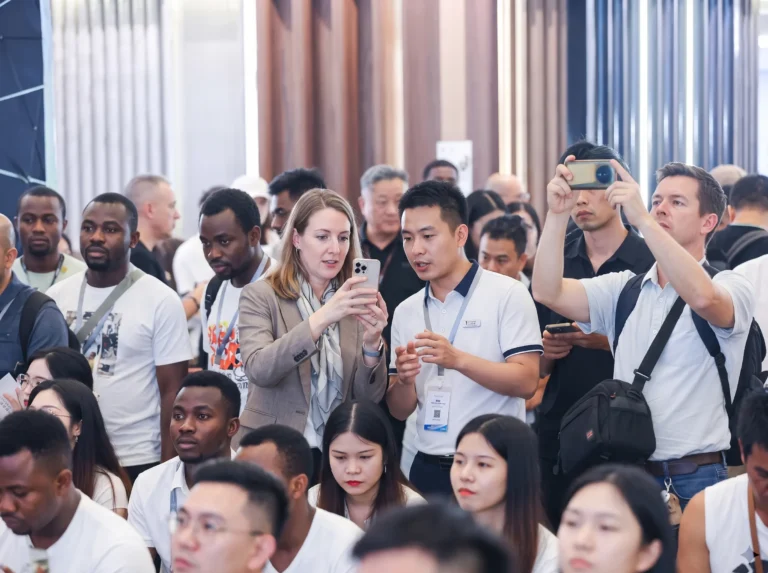
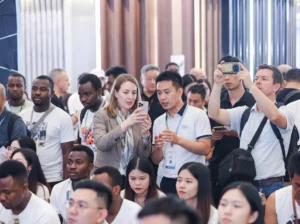
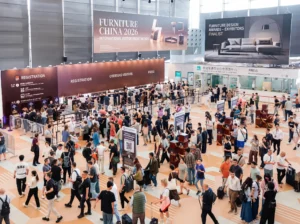
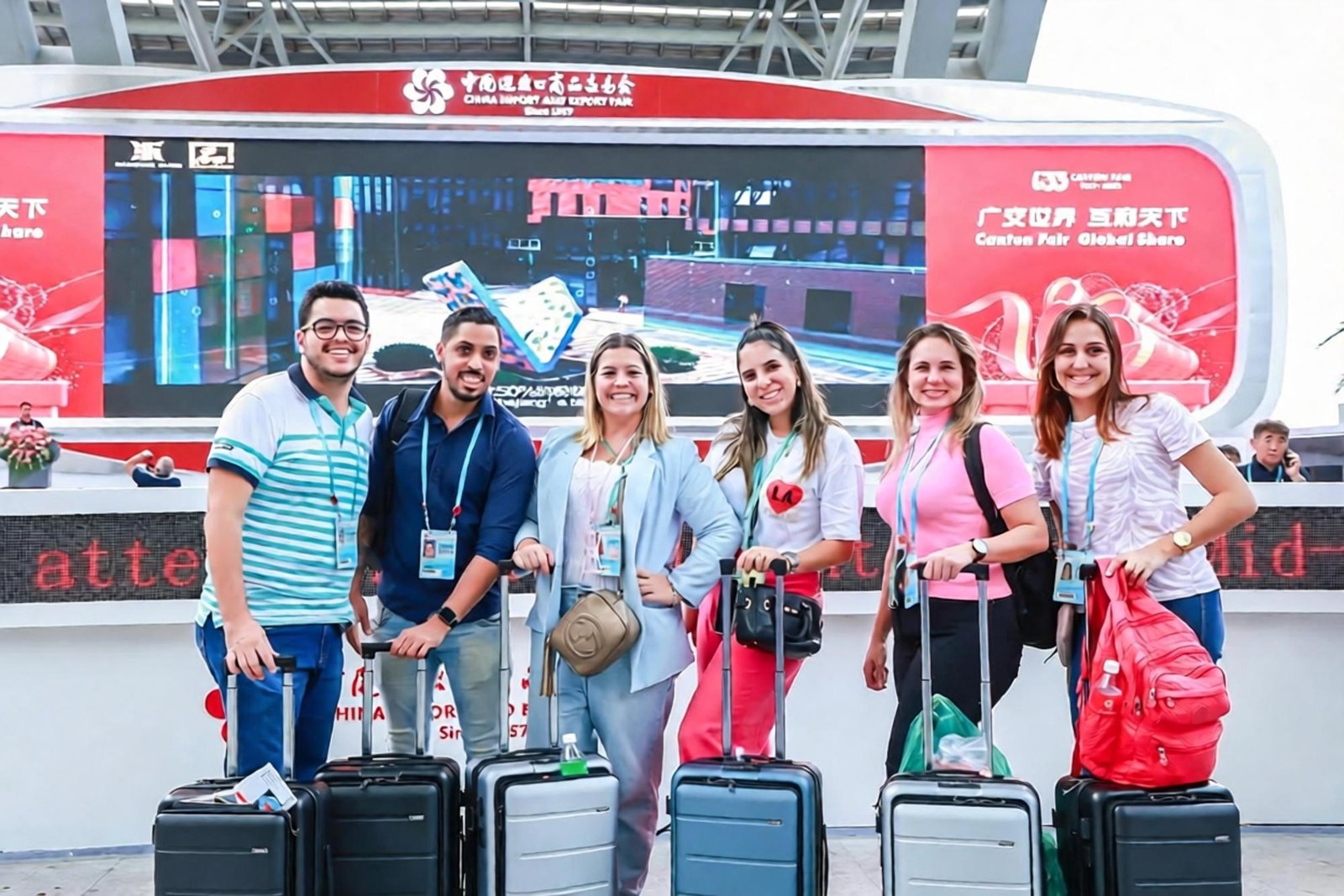
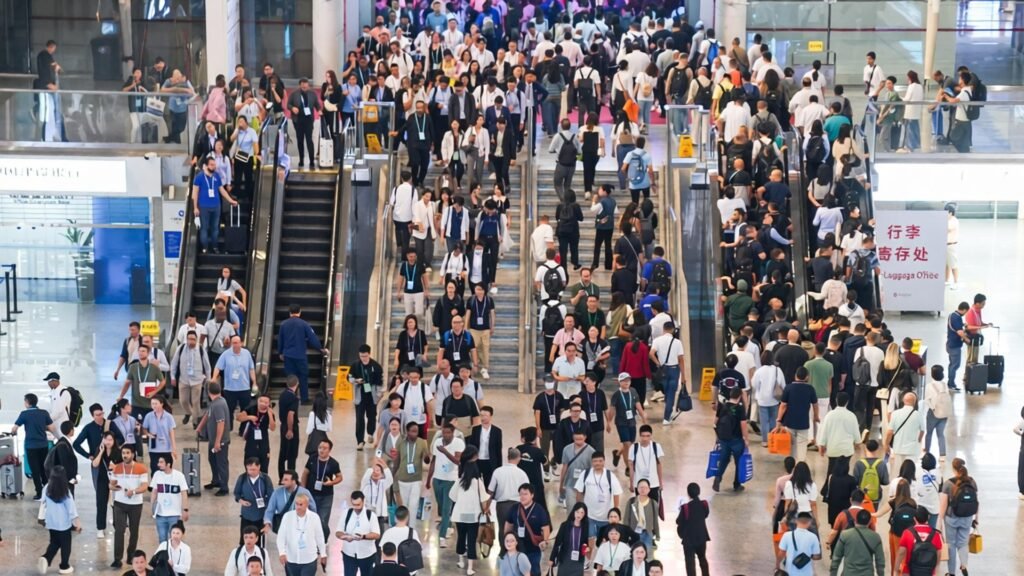
Meanwhile, CIFF Guangzhou pulled 64,291 overseas buyers in March 2026. Up 13.2% from the previous record. The market voted. It voted with its feet, its wallets, and its container bookings. And it crossed the border to Guangzhou years ago.
What Each City Actually Does
Let’s not pretend Hong Kong is useless. It’s not.
Currency flows without restrictions. Letters of credit that actually get honored. A legal framework that makes your CFO stop sweating. If your problem is “how do I structure a $2 million LC across three jurisdictions,” Hong Kong’s your answer. Full stop.
The city also has some stunning design galleries in Central and Kowloon. Great for Pinterest boards. Terrible for placing a 40-foot container order at factory pricing.
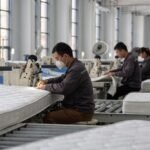
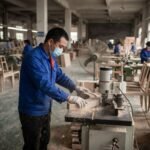
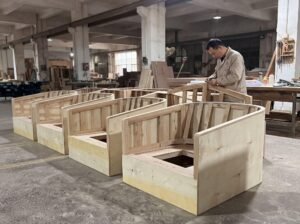
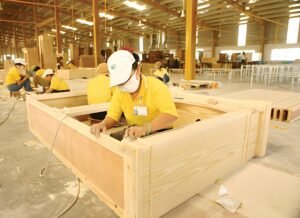
Now look at Guangzhou. Thirty kilometers southwest. Foshan. The beating heart of China’s furniture industry. About three-quarters of the country’s furniture output comes from this cluster. Foshan alone: 7,000+ manufacturers, 20,000+ distributors. Lecong’s “Ten-Mile Furniture Corridor” covers showroom space equivalent to 420 soccer fields. You could walk it for a week and still miss half the stalls.
Nansha Port, right in Guangzhou, handles the bulk of furniture exports alongside Shenzhen Yantian. The Canton Fair runs twice a year with 850,000+ square meters of floor space. Land in Guangzhou, you’re already inside the factory ecosystem. No border. No detour. No extra day burned on a highway.
So which city is better? Wrong question. Which city does what you need? Hong Kong is a financial switchboard. Guangzhou is the factory floor. Different jobs. Different tools. Pick the right one.
Six Dimensions, Side by Side
1. Supply-Chain Distance: The Commute That Eats Your Day
This is where it gets real. Fly into Guangzhou Baiyun, grab a car, and you’re walking a factory floor in Foshan in 45 minutes. Done.
Try the same from Hong Kong International. Border crossing. Customs queue. Then 150 kilometers of highway. Assuming Shenzhen Bay isn’t backed up—which it usually is, weekday mornings especially. Total time? Two and a half to three hours. On a good day. We’ve seen it take four.
A buyer based in Guangzhou knocks out three factory visits before lunch. From Hong Kong? Same itinerary is a logistical nightmare. And the cost isn’t just time. Cross-border private car with the right plates: ¥800 to ¥1,200 per trip. Do that twice a day for a week, you’ve burned through a sourcing agent’s monthly fee just on rides. Plus the full day lost to sitting in traffic.
The Hong Kong base camp gets expensive fast. Real fast.
| What you’re measuring | Guangzhou | Hong Kong |
|---|---|---|
| To Foshan factory cluster | 30–45 km, ~45 min | ~150 km, 2.5–3 hrs (often 4) |
| To Lecong wholesale market | 35 km, ~50 min | ~160 km, 3+ hrs |
| Factory visits in one day | 3–4, realistic | 1–2, if you’re lucky |
| Cross-border ride cost | Not applicable | ¥800–1,200 per trip |
| Raw material markets nearby | Yes—hardware, timber, fabric | No |
2. Trade Fairs: Where Buyers Actually Show Up
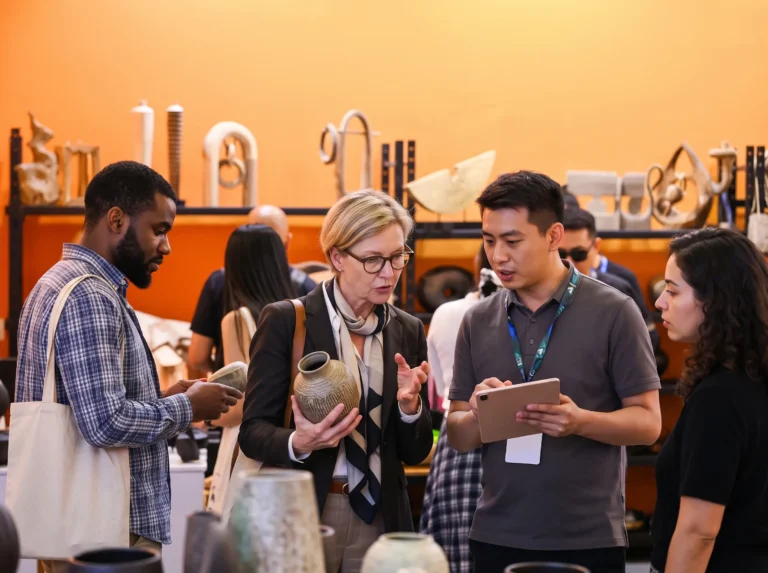
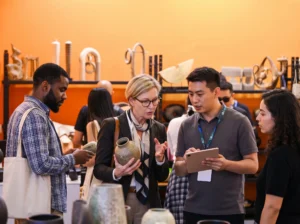
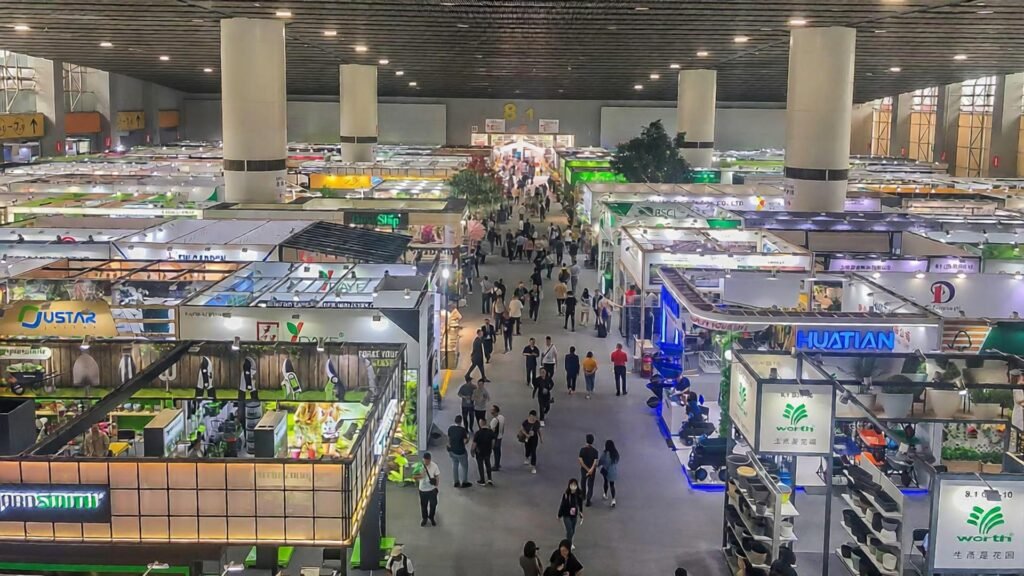
CIFF Guangzhou. Largest furniture trade fair on the planet by floor space. 2026 edition: 5,100+ brands, 353,000 trade professionals. The Canton Fair (Phase 2) adds another massive furniture and homeware block every April and October.
Hotel and commercial buyers? Guangzhou Hotel Supplies Exhibition covers 250,000 square meters, 4,000+ exhibitors. You can walk from a sofa manufacturer to a commercial lighting supplier to a marble countertop fabricator without leaving the complex.
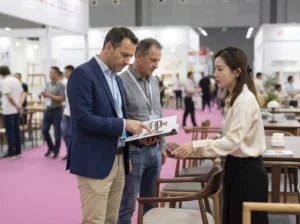
Hong Kong? Last meaningful furniture trade event, the Hong Kong Houseware Fair, folded years ago. The city still runs Business of Design Week. Lovely if you’re an architect specifying a penthouse lobby. But if you’re a procurement manager trying to lock in a container of dining chairs at factory-direct pricing, you’ll be on the same-day train to Guangzhou by noon. We’ve watched it happen. Over and over.
3. Logistics: The Cost Nobody Warns You About
Here’s the number that stops buyers cold. 20-foot container of sofas, picked up in Foshan, trucked to Guangzhou’s Nansha Port: about ¥1,500 in inland freight.
Route that same container through Hong Kong. Bill jumps by an extra ¥3,000 to ¥4,000. Cross-border haulage. Terminal handling. Transshipment fees. Plus two to three extra days on the sailing schedule.
Why the gap? Hong Kong’s port is built for high-value, low-cube cargo. Semiconductors. Pharmaceuticals. Not sectionals. Terminal charges, land scarcity, labor costs—all priced for electronics and pharma. Guangzhou’s Nansha and Shenzhen’s Yantian were built for the manufacturing export model. The cranes, the yard space, the customs workflows—tuned for furniture.
The infrastructure doesn’t just handle your cargo better. It handles it cheaper. A lot cheaper.
| Cost breakdown | Guangzhou Route | Hong Kong Route |
|---|---|---|
| Inland trucking (Foshan to port) | ~¥1,500 | ~¥1,500 + ¥3,000–4,000 cross-border |
| Terminal handling | Standard export rates | Premium (high-value cargo bias) |
| Extra transit time | None | +2–3 days |
| Customs complexity | One declaration | Two—HK plus mainland |
| Total premium vs. Guangzhou | Baseline | +20–30% |
4. Service Density: Where the Fixers Live
CIFF week. Walk into a Pazhou hotel lobby. Arabic, Spanish, Russian, Portuguese, French bouncing off the marble. Sourcing agents, freight forwarders, inspection firms, translators—they cluster around the exhibition complex like flies on honey.
Need a bilingual agent for tomorrow? ¥500 to ¥800 per day. Dinner time, you’ve got one. Same-day factory audit? Done. Container load arranged within 48 hours? Standard. Happens every day.
Hong Kong? Trade-finance consultants and shipping brokers in spades. Furniture-specific sourcing agents? Rare. The few that exist keep offices in Shenzhen or Guangzhou and commute across the border. The service ecosystem followed the factories north. Simple as that.
5. MOQ and Communication: The Small Buyer’s Edge
Guangzhou’s factory-direct culture changes everything. Walk into a Foshan workshop. Ask for 20 sofas. They say yes.
Same request in Hong Kong? Routed through a trading house. They need to aggregate your order with three others just to hit the factory’s minimum. Their markup? Usually 10–15% on top. Your MOQ? Suddenly a full container.
Language matters too. In Guangzhou and Foshan, factory sales teams speak enough English to close a deal. Many sourcing agents are fully fluent. Hong Kong’s business language is English, sure, but furniture expertise? Thin. A buyer in Hong Kong often ends up playing telephone: Hong Kong broker → Shenzhen agent → Foshan factory. Every link adds friction. Every link adds cost.
We’ve seen a $15,000 order balloon to $19,000 just from that chain. Not hypothetical. Real invoice.
6. Finance and Compliance: Where Hong Kong Still Wins
Giving credit where it’s due. Letters of credit. Offshore USD accounts. International arbitration with teeth. Complex deal, high value, legally risky? Hong Kong’s common-law framework and unrestricted currency flows are still superior. No debate.
But—and this is a big but—Guangzhou has caught up for the 80% of deals that aren’t legally exotic. Major Chinese banks now offer trade-finance products in English. Alibaba’s Trade Assurance and similar escrow services have made traditional LCs less necessary for standard transactions. Comfortable with T/T or escrow? Guangzhou’s financial infrastructure is now sufficient.
The remaining edge is for buyers who need legal recourse on high-stakes, high-risk transactions. For everyone else, the gap has closed. Significantly.
Five Mistakes That Cost Real Money
● Routing through Hong Kong “just to be safe.” Extra cross-border haulage and terminal fees add 20–30% to your logistics bill. Zero upside for furniture. If you’re not shipping semiconductors, you’re paying a premium for nothing.
● Thinking Hong Kong showrooms represent the market. Those design galleries in Central? Curated pieces at showroom prices. Not even close to the factory-direct pricing you’ll find in Lecong.
● Landing in Guangzhou but never leaving the city center. The real action is 30 kilometers away in Longjiang and Lecong. Book a hotel in Shunde, you’re walking distance from factory gates. Stay in Tianhe, you’re just looking at skyline.
● Assuming Hong Kong trading houses offer flexibility. They’re middlemen. They aggregate orders to hit factory MOQs and mark up. Small buyers get better deals going direct in Foshan. Period.
● Forgetting the visa math. Many nationalities get 144-hour visa-free transit in Guangzhou—enough for a full sourcing trip. Hong Kong offers visa-free entry for most Western passports, but then you need a mainland visa. Half-day detour before you’ve even started.
What to Actually Do
First-time buyer, container-sized order? Fly direct to Guangzhou. Hotel in Shunde or near Pazhou. Day one: CIFF or Lecong, calibrate styles and pricing. Days two and three: factory visits in Longjiang. Don’t touch Hong Kong unless you specifically need trade-finance structuring.
Small buyer, less than a full container? Guangzhou still wins. Hire a local sourcing agent. Consolidate orders from multiple Foshan workshops into one shipment. Agent fee: typically 3–5% of order value. Still cheaper than the Hong Kong trading-house markup.
Hotel or commercial project buyer? Guangzhou is non-negotiable. Guangzhou Hotel Supplies Exhibition and the FF&E clusters in Shunde are built for your category. Hong Kong has nothing equivalent.
Need complex trade finance or legal structuring? Keep Hong Kong in your toolkit. Corporate account there for LCs and currency hedging. But route physical goods through Guangzhou. Hybrid model. How experienced buyers have operated for years. Works.

FAQ
Q: First time buying furniture from China. Which city is the right China furniture entry point?
A: Guangzhou Baiyun (CAN). Under an hour to Foshan factory district. Hong Kong adds a cross-border commute and offers zero furniture-specific advantage for first-timers. For China furniture entry, Guangzhou is the only serious option.
Q: Does Hong Kong still work as a furniture re-export hub?
A: Niche cases only. High-value, low-cube designer pieces where the Hong Kong brand premium justifies the cost. Or consolidating furniture with electronics/pharma in one shipment. For standard furniture, direct export from Guangzhou or Shenzhen is cheaper and faster. Full stop.
Q: Same banking protections in Guangzhou?
A: Not exactly. Hong Kong’s common-law system and unrestricted currency flows still superior for complex trade finance. But for standard T/T, escrow, and factory audits, Guangzhou’s infrastructure is robust enough for most buyers. Hybrid approach—finance in Hong Kong, sourcing in Guangzhou—is the pragmatic middle ground.
Q: Where’s the Canton Fair?
A: Guangzhou. Pazhou Complex. Largest trade fair in China, massive furniture and homeware pavilions. Hong Kong has no equivalent event for furniture procurement.
Q: Are Hong Kong suppliers more reliable?
A: Reliable at being middlemen. They aggregate orders and manage paperwork. But factories are in Foshan. Quality control happens at the factory level. Go direct to Guangzhou, hire the same third-party inspectors (SGS, Bureau Veritas, Intertek) that Hong Kong traders use. Cut out the intermediary markup. Same protection, lower cost.
Q: Is Guangzhou the best furniture sourcing hub China has for international buyers?
A: Hands down. No other city puts you within 45 minutes of 7,000+ manufacturers, two major trade fairs, and a deep-water export port. For furniture sourcing hub China comparisons, Guangzhou wins on every metric that actually matters to buyers. Hong Kong wins on finance. That’s a different game.
Recommended Resource
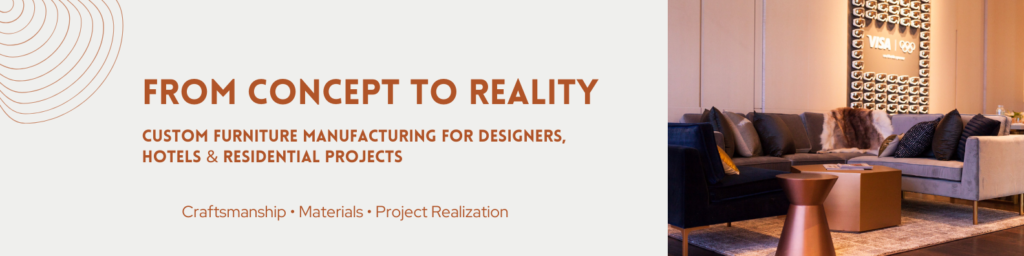
Interi Furniture specializes in custom furniture manufacturing for residential, hospitality, and commercial projects. Their experience in materials, craftsmanship, and project realization makes them a valuable resource for designers and buyers seeking tailored furniture solutions from China.