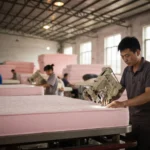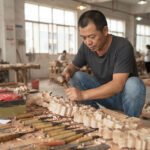


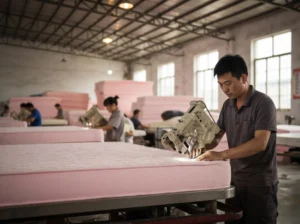


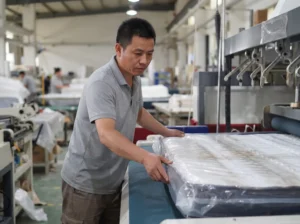





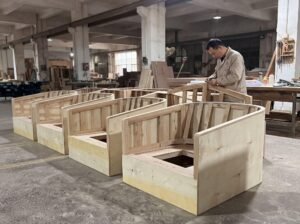
I have spent the last eighteen months in factory break rooms across Dongguan, Foshan, and Jinhua—drinking tea that was way too hot, listening to production managers talk about how they “handle” overseas buyers. What I learned was not cartoon-villain fraud. Most losses happen in broad daylight, because buyers believe things about solid wood that simply are not true—and sharp factories know exactly how to use those beliefs.
We dug into 31 solid-wood disputes from 2025 and 2026. Roughly eight out of ten buyers who lost money were not victims of theft. They were victims of their own assumptions. Solid wood myths—the seven I am about to walk you through—cost these people anywhere from five thousand to fifty thousand dollars a shipment. If you are importing furniture, you need to know how the game works.
Myth 1: “Solid Wood” Means 100% Solid Wood Everywhere
The words “solid wood” on a factory quote mean almost nothing by themselves. Under GB/T 3324-2024, China’s current standard for wooden furniture, there are four distinct categories, and three of them can legally be called “solid wood.” Only one is what you actually think you are buying.
● All-solid-wood furniture(全实木家具) . The real deal. Load-bearing parts are solid sawn timber, finger-jointed lumber, or laminated wood. No MDF hiding in the frame.
● Solid-wood furniture(实木家具). The main parts are solid, but the factory can veneer the surface with thin wood slices. Not all-solid.
● Solid-wood-veneered furniture(实木贴皮家具). MDF or plywood core, with a thin skin of real wood—maybe 0.6 mm thick.
● Board-wood furniture(板木家具). Solid frame, panel components made of veneered wood-based boards. Very common in wardrobes and beds.
A buyer from Rotterdam ordered forty “solid oak dining tables” at $1,850 each. The legs were solid oak. The tabletop? MDF core, 0.6 mm oak veneer. The factory’s defense was simple: the contract said “solid wood,” not “all-solid wood.” Under GB/T 3324-2024, they were technically correct. The buyer was out $13,500, plus a customs headache. The material cost gap between all-solid and board-wood construction? Forty to sixty percent. That is a lot of money to lose because of two missing words.
What to do: Write the exact GB/T 3324-2024 category into your contract. “All-solid-wood furniture (全实木家具).” Demand cross-section photos before production. For orders over $15,000, pay for pre-shipment inspection with destructive sampling on one spare unit.
Myth 2: Same Wood Name, Same Material, Same Value
This one hurts because it sounds so reasonable. You ask for oak. You get oak. What is the problem? The problem is that “oak” is not a scientific name. It is a trade name. And in the wood business, trade names are about as precise as asking for “red wine.”
● “Oak” that is actually rubberwood (Hevea brasiliensis). Janka hardness around 960–1,100 lbf versus white oak at 1,360. Price? Twenty-five to thirty-five percent of real white oak. Sold as “Asian oak” or just “oak.”
● “Walnut” that is not Juglans nigra. South American walnut—Juglans neotropica—is softer, lighter, and costs roughly a third to half the price of North American black walnut. A factory in Zhejiang once told me, straight-faced, that “walnut is walnut.” Technically, yes. Financially, no.
● “Ash” that is Chinese ash (Fraxinus chinensis) instead of American white ash (Fraxinus americana). Not bad wood. But not the same wood.
A US retailer ordered walnut bedroom sets at $2,400 per set. He assumed North American black walnut. The factory delivered South American material. The wood was softer, the grain more open, and his resale value dropped $800 per unit. Total hit: $18,000. The contract said “walnut.” Not “Juglans nigra.” Not “North American origin.” Just “walnut.”
Our 2025–2026 data shows that substituting rubberwood for white oak can cut a factory’s material costs by sixty-five percent. Swapping South American for North American walnut saves fifty-five percent. These are business models, not mistakes.
What to do: Your contract needs the scientific name—the binomial. Quercus alba. Juglans nigra. Add origin. “FAS-grade Quercus alba from North America.” For anything over $10,000, get a wood species ID report from an accredited lab. DNA barcoding costs a few hundred dollars. It is cheaper than one bad chair.
Myth 3: FAS Grade Means the Same Quality at Every Factory
FAS—Firsts and Seconds—is the top grade under NHLA rules. But here is what most buyers miss: FAS is a minimum-yield standard, not a uniform quality guarantee. The NHLA rule says an FAS board must yield 83.3% to 100% clear-wood cuttings on both faces. Minimum cutting size: 3″ by 7′ or 4″ by 5′. That is a wide range. An FAS board at the bottom—short, narrow, peppered with the maximum allowed knots—is legally FAS. It is also a completely different animal from an FAS Select board at the top.
A QC engineer in Dongguan, twenty years in the business, told me: “Some factories buy FAS log-run mixed lots. Maybe eighty percent FAS, twenty percent F1F. They put the F1F on the back side, the underside, the inside of a drawer box. You see a perfect FAS face. You do not see the No. 1 Common hiding underneath.” The factory is not breaking the rules. They are bending them until they squeak.
The price gap between bottom-rung FAS and true FAS Select can be twenty to thirty percent. If a factory quotes FAS white oak at fifteen percent below market, they are buying the floor of the grade and hoping you do not know the difference.
What to do: Do not write “FAS” in your contract and call it a day. Write: “FAS, minimum 90% clear yield, 6 inches and wider, 8 feet and longer.” Reject FAS/1F unless you specifically agreed to it. Ask for photos of the actual rough lumber before it goes near a saw.
Myth 4: Heavier Wood Means Better Wood
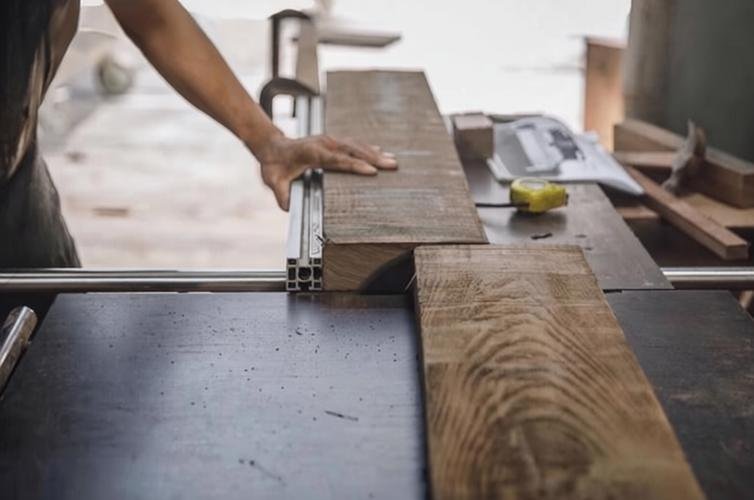
Buyers pick up a sample chair, feel the weight, and think: “This is dense. This is quality.” I have seen people do it a hundred times. And I have seen factories exploit it a hundred and one times. Weight is moisture. That is it. Wood that has not been properly kiln-dried can weigh fifteen to twenty-five percent more than the same species at the correct moisture content. A factory that skips the final drying cycle saves time, saves energy, and ships you a product that feels impressively dense—right up until it starts cracking.
A hotel group in Southeast Asia ordered two hundred oak dining chairs. The factory delivered at a price ten percent below the next bidder. The chairs felt solid. Heavy. Six months later, legs were splitting. Seat frames warping. We tested the wood on-site: sixteen to nineteen percent moisture content. The contract specified 8–12%. The factory had used air-dried stock, gave it a quick pass through the kiln, and called it done. They saved maybe $4,200 in drying costs. The hotel’s repair bill cleared $30,000.
Under GB/T 3324-2024, furniture wood should be dried to the equilibrium moisture content of the destination market. For most export destinations, 8–12% is the safe zone. Wood at 18% is a time bomb. It will shrink. It will crack. It will twist. And it will do all of that after you have already paid for it.
A properly dried white oak chair at 8% MC might weigh less than a rubberwood chair at 18% MC. But the oak chair is the better product by every metric that matters.
What to do: Put the MC range in your contract. Numbers: “8–12% MC, verified by pin-type moisture meter at three points per component.” Test the hidden spots—underside of the seat, inside the drawer box. Factories dry the surfaces; the core stays wet. Ask for kiln-drying certificates with batch numbers that trace back to your order.
Myth 5: Finger Joints and Glued Panels Are a Sign of Cheap Construction
Some importers pay a premium for “single-slab” tabletops—massive, wide boards with no visible joints. And do you know what happens when a factory hears that? They smile. Because they know exactly how to give you what you are asking for, and it is not what you think.
A Scandinavian buyer rejected a quote for finger-jointed oak panels. He wanted “solid single-piece tops.” The factory built a tabletop with a 12 mm oak veneer over an MDF core, then hand-scraped the surface to look like saw marks. The buyer paid a thirty-five percent premium for what he believed was authentic single-slab construction. When the core picked up humidity, the veneer cracked like an eggshell. Loss: $8,500 in returns, plus brand damage.
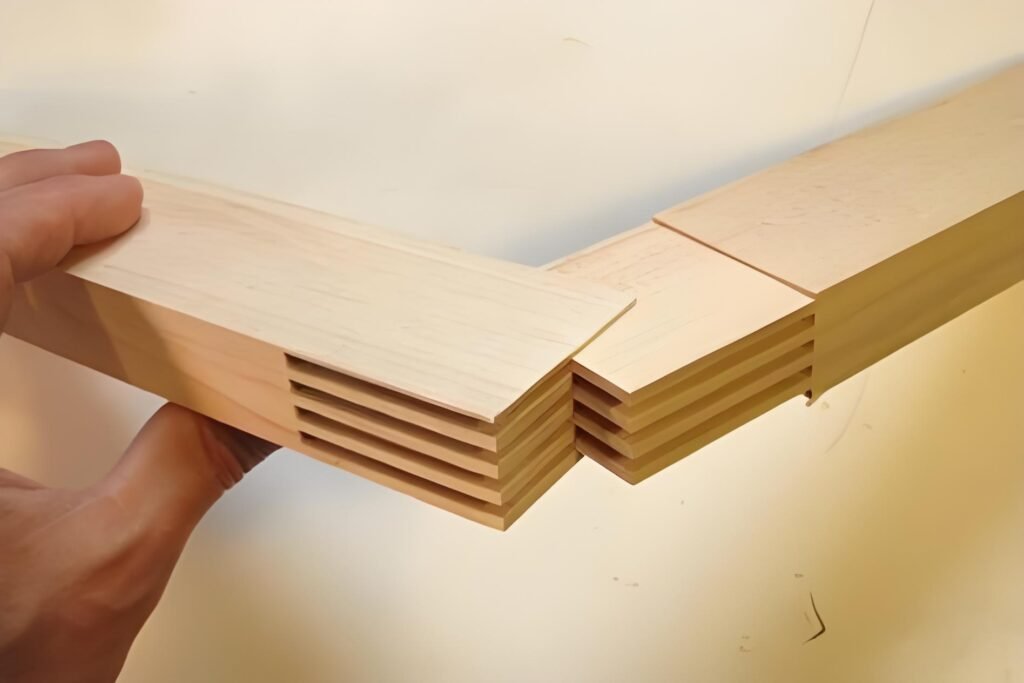
Here is the real wood fact too many buyers do not know: properly engineered finger-jointed lumber and edge-glued panels are not a compromise. They are an improvement. A 180 cm wide single slab of oak will almost certainly cup, crack, or twist within two years. An edge-glued panel of six to eight narrower boards, with alternating grain orientation, is dimensionally stable. It is stronger. It is what the industry has been doing for decades.
NHLA rules explicitly permit finger joints in FAS and better grades under the right conditions. The problem is not finger joints. The problem is factories that use your prejudice against finger joints to sell you something worse.
What to do: Do not reject finger joints or edge-glued panels. Reject factories that hide them. If you genuinely need a single-slab look, write it exactly: “Single solid board, no veneer, no substrate, maximum width 25 cm.” And accept that it will move. Wood moves. That is physics. For standard orders, specify: “Edge-glued solid-wood panel, maximum individual board width 12 cm, alternating grain orientation.”
Myth 6: Solid Wood Furniture Is Zero-Formaldehyde and Fully Eco-Friendly
Solid wood is natural. It comes from a tree. Trees do not emit formaldehyde. Therefore, solid wood furniture must be chemical-free. Right? Wrong. The wood is natural. Everything else is not. The adhesives in finger joints. The glue in the veneer. The stain. The sealer. The topcoat. That is where the formaldehyde and VOCs live. And that is where factories cut costs when you are not looking.
A German retailer launched a children’s furniture line marketed as “chemical-free natural wood.” The factory used a low-cost nitrocellulose lacquer that pushed formaldehyde levels past the legal limit. Under GB 18584-2024—the current Chinese standard for furniture emissions, effective July 2025—the formaldehyde limit for finished indoor furniture is 0.08 mg/m³. For any wood-based panel substrates, GB 18580-2017 sets the E1 limit at 0.124 mg/m³. The EU’s EN 717-1 chamber method uses 0.124 mg/m³ for E1, though the E.LES standard for particleboard and plywood is tighter at 0.08 mg/m³. The US follows ASTM E1333 or ANSI/BIFMA M7.1.
The German retailer’s batch tested at 0.12 mg/m³. Two hundred and forty units. Rejected at the port. Regulatory notification. Disposal fees. A supplier lawsuit still going. Total damage: over $45,000.
The factory did not set out to poison anyone. They bought the cheapest lacquer that looked good in the sample. The buyer did not specify a standard. He assumed “solid wood” meant “safe.” It does not.
What to do: Put the numbers in your contract. Not “eco-friendly.” Specific standards: “Formaldehyde ≤0.08 mg/m³ per GB 18584-2024; wood-based panel substrates ≤0.124 mg/m³ per GB 18580-2017 E1; TVOC ≤0.50 mg/m³ per GB 18584-2024.” Demand test reports from CMA or CNAS-accredited labs. Batch-traceable. For children’s furniture, add NAF—no added formaldehyde—or CARB Phase II / TSCA Title VI equivalent for any panels used.
Myth 7: The Price Only Depends on the Wood Species
A buyer gets three quotes for “American white oak bedside tables.” One is $185. One is $162. One is $148. The buyer picks the $148 option because, hey, it is the same wood. Right? Wrong. The species name is maybe thirty-five to forty-five percent of the factory’s direct material cost. The rest is drying, grade selection, joinery, finishing, and hardware. A factory that undercuts the market by twenty percent is not finding magical lumber. They are cutting corners you cannot see from a photograph.
A UK hotel chain sent me two bedside tables from different factories. Both quoted as “American white oak.” Side by side, the differences were obvious: Factory A at $185 used a 21-day controlled kiln cycle to 8% MC, FAS Select at 90% clear, edge-glued panels, three-coat water-based polyurethane, and undermount soft-close slides. Factory B at $148 used a 12-day rapid kiln cycle at 14% MC, FAS minimum at 75% clear, finger-jointed panels with 4 cm segments, two-coat nitrocellulose, and side-mount roller slides.
The hidden savings at Factory B: $28–32 per unit on drying, $15–18 on lumber grade, $8–10 on finishing, $6–9 on hardware. The buyer “saved” $37 per unit. Over four hundred units, that is $14,800 in apparent savings. But the product will last three to five years less. The defect rate will be higher. When you run the numbers on replacement costs and reputation damage, the “cheap” option is the expensive one.
This is the solid wood furniture China truth that too many buyers learn the hard way: the species name is the beginning of the conversation, not the end.
What to do: Ask for a cost breakdown. Species. Grade. Drying method. Panel type. Finish system. Hardware brand. A factory that cannot or will not give you this is a factory to avoid. Benchmark against NHLA lumber price indices. Any quote more than fifteen percent below the median is a red flag. Not a deal. A warning.
Three Stories from the Trenches
The Wardrobe That Was Not Solid. A US retailer ordered eighty “all-solid American black walnut wardrobes” at $2,250 each. His contract said “solid walnut.” No scientific name. No GB/T category. Testing showed MDF substrates with 1.2 mm walnut veneer on every panel. Only the frame and legs were solid. The buyer was out $18,000.
The Chairs That Cracked. A Middle East hospitality group bought 350 oak dining chairs at $145 each, ten percent below the next quote. Six months later, forty-two percent had frame cracks. On-site testing: 16–19% MC. The factory had used air-dried stock, run it through the kiln for a day or two, and shipped it. Repair and replacement costs: $31,000.
The Buyer Who Beat the System. An Australian importer runs a three-layer protocol: contract with scientific name, GB/T category, and NHLA grade minimums; pre-production photos of rough lumber with batch codes; third-party pre-shipment inspection with MC testing and destructive sampling. In 2025 and 2026, this caught three problems before shipment. Corrective actions cost $1,800. Losses avoided: an estimated $22,000.
Your One-Page Cheat Sheet
| Myth | What It Costs You | How They Do It | How You Stop It |
|---|---|---|---|
| “Solid wood” = 100% solid | \$10k–18k/batch | Veneer over MDF, board-wood hybrid | GB/T 3324-2024 category in contract; cross-section photos |
| Same name = same wood | \$8k–20k/batch | Rubberwood as oak, SA walnut as NA walnut | Scientific name + origin; species ID report |
| FAS = identical quality | \$5k–12k/batch | Bottom-tier FAS, F1F mixed in | “90%+ clear, 6″+ wide, 8’+ long”; rough-lumber photos |
| Heavy = better | \$15k–35k/batch | Skip drying, ship wet wood | Pin-meter MC test; kiln certificates with batch numbers |
| Finger joints = cheap | \$5k–10k/batch | Sell veneer-MDF as “single slab” | Accept engineered panels; reject hidden substrates |
| Solid wood = zero emission | \$20k–50k/batch | Cheap lacquer, non-compliant adhesives | GB 18584-2024 / EN 717-1 / ASTM E1333 limits; lab reports |
| Price = species only | \$8k–15k/batch | Cut drying, grade, finish, hardware | Detailed cost breakdown; >15% below median is a red flag |
Before You Sign: The Eight Things That Must Be in Your Contract
I have seen too many one-page purchase orders that say “solid oak dining table, QTY 50, $1,500 each.” That is not a contract. That is a wish.
1.Material category. GB/T 3324-2024 classification. All-solid. Solid. Veneered. Board-wood. Pick one. Write it down.
2.Wood species. Scientific name. Binomial nomenclature. Origin. Not “oak.” Quercus alba. From North America.
3.Lumber grade. NHLA grade. Minimum clear-yield percentage. Minimum width and length. Not just “FAS.”
4.Moisture content. Target range. Test method. Verification points. “8–12% MC, pin-meter, three points per component.”
5.Environmental compliance. GB 18584-2024 (≤0.08 mg/m³ formaldehyde, ≤0.50 mg/m³ TVOC) for finished furniture. GB 18580-2017 E1 (≤0.124 mg/m³) for any wood-based panel substrates.
6.Panel construction. Edge-glued, finger-jointed, or single-slab. Max board width. Glue type.
7.Acceptance criteria. Color variation tolerance. Knot size and location. Mineral streaks. Dimensional deviation. If you do not write it, the factory decides.
8.Liability and remedy. Defect rate threshold for rejection. Penalty for material substitution. Arbitration jurisdiction. Who pays when things go wrong?
Risk Control by Order Size
Small orders—under $15,000. Use the eight-item checklist as your contract appendix. Request pre-production photos with batch codes. Buy a $60 pin-type moisture meter and test three random units when they arrive. If it is a new factory, order one sample for destructive analysis before you commit to bulk.
Medium orders—$15,000 to $80,000. Add a third-party pre-shipment inspection. Budget 1.5 to 2.5 percent of order value. Require kiln-drying certificates and SDS sheets for all finishes. Do random cross-section sampling on two to three percent of units. Hold back ten percent of payment until sixty days after delivery.
Large orders—over $80,000. Put a QC representative in the factory during production. Not after. During. Mandate wood-species ID reports from accredited labs for each batch. Use AQL sampling per GB/T 2828.1-2012 with tightened inspection. Set up a bonded warehouse hold: goods do not leave the port until independent lab results confirm MC, species, and emission compliance.

FAQ: The Questions We Get Every Week
Q: Does FSC certification guarantee I am getting real solid wood?
A: No. FSC tracks the chain of custody. It certifies that the wood came from a responsibly managed forest. It does not certify what is inside the box. A veneered-MDF product can carry FSC certification if the veneer trace is clean. Always verify the GB/T 3324-2024 category separately.
Q: Can I tell solid wood from a photograph?
A: Not reliably. Modern rotary-cut veneers and high-quality printed papers replicate grain almost perfectly. Cross-section inspection or destructive testing is the only way to be sure. Photographs lie. Physics does not.
Q: The factory says “industry standard allows” their substitution. Is that true?
A: Industry practice and your contract are two different things. If your contract specifies GB/T 3324-2024 “all-solid” and they deliver board-wood, that is a breach. Full stop. Document everything. If the value is over $10,000, get a Chinese trade lawyer involved early.
Q: What does a real third-party solid-wood inspection cost in China?
A: For a standard container with MC testing, species verification, and cross-section sampling, plan on $800 to $1,500 per inspection. Location matters—Guangdong and Fujian tend to be cheaper than remote Zhejiang or Jiangsu factories. On a $50,000 to $80,000 order, that is one to two percent. Cheap insurance.
Q: Should I avoid factories that use finger-jointed panels?
A: Absolutely not. Finger-jointed and edge-glued panels are standard, sustainable, and technically superior for stability. Avoid factories that hide the use of engineered panels while charging you for “single-slab solid wood.” The panel type is not the problem. The deception is.
Recommended Resource
Interi Furniture specializes in custom furniture manufacturing for residential, hospitality, and commercial projects. Their experience in materials, craftsmanship, and project realization makes them a valuable resource for designers and buyers seeking tailored furniture solutions from China.