







I have watched buyers lose their shirts in Guangzhou. Not metaphorically—actual money, actual containers, actual furniture that arrives looking like it was built by a different species than the one that made the booth sample.
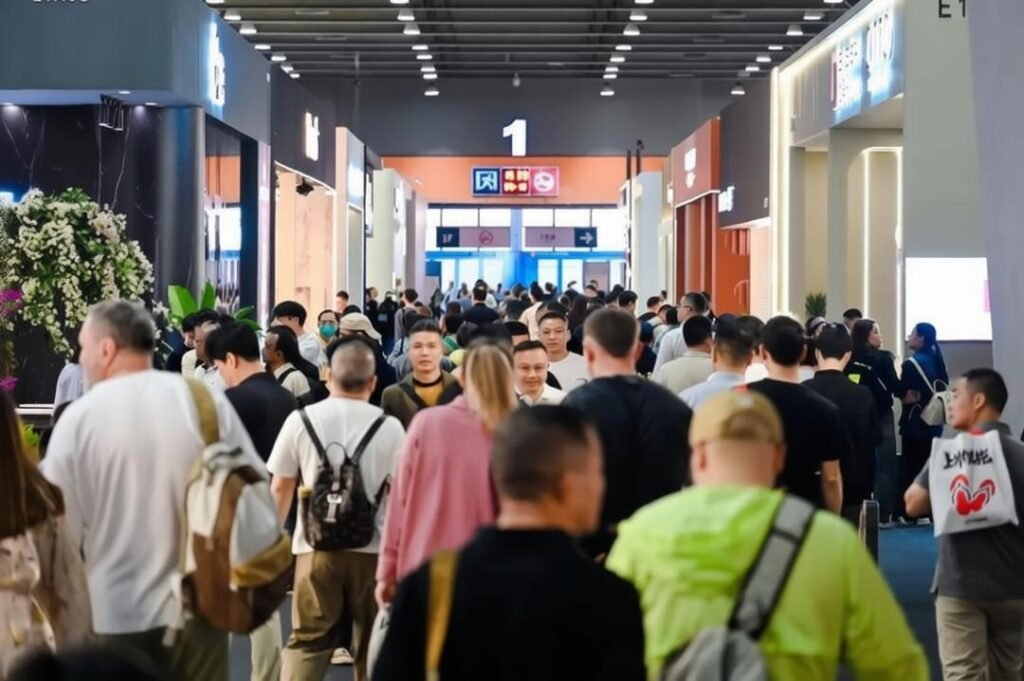
Every March and September, the same scene repeats. Planes full of buyers land at Baiyun. They check into their hotels. They hit CIFF with a notepad and a dangerous assumption: nice booth, must be a real factory. After tracking 29 factories across four fairs from 2025 into 2026, I can tell you that assumption is the most expensive thought you will have all year.
The booth is not the factory. The booth is a movie set. The factory is what happens when the cameras stop rolling, and most buyers never stick around for the credits.
That is why pre order inspection—walking the actual production floor before your pen hits the purchase order—is the only thing that separates a real supplier from an expensive mirage. This article breaks down the six ways the booth lies to you, hands you a dirty-boot checklist you can actually use, and explains why see the floor beats every video call, audit report, and glossy PDF you have ever received.
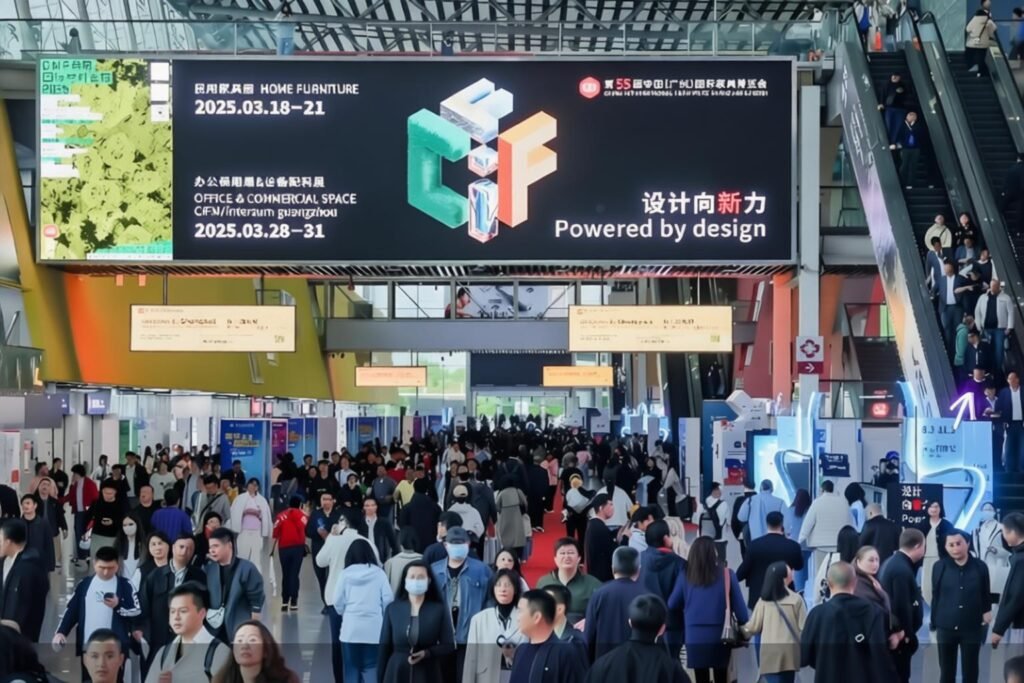
The Booth Is Not the Factory: Why Chinese Fair Factory Visit Still Matters
Here is the trap. CIFF checks your business license. They check that you paid for the space. They do not check whether you own a CNC machine, whether your workers show up sober, or whether your “factory” is a trading company with a rented sign and a warehouse full of other people’s goods.
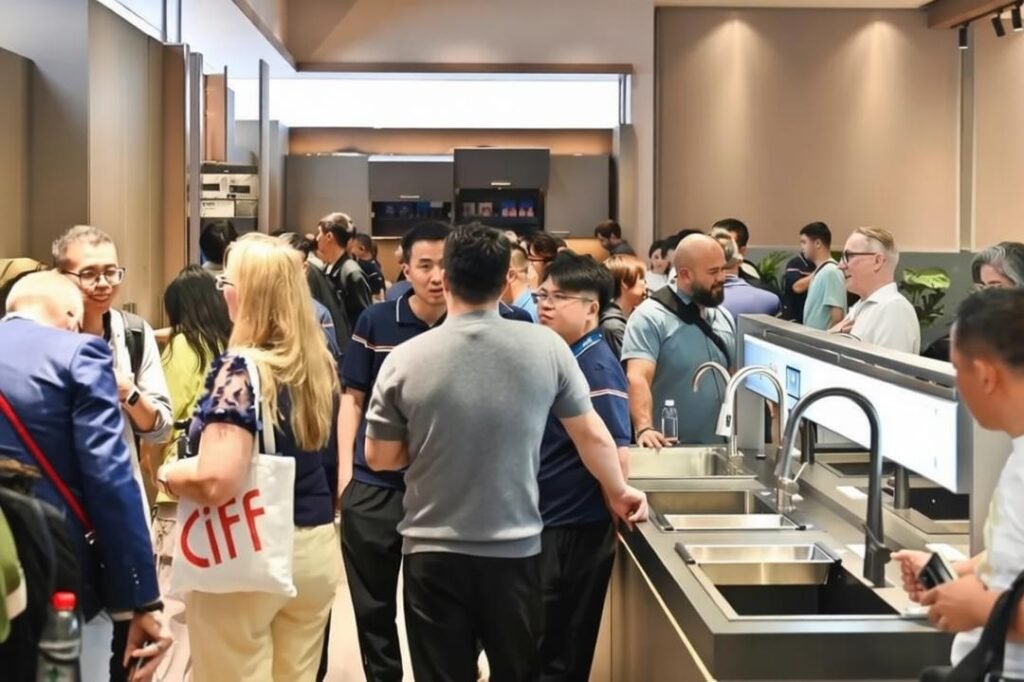
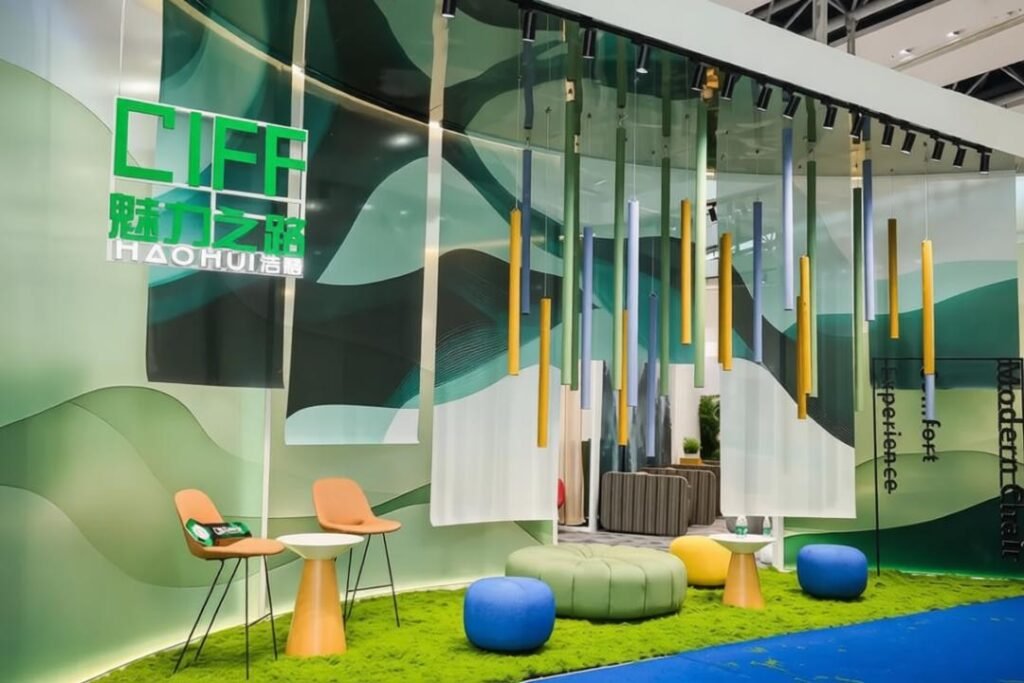
In spring 2026, my team walked into a 200-square-meter booth in Area 9.3. Marble floors. LED walls. A sofa sample that looked like it belonged in a Milan showroom. We asked the rep a simple question: “Which line produced this piece?” He smiled and changed the subject. Later that week, we traced the actual facility. It was a three-story concrete building in Sanshui with no climate control and one working spray gun.
This is not fraud. Not legally. It is just how the game is played. The booth sample was built by a prototype shop in Foshan with machines the real factory cannot afford. If you order 300 units based on that sample, you are not buying from the prototype shop. You are buying from the people who vacuumed the carpet.
That gap is why a Chinese fair factory visit is not a luxury. It is survival.

Booth vs Reality China: Six Gaps That Cost You Money
If you want to stop funding other people’s mistakes, learn to read the booth as theater. These six gaps are the ones that show up in my inbox every single month.
1. The Sample Was Never Yours to Begin With
March 2026. A Midwest buyer I know walked into a booth in Area 9.3. Full-grain leather sectional. Hand-stitched seams. Solid oak legs. Price was almost too good. He signed for 300 units on the spot.
Sixty days later, the pre-shipment sample arrived. Corrected-grain leather. Machine stitching. Rubberwood legs with an oak veneer wash. The factory’s explanation? “The display piece was from our partner workshop. Mass production uses our standard materials.”
Standard materials. That is the phrase that should make your stomach turn.
What to do: Ask the rep directly—no smiles, no handshakes—whether that exact piece came off their standard line with their standard materials. If they hesitate, you have your answer. Demand that your pre-production sample use the exact material batch intended for your order. If they cannot name the leather supplier and the material code, walk.
2. The Certificate on the Wall Belongs to Someone Else
Small factories love to frame ISO 9001, FSC, or BSCI certificates like family photos. What they forget to mention is that the certificate belongs to a parent company, a sister factory, or a facility three provinces away.
September 2025. A dining-chair exhibitor showed us an FSC Chain of Custody certificate. We wrote down the number. Verified it that night. Belonged to a plywood mill in Guangxi, 400 kilometers from the booth. The exhibitor had never seen that mill.
What to do: Photograph every certificate. Verify the number on the issuer’s database that night, not when you get home. Check that the factory name and address match the business license of the person you are talking to. During your visit, ask for the original hard copy. Not the laminated booth printout. The original.

3. “Annual Capacity: 80,000 Units” Means “If We Work Overtime and Outsource Half”
Booth banners love big numbers. They sound impressive until you stand in the workshop and count heads.
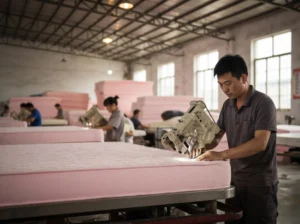
We audited a factory in Dongguan that claimed 80,000 units per year. They had two production lines. Fifteen workers per shift. On a perfect day, they might push out 120 units. Do the math. Even with overtime, even with weekends, their own lines top out around 30,000. The rest? Farmed out to workshops in surrounding towns with no quality control, no traceability, and no idea who you are.
What to do: Ask for the last six months of production logs. Not a summary. The actual logs. Count the active lines yourself. Estimate daily output. Then ask the question they hate: “What percentage of your current orders are produced in-house?” If they say 100% for a complex upholstered product, they are either lying or they are tiny.
4. “We Can Do That” Means “We Have Heard of It”
Fair sales reps are trained to say yes. Mortise-and-tenon? Yes. Water-based lacquer? Yes. Custom foam density? Yes. What they do not say is that these processes exist only in the prototype room or for orders large enough to buy a new machine.
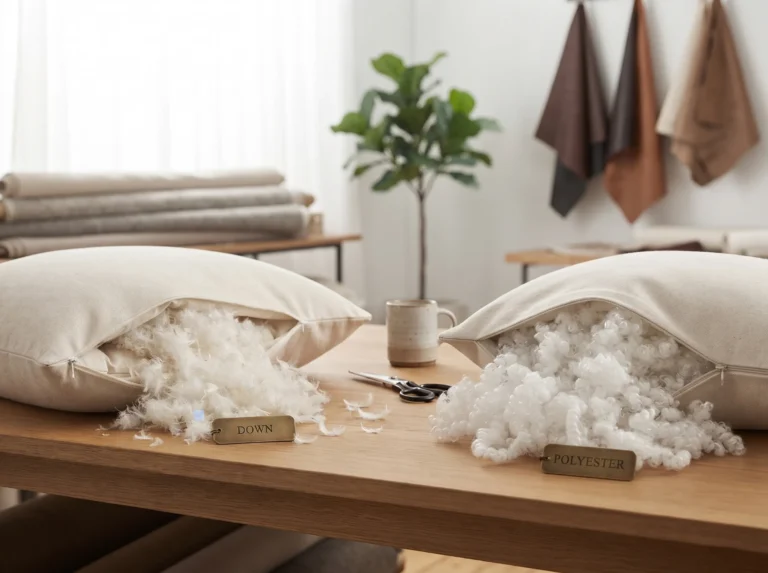
In mass production, the factory defaults to what is fast. Screws instead of dowels. Solvent-based coatings instead of water-based. Foam that costs half as much and lasts half as long.
What to do: Do not ask if they can do it. Ask to see a product currently on the line that uses the exact process you require. Not a photo. The actual piece, half-finished, with dust on it. Request a written process specification sheet as part of your PO. Not a verbal nod. A sheet. When you walk the finishing area, look at what is actually being sprayed. If every piece is getting solvent-based topcoat but the rep promised water-based, the gap is staring you in the face.

5. The Person Making Promises Has Never Built Anything
At major fairs, up to 60% of booth staff are temporary hires or dedicated trade-show teams who have never walked the workshop floor. They memorize specs from a sheet. When they tell you “lead time is 45 days,” they are reading from a table. When they promise “we can lower the arm by 3cm,” they have no authority to confirm whether the workshop can retool or whether it will add two weeks you were never told about.
What to do: Ask a question they cannot memorize. “What is your primer drying time before topcoat?” or “What tolerance does your CNC mortiser hold?” If they freeze—and they usually do—insist on a call with the production director or the factory engineer. Never accept a delivery date from booth staff without written confirmation from the operations side. Ever.
6. “Just 40 Minutes Away” Means “Two Hours in Traffic, If We Are Lucky”
“Our factory is just 40 minutes from here.” Sure. At 2 AM. On a Tuesday. With no traffic.
In reality, the facility is in Shunde, Sanshui, or Dongguan. Ninety to 120 minutes in Guangdong traffic. Some exhibitors register under a Guangzhou address while the actual production is in Jiangxi or Hunan, hundreds of kilometers away. You cannot drop in. You cannot check progress. You are flying blind.
What to do: Get the exact address before you book your flight. Verify it on Baidu Maps. Cross-check it against the business license. If the factory is more than two hours away, factor that into your plan. A distant factory is harder to supervise and more expensive to revisit. Distance is risk.
Why See the Floor Beats Every Report and Video Call
Some buyers ask whether video calls, third-party reports, and spec sheets have made the physical furniture factory audit China unnecessary. They have not. The floor holds information that cannot be transmitted digitally.
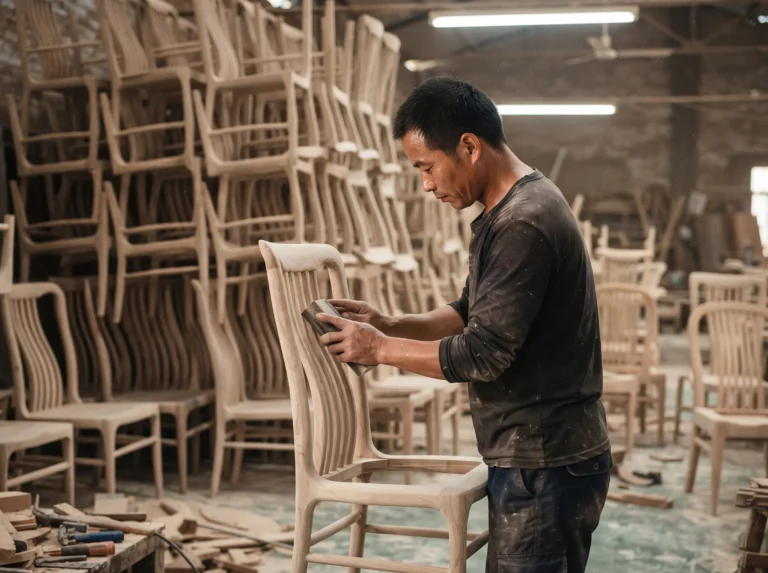
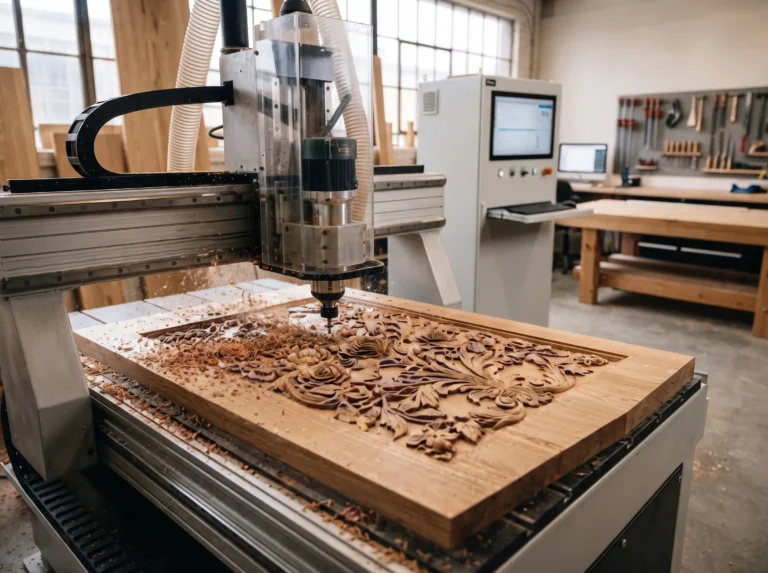
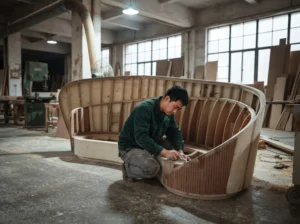
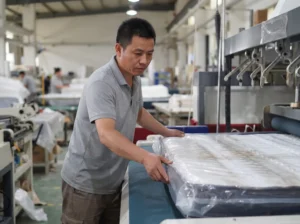
A factory can email you photos of a brand-new CNC router. The photos will not tell you whether the machine is actually running, whether the operator knows the control panel, or whether it is covered in dust because it has sat idle for a month. When you stand in the workshop, you see which machines are humming, which are cold, and whether the operator is checking measurements or just pushing buttons.
A factory can claim “120 workers.” On the floor, you count heads. You see whether they are busy, whether the workflow makes sense, or whether 30 of them are standing around because raw materials never showed up. Idle labor is a sign of poor planning or cash-flow trouble.
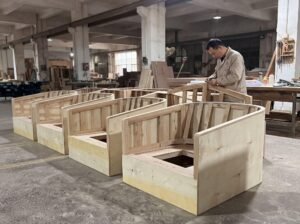
A factory can say it uses FSC-certified oak. The lumber yard tells the truth. If you see only rubberwood planks, you have your answer. A well-organized warehouse with clear inventory tags and FIFO rotation suggests the factory will handle your order with the same discipline.
Quality checkpoints are binary. A factory either has a dedicated QC station with calipers, moisture meters, and color-matching lights, or it does not. You cannot fake a room that does not exist. When you walk the floor, you see whether inspection happens at incoming material, between stages, at final pack, or not at all.
Environmental compliance is also visible. If there is no dust collection, no spray booth with proper ventilation, and workers are spraying in the open air without masks, these are not just ethical problems. They are operational risks. A factory that cuts corners on worker safety is probably cutting corners on your glue curing time and your lacquer thickness.
The Dirty-Boot Checklist: 12 Things to Verify Before You Sign
This checklist is built for orders between $50,000 and $500,000. For smaller orders, cut back, but do not skip the first four.
Production Floor Reality
1.Active machinery. Count what is running versus what is installed. Look for dust, rust, idle units. If more than 30% of major machines are sitting cold or poorly maintained, you are looking at a factory that cannot handle your volume.
2.Worker skill. Watch hand-eye coordination, speed, and whether a supervisor is actually correcting mistakes. If workers look untrained or no supervisor is anywhere in sight, quality is an accident, not a system.
3.Current production. Note what is actually on the line. If the factory is stamping metal frames while you are ordering upholstered sofas, they are learning on your dime.
4.Safety basics. Clear walkways, working fire extinguishers, dust extraction, basic PPE. If safety equipment is missing or blocked, this factory cuts corners everywhere.
Quality Control System
5.Incoming material check. Ask to see the IQC station. Are moisture meters, calipers, and color swatches actually in use? If there is no dedicated area or no records from the last 30 days, materials are not being checked.
6.In-process inspection. Look for checkpoints between stages. Are defects marked and pulled aside? If there is no visible separation of defective units from good ones, bad products are shipping.
7.Final inspection. A final QC area with adequate lighting. Ask for a random AQL record from a recent order. If they cannot produce one for a similar product, they are not inspecting.
8.Defect handling. Ask how they handle a bad batch. Can they trace it to a worker, machine, or material lot? If the answer is “we just fix it” with no system behind it, they are not fixing anything.
Supply Chain & Capacity
9.Raw material stock. Check inventory depth. Are core materials—wood, foam, fabric—stocked for at least two weeks? If the warehouse is nearly empty or only holds two to three days of material, this factory lives hand-to-mouth.
10.Component storage. Hardware, springs, mechanisms. Are they organized, labeled, and protected from moisture? If critical parts are missing or thrown in a chaotic corner, your order will wait for parts.
11.Outsourcing honesty. Ask directly: “What percentage of this order would you outsource?” Request names. If they refuse to name subcontractors or claim zero outsourcing for a complex product, they are hiding something.
12.Delivery tracking. Production schedule board or ERP screen. Are orders tracked by stage in real time? If scheduling is done on paper with no digital trail, your delivery date is a guess.
Compliance & Management
13.Environmental gear. Dust collectors, spray booths with water curtains, waste separation. If sanding dust is floating freely or spray is done in open air, this factory is not compliant and your products will show it.
14.Labor conditions. Break areas, dormitories if visible, worker age. If conditions look unsafe or you see underage workers, walk away. This is not just ethics. It is liability.
15.Document check. Business license, export license, claimed certifications—originals, not copies. If originals are unavailable or the license address does not match the facility, you are not talking to who you think you are.
16.After-sales contact. Written warranty policy and a specific contact for quality complaints. If there is no written policy or the only contact is a sales rep’s WeChat, you have no recourse when things go wrong.
Note: Items 1–4 are mandatory for every order size. Items 5–16 should scale with your order value. For orders under $20,000, focus on 1, 2, 9, and 11.
Three Real Cases from the 2026 CIFF Season
These come from direct interviews and factory visits. Names and products are changed, but the numbers are real.
Case 1: The $180,000 Sofa That Never Had a Chance
A Midwest retailer I know walked into a CIFF booth in March 2026. Full-grain leather. Hand-stitched seams. Solid walnut legs. Price was sharp. He signed a $180,000 PO on the spot, swept up by the booth’s luxury fit-out and the rep’s confidence.
Sixty days later, the pre-shipment sample arrived. Split-hide leather. Foam density dropped from 45kg/m³ to 28kg/m³. Legs were rubberwood with a walnut stain. He flew to Guangdong for an emergency visit. The “factory” was 4,000 square meters with 1.5 active lines. The rep admitted the booth sample was made by a prototype shop in Foshan. The actual factory had never produced a full-grain leather sofa at that price.
He cancelled 70% of the order. Sunk cost: $12,000.
The lesson: A booth sample is a prop. Verify production capability on the floor before you sign.
Case 2: The Hotel Project That Cost $45,000 in Air Freight
A European hospitality team placed a $340,000 contract for 800 guest-room sets at CIFF September 2025. The factory claimed 60 days and showed photos of a “50,000-square-meter facility.” The team skipped the visit because the booth looked impressive and the price was 8% below the next bidder.
Day 55, the factory asked for a 30-day extension. The buyer sent a local agent. Real facility: 12,000 square meters. Only 40% of the order was being made in-house. The rest had been farmed out to three small workshops in Jiangxi with no quality control. Wood moisture content in the outsourced units ranged from 14% to 18%, well above the 10% contract spec.
They air-freighted 30% of the order to meet the hotel opening. Cost: $45,000 in unplanned logistics.
The lesson: Capacity claims and facility photos are just data points until verified. A pre order inspection on day one would have caught the outsourcing ratio and the real facility size.
Case 3: The Buyer Who Never Gets Burned
A procurement director for an Australian furniture chain has attended CIFF for 15 straight years. His rule is simple: the booth is for browsing, never for buying. He shortlists 15 to 20 suppliers at the fair, then spends the next week visiting 4 to 5 factories per day with the checklist above. Over five years, this has filtered out roughly 80% of his initial contacts. The 20% that remain deliver on time 99.2% of the time, with a defect rate below 1.5%.
His trip costs about $8,000 all-in. His estimated annual savings from avoided failures, reworks, and delays exceed $400,000.
The lesson: The cost of a visit is small change compared to the cost of a failed order. Experienced buyers treat the floor as the final gate.
Three Fallback Options When You Cannot Fly
Not every order justifies a Chinese fair factory visit. If you cannot get on a plane, here are three alternatives. Each has a use case and real limitations.
Third-Party Factory Audit
Use this for orders above $100,000 or when qualifying a new supplier. Hire an accredited firm—SGS, Bureau Veritas, Intertek, or a reputable local auditor. The auditor spends one day on-site, checks documents and machinery, and delivers a written report with photos.
The catch: it is a snapshot. A factory can clean up for one day. It does not show long-term workflow patterns or hidden outsourcing. Budget $800 to $1,500.
Structured Video Factory Tour
Use this for re-orders or mid-sized orders ($30,000–$100,000) where a full audit is not in the budget. Do not accept a generic “factory video.” Send a specific shot list: five minutes of the active production line for your product category, two minutes of the raw material warehouse, three minutes of the QC station, and a pan across the certificate wall. Ask for one continuous take, with a newspaper held up to the camera at the start to prove the date.
The catch: video hides plenty. A factory can walk you through a “showroom workshop” while the real production happens elsewhere. You cannot verify material grades or test equipment calibration through a screen.
Small-Batch Trial Order
Use this for new suppliers with low trust or orders below $50,000. Place a 10% to 15% trial order first. Inspect the pre-production sample, request in-process photos if possible, and check the final shipment carefully. If the trial passes, scale to the full order. This is the most expensive option per unit, but the cheapest in terms of risk-adjusted cost.
The catch: a factory can pour extra effort into a small trial to win your big order, then degrade quality on the main batch. And if the trial fails, you have lost time.
The Workflow That Actually Works
Here is what 18 years of sourcing experience looks like in practice. It is designed to cut trade show sourcing risks without wasting your time.
Days 1–3: Fair Contact. Collect catalogs, photograph samples, note claimed certifications and capacity. Do not discuss detailed pricing. Do not sign anything. Get the exact factory address and business license number.
Days 4–7: Initial Screening. Back at your desk, verify the business license and map the factory address. Cross-reference certifications. Send a preliminary RFQ to 5 to 8 shortlisted suppliers. Drop anyone who refuses to give a factory address or quotes 30% below the median with no explanation.
Days 8–20: Factory Visit or Audit. For your top 2 to 3 candidates, book a visit or arrange a third-party audit. Use the checklist. If a factory says it is “too busy” for a visit, remove it. A factory that cannot spare two hours for a potential $100,000 client is not a partner.
Days 21–45: Trial Order. Place a trial order at 10% to 15% of projected volume. Specify every material, dimension, and finish in writing. Do not rely on the booth sample as your standard. Use a signed pre-production sample.
Days 46–90+: Full Production. If the trial passes, release the full PO. Run a pre-shipment inspection (PSI) for the first 2 to 3 orders. Once the supplier has proven consistency over 12 months, you can ease back on inspection frequency.
One hard rule: Never sign a large PO at the fair. The booth is a marketing environment, not a negotiation environment. The lighting, the music, the time pressure, and the free coffee are all designed to make you say yes. Wait until you have seen the floor.

FAQ: The Questions Buyers Actually Ask Me
Q1: How much does a typical factory visit in Guangdong cost?
Plan one full day per factory, including travel. From Guangzhou to Shunde or Dongguan, figure 2 to 3 hours each way. A decent interpreter runs $80 to $120 per day. All-in, you are looking at $250 to $400 per factory including transport and meals. For a 3-day trip hitting 4 to 5 factories, budget $1,500 to $2,000 before your flight.
Q2: What is the single biggest red flag?
Refusal to show the production floor. If they steer you to a showroom, claim the workshop is “under renovation,” or say the owner is not around to authorize access, leave. Transparency is not optional.
Q3: Can I trust a factory that has exhibited at CIFF for over a decade?
Longevity helps, but it does not guarantee anything. A factory can spend ten years doing safe, high-volume domestic orders while treating export work as a side gig. Check their export track record specifically, not just their fair history.
Q4: Is a six-month-old third-party audit report still good?
It is a useful reference, not current proof. Management changes, key clients leave, and production models shift fast. For any new order over $100,000, get an audit from the last 90 days or go yourself.
Q5: What if the factory is solid but the booth sample was outsourced?
Outsourcing a display sample is common and not automatically dishonest. The problem starts when the factory implies it can replicate that sample in mass production. Ask them to produce a pre-production sample using their own lines and standard materials. If the gap is acceptable, move forward. If not, walk away or renegotiate.
Recommended Resource
Interi Furniture specializes in custom furniture manufacturing for residential, hospitality, and commercial projects. Their experience in materials, craftsmanship, and project realization makes them a valuable resource for designers and buyers seeking tailored furniture solutions from China.