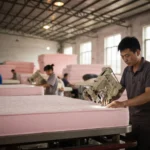


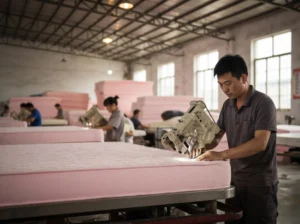

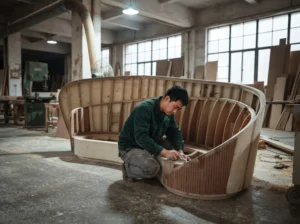
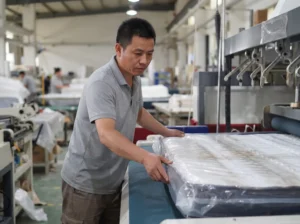





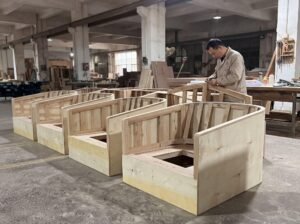
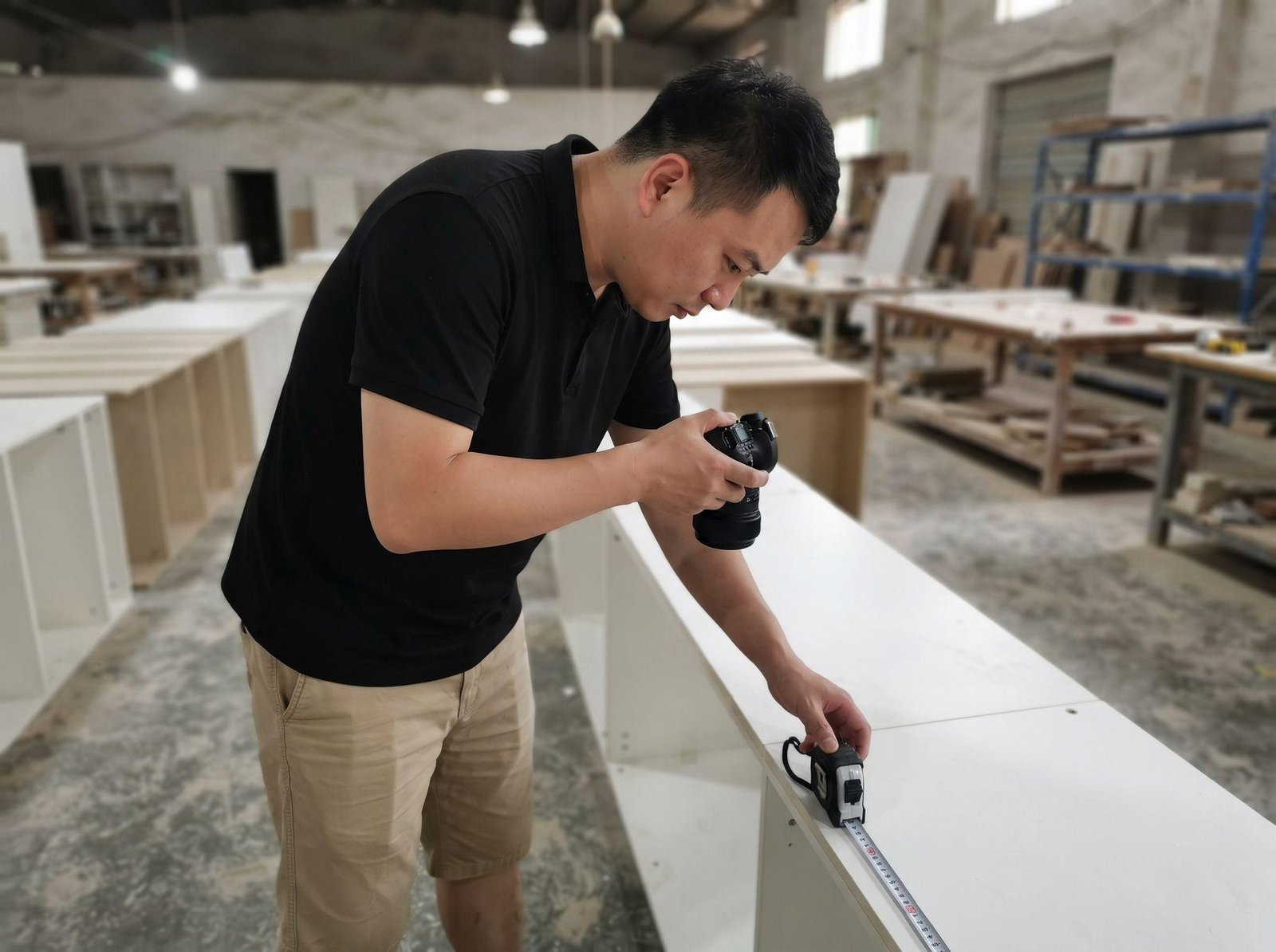
If you spend over $100,000 a year on furniture from China, you have probably asked yourself the same question we hear every week: should we keep paying for third party QC furniture inspection, or send our own team to do self inspection furniture? The honest answer is neither pure option works well at scale. After walking factory floors in Longjiang, Houjie, and Nantong for over a decade, we have seen both models fail spectacularly — and we have seen a third approach that most buyers never consider. This article breaks down the real cost structure, the blind spots each model hides, and a quality control model that actually protects your margin.
The Third-Party QC Myth: What Third Party QC Furniture Inspection Actually Misses
Most buyers treat third-party inspection like an insurance policy. You pay SGS, Bureau Veritas, or Intertek a few hundred dollars per container, get a PDF stamped “Pass,” and sleep better. But here is what the report does not tell you. We have sat in Longjiang factories where inspectors from well-known agencies spent 45 minutes on a 200-piece sofa order, checked five cartons, and left. The client in Miami received a container where 18% of the dining chairs had cracked frames hidden under upholstery. The report said “Acceptable.”
The uncomfortable truth? Third party QC furniture inspection has a real-world miss rate between 15% and 25% for furniture, based on feedback we have collected from over thirty importers across the US and Europe. Why? Furniture is not electronics. You cannot power it on and run a diagnostic. A sofa frame can be rotten inside and look perfect outside. A dining table’s moisture content needs a pin meter, not a clipboard. Most third-party inspectors are generalists rotated between textiles, toys, and furniture in the same week. They know the AQL tables by heart. They do not know that Foshan factories often swap veneer grades between morning and afternoon shifts.
Smaller agencies are even riskier. We have heard — and this is based on direct industry feedback, not rumor — that some local inspection firms in the Pearl River Delta charge $80 per man-day and have relationships with factory owners that predate your purchase order. One buyer in Germany told us his inspector’s report photos were taken in the factory’s showroom, not the production line. The actual goods shipped from a different warehouse entirely. When you pay $300 for a container inspection, you are buying a document, not a guarantee.
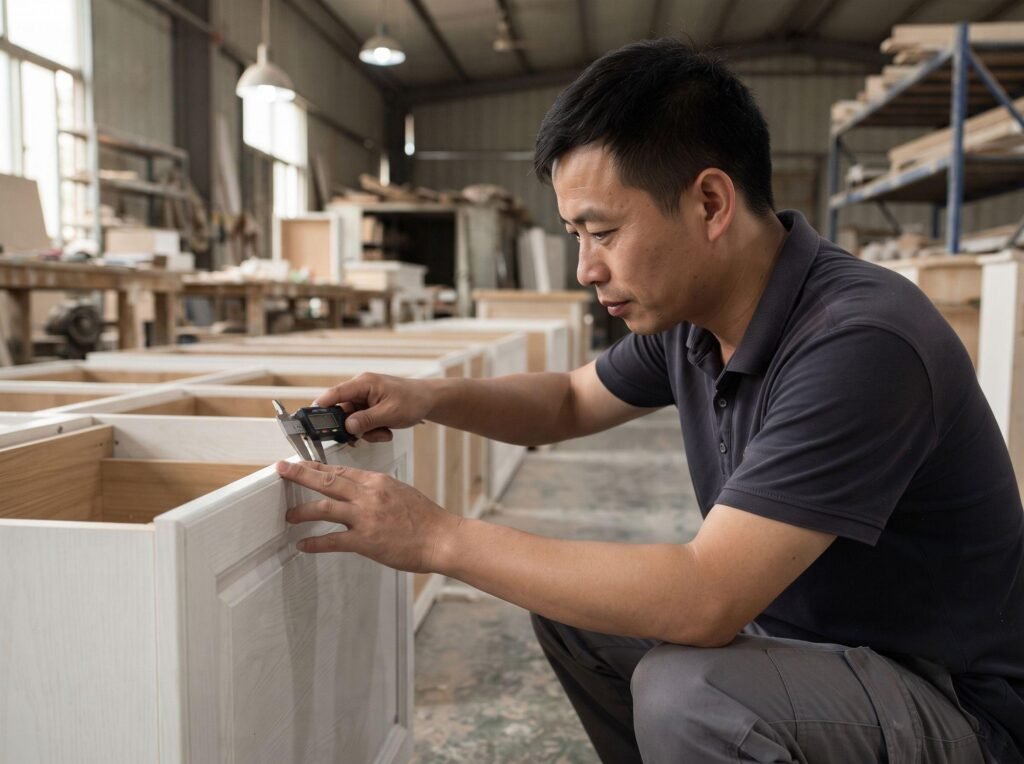
The Hidden Cost of Self Inspection Furniture: Why Flying Your Own Team to China Is Expensive
So buyers pivot to self inspection furniture. Send your own quality manager. Fly them to China for a week. Walk the floor yourself. It feels safer because you control the eyes on the ground. But the math falls apart quickly. A round-trip flight from New York to Guangzhou runs $1,200 to $2,500 depending on season. Add hotels in Foshan or Dongguan at $80 to $150 per night. Meals, ground transport, visas, and the salary you are paying that employee while they are not at their desk. One week on the ground easily costs $4,000 to $6,000.
And that is just the invoice. The real cost is what your quality manager cannot do. One person cannot cover three factories in different cities in five days. We have watched buyers fly in, spend two days at their main supplier, skip the secondary factory entirely because “there was not enough time,” and discover three months later that the secondary factory shipped defective outdoor tables. Your employee also lacks the specialized tools. Do they carry a handheld moisture meter for solid wood? A fabric abrasion tester? A color-matching light booth? Most do not. They rely on the same visual checks the third-party inspector uses, just with more jet lag.
Then there is the relationship problem. Your quality manager shakes hands with the factory boss, shares dinner, and by day three they are on a first-name basis. This is not corruption. It is human nature. We have seen honest, well-meaning buyers soften their standards because “the factory has been so helpful” or “they are clearly trying their best.” Self inspection furniture sounds like the gold standard. In practice, it often becomes a very expensive social visit with a checklist.
Why Furniture Needs a Different Quality Control Model
Here is where most QC discussions go wrong. They treat furniture like a smartphone or a garment. It is not. Furniture has four structural features that make quality control uniquely difficult — and these features determine which quality control model you should actually use.
First, concealment. You cannot tear open every sofa to inspect the internal frame without destroying the product. A sectional might look flawless on the outside while the plywood frame inside is held together with staples instead of screws. We have seen a $4,000 Italian-design replica sofa from a Nantong factory collapse after six months because the internal webbing was replaced with cheap elastic bands. No surface inspection catches that.
Second, material variance. Wood moisture content swings with the season. A dining table inspected in March at 12% moisture can warp by July if the factory stored it in an unconditioned warehouse. Fabric dyes shift between batches. The navy blue you approved in sample swatch 1B might arrive as midnight blue in production lot 3C. These are not “defects” in the traditional sense. They are inherent risks of natural materials that require process monitoring, not just final inspection.
Third, packaging sensitivity. In furniture, the box is part of the product. A dining chair with perfect joinery can arrive with a cracked leg because the factory used 3mm cardboard instead of 5mm. We have tracked damage claims for a hotel client in Dubai and found that 60% of their transit damage came from inadequate corner protectors, not manufacturing defects. Most QC reports spend one line on packaging. For furniture, that line should be half the report.
Fourth, batch complexity. A single hotel project might involve twelve SKUs across three factories: upholstery in Foshan, solid wood in Dongguan, metal frames in Zhongshan. Each has different lead times, different quality baselines, and different levels of English communication. A one-size-fits-all quality control model is not just inefficient. It is dangerous.
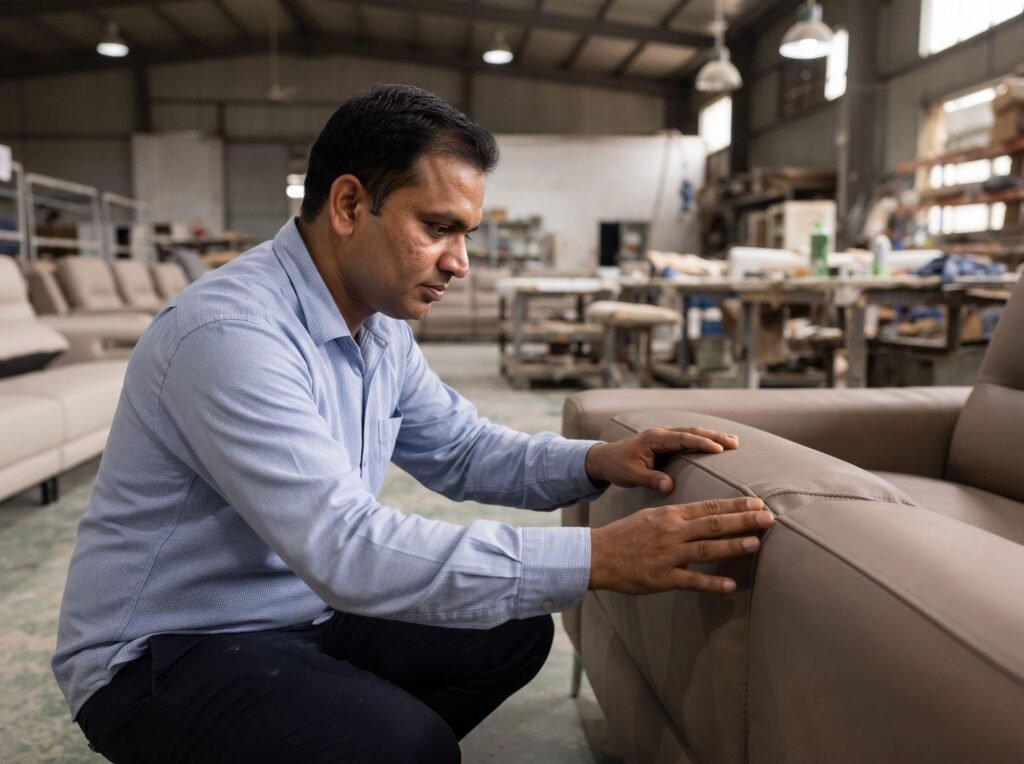
A Big Buyer QC Strategy That Cuts Costs Instead of Adding Them
After all this, what is the answer? We do not think big buyers should choose between third party QC furniture inspection and self inspection furniture. We think they should stop thinking in binary terms. The buyers we see succeeding — the ones with $500K+ annual spend who consistently hit 98% acceptance rates — use a hybrid model. And here is the counterintuitive part: for large buyers, the hybrid approach costs less than pure third-party reliance.
Here is how the math works. A buyer spending $400,000 a year on furniture who uses third-party inspection on every shipment at $350 per container, four containers per month, spends $16,800 annually on QC. That same buyer who hires one full-time QC representative in China at $30,000 a year, backed by third-party spot checks on high-risk shipments at $350 each twice a month, spends $38,400. Wait — that is more, not less. But factor in the rework, returns, and damage claims the hybrid model prevents. One container of defective hotel sofas costs $25,000 to replace, not including the lost room revenue. If the hybrid model prevents just two such incidents a year, it pays for itself twice over.
We have built a simple framework based on annual spend and risk profile. It is not academic theory. It is what we have seen work on the ground.
| Annual Furniture Spend | Factory Relationship | Recommended Model | Why |
|---|---|---|---|
| Under $100K | New or unverified | Third-party full inspection | You lack volume to justify dedicated staff. Use reputable agencies and specify furniture-specific checklists. |
| $100K–$300K | Mixed (some trusted, some new) | Third-party + self spot checks | Fly your team in for first-article inspections on new SKUs. Use third-party for routine shipments from trusted factories. |
| $300K–$500K | Established but multi-factory | Hybrid: dedicated QC staff + third-party audit | Hire a local QC or assign a regional agent. Use third-party for random spot checks and social compliance audits. |
| Over $500K | Deep, multi-year relationships | Full-time QC representative + third-party spot checks + factory scorecards | At this scale, a full-time eye on the ground prevents systemic issues. Third-party becomes a verification layer, not the main defense. |
The key insight is role separation. Your full-time QC person builds relationships, tracks processes, and catches problems before they become containers. The third-party inspector provides an external verification layer that your QC cannot — an outside eye that factory staff know they cannot charm over dinner. When the factory knows both systems are watching, behavior changes. We have seen defect rates drop 40% within six months of implementing this dual structure.
For big buyer QC strategy, there is one more layer most people miss: factory scorecards. Track every shipment. Log defect types, severity, and root cause. After three months, you will know which factories need full inspection, which can move to spot checks, and which should be replaced entirely. This data turns QC from a cost center into a sourcing intelligence tool. One of our clients, a retail chain in the UK, used this approach to cut their supplier base from fourteen factories to eight — and improved their average acceptance rate from 87% to 96%.
Industry Truth: The “Pass” Stamp Means Less Than You Think
Here is a story we do not share lightly. In 2023, a well-known European inspection firm issued a “Pass” report on a 40-foot container of hotel headboards from a Foshan factory. The buyer in Stockholm accepted the shipment. Two months after installation, the headboards started emitting a chemical odor that forced the hotel to close three rooms for remediation. The inspection report had checked dimensions, stitching, and wood finish. It did not test for VOC emissions because the buyer did not specify it, and the inspector did not suggest it. The factory had switched to a cheaper adhesive after the sample approval. Total cost to the buyer: €47,000 in replacements, plus reputational damage. The inspection firm? They pointed to the report scope and walked away. A third party QC furniture inspection report is a photograph of one moment. It is not a warranty. It is not a guarantee. It is a snapshot taken by a human being who may have been in that factory for less time than you spend reading this article. Use it accordingly.
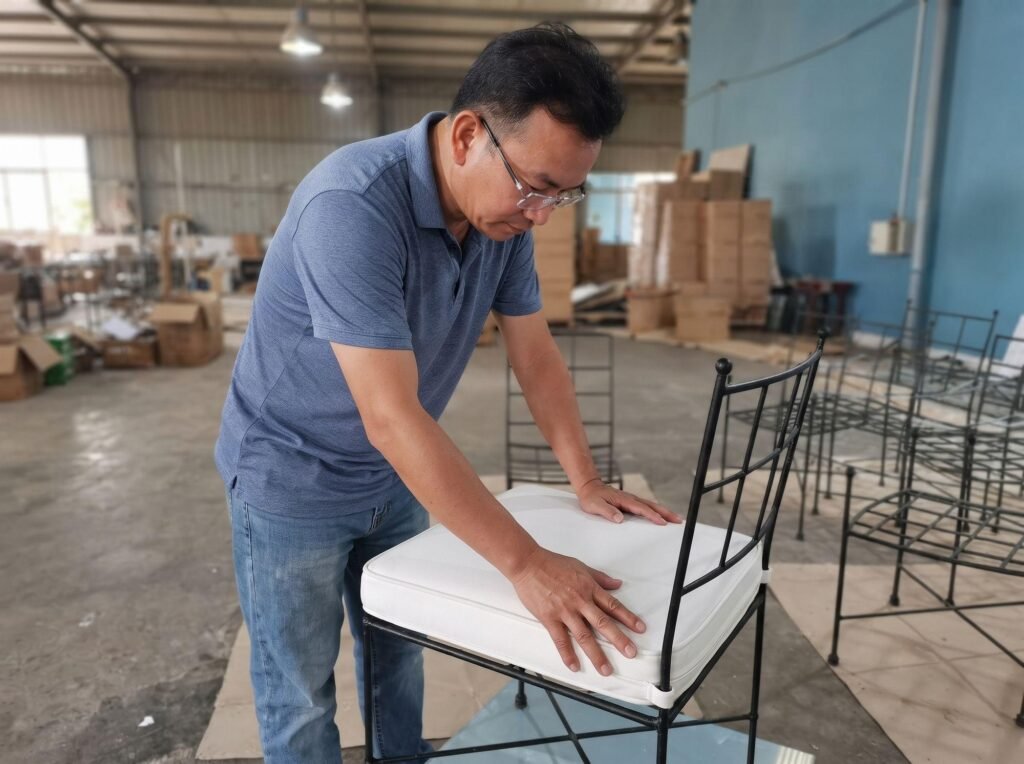
What We Actually Recommend
If you are reading this and thinking, “We are spending too much on QC and still getting burned,” you are not alone. The furniture industry has a QC problem because it treats a complex, multi-factory, multi-material supply chain as if it were a single assembly line. It is not.
For buyers under $300K annual spend, our advice is simple: do not try to build a team in China. Instead, get specific with your third-party scope. Demand furniture-specific inspectors, not generalists. Specify checks that matter: internal frame photos (via zipper access), moisture readings on solid wood, packaging drop tests, and VOC screening for upholstered goods. A detailed scope of work costs the same as a generic one. The difference in output is enormous.
For buyers over $500K, the math is clear. A dedicated QC presence — whether a full-time hire, a retained agent, or a hybrid arrangement with a sourcing office — pays for itself. Pair that with third party QC furniture inspection spot checks on new factories and high-value shipments. Build your factory scorecard. Track trends, not just transactions. Your big buyer QC strategy should evolve from “inspect and hope” to “monitor and prevent.”

FAQ
Is third party QC furniture inspection worth the cost for small buyers?
Third-party furniture inspection runs $250–$400 per man-day in the Pearl River Delta. SGS and BV sit at the high end. Local firms charge $80–$150, but quality varies. Budget $300–$500 per container. You are buying time on the ground, not a guarantee.
Can factory self inspection furniture replace third-party checks?
Rarely. Factory self-inspection works as an early filter, but we have seen “minor” defects downgraded or omitted. Use factory reports for initial production checks only. Never accept them as final approval, especially for new suppliers or custom orders.
What quality control model works best for multi-factory orders?
A hybrid model. Assign a dedicated QC representative to monitor processes across factories, then use third-party inspectors for random spot checks and new-factory audits. This prevents the “one person, three cities, five days” problem that plagues self-inspection.
When does a dedicated QC staff become part of a smart big buyer QC strategy?
Around $400,000 to $500,000 in annual spend. Below that, salary and overhead do not justify coverage. Above that, one prevented defective container — often $20,000+ in replacement and lost revenue — covers the QC salary for a full year.
What do standard reports miss that a furniture-specific quality control model should cover?
Four things: (1) internal frame access for upholstered goods, (2) moisture readings on solid wood, (3) packaging drop and stack tests, and (4) VOC screening for foam and adhesive. These catch the costliest post-delivery problems.
Recommended Resource
Interi Furniture specializes in custom furniture manufacturing for residential, hospitality, and commercial projects. Their experience in materials, craftsmanship, and project realization makes them a valuable resource for designers and buyers seeking tailored furniture solutions from China.