












If your orders have grown big enough to fill a box, container load furniture China shipping is probably already on your radar. But here is the thing nobody wants to say out loud: going full container load furniture is not always the smart play. We have walked the factory floors in Longjiang. We have sat in those cramped freight offices in Shenzhen where the air conditioning barely works and the coffee tastes like burnt rubber. We have watched buyers—smart buyers, experienced buyers—get burned by FCL furniture shipping because they bought into a myth. This container load guide China is not theory. It is what actually happens when you try to move sofas and beds across an ocean in 2026.
Container Types: The Size Myth
Walk into any forwarder’s office. First thing they do? Push the 40HQ. Bigger box, lower cost per CBM. Simple math. Except it is not simple. Not for furniture.
A 40HQ gives you roughly 68 to 70 CBM on paper. In reality? Furniture does not stack like shoeboxes. A three-seater sofa, wrapped and crated, eats 2.5 to 3 CBM. A king mattress? Another 2 to 2.5. Do the math. Twenty sofas and you have already burned through half the container. The rest? Awkward gaps. Air pockets. Wasted space.
Smart buyers do not pick the biggest box. They match the container to the cargo.
| Container Type | Usable CBM | Best For | The Catch |
|---|---|---|---|
| 20GP | 28–30 CBM | Dense stuff: stone tables, metal frames, solid wood shelves | Looks small. For bulky items, it is smaller than it looks. |
| 40GP | 58–60 CBM | Mixed loads. The safe middle ground. | Ceiling is too low for tall pieces like wardrobes. |
| 40HQ | 68–70 CBM | High volume, low density: sofas, mattresses, upholstered beds | Easy to overfill. Weight distribution becomes a nightmare. |
| 45HQ | 78–80 CBM | Massive single-category orders | Hard to book. Not every port handles them. |
Here is a story from March. Hotel buyer, eighty armchairs, factory near Dongguan. Forwarder quotes a 40HQ. Standard play. We told him: split it. Two 20GPs. Why? Those armchairs are light but bulky. In a 40HQ, you get these tall, narrow towers of cartons with nothing to lock them in place. Two 20GPs cost about 12% more upfront. But he saved roughly $4,000 in repackaging and damage claims on the other end. The “bigger” box? Sometimes it is just a bigger mistake.
Loading Strategy: The Space Game
Loading furniture is not Tetris. It is structural engineering done by guys with forklifts and stretch film.
Low-density cargo floats. Sofas, mattresses, upholstered headboards—they fill space but do not weigh much. High-density cargo sinks. Marble tables, oak cabinets, metal bed frames—they get heavy fast but barely fill a corner. Mix them wrong and the physics of the whole container shifts.
Center of gravity matters. Load all your heavy tables at the front, stack sofas to the ceiling at the back, and that box will rock like a seesaw in rough water. We have seen containers flagged at transshipment ports because the weight distribution tripped safety sensors. Delays. Sometimes forced unloading and reloading. At your expense.
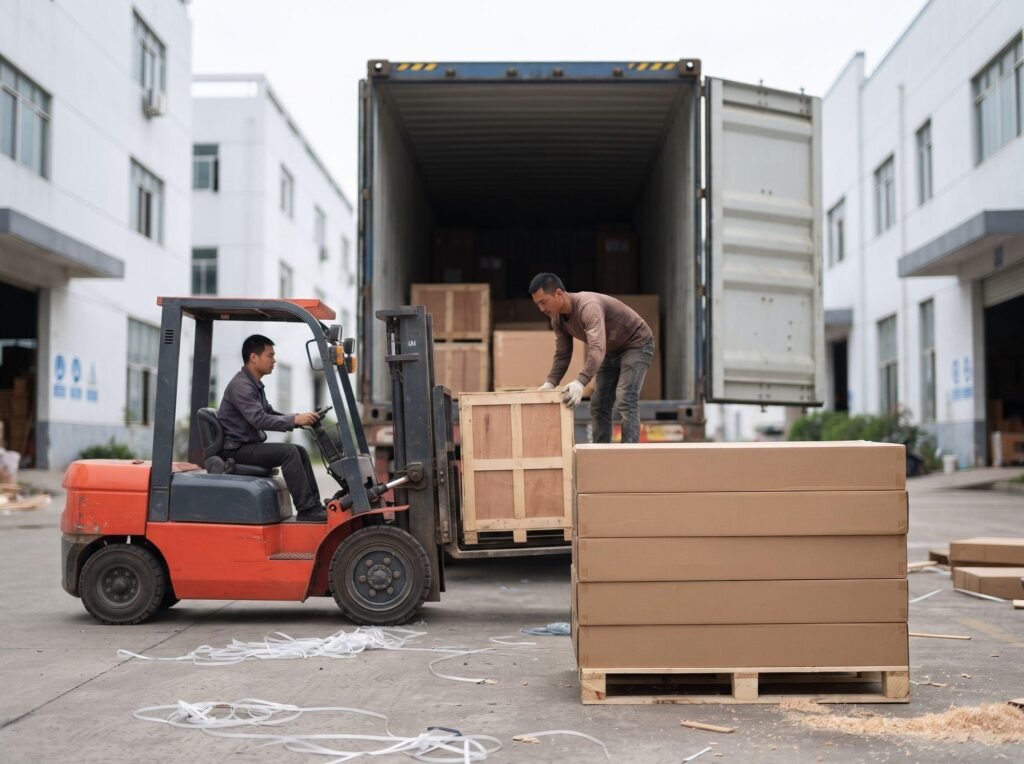
Here is what the pros do. Heavy stuff on the floor, against the front wall. Light, bulky pieces fill the upper and rear zones. And they leave gaps. On purpose. A container crammed to 100% has no airflow, no room for dunnage, no buffer when the ship rolls. I have watched loading crews in Foshan stuff a 40HQ until the doors barely shut. Looks efficient. It is not. Those shipments show up with crushed corners, torn vinyl, frames that have been grinding against each other for twenty-one days at sea.
Insider Tip: If more than 60% of your load is upholstered, shoot for 85–90% visual fill. Not 100%. That empty space? It is not waste. It is cheap insurance.
2026 Freight Reality: What the Quotes Hide
The FCL furniture shipping market in 2026 is a different animal. Still using rate cards from 2023? Your budget is already dead.
Red Sea rerouting is not going away. Carriers are running the long way around the Cape of Good Hope. Adds ten to fourteen days. Burns more fuel. And that cost? It hits the shipper hard. By mid-2026, the numbers got ugly. Asia-Europe spot rates for a 40HQ stabilized around $4,000 in early June. By late June and July? Many lanes spiked to $6,000–$7,000. Shanghai to Rotterdam hit about $4,682 in early July. Trans-Pacific was worse. Late June, China to the U.S. East Coast surged to roughly $7,880 for a 40-foot box.
The spread is massive. Depending on your contract, lane, and when you booked, a 40HQ in 2026 could cost $1,200 on a locked annual deal—or well over $7,200 on the spot market. Spot rates move weekly. Sometimes daily. If your forwarder gave you a quote last month, it is probably wrong now.
West Coast congestion follows a rhythm. Almost predictable. LA and Long Beach peak July through October. But 2026 brought an early squeeze. Forwarders in Shenzhen and Ningbo are already talking about slow steaming and blank sailings. Translation: even after customs clearance, your box might sit on the dock an extra four to six days.
And here is the kicker. That ocean freight number on your quote? It is maybe 60 to 70% of what you will actually pay. The rest is hiding in the fine print.
FCL vs. LCL: The Real Break-Even
Old rule: more than 10 or 15 CBM, go FCL. That rule is garbage. It ignores what you are actually shipping.
Dense furniture—solid wood, stone, metal—FCL usually makes sense around 12 to 15 CBM. The weight earns the space. But low-density stuff? Sofas, mattresses? We have seen LCL beat FCL on cost per unit until the buyer hit 25 or even 30 CBM. Why? LCL warehouses are consolidation machines. They pack your cartons with other dense cargo, filling the voids you would have left empty. You pay for the space you use. Not the air you would have wasted.
Let us run the numbers honestly. A 40HQ from Shenzhen to Los Angeles on the spot market in mid-2026? You are looking at $5,500 to $7,500 in base ocean freight. If you locked in a good annual contract early in the year, maybe $3,500 to $5,000. But those deals are drying up fast. Take a $6,500 spot rate. Divide by 70 CBM. That is $93 per CBM. But if your sofas only fill 45 CBM and the rest is dead air, your real cost is closer to $144 per CBM. Meanwhile, LCL rates have climbed too, but their warehouses still squeeze better efficiency out of every cubic meter. An LCL quote at $100 to $130 per CBM starts looking pretty good—especially since LCL quotes often bake in destination handling, while FCL leaves those fees for you to discover later.
Insider Truth: For upholstered furniture, full container load furniture is not automatically the cheaper option. Not until you are moving 50+ CBM of consistent product. The story that FCL always saves money? That is a fairy tale told by people who have never watched a sofa get loaded.
The Hidden Cost Black Hole
This is where the bleeding starts. Ocean freight is just the opening act.
DTHC—Destination Terminal Handling Charge. At Rotterdam or Hamburg, a 40HQ runs €450 to €700. In the U.S., the math is different, but chassis fees and congestion surcharges stack up fast. We have seen chassis fees hit $250 to $400 per day during peak season when the trucker cannot turn the chassis around fast enough.
Overweight fines. A 40HQ caps out around 30,480 kg gross. Sounds like a lot. Fill it with solid oak dining sets and marble consoles and you will hit that ceiling sooner than you think. Flagged. Offloaded. Fined. And the fine is the cheap part. The delay is what costs you.
Demurrage and detention. You get free days at port. Usually three to five. Miss the window by two days in 2026? Add $200 to $400. Miss it by a week? Four figures. Easy.
Customs inspection. Random, they say. But furniture from China gets extra eyes in certain markets. U.S. CBP has been hammering wood products on Lacey Act compliance. An inspection holds your box for three to seven days. You pay demurrage the whole time.
Doc changes. Change the consignee after sailing? $150 to $300. Fix a typo in the HS code? Another hit. Small numbers. Until you stack three or four on one shipment.
Add it up. In the low-rate years, we tracked shipments where extras exceeded the ocean freight. One UK buyer paid £2,100 in base freight and £2,800 in destination charges, demurrage, and a customs exam. In 2026, base freight is so high that the proportional pain of extras has dropped. But the absolute dollars have not. A $6,500 spot rate plus $2,500 in DTHC, chassis, and exam fees is still a $9,000 shipment. The danger now? Buyers budget for the $6,500 and completely forget the $2,500.
Insurance and Damage Control: The Real Risk
Buyers lose sleep over storms. They should lose sleep over the loading bay in Longjiang.
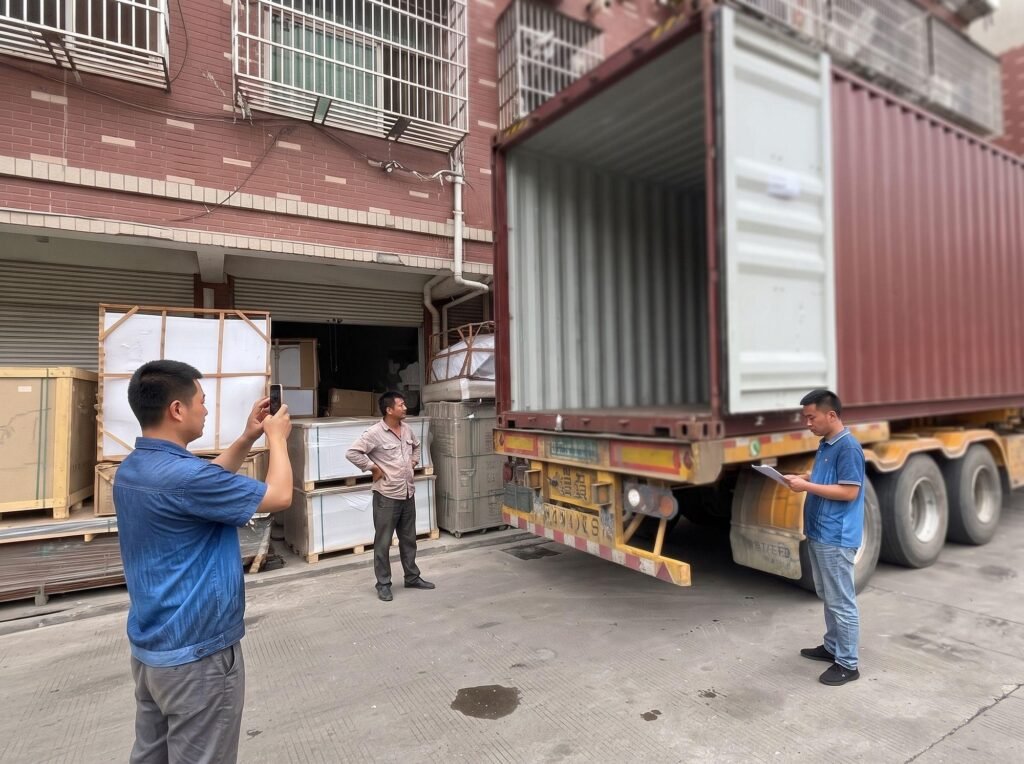
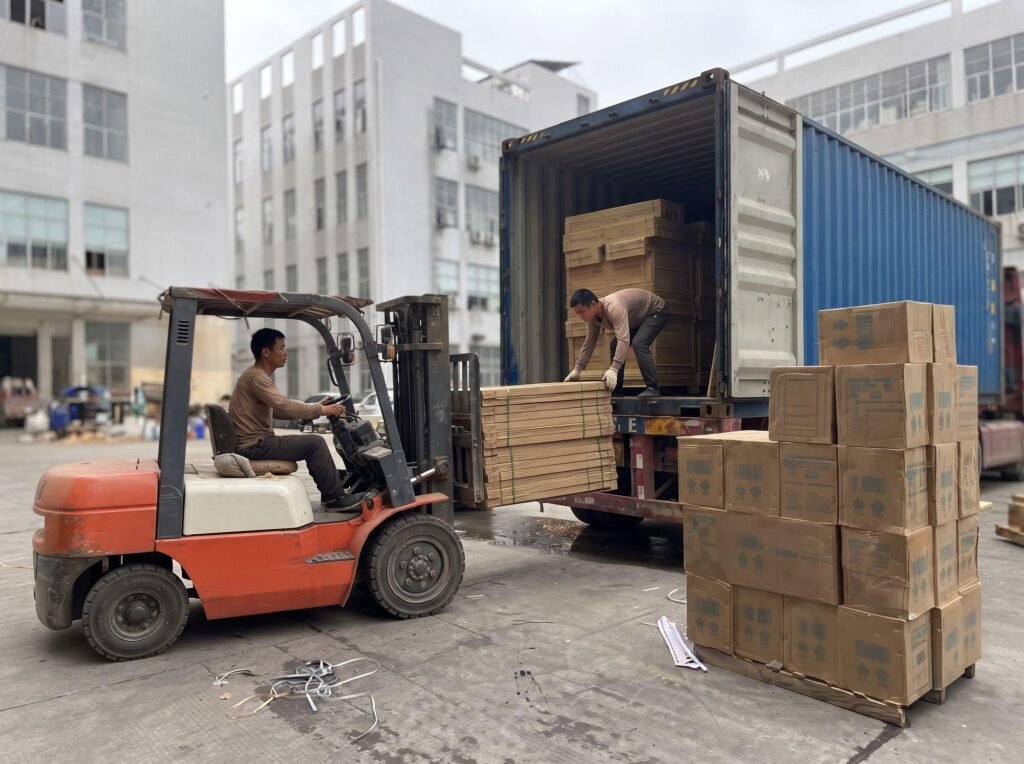
The number one cause of damage in FCL furniture shipping is not the ocean. It is the loading crew. A 40HQ of sofas, loaded right—with corner boards, load bars, real dunnage—arrives clean. The same cargo, loaded by a crew in a hurry on a Friday afternoon? Thirty percent packaging damage. Five to ten percent frame damage. I have opened containers where the “bracing” was three strips of packing tape and a prayer.
What actually works:
● Corner boards. Cheap. Non-negotiable. They stop the stack from eating itself.
● Load bars. Brace the cargo against the walls. Without them, everything moves.
● Dunnage. Wood, cardboard, inflatable bags. Fill the voids. Absorb the shock. Air bags are gold for mixed loads.
● Desiccants. Long transit, humid ports. Mold on a sofa is a total write-off.
Insurance? Another trap. “All-risk” marine cargo insurance sounds bulletproof. It is not. Read the exclusions. Most policies exclude “inadequate packaging” and “improper stowage.” That is exactly how furniture gets damaged. Factory loads the box, load is deemed improper, claim denied. We tell buyers: hire a loading supervisor. Or negotiate with the factory to own the liability for loading damage. One of those two. Non-negotiable.
💡 Insider Tip: Photos. Before the doors close, shoot every wall, every layer, every brace. Those photos are the only proof you have if something goes wrong. No photos? Good luck with that claim.
When FCL Makes Sense—and When It Does Not
Strip away the sales pitch. Here is the truth.
FCL works when:
● You are shipping dense, high-value pieces that earn the space. Solid wood. Stone. Metal.
● Your volume is steady. Monthly or quarterly. Predictable.
● Your destination warehouse can handle a full box. Dock height. Unloading crew. Space.
● You have a contract rate locked in with a carrier or NVOCC.
FCL is a bad idea when:
● Your cargo is mostly low-density upholstered goods and you are under 50 CBM.
● You are buying from three factories with different production schedules. Waiting for everything to finish so you can fill one box? That delay usually costs more than shipping two LCL batches.
● Your destination warehouse charges steep unloading fees or cannot handle a 40HQ at the dock.
● You are new to this. FCL forgives nothing. LCL gives you room to make mistakes.
Your 2026 Action Checklist
Before you sign that booking, walk through this:
1.Match the box to the cargo. Do not auto-select 40HQ. Calculate density. Not just volume.
2.Demand the all-in number. Ocean freight + DTHC + chassis + demurrage buffer. If your forwarder dodges the question, get a new forwarder.
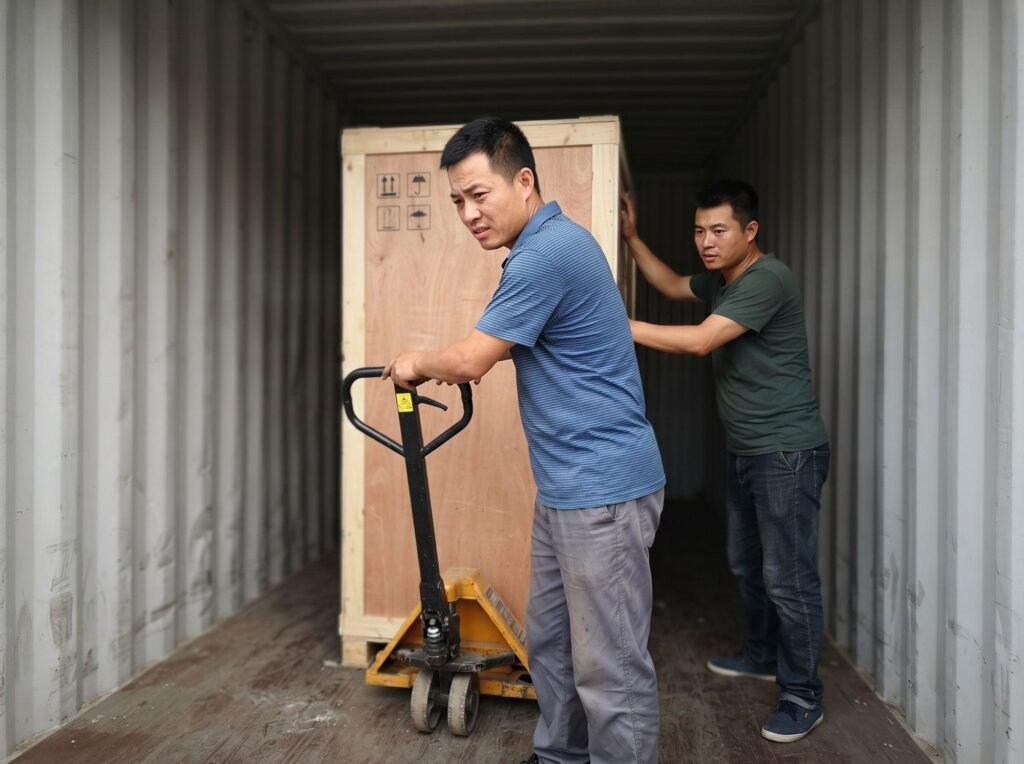
3.Watch the load. Be there. Send someone. Hire a supervisor. And take photos. Lots of photos.
4.Read the insurance exclusions. “All-risk” is marketing. The exclusions are reality.
5.Pad your timeline. Build in seven to ten extra days. 2026 is not a year for just-in-time faith.
6.Run FCL and LCL side by side. Compare cost per unit. Not per CBM. Per unit.

FAQ
What is the cheapest way to ship furniture from China?
Depends on what you are moving. Dense, high-value pieces? Full container load furniture usually wins. Low-density upholstered goods under 50 CBM? LCL is often cheaper per piece. Get both quotes. Do the math yourself.
How much furniture fits in a 40HQ container?
Paper says 68–70 CBM. Reality? 45 to 55 CBM of actual furniture is a safe, realistic load. Stuff it to the ceiling and the damage bill will eat any freight savings.
What hidden costs should I watch for in FCL shipping?
DTHC, chassis fees, overweight fines, demurrage, detention, customs holds, doc amendments. Stack them up and you are looking at $2,000 to $3,500 on top of your ocean freight. Always ask for the all-in estimate.
Is FCL safer than LCL for furniture?
Not by default. FCL gives you control over loading. That is good if you know what you are doing. Load it wrong and you eat the full damage cost. LCL warehouses consolidate boxes every day. They know what they are doing. Safety comes down to execution, not the mode.
How do I prevent damage during FCL furniture shipping?
Corner boards. Load bars. Dunnage. Desiccants. Supervise the loading or hire someone who knows what they are looking at. Photos before the doors close. And read your insurance exclusions. Twice.
Ready to Ship Smarter?
Container load furniture China shipping is a tool. Not a badge of honor. The buyers who win in 2026 are not the ones with the biggest POs. They are the ones who know when a 20GP beats a 40HQ. When LCL beats FCL. When the “savings” on the freight quote turn into a five-figure surprise at the destination port.
Recommended Resource
Interi Furniture specializes in custom furniture manufacturing for residential, hospitality, and commercial projects. Their experience in materials, craftsmanship, and project realization makes them a valuable resource for designers and buyers seeking tailored furniture solutions from China.