


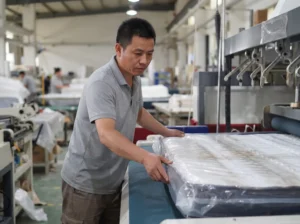






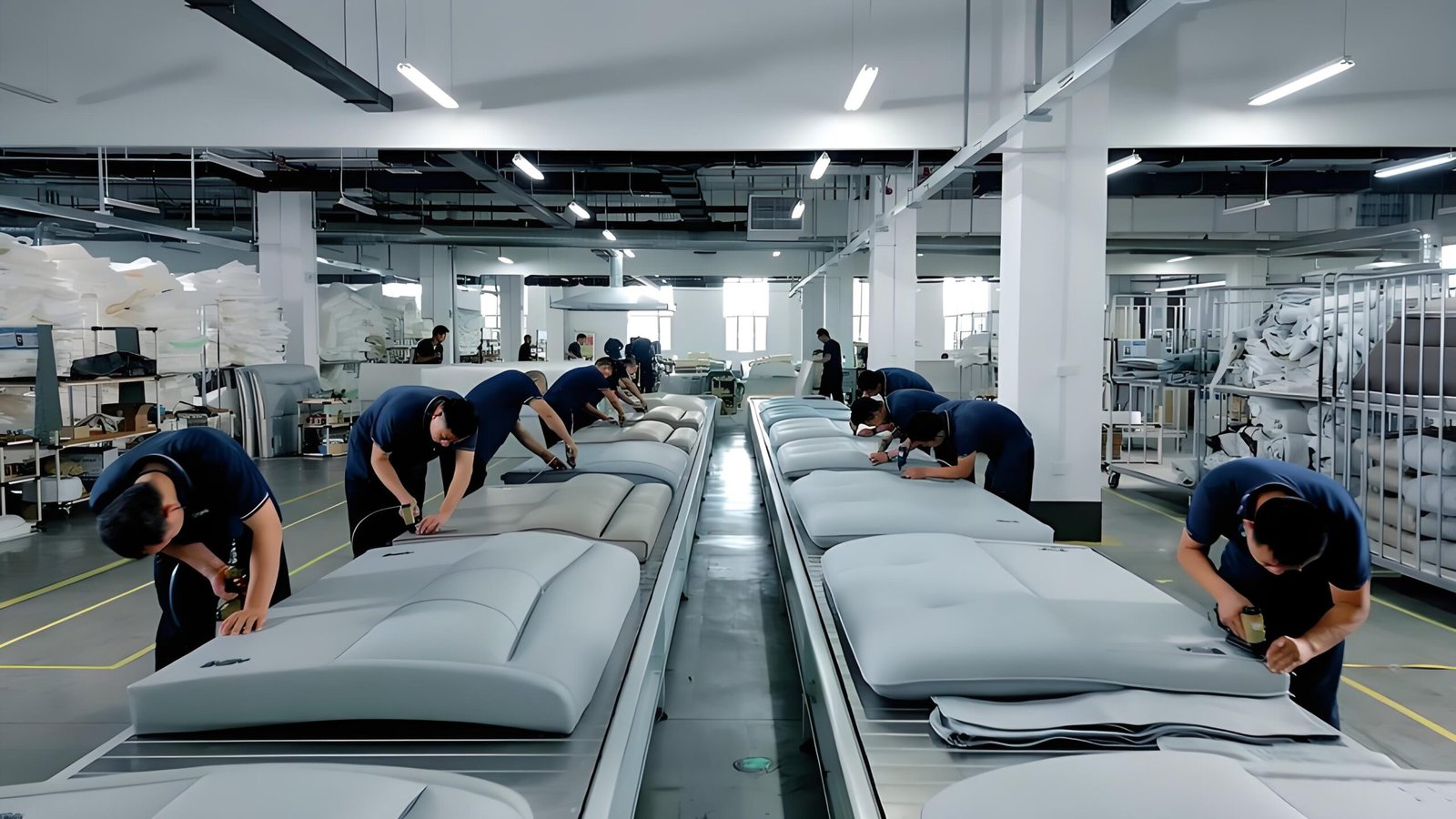
You open the carton. The sofa looks clean. Stitching appears straight. No tears, no stains. You sign the release. Three months later, your customer emails photos of a split seam, a collapsed cushion, or a frame that creaks every time someone sits down.
This is not bad luck. It is a predictable outcome of surface-only checking. The upholstery QC checklist below is the same 17-point protocol I have used since 2019 across Guangdong and Zhejiang soft-goods factories. It is not a classroom theory. It is a field manual written in warehouse dust and cutting-table debris. Based on our 2026 audit logs from 21 facilities, over 90% of quality failures start inside the sofa—where standard buyer eyes never reach.
A sofa quality inspection that stops at the surface is barely an inspection at all. It is a courtesy.
The Brutal Truth: What Factories Know That Buyers Don’t
Factories know exactly where your eyes stop. They know you will check the front, the top, and the arms. They also know you will not flip the unit over, cut the dust cover, or pull a foam core from the cushion corner. So they route their best materials to the visible 30% and their compromises to the hidden 70%.
I have watched a factory supervisor personally carry three “audit-ready” sofas to the loading bay while the remaining 117 units sat in a back row with different foam batches. This is normal. It is not cheating in the factory’s mind. It is resource allocation. Your job is to break that allocation model.
For any serious upholstery quality control China operation, you need to get inside the product. Surface checks are for showroom displays, not container loads.
The 17-Point Checklist: How to Audit Like Someone Who Actually Sits on the Product
These 17 checks follow the sofa from the outside in. I have grouped them into six modules because that is how a sofa is built: fabric first, then stitches, then foam, then frame, then hardware, then compliance. Each entry tells you what to check, how to check it, what passes, what fails, and how the factory will try to fool you. Treat this sofa factory inspection checklist as a working document. Cross out what does not apply to your product. Add your own thresholds. But do not skip the internal checks.
Module 1: Fabric & Exterior (3 Checks)
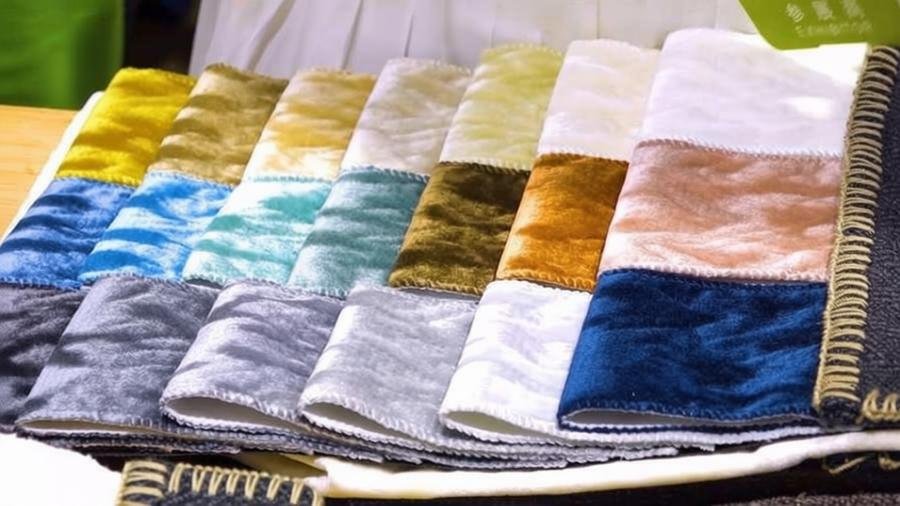
Check 1: Fabric Defects & Shade Consistency
| What to Check | How to Check It | Pass Threshold | What Happens If It Fails | How the Factory Fools You |
|---|---|---|---|---|
| Fabric flaws and color drift | Hold the bulk roll and the sealed sample under identical 5,000K natural light at 1m distance. Do not let the factory choose the light. | No visible flaws >2mm. Color ΔE ≤1.5 for commercial grade, ≤1.0 for premium residential. ISO 105 protocols apply. | End-user color complaints. Batch returns. Showroom-to-delivery mismatch. | Factory swaps sample-grade dye lot for a cheaper bulk lot. Tests under warm 3,000K LED to hide cool-tone shifts. |
Real scene, March 2026, Foshan. I was auditing an 800-unit monthly for a Nordic distributor. The bulk fabric looked perfect under the warehouse sodium lights. I pulled out my 5,000K lamp. The bulk had gone gray. The factory had switched from reactive dye to sulfur dye to save 18% on color costs. They knew the sodium lights would mask it. I caught it only because I checked at the cutting table, before sewing started. If I had checked finished goods only, I would have missed it entirely.
Check 2: Pattern Match at Seams
| What to Check | How to Check It | Pass Threshold | What Happens If It Fails | How the Factory Fools You |
|---|---|---|---|---|
| Pattern continuity across seams | Measure offset at every visible seam—cushion joins, arm-to-back transitions. Use a steel ruler, not your eye. | Woven: offset ≤2mm. Velvet/nap: directional alignment within 5°. | Visual asymmetry in high-end placements. Customer rejection on large orders. | Factory flips panels to mirror the grain, cutting waste but destroying pattern flow. |
Check 3: Surface Damage & Stains
| What to Check | How to Check It | Pass Threshold | What Happens If It Fails | How the Factory Fools You |
|---|---|---|---|---|
| Physical damage, oil, mold, contamination | White-glove swipe every contact surface. UV flashlight scan for oil spots invisible to daylight. | Zero damage on visible surfaces. Stain <5mm² only on hidden underside, and only if it will not spread. | Reputation damage on white-glove deliveries. Mold bloom if organic contamination is present. | Factory touches up oil spots with fabric markers. Wipes mold with bleach but never fixes the humidity source. |
Module 2: Stitching & Craftsmanship (3 Checks)
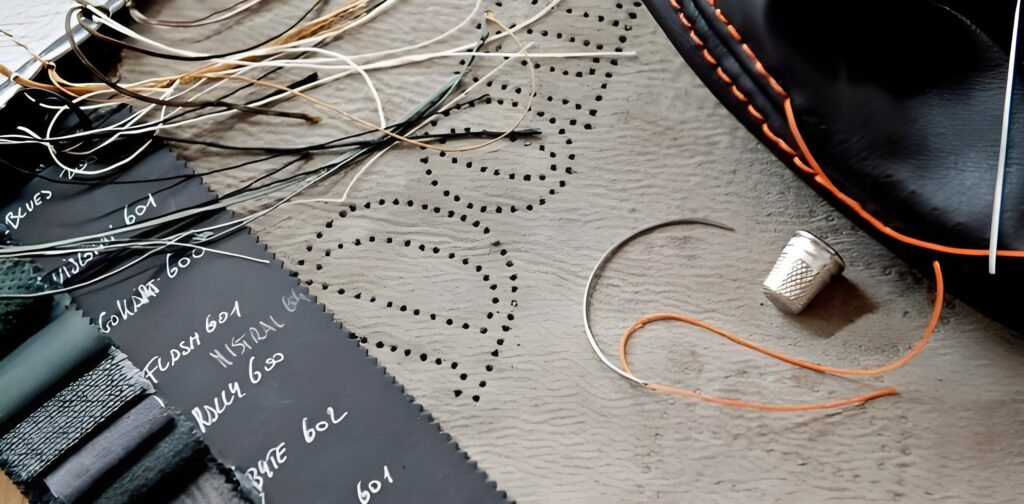
Check 4: Stitch Count & Seam Strength
| What to Check | How to Check It | Pass Threshold | What Happens If It Fails | How the Factory Fools You |
|---|---|---|---|---|
| Stitch density and seam hold | Count stitches per 10cm with a seam gauge. Perform a 5N pull test on a sample seam. | Standard zones: 8–10 per 10cm. High-stress zones (seat deck, armrest): 10–12. Seam slippage <6mm under 5N, per ISO 13935. | Seam blowout under load. Accelerated wear at stress points. | Factory sews visible top seams at full density, then drops to 6–7 per 10cm on hidden lower seams. Uses thinner thread underneath. |
Real scene, September 2025, Zhejiang. I checked the armrest-to-seat seam. Eleven stitches per 10cm. Beautiful. Then I lifted the cushion. The underside seat-deck seam showed 6.5 stitches per 10cm, sewn with a lighter T-30 thread instead of the specified T-50. The supervisor told me, without embarrassment, that this was standard practice: “save thread on parts the customer never sees.” That seam failed in the field within 5 months. The cushion detached from the frame.
Check 5: Corner Build & Tufting
| What to Check | How to Check It | Pass Threshold | What Happens If It Fails | How the Factory Fools You |
|---|---|---|---|---|
| Corner shape and tuft hold | Hand-stress every corner. Measure tuft depth with a depth gauge. | Corner radius deviation ≤3mm. No raw foam showing at folds. Tuft depth variation ≤2mm across the unit. | Corner blowout from stress concentration. Tuft sag creating a visual collapse. | Factory stuffs corners with scrap foam offcuts to fake fullness. Hides tuft knots under button caps with no anchor reinforcement. |
Check 6: Thread Tails & Edge Finish
| What to Check | How to Check It | Pass Threshold | What Happens If It Fails | How the Factory Fools You |
|---|---|---|---|---|
| Loose threads and overlock coverage | Run your hand along every seam. Inspect piped edges for full overlock. | Thread tails <3mm on all surfaces. Overlock coverage 100% on raw edges. | Loose threads snagging in transit. Edge fraying after the first clean. | Factory trims visible threads but leaves 10–15mm tails inside cushion covers. Uses single-needle overlock on hidden edges instead of three-thread. |
Module 3: Fill & Comfort System (3 Checks)
Check 7: Foam Density & Compression Set
| What to Check | How to Check It | Pass Threshold | What Happens If It Fails | How the Factory Fools You |
|---|---|---|---|---|
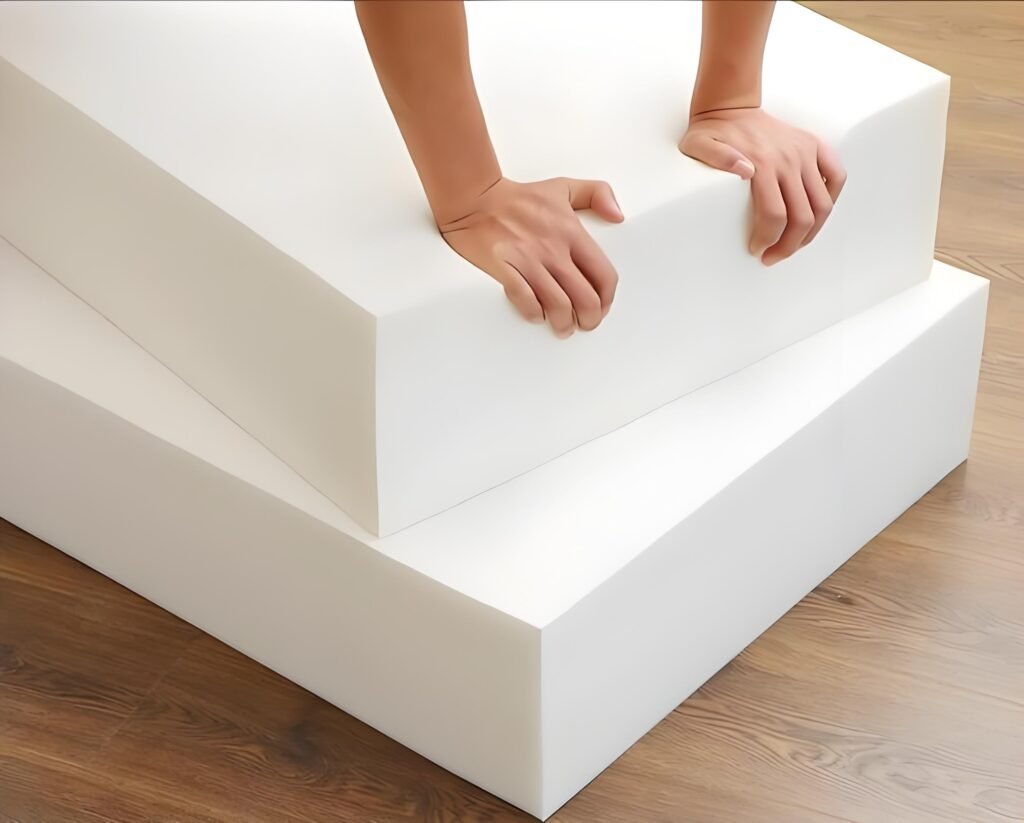
| Foam density and resilience loss | Extract a core from a hidden cushion corner. Weigh and measure for density. Submit for ASTM D3574 Test D (Method B: 50% compression, 70°C, 22 hours). | HR foam: ≥35kg/m³, compression set <10%. Standard polyether: ≥25kg/m³, compression set <15%. | Premature sagging. Loss of support. Warranty claims at 12–24 months. | Factory labels 28kg/m³ foam as “35kg/m³” on the spec sheet. Blends calcium carbonate filler to inflate weight without improving cell structure. |
Real scene, April 2026, Dongguan. A factory showed me a third-party lab report: 38.2kg/m³, 9.8% compression set. Looked perfect. I pulled a 50mm core from a hidden corner and ran a water-displacement test: 31.4kg/m³. Independent lab came back at 22% compression set—more than double the limit. FTIR found 18% calcium carbonate filler loaded into the foam. The filler added mass, so the factory’s scale read high, but it added zero resilience. The cushions would have collapsed within 14 months of normal home use. The brand would have faced six-figure replacement costs inside their warranty window.
Check 8: Down & Synthetic Fill Distribution
| What to Check | How to Check It | Pass Threshold | What Happens If It Fails | How the Factory Fools You |
|---|---|---|---|---|
| Fill uniformity in down or fiber cushions | Palpate the entire cushion surface with your hands. Tear down one unit per batch if possible. | No clumps or voids >50mm². Fill weight within ±5% of specification. | Lumpy seat. Cold spots in winter. Uneven aging. | Factory loads premium fill into the front visible zones, then uses cheap fiber or empty chambers in the rear. |
Check 9: Cushion Firmness Consistency
| What to Check | How to Check It | Pass Threshold | What Happens If It Fails | How the Factory Fools You |
|---|---|---|---|---|
| Hardness consistency across the seat | IFD test per ASTM D3574 Test B. Measure center and four corners. | IFD variation ≤±15% across all points. Blind touch test shows no perceptible difference. | Customer complains of “sinking into a hole” on one side. Asymmetric wear. | Factory mixes foam from different batches with different IFD ratings. Puts softer foam at the front edge for a “good first sit” while the rear uses cheaper hard slab. |
Module 4: Internal Frame & Structure (3 Checks)
Check 10: Frame Timber & Joint Integrity
| What to Check | How to Check It | Pass Threshold | What Happens If It Fails | How the Factory Fools You |
|---|---|---|---|---|
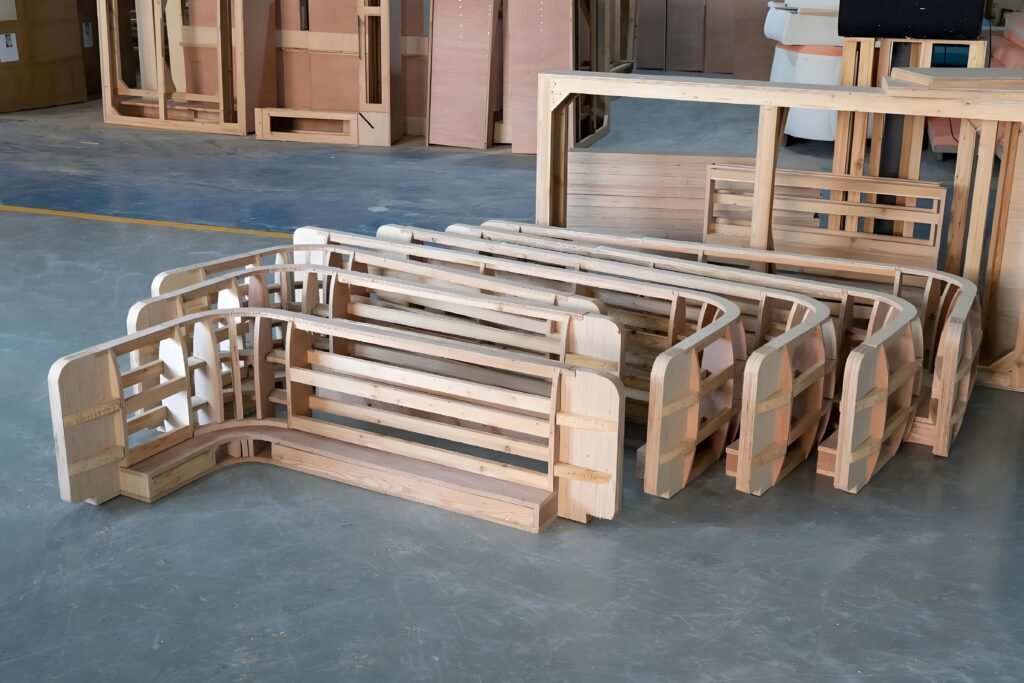
| Wood species, moisture, and joint type | Disassemble one unit per batch. Inspect the wood, check moisture content, and identify the joint. | Solid hardwood (beech, oak, rubberwood) or engineered LVL. Moisture 8–12%. Mortise-tenon or metal bracket joints. No knots >10mm. | Frame breakage under EN 12520:2015 static load (200kg, 6 hours). Joint loosening causing squeak. | Factory uses poplar or pine with knots in hidden rails. Covers the bottom with black non-woven fabric so you cannot see inside. Uses stapled butt joints instead of mortise-tenon. |
Real scene, January 2026, Guangzhou. The showroom sample had a solid beech frame. I cut the dust cover on a production unit. The rear rail and center support beam were poplar, not beech. The poplar had 18% moisture content and a 25mm knot sitting right on the stress point. The factory had stained the poplar dark to match the beech visible at the front. Under EN 12520 static load modeling, that joint would have failed within the warranty period. The factory claimed the poplar was “just for the sample.” I checked their incoming timber logs: zero beech deliveries in the previous 30 days. The buyer avoided an estimated 40% frame failure rate.
Check 11: Spring & Webbing System
| What to Check | How to Check It | Pass Threshold | What Happens If It Fails | How the Factory Fools You |
|---|---|---|---|---|
| Spring wire, pitch, and webbing anchor | Caliper the wire gauge. Count coils per 100mm. Check webbing weave density and how it is anchored. | Sinuous spring: 3.0–3.2mm wire, pitch 45–55mm. Webbing: polypropylene ≥60g/m², anchored with metal clips—not just staples. | Spring fatigue. Seat deck collapse. Webbing tear at 6–12 months. | Factory uses 2.6mm wire to save steel cost. Widens pitch to 65mm to use fewer springs. Staples webbing directly to plywood with no reinforcement clips. |
Check 12: Noise & Stability Under Load
| What to Check | How to Check It | Pass Threshold | What Happens If It Fails | How the Factory Fools You |
|---|---|---|---|---|
| Creaks, clicks, and frame movement | Apply 100kg cyclic load. Sit and stand 50 times. Listen. | Zero audible noise under static and dynamic load. Frame joint movement <1mm. | Customer returns for “noisy sofa.” Cheap perception in premium positioning. | Factory sprays silicone on joints before the audit to hide squeaks. Uses felt pads that compress and fail within 30 days. |
Module 5: Hardware & Functional Parts (2 Checks)
Check 13: Leg Fittings & Metal Components
| What to Check | How to Check It | Pass Threshold | What Happens If It Fails | How the Factory Fools You |
|---|---|---|---|---|
| Leg bolts, plating, and level | Torque-test leg bolts to spec. Check plating thickness. Verify leg level on a flat surface. | Torque retention ≥90% after 10 cycles. Plating passes 24h salt spray (ISO 9227). Leg level <1mm deviation per 1m. | Leg loosening. Floor scratching. Tip-over risk on uneven floors. | Factory uses zinc-plated bolts instead of stainless. Hand-tightens legs for audit photos, then ships without thread-lock compound. |
Check 14: Recliner / Sofa Bed Mechanism
| What to Check | How to Check It | Pass Threshold | What Happens If It Fails | How the Factory Fools You |
|---|---|---|---|---|
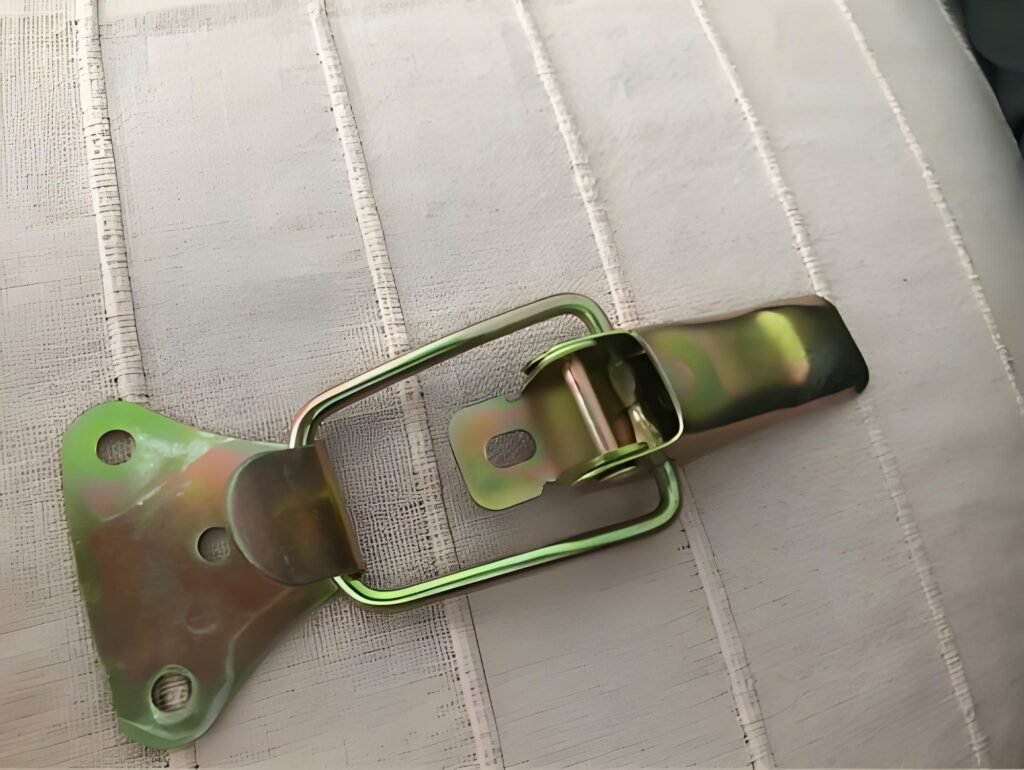
| Mechanism cycle life and pinch points | Run 25 full cycles. Check smooth travel, lock engagement, and pinch hazards. | Minimum 25,000 cycles per EN 12520 durability annex. Zero pinch points. Lock holds at every position. | Mechanism jam. Finger-trap liability. Frame twist under repeat use. | Factory greases the mechanism heavily before your visit so it runs smooth. Uses low-grade steel in linkages that fatigue after 3,000 cycles. |
Module 6: Compliance & Packaging (3 Checks)
Check 15: Fire Safety & Chemical Compliance
| What to Check | How to Check It | Pass Threshold | What Happens If It Fails | How the Factory Fools You |
|---|---|---|---|---|
| Flammability and VOC compliance | Verify lab reports: EN 1021-1 (cigarette), EN 1021-2 (match), or 16 CFR Part 1640 / CAL TB 117-2013 for US market. Check foam VOC. | EN 1021-1: no progressive smolder after 1 hour. EN 1021-2: flame self-extinguishes within 120 seconds after source removal. Formaldehyde <0.1ppm (ISO 16000). | Regulatory recall. Customs rejection. Liability in hospitality settings. | Factory submits a genuine report for the sample composite, then swaps in non-FR foam for bulk. Uses compliant interliner only on the tested sample. |
Check 16: Labels & Documentation
| What to Check | How to Check It | Pass Threshold | What Happens If It Fails | How the Factory Fools You |
|---|---|---|---|---|
| Care labels, content tags, warnings | Match the physical label to the purchase order and destination language requirements. | Permanent care label with ISO 3758 symbols. Content declaration in destination language. Flammability warning where required. | Customs hold for non-compliant labeling. Consumer complaints from missing care instructions. | Factory prints generic English-only labels for all markets. Skips flammability warning to save print cost. Uses adhesive labels that peel off within a month. |
Check 17: Packaging & Moisture Protection
| What to Check | How to Check It | Pass Threshold | What Happens If It Fails | How the Factory Fools You |
|---|---|---|---|---|
| Carton strength and moisture barrier | Drop-test a corner from 300mm. Check humidity indicator card inside the PE liner. Verify leg wrapping. | Double-wall carton ≥5mm total thickness. Humidity indicator <60% RH at sealing. All corners foam-protected. | Corner crush in transit. Moisture absorption during ocean freight causing mold. Leg finish damage. | Factory uses single-wall carton on non-visible sides. Omits humidity card on night-shift packing. Wraps legs in thin tissue instead of EPE foam. |
Defect Severity: When to Accept, When to Reject
Our pre-shipment furniture audit protocol uses three tiers. No emotion. Just classification and action.
| Severity | What It Means | Examples | What You Do |
|---|---|---|---|
| Minor | Does not affect function, safety, or long life. Cosmetic only. | 5mm thread tail on hidden underside. Slight packaging crease on non-visible back. | Accept it. Log it. Move on. |
| Major | Affects function, durability, or compliance. Will cause a complaint or warranty claim. | Seam slippage >6mm. Foam compression set >15%. Frame moisture >14%. IFD variation >20%. | Rework or repair before shipment. Inspect 100% of the affected batch segment. |
| Critical | Immediate safety risk, regulatory violation, or total failure. | Non-compliant FR foam. Untreated knotty softwood in the load path. Exposed pinch point. Missing flammability label in a regulated market. | Reject the batch. Do not ship. Demand root-cause analysis and re-qualification. |
Five Field Techniques That Work in Real Warehouses
These are not textbook methods. These are habits I have built over 15 years and 200+ factory floors. They cost nothing except time and attention.
1. Sample by Production Sequence, Not by Warehouse Row.
Do not inspect the front row of finished goods. Ask for the 3rd, 8th, and 15th unit from the current production line. Factory “audit-ready” units are always placed where you can reach them easily. The real product is further back.
2. Cut the Dust Cover in the First 60 Seconds.
Carry a hooked blade. Cut the non-woven bottom panel. Look at the frame timber, spring anchors, and webbing clips immediately. If the factory refuses this partial disassembly, treat it as a red flag. I have walked out of audits over this. You should too.
3. Bring Your Own Light.
Factory lighting is chosen to make their product look good. Carry a 5,000K natural-spectrum portable lamp. Compare bulk fabric to your sealed sample under identical light. Rotate the fabric 90 degrees to catch nap-direction color shift, especially on velvets. Do not trust their lights. Ever.
4. Run a 24-Hour Compression Test Yourself.
During a two-day audit, sit on the sample sofa for 30 minutes every four hours. Photograph cushion recovery at 1 minute, 5 minutes, and 30 minutes after you stand up. Slow recovery means poor resilience, no matter what the density certificate says. This test costs zero dollars and catches more foam fraud than half the lab reports I have seen.
5. Match Batch Codes to Incoming Certificates.
Photograph the frame timber stamp, the foam core batch code, and the fabric bolt-end serial number. Ask the factory to trace these exact codes to their incoming material certificates. Mismatched codes mean material substitution. This sounds obvious, but I catch substitutions on roughly 30% of audits because buyers never ask.
Six Checks You Can Do Yourself (No Lab, No Auditor)
If you are visiting the factory alone or checking your own warehouse receipt, run these six tests in 90 minutes. They catch 80% of major and critical defects without a single piece of lab equipment.
1. Smell the carton immediately on opening. Sharp chemical or ammonia odor means non-compliant foam curing or excessive VOC off-gassing. Trust your nose. It is faster than a lab.
2. Knee-press the cushion edge. Kneel hard on the seat cushion edge for 30 seconds. Release. Full recovery within 3 minutes is acceptable. A permanent dent means compression set failure. The foam is already dead.
3. Hand-torque the leg bolts. Tighten by hand, then try to loosen with moderate force. If it turns easily, the factory skipped the thread-lock compound. They will loosen in transit.
4. Tape-count a hidden seam. Stick a 10cm strip of tape on a hidden seam and count stitches. Fewer than 8 per 10cm on any seam is a warning. Fewer than 6 is a guarantee of early failure.
5. Tap the frame joints with a coin. Invert the sofa. Tap each joint. A dull thud means solid contact. A hollow rattle means a gap or a staple-only joint. That joint will squeak or fail.
6. Daylight sample comparison. Place your original sample and one bulk unit side by side in natural daylight. Any visible color or texture difference is a hold. Do not accept “dye lot variation” as an excuse. If they changed the dye lot, they should have told you before production started.
Four Real Scenes from the Factory Floor
These are not hypotheticals. They are from my 2026 audit logs. I include them because reading a checklist is not the same as understanding how a factory thinks.
Scene 1: The Hardwood Switch (Guangzhou, January 2026)
Showroom sample: solid beech, mortise-tenon, beautiful. Purchase order: “solid hardwood, moisture ≤12%, no knots >10mm.” I cut the dust cover on a production unit. Rear rail and center beam: poplar. Not beech. Poplar with 18% moisture and a 25mm knot on the stress point. The factory had stained the poplar to match the beech front rail. They claimed it was “just for the sample.” I checked their timber delivery logs: zero beech in 30 days. The buyer would have seen 40% frame failures within 18 months. Always cut the cover.
Scene 2: The Fabric Swap (Foshan, March 2026)
Sealed sample: reactive-dyed, high-twist polyester, ΔE ≤1.0. Bulk looked identical under sodium warehouse lights. I moved a unit to a cutting table and lit it with my 5,000K lamp. Gray shift. ΔE 2.3. The factory had switched to a sulfur-dyed bulk lot from a cheaper supplier, saving 18% on dye. Colorfastness dropped from ISO 105-B02 grade 6 to grade 4. The fabric would have faded unevenly within 12 months of sun exposure. The factory called it “normal dye-lot variation.” I called it a contract violation. They re-cut the entire batch. 14 days late, but zero color claims.
Scene 3: The Calcium Carbonate Foam (Dongguan, April 2026)
Factory report: 38.2kg/m³, 9.8% compression set. My water-displacement test on a hidden core: 31.4kg/m³. Independent lab: 22% compression set. FTIR found 18% calcium carbonate filler. The filler added weight, not resilience. The foam would have lost 50% of its height within 14 months of normal home use. The brand’s 24-month warranty would have been a financial trap. The factory’s lab report came from a “golden sample” that never saw the production floor.
Scene 4: The Stitch Bait-and-Switch (Zhejiang, September 2025)
Armrest seam: 11 stitches per 10cm. Perfect. I lifted the cushion. Underside seat-deck seam: 6.5 per 10cm, sewn with T-30 thread instead of T-50. The supervisor first said it was “a different design for comfort.” Then he admitted: “we save thread on parts the customer never sees.” My pull test failed at 3.2N, below the 5N minimum. The factory had to open and re-sew 400 units at their own cost. Without intervention, those cushions would have detached from the frames within 18 months.
Final Recommendations: Five Rules That Cut Defects by 74%
Our 2026 data across 21 factories in Guangdong and Zhejiang shows these five actions, when applied consistently, reduce post-delivery defect rates by an average of 74%. They are not complicated. They are just not optional.
1. Write the Frame Spec into the Purchase Order.
Do not reference the sample alone. Specify timber species, moisture content, and joint type as material clauses. Require timestamped photos of the bare frame before upholstery begins. If the factory refuses, find another factory.
2. Seal the Fabric Bolt Number.
When the sample is approved, seal the fabric bolt-end serial number in a joint-signature envelope. During bulk production, match every bulk bolt to that sealed record. Any substitution requires your written approval and a new lab report. This takes five minutes and prevents 60% of color disputes I encounter.
3. Demand a Physical Compression Test Every Batch.
Do not trust the factory’s density certificate. Pull one core sample per batch. Run a 24-hour, 50% compression test, or send it to a lab for ASTM D3574 Test D. The cost is negligible. One warranty claim costs more than a year of lab testing.
4. Put a “Right to Cut” Clause in Your Audit Agreement.
State clearly that your auditor may cut dust covers, extract foam cores, and drill frame inspection holes. If the factory refuses, the audit fails automatically and the batch is held. I have ended audits over this. It is a non-negotiable line.
5. Control the Light Source.
Specify in your QC protocol that color approval happens under 5,000K ±200K natural-spectrum light. Not sodium. Not fluorescent. Not warm LED. Give your auditor a calibrated portable lamp. Factory lighting is designed to sell, not to inspect.

FAQ: The Five Questions I Get Asked Most Often
Q1: Can I check foam density without a lab?
Yes. Weigh a cushion of known dimensions and calculate kg/m³. A 60×60×10cm cushion weighing 1.3kg equals 36kg/m³. If this deviates more than 10% from the factory certificate, send a sample to a lab.
Q2: What Martindale count do I actually need for a home sofa?
Per ISO 12947, minimum 20,000 cycles for residential use. For daily family sofas, specify 30,000–50,000. Contract or hospitality settings need 50,000+.
Q3: How do I tell hardwood from softwood without tearing the sofa apart?
Drill a 2mm pilot hole in a hidden underside rail. Hardwood shavings are granular and splintered. Softwood shavings are fibrous and wool-like. Seal the hole afterward.
Q4: Does an ISO 9001 certificate mean the product is good?
No. ISO 9001 certifies paperwork, not product quality. I have audited ISO-certified factories shipping frames with 22% moisture content. Always verify the physical product against your spec sheet.
Q5: What is the practical difference between EN 1021-1 and EN 1021-2?
EN 1021-1 uses a smoldering cigarette for one hour. Progressive smoldering must not occur. EN 1021-2 uses a match-flame equivalent for 15 seconds. Any flame must die within 120 seconds after the source is removed.

Recommended Resource
Interi Furniture specializes in custom furniture manufacturing for residential, hospitality, and commercial projects. Their experience in materials, craftsmanship, and project realization makes them a valuable resource for designers and buyers seeking tailored furniture solutions from China.