







Every March and April, the Pazhou district in Guangzhou gets flattened by global furniture buyers. CIFF Guangzhou wraps up, and Canton Fair Phase 2 rolls in a few weeks later. I’ve watched too many buyers fly in thinking they can “knock out both fairs in one trip,” only to find themselves collapsed on a hotel bed by day ten, four hundred business cards in their phone, unable to remember who quoted what.
Here’s the truth: a Canton Fair CIFF combination isn’t just stuffing two fairs into one business trip. I’ve seen teams run fourteen days across eight factories and two fairs, then sign fewer contracts than peers who only attended CIFF. The killer is rhythm—too much energy upfront, then a crash in the second half when the good factories show up and you’ve got nothing left to negotiate with.
This article lays out a 10-day sourcing itinerary that has been refined over a dozen cycles. It isn’t one of those copy-pasted “fair schedule roundups” floating around online. It’s based on years of tracking buyer teams, showing you how to distribute stamina, time, and bargaining chips across a real China sourcing marathon.

Why Bother Combining Them?
People ask me all the time: Canton Fair Phase 2 has furniture. CIFF is furniture. Isn’t one enough?
No. Not even close.
CIFF Guangzhou is a pure-play, full-chain furniture show. Eight hundred and fifty thousand square meters, over five thousand brands, covering home furniture, office furniture, hotel furniture, machinery, hardware, fabrics, and leather. At a CIFF booth you’re usually talking to a product manager or export director who can discuss how to alter a mortise joint, tweak foam density, or flex the MOQ from five hundred down to two hundred. That depth is hard to find at a general trade show.
Canton Fair Phase 2 runs on a completely different engine. It’s a broad export marketplace where furniture occupies maybe fifteen to twenty percent of the floor. Most exhibitors here show up with standard catalogs, and their response time on custom requests is noticeably slower. But Canton Fair offers something CIFF can’t—price benchmarking. The same sofa you priced as a custom job at CIFF might come in fifteen to twenty percent lower as a standard export SKU at Canton Fair.
The two venues sit in the same Pazhou cluster. CIFF uses the Canton Fair Complex and the Poly World Trade Center Expo, roughly 1.2 kilometers apart, a fifteen-minute walk, one stop on Metro Line 8. Zero geographic friction, but very different strategic value.
Here’s an insider dynamic a lot of buyers miss: about sixty-five percent of premium factories attending both fairs deploy entirely different reception teams at each event. The CIFF booth has decision-makers. The Canton Fair booth often has junior sales reps. You negotiate OEM/ODM sample fees and mold cycles at CIFF; at Canton Fair, the same factory runs a standard-product pricing algorithm that doesn’t even connect to the custom desk.
Sequence matters. Run CIFF first. Lock down technical feasibility, customization scope, and collection depth. Carry that intel into Canton Fair Phase 2 for price pressure-testing. Reverse the order and you anchor yourself to the standard rate—when you go back for custom work, the factory knows you already heard their floor price, and the premium room shrinks.

The 10-Day Framework: This Isn’t a Trade Show, It’s an Endurance Sport
Let’s be clear: these ten days aren’t consecutive. CIFF Guangzhou Home Furniture usually runs March 18-21, Office/Commercial and Equipment March 28-31, while Canton Fair Phase 2 Spring falls April 23-27. There’s a three-week gap in between. A real dual fair strategy strings the entire spring sourcing season together—ten core fair days plus factory audits and buffer time, roughly fourteen days total.
Two Weeks Before Departure: Don’t Wait Until You Land
I once watched a German buyer arrive in Guangzhou without pre-registering for Canton Fair. He spent two hours in a badge line, got inside at noon, and lost half a day.
Get a few things locked before you fly. Pull the exhibitor lists from both the CIFF and Canton Fair websites, filter by your target categories, and identify factories attending both. You’ll usually land around fifteen to twenty names. Then fire off emails or LinkedIn messages with a subject line like “CIFF/Canton Fair Appointment + [Company] + [Category].” Keep the body under five lines—state which day you want and what you want to discuss. Based on our tracking data, structured subject lines pull about thirty-five percent higher confirmation rates than vague “Hello dear friend” openers.
Also, turn your product gaps into a single sheet: materials, size ranges, target FOB bands. Keep it under three pages. Bring that paper to the fair. It beats scrolling through an iPad every time.
Skip the hotels directly across from the venue. During fair season, Pazhou hotel rates spike to 2.5-3x normal. Move two stops down Metro Line 8—stations like Changgang, Kecun, or Chigang—and you’re ten to fifteen minutes from the complex by subway, with far better rates and more places to eat.
The CIFF Four Days: Don’t Try to Cover It, Try to Filter It
Day one of CIFF Home Furniture, most buyers’ instinct is to “walk every hall first.” Wrong. On the morning of day one, visit only the five or six core suppliers you pre-booked. Spend thirty to forty minutes at each. Touch the materials, inspect the construction, photograph details—ask first, some booths prohibit photos. Spend the afternoon on lateral price comparisons in the same category aisles. Cap effective daily visits at eight to ten. Beyond that, you’ll get back to your hotel with a fogged brain and no idea who quoted what.
Day two is depth day. Pick two or three of yesterday’s best leads and return for round two. Bring specific requests—dimension changes, fabric swaps, a custom finish. Ask them to calculate sample fees and mold lead times on the spot. Most factories at CIFF are willing to go this deep because the show’s atmosphere is built around project work and customization, not the “quote and rotate” rhythm of Canton Fair.
If day three hits the Office/Commercial or Equipment opening, it’s worth a spin. Especially if you’re sourcing whole projects, the value is upstream—hardware, panels, fabrics. These tier-two suppliers cluster tightly at CIFF and are basically absent from Canton Fair.
Day four morning, run through all high-intent CIFF contacts and sort them into three tiers: A (must audit factory), B (revisit at Canton Fair), C (file the card, don’t chase). Send emails to A-tier suppliers that same evening to lock in factory audit dates. Don’t wait. A week later, their heat on you has cooled.
The Gap: These Three or Four Days Make or Break Your Trip
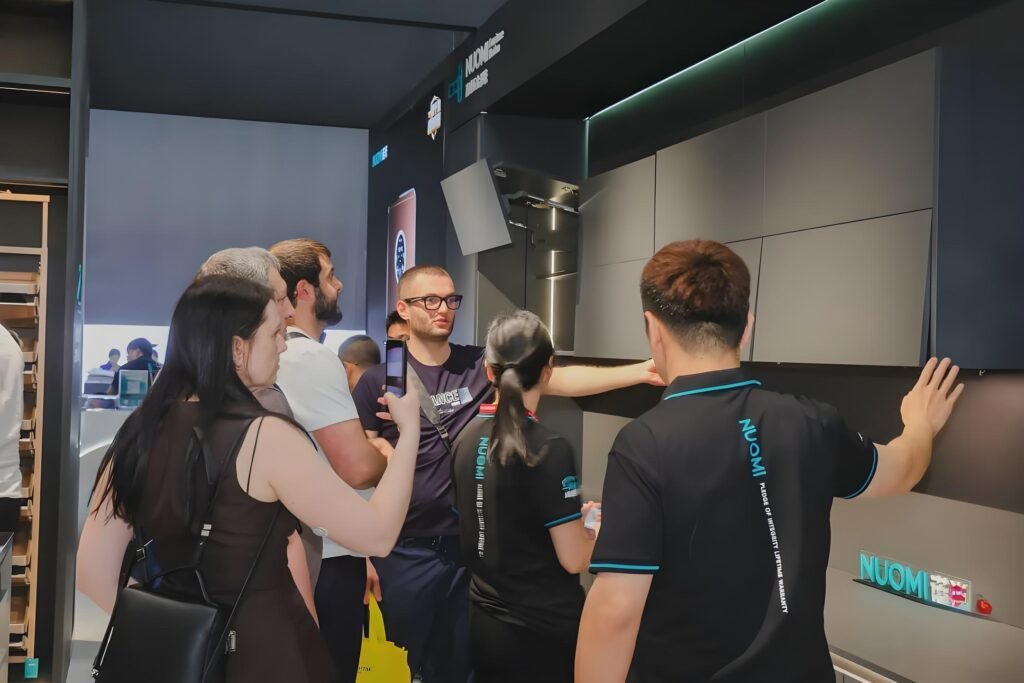
Between CIFF teardown and Canton Fair Phase 2 opening, you’ve got roughly three weeks. Do not fly home during this window. I’ve seen buyers make this mistake repeatedly—they figure there’s a gap, so they’ll head home to handle some business and fly back for Canton Fair. The round-trip airfare isn’t the real cost. It’s the momentum you built at CIFF, gone cold.
Spend these days in Foshan Shunde, Longjiang, or Dongguan Houjie. Visit three to five A-tier suppliers you shortlisted at CIFF. Walk the factory floor, not the showroom. Check raw-material warehouse turnover, finished-goods stock levels, and whether the quality control (QC) station is actually staffed or just a desk with a stamp. Review drawings face-to-face with engineering. Note any red flags—lead-time volatility, material-substitution risks. These notes are hard currency when you negotiate at Canton Fair.
Back in Guangzhou, spend a day compiling audit notes and updating supplier tiers. By now you know who’s solid and who’s blowing smoke.
The Canton Fair Phase 2 Five Days: Price Pressure and Term Locking
Day one of Canton Fair Phase 2, the crowd hasn’t fully peaked yet. Start by visiting suppliers you already met at CIFF. Same people, different venue, different psychology. With more scattered traffic at Canton Fair, a “familiar face” often gets more price flexibility on standard products than they offered at CIFF.
Days two and three, camp in Area B’s furniture zone. Do two things simultaneously: benchmark the standard-product price against your CIFF custom quotes to see if the premium is justified, and identify two to three backup suppliers exhibiting only at Canton Fair, not at CIFF. The breadth of Canton Fair means you’ll always find small factories that skipped CIFF, often with more elastic pricing.
Day four is the buffer day most buyers ignore. Skip the fair. Handle accumulated emails from your hotel, confirm sample shipping addresses, organize quote sheets. This is also the best window for second-round term negotiations with core suppliers—after CIFF contact and factory audits, you’ve got enough trust to discuss payment structures (e.g., 30% deposit, 70% against copy of B/L) and delivery commitments.
Day five is the final day. Some booths start dismantling in the afternoon, creating last-minute price pressure. But don’t dump all your information collection onto the final day—after thirteen days of high-intensity operation, your processing capacity is shot. Spend thirty minutes every evening archiving the day’s cards, quotes, and verbal commitments. That habit will save you.

Three Buyer Profiles, Three Different Approaches
Not everyone should run the same pace.
Product-selection buyers want standard or micro-customized products for immediate orders. Devote seventy percent of energy to CIFF Home Furniture, since CIFF’s product refresh typically runs six to twelve months ahead of Canton Fair. Use Canton Fair Phase 2 for thirty percent price comparison and backup development.
Factory-development buyers are hunting long-term strategic partners. Both CIFF phases need deep attendance to assess cross-category production capability. Extend gap-period factory audits to four or five days, covering at least two industrial clusters—say, Foshan Shunde plus Dongguan Houjie—to test geographic concentration against your logistics needs.
Designer-inspiration buyers are here for trends and material intelligence. On CIFF opening day, hit the design-brand halls first, not the standard booths. Canton Fair Phase 2 adds value in Areas C and D—home decorations, ceramics, glass crafts—which complete a soft-goods scheme alongside furniture. Cap daily effective visits at five or six, leaving time to look and touch.
| Buyer Profile | CIFF Time Share | Canton Fair Time Share | Gap-Period Focus | Daily Effective Visits |
|---|---|---|---|---|
| Product-Selection | 70% | 30% | Price validation | 10-12 |
| Factory-Development | 60% | 40% | Factory audits & engineering alignment | 6-8 |
| Designer-Inspiration | 55% | 45% | Design-studio visits | 5-6 |
Survival Rules for the Dual-Fair Marathon
Transport and Accommodation
Between venues during CIFF, walking from the Canton Fair Complex to the Poly World Trade Center Expo covers 1.2 kilometers in about fifteen minutes—usually faster than waiting for a shuttle. During Canton Fair, moving from Area A to Area B inside the complex takes about twelve minutes via internal corridors.
Book along Metro Line 8. Don’t crowd the venue doorstep. Fair-season hotel rates in Pazhou triple; moving two stations down saves enough to cover a month of dim sum.
Stamina Management
Fourteen consecutive days of high-intensity decision-making. By around day seven, roughly thirty-eight percent of buyers show measurable decision fatigue. They stop pushing back on quotes. They let detail gaps slide.
My advice: split each day into two four-hour blocks, 9:30 AM to 1:30 PM and 2:30 PM to 6:30 PM. Take a mandatory one-hour midday break completely outside the fairgrounds. Limit evening supplier dinners to two max; from day three onward, decline non-core invitations. At least half the “new friends” you make at CIFF are people you’ll never contact again after you fly home. You don’t need to eat with all of them.
Negotiation Rhythm
CIFF moves slow. Suppliers expect twenty to forty minutes. Good for technical discussions and long-term frameworks. Canton Fair moves fast. Ten to fifteen minutes per cycle. Sales reps want to pitch and rotate.
Adjust your tactics accordingly. At CIFF, say “I’ll bring detailed drawings tomorrow afternoon” to lock in deeper dialogue. At Canton Fair, open with your purchase list and target price band to fast-filter suppliers worth continuing with. Save depth negotiations for post-fair email or factory visits.

The Five Most Common Pitfalls—and How to Dodge Them
Pitfall one: Splitting time evenly and skimming both fairs.
This is the classic mistake. Weight CIFF and Canton Fair dynamically based on your goals. Need customization depth? Lead with CIFF. Need price benchmarking? Lead with Canton Fair. A fifty-fifty split leaves both sides undercooked.
Pitfall two: Flying home during the gap.
The gap is your only factory audit window. Flying back and forth costs more than airfare—you lose the negotiation momentum built at CIFF. The factory is busy too; interrupt for two weeks and you drop on their priority list.
Pitfall three: Revisiting the same supplier at both fairs without new leverage.
Your second visit must carry fresh intel—audit findings, competitor quotes. Otherwise you’re just wasting each other’s time.
Pitfall four: Burning out in the first five days and going hollow in the back half.
Enforce a hard ceiling of eight effective visits per day from day three onward. Limit evening meals to one per night. Remember: seventy percent of time for twenty percent of high-intent suppliers. Even distribution is the biggest trap in a sourcing marathon.
Pitfall five: Dumping all card collection onto the final day.
Some booths start dismantling on the final afternoon, and after thirteen days of high-intensity travel, your brain is mush. Spend thirty minutes every evening digitizing the day’s contacts. That discipline saves you.
Core Action Checklist
1.Two weeks pre-departure: complete dual pre-registration, export exhibitor lists, filter fifteen to twenty target suppliers, send structured appointment emails.
2.CIFF days one and two: validate pre-screened list, conduct deep technical alignment with core suppliers, obtain custom-feasibility assessments.
3.Gap days five to seven: audit three to five A-tier supplier factories, verifying production lines, QC checkpoints, and capacity alignment.
4.Canton Fair days nine to eleven: run price benchmarking and volume-term negotiation, locking standard pricing and backup suppliers.
5.Within forty-eight hours post-fair: send tiered follow-up emails defining next steps—samples, contracts, or hold.

FAQ
Q: Are CIFF Guangzhou and Canton Fair Phase 2 held on consecutive dates?
A: No. CIFF Guangzhou typically runs in March (Home Furniture: March 18-21; Office/Commercial & Equipment: March 28-31), while Canton Fair Phase 2 Spring runs April 23-27 and Autumn runs October 23-27. Under normal scheduling they are separated by roughly three to four weeks. Dual-fair linkage means integrating both into a single spring sourcing season, with factory audits in the gap, forming a complete procurement cycle.
Q: If I only have ten days total, can I skip the gap-period factory audits?
A: You can, but efficiency drops significantly. Project tracking data shows teams including factory audits experience roughly forty-five percent fewer supplier performance issues on subsequent orders. If strictly limited to ten days, compress CIFF to three days, Canton Fair to four days, and reserve three days for concentrated factory audits in Foshan or Dongguan.
Q: Do the two fairs overlap in furniture categories?
A: Roughly sixty-five percent of premium factories attend both, but with different focuses. CIFF emphasizes new releases, full collections, and project-customization capability. Canton Fair emphasizes standard export models and volume stock. For buyers, this is not duplication; it is the same supplier behaving differently in two distinct contexts.
Q: Which fair offers lower pricing?
A: Neither is universally cheaper. CIFF quotes are typically project-based, including sample fees and mold amortization. Canton Fair standard-product quotes are volume-discount based. A factory’s custom SKU is usually priced higher than its standard equivalent, but the margin potential in the destination market is also greater.
Q: As a first-time buyer, which fair should I prioritize?
A: If your goal is clear and customization-heavy, prioritize CIFF. If your goal is rapid price-band mapping for standard Chinese export furniture, prioritize Canton Fair Phase 2. Ideally, combine both: CIFF builds your mental framework; Canton Fair validates pricing.
Q: Any hotel booking tips for the dual-fair period?
A: Pazhou district hotel rates during fair periods can reach 2.5-3x normal levels. Book along Metro Line 8 (e.g., Changgang, Kecun, Chigang stations) rather than directly opposite the venue. The metro ride to the complex is 10-15 minutes, and rates are far more reasonable. Book at least six weeks ahead.
Recommended Resource
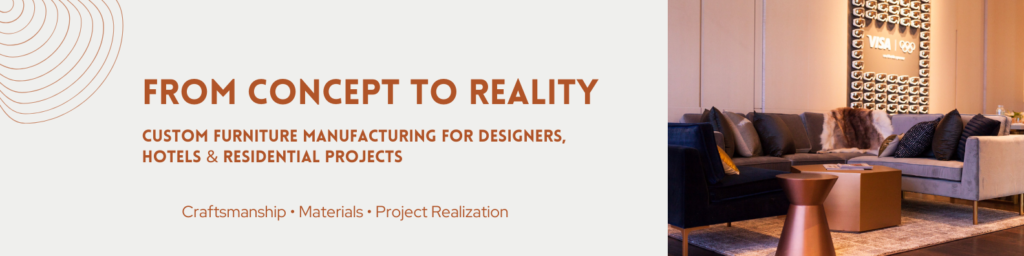
Interi Furniture specializes in custom furniture manufacturing for residential, hospitality, and commercial projects. Their experience in materials, craftsmanship, and project realization makes them a valuable resource for designers and buyers seeking tailored furniture solutions from China.