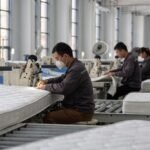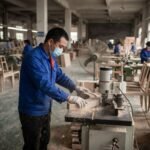







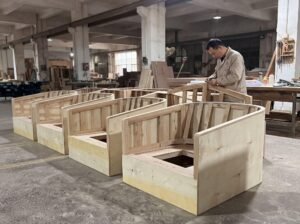
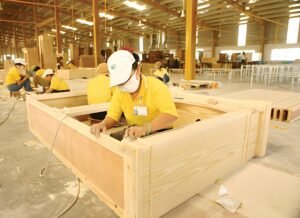

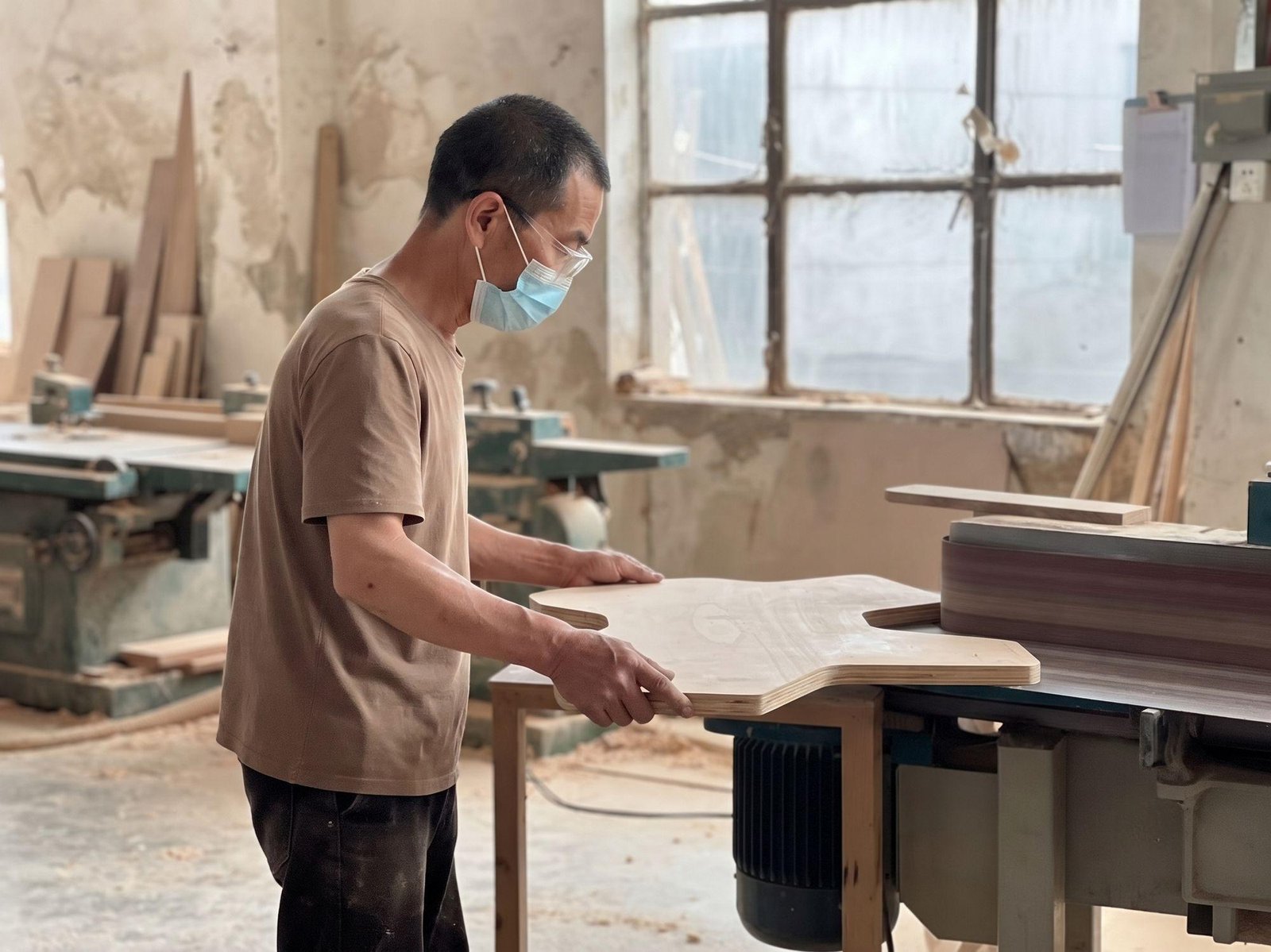
I was standing in a Foshan factory last March, watching two lines run parallel. On the left, workers were crating solid oak dining tables for a German distributor — heavy plywood boxes, foam corners, the works. On the right, a crew was shrink-wrapping flat-packed bed frames in thin corrugated cardboard, destination: Amazon FBA, California. Same roof. Same CNC machines. Two completely different playbooks.
That scene sums up the whole game. Chinese factories customize low-cost ecommerce versions through seven targeted process simplifications — design lockdown, material downgrades, merged production steps, looser QC, lighter packaging, stripped after-sales, and bulk supply deals. These aren’t random hacks. They’re a deliberate re-engineering of the entire production flow, pushed by platform algorithms, seller margin squeeze, and buyers who want a $199 sofa that photographs well.
Here’s what most people miss: some of this simplification is genuinely smart. Some of it will destroy your product in eight months. The trick is knowing which is which. This article breaks down exactly how process simplification ecommerce works, what each cut costs you, and how to spot a legitimate low cost version versus a ticking time bomb.
Why E-Commerce Forced Factories to Build a Second Production Line
Furniture factories didn’t wake up one day and decide to make worse products. The e-commerce model changed the math so drastically that a parallel production system became inevitable.
Platform ranking algorithms eat margin for breakfast. On Amazon and Wayfair, price isn’t just a number — it’s a visibility lever. Drop your sofa frame from $280 to $195 and you jump three pages in search results. That pressure doesn’t stay with the seller. It travels straight back to the factory, usually within 24 hours of a sales meeting.
Return rates on furniture are brutal. E-commerce furniture sees 8% to 15% returns, versus under 3% for brick-and-mortar. Sellers bake those returns into their pricing. Factories, in turn, design products cheap enough that a returned unit doesn’t wipe out the profit on five sales.
The buyer mindset shifted. Traditional furniture shoppers think in decades. E-commerce shoppers think in photos and delivery speed. A sofa that looks great in a listing, ships in three days, and costs less than a monthly gym membership? That’s the brief. Durability became a secondary concern — or sometimes not a concern at all.
Freight costs punish fully assembled furniture. A dining table crated and shipped whole from Guangzhou to Los Angeles runs about $180 in ocean freight. Flat-pack that same table in a cardboard box and you’re looking at $45. That $135 gap is often larger than the factory’s entire margin on the piece. So the factory flat-packs it. Simple as that.
These forces created what factory managers privately call the “e-commerce line” — same workers, same machines, different rules entirely.
The Seven-Step Simplification Chain
Step 1: Design Lockdown — Killing Customization Before It Starts
Here’s how it works in practice. A traditional export buyer — say, a hotel chain from Hamburg — wants a sofa 12cm longer, with fire-retardant foam, in a specific fabric grade. That order needs engineering time, sample approval, maybe three rounds of back-and-forth. The factory charges a premium because flexibility is expensive.
On the factories customize low cost ecommerce line, that flexibility dies. One SKU. One size. One fabric. One foam density. No engineering department gets involved. No samples cross the ocean. The design is frozen before the first board gets cut.
What this saves: Typically 5% to 10% per unit. The money comes from eliminated engineering hours, faster production scheduling, and less material waste from changeovers.
Where the line sits: Design lockdown is usually harmless. A standardized product isn’t worse — it just offers fewer choices. The danger only shows up when the factory uses standardization as cover for a fundamentally weaker base design. If the locked SKU was already borderline, locking it just makes the problem permanent.
What to ask: “Can you modify dimensions, foam density, or fabric grade on this SKU?” If the answer is a flat no with zero explanation, you’re looking at a frozen design. Not automatically bad — but know what you’re buying.
Step 2: Material Downgrades — The BOM Gets a Haircut
This is where most buyers get burned, because material downgrades hide in plain sight. The factory opens the Bill of Materials and starts crossing things off. Solid wood becomes engineered wood. High-density foam drops to standard polyfoam. Stainless steel hardware becomes zinc alloy. Fabric weight slides from 280gsm to 180gsm.
You can’t see any of this in a product photo. A sofa frame wrapped in fabric looks identical whether it’s built from solid hardwood or MDF with a veneer. The difference only surfaces two years later, when the frame starts groaning every time someone sits down.
What this saves: Material downgrading is the single biggest cost cutter, usually dropping unit cost by 15% to 30%. Upholstery pieces see the steepest drops because foam and fabric eat up so much of the total cost. Solid wood furniture sees smaller but still real savings from switching to engineered wood or thinner stock.
Where the line sits: This is where “smart optimization” ends and “dangerous cutting” begins. Replacing solid wood with plywood in a non-structural panel? Fine. Replacing the main support frame with particleboard? You’re building a liability. Standard foam instead of high-density for light use? Acceptable. Using reclaimed scrap foam from other production runs? That’s not a downgrade — that’s fraud.
What to ask: Demand the full BOM for the e-commerce version and compare it to the standard. Specifically check: – Frame material and thickness – Foam density (kg/m³ or lbs/ft³) – Fabric weight (gsm) and composition – Hardware material grade – Finish type and layer count
If the factory won’t show you the BOM, walk away. Seriously. A factory that won’t disclose what it’s building with has something to hide.
Step 3: Merging and Deleting Production Steps
In a traditional furniture factory, a wooden chair might go through six sanding stages, each with progressively finer grit. The e-commerce version? Maybe two. Under factory lighting, the surface looks fine. Six months of daily use later, the finish starts wearing through in patches.
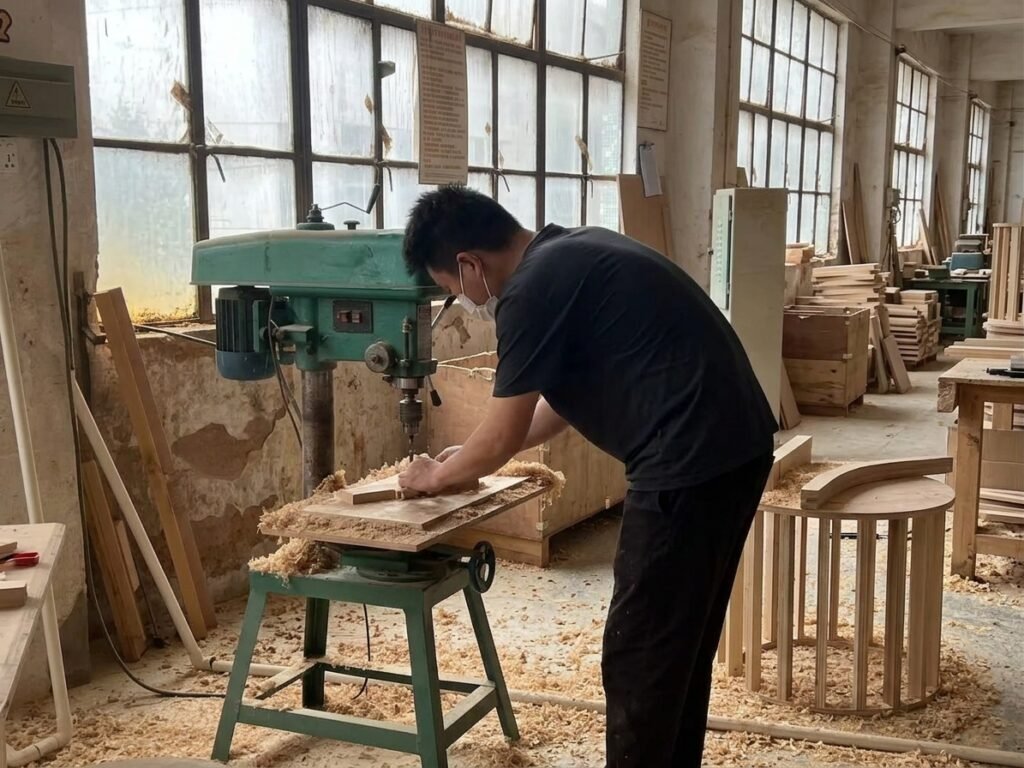
Other common cuts: hand-finishing becomes machine-only. Assembly pre-drilling gets skipped in favor of self-tapping screws that chew into the wood. Wood conditioning before staining disappears, leading to blotchy, uneven color that looks fine in photos and terrible in person.
What this saves: Usually 5% to 12% on labor and machine time. Smaller than material downgrades, but it adds up across a full production run.
Where the line sits: Some step merging is genuinely harmless. Combining two sanding stages into one, done carefully, produces a nearly identical result. But skipping wood conditioning before staining? That blotchiness becomes obvious within months. Missing pre-drilled holes? Your customer ends up with stripped screws and wobbly joints.
What to ask: “How many sanding stages does this go through?” “Is the wood conditioned before staining?” “Are pilot holes pre-drilled?” If the factory gets evasive about production steps, that’s a signal.

Step 4: Compressed Quality Control — When “Good Enough” Gets Redefined
Most export furniture factories follow AQL (Acceptable Quality Level) standards. A standard shipment might be inspected at AQL 2.5 — meaning no more than 2.5% of units can have minor defects. The e-commerce line? Often AQL 4.0 or even 6.5. The factory still checks products, but the bar for “acceptable” drops significantly.
I’ve seen factories where the export line gets full inspection on the first three shipments, while the e-commerce line gets random sampling from day one. Same factory. Same management. Different standard.
What this saves: 2% to 5%, mostly from reduced inspection labor. The real cost shows up later in returns, one-star reviews, and chargebacks that the seller eats.
Where the line sits: AQL 4.0 isn’t automatically dangerous for simple, low-cost items. But combine it with material downgrades and step merging, and you get a compounding effect. Three small problems stack into a product that fails fast.
What to ask: “What AQL level do you use for e-commerce orders?” “Full inspection or sampling?” “What happens to units that fail?” Vague answers here are a warning.
Step 5: Lightweight Packaging — The Visible Difference
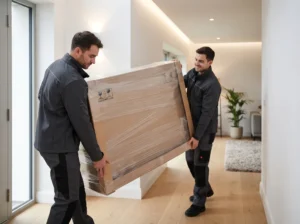
This is usually the first thing you notice. A traditional export dining table ships in a plywood crate with foam corners, corner posts, and full wrapping. The e-commerce version ships in a double-wall cardboard box with minimal internal bracing.
I watched a factory in Dongguan pack the same coffee table two ways. The export version went into a crate that could survive being dropped from shoulder height. The e-commerce version went into a box that started showing crush marks before it even left the loading dock.
What this saves: 3% to 8% on materials and freight. For flat-packed items where packaging is a big chunk of landed cost, the savings get real.
Where the line sits: The risk here is transit damage, not product quality. A well-built table in thin packaging might arrive with scratched edges or cracked corners. Structurally fine. Customer experience ruined.
What to ask: Get photos of the actual packaging, not renderings. Ask for drop-test results or ISTA transit-test certification. If the factory hasn’t tested the packaging for actual e-commerce shipping conditions, assume your damage rate will be above average.
Step 6: Stripped After-Sales — What Happens After the Sale
Traditional export buyers negotiate warranty terms, spare parts availability, and repair support. E-commerce sellers usually don’t — partly because the price point can’t support it, partly because platform return policies make factory-level support less relevant.
The result? No spare parts program. No dedicated warranty claim process. No repair instructions. If a leg breaks on month four, the customer either lives with it or returns the whole unit.
What this saves: 1% to 3%, mostly from eliminated admin overhead. Small but real.
Where the line sits: Generally acceptable for low-cost, high-turnover products where the expected lifespan is shorter. It becomes a problem when sellers market the product as “high quality” or “built to last” while the factory offers zero meaningful support.
What to ask: “What’s the warranty term?” “Are spare parts available?” “Do you provide repair instructions?” If the answer is “replace the whole unit,” factor that into your customer service budget.
Step 7: Supply-Chain Coordination — The Invisible Engine
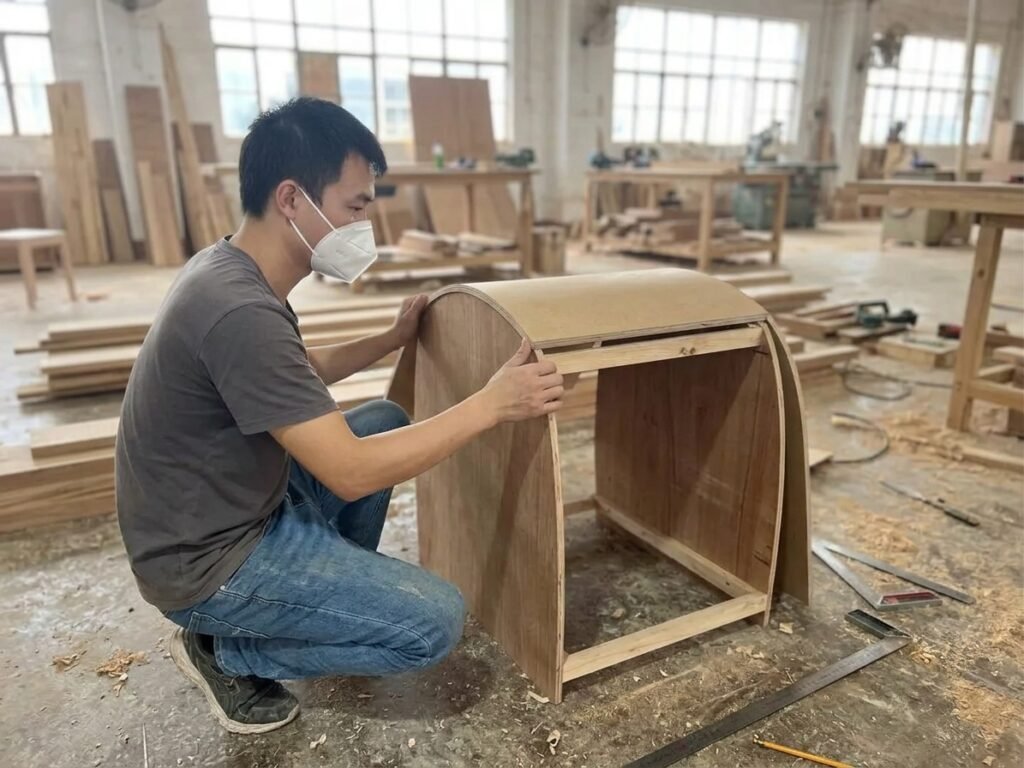
This is the least visible but most structurally important piece. The factory coordinates with material suppliers for bulk, long-term orders at locked-in prices. Instead of buying foam, fabric, and hardware per order, they commit to quarterly or annual volumes in exchange for 10% to 20% material discounts.
A factory manager in Shunde told me last year that his foam supplier gives him an 18% discount if he commits to 20,000 meters per quarter. That’s not pocket change. It lets him offer stable, low pricing on e-commerce SKUs without constant renegotiation.
What this saves: 5% to 15% on material costs, depending on volume and commodity price stability. These savings often get shared between factory and seller.
Where the line sits: Usually safe. The risk only emerges if the factory locks in the lowest-grade materials to maximize the volume discount. A factory committing to 50,000 meters of 180gsm polyester gets a better price than one buying 5,000 meters of 280gsm blended fabric — but the product quality reflects that choice.
What to ask: “Are material grades locked by contract, or can you upgrade for specific orders?” If the supply agreement forces the lowest grade, upgrading may be impossible or prohibitively expensive.
Head-to-Head: Standard Export vs. E-Commerce Simplified
| Dimension | Standard Export Version | E-Commerce Simplified Version | Typical Cost Difference |
| Design | Customizable dimensions, finishes, hardware | Frozen SKU, one configuration | -5% to -10% |
| Materials | Solid wood, high-density foam, premium fabric | Engineered wood, standard foam, lighter fabric | -15% to -30% |
| Production Steps | Full multi-stage process | Merged or skipped steps | -5% to -12% |
| Quality Control | AQL 2.5, full inspection common | AQL 4.0–6.5, sampling inspection | -2% to -5% |
| Packaging | Heavy-duty crates, full protection | Lightweight cardboard, minimal padding | -3% to -8% |
| After-Sales | Warranty, spare parts, repair support | Minimal or none | -1% to -3% |
| Supply Chain | Per-order material purchasing | Volume-locked, long-term contracts | -5% to -15% |
| Total Estimated Savings | — | — | -15% to -45% |
Note: These ranges reflect industry-observed patterns across multiple product categories and factory tiers. Individual results vary by product type, factory capability, and order volume. Data current as of July 2026 for China’s furniture manufacturing sector.
The Boundary Line: Smart Cuts vs. Dangerous Shortcuts
Not every cost reduction is a scam. Some simplification is genuinely intelligent manufacturing. You just need to know where the line sits.
Cuts that are usually fine: – Design standardization for high-volume SKUs – Engineered wood in non-structural panels – Standard-density foam for light-use furniture – Combining redundant production steps – Lightweight packaging for flat-packed, low-value items – Volume-based material contracts
Red flags that signal dangerous cutting: – Particleboard or MDF in load-bearing frames – Foam density below 25kg/m³ (1.5 lbs/ft³) in seating – Fabric weight below 150gsm for upholstery – Missing pre-drilled holes forcing self-tapping assembly – No quality inspection documentation – Packaging that fails basic drop tests – No material certifications (CARB, REACH, etc.)
The compound risk problem: One simplification is usually manageable. A sofa with standard foam but a solid wood frame and decent fabric? Fine for moderate use. But when the factory combines low-density foam, engineered wood frame, thin fabric, compressed QC, and minimal packaging, the failure modes multiply. The sofa doesn’t just get uncomfortable — it structurally collapses.
For B2B Buyers: Negotiating E-Commerce Customization Without Getting Burned
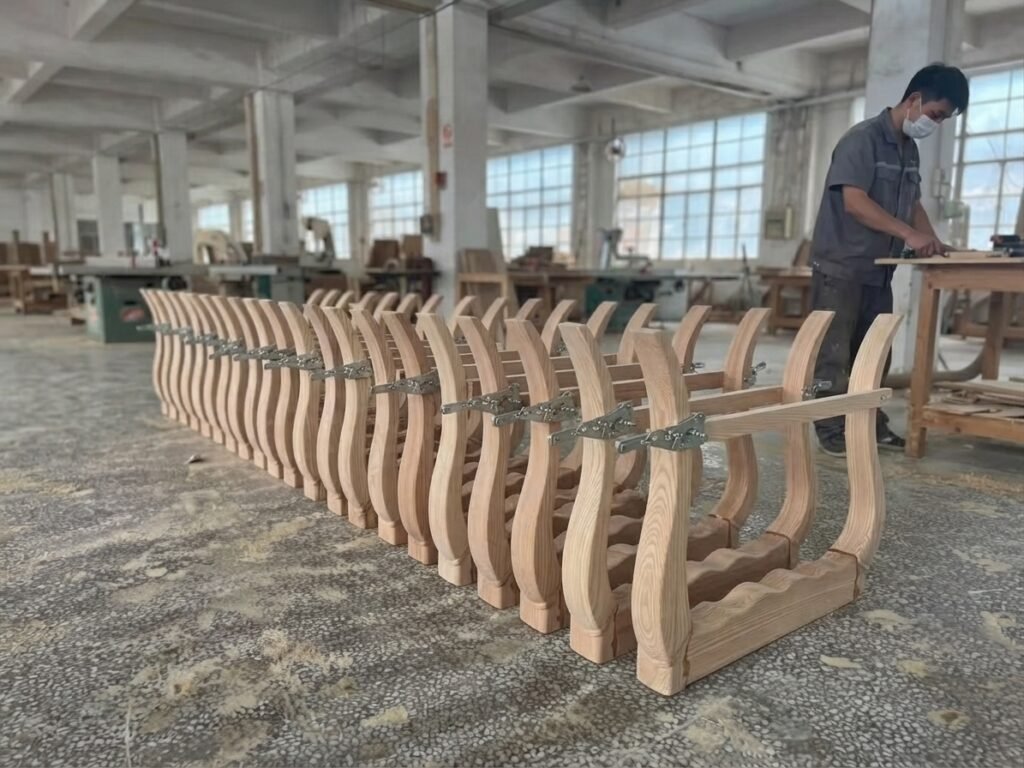
If you’re sourcing private label furniture China for e-commerce, you need to control the simplification process instead of accepting whatever the factory delivers.
Define your non-negotiables before you talk price. Tell the factory upfront which elements you won’t compromise on. Frame material, foam density, and fabric grade are the usual make-or-break specs. Put these in writing in your product specification sheet. If you don’t define the floor, the factory will.
Request three quotes, not one. Ask for standard export, fully simplified e-commerce, and a “controlled simplification” that keeps your non-negotiables while accepting reasonable cuts elsewhere. Most factories can do this if you ask clearly. The middle option often lands 15% to 25% below standard export while keeping the product structurally sound.
Audit the BOM, not just the sample. A golden sample proves the factory can build one good unit. The BOM proves they plan to build every unit that way. Insist on a detailed BOM with material grades, thicknesses, and supplier names. If they won’t show it, that’s your answer.
Write QC standards into the purchase order. Don’t assume the factory uses the same AQL for all customers. If you want AQL 2.5, say so. If you want full inspection on the first three shipments, specify it. Verbal agreements with factory sales reps have a funny way of evaporating when problems arise.
Test the packaging before you ship at scale. Order one unit shipped to your warehouse via the exact same method your customers will use. Open it. Inspect it. If it’s damaged, the packaging isn’t adequate — regardless of what the factory claims. I’ve seen sellers skip this step and regret it three months later when their return rate hits 20%.
Negotiate after-sales terms even for low-cost items. Even a basic spare parts program or repair instruction sheet reduces your long-term customer service costs. Factories often agree to these if you commit to volume. They just won’t offer unless you ask.
For Personal Home Buyers: Spotting E-Commerce Simplification When Shopping Online
You can’t audit the factory from your living room. But you can still protect yourself.
Read the specs, ignore the photos. Look for specific material information in the product description. “Solid wood frame” means something different from “wood frame” or “engineered wood frame.” “High-density foam” is different from “foam” or “polyurethane foam.” When the description is vague, that’s intentional. Vague means they’re hiding something.
Mine the one-star and two-star reviews. Don’t just glance at the star rating — read the actual complaints. Patterns matter. If multiple reviewers mention sagging cushions within six months, weak frame joints, or fabric pilling, you’re looking at a heavily simplified product. One bad review is an outlier. Five saying the same thing is a pattern.
Compare weights for the same dimensions. A heavier product usually indicates denser materials. A sofa weighing 45kg is built differently from one weighing 28kg. Not a perfect test — some lightweight materials are high quality — but it’s a useful signal. When the lighter one is half the price, the weight difference is telling you why.
Beware prices that don’t make sense. A genuine leather sofa for $399 isn’t a deal — it’s a physics problem. Either the leather is bonded (not genuine), the frame is composite, or both. Real materials cost real money. When the math doesn’t add up, the product doesn’t either.
Check the warranty and return policy. A one-year warranty and 30-day return window tells you something about the manufacturer’s confidence. A five-year warranty and white-glove delivery tells you something else. The policy is the factory’s way of saying how long they expect the product to last.
Myths That Cost Buyers Money
Myth: “Low price means the factory is sacrificing its own margin.”
Reality check: Factories don’t stay in business by being generous. The price drop comes from systematic process simplification, not from the factory eating its own profit. A factory selling e-commerce versions at 40% below export prices is often making the same — or better — margin because their costs dropped proportionally. The money came out of the product, not the factory’s pocket.
Myth: “All e-commerce furniture is garbage.”
Reality check: There’s a wide spectrum. Some e-commerce furniture is genuinely well-built with smart simplifications that don’t compromise core quality. Other products are disasters held together with hope and cheap glue. The difference is in which simplifications the factory chose — not in whether they simplified at all.
Myth: “If it looks the same in photos, it is the same.”
Reality check: Photos hide everything that matters. You can’t see foam density, frame material, or fabric weight in a product image. Two sofas that look identical online can have completely different internal construction. The photo shows you the surface. The BOM shows you the truth.
Myth: “Chinese factories always use the cheapest possible materials.”
Reality check: Chinese factories produce exactly what the buyer specifies and pays for. A factory building for a German distributor uses different materials than one building for a budget Amazon seller because the buyers have different requirements and budgets. The factory isn’t the problem — the specification is. You get what you specify. And what you pay for.

FAQ: E-Commerce Furniture Process Simplification
How do Chinese factories make cheap furniture for ecommerce?
They run seven main plays. First, they lock the design — one SKU, no customization, no engineering back-and-forth. Second, they downgrade materials in the BOM — engineered wood instead of solid, standard foam instead of high-density, lighter fabric, cheaper hardware. Third, they merge or skip production steps — fewer sanding stages, no wood conditioning, skip pre-drilling. Fourth, they loosen QC — AQL 4.0 or 6.5 instead of 2.5. Fifth, they cut packaging weight — cardboard instead of crates, minimal internal bracing. Sixth, they strip after-sales — no spare parts, no repair support. Seventh, they lock in bulk material contracts for 10% to 20% discounts.
Combined, these cuts typically drop unit costs by 15% to 45% versus standard export versions. The critical distinction is between acceptable efficiency moves — like design standardization or volume contracts — and dangerous quality compromises — like particleboard in load-bearing frames or foam so light it collapses in months.
What is the difference between cheap ecommerce furniture manufacturing and standard export production?
Standard export production is built for longevity and customization. You can modify dimensions, choose finishes, upgrade hardware. Materials run higher grade — solid wood, high-density foam, heavier fabric. Production follows strict multi-step processes with tight QC at AQL 2.5. Packaging is heavy-duty protective crating. After-sales includes warranty, spare parts, and repair support.
Cheap ecommerce furniture manufacturing strips all of that systematically. Designs get frozen. Materials drop a grade or two. Production steps merge or disappear. QC loosens to AQL 4.0–6.5. Packaging goes lightweight. After-sales gets minimal or eliminated. The product looks similar on the surface but performs differently over time. It’s not inherently bad — it’s built for a different use case. The problem starts when sellers market it as something it’s not.
How can I tell if a factory is doing reasonable cost reduction or dangerous shortcuts?
Ask for three things and don’t accept excuses. One: a detailed BOM comparing the standard and simplified versions. Two: the production flow chart showing which steps are merged or skipped. Three: the QC inspection standard with the specific AQL level.
Red flags that should make you walk away: particleboard anywhere in a load-bearing frame; foam density below 25kg/m³ in seating; fabric weight below 150gsm for upholstery; missing pre-drilled assembly holes; no quality documentation of any kind; packaging that hasn’t been transit-tested; no material certifications like CARB or REACH.
Safe simplifications you can usually live with: design standardization for high-volume runs; engineered wood in non-structural panels; standard foam for light-use furniture; combining redundant sanding or finishing steps; lightweight packaging for flat-packed items; volume-based material contracts that lock in pricing without locking in the lowest grade.
What should I look for in the BOM when sourcing private label furniture China for ecommerce?
Focus on five elements that determine whether the product survives or dies. Frame material and thickness — solid hardwood versus engineered wood versus particleboard. This is where structural failures start. Foam density in kg/m³ or lbs/ft³ — higher is better for seating, period. Fabric weight in gsm and composition — 280gsm blended fabric performs very differently from 180gsm pure polyester. Hardware material grade — stainless steel versus zinc alloy determines whether joints hold or corrode. Finish type and layer count — more layers usually mean better durability and appearance retention.
If the factory won’t provide a detailed BOM, or if the e-commerce version’s BOM shows major downgrades in structural materials, you’re not looking at optimization. You’re looking at a product designed to fail.
Is lightweight packaging always bad for ecommerce furniture?
Not at all. For flat-packed, low-value items where freight cost eats up a big chunk of the landed price, lightweight packaging is a reasonable trade-off. The risk isn’t product quality — it’s transit damage. A well-built table in thin cardboard might arrive with scratched edges or a cracked corner. Structurally it’s fine. The customer experience is ruined.
The key question is whether the packaging has been tested for the actual shipping conditions it will face. Ask for ISTA transit-test results or photos from drop tests. If the factory hasn’t tested the packaging — and many haven’t — expect higher damage rates and factor that into your pricing. A 5% damage rate on a $50 item is annoying. A 5% damage rate on a $500 item is expensive.
Can I negotiate a middle ground between fully simplified and standard export quality?
Yes, and you absolutely should. Most factories can produce what I call a “controlled simplification” — keeping the critical quality elements that prevent structural failure while accepting reasonable cuts elsewhere. You keep the solid frame, the adequate foam, and the decent fabric. You accept design standardization, lighter packaging, and simplified after-sales.
Ask for three quotes: standard export, fully simplified e-commerce, and controlled simplification. Define your non-negotiables in writing before you negotiate price. This middle path typically yields a product costing 15% to 25% less than standard export while maintaining quality that’s acceptable for its intended use. The factories that refuse to offer a middle option are usually the ones you don’t want to work with anyway.
Why do some ecommerce furniture items fail within months while others last years?
Failure almost always comes from compounding simplifications, not a single problem. A sofa with standard foam but a solid wood frame and good fabric might sag eventually but won’t collapse. That’s a wear issue, not a structural failure.
But when the factory stacks low-density foam, an engineered wood frame, thin fabric, compressed QC, and minimal packaging on the same product, the failure modes accelerate each other. The frame weakens under load. The foam compresses permanently and stops providing support. The fabric tears at stress points. The overall structure degrades faster than any single issue would cause on its own. This is why auditing the full simplification chain matters more than checking any one element in isolation.
Final Word: Simplification Is a Tool — The Problem Is Opacity
The furniture industry didn’t create process simplification ecommerce to deceive anyone. It evolved because e-commerce created a legitimate demand segment — buyers who prioritize price and speed over longevity and customization. Factories responded with a production model that delivers exactly what that segment wants. That’s not a crime. That’s market adaptation.
The real problem is opacity. When buyers don’t understand what they’re getting, they can’t make informed decisions. A $199 sofa built with smart simplifications is a legitimate product for the right buyer. A $199 sofa marketed as “premium quality” while built with dangerous shortcuts is a scam. The difference isn’t the price — it’s the honesty about what’s inside.
At Furniture Discover, we close that gap. We tell you what the industry won’t: how the product is actually built, which cuts are safe, and which ones will cost you more in returns and replacements than you saved on the purchase.
Before your next factories customize low cost ecommerce order, run through the seven-step checklist in this article. Ask the hard questions. Read the BOM. Test the packaging. And remember — the cheapest price isn’t the best deal if the product doesn’t make it through its first year.
Recommended Resource
Interi Furniture specializes in custom furniture manufacturing for residential, hospitality, and commercial projects. Their experience in materials, craftsmanship, and project realization makes them a valuable resource for designers and buyers seeking tailored furniture solutions from China.