








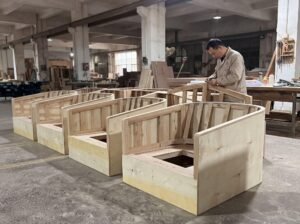
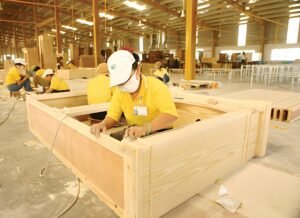

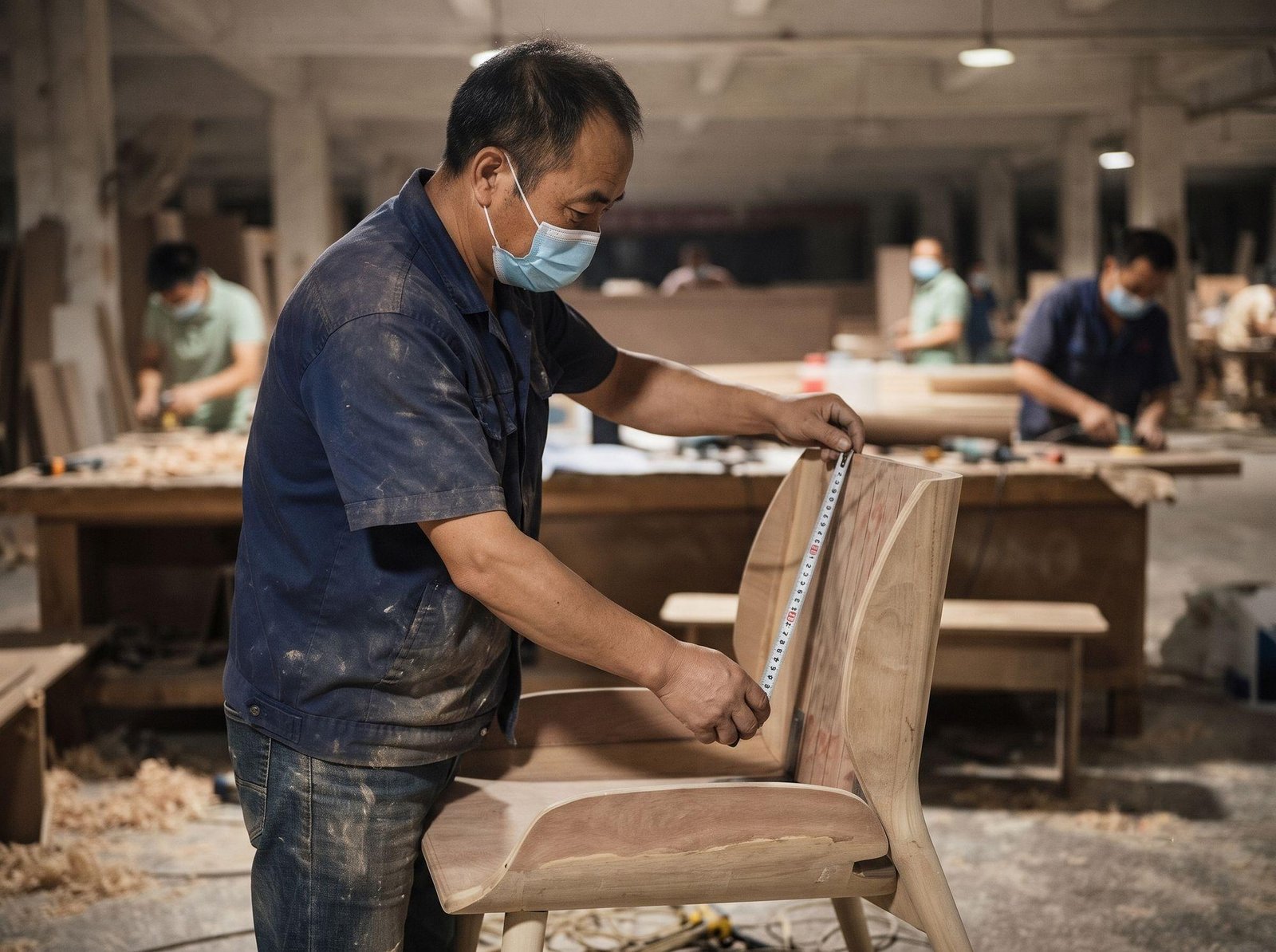
The only reliable way to verify your furniture order’s progress in China is to replace blind trust with an evidence-based tracking system. Break production into verifiable milestones. Demand photo or video proof at each stage. Tie payment releases to confirmed completion, not verbal promises. Add third-party inspection at critical handoffs. This shifts the power dynamic: instead of accepting whatever story the factory tells you, you verify it against hard evidence.
“Almost Done” Means Nothing: Why Verbal Updates Fail Buyers
“Your sofa frames are almost finished.” “The upholstery starts next week.” “Just two more weeks.” If you’ve sourced from China, you’ve heard these lines. They sound reasonable. They rarely mean what you think.
The problem isn’t necessarily dishonesty. Often, the person giving the update genuinely believes it. The production manager reports what the workshop supervisor told him. The supervisor reports what he saw at 9 AM, before the afternoon shift discovered a fabric mismatch that sent half the line back to cutting. By the time the message reaches you, it’s stale, filtered through layers of optimism and internal pressure.
What we’ve seen repeatedly is this: the buyer becomes the last node in an information chain that nobody designed. The factory controls the narrative because they control the floor. You can’t walk the workshop. You can’t see raw material stock. You can’t tell if “almost done” means 80% complete or 20% with a shrug. You’re stuck at the information endpoint.
This isn’t a character flaw. It’s structural. Chinese furniture manufacturing runs on tight margins, volatile material costs, and seasonal spikes. A factory might have your order, a hotel chain’s order, and a domestic retailer’s order competing for the same cutting tables. When capacity tightens, someone gets pushed back. Without tracking, that someone is usually the buyer who isn’t watching.
Verbal updates also create a psychological trap. Each phone call or WeChat message gives a sense of control. But it’s theater. Updates are cheap. Sending time-stamped photos of your specific order at a specific station requires discipline. Most factories won’t do it unless you build it into the agreement from day one.
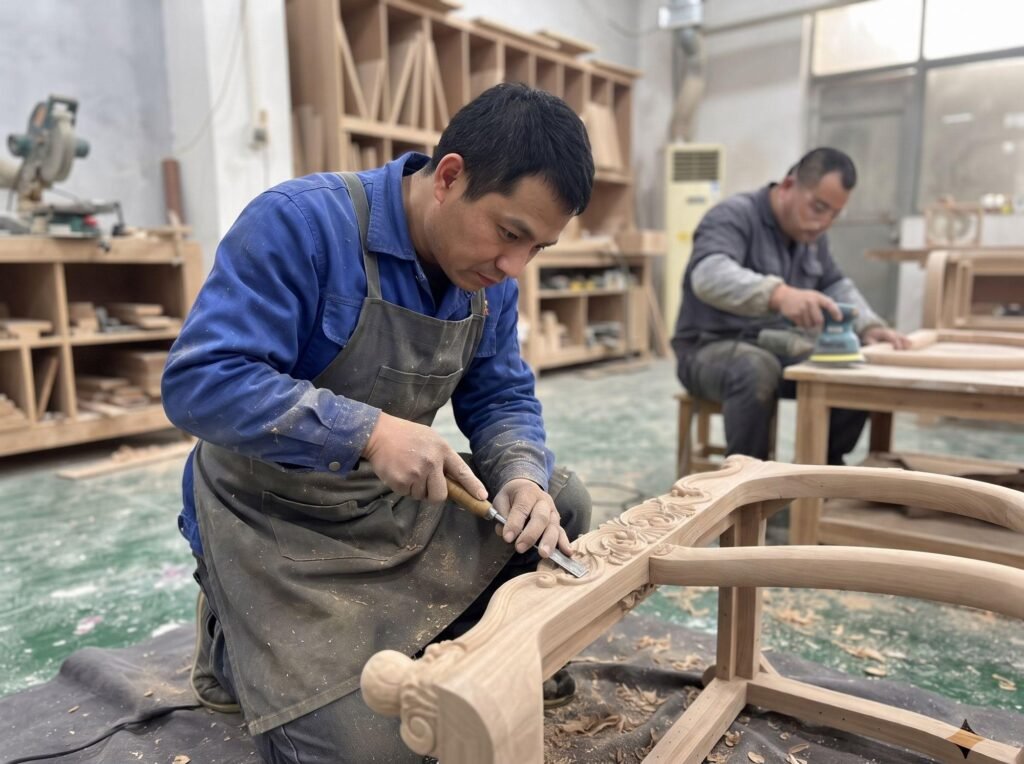
The Real Reasons Behind the Five Most Common Delay Lines
Factories don’t invent excuses out of thin air. Some delays are genuine. Some cover deeper problems. The skill lies in telling the difference.
“The raw materials haven’t arrived.”
Sometimes true. Wood veneer from South America can sit at port for weeks. Fabric mills run on thin inventory. But in other cases, this means the factory used your deposit to buy materials for a larger order first. Without a tracking number or a photo of the material batch with your PO number visible, you can’t tell which version is real.
“Environmental inspection.”
Compliance sweeps are real, especially in the Pearl River Delta and around trade show seasons when authorities tighten enforcement. But this excuse has also become a blanket cover for power rationing, equipment failure, or prioritizing another client’s rush job. Ask for the official notice number or a photo of the posted shutdown notice. Real inspections leave paper trails.
“The workers had to redo some pieces.”
Quality failures happen. Chair frames warp after steaming. Leather dye lots don’t match approval samples. These are legitimate reasons for delay. But “rework” can also mask the fact that your order never entered production on schedule because the factory accepted a last-minute bulk order. Genuine rework comes with photos of defective units. Excuse rework comes with vague apologies and no documentation.
“Machine breakdown.”
CNC routers and sewing machines do break. But a single broken machine rarely halts an entire order unless the factory runs at absolute capacity with zero redundancy—or unless the breakdown is exaggerated to buy time. Request a photo of the maintenance ticket. Most factories have backup equipment. If they don’t, that’s a red flag about operational maturity.
“Almost done. Two more weeks.”
This classic stalling phrase buys time without committing to anything specific. “Almost done” has no measurable definition. When you hear this pattern, the factory has likely lost control of the schedule and is hoping to catch up before you escalate. The countermeasure is specificity: instead of asking “when will it be done,” ask “which production step is active right now, and what evidence can you send by end of day.”
| Delay Line | Could Be Real If… | Likely an Excuse If… |
|---|---|---|
| Raw materials delayed | Supplier tracking provided; photos show material arrival with your PO visible | No tracking number; story changes between calls; other clients’ orders unaffected |
| Environmental inspection | Official notice or shutdown photo shared; dates align with regional enforcement | Vague timing; no documentation; cited repeatedly over weeks |
| Rework required | Photos of defects shown; specific defect described; partial shipment offered | No visual proof; description shifts; duration keeps extending |
| Machine breakdown | Maintenance log or video shared; backup machine explanation given | No evidence; affects only your order; other lines unaffected |
| “Almost done, two more weeks” | Specific sub-tasks listed with dates; evidence of active work shown | Same phrase repeated; no stage-specific updates; avoids video calls |
From Trust to Verification: The Four-Layer Tracking System
The solution isn’t finding a factory that never delays. It’s building a system where delays are visible early, documented clearly, and financially consequential. Here’s the framework we’ve refined through years of order tracking China factory work.
Layer 1: Contract Milestone Design
Most purchase orders treat production as a black box. You pay a deposit, you pay the balance, you get a ship date. That model assumes the factory will manage itself. It won’t—not maliciously, but because factories juggle dozens of orders and yours only stays top-of-mind if someone forces it.
Structure your contract around production milestones tied to verifiable events. For a sofa order: (1) raw frame material cut and approved, (2) frame assembly complete, (3) foam and webbing installed, (4) upholstery pattern matched and first piece approved, (5) full production run complete, (6) final QC passed and packed.
Each milestone gets a date range, not a single date. “Week of August 5” is more honest than “August 5.” Each milestone also gets a payment trigger. You release the next installment only when the milestone is verified, not when the factory says it’s done. Their cash flow becomes tied to your verification, not just their production speed.
Layer 2: Process Evidence Requirements
Verbal confirmation is worthless. Photo evidence is better. Video evidence is better still. But even photos can be staged or recycled.
The key is specificity. Don’t ask for “production photos.” Ask for: a photo of your PO number on a card, placed on the material batch at the cutting station. A video panning across the floor showing your order’s components at active workstations, with the date visible on a phone screen in frame. A close-up of the QC checklist with your PO number, signed and dated.
Some factories push back. They’ll say it’s too much work, or that no buyer asks for this. That’s information in itself. A factory refusing basic documentation doesn’t want you to see the floor. The ones that agree quickly usually have cleaner operations—or have learned that transparency wins repeat business.
For production monitoring systems, use a shared folder updated by a designated factory contact. Weekly manufacturing progress updates minimum. Daily during critical phases. The contact should be the production planner or QC lead, not the sales rep, who has every incentive to tell you what you want to hear.
Layer 3: Third-Party Validation
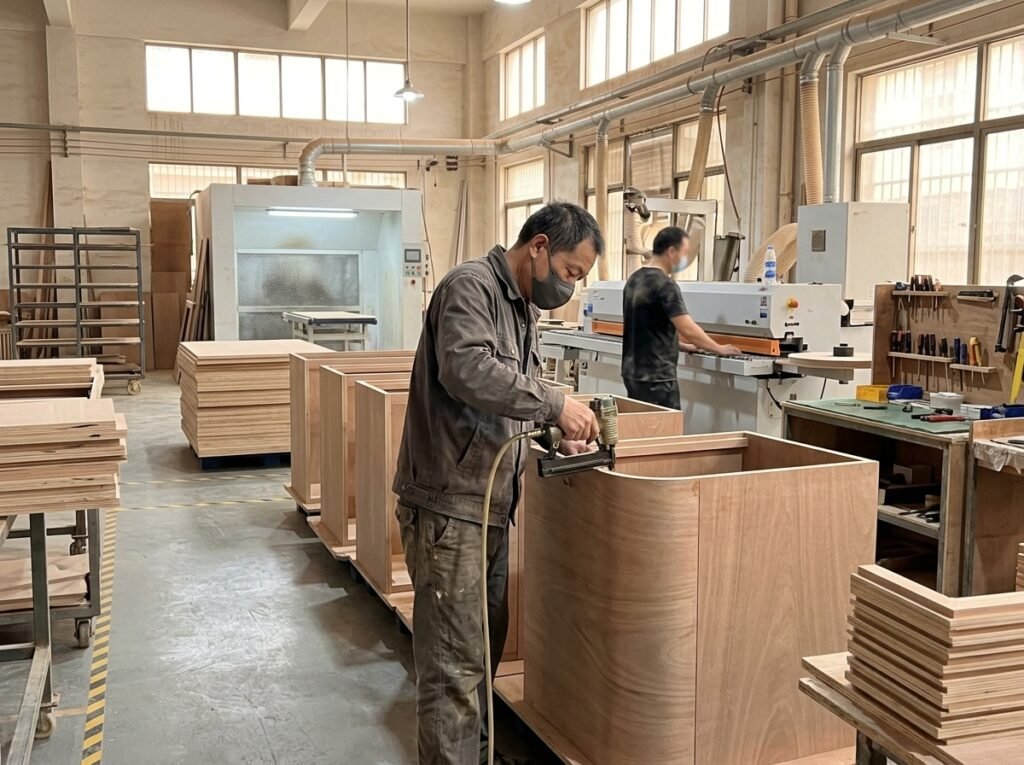
Factory-provided evidence is necessary but not sufficient. You need independent eyes at the moments that matter.
Third-party QC inspection verifies that self-reported progress matches reality and creates a neutral record if disputes arise. The critical points are: (1) pre-production, to confirm materials match specs before cutting, (2) mid-production, to catch construction errors before they’re buried under upholstery, and (3) pre-shipment, to verify finished goods against your approved sample.
For buyers who can’t afford full services at every milestone, use a hybrid: factory QC for routine updates, but book an independent inspector for pre-shipment. That’s the point of maximum leverage—problems found then still have time to be fixed before you withhold final payment.
Some buyers also use video call inspections. Not a friendly chat, but a structured walkthrough where the factory contact carries a phone through the workshop, shows specific workstations, and answers direct questions about which order runs where. Twenty minutes. It reveals more than a month of emails.
Layer 4: Payment Rhythm Binding
This is the layer most buyers skip, and it matters most.
The standard 30/70 split—30% deposit, 70% before shipment—gives the factory most of their money before they’ve proven anything. By the time you discover a delay or quality issue, they’ve already cashed the bulk payment. Your leverage is gone.
A milestone-based structure looks different. Maybe 20% deposit, 20% at frame completion, 20% at upholstery start, 20% at final QC, 20% against bill of lading. The principle is constant: money moves when verified progress moves.
Factories will resist. They’ll cite cash flow pressure and material prep costs. Some concerns are legitimate. A 20% deposit might not cover leather for a full container of sofas. In those cases, negotiate a higher initial deposit tied to material verification—released only after you receive photos of purchased material with your PO number.
The goal isn’t punishment. It’s alignment. When the factory gets paid for hitting milestones, they manage your order like a priority. When they get paid regardless, they manage it like a queue item.
A Lightweight Version for Small Orders and Individual Buyers
Not every buyer orders a full container. If you’re a designer sourcing twelve chairs, or a homeowner buying a custom dining set, the four-layer system can be simplified.
Focus on two non-negotiables: evidence before deposit, and payment on delivery.
Before sending money, request photos of the factory’s current production floor. Not showroom shots—actual workshop photos. Ask for a video call walking through an active order similar to yours. If they refuse or deflect, find another factory. This single step filters out most problematic suppliers.
Structure payment as: small deposit (10-20%) to reserve the slot, balance paid only after video evidence of finished goods packed and labeled with your details. For very small orders, use a secure payment method with buyer protection, or a platform holding funds in escrow.
Skip the formal QC inspector. Instead, ask for a 2-minute video of your finished pieces from multiple angles, with a paper showing your name and date placed in frame. Most quality issues—wrong fabric, wrong dimensions, damaged frames—are visible on video. If the factory won’t do this for a $3,000 order, they won’t do anything right for a $30,000 order either.
Your Pre-Order Checklist: Set Up Tracking Before You Pay the Deposit
The worst time to negotiate tracking terms is after you’ve paid. Build these into your initial agreement.
● Define milestones in writing, with date ranges and evidence requirements
● Specify who provides updates (name and role, not just “the factory”)
● Require photo/video evidence with PO number and date visible
● Book third-party inspection for at least pre-shipment; add mid-production for complex orders
● Structure payment to release only after milestone verification
● Include a clause defining consequences for missed milestones without documented cause
● Request a production schedule timeline before deposit
● Confirm the factory’s peak season capacity and whether your order competes with domestic rush jobs
If the factory won’t agree to three or more of these, that’s data. Either they lack systems for transparency, or they don’t want you to have visibility. Both are reasons to keep looking.

FAQ
How often should I request production updates?
Weekly during normal phases, daily during critical transitions like material arrival or upholstery start. Increase frequency when previous updates have been vague. Don’t apologize for asking. It’s your money.
What if the factory refuses to send photos or videos?
This is a signal, not an obstacle. Factories with clean operations usually agree readily because documentation costs nothing and builds trust. Resistance often indicates operational chaos they don’t want exposed, or a priority problem—they’re working on other orders and don’t want you to see empty workstations. Consider it a red flag.
Can I trust factory-provided QC reports?
Factory QC reports are useful for routine monitoring but should not be your only quality gate. Their incentive is to pass units, not protect your standards. Use factory QC for progress tracking, but always add independent pre-shipment inspection for final verification.
What’s a reasonable penalty clause for missed milestones?
Penalty clauses are tricky across borders and rarely enforceable. A more effective approach is payment withholding. Structure your contract so missed milestones delay payment releases. The factory feels the pain through cash flow delay, which is immediate and real, rather than through a legal threat they’ll ignore.
How do I tell if a delay is a real problem or just poor planning?
Real problems come with documentation: material shortage photos, inspection notices, maintenance records. Poor planning comes with repetition—the same excuse recycled, the same “two more weeks” restated. Ask for specific evidence of the claimed problem. A factory facing a genuine crisis will usually provide it eagerly. A factory making excuses will resist specificity.
Is video call inspection as good as physical third-party inspection?
No, but it’s far better than nothing. Video calls let you see the workshop environment and gauge whether machines are running. They won’t catch subtle quality defects or precise measurements, which is why you still need pre-shipment inspection for final verification. Think of video calls as progress verification, not quality certification.

Recommended Resource
Interi Furniture specializes in custom furniture manufacturing for residential, hospitality, and commercial projects. Their experience in materials, craftsmanship, and project realization makes them a valuable resource for designers and buyers seeking tailored furniture solutions from China.