





Yes, you can source furniture without Chinese — but the friction depends on three things: your order size, the factory’s export experience, and how much risk you can absorb from communication gaps. Small buyers face a steeper climb than most guides admit. Large-volume purchasers have more leverage, yet they still hit walls that no translation app can fix. This article breaks down what actually works, what quietly fails, and where the real costs hide.
What Factory English Actually Looks Like
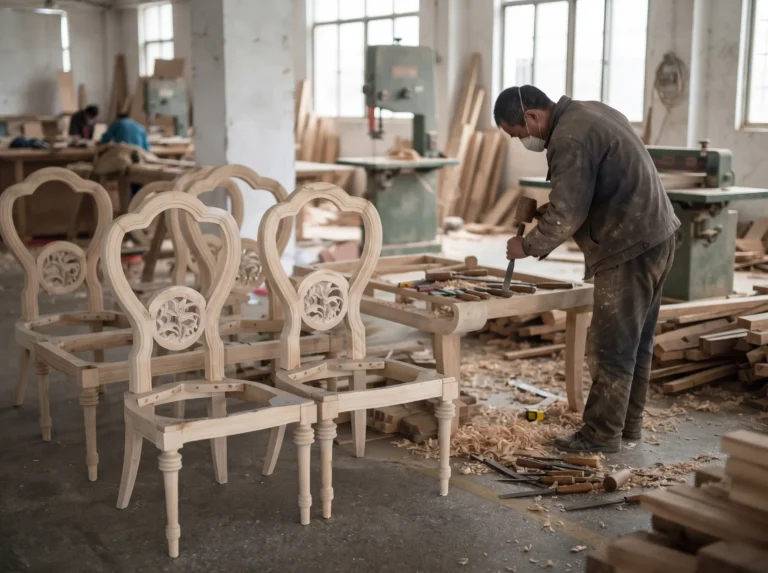
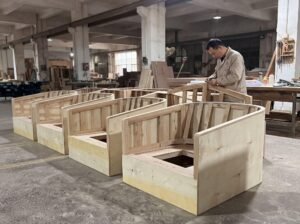
China’s furniture industry is not a monolith. A 500-person factory in Foshan serving European hotel chains operates differently from a 30-person workshop in Ganzhou making chairs for domestic wholesalers. Their English capabilities diverge just as sharply.
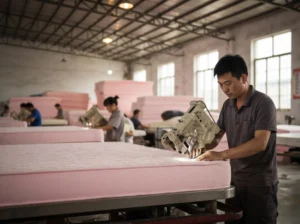
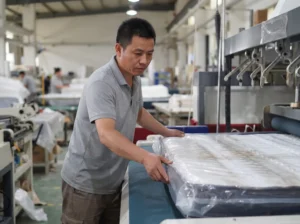
Large export-focused factories — typically 200+ employees — usually employ one to three full-time foreign trade managers. These staff handle RFQs and shipping documents in functional English. However, “functional” is the key word. Their vocabulary centers on pricing, MOQs, and container logistics. Ask them to explain why a veneer grade caused a color mismatch, or to debate UK hospitality fire-retardant standards, and the conversation stalls. They default to sending photos, repeating “no problem,” or escalating to a WeChat group where a senior manager jumps in with broken English.
Mid-sized factories — the 50-to-150-employee range that dominates China’s landscape — represent the gray zone. Many have a single “foreign trade clerk” who is actually a 24-year-old graduate juggling three Alibaba accounts at 11 PM. Their English covers basic catalogs and price lists. Technical discussions? They copy-paste into Baidu Translate and hope. One California designer received a sample where “upholstery foam density” had been mistranslated. The factory sent 25D foam instead of 35D. The error cost her three weeks and $4,200 in remade samples. The clerk had never encountered “density” in a furniture context before.
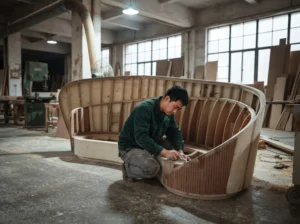
Small workshops and niche producers — especially stone furniture makers in Yunfu or solid wood specialists in Jiangxi — often have zero English-speaking staff. Their business model relies on domestic distributors or trading companies. If you email them in English, do not expect a response. This is not rudeness. It is rational allocation of limited time.
Regional variation matters. The Pearl River Delta has the deepest bench of English-capable staff due to decades of export exposure. Zhejiang’s Anji county varies widely. Northern and inland regions lag further. Data updated as of July 2026.
Six Ways to Source Furniture Without Mandarin
1. Direct Factory Contact via Alibaba or Made-in-China
The default starting point. Platform interfaces are in English. The friction begins after the initial inquiry.
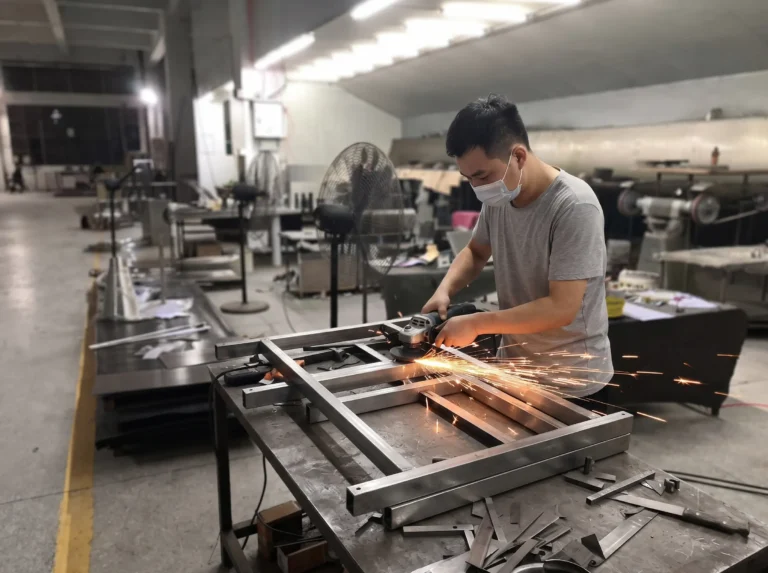
What works: Price discovery, catalog browsing, and MOQ confirmation go smoothly. For standardized products — metal frames, basic sofas, melamine tables — this path is viable.
Where it breaks: Customization discussions. One buyer exchanged 47 emails to confirm a change from oak to walnut legs. The clerk kept replying “yes, we can do” without confirming price or lead time. The order shipped with wrong legs because the modification never reached the production floor — lost in translation between the English clerk and the Chinese-speaking supervisor.
Cost: Free for buyers. The real cost is time and error risk.
2. Hiring a Sourcing Agent or Buying Office
A sourcing agent acts as your Mandarin-speaking proxy. They visit factories, inspect quality, negotiate terms, and translate specifications.
What works: Agents with genuine furniture expertise prevent disasters. They know which factories pad Alibaba photos with renderings. They can spot when “solid wood” means MDF with a 2mm veneer. For orders above $50,000, a competent agent often pays for themselves by preventing one major mistake.
Where it breaks: The agent market is unregulated. Some secretly take 5-15% commissions from factories — unbeknownst to the buyer — creating an incentive to steer clients toward higher-margin, not higher-quality, suppliers. Other agents lack technical knowledge. They can translate “sofa” but cannot explain why a suspension system fails after 18 months. For reference only, subject to actual verification: commission-based fees range from 3% to 8% of order value, while flat-fee agents charge $300–$800 per day. Data updated as of July 2026.
Cost: 3-8% commission or $300–$800/day plus travel.
3. Using WeChat with Translation Tools
WeChat dominates Chinese furniture manufacturing communication. Most factories prefer it over email. The built-in translation handles simple sentences adequately.
What works: Quick confirmations, photo sharing, and voice messages that auto-translate. For buyers who adapt to the platform’s rhythm, communication speeds up.
Where it breaks: Furniture terminology is highly specific. “Tufting,” “dovetail joinery,” and “water-based lacquer” do not translate cleanly. One buyer requested “mortise and tenon joints” for a solid wood bed frame. WeChat’s translator rendered it as “mouse and ten people joints.” The factory defaulted to standard screw-and-bracket assembly. The bed held together. It was not what was ordered. Technical specs remain hazardous for machine translation.
Cost: Free, but the error tax can be steep.
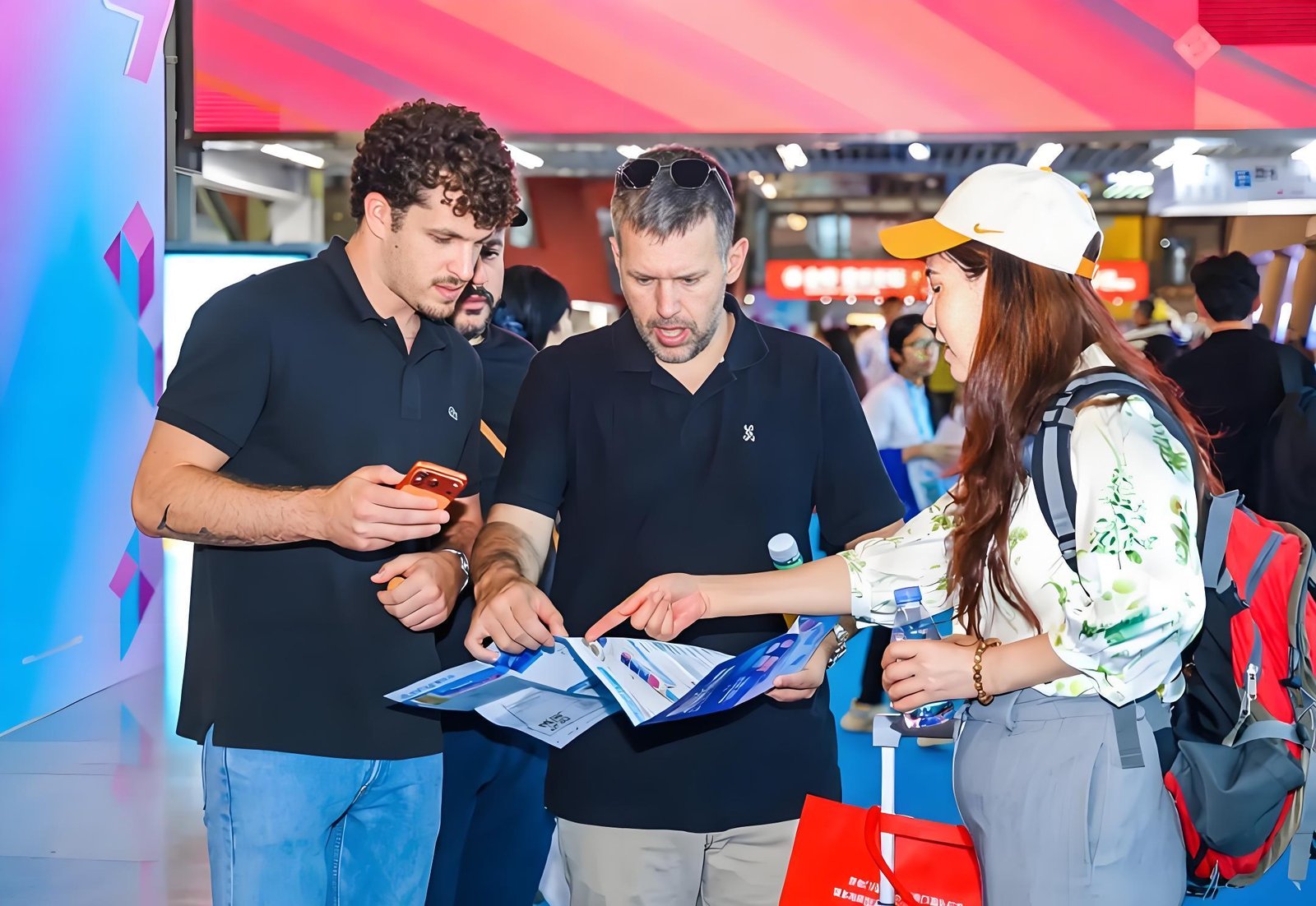
4. Attending Trade Shows with an Interpreter
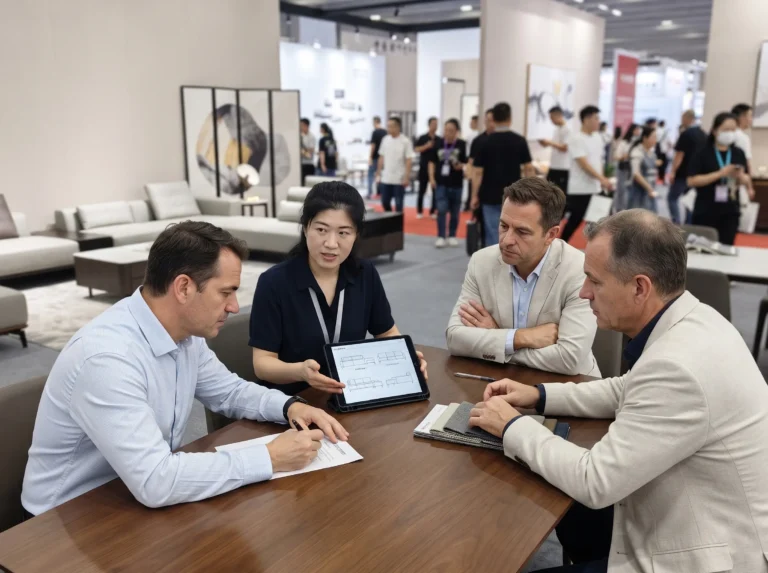
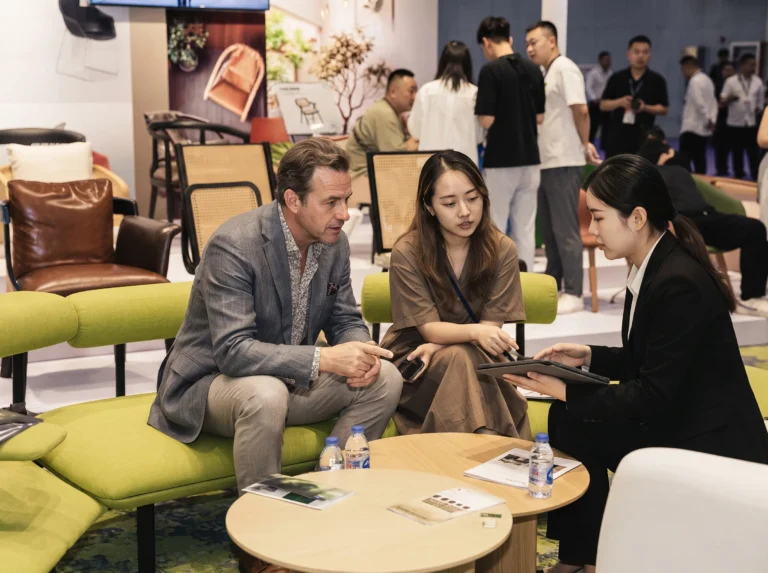
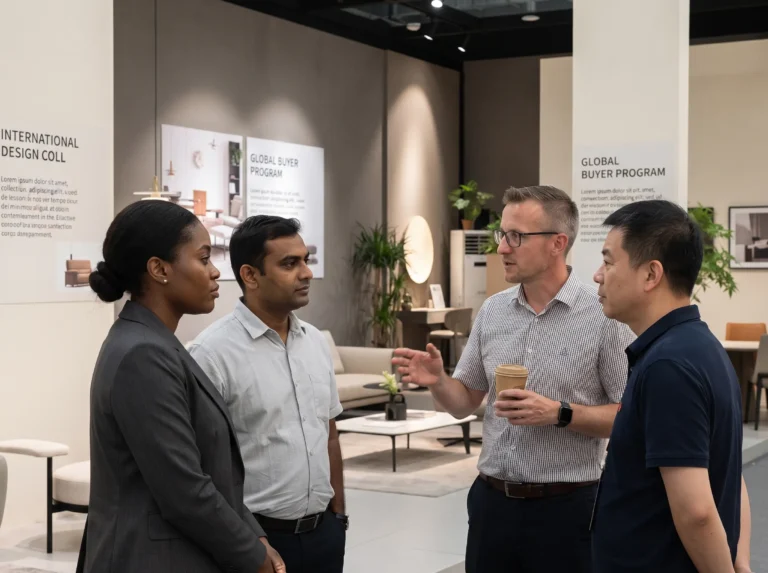
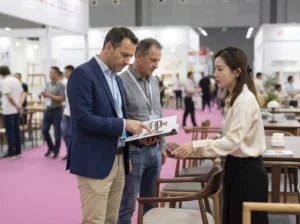
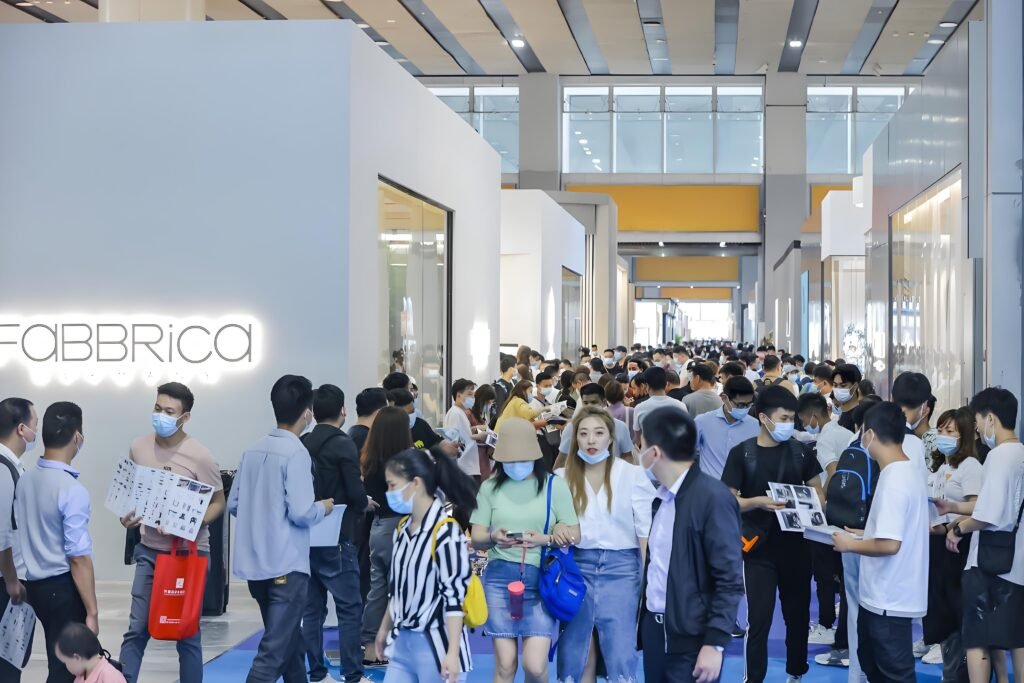
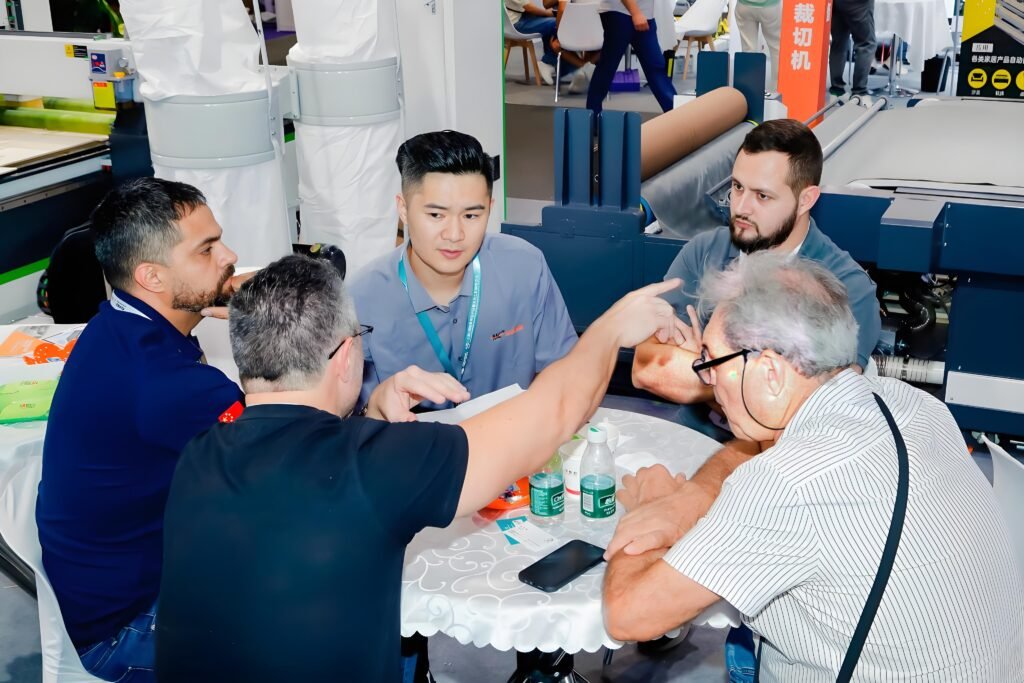
Canton Fair, CIFF Guangzhou, and Furniture China Shanghai attract thousands of international buyers. On-site interpreters are available for hire.
What works: Face-to-face meetings cut through email ambiguity. You touch samples, point at details, and gauge a factory’s organization by walking their booth. A good interpreter bridges language and cultural context.
Where it breaks: Booth staff are salespeople, not technical engineers. They say “yes” to almost any request because their goal is getting your business card. An interpreter translates words but cannot verify feasibility. Post-show follow-up frequently reveals that the enthusiastic “no problem” translates to “we need to check with our engineer” two weeks later. Show-floor interpreters vary wildly — some are university students; others are seasoned veterans. Telling the difference in 15 minutes is nearly impossible.
Cost: $150–$400/day at major shows, plus travel and accommodation.
5. Working with Trading Companies
Trading companies buy from factories and resell to you. They absorb the Mandarin layer entirely.
What works: You negotiate in English with a company that understands Western business norms. Contracts and dispute resolution feel familiar. For buyers prioritizing convenience, this is the lowest-friction path.
Where it breaks: You lose transparency. The trading company will not disclose their factory source — that is their competitive moat. You cannot conduct independent audits. You pay a markup — typically 15-30% above factory cost — hidden inside the quoted price. If quality issues arise, the trading company acts as a buffer, which sounds protective until you realize they have every incentive to minimize the problem rather than fix it. One buyer discovered their “direct from manufacturer” dining set had passed through two trading companies. The final markup exceeded 40%.
Cost: Embedded 15-30% markup, sometimes higher for complex or low-volume orders.
6. Building a Local Team or Partnership
Some serious buyers — especially those importing container-loads quarterly — hire bilingual staff in China or partner with a local professional.
What works: Dedicated oversight. Your representative visits factories unannounced, inspects production mid-cycle, and catches errors before they become container-sized problems. This is the gold standard for buyers with sufficient volume.
Where it breaks: Hiring quality staff is competitive. A competent bilingual furniture specialist commands $3,000–$6,000/month plus benefits in major hubs. Partnerships require trust-building that takes months. For buyers moving less than $200,000 annually, the economics rarely work.
Cost: $3,000–$6,000/month for full-time staff, or negotiated retainer for part-time partnerships.
Sourcing Without Chinese: Side-by-Side Comparison
| Approach | Best For | Estimated Cost | Communication Risk | Transparency | Speed to Order |
|---|---|---|---|---|---|
| Direct Alibaba/MIC contact | Standard products, small MOQs | Free (buyer side) | High for custom work | High | Fast for catalogs; slow for specs |
| Sourcing agent | Medium+ orders, first-time buyers | 3-8% or $300–$800/day | Medium (depends on agent integrity) | Medium | Moderate |
| WeChat + translation tools | Quick confirmations, photo-heavy discussions | Free | High for technical terms | High | Fast for simple items |
| Trade show + interpreter | Relationship building, tactile evaluation | $150–$400/day + travel | Medium (booth promises ≠ production reality) | Medium | Slow (follow-up dependent) |
| Trading company | Convenience, risk-averse buyers | 15-30% hidden markup | Low (English-native interface) | Low | Fast |
| Local team/partnership | High-volume, recurring importers | $3,000–$6,000/month | Low | Very High | Moderate (setup phase) |
Data updated as of July 2026. Cost ranges are approximate and vary by region and service quality.
The Hidden Risks No One Talks About
Language barriers in furniture sourcing do not just cause awkward emails. They create measurable, expensive problems surfacing months after the container arrives.
Dimensional errors from misunderstood drawings. A factory receives a CAD file with dimensions in inches. Their software reads in millimeters. No one catches the discrepancy because the English-speaking clerk does not open CAD files. The dining table arrives 2.5 times larger than intended. Experienced buyers now specify “all dimensions in millimeters, please confirm” in bold — and still request a pre-production sample.
Material substitutions you never approved. “Solid oak” in a factory’s English vocabulary sometimes means “oak veneer on plywood substrate.” The distinction matters for durability and refinishing. A buyer who cannot read the Chinese specification sheet relies on the factory’s English summary — often written by someone whose goal is closing the sale, not educating on material science.
Finish and color drift. A buyer specifies “RAL 7021 Black Grey” for a metal frame. The factory’s painter has never heard of RAL codes. The English speaker translates it as “dark gray, almost black.” The painter picks a color from the local supplier’s chart. It is close. It is not the same. For a hotel project requiring 200 identical chairs, this is a disaster.
Quality standard mismatches. A factory claims their upholstery meets “California TB 117-2013” fire standards. Did they test the actual foam batch? Or do they have a three-year-old certificate from a different supplier? Verifying this requires reading Chinese test reports and understanding certification body logos. An English-only buyer is flying blind on compliance.
After-sales communication desert. When problems arise, the English-speaking contact who was responsive during sales often disappears. They moved to a new company, or they were never the right person for warranty claims. You are left with a WeChat account that reads messages but does not reply. The Mandarin-speaking buyer can call the factory director directly and escalate through local networks.
What Works Best for Your Situation
There is no universal answer. The optimal path depends on your profile.
If you are a B2B buyer — importing for retail, hospitality, or commercial projects — source furniture without Chinese is feasible but requires infrastructure. Budget for either a vetted sourcing agent (with verified furniture-specific references) or a local representative. Do not attempt complex custom orders through Alibaba chat alone. The savings in agent fees will evaporate on the first production error. For orders above $100,000, consider a pre-shipment inspection by a third-party firm like SGS or Bureau Veritas — the report will be in English, adding accountability that language barriers otherwise erode.
If you are a C-end buyer — furnishing a home, buying for a small Airbnb portfolio — the lowest-risk path is often a trading company with Western-facing operations and domestic warehousing. You will pay more. You will also sleep better. Alternatively, stick to highly standardized products where customization is minimal: metal dining chairs, simple wood tables, basic storage units. The less you need to communicate beyond “how many, what color, what address,” the safer you are.
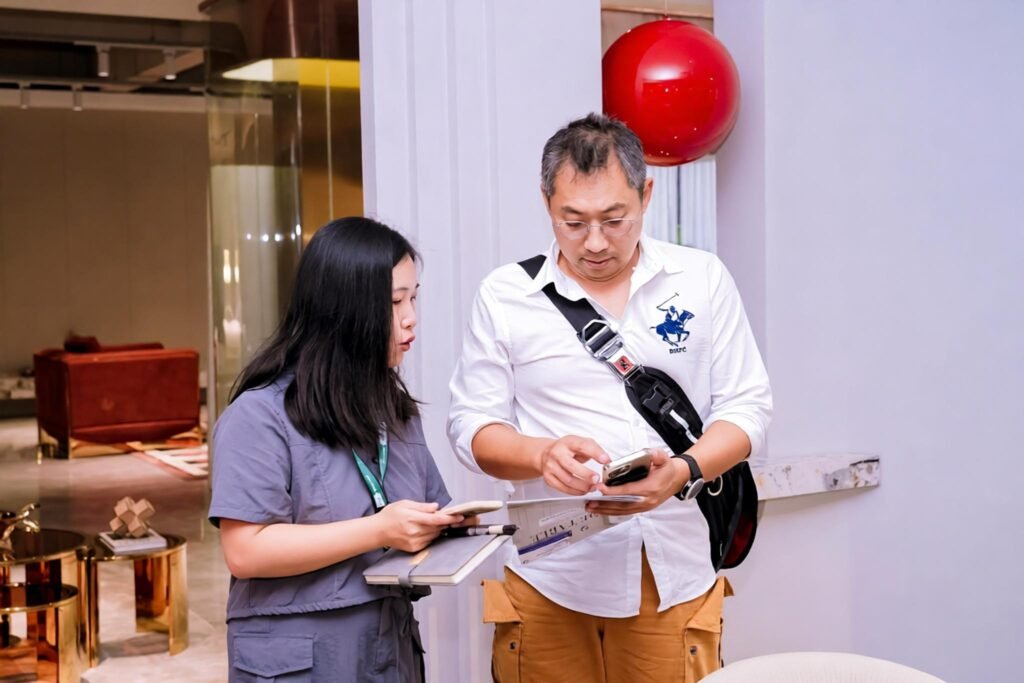
If you are a designer or architect specifying custom pieces — do not skip the Mandarin layer. Your drawings, material specs, and finish standards are too nuanced for anything less than expert translation. Hire a technical translator who knows furniture manufacturing, not just a bilingual assistant. The cost of one accurate translation cycle is a fraction of remaking a failed prototype.

Frequently Asked Questions
Can I use Google Translate for all my factory communication?
For simple messages — “What is the lead time?” or “Please send photos” — yes. For technical specifications, material standards, contract terms, and dispute resolution, no. Google Translate handles general vocabulary well but struggles with furniture-specific terminology and contextual nuance. One mistranslated word in a production order can cost thousands.
Do all Chinese furniture factories have English-speaking staff?
No. Large export-oriented factories usually do. Small and mid-sized workshops often do not. Even when English staff exist, their technical vocabulary is typically limited to commercial terms, not engineering or quality-control concepts. Always confirm who will handle your specific communication before placing an order.
Is it cheaper to source directly from factories without an agent?
Sometimes, but not always. The factory’s export price to a direct buyer is often the same as their price to a trading company. The “savings” from cutting out the middleman can be erased by communication errors, shipping mis coordination, and quality issues that an experienced agent would have prevented. For first-timers, the risk premium often exceeds the agent’s fee.
What is the safest way to verify factory claims if I do not speak Chinese?
Request third-party audit reports (BSCI, ISO 9001, FSC) in English. Use Google Reverse Image Search on their “factory photos” to check for stock images. Ask for a video call where they walk the production floor — not just the showroom. If possible, hire a local inspector for a one-day factory visit ($300–$500) before committing to a large order. These steps do not require Mandarin skills.
Can I visit factories in China without a translator?
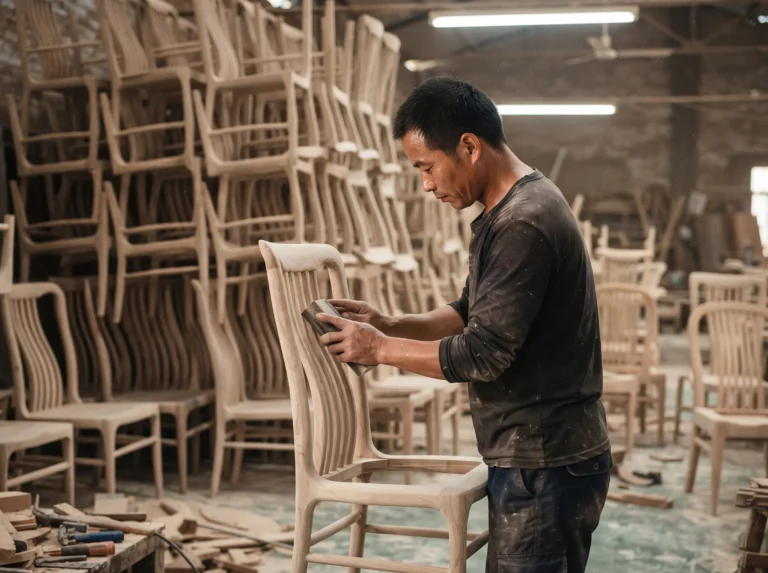
You can, but you will miss what matters. Factory tours reveal more in unscripted moments — the condition of the sanding area, how scraps are handled, whether workers wear safety gear — than in the polished showroom. Without Mandarin, you depend entirely on the English-speaking sales guide, who will show you what they want you to see. A translator who understands manufacturing can ask the uncomfortable questions you cannot.
Are there furniture factories in China that specifically cater to English-speaking buyers?
Yes, but they are a subset of the total market. These factories typically have dedicated export departments, English websites, and experience with Western compliance standards. They also know they can charge premium prices because they have reduced the buyer’s friction. You are paying for convenience, not necessarily better manufacturing. Evaluate them with the same rigor you would apply to any supplier.
The Bottom Line
You can source furniture without Chinese. Thousands of buyers do it every day. The question is not whether it is possible — it is whether you have built the right support structure to absorb the communication gaps that inevitably arise. Small orders and simple products tolerate more friction. Complex, high-value, or custom projects demand more linguistic and cultural infrastructure than a translation app can provide.
The furniture industry in China is vast, competitive, and genuinely capable of world-class production. It is also opaque to outsiders who cannot read the signals embedded in factory behavior, specification sheets, and business culture. Your job as a buyer is not to become fluent in Mandarin overnight. It is to recognize where language gaps create risk — and to invest in the right buffers, whether that means a trusted agent, a technical translator, or simply the humility to stick to standardized products until you have earned your scars.
Recommended Resource
Interi Furniture specializes in custom furniture manufacturing for residential, hospitality, and commercial projects. Their experience in materials, craftsmanship, and project realization makes them a valuable resource for designers and buyers seeking tailored furniture solutions from China.
Image credits: Some photos sourced from CIFF exhibitions and public industry zone references. Contact us for removal if any copyright concerns arise.