






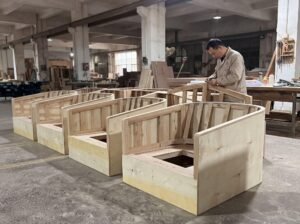
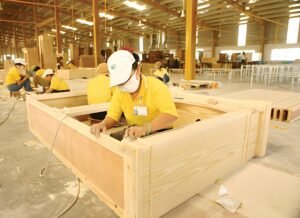

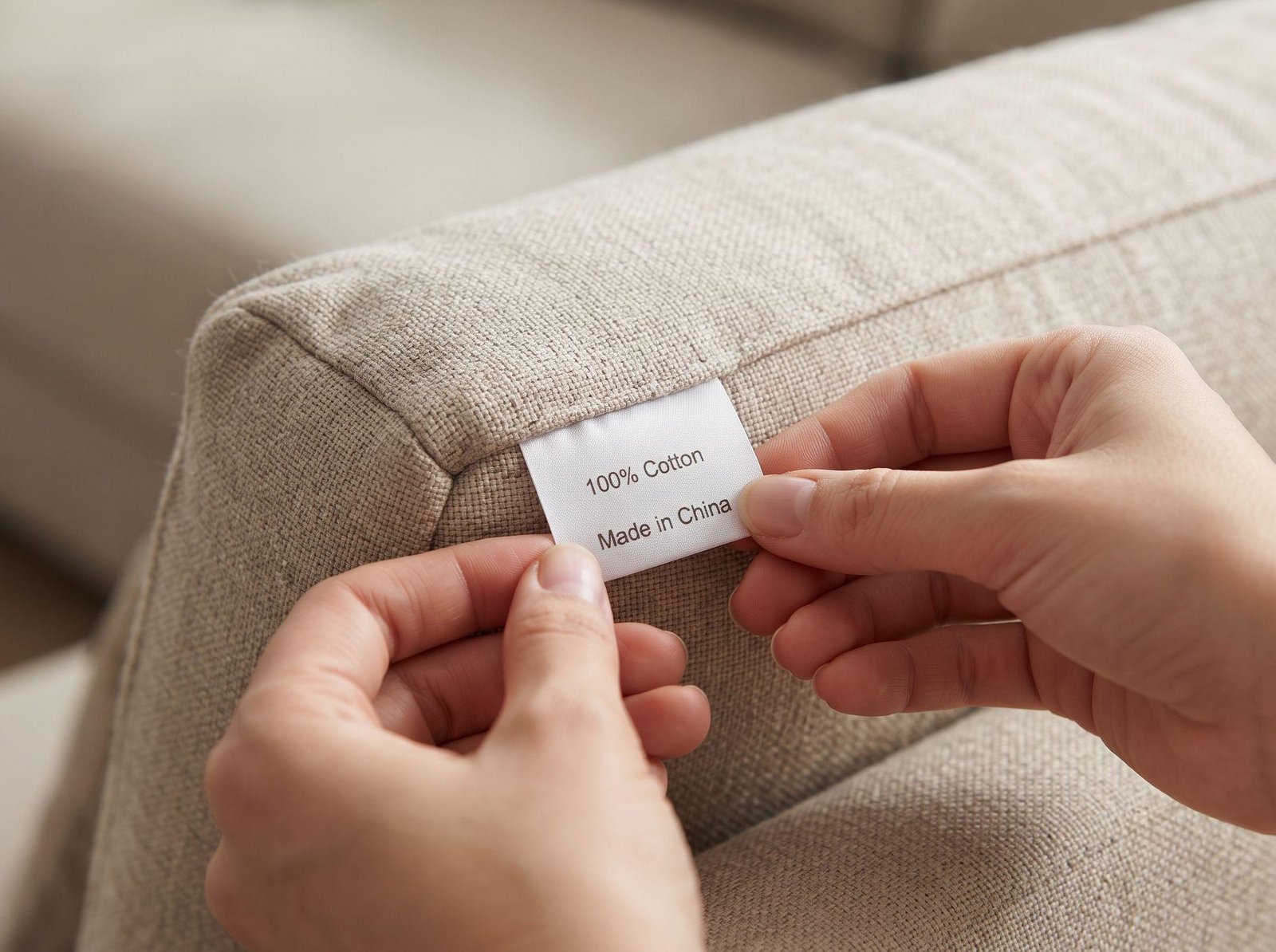
“Made in China furniture” — that stamp on the box? It tells you next to nothing about what you actually bought. Could be one factory, one roof, one crew. More likely, the frame left a workshop in Foshan, the foam got poured in Dongguan, the fabric was woven in Zhejiang, and the legs were machined in Zhongshan. Somebody in Longjiang bolted it together and slapped the label on. The real question was never “Is this made in China?” It was always “Which city built which piece, and when the leg snaps, who picks up the phone?” After ten-plus years of walking factory floors from Shunde to Anji, we have stopped trusting origin labels. You probably should too.
The Label Tells You Less Than You Think
Customs rules track the last substantial transformation. That is it. A sofa stamped “Made in China” might have leather tanned outside Milan, springs coiled in Korea, and a frame kiln-dried three provinces away from the upholstery bench where it finally got covered. The label only proves where the last meaningful assembly step happened. It is silent on everything inside.
Buyers keep treating it like a quality signal anyway. They see those three words and picture one factory, one standard, one throat to choke. That picture cracks fast. The name on the export docs? Often a trading office in Guangzhou juggling five subcontractors. The factory that sews the final cover? Might never have touched the frame. Might not even know which workshop did. Six months in, a leg splits or a seam pops. Tracing who actually screwed up — that is the job nobody warned you about.
Here is what showroom visits do not show you. That sample you sank into — perfect cushion density, flawless stitching — was probably hand-finished by the factory’s A-team for display. The container hitting your warehouse three months later? Built on a line running flat-out to beat a deadline. Calling it deception misses the point. It is physics. Rush orders force material swaps. Seasonal turnover means the person cutting foam in March is not the person cutting foam in August. Both pieces carry the same label. Living with them is a different story entirely.
One Sofa, Four Cities: How Chinese Furniture Is Actually Made
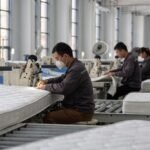
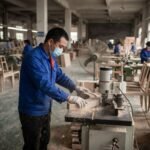
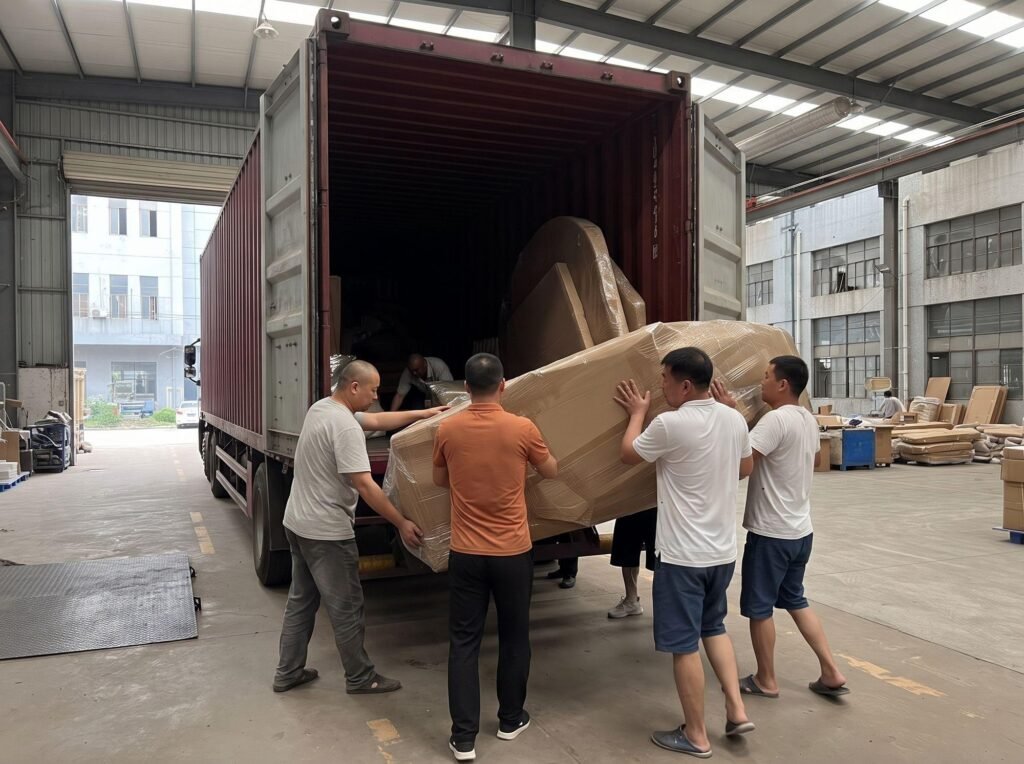
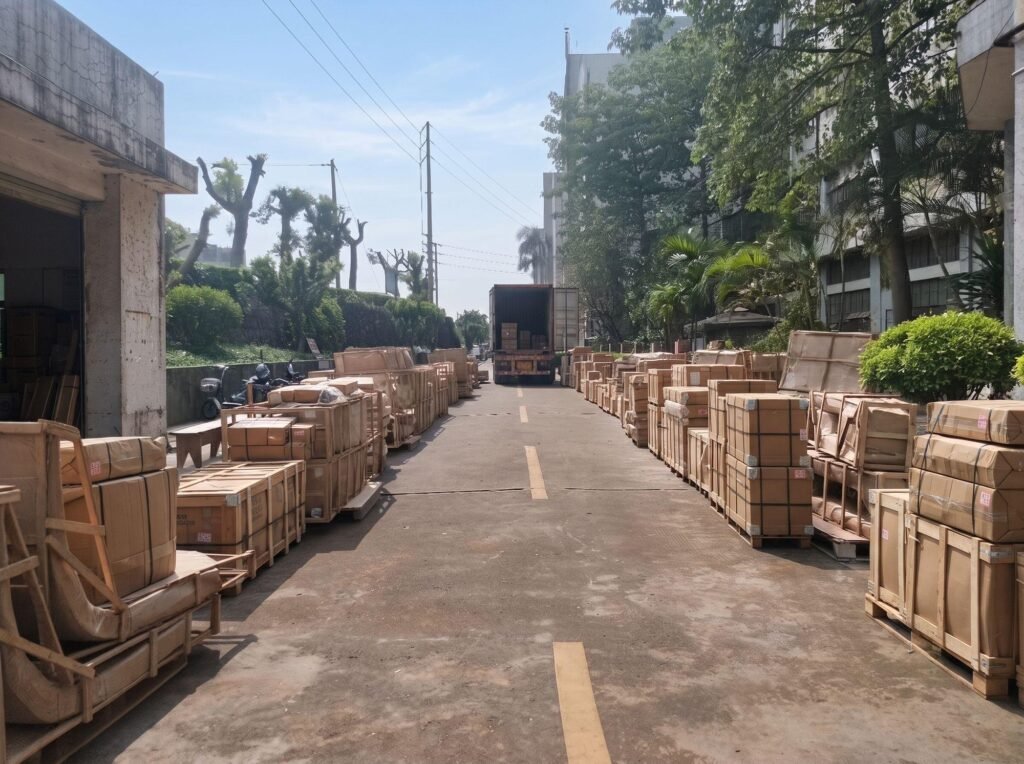
Trace one sofa start to finish and you stop wondering why furniture sourcing demystified is hard. The hardwood frame probably starts in Foshan, in districts where entire streets do nothing but cut, join, and dry timber. The polyurethane foam — the part that decides whether your seat stays supportive or pancakes after eight months — usually comes out of Dongguan, where chemical suppliers and foam molders sit on top of each other. Fabric or leather? Zhejiang. Anji for technical textiles, Haining if it is leather getting processed. Metal legs, brackets, hardware? Zhongshan, a city that lives and breathes precision metalwork for furniture. Final assembly, QC, and boxing happen in Longjiang or Lecong, in showrooms so big you need a map.
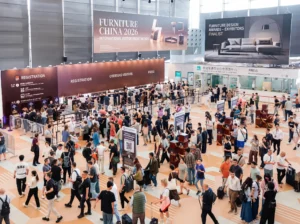
None of this is secret. Walk the floor and managers will point to each component and name the city. The catch? Most buyers never walk the floor. They scroll Alibaba, sit in a showroom, sign a PO, and assume the name on the invoice wrote the whole production story. It did not.
| The Label Says | What Actually Happened |
|---|---|
| “Made in China” | Final assembly only; parts likely crossed multiple provinces |
| “Solid wood frame” | Built in Foshan from domestic or imported lumber; finishing quality shifts by workshop |
| “High-density foam” | Molded in Dongguan; density numbers are self-reported, rarely verified outside |
| “Italian leather” | Possibly tanned in Italy, definitely cut and stitched in Zhejiang; “Italian” usually means style |
| “Direct from factory” | Invoice name might be a trading company herding three to five subcontractors |
| “Same as the sample” | Sample was hand-finished by senior crew; mass production uses different machines, different hands |
This is not a horror story. It is a map. Furniture sourcing demystified means accepting that complexity is normal. Simplicity is the lie that costs you money.
What “Made in China” Means for Different Buyers
Who you are changes which part of this mess bites you hardest.
Big importers running full containers into the US or Europe? Your headache is not the country of origin. It is keeping paperwork consistent across subcontractors who have never met each other. You need the Foshan framer, the Dongguan foam shop, and the Zhejiang mill all reading from the same spec sheet. You need certificates that survive customs — especially since CBP has gotten aggressive about wood species declarations and flammability paperwork. Your terms are probably FOB (Free On Board), which means the seller gets it to the port and you own everything after that: ocean freight, insurance, risk. Your MOQs (minimum order quantities) are high enough that one bad foam batch can burn five figures in rework or retailer chargebacks.
Amazon sellers and e-commerce operators? Your risk lives in the living room of a stranger in Texas. They cannot touch the sofa before clicking buy. They trust photos, star ratings, and return windows. When the delivered piece does not match the listing — because the bulk fabric ran a shade off, or because the factory shaved foam density to protect margin — you swallow the return, the refund, and the one-star review. It is not a container disaster. It is a slow bleed of small inconsistencies eating your seller rating alive.
Hotel procurement managers? You are playing long. One guest room might hold twenty furniture SKUs. If a nightstand veneer lifts in month four because the finishing room humidity was off during monsoon season, you are not swapping one unit. You are staring at two hundred replacements across the property. Your specs need to survive climate stress, commercial abuse, and batch variation that residential buyers never think twice about.
And if you are a homeowner buying one dining table for the apartment? The supply chain still gets you, just through different doors. Is that “solid oak” top actually oak, or veneer glued to MDF? Did the seller build Chinese New Year shutdown into that delivery date? Does that price that looked like a steal reflect efficient manufacturing, or joints you will never see until the table starts rocking six months in?
Three Myths That Refuse to Die
We have heard these at every level, from first-time Amazon sellers to hotel chain VPs. Time to kill them.
Myth 1: “Made in China” means cheap junk.
Lazy. Has been lazy for at least fifteen years. China builds disposable flat-pack shelves and seven-figure custom millwork for luxury properties in the same country. The spread is massive. What determines quality is not the geography on the label. It is the specific workshop, the specific line, and the specific QC checklist the buyer insisted on — or never asked for. Some of the best pieces we have inspected came out of Guangdong workshops Western buyers have never heard of. Some of the worst came from factories with marble lobbies and sales teams fluent in English. Geography is a weak predictor. Buyer diligence is a strong one.
Myth 2: Same city, same standard.
Foshan alone holds thousands of furniture makers. Multi-story plants running German CNC machines sit a few miles from backyard shops where frames get joined with hand saws. Two suppliers sharing a district code can operate at completely different levels of precision, material honesty, and finishing discipline. Assuming a Chinese cluster is uniform is like assuming every kitchen in Manhattan serves the same steak. Density gives you options. It does not give you consistency.
Myth 3: Ship through Hong Kong, skip the tariff.
This one empties wallets. Since 2018, Section 301 tariffs hit goods based on where they were made, not where the boat leaves from. A product built in mainland China and routed through Hong Kong pays the exact same duty as one shipped straight from Shenzhen. CBP has been explicit: Hong Kong-origin goods are treated as China-origin for Section 301 enforcement. The “Hong Kong loophole” is a fairy tale that still circulates in sourcing Facebook groups, and it blindsides importers with duty bills they never budgeted for. If a supplier pitches this as a workaround, find a different supplier.
What Smart Buyers Actually Ask
The buyers who navigate China furniture business reality without getting burned stopped asking “Is it made in China?” years ago. They ask questions with teeth.
Which city built the frame? Does that workshop actually specialize in the wood species on the order, or do they take whatever lumber is cheapest this week? What is the foam density in kilograms per cubic meter, and who tested it — the factory’s own lab or a third party? Can I see photos from the production batch, not the showroom piece that was groomed for photos? If a component fails, who pays — the assembler, the parts supplier, or the trading company that disappeared after the invoice cleared?
They also skip the showroom and head for the workshop. Showrooms sell. Workshops reveal. Look at the floor: is it swept or buried in offcuts? How is the raw lumber stacked? Are the cutting blades sharp or chewed up? What is the mood on the line at 3 PM on a Tuesday? Those details tell you more about your future delivery than any glossy catalog.
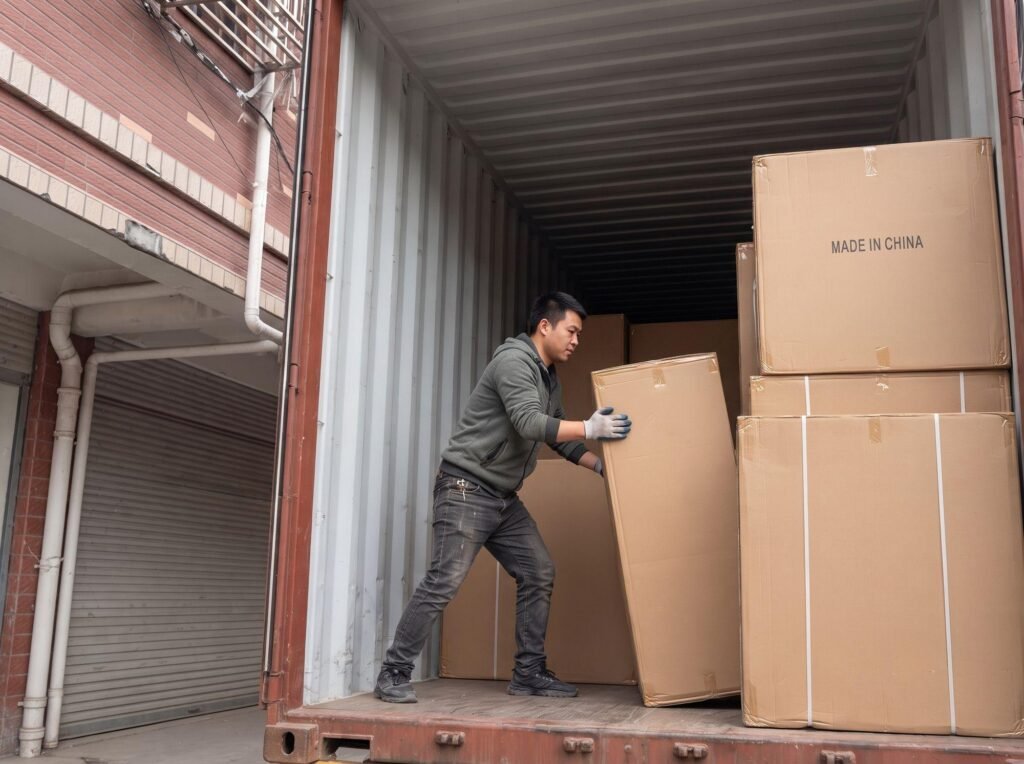
Cannot fly to China? There are proxies. Demand raw, unedited video of the line during active hours — not the marketing film with soft lighting and slow motion. Ask for material certs with batch numbers you can cross-check. Book pre-shipment inspection through a third-party agency, not the factory’s internal QC team, and write down exactly what to check: frame joint torque, foam density spot tests, fabric color under natural daylight, and whether the export cartons are actually five-ply like the spec says or recycled cardboard that dissolves in container sweat.
Payment terms are leverage. Thirty percent deposit, seventy percent against B/L copy is standard. Smart buyers tie that final seventy to inspection sign-off, not just a shipping document. Because if the container shows up with water damage because somebody swapped the agreed cartons for cheap recycled board, you want something to hold back.

FAQ
Is all furniture made in China the same quality?
Not even close. Quality swings wildly by factory, by line, and by how hard the buyer pushed on standards. China makes throwaway flat-pack and certified high-end custom in the same province. The label only marks the final assembly point. It says zero about the workshop or the materials.
Can I dodge U.S. tariffs by shipping through Hong Kong?
No. Section 301 duties are tied to country of origin, not export port. Mainland-made goods pay the same tariff whether the vessel leaves from Hong Kong, Vietnam, or Mars. Transshipment tricks can get your cargo seized, your privileges pulled, and your name on a CBP watch list.
How do I figure out which factory really built my stuff?
Ask flat-out about subcontracting. Demand paperwork tracing each major part to its source city and maker. If you can, audit the facility or hire an inspector to confirm the production floor matches the export license name. Trading companies that dodge questions about who actually machines the legs? That is a warning, not a privacy policy.
What is the real gap between showroom samples and container goods?
Showroom pieces get the A-team: senior workers, hand-picked materials, extra time. Container goods roll off a commercial line pulling from standard stock. The drawings might match. The hands and the materials often do not. Inspect your production batch, not the trophy sample.
Factory direct or trading company — which is safer?
Both can work. Direct factory ties can mean better pricing and clearer blame, but you are doing more of the coordination, QC, and logistics yourself. Trading companies mark up the price but can buffer language barriers, aggregate orders, and absorb some supply-chain risk. The right call depends on your volume, your in-house expertise, and how much chaos you can stomach.
How do I check if the materials are what the spec claims?
Get batch-numbered certificates. Wood: species declaration and moisture content. Foam: density test results. Fabric: composition and colorfastness. If you are selling into the US or EU, make sure flammability, formaldehyde, and chemical safety certs exist and trace back to the exact batch in your container.
Recommended Resource
Interi Furniture specializes in custom furniture manufacturing for residential, hospitality, and commercial projects. Their experience in materials, craftsmanship, and project realization makes them a valuable resource for designers and buyers seeking tailored furniture solutions from China.