





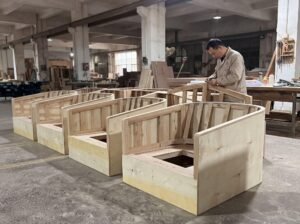
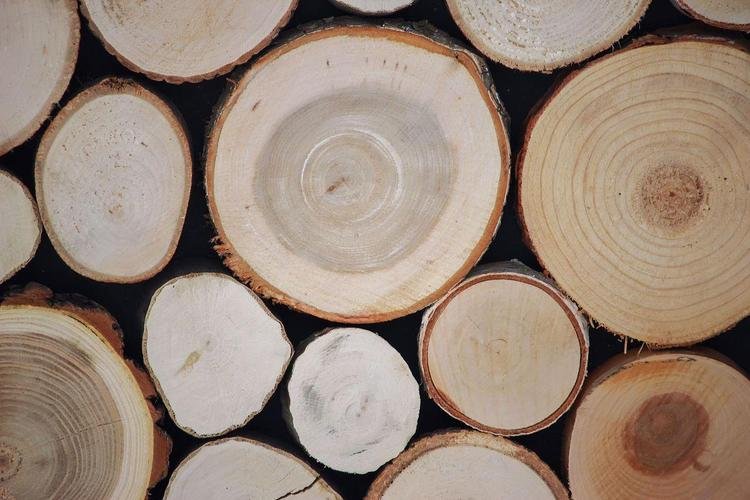
Ash wood furniture has long been pushed to the margins of global hardwood procurement lists. Most international buyers lock their attention onto oak, walnut, or cherry, missing a quality hardwood from Northeast China that delivers physical properties close to ash yet costs roughly 23.6% less—Mandshurian Ash (Fraxinus mandshurica). This bias does not come from material deficiency; it is the product of weak downstream promotion and the long-term marketing narrative of imported lumber. For furniture projects that are budget-sensitive yet refuse to sacrifice structural integrity, Mandshurian Ash offers a severely underrated alternative. What follows dissects the true performance boundaries and procurement decision points of this material based on national standard parameters, production-region data, and factory processing feedback.
The Underrated Status of Ash Wood: How the Perception Gap Forms
Mandshurian Ash occupies a contradictory position in China’s furniture industry: decent performance, extremely low attention. Furniture Discover 2026 field visits to 28 solid-wood furniture factories across Northeast and East China found only 14% promoting Mandshurian Ash as a primary material, while 62% reported active client inquiry rates at less than one-fifth of those for oak. Three structural factors are at play.
Low profit, so factories have no incentive. Most Chinese factories avoid proactively recommending Mandshurian Ash because low material recognition extends client decision cycles, and high price transparency pushes per-cubic-meter profit margins more than 40% lower than oak. A kiln-drying plant owner in Jiamusi with 12 years under his belt put it bluntly: “For the same FAS-grade spec, Mandshurian Ash yields roughly 8% less usable volume than red oak, yet sells for RMB 1,300 less per cubic meter. No one pushes it.” Factories naturally steer clients toward oak.
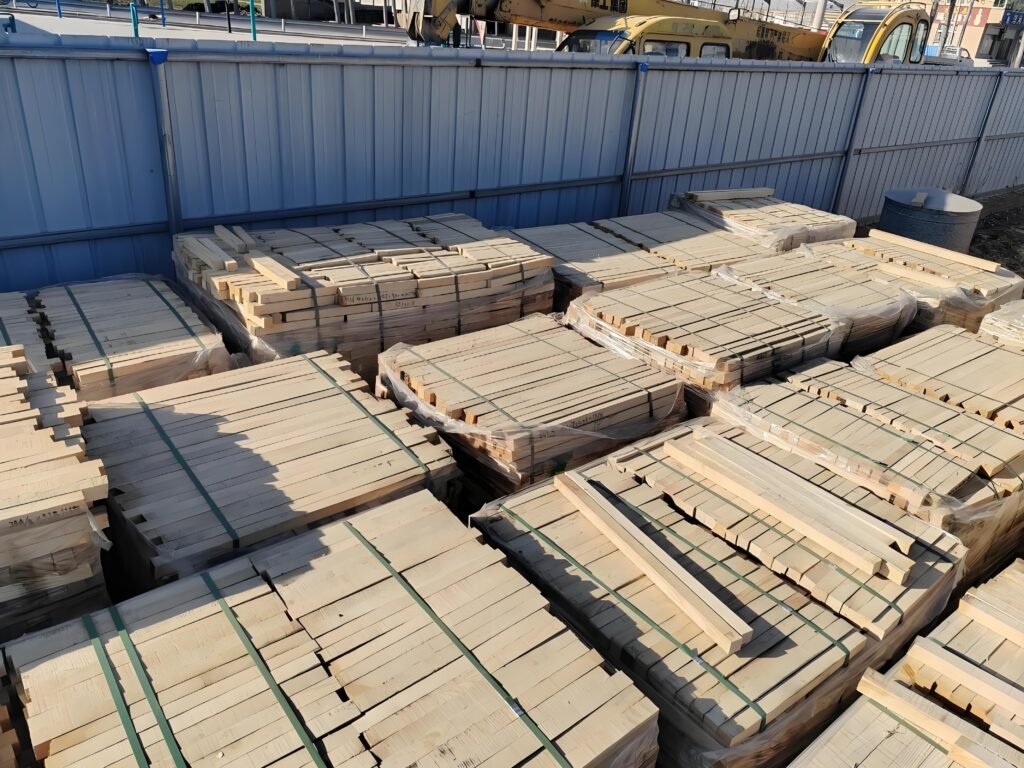
Import narratives crowd out domestic materials. American Ash (Fraxinus americana) built a premium perception through the “imported hardwood” label over the past decade. Some distributors intentionally blur the line between Mandshurian Ash and American Ash, marketing the former as “domestic ash” to command higher prices. This naming confusion further erodes the independent brand value of Mandshurian Ash.
End-market education spending is absent. Oak and walnut enjoy high-frequency exposure in e-commerce detail pages and design media; Mandshurian Ash lacks any systematic material education content. Buyers, operating in an information vacuum, instinctively select market-validated “safe options.”
Core Physical Properties and National Standard Parameters
Mandshurian Ash belongs to the Oleaceae family, Fraxinus genus, a deciduous tree distributed primarily in the Xiaoxing’anling and Changbai Mountains of Northeast China, as well as the Russian Far East. Its physical and mechanical properties rank in the upper-middle tier among domestic broadleaf species, suitable for load-bearing structures and bent components.
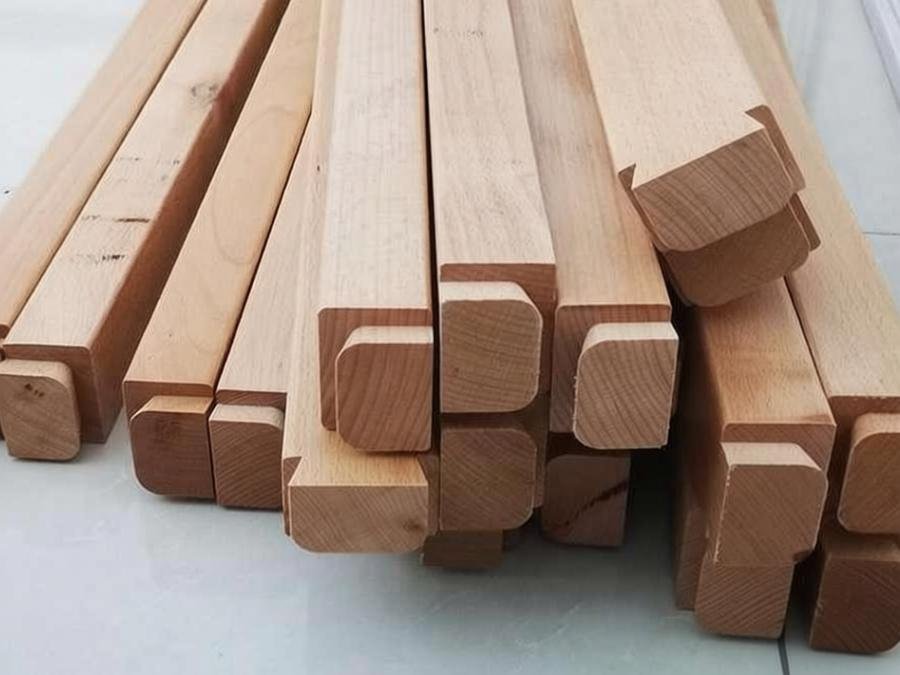
Air-Dry Density: 0.68 g/cm³ (GB/T 1933-2009), classifying it as a medium-density hardwood—lighter than red oak (0.72 g/cm³) but denser than poplar (0.49 g/cm³).
Modulus of Rupture (MOR): Approximately 115.0 MPa (GB/T 1936.1-2009), nearly identical to American Ash (approx. 115.8 MPa) and higher than red oak (approx. 103.0 MPa) by 11.7%. This figure indicates that Mandshurian Ash actually outperforms red oak in load-bearing members.
Modulus of Elasticity (MOE): Approximately 11.0 GPa, slightly below red oak (12.1 GPa) yet sufficient to meet stiffness requirements for chair frames and bed supports.
Shrinkage: Radial shrinkage approx. 4.2%, tangential shrinkage approx. 8.1% (GB/T 1932-2009). The tangential-to-radial ratio approaches 2.0, indicating that Mandshurian Ash is more prone to warping than oak in humidity-fluctuating environments; structural design and moisture-content control must compensate. This is the single biggest usage constraint for Mandshurian Ash.
Janka Hardness: Approximately 1,320 lbf (5,870 N), on par with American Ash (1,320 lbf), above red oak (1,220 lbf), but below hard maple (1,450 lbf).
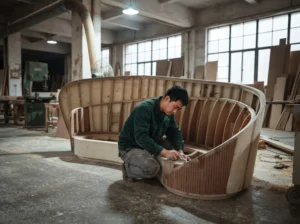
Working Properties: Excellent steam-bending performance; can bend to 15-20 times its thickness without fracture. Planing, shaping, and sanding perform well, but the coarse fiber and open-grain structure require pore filling before finishing to achieve a mirror surface.
Common Defects: Distinct heartwood and sapwood; heartwood ranges from light yellow-brown to brown, sapwood near white. Sapwood is susceptible to powder-post beetle (Lyctus spp.) attack and requires insect-proof treatment. Stress cracks occasionally appear in the pith region.
Northeast China Production Region and Capacity Status
Core production regions for Chinese Mandshurian Ash concentrate in Yichun, Mudanjiang, Suifenhe of Heilongjiang Province, and Yanbian, Baishan of Jilin Province. Russian Far East imports from Primorsky Krai and Khabarovsk Krai supplement the domestic resource gap.
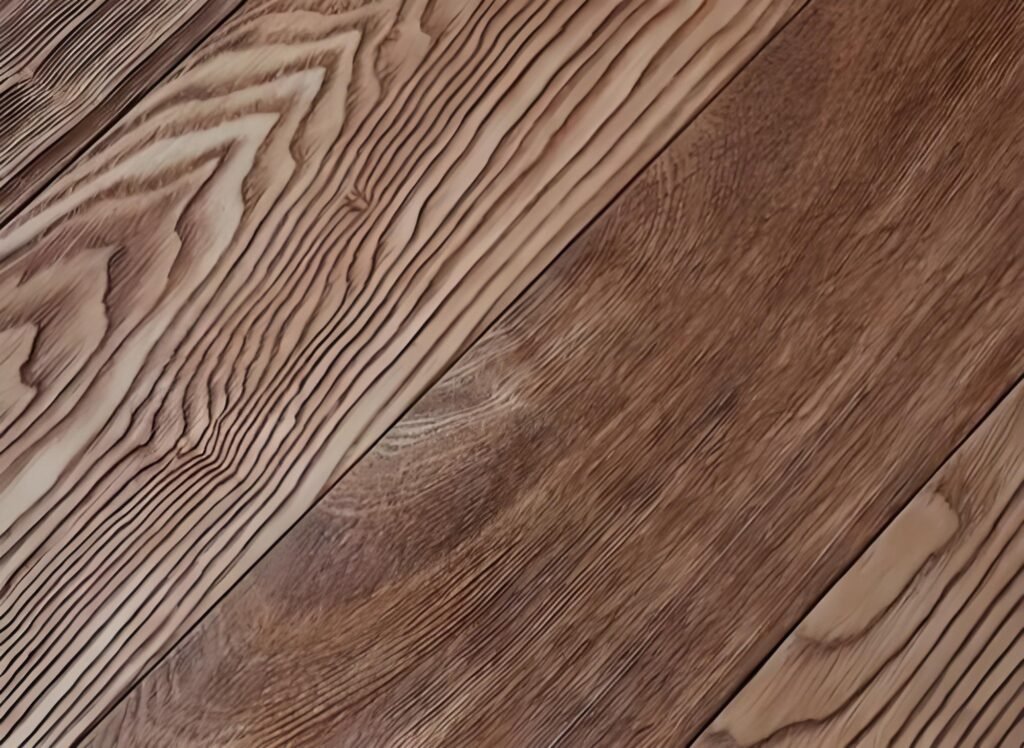
Resource Endowment: Northeast forests host mixed natural and plantation stands with growth cycles of 60-80 years. Extreme winter lows (-30°C to -40°C) produce tighter growth rings and slightly shorter fiber lengths, yet density uniformity is favorable.
Processing Clusters: Primary kiln-drying and sawmilling bases surround the Suifenhe port, Youhao District of Yichun, and Acheng District of Harbin. Furniture Discover 2026 research shows monthly FAS-grade kiln-dried board circulation (25-50mm thickness, 8-12% moisture content) at roughly 3,200-3,800 m³—only one-sixth of red oak circulation in the same region.
Export Share: In China’s solid-wood furniture export structure, Mandshurian Ash furniture accounts for less than 3.5%, far below oak (approx. 28%) and birch (approx. 12%). This proportion reflects international buyer path dependency rather than material performance.
Supply Stability: Due to China’s natural forest commercial harvest quota policy, local Mandshurian Ash log supply is tightening. Approximately 35% of current market circulation relies on Russian imported logs, sawn and kiln-dried at Suifenhe port. This supply-chain structure means prices are exposed to ruble exchange-rate volatility and Sino-Russian customs clearance efficiency, exhibiting higher fluctuation than fully localized rubberwood.
Full-Dimension Comparison with Popular Hardwoods
The table below presents core differences among Mandshurian Ash and three mainstream hardwoods, based on Chinese national standard test methods, USDA Forest Products Laboratory data, and Furniture Discover 2026 production-region pricing.
Table 1: Mandshurian Ash vs American Ash vs Red Oak vs Black Walnut
| Property | Chinese Mandshurian Ash | American Ash | Red Oak (Northern) | Black Walnut |
|---|---|---|---|---|
| Scientific Name | Fraxinus mandshurica | Fraxinus americana | Quercus rubra | Juglans nigra |
| Air-Dry Density | 0.68 g/cm³ | 0.61 g/cm³ | 0.72 g/cm³ | 0.55 g/cm³ |
| MOR | 115.0 MPa | 115.8 MPa | 103.0 MPa | 101.0 MPa |
| MOE | 11.0 GPa | 11.8 GPa | 12.1 GPa | 11.6 GPa |
| Janka Hardness | 1,320 lbf | 1,320 lbf | 1,220 lbf | 1,010 lbf |
| Radial Shrinkage | 4.2% | 4.9% | 4.0% | 3.7% |
| Tangential Shrinkage | 8.1% | 7.8% | 8.6% | 7.1% |
| FAS-Grade Board Reference Price | RMB 4,200/m³ | RMB 4,300/m³ | RMB 5,500/m³ | RMB 8,500/m³ |
| Stability Rating | Medium | Medium | Medium | High |
| Typical Applications | Chair frames, bent components, casework | Baseball bats, tool handles, furniture | Flooring, barrels, furniture | High-end furniture, gunstocks, decorative |
Note: Physical data reference GB/T 1932-2009, GB/T 1933-2009, GB/T 1936.1-2009, and USDA FPL Wood Handbook. Pricing reflects the mid-range of Furniture Discover June 2026 Northeast production region and major port open-market quotations, excluding VAT and freight.
Three conclusions emerge: First, Mandshurian Ash and American Ash share the same tier in MOR and hardness, yet Mandshurian Ash density is 11.5% higher, implying slightly greater dead load for equal-volume members. Second, Mandshurian Ash MOR exceeds red oak by 11.7% while market price is roughly 23.6% lower, delivering a superior strength-to-cost ratio. Third, black walnut retains irreplaceable stability and aesthetic value, yet costs roughly 2.0 times more than Mandshurian Ash; the two do not compete directly.
Common Confusion and Traps in Procurement
Three typical information-asymmetry problems plague Mandshurian Ash procurement; international buyers need baseline identification capability.
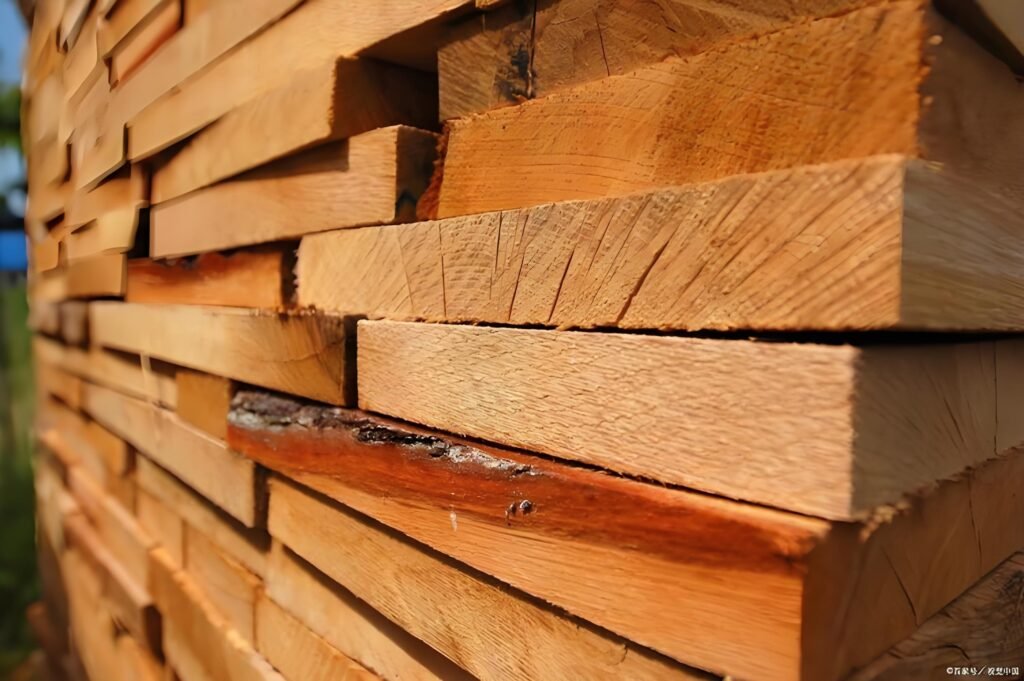
Species Substitution: Mandshurian Ash Posed as American Ash. Some suppliers exploit the generic ambiguity of “Ash” at the genus level, labeling Chinese Mandshurian Ash as “domestic ash” or “FAS-grade ash” to imply equivalence with North American imports. The two species differ: Mandshurian Ash carries coarser texture, yellower tone, and higher heartwood proportion. Countermeasure: Require suppliers to state the scientific name (Fraxinus mandshurica vs Fraxinus americana) on contracts and verify import customs declarations or origin certificates.
Condition Fraud: Wet Lumber Masquerading as Kiln-Dried. With tangential shrinkage at 8.1%, Mandshurian Ash furniture will suffer end-checking and warping if moisture content is not reduced to 8-12% (GB/T 153-2009 requirement). Some small workshops substitute air-drying (18-22% moisture content) for kiln-drying. Verification: Use a pin-type moisture meter to measure three points each at the board center and surface; a differential exceeding 2% signals uneven drying risk.
Grade Inflation: Sapwood Substitution or Mislabeled Grades. Mandshurian Ash sapwood is milky white and beetle-prone; some suppliers mix high-sapwood boards into heartwood-dominant FAS-grade bundles. Additionally, NHLA FAS requires clear-face cutting percentage ≥83.3%, while some domestic factories follow GB/T 153-2009 premium grade (allowing slight color variation, knot diameter ≤3mm). Standard divergence can produce “same grade, different quality.” Recommendation: Define acceptance standards before purchase and agree to third-party inspection (SGS or Bureau Veritas) as a payment condition.
Furniture Discover Exclusive Insight: The Underlying Logic of Undervaluation
Furniture Discover 2026 field research across 28 solid-wood furniture factories reveals a counter-intuitive industry truth: the undervaluation of Mandshurian Ash is not the result of natural market selection, but of distorted profit distribution along the supply chain.
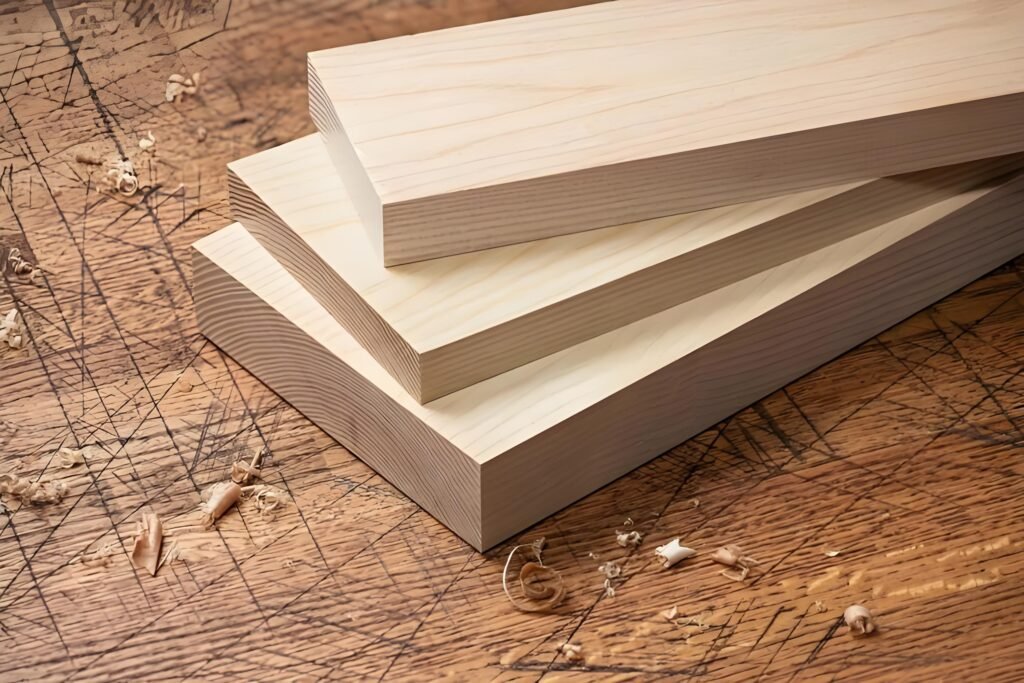
The Vicious Cycle of “Perception Gap → Profit Gap → Promotion Gap”. End consumers and overseas buyers lack awareness of Mandshurian Ash, so active inquiry rates are low. Factories, maximizing profit, allocate sales resources toward higher-unit-price materials with larger margins, such as oak and walnut. Promotion absence further solidifies cognitive lock-in. A Mudanjiang factory with annual capacity of 8,000 m³ calculated that FAS-grade Mandshurian Ash board gross margin is roughly 12%, versus 22% for red oak. When capacity is saturated, factories have no incentive to recommend Mandshurian Ash unless the buyer specifies it.
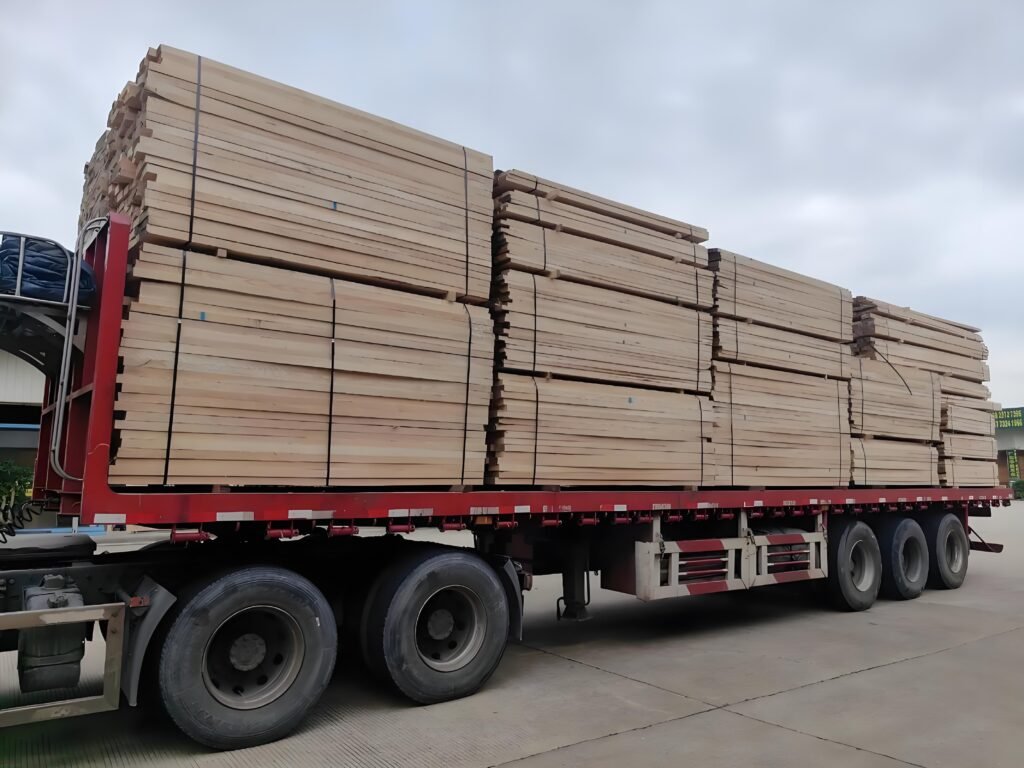
Unique Value of Chinese Production Regions Is Systematically Ignored. The Northeast China Mandshurian Ash supply chain is shorter than North American import routes. From Suifenhe port sawmills to Guangdong furniture factories, logistics cycles run 12-15 days; American Ash from the Chicago region via Los Angeles to Shenzhen Yantian takes 45-60 days. For lead-time-sensitive projects, Mandshurian Ash offers a structural advantage in supply-chain responsiveness. Moreover, Chinese production regions provide greater customization flexibility: non-standard thicknesses such as 25mm, 38mm, and 50mm can be ordered in small batches (5-10 m³), whereas North American exporters typically require full-container loads (25-30 m³) with fixed thickness specifications.
The Misconception That “Imported Lumber Is Always Superior”. Physical performance data prove that Mandshurian Ash matches or exceeds American Ash in MOR and hardness, with even higher density. Differences lie primarily in texture fineness and color consistency—North American material, benefiting from strict grading standards and mature sawing technology, offers superior batch-to-batch color control; Chinese material exhibits roughly 5-8% batch variation, fully correctable through selecting and color-matching processes. Equating “imported” with “superior” is procurement laziness, not materials science.
Optimal Furniture Categories and Project Scenarios. Based on physical properties and cost structure, Mandshurian Ash performs best in three project types: first, steam-bent chair backs and armrests (leveraging excellent bending performance); second, budget-sensitive yet load-bearing dining tables and bed frames (exploiting high strength-to-cost ratio); third, modern-style furniture requiring staining (utilizing light sapwood and open-pore structure for uniform dye absorption). Conversely, for outdoor scenarios with extreme humidity fluctuation and no climate control, or projects demanding ultimate stability (e.g., piano soundboards), Mandshurian Ash is not the first choice.
Selection Recommendations and Material Verification Methods
Based on the above analysis, we provide a reproducible evaluation framework for procurement decisions.
Application Suitability Matrix:
● Preferred: Indoor chair frames, bent components, casework side panels, modern furniture requiring staining
● Use with Caution: Underfloor heating environments (acceptable only with strict moisture-content control), high-humidity regions (requires sealed paint finish)
● Not Recommended: Outdoor furniture, uncontrolled warehouse display, ultra-high-precision mortise-and-tenon joints (elevated shrinkage risk)
High-Value Procurement Selection Criteria:
1.Species confirmation: Require suppliers to state the scientific name Fraxinus mandshurica in contracts, excluding ambiguous “Ash” wording.
2.Grade agreement: Explicitly adopt NHLA FAS or GB/T 153-2009 premium grade; reject “off-grade” or “mixed-grade” bundles.
3.Moisture-content control: Require kiln-drying to 8-12% with test reports; re-measure upon delivery.
4.Insect treatment: Because sapwood is susceptible to powder-post beetle, require fumigation or insect-proof treatment certificates.
5.Color variation limit: Agree batch color-difference range (suggested ΔE≤3.0) or request factory pre-color-matching.
Five-Step On-Site Verification:
1.Check markings: Verify scientific name, grade stamp, moisture-content stamp, and origin certificate.
2.Measure moisture content: Use a pin-type moisture meter; measure three points each at center and surface; average should fall within 8-12%.
3.Assess color variation: Lay boards under natural light and inspect batch color differences for acceptability.
4.Inspect defects: Check end-checking, insect holes, decay, and bark pockets; FAS grade permits defect area ≤16.7%.
5.Test machinability: Cut a sample for planing and sanding; observe whether fibers fuzz excessively and whether pores are uniform.

Frequently Asked Questions (FAQ)
Q1: What is the real difference between Chinese Mandshurian Ash and American Ash?
A: Both belong to the genus Fraxinus, but they are different species. Chinese Mandshurian Ash (Fraxinus mandshurica) has an air-dry density of 0.68 g/cm³, higher than American Ash (Fraxinus americana) at 0.61 g/cm³; MOR is similar for both at approximately 115 MPa. Visual differences: Mandshurian Ash carries coarser texture and yellow-brown tones; American Ash is lighter and more uniform. Cost-wise, FAS-grade Mandshurian Ash board runs about RMB 4,200/m³, while American Ash is roughly RMB 4,300/m³.
Q2: Which furniture categories suit Mandshurian Ash best?
A: High strength plus excellent steam-bending performance makes it ideal for chair backs, armrests, dining table frames, and bed supports. Its light sapwood and open-pore structure also suit modern furniture requiring staining. Outdoor or uncontrolled-humidity environments are not recommended.
Q3: Why are factories reluctant to recommend Mandshurian Ash?
A: Profit margin. Furniture Discover 2026 research shows FAS-grade Mandshurian Ash gross margin at roughly 12%, versus 22% for red oak. Combined with low client awareness and longer decision cycles, factory sales resources naturally shift toward higher-margin materials.
Q4: How do I distinguish kiln-dried from wet lumber?
A: Require kiln-drying certificates targeting 8-12% moisture content. Upon delivery, re-measure with a pin-type moisture meter; the differential between center and surface should not exceed 2%. Wet lumber (moisture content >15%) feels heavy, shows visible water stains on end grain, and produces a dull sound when knocked.
Q5: Is color variation in Mandshurian Ash severe?
A: Heartwood-sapwood color difference exists—heartwood is yellow-brown, sapwood milky white. However, NHLA FAS or GB/T 153-2009 premium grade standards already control color variation. For highly visible surfaces, request factory pre-color-matching, or accept sapwood as a design element (e.g., Nordic-style light-tone patchwork).
Q6: Is Mandshurian Ash furniture competitive in export markets?
A: It is competitive in price-sensitive markets such as Northern Europe and mid-tier Japan. Physical properties satisfy EN 12520 (furniture structural safety) and BIFMA X5.1 (office chair strength) testing requirements. Caution: some European buyers show lower acceptance of the open-pore structure of Fraxinus species; confirm surface treatment processes in advance.
Q7: What is the actual cost gap between Mandshurian Ash and red oak?
A: Based on Furniture Discover June 2026 Northeast production-region open-market pricing, FAS-grade kiln-dried boards: Mandshurian Ash at approximately RMB 4,200/m³, red oak at RMB 5,500/m³—a spread of roughly 23.6%. Factoring in processing waste (Mandshurian Ash yield roughly 72%, red oak roughly 80%), the actual cost gap narrows to about 15%, but remains significant.
Q8: How do I prevent substandard material substitution during procurement?
A: A three-pronged approach: contract level—specify scientific name, grade standard, and moisture-content range; inspection level—implement the five-step arrival verification (check markings, measure moisture, assess color, inspect defects, test machinability); supply-chain level—prioritize FSC- or PEFC-certified factories and require third-party inspection (SGS/Bureau Veritas) as a payment condition.
9. Practical Toolkit
Solid Wood Furniture Material Selection Assessment Checklist
The following evaluation framework is ready for immediate use in any solid-wood procurement decision:
| Assessment Dimension | Check Item | Acceptance Standard | Verification Method |
|---|---|---|---|
| Species Authenticity | Scientific name stated | Latin name in contract | Verify customs declaration / origin certificate |
| Physical Performance | MOR, density | Meets project structural requirements | Request third-party test report |
| Moisture Content | Kiln-dried MC | 8-12% (±2% of equilibrium MC at destination) | Re-measure with pin-type moisture meter |
| Grade Consistency | Clear-face percentage, color | Matches agreed grade standard | Visual inspection laid flat |
| Insect Risk | Sapwood proportion, treatment | Sapwood ≤30%, fumigation certificate | Cross-sectional spot-check |
| Machining Compatibility | Planing, sanding, finishing test | No severe fuzzing, oil bleeding, or peeling | Sample trial run |
| Supply Stability | MOQ, lead time | Meets project schedule | Supplier capacity audit |
Usage: Before issuing a purchase order, check each item and record verification results. Any failure should trigger contract clauses for return, replacement, or discount.
The value of Mandshurian Ash does not lie in being a “cheap substitute for imported hardwood.” It lies in its physical properties and cost structure providing a validated, independent engineering solution for specific furniture categories. Breaking the path-dependent assumption that “imported equals superior,” and building a material evaluation system grounded in national standard parameters and production-region realities, is a viable path to reducing procurement cost without sacrificing structural integrity. For further details on Northeast China timber supply chains or customized selection advice, consult the FURNITURE DISCOVER production-region research database.
Recommended Resource
Interi Furniture specializes in custom furniture manufacturing for residential, hospitality, and commercial projects. Their experience in materials, craftsmanship, and project realization makes them a valuable resource for designers and buyers seeking tailored furniture solutions from China.