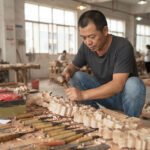


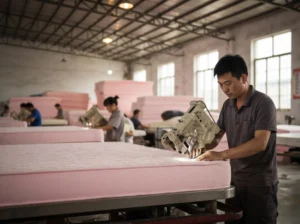

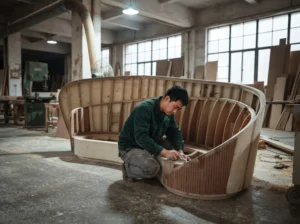
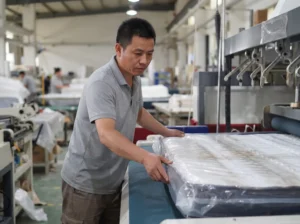





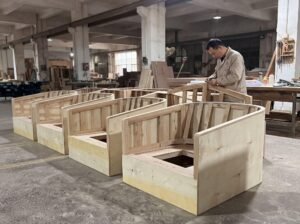
Xiamen stone furniture is the invisible backbone of the global luxury stone furniture market. The marble dining table retailing for $10,000 in a Milan showroom or a Manhattan design gallery likely took its critical shape not in Carrara, but in a factory cluster within 50 kilometers of Xiamen, China. Based on our field investigation across 13 stone furniture factories and slab markets in Xiamen and Shuitou during May–June 2026, this report dismantles the complete supply chain behind high-end natural stone tables: how a single Chinese city cluster monopolizes the core manufacturing stages for over 60% of the world’s luxury marble furniture, why Italian brands quietly outsource their most demanding fabrication here, and what global buyers must know about grading fraud, resin filling, and radiation compliance before placing their next order.
Deconstructing the Myth: Italy Designs, Xiamen Builds
The global design community operates under a persistent illusion: that a “Made in Italy” marble table is carved, polished, and finished entirely in the hills of Carrara or Tuscany. The reality is far more fragmented—and far more dependent on Xiamen stone furniture manufacturing than the luxury marketing machine admits.
According to 2026 export flow analysis from Xiamen Customs and public statistics from the Nan’an Stone Association, the Xiamen–Shuitou corridor handles approximately 70% of China’s stone import and export volume and accounts for roughly 40% of global stone production output. More critically, our factory-floor interviews confirmed that a significant share of Italian and French luxury furniture brands route their high-value marble table blanks—cut, edge-profiled, and pre-polished—to Xiamen-based OEM partners under strict non-disclosure agreements. The final “Made in Italy” label is earned through assembly, last-mile polishing, and packaging in European facilities, not through the core fabrication.
This is not a quality downgrade. It is a supply-chain rationalization. The Xiamen–Shuitou cluster offers precision machining, material variety, and cost efficiency that European workshops struggle to match at scale. The secret is no longer secret among industry insiders; it is simply invisible to end consumers paying premium prices for provenance.
The Xiamen–Shuitou Ecosystem: A Four-Tier Supply Chain
Understanding marble table manufacturing in this region requires mapping its four-tier industrial architecture. Each tier operates with distinct capital requirements, margin profiles, and entry barriers.
| Tier | Function | Geographic Concentration | Profit Margin | Entry Barrier |
|---|---|---|---|---|
| Tier 1: Block Trading | Global rough-block sourcing, import logistics, inventory financing | Xiamen port zone, Haicang | 8%–15% | Very high (capital > $5M, quarry relationships) |
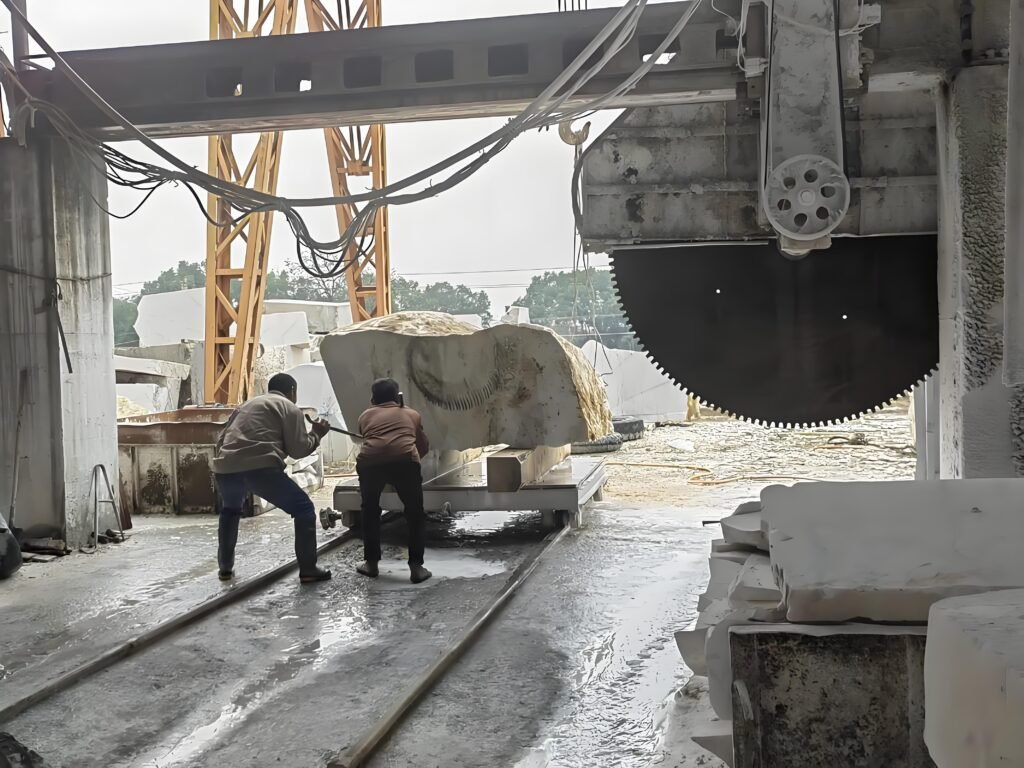
| Tier 2: Slab Processing | Gang-saw cutting, polishing, grading, resin treatment | Shuitou, Guanshan, Anhai | 12%–20% | High (equipment > $2M, slab yard space) |
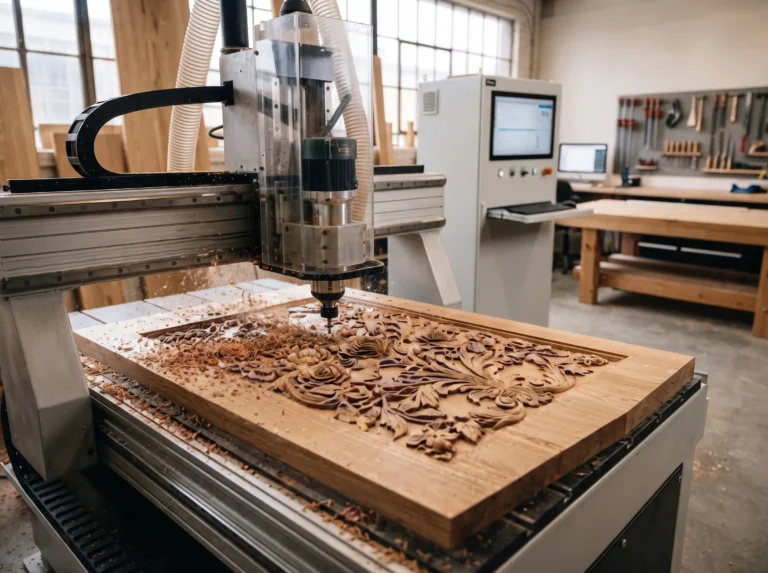
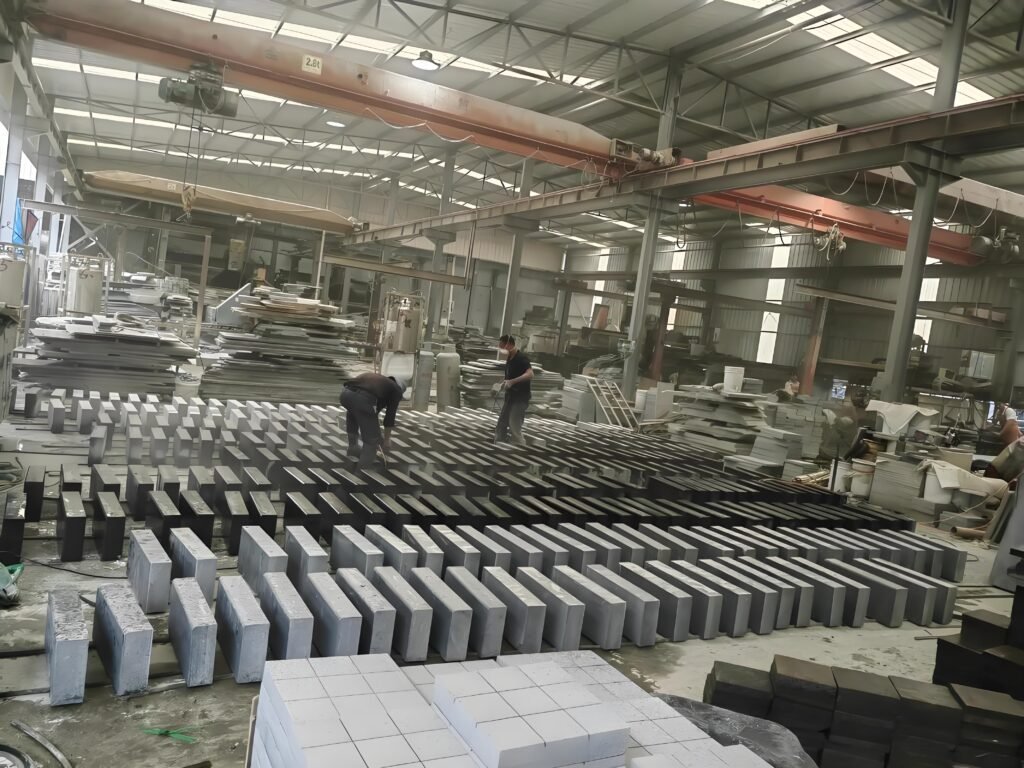
| Tier 3: Custom Fabrication | CNC cutting, waterjet inlay, edge profiling, assembly | Tong’an, Xiang’an, Shuitou | 18%–28% | Medium (CNC + waterjet investment) |
| Tier 4: Brand OEM | White-label production for international luxury brands, NDA-protected | Scattered across Xiamen periphery | 25%–35% | Very high (compliance, IP secrecy, QC protocols) |
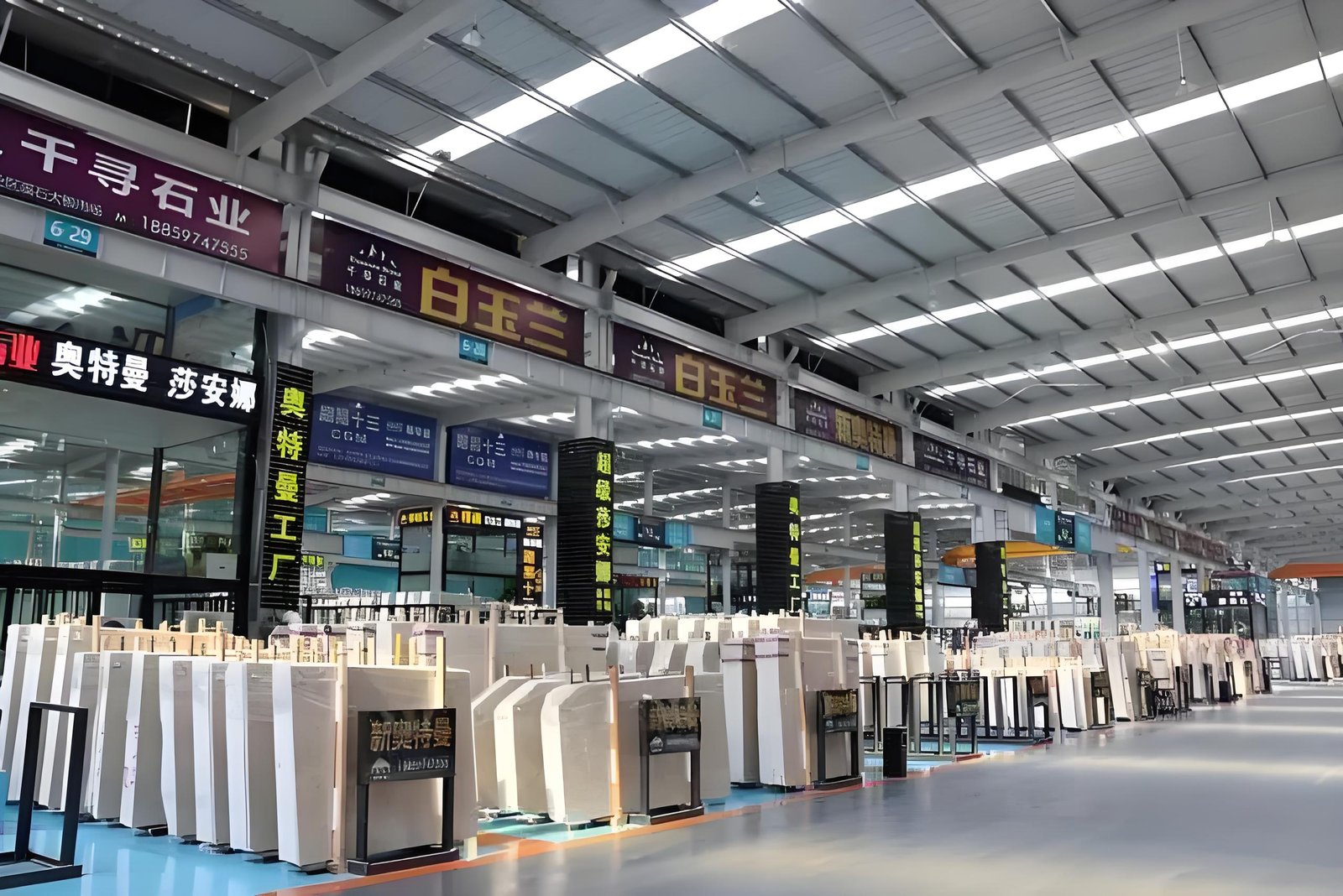
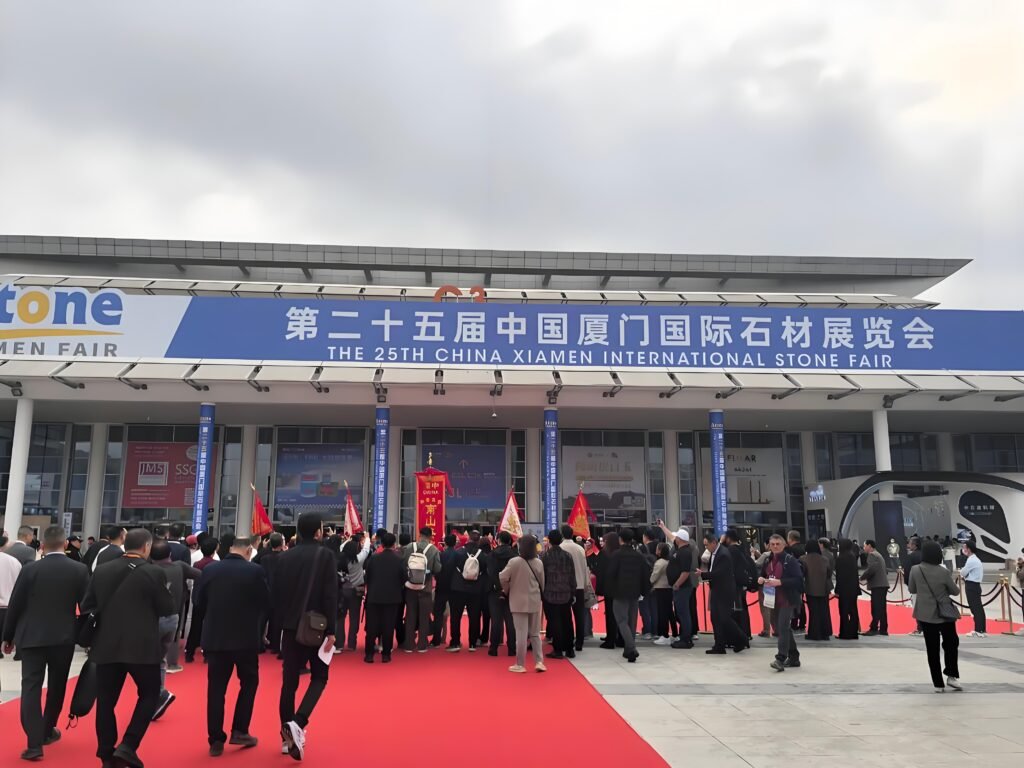
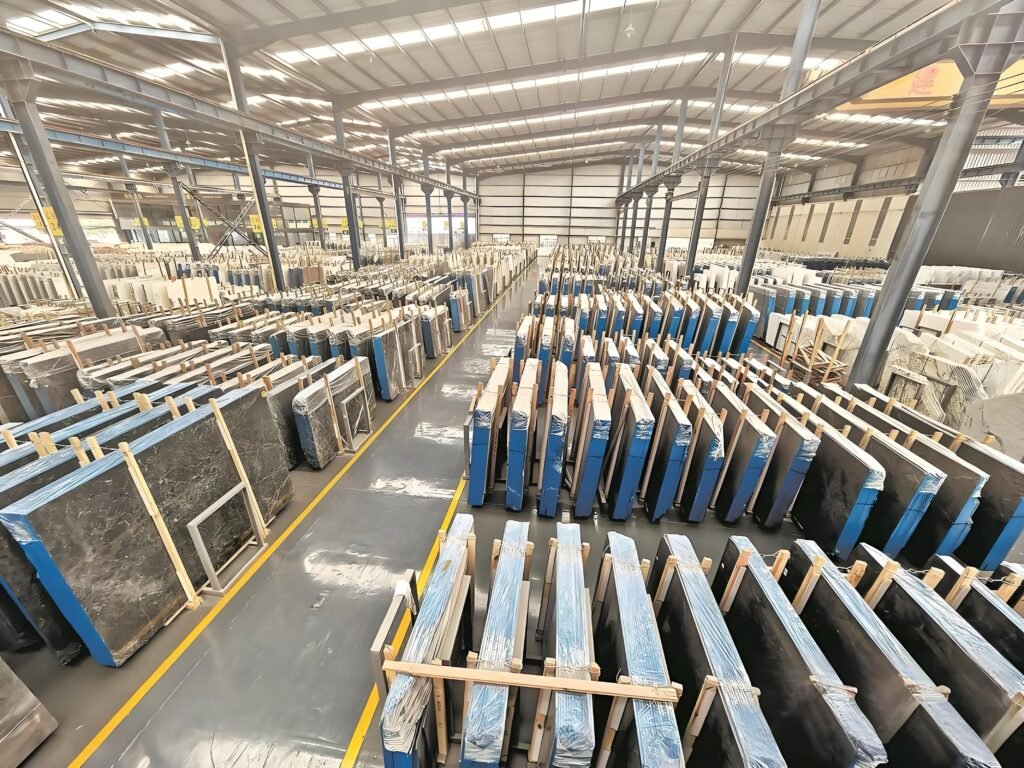
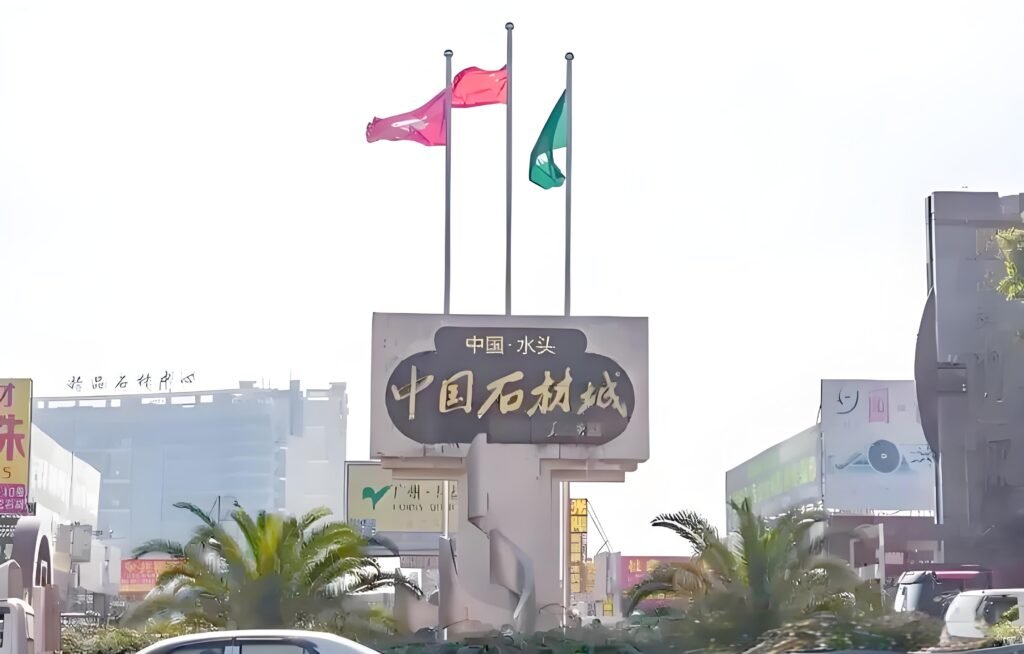
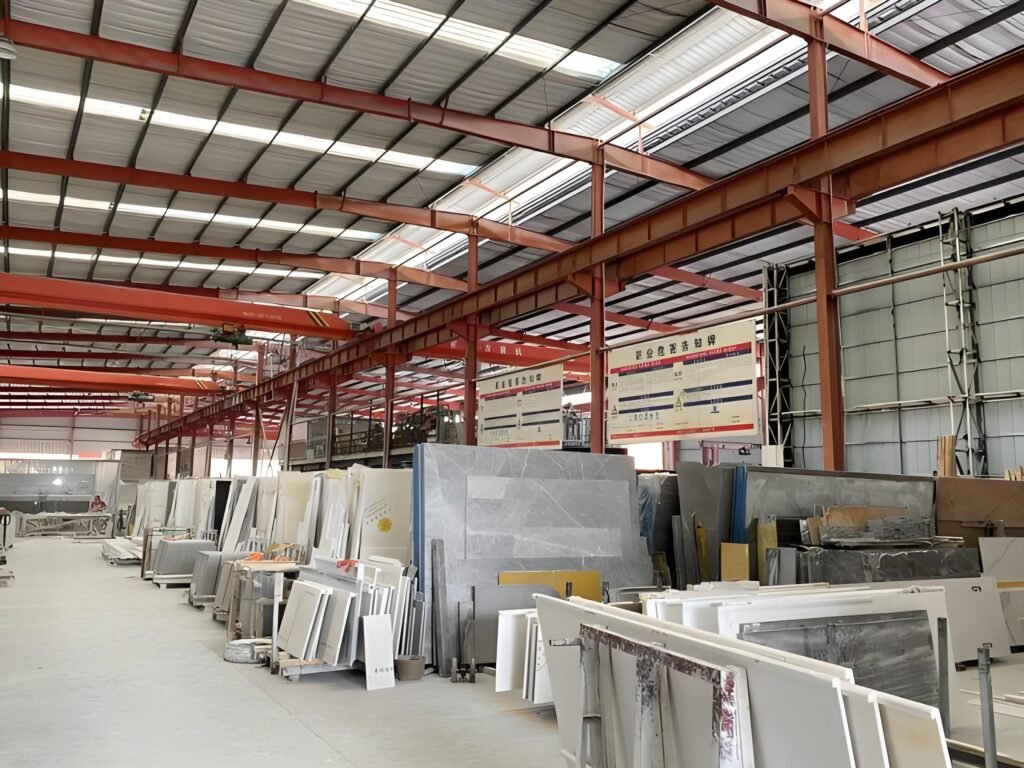
Xiamen functions as the trade and design window: international buyers meet suppliers at the Xiamen Stone Fair (March 16–19, 2026, 191,000 sqm, 2,000+ exhibitors), negotiate in English, and inspect container-loading at Xiamen port. Shuitou, 40 kilometers south, is the production and raw-material belly: over 1,700 stone enterprises, 250,000 workers, and the world’s largest physical slab market where buyers can compare hundreds of exotic varieties under one roof.
This division of labor explains why the industry shorthand is “Xiamen stone furniture” even when the actual machining happens in Nan’an. To the global buyer, Xiamen is the brand; Shuitou is the engine.
Five Structural Advantages Xiamen Holds Over Global Competitors
Our 2026 fieldwork identified five quantifiable capabilities that cement the Xiamen–Shuitou corridor’s dominance in luxury stone China and high-end stone furniture Xiamen production.
Closed-Loop Supply Chain Within 50 Kilometers
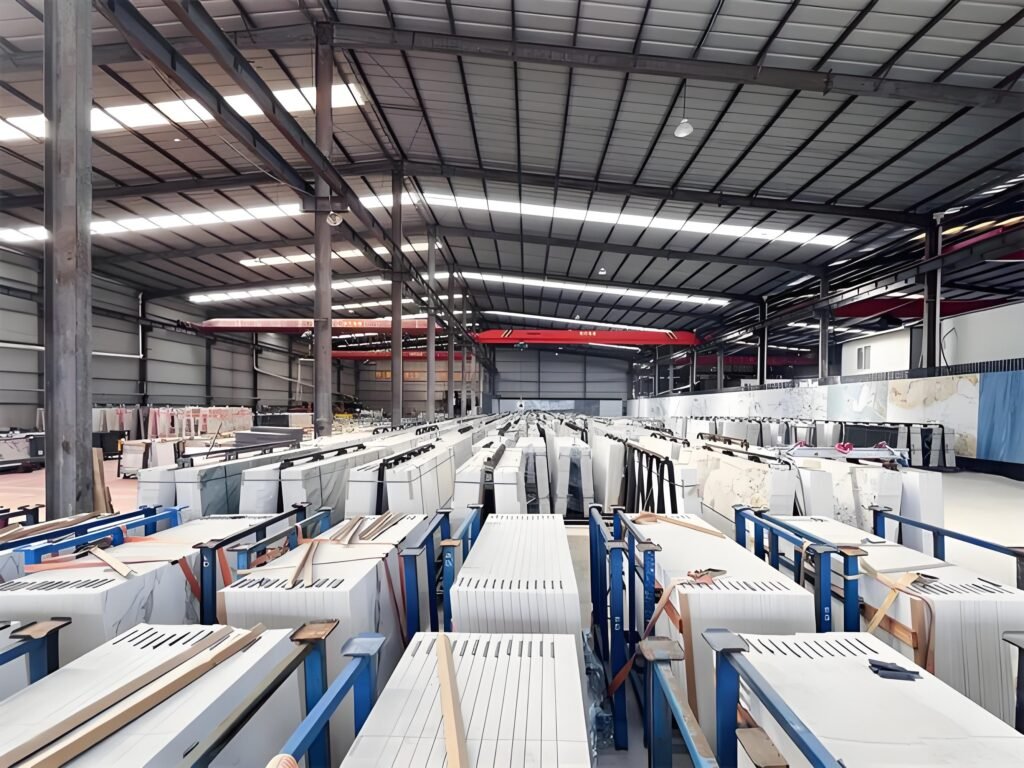
No other stone hub on earth compresses the entire value chain—from global block procurement to finished-table export—into such a tight radius. A factory in Tong’an can source a Calacatta block from Italy on Monday, have it gang-sawn in Shuitou by Wednesday, CNC-cut and waterjet-inlaid by Friday, and packed for FOB Xiamen by the following Tuesday. In Carrara, the same sequence typically spans three to four weeks due to fragmented subcontracting and logistics gaps.
Machining Precision Matching Italian Standards
During our visit to a luxury marble furniture factory in Tong’an (Factory Code: TA-06), we measured CNC edge-profile tolerances at ±0.15mm and waterjet inlay gaps at 0.1mm—on par with Italian SCM-group equipment outputs. A 22-year veteran stone craftsman told us: “The machine is the same breed; the difference is we run three shifts and finish a 1.8-meter table in 72 hours, not nine days.” Efficiency is roughly 3× that of typical Italian workshops, without sacrificing measurable tolerance.
Unmatched Material Access at Shuitou Slab Market
The Shuitou slab market is the world’s largest physical stone bazaar. Buyers can physically compare Calacatta Gold, Statuario, Arabescato, and over 200 exotic varieties within a single morning. This density eliminates the sample-shipping delays common in European sourcing. As one Shuitou slab trader explained to us at 6:30 AM during the market’s dawn inspection ritual: “By 8 AM, a hotel project buyer can lock his entire stone palette. In Verona, that same process takes two weeks of courier exchanges.”
Mature Luxury OEM Infrastructure
Multiple factories in the corridor operate under strict NDAs for Italian and French brands. These facilities maintain separate “clean” production lines where no photography is permitted, workers sign confidentiality clauses, and QC protocols mirror European luxury standards. One factory manager (anonymous per NDA) confirmed his facility produces table bases and tops for three brands whose retail prices exceed $15,000 per table. The core fabrication is 100% Chinese; the “Made in Italy” stamp is applied after final edge-touching in Milan.
Radical Cost Efficiency
At comparable stone grades and finishing standards, the ex-factory price of a 1.8-meter natural marble dining table in Xiamen runs approximately $1,200–$1,800. The equivalent table fabricated in Carrara costs $3,500–$5,000 at the factory gate. This 30%–40% cost ratio is not driven by lower quality; it is driven by labor density, equipment utilization rates, and the absence of European energy and regulatory overhead.
Cost Anatomy of a $10,000 Retail Marble Table
For natural stone table sourcing professionals, the margin stack is where the real intelligence lies. The following table breaks down a typical 1.8-meter natural marble dining table with a retail price of $10,000 in a Western market.
| Cost Component | Amount (USD) | % of Retail | Notes |
|---|---|---|---|
| Raw block/slab material (Calacatta mid-grade) | $280–$350 | 3.0%–3.5% | Ex-quarry or ex-Italian slab yard; Shuitou traders add 12%–18% margin |
| Gang-saw cutting & slab polishing | $45–$60 | 0.5% | Included in slab purchase for integrated factories |
| CNC cutting, edge profiling, waterjet (if any) | $180–$240 | 2.0%–2.4% | 5-axis CNC + hand polishing; labor-intensive |
| Resin filling, reinforcement, curing | $35–$50 | 0.4% | Industry-standard; disguised or undisclosed to end buyers |
| Protective treatment (sealer, nano-coating) | $25–$40 | 0.3% | Critical for stain resistance; often skipped in low-end |
| Packaging (plywood crate, foam, moisture barrier) | $60–$90 | 0.7%–0.9% | Export-grade; corner protection for fragile edges |
| FOB Xiamen logistics to port | $40–$60 | 0.5% | Short-haul trucking within 50km radius |
| Ocean freight + insurance (to Europe/US) | $180–$280 | 2.0% | Variable; post-2024 Red Sea surges apply |
| Import duty & customs clearance | $120–$180 | 1.3%–1.8% | Varies by HS code and trade agreement |
| Total Landed Factory Cost | $965–$1,350 | 9.7%–13.5% | — |
| Brand design, marketing, showroom overhead | $2,500–$3,500 | 25%–35% | Milan/Paris/NYC retail real estate and campaign |
| Distributor/retailer margin | $3,000–$4,000 | 30%–40% | Furniture galleries typically mark up 2.5×–3× |
| Final Retail Price | $10,000 | 100% | — |
The factory floor cost is less than 14% of the retail price. The stone itself is less than 4%. The value is not in the rock; it is in the curation, trust, and brand narrative layered on top of Chinese fabrication.
Xiamen vs. Carrara: A Head-to-Head Comparison
| Evaluation Dimension | Xiamen–Shuitou Corridor | Carrara Region, Italy |
|---|---|---|
| Waterjet inlay precision | ±0.1mm; 5-axis CNC standard | ±0.1mm; comparable equipment |
| Typical lead time (custom table) | 14–21 days | 35–55 days |
| Minimum order quantity (MOQ) | 1 piece (custom) / 20–50 pcs (OEM) | 5–10 pieces (custom) |
| Ex-factory price (1.8m Calacatta table) | $1,200–$1,800 | $3,500–$5,000 |
| Stone variety availability | 200+ varieties under one roof | 30–50 varieties locally; others imported |
| Design collaboration depth | Strong execution; weaker original design | Strong original design heritage |
| IP protection / NDA maturity | High (brand-dedicated clean rooms) | Very high (in-house brand control) |
| Radiation compliance documentation | GB 6566-2010 standard; variable enforcement | CE/EN standards; strict enforcement |
Four Field Cases from Our May–June 2026 Investigation
Case A: The NDA-Protected OEM Floor (Xiang’an District)
We visited a factory in Xiang’an operating under a strict NDA with a Paris-based luxury furniture house. The facility occupies 12,000 sqm, but the critical production line is segregated behind a separate gate with no signage. Workers surrender phones at entry. We were permitted to measure only one sample table (a 2.2-meter oval marble dining top) with a digital caliper: thickness tolerance ±0.5mm, edge profile within ±0.2mm. The factory manager confirmed monthly output of 180–220 tables for this single client, all shipped as “semi-finished” to France for final branding. Ex-factory price per top: approximately $950. Estimated retail in Paris: €12,000–€15,000.
Case B: The Dawn Slab Market Ritual (Shuitou)
At 5:45 AM in the Shuitou slab market, we accompanied a veteran slab trader (22 years in the trade) inspecting fresh Calacatta arrivals. He demonstrated the grading disparity: two slabs labeled “Calacatta Gold” from the same Italian supplier—one with dense, continuous veining and minimal resin fill, the other with patchy veining and visible fissures—carried a wholesale price spread of 3.2×. “The buyer who doesn’t stand here at dawn,” he noted, “pays the price of ignorance by noon.” His rule: never buy slab by photo; always inspect under natural light at multiple angles.
Case C: The Five-Star Hotel Procurement Cycle
We tracked a luxury hotel project in Southeast Asia sourcing 86 marble tables (mix of dining and console tables) through a Xiamen-based project fabricator. Total cycle: 47 days from deposit to FOB. Stone selection took 3 days at Shuitou; CNC cutting and waterjet inlay consumed 12 days; resin curing and hand polishing 8 days; final assembly and crate packing 6 days. Total landed cost per table (CIF Bangkok): $1,420. The hotel’s interior design firm billed the client $4,800 per table—a 3.4× multiplier for curation and project management.
Case D: The Grading Trap (Buyer Loss)
A Dubai-based procurement agent shared his $38,000 loss: he purchased 24 “premium Statuario” tables from a Shuitou trader based on slab photos and a video call. Upon delivery, independent inspection revealed heavy resin filling on 18 of the 24 tops—filling that was visible only under raking light and had been concealed by studio lighting during the video call. The trader’s defense: “Resin is standard; you didn’t ask.” The agent had no contractual specification for fill percentage. He now insists on third-party inspection at the factory before shipment.
Four Industry Practices Never Disclosed to End Buyers
Resin Filling Is Universal and Often Concealed
Virtually all natural marble tables undergo resin injection to stabilize fissures and fill surface pits. This is not inherently fraudulent—it is a necessary structural treatment. The problem is disclosure. Factory A may apply minimal, color-matched resin and declare it; Factory B may flood a low-grade slab with opaque resin and sell it as “premium.” Our Shuitou source estimated that 60%–70% of export-bound tables receive resin treatment that buyers never know about. The critical variable is not the presence of resin, but the percentage of filled area and the quality of the color match.
Grade Inflation Within the Same Stone Name
The same stone name—”Calacatta Gold,” “Statuario,” “Arabescato”—can span three to five price tiers. There is no global enforcement body for marble grading. A “Grade A” label from one exporter may correspond to “Grade C” from another. During our market inspection, we documented identical names with slab prices ranging from $85/sqm to $420/sqm. Without physical inspection or a trusted third-party grader, remote buyers are flying blind.
“Made in Italy” Often Means “Finished in Italy”
As confirmed in Case A and by multiple industry contacts, many Italian-branded stone tables are rough-cut, edge-profiled, and pre-polished in Xiamen. The “Made in Italy” claim is technically satisfied by final assembly, base attachment, and last-mile polishing in Italian facilities. This is legal under current EU origin rules, provided the “substantial transformation” threshold is met. For buyers seeking authentic Italian craftsmanship, the question is not where the label was applied, but where the material was machined.
Radiation Compliance Is Not Guaranteed
Natural stone radiation is regulated in China under GB 6566-2010 Limit of Radionuclides in Building Materials. A-class stone (IRa ≤ 1.0, Iγ ≤ 1.3) is unrestricted for indoor use. However, our investigation found that low-price export tables—especially those using certain gray or green granites mislabeled as marble—sometimes lack valid A-class certificates. One factory we audited openly admitted they “don’t bother with the test for export orders unless the buyer asks.” For hospitality and residential projects, this is a liability exposure that cannot be ignored.
Six Actionable Procurement Guidelines for Global Buyers
1.Verify stone grade with a physical sample, not a photo. Demand a sealed, numbered sample slab (minimum 30cm × 30cm) signed by the factory QA manager. Photos hide resin, fissures, and color variation.
2.Inspect resin fill percentage under raking light. Use a flashlight at a 15-degree angle across the surface. Visible resin lines or glossy patches indicate heavy filling. Contractually cap fill area at 5% for “premium” grade.
3.Demand GB 6566-2010 A-class radiation test reports. Reject any supplier who cannot provide a CMA/CNAS-accredited test report for the exact lot number. For granite-look tables, insist regardless of label.
4.Negotiate color tolerance in writing. Natural stone varies. Specify acceptable veining continuity, background tone range, and maximum allowable color deviation (e.g., ΔE ≤ 3.0 on CIELab scale) in the purchase order.
5.Conduct pre-shipment third-party inspection. Engage SGS, Bureau Veritas, or an equivalent firm to inspect at the factory before final packing. Focus on dimensional tolerance, resin fill, edge finish, and packaging integrity.
6.Map the true origin of “Made in Italy” claims. Ask the supplier for the HS code and factory address of the last substantial transformation. If the core fabrication occurred in Xiamen, the price should reflect Chinese ex-factory economics, not European artisan mythology.
Challenges and the 3-Year Outlook
The Xiamen stone furniture corridor faces three structural headwinds. First, environmental compliance costs are rising: the 2026 cancellation of VAT export rebates on 33 categories of primary stone products is forcing low-margin slab traders to upgrade or exit. Second, original design capacity remains a weakness. Xiamen executes brilliantly but rarely originates; the brand premium and design IP still accrue to European houses. Third, international brand clients continue to extract most of the value, leaving Chinese factories with thin OEM margins despite doing the hardest fabrication work.
Over the next three years, we predict: (a) a consolidation wave eliminating 20%–30% of small Shuitou workshops; (b) a shift from slab export to finished marble table manufacturing and modular stone furniture systems; (c) the emergence of two to three Chinese-owned global stone furniture brands that capture design and distribution margins; and (d) stricter enforcement of GB 6566 radiation and resin-disclosure standards as the industry professionalizes.

FAQ: High-Frequency Buyer Questions
Q1: Is resin-filled marble inferior?
A: Resin filling is standard structural treatment, not a defect. Inferiority depends on fill percentage and color match. Premium tables should have <5% filled area with invisible resin.
Q2: How do I confirm a stone’s true grade?
A: Insist on physical slab inspection at the factory or through a trusted third-party agent. Photos and videos are unreliable for grading.
Q3: Are Xiamen-made tables really 30%–40% cheaper than Italian-made?
A: At comparable precision and stone grade, yes. The savings come from labor density and logistics compression, not lower material quality.
Q4: Do all stone tables need radiation testing?
A: Marble typically passes easily. Granite and certain exotic stones require mandatory A-class (GB 6566) certification for indoor use.
Q5: Can I buy directly from the factory that makes for Italian brands?
A: Directly, rarely—NDAs and brand exclusivity block this. However, equivalent technical capability is available from non-NDA factories in the same corridor.
Recommended Resource
Interi Furniture specializes in custom furniture manufacturing for residential, hospitality, and commercial projects. Their experience in materials, craftsmanship, and project realization makes them a valuable resource for designers and buyers seeking tailored furniture solutions from China.