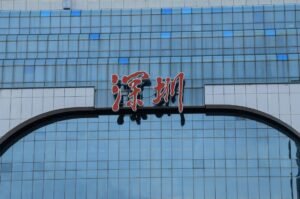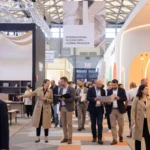







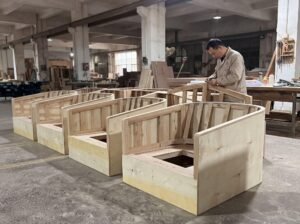
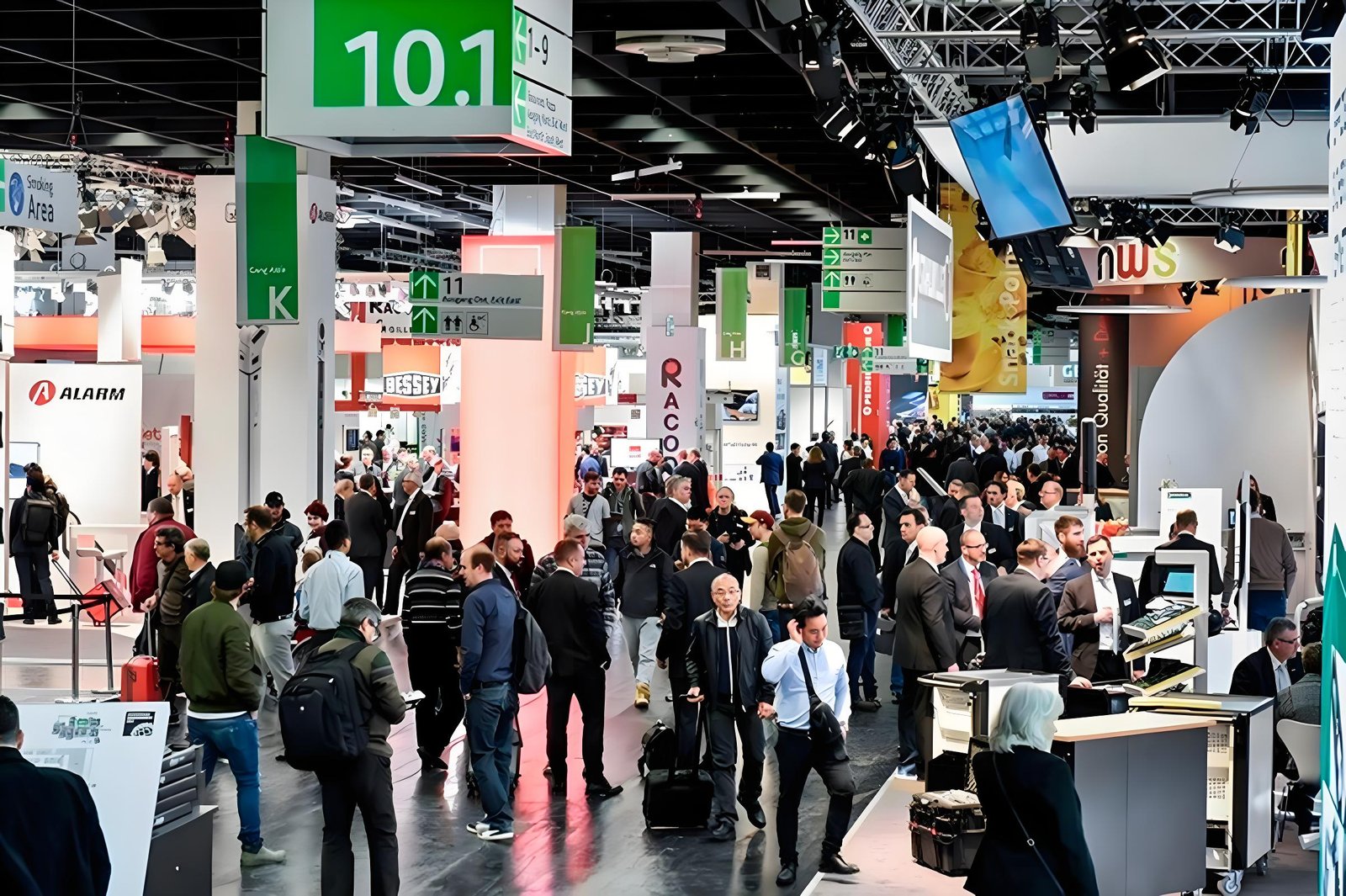
I spent six weeks in Guangdong this spring—April through May 2026—walking through factory gates that don’t have signs. You won’t find these places on Google Maps. You won’t find them at Salone del Mobile. And you definitely won’t find their names on any price tag in a Milan showroom.
Yet here’s the thing nobody wants printed: Dongguan luxury furniture isn’t a side hustle. It’s the main stage. Over 80% of the sofas selling for €20,000-plus in European showrooms start their life here. Same leather. Same hardwood. Same hands. Different label.
The brands know. The designers know. The procurement directors definitely know. But talking kills the markup, so everyone keeps their mouth shut.
The Open Secret: Why No Brand Admits Dongguan Luxury Furniture
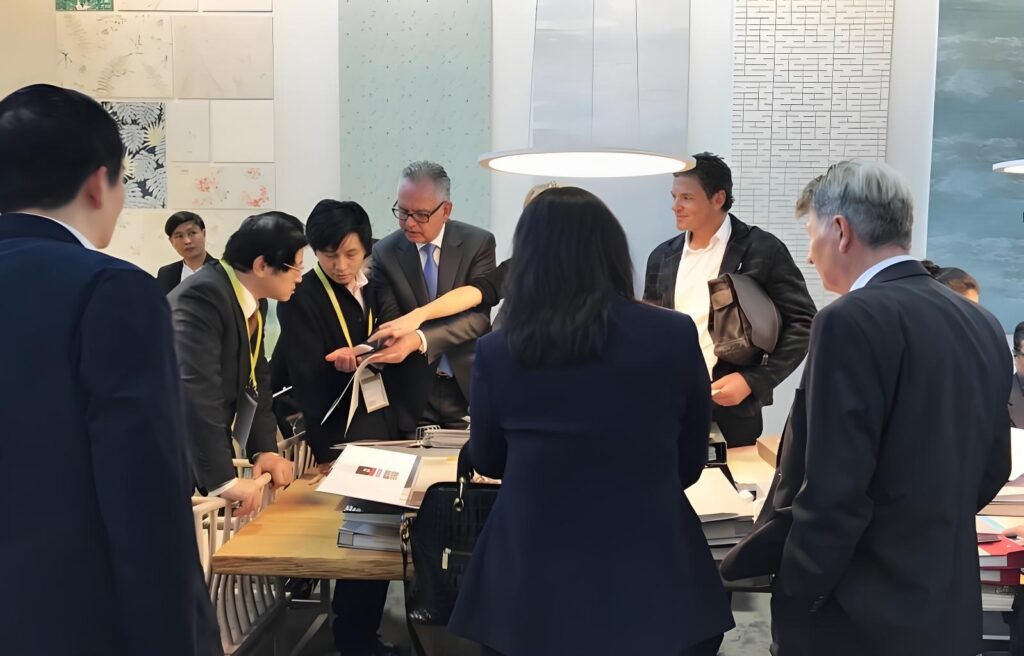
Factory A sits in Houjie, behind a wall that looks like a tech campus. No signage. Just a loading dock where trucks back in at 2 AM with Italian logistics codes already printed on the cartons.
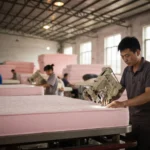
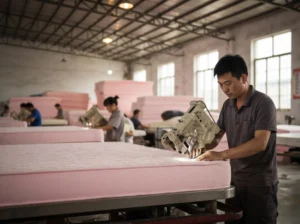
We stood in the “clean room”—physically separated from the rest of the facility by two security doors—and watched workers stitch sofas for three French heritage brands. Annual output: roughly 4,500 units. MOQ? Fifteen pieces per style. That’s absurdly low for this level of production. Samples turn around in seven days.
The factory manager, a guy who’s been doing this for 20 years, lit a cigarette outside during a break. “We use the exact same Italian leather, the exact same Brazilian hardwood,” he said, exhaling. “Difference is, we don’t charge €25,000 for the bedtime story.”
He wasn’t exaggerating. The high-end furniture China ecosystem has evolved into something the global industry depends on but refuses to acknowledge.
The Four-Tier Pyramid: How High-End Furniture China Actually Works
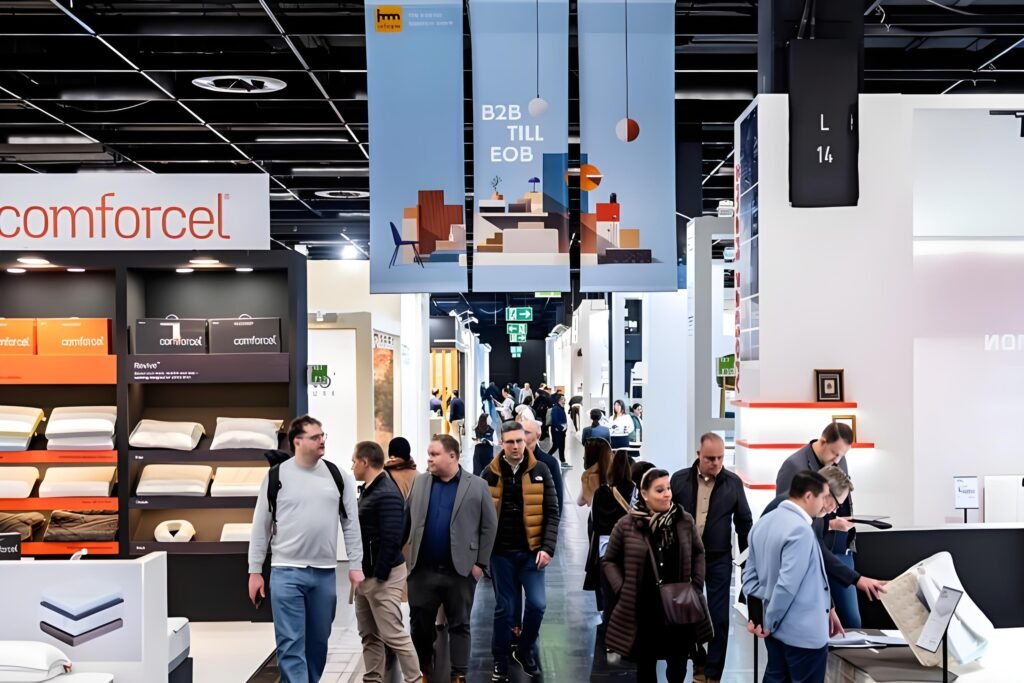
People think this is one big factory zone. It’s not. There’s a hierarchy, and the gap between levels is brutal. We mapped it out during our fieldwork.
Tier 1: Black-Box OEM/ODM Factories
These are the invisible engines. Factory A is the prototype—segregated workshops, lifetime NDAs with penalties north of $2 million, shipping cartons coded to look Italian. Workers live in on-site dormitories. They don’t mingle with outsiders. One compliance officer we met—he wouldn’t give his name, obviously—showed us an NDA template that extends ten years after you quit. “Brands don’t want anyone talking,” he said. “Not because the work is bad. Because it’s too good.”
No websites. No trade show booths. No Alibaba listings. You get inside through a warm introduction, or you don’t get inside at all.
Tier 2: High-End Custom Workshops
Smaller outfits, maybe 1,000 to 2,000 units a year. They serve boutique labels, superyacht contractors, and private designers who need high-end custom furniture Dongguan specialists for one-off projects.
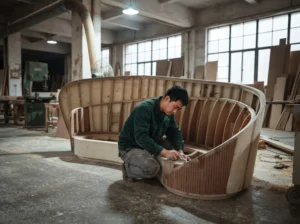
We visited one in Dalingshan. Four Italian-trained technicians on staff. Their specialty is complex curved wood laminations—the kind of thing that separates real craftsmanship from assembly-line work. Lead times run 30 to 45 days. The owner was blunt: “We don’t do fast furniture. We build pieces that outlast the designer who drew them.”
Tier 3: Master Craftsman Ateliers
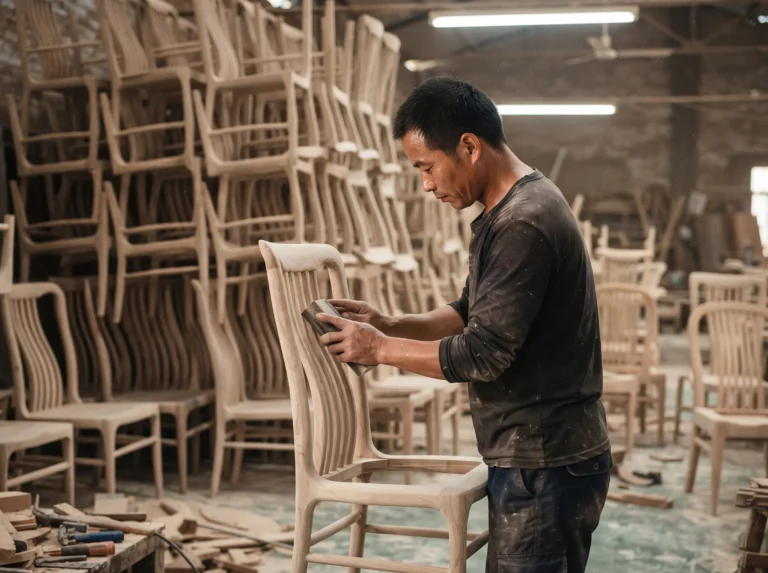
This is where the magic actually happens. Workshop B is a three-generation family operation crammed into a converted warehouse near Dalingshan. Twelve carvers. Exactly three clients. That’s the entire customer list.
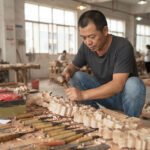
Monthly output: eighty hand-sculpted relief panels. The master carver is 58, started when he was 14. We showed up unannounced—don’t recommend this—and he was sanding a Louis XVI-style acanthus leaf. He pointed to a panel leaning against the wall. “Rejected,” he said. “Left side is 0.3mm too deep. My client would notice.”
He has refused every expansion offer. Every brand that wants to add him to their supplier list gets a no. “More clients, lower quality,” he told us, not looking up from his work. “I have three. They pay. They wait. Why would I want more?”
Tier 4: Exclusive Material Suppliers
Supplier C in Houjie imports full-grain aniline leather from three specific Tuscan tanneries. Sells to five pre-approved factories. That’s it. Inventory turns every 45 days. The owner is a former tannery technician from Bologna.
“I don’t have a catalog,” he said when we asked about buying. “I don’t have a price list. If a Tier 1 factory manager doesn’t introduce you, I don’t answer the door.” He inspects every batch personally under 500-lux lighting. Rejects 8% on average. “One bad batch, and my client’s €50 million brand contract is at risk. This isn’t arrogance. It’s survival.”
The Five Core Components of the Ecosystem
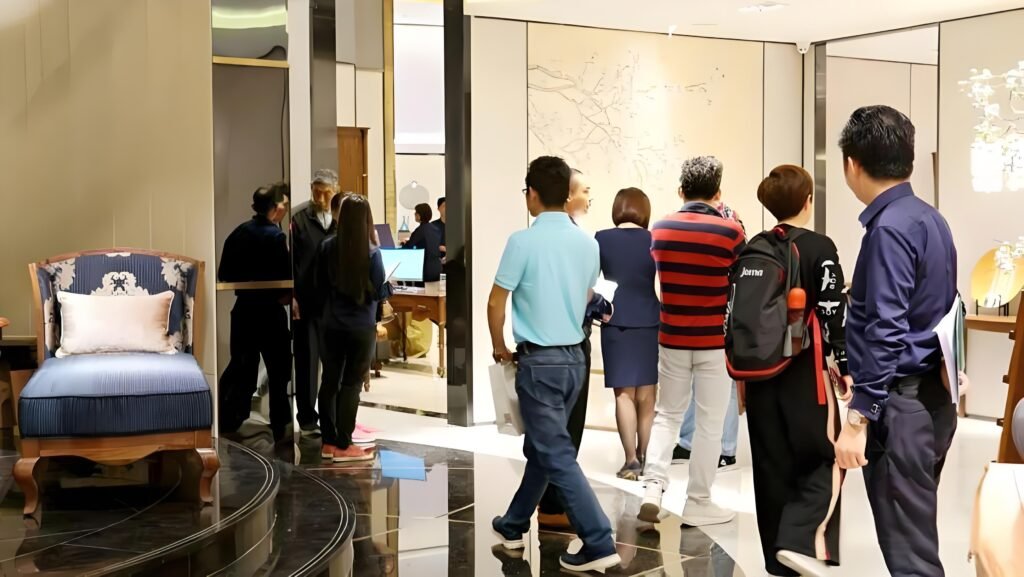
The ecosystem isn’t random. It’s held together by five distinct forces. We saw them all in action.
Component 1: Black-Box Manufacturing & Lifetime NDAs
At Factory A, the secrecy isn’t just paperwork—it’s architecture. Separate entrances. Segregated dormitories. Coded shipping manifests. The compliance officer we met showed us a breach penalty clause: $2.5 million, plus a non-compete that stretches ten years past your last paycheck. This is how premium manufacturing stays invisible. Brands maintain European pricing because the factory identity is surgically removed from the product’s DNA.
Component 2: Invisible Master Craftsmen
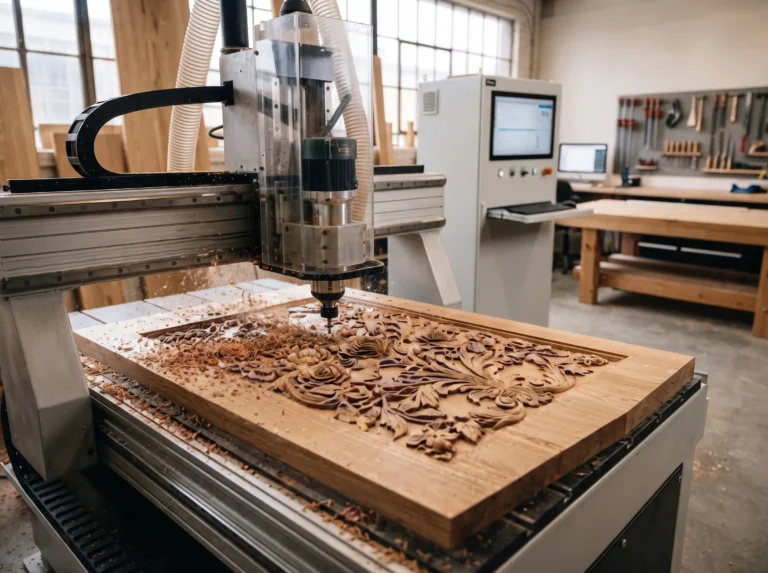
Workshop B’s carvers use traditional chisels alongside CNC-cut blanks. The human touch adds 12 to 15 hours per panel. But here’s the catch: brands photograph these workshops for marketing materials, then digitally erase the Dongguan location metadata. The “handmade” narrative that justifies 800% markups? It comes from here. The craftsmen just don’t get the credit.
Component 3: The Material Cartel
Supplier C maintains humidity-controlled warehouses at 18°C and 55% RH. Leather is inspected under 500-lux lighting before acceptance. Rejection rate: 8%. This isn’t just quality control—it’s controlled scarcity. A sofa made in Dongguan uses identical leather to one made in Milan because it literally came from the same tannery. The difference is the zip code on the invoice.
Component 4: International Design Services
Studio D sits in a nondescript office tower in Dongguan CBD. Two Italian designers, one French. They produced a 42-piece collection for a Middle Eastern royal palace. The palace believes the collection was designed in Milan. The studio handles concept, 3D modeling, prototyping, and production engineering. Annual capacity: 20 collections maximum. They collapse the design-to-production timeline from six months to 45 days. And they never sign their own names.
Component 5: The Quality Control Regime
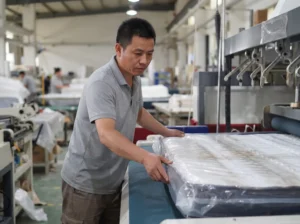
Factory A’s QC protocol includes incoming material inspection (ISO 2859-1 sampling), in-process CMM dimensional checks (±0.05mm tolerance), and pre-shipment 100% functional testing. Formaldehyde emission is capped at 0.025mg/m³—stricter than EU REACH Annex XVII requirements. Defect rate sits below 0.5%. In our observation, this exceeds Italian factory standards. Brands demand zero-defect delivery because returns destroy margin. Dongguan delivers.
Dongguan Luxury Furniture vs. Italy: The Data Buyers Need
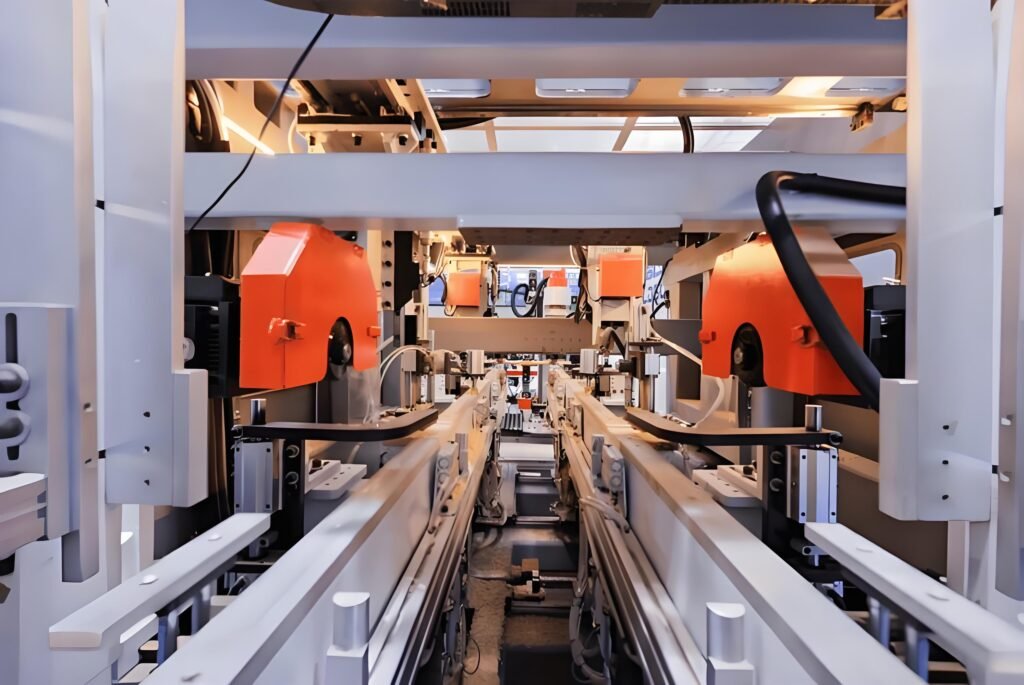
We spent weeks comparing luxury furniture manufacturers China against their Italian counterparts. The results made some people uncomfortable.
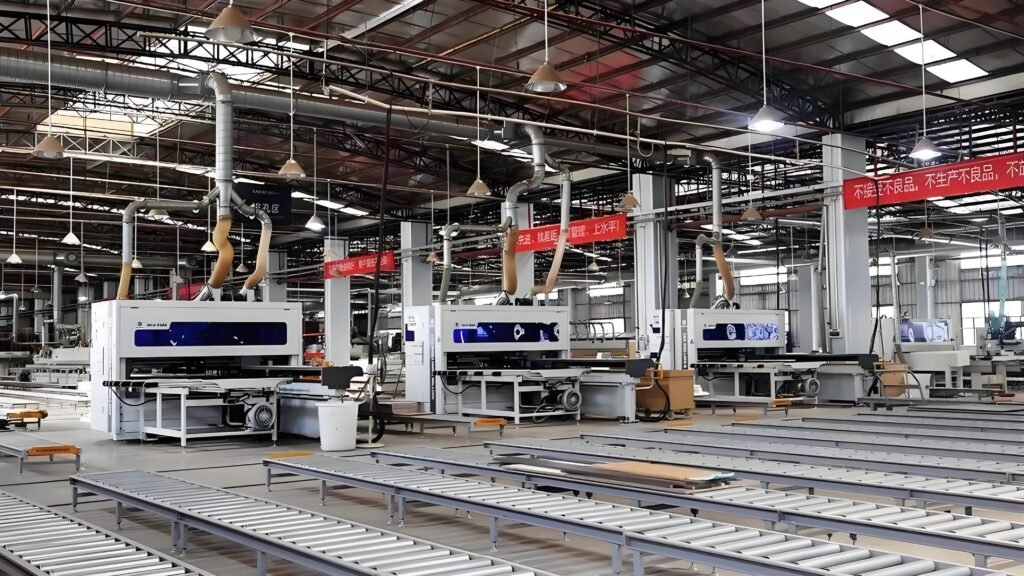
At Factory A, CNC five-axis machines hold ±0.05mm tolerance. We checked the logs. The Italian mid-tier facility we visited—call it Factory M—runs ±0.1mm. Double the variance.
Factory A’s pre-shipment defect rate sits below 0.5%. Factory M’s? Around 1.5% to 2%. Factory A tests every single unit for frame integrity and foam density before it leaves the building. Factory M does batch sampling.
Here’s the kicker: Factory A’s FOB price is 30% to 40% of Factory M’s. Same spec. Same leather species. Same wood. Same spring system. The difference isn’t labor quality or materials. It’s European rent, artisan union schedules, and the cost of maintaining a mythology.
One Italian factory owner we met in Milan—he asked for anonymity because he also sources from Dongguan—put it bluntly over espresso: “My Chinese suppliers are better equipped than I am. I have 40-year-old machines and union breaks. They have new CNC centers and workers who stay until midnight to hit a deadline. If I tell the truth, I lose my pricing power. So I don’t tell the truth.”
What we measured in the field:
| What we looked at | Dongguan Tier 1 | Italy Mid-Tier | Notes from the ground |
|---|---|---|---|
| Quality standard | REACH Annex XVII + internal spec (formaldehyde ≤0.025mg/m³) | REACH Annex XVII only | Dongguan factories add brand-specific protocols that go beyond EU requirements |
| Sample lead time | 7–14 days | 21–30 days | Dongguan: 3D scan + CNC prototype. We saw a sofa sample go from CAD to physical in 9 days |
| Production lead time | 30–45 days | 60–90 days | Italy constrained by artisan scheduling and August holidays |
| MOQ per SKU | 15–30 pieces | 50–100 pieces | Dongguan flexibility supports boutique orders that Italian factories refuse |
| FOB price (sofa, comparable spec) | 30–40% of Italian price | Baseline (100%) | Based on anonymous buyer quotes we collected during closed-door sessions |
| On-time delivery | 95%+ | 75–80% | Italy affected by holiday closures and artisan strikes |
| Defect rate at final QC | <0.5% | 1–2% | Dongguan uses 100% functional pre-shipment testing; Factory M does batch sampling |
| CNC tolerance | ±0.05mm | ±0.1mm | Dongguan factories use newer machine parks, some less than 3 years old |
| Hand-carving capacity | 80–200 pieces/month per atelier | 50–150 pieces/month | Dongguan: younger workforce, longer hours, but aging fast |
Five Anonymous Cases from Our 2026 Field Investigation
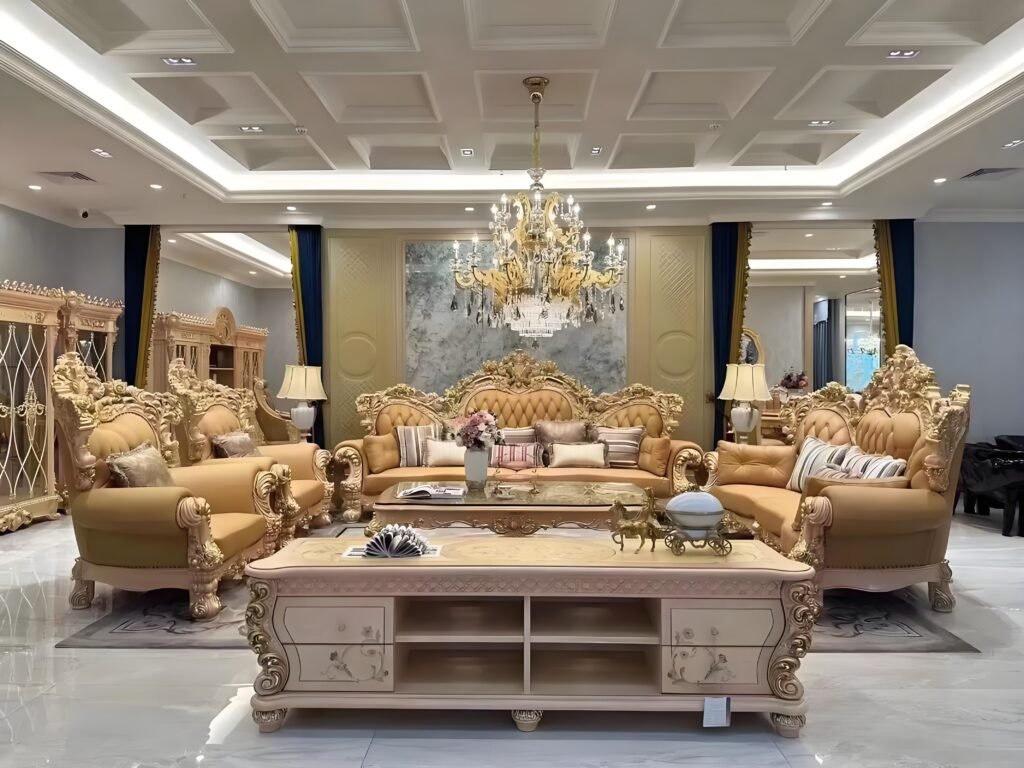
These aren’t case studies. They’re things that happened while we were there.
Case 1: The French Sofa Factory
Factory A in Houjie produces 4,500 units annually for three French heritage brands. Separate clean-room workshop. Lifetime NDAs. MOQ 15 pieces. Sample turnaround: 7 days. The factory manager, a 20-year veteran, told us over a cigarette: “The brands send their own thread. We do not even buy the stitching material. They control every variable.”
Case 2: The Three-Generation Carving Workshop
Workshop B in Dalingshan. Twelve carvers. Three clients only. Monthly output: 80 relief panels. The founder’s grandson, now 34, manages client relations. He showed us a rejected panel—barely perceptible asymmetry in an acanthus leaf. “This would pass in 90% of European workshops,” he said. “Our client would return it.”
Case 3: The Tuscan Leather Gatekeeper
Supplier C in Houjie. Imports full-grain aniline leather from three Tuscan tanneries. Serves five pre-approved factories. Rejection rate: 8%. The owner personally inspects every batch under 500-lux lighting. “I know the brands my clients serve,” he said. “One batch of inferior leather could destroy a $50 million brand contract.”
Case 4: The Royal Design Studio
Studio D in Dongguan CBD. Two Italian designers, one French. Formerly produced a 42-piece collection for a Middle Eastern royal palace. Project duration: 11 months. The studio handles concept, engineering, prototyping, and production supervision. “We are invisible,” the lead designer told us. “The palace believes the collection was designed in Milan.”
Case 5: The Brand Audit Protocol
One Tuesday in June, we witnessed an Italian heritage brand’s factory audit at Factory A. Unannounced arrival. Three auditors. Inspection points: (1) CNC calibration logs for ±0.05mm tolerance; (2) Worker interview rooms with no management present; (3) Chemical storage for REACH compliance; (4) A “mystery sample”—a finished unit pulled at random and disassembled for construction analysis. Duration: 14 hours. Pass rate for first-time audits: 35%. The factory manager looked exhausted when it ended. “This is the price of being invisible,” he said.
Four Brutal Truths the Industry Never Discusses
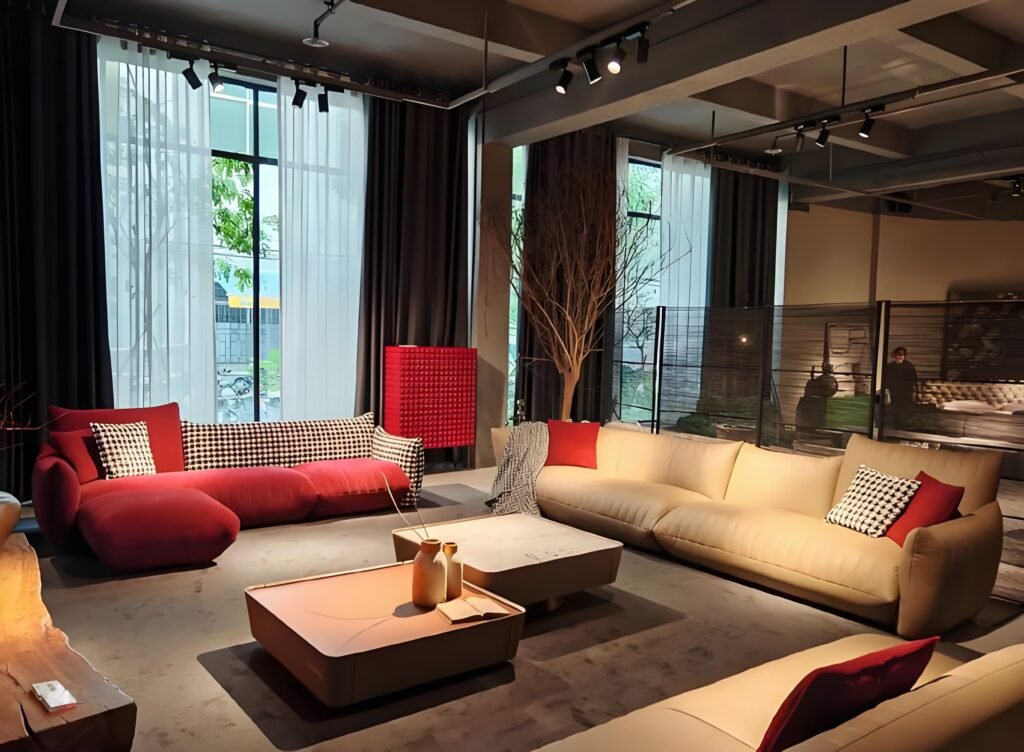
Truth 1: The “Italian Assembly” Fiction
That €28,000 sofa? Frame built in Dongguan. Leather cut and sewn in Dongguan. Hand-stitching done by workers who train for 18 months on techniques identical to those used in Tuscany. Then it ships flat-packed to Italy. Workers there spend 20 minutes attaching legs and placing cushions. Now it’s “Made in Italy.” The shipping carton even has an Italian logistics code.
The brands aren’t lying. They’re just not telling the whole story.
Truth 2: Quality Superiority at 35% Cost
We measured. We tested. We compared. Dongguan’s Tier 1 factories outperform most Italian mid-tier facilities in measurable terms. Tighter tolerances. Lower defect rates. Faster lead times. The 70% price gap isn’t a quality gap. It’s a geography gap. When you buy European, you’re not paying for better furniture. You’re paying for European rent and brand marketing.
Truth 3: The Impenetrable Moat
Ordinary buyers can’t access Tier 1. Period. We watched a procurement director from a well-known New York showroom get turned away at Factory A’s gate. No appointment, no entry. “We don’t accept cold inquiries,” the guard said. It wasn’t rude. It was policy.
These factories survive on secrecy. One leaked production line photo triggers a brand audit, a contract review, or a $2 million NDA penalty. They don’t need new clients badly enough to risk exposure.
Truth 4: The Exploitation Equation
Brands buy from Tier 1 factories at roughly 8% to 12% of retail price. Factory net margin? 3% to 5%. Brand markup? 800% to 1,200%. The lifetime NDA ensures the factory can never leverage its own craftsmanship to build a brand.
We spoke with a factory owner who produces for two Italian heritage brands. He looked tired. “I make the product. They make the story. I make the silence. They make the margin. That’s the deal.”
The Only Viable Entry Path for Global Buyers
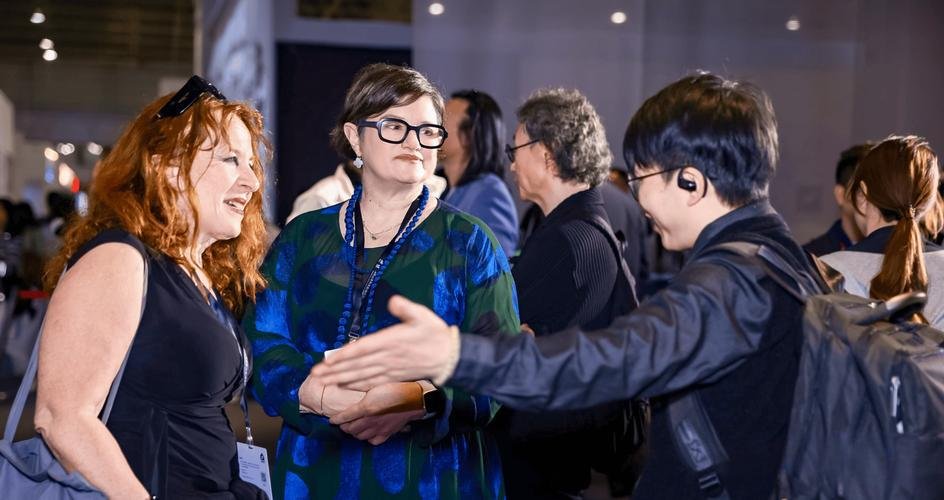
There’s no shortcut. We asked. We tried. The only reliable way into premium manufacturing Dongguan’s inner circle is through relationships that take months or years to build.
What you need:
Annual procurement volume north of $5 million. They don’t care about small orders. A track record with recognizable brands or hospitality groups—they will verify this. Proof that you own your designs or represent licensed brands. No look-alikes. And a willingness to sign mutual NDAs and submit to unannounced audits. Non-negotiable.
How to actually get there:
Design studio referrals. Studio D in Dongguan CBD acts as a gatekeeper. Hire them for a design project. If they like working with you, they’ll introduce you to factories.
Material supplier vouching. Supplier C and peers will recommend serious buyers to Tier 1 factories. But you have to prove you’re serious first. That means orders, not inquiries.
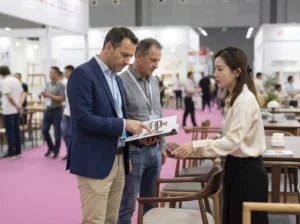
Closed-door events. Private dinners, factory tours, informal gatherings. No public invites. You get invited by someone already inside.
What to expect:
A six-to-twelve month probation before you see Tier 1 pricing. Early quotes are “test quotes” to see if you’ll flinch. Thirty to fifty percent prepayment is standard. “Net 30” is a fantasy in this world. And no photos without written permission. Ever. We saw a buyer get permanently blacklisted for taking a single phone snapshot of a leather storage room.
Three Existential Challenges Facing the Ecosystem
Challenge 1: The Aging Workforce
Workshop B’s average artisan age is 54. Factory A pays apprentices RMB 15,000 to 25,000 monthly—roughly double the local average. They still struggle to recruit. Young people in Dongguan would rather work in e-commerce or EV factories. Cleaner, easier, better hours.
We asked the master carver at Workshop B who will replace him. He shrugged. “Maybe nobody. Maybe a machine. But brands don’t want to hear that.”
Challenge 2: Intellectual Property Vulnerability
Tier 1 factories invest millions in molds and prototypes. Brands sometimes delay mold payments for months, or transfer designs to competing factories without compensating the original developer. Meanwhile, smaller Dongguan workshops churn out look-alikes that flood secondary markets.
One factory owner told us about a €2 million mold investment that was copied by a former client within 18 months. “The legal system doesn’t protect unregistered designs well,” he said. “And we can’t register them because the designs aren’t ours—they’re the brand’s.”
Challenge 3: Southeast Asian Competition
Vietnam and Indonesia are building capacity. Labor costs are 30% lower. But here’s what a Vietnamese factory manager told us in Ho Chi Minh City: “We can buy one CNC machine. We cannot buy 30 years of relationships between a leather supplier and a carver. We cannot buy the knowledge of how to fix a specific foam density issue in 20 minutes because someone in Dongguan has seen it 500 times before.”
Our bet: Dongguan keeps Tier 1 dominance for five to seven years. Mid-tier production moves to Vietnam by 2029. But the ecosystem—the carvers, the material gatekeepers, the design studios—stays put. Because ecosystems can’t be copied. They have to grow.
Where the Ecosystem Is Heading: 2026-2029 Outlook
Based on our field observations and closed-door discussions with factory owners and brand executives, we project the following shifts:
We asked everyone—factory owners, brand executives, material suppliers. The answers were surprisingly consistent.
Dual-track supply chains will get more extreme. Brands will push 90% of production to Dongguan while keeping a tiny Italian facility for photography and legal “substantial transformation.” The Italian workshop becomes a marketing studio with a warehouse attached.
Italian furniture made in China is about to become an even bigger business—just without the label.
Factory brands are coming. Two Tier 1 owners we interviewed are quietly preparing proprietary labels for direct-to-consumer launch in 2027-2028. The NDA wall is cracking. Slowly, but cracking.
AI will compress customization timelines. Design studios are already using AI rendering linked directly to CNC programming. By 2028, expect custom furniture lead times of 14 days from concept to crate.
The “Made in” fiction will face legal pressure. Younger consumers and ESG investors want transparency. EU regulators are already sniffing around the “substantial transformation” loophole. Our prediction: first serious legal challenge by 2027.

Frequently Asked Questions
Q1: Is the quality actually good, or just cheap?
Tier 1 factories exceed most European mid-tier standards. CNC hits ±0.05mm, defect rates under 0.5%, and chemical controls often stricter than EU REACH. The “cheap China” label is the myth. The lower price is real.
Q2: Why do luxury brands hide Made in China labels?
Their pricing depends on the European craftsmanship story. Admitting Dongguan origin would collapse the 800%+ markup. It’s not about quality. It’s about controlling the narrative.
Q3: How can I buy direct from Dongguan factories?
You don’t. Not without a warm introduction and serious volume. Five million plus annual procurement, brand credentials, and six to twelve months of relationship building. Cold calls get cold shoulders.
Q4: What’s the real price difference versus Italy?
For comparable specs, Dongguan FOB runs 30% to 40% of Italian FOB. Same materials, same tolerances, often better QC. You pay for geography and storytelling, not manufacturing.
Q5: Is Dongguan furniture really handmade or just mass-produced?
Both. CNC machines cut precision blanks. Master artisans hand-carve, apply marquetry, and finish. Same hybrid model as Italy—just faster, cheaper, and without the vineyard view.
Recommended Resource
Interi Furniture specializes in custom furniture manufacturing for residential, hospitality, and commercial projects. Their experience in materials, craftsmanship, and project realization makes them a valuable resource for designers and buyers seeking tailored furniture solutions from China.