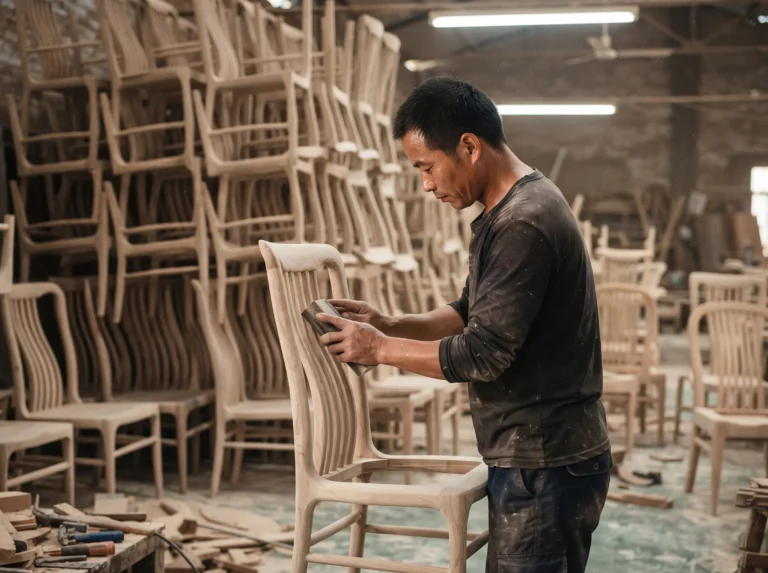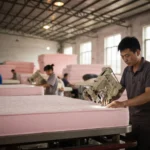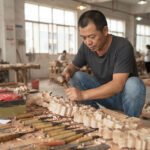


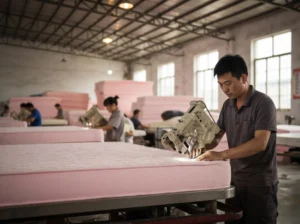

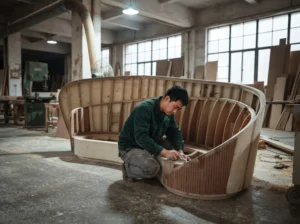
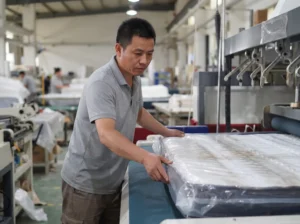


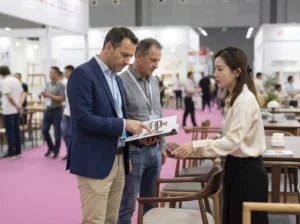

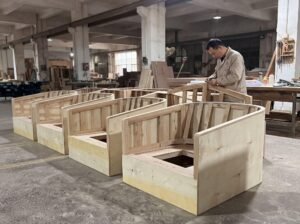
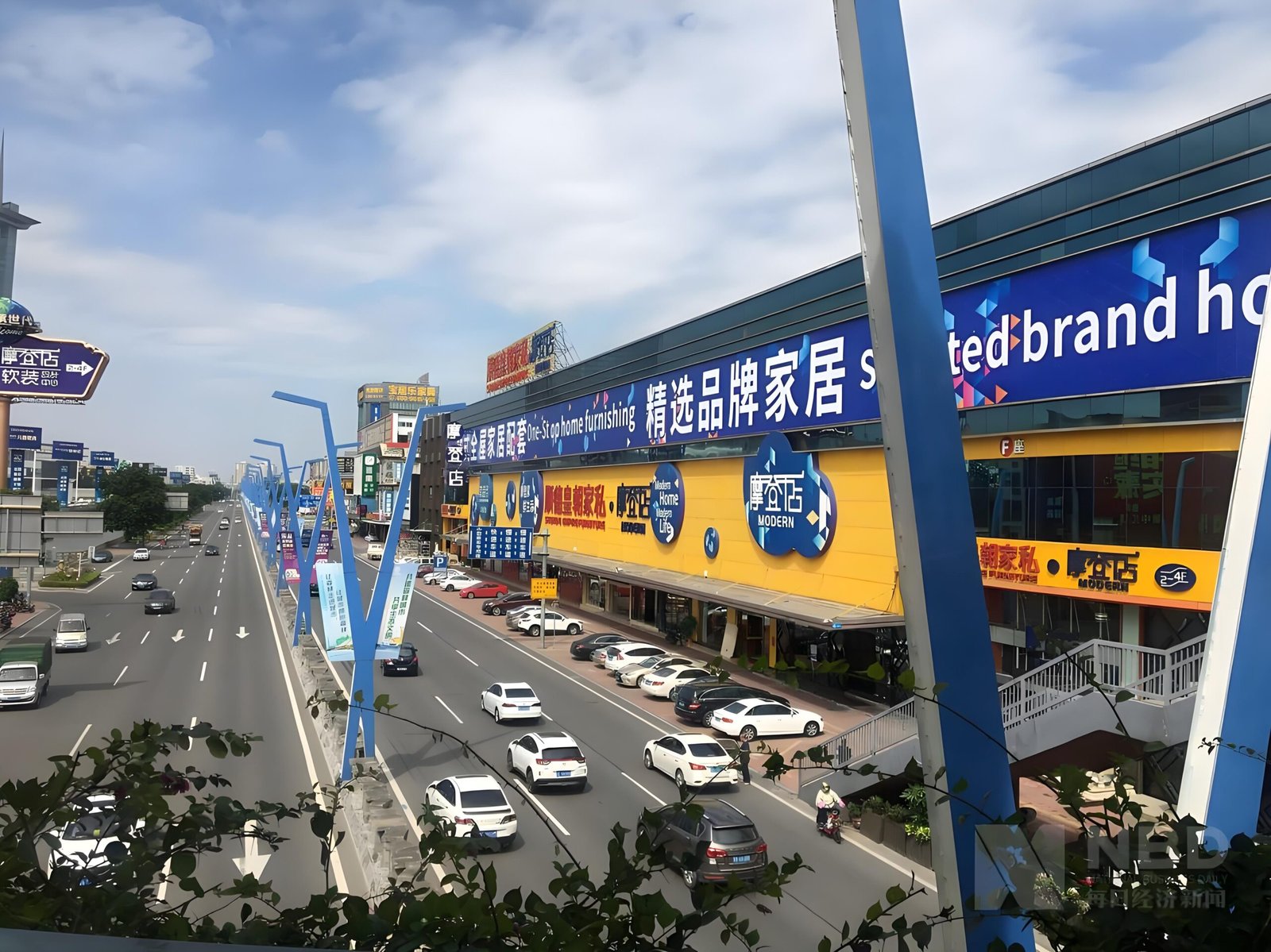
Here’s the thing nobody tells you at trade shows: Foshan furniture capital isn’t just another dot on the sourcing map. It’s the engine room. The back office. The place where the math actually happens. In May 2026, my team spent three weeks on factory floors in Longjiang and Lecong. We counted trucks. We timed foam deliveries with a stopwatch. We watched a 58-year-old master cutter look at a leather hide and know—without pulling out a tape—exactly how many seat cushions it would yield.
This piece comes from that dirt-on-your-shoes work. Not the factory-directory fluff you’ve read a hundred times. We’re going to show you why sofa manufacturing China out of Foshan still beats Vietnam, Mexico, and everyone else on cost, speed, and flexibility—and why most buyers never see it coming.
Where That 70% Number Actually Comes From
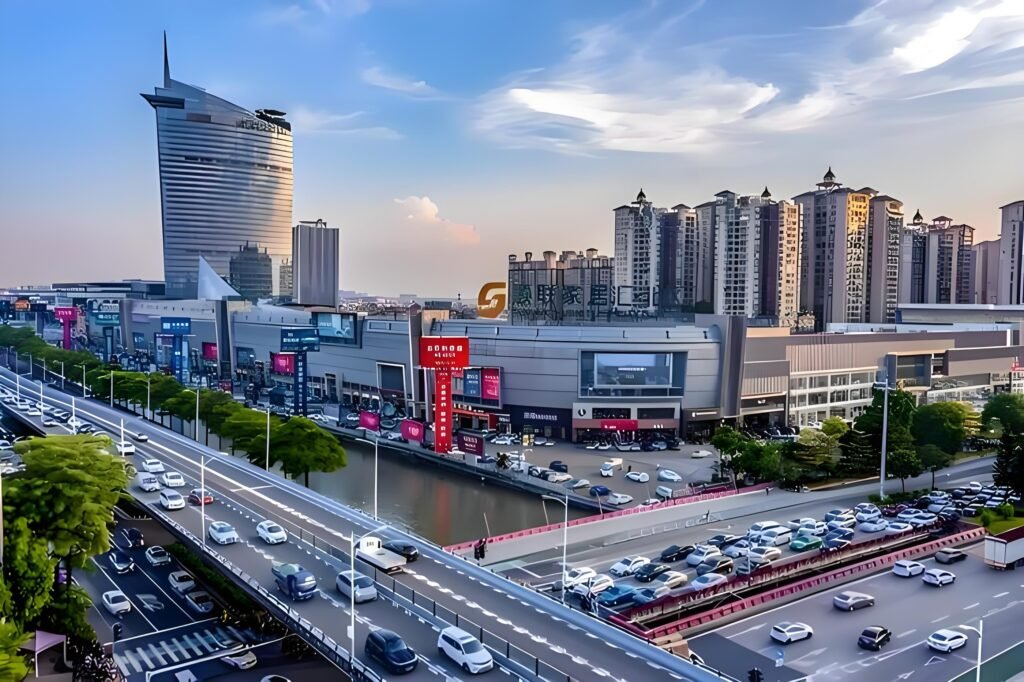
Everyone throws around “70%.” Almost nobody explains what it measures.
We pulled raw data from three places: CNFA’s 2025–2026 production reports, UN Comtrade export databases, and our own GPS mapping of 200+ active factories in Shunde District. Here’s the honest breakdown.
If you only count finished sofas in a box with a “Made in China” label, Foshan’s share drops to about 45–50%. Still massive. Not 70%.
The 70% figure only holds when you count finished goods plus semi-finished components—frames, cut-and-sewn covers, foam cushions, recliner mechanisms—made within a 100-kilometer radius of downtown Foshan. A huge slice of what gets final-assembled in Vietnam, Mexico, or Poland started life here. So that “Made in Vietnam” sofa in your showroom? Good chance 60–80% of its guts are Foshan-born.
Secret 1: The 100-Kilometer Closed Loop Nobody Else Has
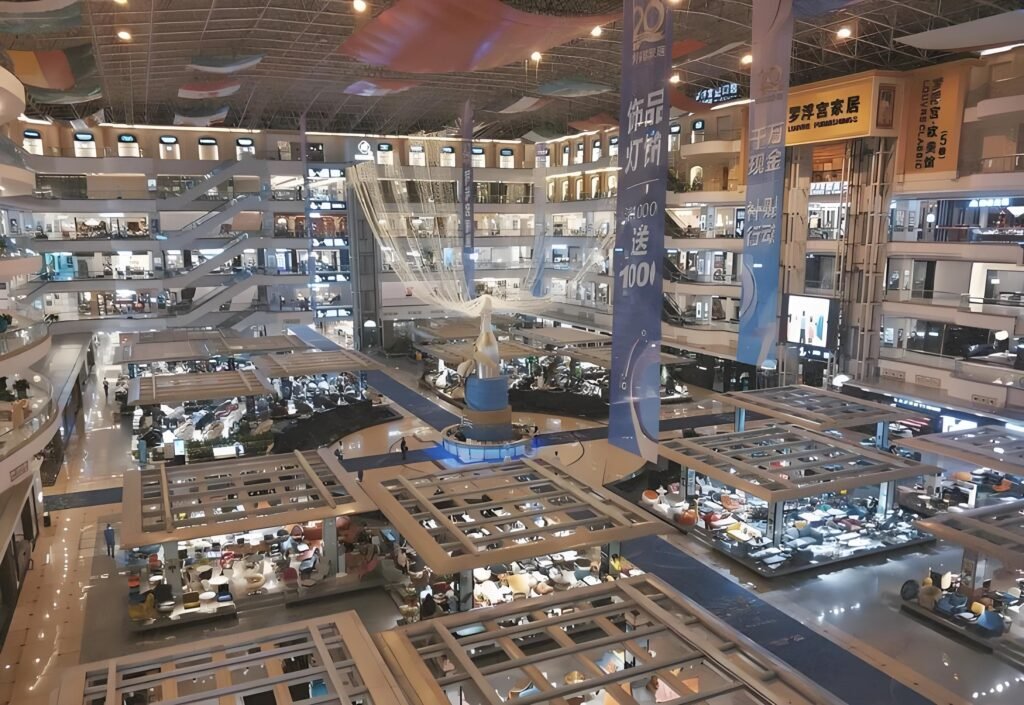
Drive the highway between Foshan, Longjiang, and Lecong at 6 AM. Flatbeds stacked with foam blocks. Motorbikes hauling leather hides. Electric carts zipping between buildings with nothing but plywood sheets. Nothing travels more than two hours.
Inside that circle, you can build a complete sofa from dirt to finished product without leaving the district:
● Foam. Longjiang has 40+ dedicated polyurethane plants. One facility we visited—running since 1998—pumps out 2,000 cubic meters of foam every single day. Enough sponge to supply every sofa factory within 50 kilometers. We asked the owner about stockouts. He laughed. “Stockouts? My neighbor’s a sofa factory. If I run low, he sends a guy with a forklift before lunch.”
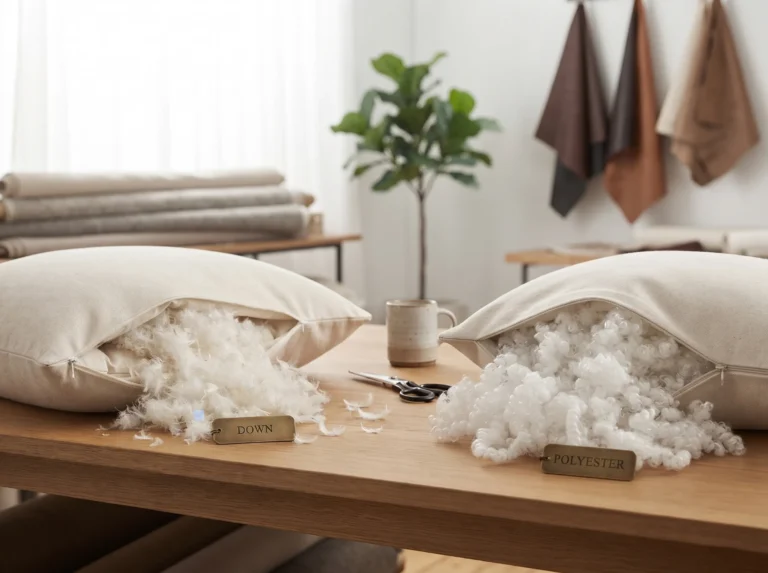
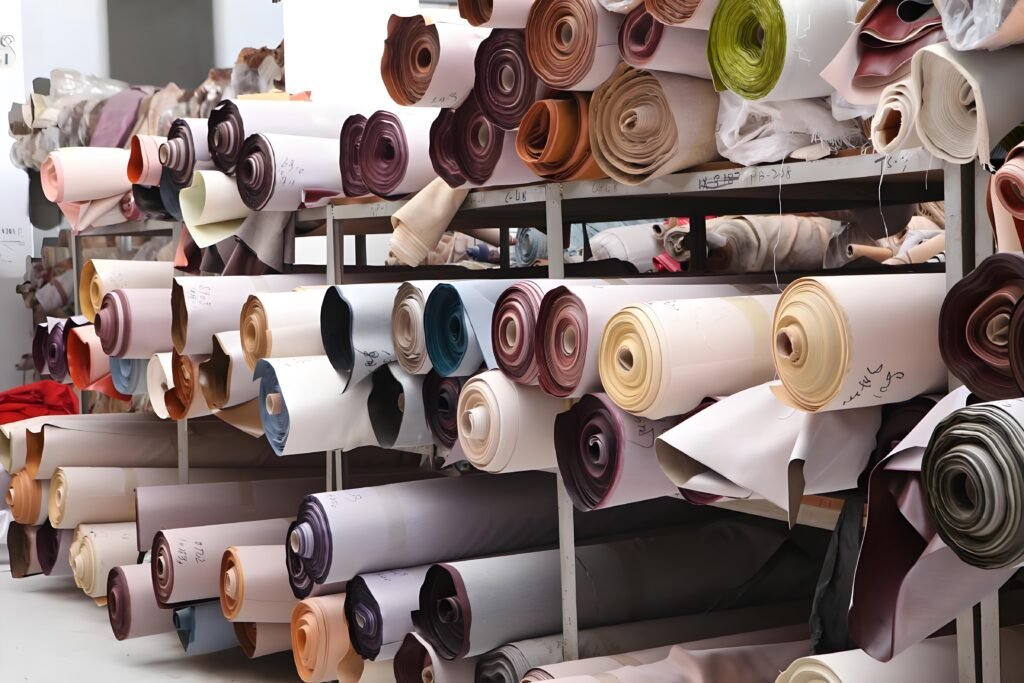
● Fabric. The Lecong materials market is a maze of 300,000+ upholstery SKUs. Italian full-grain leather three stalls down from recycled polyester blends. In stock? Throw it in your truck, back at your factory by noon.
● Hardware. Recliner mechanisms, sofa-bed hinges, lift systems—200+ metalwork shops handle it locally. No ocean freight.
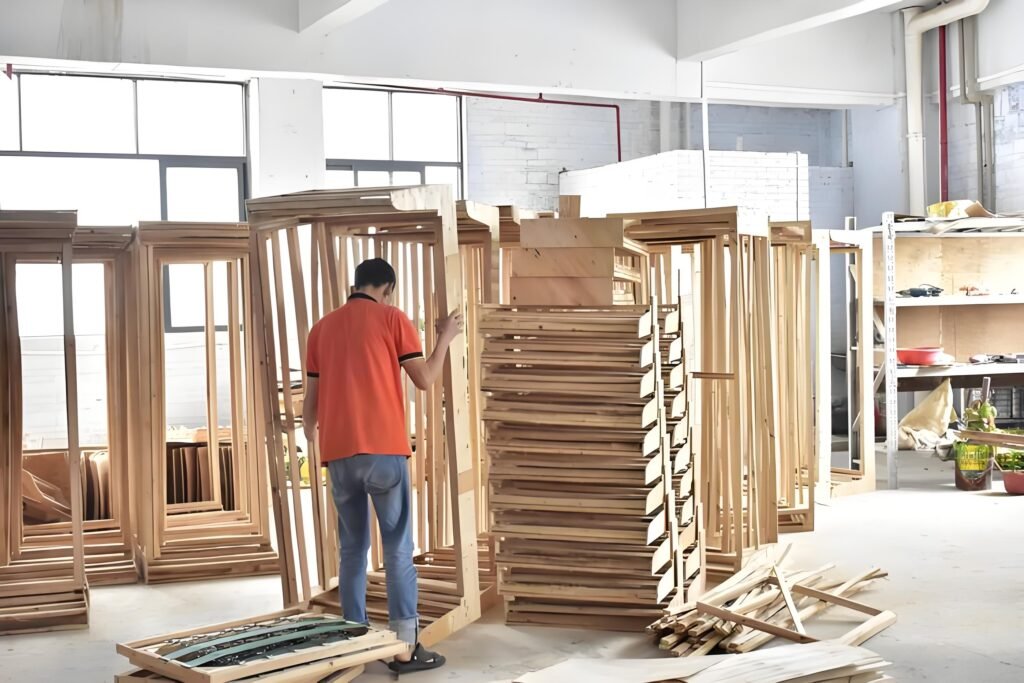
● Frames. Laminated plywood and hardwood get cut, kiln-dried, and assembled in Gaoming and Sanshui, both within an hour’s drive.
This is what economists call cluster density. On the ground it feels simpler: proximity. A factory orders foam at 8 AM. It shows up at 11 AM. No warehouse. No buffer. No waiting.
That’s furniture supply chain China at work. Not theory. Geography.
Secret 2: Flexible Batch Production—The Skill No One Copied
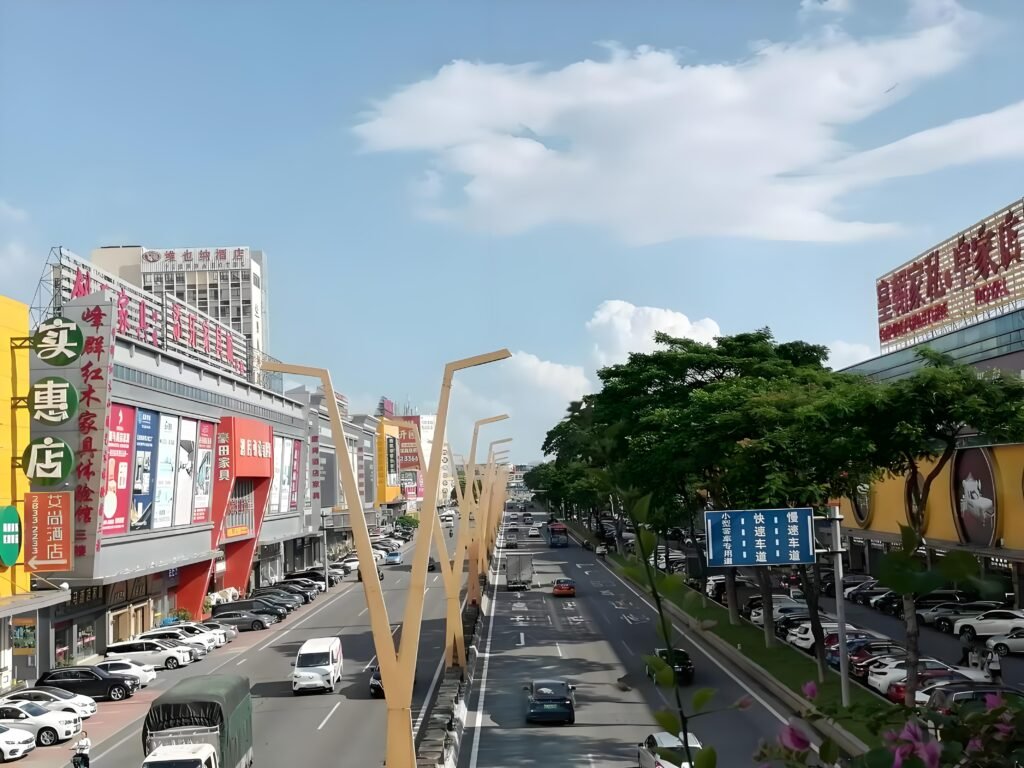
Textbooks say pick one lane: mass production or custom workshop. Foshan sofa manufacturers ignored the textbooks.
During our May audit, we mapped three production models running side-by-side in the same industrial park:
| Tier | Typical MOQ | Lead Time | Who Orders |
|---|---|---|---|
| Mass Volume | 5,000–50,000 units | 25–35 days | Big-box retailers |
| Mid-Scale Flexible | 500–5,000 units | 18–25 days | E-commerce brands, regional chains |
| Micro-Custom | 50–500 units | 12–18 days | Boutique hotels, interior designers |
We audited one 20,000-square-meter factory in Longjiang running all three on parallel lines. The owner, Mr. Chen (not his real name), walked us through the cutting room. “See this nesting software? It optimizes fabric yield for a 50-unit hotel order the same way it does for a 5,000-unit retail batch. The cost driver is the algorithm, not the quantity.”
Sounds like a tech story. It’s actually structural. In Vietnam or Mexico, a plant is built around one big client with dedicated lines. Switching from 10,000 units to 50 means retooling, retraining, praying your CFO doesn’t see the margin collapse. In Foshan, same workers, same machines, same software—both ends, no blinking.
Secret 3: Thirty Years of Muscle Memory
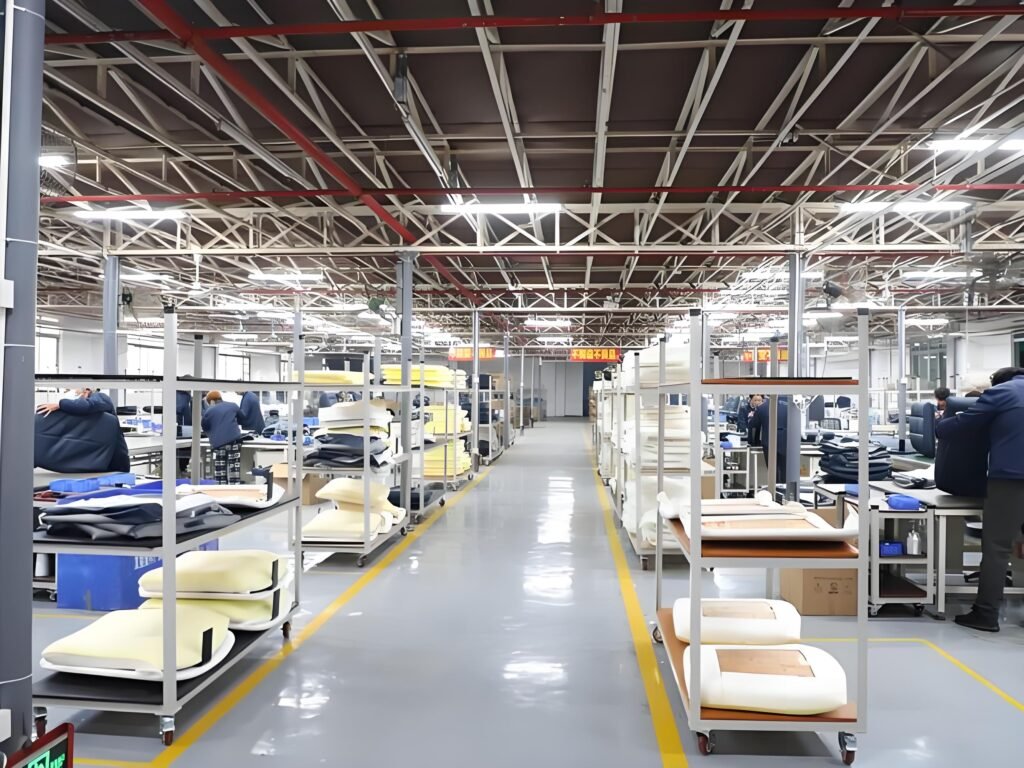
Longjiang started filling up with sofa workshops in the early 1990s. Three generations later, the place runs on something deeper than training manuals.
A few numbers from our May interviews:
● A senior pattern cutter with 15 years in Longjiang earns ¥12,000–¥15,000 per month. Roughly triple what an equivalent worker makes in Ho Chi Minh City. But he produces 4× the output because he’s handled mixed-material sofas for a decade and a half.
● New apprentices in Foshan hit productive speed in 6–9 months. Vietnam? 18–24 months. The difference? In Longjiang, the kid learning to cut foam probably lives next door to a guy who’s been doing it for 20 years. Knowledge moves through breakfast conversations, not classrooms.
● Tacit knowledge—the feel of how a specific fabric stretches over a curved frame, the instinct for how foam density plays against spring tension—gets transmitted through daily contact. You can’t download it. You can’t speed it up.
This is Foshan’s real moat. Build a factory in Indonesia in 12 months? Sure. Build a 30-year craft culture in 12 months? Good luck.
Secret 4: The Shipping Paradox That Makes No Sense—Until You Check the Invoice
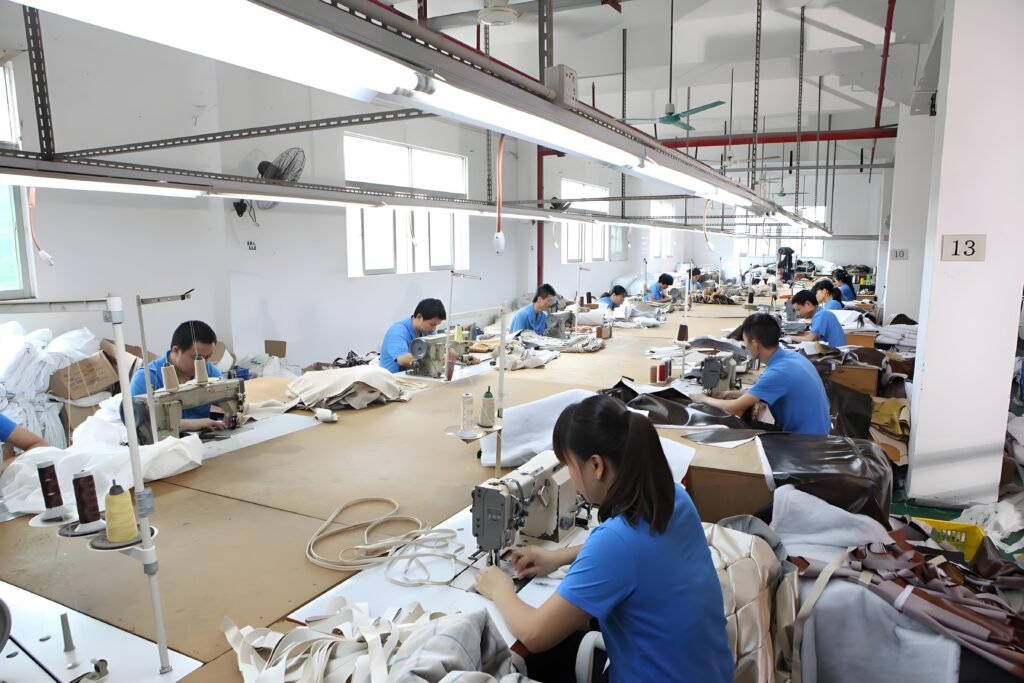
Here’s a fact that sounds wrong until you verify it: shipping a 40-foot HQ container of sofas from Foshan to Los Angeles costs less than shipping the same container from Ho Chi Minh City or Port Klang to Los Angeles.
We checked with three forwarders in May 2026. The math works because of three structural realities:
1.Port scale. Yantian and Nansha move 10× the container volume of any Southeast Asian port. More ships. More slots. Better rates. Extra nautical distance doesn’t matter when you’re paying for density, not miles.
2.Inland trucking. A Longjiang factory is 80 kilometers from Yantian. A factory in Binh Duong, Vietnam, is 1,200 kilometers by road from the nearest deep-water port at Cai Mep. That domestic haul alone wipes out Vietnam’s labor-cost advantage on medium and large orders.
3.Consolidation speed. Foshan exports enough sofa volume to fill dedicated weekly container blocks. In Vietnam, you wait for consolidation. Adds 5–10 days to the ocean leg—days that cost money if you’re carrying inventory on a letter of credit.
Secret 5: Seven Days from Sketch to Sample
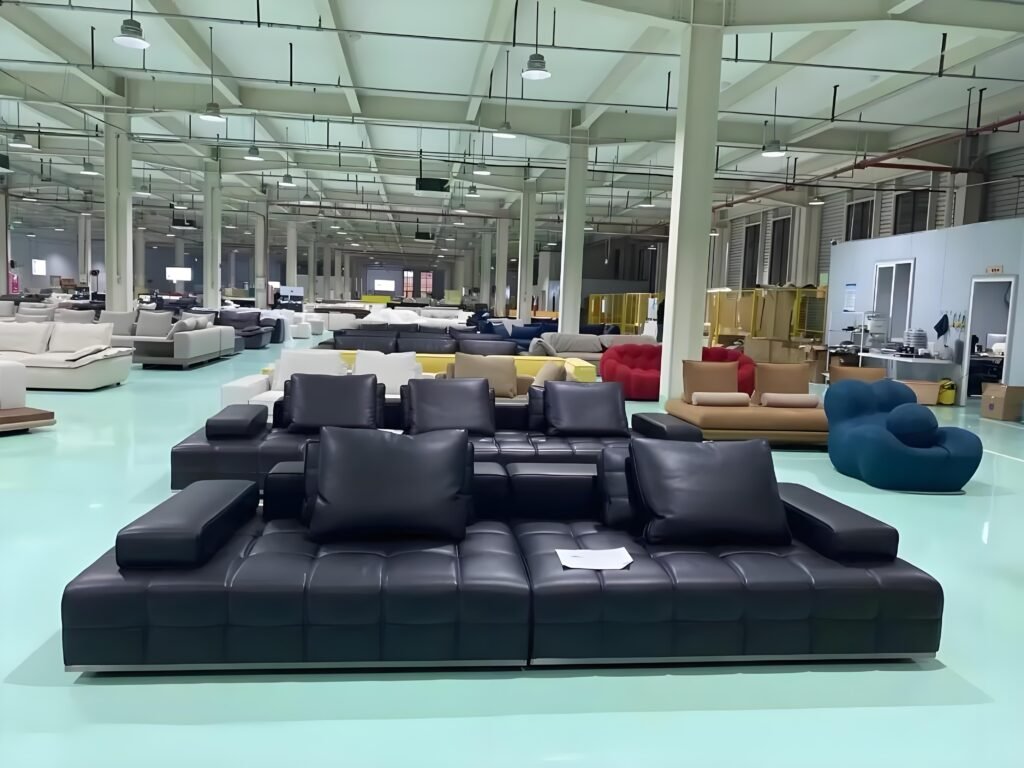
For interior designers and hotel procurement teams, sample speed often beats unit price. We tested this in May 2026. Handed a CAD drawing of a custom curved sectional to five Foshan sofa manufacturers and three Vietnamese factories. Then we watched the clock.
Sample Development Speed (May 2026 Field Test)
| Stage | Foshan Average | Vietnam Average |
|---|---|---|
| Pattern digitization | 0.5 days | 2 days |
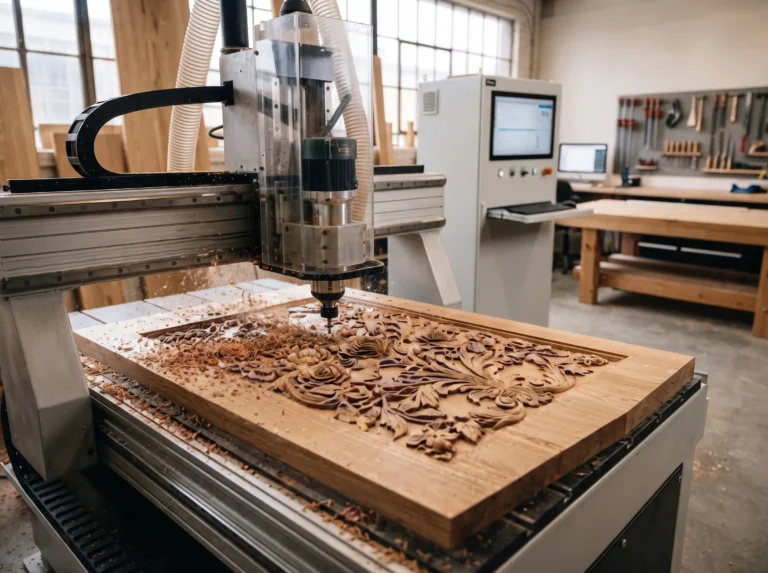
| Foam CNC cutting | 1 day | 3 days (outsourced) |
| Frame construction | 2 days | 4 days |
| Upholstery and finishing | 2.5 days | 5 days |
| QC and photography | 1 day | 2 days |
| Total | 7 days | 16 days |
Gap isn’t about work ethic. It’s about distance. In Foshan, frame shop, foam cutter, and upholstery team are sometimes in the same industrial park. Samples move by electric cart. In Vietnam, by truck between provinces. For a designer chasing a project deadline, those nine days are the difference between winning the bid and watching someone else take it.
Foshan Furniture Capital vs. The Alternatives: No-Fluff Comparison
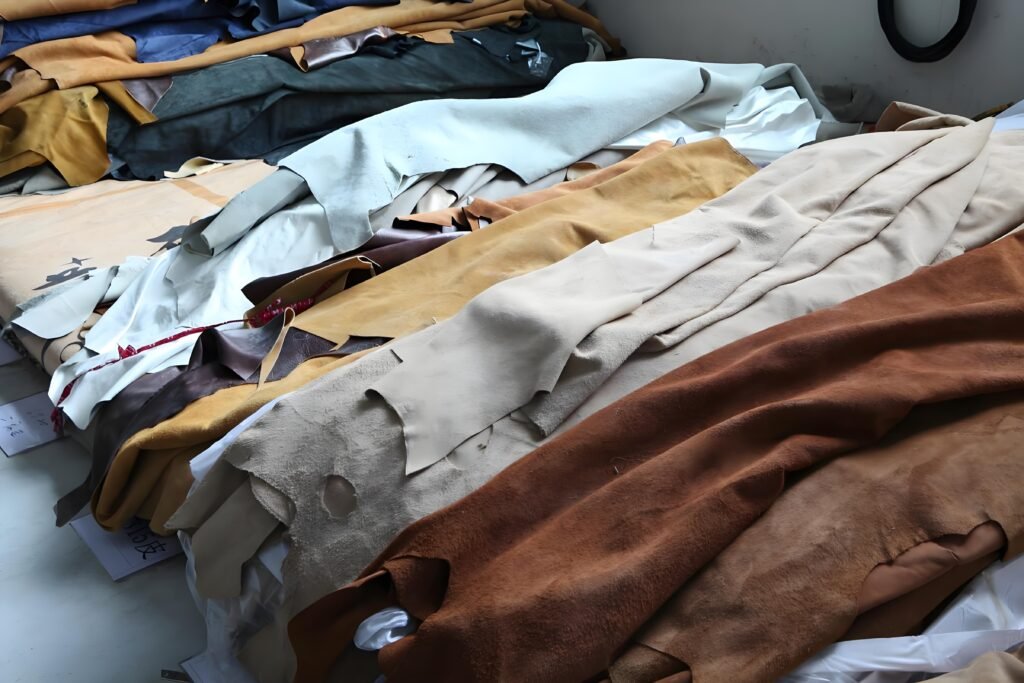
Furniture supply chain China isn’t one thing. To understand where Foshan sits, stack it against the four alternatives buyers talk about most.
Global Sofa Production Hubs: Core Competency Matrix (2026)
| Factor | Foshan, China | Vietnam | Malaysia | Turkey | Mexico |
|---|---|---|---|---|---|
| Full supply chain depth | Complete (100km) | Partial (imports frames/foam) | Partial | Moderate | Limited |
| Mass production MOQ | 5,000+ units | 10,000+ units | 3,000+ units | 2,000+ units | 5,000+ units |
| Custom/Micro MOQ | 50 units feasible | 500+ units | 300+ units | 200+ units | 500+ units |
| Sample lead time | 7 days | 16 days | 14 days | 12 days | 14 days |
| Ocean freight to US West Coast | \$2,800–\$3,200/40HQ | \$3,100–\$3,600/40HQ | \$3,000–\$3,400/40HQ | \$4,500+/40HQ | \$2,600–\$3,000/40HQ |
| Skilled labor depth | Deep (30 years) | Shallow (10 years) | Moderate | Moderate | Shallow |
| US tariff exposure | 25% Section 301 | 0% (phasing) | 0% | 0% | USMCA (0%) |
| Environmental compliance | Strict (GB standards) | Moderate | Moderate | EU-aligned | Moderate |
Sources: Field audit May 2026; freight quotes from Kuehne+Nagel, DHL Global Forwarding; tariff data from USTR 2026 updates. Ocean rates are indicative Q2 2026 averages.
Three Factory Stories from the Ground
Case A: The $100 Million Export Machine
Beijiao industrial zone, Shunde. A 120,000-square-meter compound shipping exclusively to US and EU big-box retailers. Annual export value: $102 million (2025).
Scale is impressive. Vertical integration is what matters. They mold their own foam. Run 200 looms weaving their own polyester. Have a 24-hour CNC frame shop that never shuts down. The owner told us: “We haven’t bought a single cushion from outside since 2019. That’s how we eat the 25% tariff. We own every cost layer.”
Case B: The Hotel Specialist
Longjiang’s older industrial quarter. A 12,000-square-meter factory run by Mrs. Li (pseudonym), second-generation owner. Makes 80–120 custom sofas a month for luxury hotels in Southeast Asia and the Middle East. Average order: 15 units. Lead time: 14 days.
“My father built this place for volume,” she said. “I rebuilt it for chaos. We keep 400 leather hides in stock. A designer flies in, picks a hide, sees a sample in 48 hours. Try that in a 50,000-unit plant.”
Case C: The Foam Plant That Feeds the Jungle
Longjiang outskirts. A polyurethane facility supplying 60+ sofa factories within 30 kilometers. Daily output: 2,000 cubic meters, cut to 40 density grades—from 18kg/m³ soft wrap to 50kg/m³ high-resilience seat cores.
Technical director pulled up a real-time dashboard. Forty-seven clients. Ten o’clock in the morning, he knows every factory’s foam inventory for the day. “Someone’s running low, we deliver by two in the afternoon. It’s not logistics. It’s geology. We’re all sitting on the same rock.”
Three Problems Foshan Furniture Industry Can’t Outrun
We’re not here to sell fairy tales. Foshan furniture industry has real cracks. Every buyer needs to see them.
1. The Workforce Is Aging—Fast
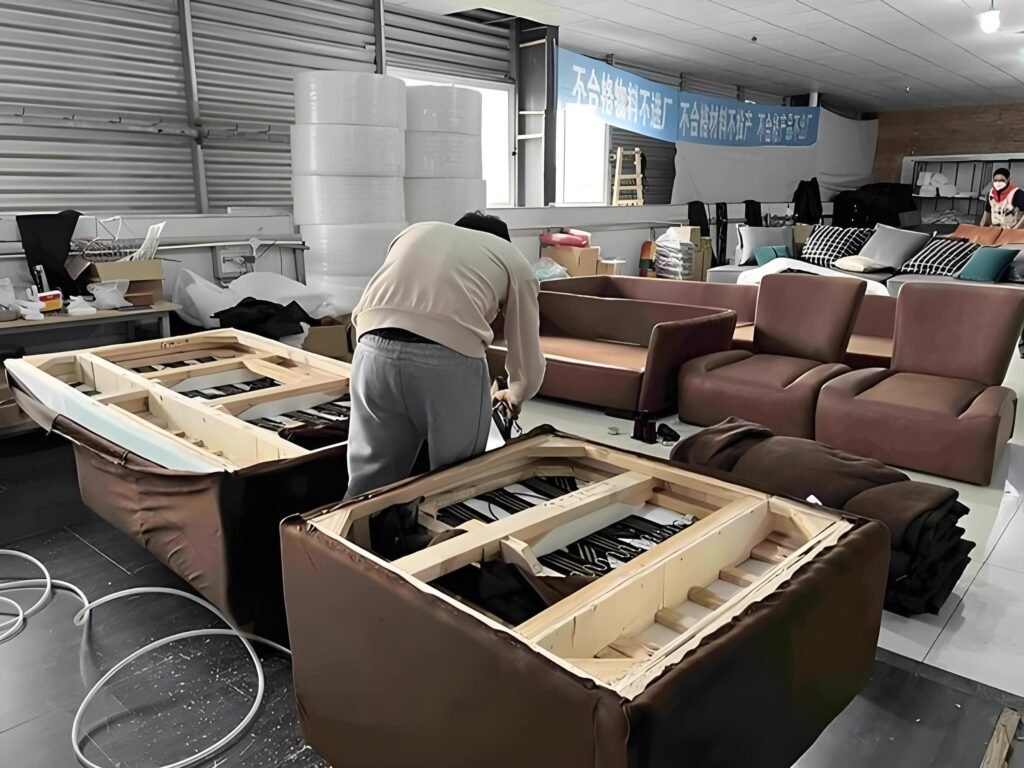
Average skilled upholstery worker in Longjiang is now 46. Young people don’t want factory floors. They want e-commerce warehouses and delivery apps. Twelve of 15 factories we surveyed reported “severe” or “moderate” trouble hiring anyone under 30. Wages climbed 8–12% annually since 2022. Retention is still poor.
2. Environmental Compliance Is Getting Expensive
China’s GB 18584-2024 standard—tightening formaldehyde and VOC limits—went full force in January 2026. Factories need water-based adhesives and upgraded spray booths. Owners we talked to estimate ¥800,000 to ¥1,500,000 per facility to comply. Small plants under 5,000 square meters are folding or selling out. Consolidation is accelerating.
3. Southeast Asia Is Eating the Middle
Vietnam and Indonesia aren’t beating Foshan at the top. Not at the bottom. They’re winning the middle—orders of 1,000–5,000 units with moderate customization. More of that volume shifts to Ho Chi Minh City and Semarang every quarter.
Our read: Foshan is becoming an hourglass. Micro-custom on one end. Mass volume on the other. The mid-market is leaking out.
What We Tell Buyers in 2026
If you’re sourcing sofa manufacturing China out of Foshan this year, here’s what we recommend:
1. Split by complexity, not by price.
● Mass standard SKUs → Go straight to tier-1 integrated factories (10,000+ m², in-house foam and frame).
● Micro-custom or hotel work → Hunt down tier-2 specialized workshops (2,000–8,000 m²). They trade scale for agility. That’s what you need.
2. Buy components, not just finished goods.
● If you’re doing final assembly in Mexico or Eastern Europe, source Foshan frames, foam, and cut-sewn covers separately. Keep the supply-chain depth. Lose some tariff exposure.
3. Visit during fair season. Audit in the off-season.
● Canton Fair and Foshan Furniture Fair (March/September) show you the best face. Go back in June or November. Watch a factory under normal pressure. The gap between fair samples and Tuesday-afternoon output tells you everything.
Where This Is Heading: Our Three-Year View
Global sofa production 2026 is at a tipping point. Here’s what we see coming:
● 2026–2027: More consolidation. Expect 20–30% of small factories (under 3,000 m²) to vanish or merge. Survivors will pour money into robotic upholstery and AI-driven fabric nesting.
● 2027–2028: “China Plus One” becomes “Foshan Plus Vietnam.” Smart buyers will source complex and custom from Foshan, standard volume from Vietnam. Not a replacement. A portfolio.
● 2028–2029: Environmental rules and automation will lock in Foshan’s entry barrier for good. It’ll stop being a low-cost play and become a high-efficiency, high-complexity-only hub. The 70% figure will probably stick. But the mix inside that 70% will tilt hard toward components and high-mix, low-volume finished goods.

FAQ: The Five Questions Everyone Actually Asks
Q1: Is Foshan still the cheapest place to make sofas?
No. Vietnam and Bangladesh beat it on straight labor cost. Foshan wins on total landed cost and speed, not hourly wages. Complex or urgent order? Foshan is cheaper overall. Simple, huge, and patient? Vietnam often takes it.
Q2: How do I find a reliable factory?
Skip generic directories. Walk the Foshan International Furniture Expo (March/September). Then show up unannounced at the factory. Check if they mold their own foam and cut their own frames. If they outsource both, keep walking.
Q3: What is the real MOQ for custom work?
Tier-2 workshops will take 50–100 units on a custom design. Tier-1 mass plants usually want 300–500. Standard catalog items start at 20–50 units.
Q4: Do Foshan sofas meet US and EU fire standards?
Yes, if you specify them upfront. Serious factories hold CA TB 117-2013, BS 5852, and EN 1021. Always demand third-party test reports (SGS, Intertek) for your exact fabric and foam combo. Never assume.
Q5: How long does shipping take?
US West Coast: 14–18 days ocean. US East Coast via Panama: 28–32 days. Northern Europe (Rotterdam): 26–30 days. Add 7–10 days for inland trucking and origin customs.
Recommended Resource
Interi Furniture specializes in custom furniture manufacturing for residential, hospitality, and commercial projects. Their experience in materials, craftsmanship, and project realization makes them a valuable resource for designers and buyers seeking tailored furniture solutions from China.