







If you have been importing from China long enough, you already know February is a write-off. But here is what most people get wrong: it is not just the Lunar New Year. The furniture export seasonality that wipes out February shipments is actually three things stacking on top of each other—factory shutdowns, buyers front-loading everything into January, and overseas procurement teams going quiet from mid-January through mid-February. That triple hit is why the China furniture export February drop can swing anywhere from about 26% to over 53% month-over-month, depending on how aggressively the market pulled orders forward before the holiday.
On the flip side, October is when the pipeline explodes. Not because of some vague “Christmas rush,” but because two separate calendars collide: Western retailers making their final Black Friday replenishment push, and the bulk production from spring Canton Fair commitments finally hitting the water. That collision is the real engine behind every October furniture export spike.
At Furniture Discover, we do not sell furniture. We decode the systems that move it. Here is how the cycle actually works on the ground.
What the Customs Data Really Looks Like
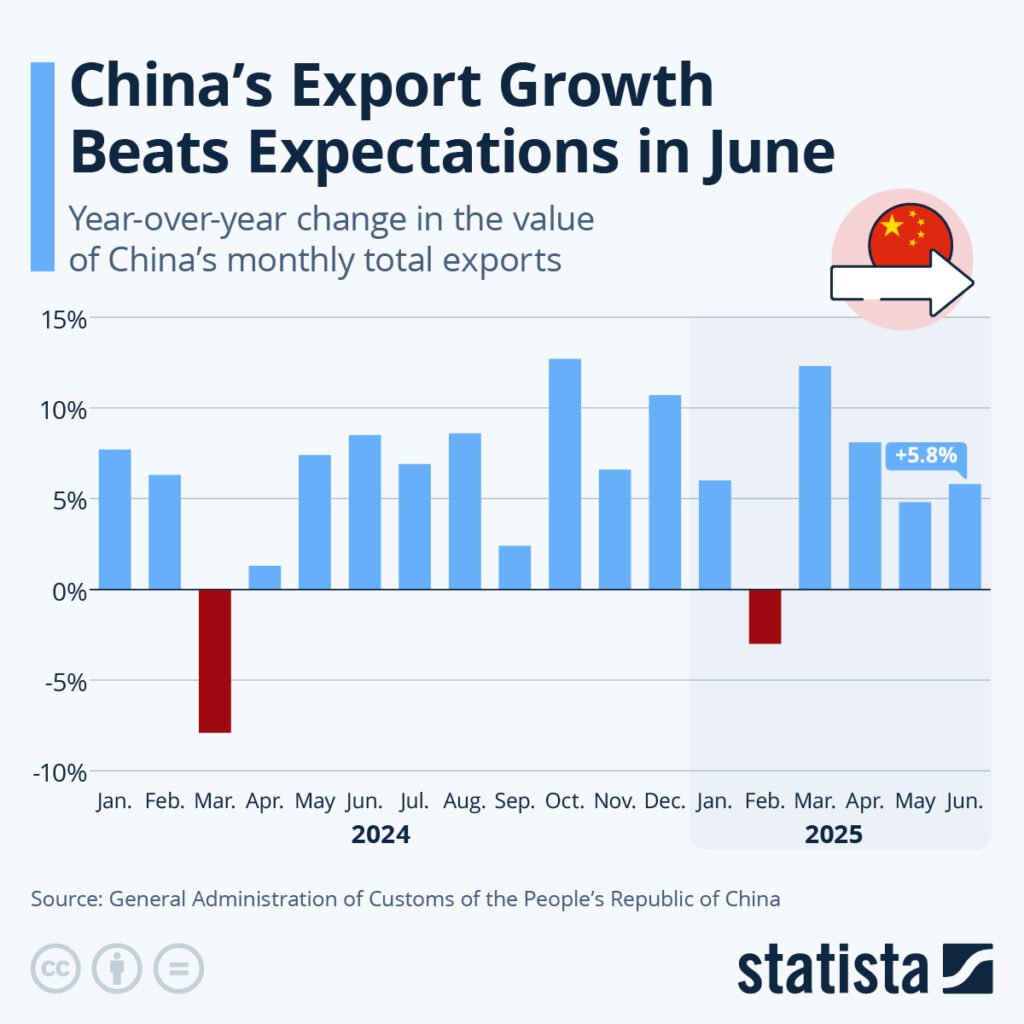
Pull the monthly export figures from China Customs and you will see the same waveform year after year. January is strong—sometimes artificially strong—because factories are pushing hard to clear backlogs before workers head home. Then February falls off a cliff. Recent data puts the month-to-month drop anywhere from roughly 26% to over 53% versus January. That is a massive range, and it tells you something important: the size of the February hole depends on how much volume got yanked into January.
March and April are recovery months. Factories in Shunde, Dongguan, and Houjie are scrambling to hire back workers, and production lines do not return to full speed overnight. May through September is the steady season—nothing dramatic, though you will feel a slight summer lull in July when some factories rotate maintenance. Then October hits, and the numbers jump. November stays elevated but starts to tighten as container space gets scarce. December drifts down again as the Western retail cycle winds down and Chinese plants start preparing for the next Lunar New Year shutdown.
Three calendars are running here: the Chinese manufacturing clock, the Western retail buying clock, and the ocean freight clock. When they misalign, you eat the cost. When you understand the overlap, you gain leverage.
The February Collapse: It Is Bigger Than the Holiday
Sure, the Lunar New Year is the headline. In the Pearl River Delta, most factories shut down for 10 to 20 days. Some smaller workshops in Longjiang or Lecong close for a full month. But if you stop your analysis there, you are missing the mechanics.
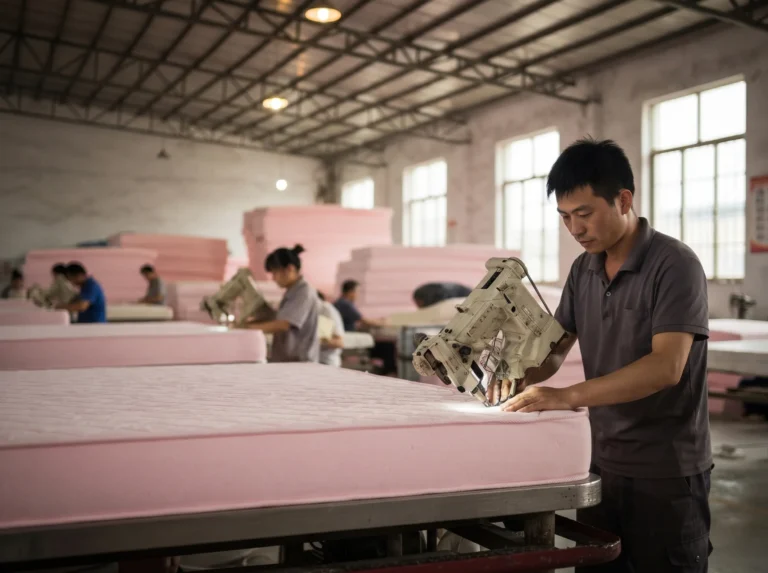
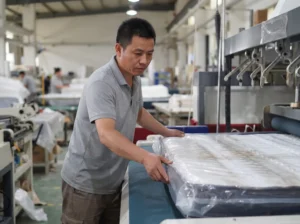
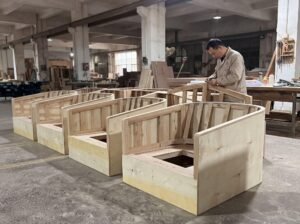
Here is what actually happens on the floor. Skilled workers—migrant laborers from Hunan, Jiangxi, Sichuan, Henan—start disappearing in mid-January. By the time the official holiday begins, an upholstery factory might already be running at half capacity. Why? Because hand-finishing stages like leather cutting and stitching and foam assembly cannot run without experienced hands. A CNC metal shop can sometimes stretch an extra week with automated cutting, but powder-coating booths and final QC still need bodies on the line. The production halt is real, but it starts earlier than the holiday date on the calendar.
Then there is the January front-loading. Every experienced buyer knows February is dead space. So they push their forwarders to book vessels in late December and early January. That creates a January export number that looks great on paper but is essentially stolen from February. The customs data does not lie, but it does mislead—January looks strong not because demand surged, but because everyone rushed to beat the clock. February looks catastrophic not because buyers disappeared, but because the orders already left.
On top of that, procurement teams at large retail chains and hospitality groups basically go dark from mid-January to mid-February. They are either on holiday or unwilling to sign POs for production slots they cannot monitor. So you have a supply pause and a demand pause happening at the same time. Double vacuum.
What does that mean in practice? If you are trying to ship in the second half of January, container space out of Yantian or Ningbo can run 20% to 40% above November rates, and cut-off dates get pulled forward with little warning. I have seen buyers miss sailings because they assumed the same 3-day buffer they had in October would still apply in mid-January. It does not.
The October Surge: Two Engines, Not One
Everyone calls it the “pre-Christmas rush.” That is only half the story.
The first engine is Western retail stocking. Black Friday in the U.S. and pre-Christmas promotions in Europe need inventory on shelves by late October or early November. Work backward from there: retailers need goods at their distribution centers by mid-September, which means vessels need to depart China in August and September. But here is the nuance most people miss—many big retailers place their final replenishment orders in August, after they see early sell-through data. Those orders hit production in September and ship in October. So the October spike is not the initial Christmas order wave; it is the second wave, the replenishment wave. That is why the numbers peak in October even though the Christmas narrative suggests they should have peaked earlier.
The second engine is the Canton Fair autumn cycle. Phase 2 (furniture and home décor) runs in late October. But the orders placed there do not ship in October—they are sampled and negotiated during the fair. The real October shipment wave comes from commitments made earlier in the year. Buyers who visited the spring Canton Fair in April–May, finalized designs in June–July, and approved bulk production in August are now seeing their orders complete. Factories push these out before the National Day holiday (October 1–7) to clear floor space for autumn fair samples. That creates a concentrated shipping window in the first three weeks of October.
When both engines fire together, container demand outstrips supply. In October 2024, spot rates from China to the U.S. West Coast spiked because retailers and project buyers were competing for the same vessel slots. This is not a market surprise. It is a calendar collision you can see coming six months out.
If you are importing for a Q4 project or holiday season, your last reliable sailing window is usually the first two weeks of October. After that, you are gambling on premium rates and potential rollovers.

Not All Furniture Follows the Same Clock
The national aggregate data hides a lot. Furniture export seasonality looks different depending on what you are buying.
Upholstered sofas and sectionals peak in September–November. Long production cycles (foam curing, multi-stage QC, packaging) mean these need to be in the water early to hit holiday retail. Their low season is January–February, no surprise.
Outdoor furniture—aluminum, wicker, teak—actually ships strongest in February through April. U.S. and European retailers are preparing for spring patio season. That means outdoor buyers face the opposite headache: their peak shipping window overlaps with the Lunar New Year recovery. Factories are still ramping up in March, yet outdoor POs are already pushing for April delivery. Only buyers who planned six months ahead dodge that bottleneck.
Small home décor and accent pieces run August–October because they follow fast-fashion retail replenishment cycles. Quick turns, smaller volumes, but the same October port congestion.
Custom hospitality and hotel furniture is its own animal. Hotel opening dates and restaurant fit-out schedules drive demand, not retail seasons. But even here, the China trade cycles matter. A 200-room hotel project needing custom casegoods has to place its final order by September for a March installation. Why? Because February production is essentially nonexistent. Miss that window, and you are looking at a 6-week delay minimum.
Solid wood dining and bedroom sets peak October–December because wood curing and finishing schedules align with the pre-holiday push. Their trough is February–March, when humidity in the factory regions complicates drying schedules.
What B2B Buyers Should Actually Do
Knowing the cycle is useless if you do not change your behavior. Here are three moves that separate experienced importers from the ones who panic-email their factory in January.
Lock Q1 production slots in November. Do not wait until January to ask about February production. By November, factories are still hungry for orders but have not yet entered the pre-holiday frenzy. You can usually negotiate better pricing and more flexible terms. Ask for a written production slot reservation with a modest deposit. Many mid-size factories in Foshan and Dongguan will hold a line for you if you commit before mid-December. I have seen buyers get 5% to 8% better pricing simply by negotiating in November versus January.
Use June–July for development and sampling. This is when factories have the most open capacity and the most patient sales teams. If you are launching a new collection, summer is the ideal time to send samples, revise prototypes, and lock in fall production. Wait until September, and you are competing with every other buyer who delayed their planning. Plus, sampling quality tends to be better in the summer lull because the QC team is not rushing to clear a hundred other orders.
Bundle ocean freight into your off-peak negotiations. Freight forwarders are more willing to offer fixed-rate contracts or space guarantees in April–May and again in July–August. If you can forecast even roughly six months of volume, lock in a rate during these windows. When October hits and spot rates spike, your landed cost stays predictable. I have seen the difference between a locked July rate and an October spot rate hit $800 to $1,200 per container on the Transpacific lane.

For Personal Home Buyers
If you are furnishing one house or villa, the China trade cycles still affect you—just differently.
The best time to import furniture from China for a personal project is September to early October. You avoid the pre-Lunar New Year chaos, and factories are motivated to fill their lines before the holiday slowdown. From deposit to your door, expect 8 to 12 weeks. So a September order lands in December. That is fine unless you are trying to hit a Christmas deadline, in which case you needed to order in July.
Avoid ordering in January or February. Even if a seller promises “fast production,” the reality is their factory is either closed or running a skeleton crew. Your “4-week lead time” easily becomes 8 to 10 weeks. I have seen personal buyers get stuck for three months because they placed an order in mid-January and the factory could not get enough workers back in March.
Watch for off-season discounts on outdoor furniture in November through January. Western retailers are clearing patio inventory, and Chinese factories are willing to offer better pricing on outdoor collections during their own low season. If you are buying for a second home or a future spring project, that is your window.
One more thing: if you are buying less than a full container, your goods will be consolidated (LCL). During peak months, LCL warehouses are overwhelmed. Your shipment sits. Book in October or earlier, or wait until January when warehouse flow normalizes. LCL delays in November can add 2 to 3 weeks for no reason other than warehouse congestion.
Seasonal Pitfalls to Watch
Do not treat February as “just a slow month.” It is a production dead zone. If your project timeline has no buffer, you will miss your deadline. I have seen hotel opening dates pushed back because the procurement team did not account for the February hole.
Always have a Plan B sailing in October. Vessel rollovers and transshipment delays spike. Book your primary sailing, but know your backup option. The difference between a first-week October sailing and a third-week sailing can be 10 days or more in delivery time.
Check wood moisture content on summer orders. If you order solid wood furniture for October shipment, the wood may have been cured during the humid summer months in Guangdong or Zhejiang. Request kiln-drying certificates and moisture content reports—especially for oak, ash, and walnut. I have seen containers arrive in Los Angeles with wood warping because the factory skipped proper drying in July to rush the order.
Do not trust “factory direct” promises in peak season. In October, every factory is overloaded. The workshop that promised you priority may be subcontracting your order to a smaller facility you have never audited. Insist on production photos with date stamps. If they push back, that is a red flag.

FAQ
When is the slow season for furniture exports from China?
February, hands down. January and March are also soft. For outdoor furniture, the trough is November through January.
What is the best time to import furniture from China?
Depends on what you are buying. For upholstered and indoor furniture, September–October gives you the best balance of factory capacity and reliable shipping. For outdoor, February–March. For custom projects, work backward from your install date and add 6 to 8 weeks of buffer. Honestly, if you are not sure, order in September. It is the safest window.
How does the Canton Fair affect timing?
Spring fair (April–May) drives a secondary shipping wave in June–July. Autumn fair (October) drives sampling and negotiation, but the actual shipment peak happens in the weeks right before the fair, as factories clear existing orders to make room for samples.
Does the National Day holiday matter?
October 1–7, most factories close 3 to 7 days. Less severe than Lunar New Year, but the week before can get congested at ports as everyone tries to ship early.
How far ahead should I book ocean freight?
Peak months (September–October), book 4 to 6 weeks out. Normal months, 2 to 3 weeks. For LCL, add another week or two. And honestly, in October, even 4 weeks is not a guarantee if the market is hot.
Final Word
The China furniture export February drop and the October furniture export spike are not calendar quirks. They are the visible output of worker migration patterns, retail procurement cycles, maritime logistics constraints, and trade fair timetables. Buyers who treat these as predictable forces—not surprises—gain a real edge in cost, quality control, and delivery reliability.
At Furniture Discover, we tell you what the industry won’t. Next time you see a headline about China’s monthly export figures, you will know exactly what is happening on the factory floor in Shunde or Longjiang—and what it means for your next order.
Recommended Resource
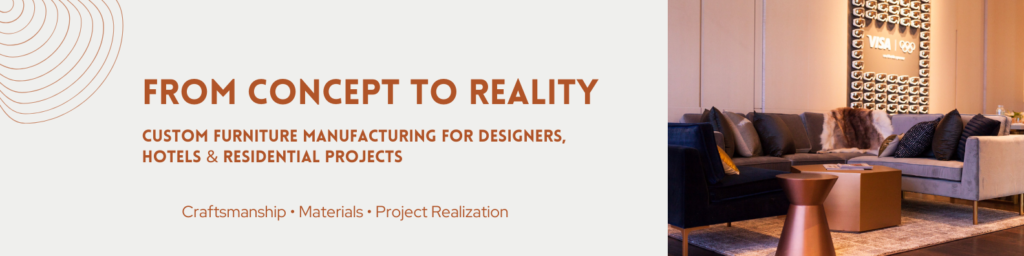
Interi Furniture specializes in custom furniture manufacturing for residential, hospitality, and commercial projects. Their experience in materials, craftsmanship, and project realization makes them a valuable resource for designers and buyers seeking tailored furniture solutions from China.