







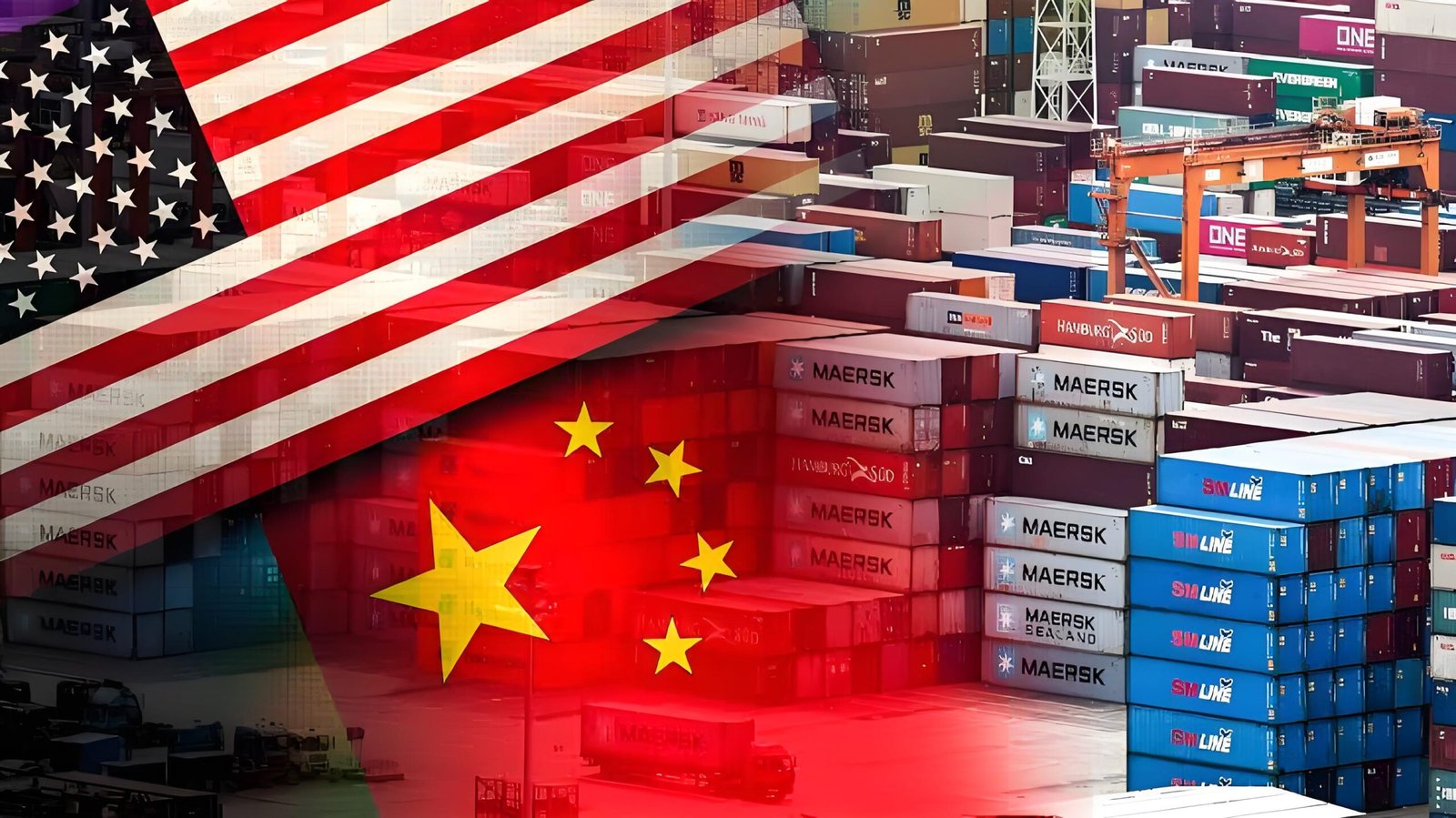
$21 billion. That’s not a typo. In 2024, American buyers imported roughly $20.9 billion in furniture, bedding, and mattresses from China under HS Chapter 94. Fifth biggest category from China. Behind electrical machinery, nuclear reactors, toys, and plastics. Ahead of vehicles, steel, footwear.
You’d think with all the tariff talk, this number would be zero. Or close to it. It’s not. And that’s the story nobody’s telling.
Tariffs didn’t kill Chinese furniture exports. They killed the old way of doing business—low-margin wooden bedroom sets moving through a dumb pipeline from factory to distributor to big-box retailer. What replaced it? Messier. More fragmented. But for buyers who figured it out, more profitable.
The $21 Billion Question: Why the Headlines Don’t Match the Data
Political Theater vs. Purchase Orders
Walk the floor at High Point Market. Talk to sourcing directors. Scroll vendor lists. Pattern’s unmistakable: Chinese factories still own critical categories. The disconnect isn’t in the data—it’s in how data gets reported versus how supply chains actually breathe.
US furniture imports from China under HS 94: about $20.93 billion in 2024. Fifth largest export from China to the US. Behind electrical machinery ($127B), machinery ($85B), toys ($32B), plastics ($21.5B). In a year analysts predicted collapse, this number just sits there. Stubborn. Refusing to die.
But here’s the thing. The headline number is boring. What’s underneath? That’s where it gets interesting.

What’s Really Changing Inside That $21 Billion
Category Migration: Where the Volume Actually Went
The tariff impact wasn’t uniform. Never was. Different products got hit differently. Buyers responded like water finding cracks—some flooded out of China, others stayed put, a few flowed back in.
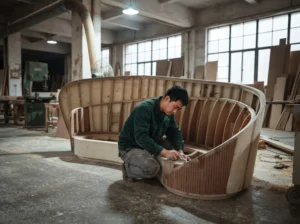
Wooden bedroom furniture (HTS 9403.50)—the cautionary tale. Anti-dumping duties crushing this since early 2000s. Some Chinese producers face AD/CVD above 200%. Not 25%. Two hundred percent. This isn’t a tariff problem; it’s a pricing problem that made Chinese bedroom sets uncompetitive years before the trade war started. Wonder why your local store doesn’t carry “Made in China” bedroom sets? That’s why.
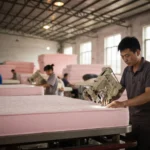
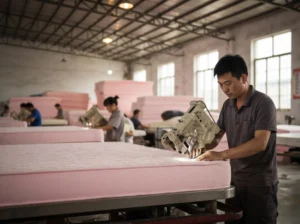
Now flip it. Upholstered seating (HTS 9401.71) and metal furniture (HTS 9403.20)? China’s still holding. Why? Vietnam can’t replicate Guangdong’s fabric ecosystem or Zhejiang’s foam clusters overnight. Thirty years of supply chain. You don’t move that by signing a lease in Binh Duong.
The breakdown:
| Product Category | China’s 2024 Position | What’s Actually Happening |
|---|---|---|
| Upholstered seating | Still dominant | Fabric/foam ecosystem locked in Guangdong/Zhejiang |
| Metal office furniture | Growing | China’s steel processing scale—unmatched |
| Wooden bedroom sets | Dead zone | AD/CVD >200%, not just Section 301 |
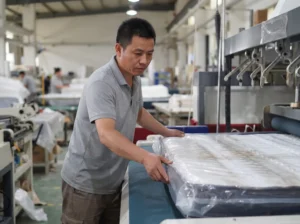
| Mattresses | Surging | Compression packaging changed DTC game |
| Lighting fixtures | Stable | LED component supply chain concentrated in China |
Sources: China Customs, US Census Bureau, 2024.
The Geography of Resilience: Why Some Buyers Never Even Tried to Leave
American furniture sourcing from China isn’t one decision. It’s fifty decisions by fifty procurement teams with different pain thresholds and margin math.
The Big Players (annual China spend >$50M): Diversified after 2018, sure. But didn’t abandon China—built parallel Vietnam pipelines for tariff-exposed categories, kept Chinese production for complex multi-component products where engineering support matters. Their tariff “hedge”? Geographic balance. Portfolio theory, not isolationism.
The Squeezed Middle ($5M-$50M): This hurts. No capital to build Vietnam relationships from scratch. Can’t absorb 25% tariff hits on 8% margins. Got creative—buying Chinese components for final assembly in Mexico, pivoting to lower-duty categories. Some making it work. Others just making it through.
The Small & Nimble (DTC brands, personal buyers): Irony? Smallest players often most flexible. No legacy inventory systems. No vendor qualification bureaucracy. No quarterly board meetings where someone asks why you’re still buying from China. Experiment with direct factory relationships, compressed mattress shipping, consolidated containers. Stuff that gives Fortune 500 procurement directors migraines.

Why American Buyers Haven’t Completed the Exit
Three Structural Barriers Nobody Talks About
US China furniture trade at $20+ billion isn’t nostalgia. It’s math.
1. Vietnam’s Production Ceiling Is Real
Furniture Today: Vietnam’s 2024 US furniture exports about $9.4 billion (narrow household furniture口径). Top spot. But hitting walls:
● Raw material dependence: Vietnam imports timber and wood components. Guess where from? China. That “Vietnam-made” dining table? Technically true. But the wood inside might’ve started in a Chinese sawmill.
● Labor cost convergence: Wages in Binh Duong, Dong Nai up 40-60% since 2018. The cost advantage that lured factories there? Evaporating.
● Infrastructure saturation: Port capacity, trucking, industrial electricity—not abstract when your container sits at port three extra weeks because system’s maxed out.
2. The Ecosystem Gap
China’s furniture clusters—Foshan soft furnishings, Dongguan metal, Hangzhou outdoor—aren’t just factories. They’re ecosystems. A buyer sourcing upholstered sofas from Vietnam needs to import fabric from China (or pay Korean/European premiums), foam from China/Taiwan, hardware and frame components from China. “China-free” Vietnam supply chain? Nice story. Not reality for mid-to-upper market.
3. Hidden Costs of “Tariff-Free” Alternatives
New factory qualification. Quality system replication. Engineering communication barriers. First-year quality failures. Add 8-15% to effective costs even when headline factory price looks competitive. For hotel FF&E, contract office, bespoke residential—customization complexity high—these friction costs often exceed tariff savings from shifting to Vietnam or Mexico.
How Buyers Actually Manage Tariff Exposure
The Compliance Spectrum
Large Importers: Playing the FTZ Game
Sophisticated importers with multi-category portfolios use Foreign Trade Zones (FTZs) and bonded warehouses. Stage inventory in FTZ, enter US commerce only when sold. Not tax avoidance—cash flow timing. Flexibility to re-export if tariff rates shift. Big guys been doing this for years. Mid-tier just catching on.
Mid-Size Buyers: The HTS Reclassification Dance
HTS 9403.60 (wooden) vs. 9403.20 (metal): 25-percentage-point duty difference. Some buyers reengineered products—metal frames with wood accents instead of wood frames with metal accents. Legal? Yes, if good faith with proper engineering documentation. But US Customs scrutinizing borderline claims more aggressively. Window narrowing.
E-commerce Sellers: Riding De Minimis
Section 321 de minimis exemption ($800/shipment) created thriving cross-border DTC channel for furniture accessories, lighting, flat-pack. Bypasses traditional import structures entirely. Catch: regulatory scrutiny intensifying in 2025. Party might be ending.

What This Means for B2B Procurement Strategy
The New Risk Matrix: 2025-2026
For Personal Home Buyers
Importing direct from China for residential? Tariff math changed but didn’t kill the deal. Container-load quantities (20-40 pieces), landed cost savings vs. US retail still hit 40-60% even after 25% Section 301 duties—if you manage logistics, customs, quality inspection properly. Key is category selection. Upholstered goods, metal furniture, lighting work post-tariff. Solid wood case goods? Tougher sell.
Compliance Checklist:
● CPSC flammability standards (16 CFR 1640 for upholstered)
● Proper HTS classification + Lacey Act declarations for wood
● UL/ETL certification for lighting
● Freight forwarder who understands FCL residential delivery (not all do)
For Commercial Buyers (Hotels, Restaurants, Multi-Family)
Contract furniture market saw most dramatic restructuring. Chinese factories that served US hospitality through distributors now shifting to “manufacturing + installation support” models. Chinese factory produces, ships to US-based installation partner who handles final mile, assembly, client-facing project management. Preserves Chinese manufacturing economics while creating US service-layer jobs. Keeps project stakeholders happy.

FAQ—Questions Buyers Actually Ask
Q: How much furniture does US import from China annually?
A: About $20.9 billion under HS Chapter 94 in 2024. Roughly 23% of total US household furniture imports by value. Share down from pre-2018 levels, but still second-largest source after Vietnam.
Q: Current tariff rate on Chinese furniture?
A: Most categories: 25% Section 301 on top of standard MFN rates (0-3.4%). Wooden bedroom furniture: additional AD/CVD duties exceeding 200%. Yes, two hundred percent.
Q: Is Vietnam really cheaper than China now?
A: Standardized wooden case goods? Often yes. Upholstered products, complex custom pieces, serious engineering support? China’s total landed cost frequently remains competitive even after tariffs. Depends on product, complexity, quality tier.
Q: Can I legally import furniture direct from China as personal buyer?
A: Yes. Comply with CPSC standards, proper HTS classification, customs entry. Under $800/shipment: Section 321 de minimis simplifies. Larger orders: get licensed customs broker. Don’t wing it.
The Bottom Line—What $21 Billion Actually Means
US China furniture trade didn’t collapse because economics never supported collapse. Tariffs restructured trade, reallocated winners and losers, forced buyers to get smarter about compliance, classification, supply chain architecture. What they didn’t do: erase three decades of manufacturing ecosystem density, material supply chain integration, engineering talent.
Buyers who navigated this successfully? Not ones who reflexively fled or stubbornly stayed. Ones who built portfolio sourcing strategies, invested in compliance infrastructure, treated tariffs as cost to manage—not binary signal to exit.
That $21 billion isn’t a relic. It’s evidence that resilient supply chains adapt rather than simply relocate.
Analysis based on publicly available trade data. Specific duty rates, compliance requirements, cost structures vary by product category, HTS classification, individual supplier arrangements.
Recommended Resource
Interi Furniture specializes in custom furniture manufacturing for residential, hospitality, and commercial projects. Their experience in materials, craftsmanship, and project realization makes them a valuable resource for designers and buyers seeking tailored furniture solutions from China.