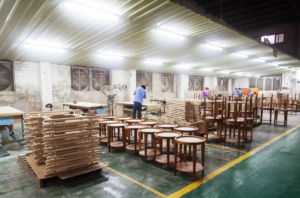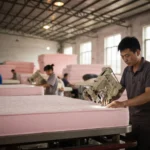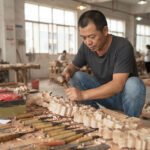


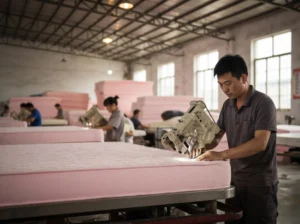





China furniture price structure is not a single number. The quote you receive from a factory—especially the one labeled “best price” or “lowest quote”—is almost never the real cost of getting that product into your warehouse or living room. Most overseas buyers, whether they are running a retail chain or furnishing a single apartment, make the same mistake: they treat the factory’s headline figure as the total outlay. It is not. The China furniture price structure operates across five distinct tiers, each with its own inclusions, exclusions, and hidden liabilities. When a supplier pushes a best price trap, the gap between what you pay and what you think you are paying is where the real cheap Chinese furniture risks live. To understand furniture pricing China, you need to stop looking at the number on the email and start reading what is missing from it.
That is what furniture discover does. We tell you what the industry won’t.
The Five-Tier China Furniture Price Ladder
If you want to understand furniture pricing China, stop thinking in terms of “cheap” versus “expensive.” Think in terms of what the price actually buys. Based on industry-wide observations across Foshan’s upholstered furniture cluster, Dongguan’s solid-wood manufacturing base, and Suzhou’s metal-and-office segment, the market operates on five tiers. These are not formal classifications—no factory prints them on a brochure—but every experienced sourcing manager recognizes them immediately.
Tier 1 — Ex-Works Factory Floor Price (The “Naked” Number)
This is the number that sounds unbelievable. It covers raw materials, direct labor, and basic workshop overhead. Nothing else. No packaging beyond a plastic wrap. No inland freight to the port. No export documentation. No quality inspection. In Foshan’s soft-goods sector, this tier typically sits at roughly 25–35 percent of what the same item would cost at retail in Europe or North America, though this ratio varies significantly by product category and factory scale. The problem is not the number itself. The problem is that some suppliers present this as their “final” quote, then stack charges later. If you are comparing quotes and one factory is 20 percent lower than the rest, there is a high probability you are looking at an ex-works floor price dressed up as a complete offer.
Tier 2 — Workshop Cost Base (The Internal Benchmark)
One step up from the floor price, this tier adds factory management costs, equipment depreciation, energy, and basic workshop-level quality control. It is the number the factory owner uses to decide whether a project is worth taking. You will rarely see this price as a buyer, but it matters because it sets the psychological floor for the sales team. In Dongguan’s solid-wood sector, workshop cost base generally runs 15–25 percent above the raw floor price, depending on the complexity of joinery and finishing. If a factory quotes below this internal benchmark, they are not being generous. They are planning to recover the difference somewhere else—usually through material downgrades, outsourced production, or omitted services.
Tier 3 — Standard Export FOB Price (The Honest Starting Point)
This is the first tier that resembles a real business quote. A standard export FOB price from a legitimate export factory includes: the product cost, basic export packaging, inland transport to the departure port, export customs clearance, and a factory-level quality check. It does not include ocean freight, insurance, destination charges, or your local warehousing. This is the baseline that most professional buyers use for comparison. In the Foshan and Dongguan markets, standard FOB quotes typically carry a 30–50 percent markup over the ex-works floor price, reflecting the actual cost of doing export business properly. When a factory gives you a “best price” that is significantly below a standard FOB quote from a comparable facility, you are not getting a deal. You are getting a best price trap.
Tier 4 — Lead-Gen “Best Price” (The Bait)
This is where the cheap Chinese furniture risks concentrate. The lead-gen price is designed to win the inquiry, not to deliver the product at the quoted cost. It is built on one or more of the seven cost-cutting tactics we will detail in the next section. The factory knows the number is unsustainable. They also know that once you have invested time in samples, deposits, and project planning, you are unlikely to walk away over a 10–15 percent price adjustment at the last mile. This tier is the single biggest source of buyer disputes in the China furniture trade. It looks like a furniture factory price negotiation China victory. It is actually the beginning of a margin-recovery exercise by the supplier.
Tier 5 — Custom Project Premium (The Real Cost of Specialization)
When you move beyond catalog items into custom dimensions, proprietary finishes, or small-batch production, you enter the premium tier. This price includes design fees, sampling costs, dedicated molds or tooling, and the efficiency losses of interrupting a factory’s standard production line. The custom furniture premium is not a predatory markup. It is a realistic reflection of the disruption a non-standard order causes to a factory optimized for volume. Many buyers mistakenly compare a custom project’s quote against a catalog item’s standard FOB price and cry foul. The comparison is invalid. The China furniture price structure demands that custom work sits at its own tier.

Why the “Best Price” Almost Always Disappoints: Seven Hidden Traps
A best price trap is not one single trick. It is a cluster of cost-cutting maneuvers that are individually invisible to most buyers and collectively devastating. Here is how factories bridge the gap between an unsustainable headline quote and a margin they can actually live with.
Trap 1 — Material Downgrades You Cannot See
This is the most common and the hardest to detect. A factory quotes for 45-density high-resilience foam, then substitutes 35-density foam once the order is confirmed. The difference is invisible until the sofa collapses six months after delivery. In solid wood, a quote based on FAS-grade lumber may be fulfilled with “#1 Common” grade, which carries more knots and color variation. Leather grades shift from full-grain to corrected-grain without notice. Hardware swaps from a branded European hinge to an unbranded domestic equivalent. In each case, the factory has a plausible excuse: “That was the sample material. Production stock varies.” The furniture material specification you approved is not the material you receive.
Trap 2 — Process Omissions
Every finished piece of furniture goes through a sequence of steps that determine its durability and appearance. A factory under price pressure simply deletes steps. A seven-coat finishing schedule—sealer, stain, sealer, sand, topcoat, sand, topcoat—becomes three. Hand-sanding between coats disappears. Traditional mortise-and-tenon joinery is replaced with screw-and-bracket assembly because it is faster and requires less skilled labor. In upholstered goods, the internal dust cover is omitted. The difference between a proper process and a stripped-down one does not show up in a showroom photo. It shows up two years later when the finish peels or the frame loosens.
Trap 3 — Outsourced Production (The Silent Subcontract)
The factory you visited, the one with the clean showroom and the ISO certificate, does not always make your order. In Foshan and Dongguan, it is common practice for a primary factory to subcontract overflow or low-margin orders to smaller workshops that operate on thinner overheads and weaker quality control. The primary factory takes a margin for doing nothing more than project management. You think you are buying from a vetted facility. You are actually buying from an unknown subcontractor whose workshop you have never seen. This is a standard industry practice, not a scandal, but it becomes a cheap Chinese furniture risk when the buyer is unaware and the subcontractor’s standards diverge from the primary factory’s.
Trap 4 — Deliberate Quote Omissions
The most brazen version of the best price trap is simply leaving things out of the quote. The factory sends a price that covers the product and nothing else. Then, after you have committed, they add charges for inland transport to the port, export customs documentation, fumigation or inspection fees, spare parts, and basic packaging. In some cases, the quote excludes the cost of export-grade carton or crate packaging, and the buyer discovers at shipment that the goods are wrapped in plastic film. A legitimate standard FOB quote includes these items. A lead-gen “best price” often does not. This is why furniture factory price negotiation China requires itemized bills of materials, not lump-sum figures.
Trap 5 — Quality Control Compression
A factory running on a squeezed margin cuts inspection hours. Instead of a 100-percent pre-shipment inspection on critical dimensions and finish consistency, they move to random sampling. Instead of checking every carton for correct labeling and count, they check one in ten. The statistical probability of a defect slipping through rises sharply. The buyer receives a container with a 5–8 percent defect rate instead of the sub-2 percent rate that a properly funded production run would yield. The repair or replacement cost falls on the buyer, erasing any apparent savings from the “best price.”
Trap 6 — Warranty and Liability Evasion
Factories offering unsustainable prices often protect themselves with contract language that strips the buyer of normal recourse. Warranty periods shrink from two years to ninety days. Claims require photographic evidence taken within 48 hours of delivery, which is often impossible for containerized sea freight. Liquidated damages for late delivery are capped at trivial amounts or excluded entirely. The hidden cost in Chinese furniture quote is the insurance premium you are effectively self-funding because the supplier has transferred all risk to your side of the contract.
Trap 7 — Sacrificed Lead Times
The final trap is timeline compression. To hit a price that covers only bare production cost, the factory slots your order behind higher-margin work or pushes it to a slower subcontractor. The quoted six-week delivery stretches to twelve. For buyers with seasonal retail windows or hotel opening deadlines, this delay is often more expensive than the original price difference would have been. In the Foshan upholstered furniture market, standard lead times for export orders range from 35 to 50 days depending on complexity. A factory promising 20 days at a “best price” is either lying about the timeline or planning to cut every corner to meet it.
Configuration and Risk Comparison by Price Tier
The table below summarizes what each tier typically includes, what it excludes, and where the risk concentrates. Use this as a reference when evaluating multiple quotes.
| Price Tier | What It Typically Includes | What It Often Excludes | Primary Risk Profile |
|---|---|---|---|
| Ex-Works Floor | Materials + labor + basic workshop overhead | Packaging, inland freight, export docs, QC | Buyer absorbs all logistics and compliance cost |
| Workshop Cost Base | Floor price + management + energy + basic QC | Profit margin, export services, after-sales | Factory has no incentive to prioritize your order |
| Standard FOB | Product + export pack + inland transport + customs + factory QC | Ocean freight, insurance, destination fees | Baseline honest quote; compare apples-to-apples |
| Lead-Gen “Best Price” | Product only, often with material/process cuts | Multiple services; quality and timeline are negotiable | Best price trap; highest dispute rate |
| Custom Premium | Design + sampling + tooling + non-standard production | Volume discounts; off-the-shelf speed | Cost is real but justified; avoid comparing to catalog FOB |
Note: The above represents general industry observations across China’s core furniture manufacturing clusters as of 2026. Specific terms vary by product category, factory scale, and export destination.
How Professional Buyers Audit a Quote
Experienced buyers do not negotiate from a position of “make it cheaper.” They negotiate from a position of “show me what this number includes.” Here is the practical workflow used by buyers who avoid the best price trap.
Demand a Line-Item BOM
Ask for a bill of materials that breaks down every major component: wood species and grade, foam density, fabric or leather grade, hardware brand and origin, finishing process steps, and packaging specification. If a factory refuses to provide this, you are not dealing with a transparent supplier. You are dealing with a pricing black box.
Check the Quote Validity
In the Foshan and Dongguan markets, legitimate export quotes typically carry a validity period of 7 to 15 days. This reflects raw material price volatility and currency fluctuation. A quote that is “valid indefinitely” is either a marketing gimmick or a signal that the factory plans to adjust the specification later to recover margin. Treat short validity as a sign of honesty, not pressure.
Benchmark Against the 15-Percent Rule
This is an industry heuristic, not a scientific law. If a quote is more than 15 percent below the standard FOB price from a comparable factory with similar specifications, there is a structural reason for the gap. The reason is rarely “we are more efficient.” It is usually one of the seven traps described above. Use this rule as a yellow flag, not a red line—some factories genuinely specialize in certain categories and run leaner—but never ignore it.
Understand Volume-Based Negotiation Realities
Volume is the only real leverage in furniture factory price negotiation China. A factory will not cut its margin out of goodwill. It will cut margin in exchange for predictable, recurring volume that justifies production planning. If you are ordering one container, your room for negotiation is typically 3–8 percent on a standard FOB quote, achieved through payment-term improvements or simplified packaging. If you are committing to six containers annually, you can negotiate into the 10–15 percent range, but only by offering something the factory values: longer production windows, consolidated shipping schedules, or reduced sampling cycles. The buyer who walks in demanding 30 percent off without offering anything in return is the buyer who gets the best price trap.
Verify with Third-Party Inspection
For orders above a modest threshold, engage a third-party inspection agency to conduct a pre-shipment check against the BOM and approved samples. The cost is typically 200–400 USD per container, which is trivial compared to the cost of receiving a mis-specified shipment. This step is non-negotiable for buyers who want to understand furniture pricing China at the ground-truth level.

For Personal Home Buyers
If you are furnishing your own home and ordering directly from a Chinese factory—perhaps through an agent or a small-batch platform—the same principles apply, but the stakes are different. You are not managing a retail supply chain. You are buying one dining table or one sofa. The cheap Chinese furniture risks are personal, not commercial.
The “Small Order” Surcharge You Do Not See
Factories optimized for container-load export do not love single-piece orders. If a supplier gives you a surprisingly low price for a one-off custom piece, they are likely planning to fulfill it through a subcontractor or to use leftover stock materials that do not match the sample. Ask directly: “Is this made in your own workshop or outsourced?” A straight answer is a good sign. Evasion is not.
Calculating Your Real Landed Cost
Your “price” is not the factory quote. It is the factory quote plus agent commission (if any), inland transport to the port, ocean freight, destination port charges, customs duties, VAT or sales tax, and final-mile delivery to your home. For a single sofa, ocean freight can add 30–50 percent to the product cost. A factory quoting 800 USD for a sofa that costs 1,200 USD to ship is not selling you an 800-dollar sofa. They are selling you a 2,000-dollar sofa with a misleading headline. Understand furniture pricing China by calculating the landed number, not the factory number.
Spotting the Traps as a Non-Professional
You do not need a QC team. You need a checklist. Before paying any deposit, confirm: the exact material specifications in writing, the number of finish coats, the hardware brand, whether the quoted price includes export packaging and port delivery, the production timeline with penalties, and the warranty terms. If the supplier is reluctant to put any of this in writing, walk away. There is always another factory.
The Complete Quote Verification Checklist
Use this checklist before signing any purchase contract or paying a deposit. It is adapted from the standard audit protocols used by professional furniture buyers in the Foshan and Dongguan markets.
● [ ] Material specifications confirmed in writing: wood species/grade, foam density, fabric/leather grade, metal type and thickness
● [ ] Process standards documented: number of finish coats, joinery method, upholstery construction sequence
● [ ] Hardware details specified: brand, origin, load rating, finish type
● [ ] Packaging grade defined: export carton, corner protection, palletization, crating if required
● [ ] Included services listed: inland transport, export customs, documentation, fumigation, inspection
● [ ] Excluded services explicitly stated: ocean freight, insurance, destination port fees, import duties
● [ ] Quality standard agreed: AQL level, inspection timing, defect classification, rework protocol
● [ ] Timeline fixed: production start date, completion date, shipping window, liquidated damages for delay
● [ ] Warranty terms clear: coverage period, claim procedure, replacement vs. repair policy
● [ ] Quote validity noted: expiration date, currency, conditions for price adjustment

Frequently Asked Questions
Q: How is furniture priced in China?
A: Furniture in China is priced across five tiers: ex-works floor price, workshop cost base, standard FOB quote, lead-gen “best price,” and custom project premium. The number most buyers see first is rarely the real cost of getting the product to their door.
Q: What is the real cost of cheap Chinese furniture?
A: The real cost includes material downgrades, omitted processes, outsourced production, missing services, compressed quality control, weak warranty terms, and delayed delivery. When these factors are combined, the “cheap” option often costs more than the standard FOB alternative.
Q: How do I know if a factory quote is reasonable?
A: Request a line-item BOM, benchmark the total against quotes from two comparable factories, apply the 15-percent rule as a sanity check, and verify the quote validity period. If a quote is significantly below the market cluster without a clear operational reason, it carries elevated risk.
Q: What hidden costs should I watch for in a Chinese furniture quote?
A: Common hidden cost in Chinese furniture quote items include inland transport to port, export customs documentation, third-party inspection fees, spare parts, export-grade packaging, and post-delivery warranty service. Always demand an explicit inclusion/exclusion list.
Q: Is the factory’s “best price” ever actually the best deal?
A: Rarely. The best price trap works because buyers compare headline numbers instead of total cost of ownership. A standard FOB quote from a vetted factory is almost always the safer and, over a two-to-three-year product lifecycle, the cheaper option.
Q: Can I negotiate a factory’s standard FOB price down?
A: Yes, but within limits. Furniture factory price negotiation China works best when you offer volume commitments, longer-term partnerships, or simplified specifications that reduce the factory’s labor or material waste. Asking for a straight 20-percent discount without changing anything usually triggers one of the seven traps.
Final Word
This guide reflects market conditions as of 2026 and applies to the mainstream export furniture manufacturing clusters in Foshan, Dongguan, and Suzhou.
The China furniture price structure is not designed to confuse you. It is designed to serve different buyers with different needs. The problem arises when a factory deliberately blurs the tiers, presenting a lead-gen price as a standard FOB quote, or an ex-works floor price as a complete offer. To understand furniture pricing China, you need to read the quote the way a factory owner reads it: as a stack of costs, risks, and margin recovery tactics.
Recommended Resource
Interi Furniture specializes in custom furniture manufacturing for residential, hospitality, and commercial projects. Their experience in materials, craftsmanship, and project realization makes them a valuable resource for designers and buyers seeking tailored furniture solutions from China.