










The tariff schedules and labor figures here are current as of mid-2026. Trade policy being what it is—volatile and politically charged—buyers should confirm duty rates before committing capital. What follows is a snapshot, not a prophecy.
The Reshoring Reality: Why American Furniture Costs What It Does
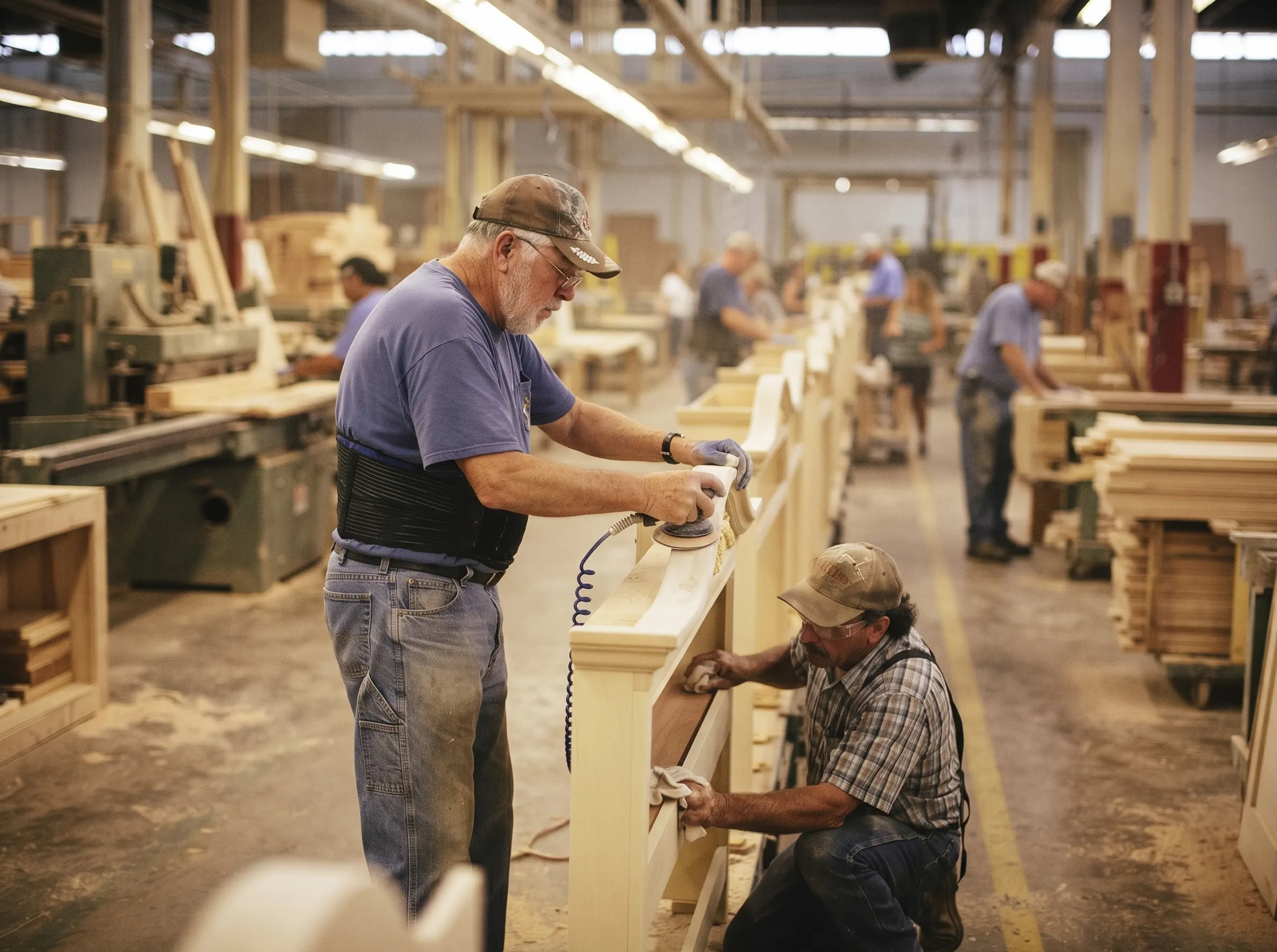
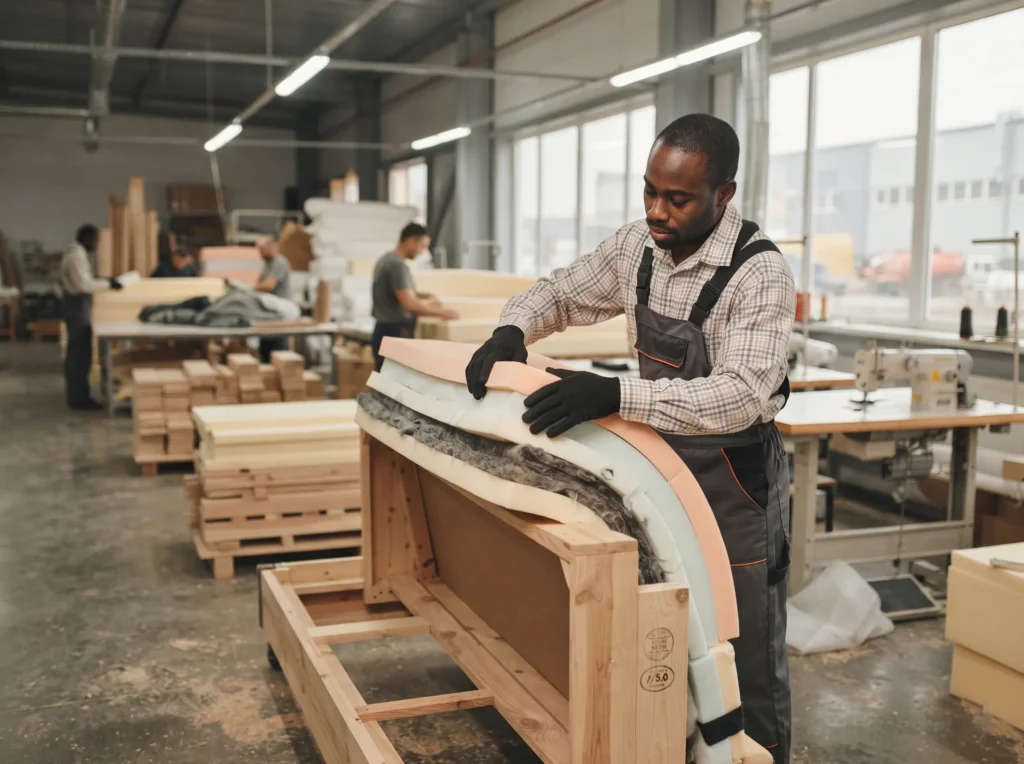
US furniture manufacturing is having a moment in the spotlight, and like most moments in the spotlight, it looks bigger on stage than it is in the wings. Tariffs on Chinese imports, the lingering PTSD of pandemic supply chains, and a patriotic itch among consumers have all conspired to put “Made in USA” back in the marketing playbook. But here is what the press releases leave out: the cost structure underneath American production—labor, raw materials, regulatory compliance, land, energy—hasn’t magically healed. A sofa built in North Carolina still lands on the showroom floor at roughly three times the price of its Chinese or Vietnamese twin. That math hasn’t changed, and it isn’t going to. What has changed is that three groups—custom furniture buyers, government contractors, and brands selling a story rather than just a product—have found reasons to stomach the premium. Everyone else is still importing.
Why “Made in USA” Is Having a Moment
The Tariff Shock That Changed the Math
If you were sourcing from China in 2018, you remember the day the spreadsheets turned red. Targeted duties metastasized into a blanket tax that erased the margin cushion American retailers had treated as a birthright. For mid-market brands—the ones living between IKEA and Herman Miller—the shock was existential. Absorb the tariff and watch profits evaporate. Pass it to consumers and watch volume crater. Or pivot to Vietnam, Mexico, or domestic factories. Reshoring didn’t win on merit; it won by default because the old default got expensive.
The Supply Chain Trauma Buyers Still Remember
Anyone who lived through the port congestion of 2021–2022 doesn’t need a reminder. Containers that cost $2,000 pre-pandemic spiked past $20,000. Lead times stretched from ninety days to six months. Buyers learned a hard lesson: inventory on a ship is inventory you can’t sell. Domestic production promises delivery in weeks, not quarters. That certainty carries a price tag, but for e-commerce sellers who live and die by stockout metrics—it is worth paying.
The Consumer Sentiment Shift
There is a slice of the American market—affluent, politically engaged, skeptical of global supply chains—that will pay extra for a “Made in USA” label. It is not a majority. It is not even a large minority. But it is wealthy, loyal, and vocal. For brands targeting that demographic, domestic production is less a manufacturing decision than a marketing investment. The sofa costs more to build, but it sells at a higher margin because the story sells.
The Three Drivers Behind the Reshoring Push
Policy Pressure: Tariffs and the Buy American Act
Federal procurement is not a market. It is a compliance exercise with a budget attached. The Buy American Act mandates domestic content for government-funded construction, military housing, federal office fit-outs. If you are selling to the General Services Administration, “Made in USA” is not optional—it is a ticket to the game. Outside that corridor, policy functions as a tax on imports rather than a subsidy for domestic efficiency. The factories don’t get cheaper; the imports just get less cheap.
Operational Pressure: Lead Times and Inventory Risk
Retailers with thin balance sheets have learned that speed is a form of capital. Domestic manufacturing compresses the cash conversion cycle from months to weeks. For trend-driven categories—seasonal color palettes, influencer-driven silhouettes—the ability to reorder in small batches without ocean freight exposure is survival, not luxury. This logic supports reshoring for fast-turn SKUs. It does not support reshoring for staple goods where demand is predictable.
Market Pressure: The Premium Brand Narrative
In the lifestyle marketing ecosystem, “Crafted in North Carolina” outperforms “Imported from Dongguan” every time. The objective quality may be identical. The consumer does not care. For brands above the mass-market fray, domestic production is a brand equity play. They accept lower unit margins because customer lifetime value compensates.
The Cost Breakdown: Where the 3X Multiplier Comes From
Labor: The Single Largest Gap
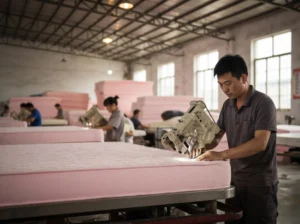
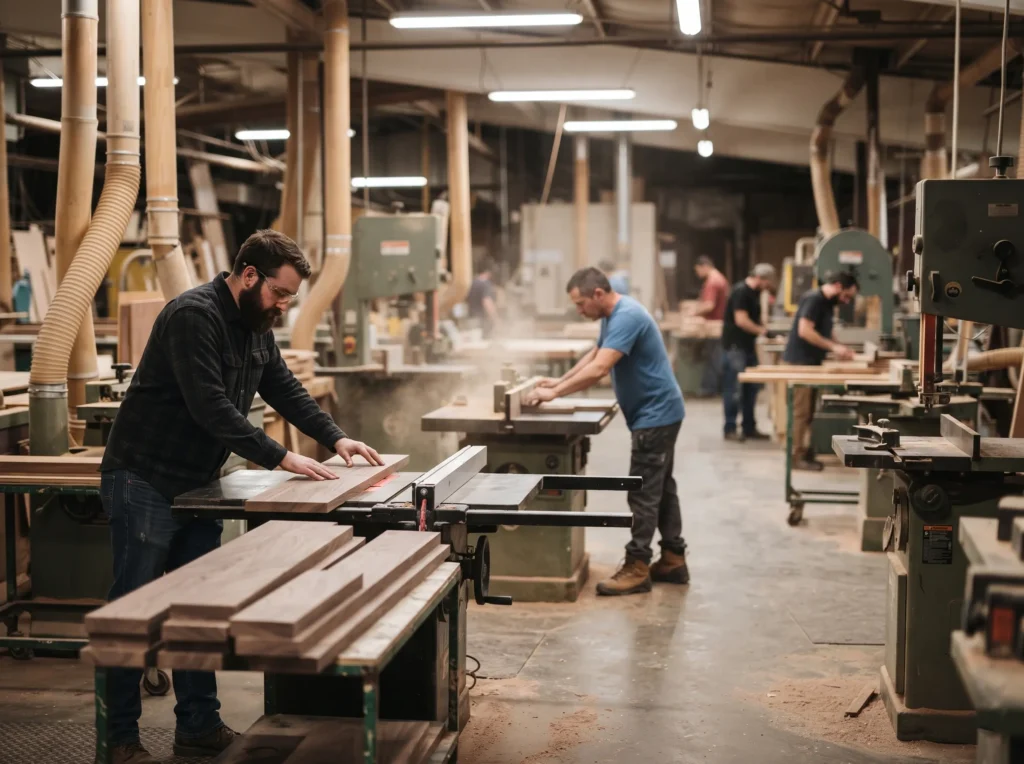
If you want to understand why American furniture costs what it costs, start with the paycheck. The gap is not a rounding error; it is a chasm.
| Cost Component | US Factory Floor (Approximate) | China/Vietnam Factory Floor (Approximate) | What It Means |
|---|---|---|---|
| Skilled upholstery worker, hourly | $22–$28 | $3.50–$5.50 | Roughly 5x–6x before benefits |
| Woodshop craftsman, hourly | $18–$24 | $2.80–$4.50 | Same gap, different trade |
| Benefits and payroll load | 35%–45% on top of base | 20%–30% on top of base | The hidden multiplier |
| Annual training/retention per head | $4,000–$6,000 | $800–$1,200 | Turnover is cheaper overseas |
| Effective daily output hours | 7.5–8 (strict OT rules) | 10–12 (standard) | 30%–50% fewer chairs per day |
For reference only, subject to official verification. These numbers come from factory floors I’ve walked in High Point, Tupelo, Foshan, and Dongguan between 2024 and 2025. Directional, not gospel.
Labor alone accounts for about half the total cost delta. You cannot automate your way out of this in an industry where hand-finish work is still standard. Robots don’t upholster sofas well. Not yet, anyway.
Materials and Components: The Hidden Import Dependency
American factories buy domestic hardwoods at competitive prices. Beyond raw lumber, the story falls apart fast. High-density foam, performance fabrics, decorative hardware, precision drawer slides—these either don’t exist at scale domestically or cost a fortune when they do. A factory in High Point can stitch a sofa on American soil, but odds are the foam core, the fabric, and the recliner mechanism spent time in a container before they ever saw a sewing needle.
| Material Category | Can You Buy It Domestically? | Cost Premium vs. Import | How Dependent Is the US? |
|---|---|---|---|
| Solid hardwoods (oak, maple, ash) | Yes, widely | 0%–10% | Low |
| Engineered wood / MDF | Sort of | 15%–25% | Medium |
| High-density upholstery foam | Barely | 40%–60% | High |
| Decorative hardware | Not really | 50%–80% | Very high |
| Performance fabrics | Somewhat | 30%–50% | Medium-high |
| Recliner/lift mechanisms | Almost never | 60%–100% | Very high |
For reference only, subject to official verification.
Compliance, Land, and Energy: The Fixed Cost Burden
Running a factory in the US means playing by rules that simply don’t exist—or aren’t enforced—at Asian competitors. EPA air quality standards, OSHA safety mandates, state environmental reporting. Then there is property tax, workers’ comp insurance, and energy bills that would make a Guangdong factory manager weep.
| Fixed Cost Factor | What It Adds to Your Unit Cost in the US | What It Adds in Asia | The Short Version |
|---|---|---|---|
| EPA/OSHA compliance | 8%–12% | 1%–3% | Paperwork and filtration aren’t free |
| Property tax and land | 5%–8% | 1%–2% | Even right-to-work states aren’t cheap |
| Energy (electric, gas) | 4%–6% | 2%–3% | Subsidized power overseas |
| Insurance and liability | 3%–5% | 1%–2% | American litigation culture |
For reference only, subject to official verification.
What American Factories Actually Produce vs. What They Don’t
The Niches Where Domestic Production Wins
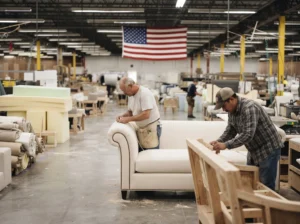
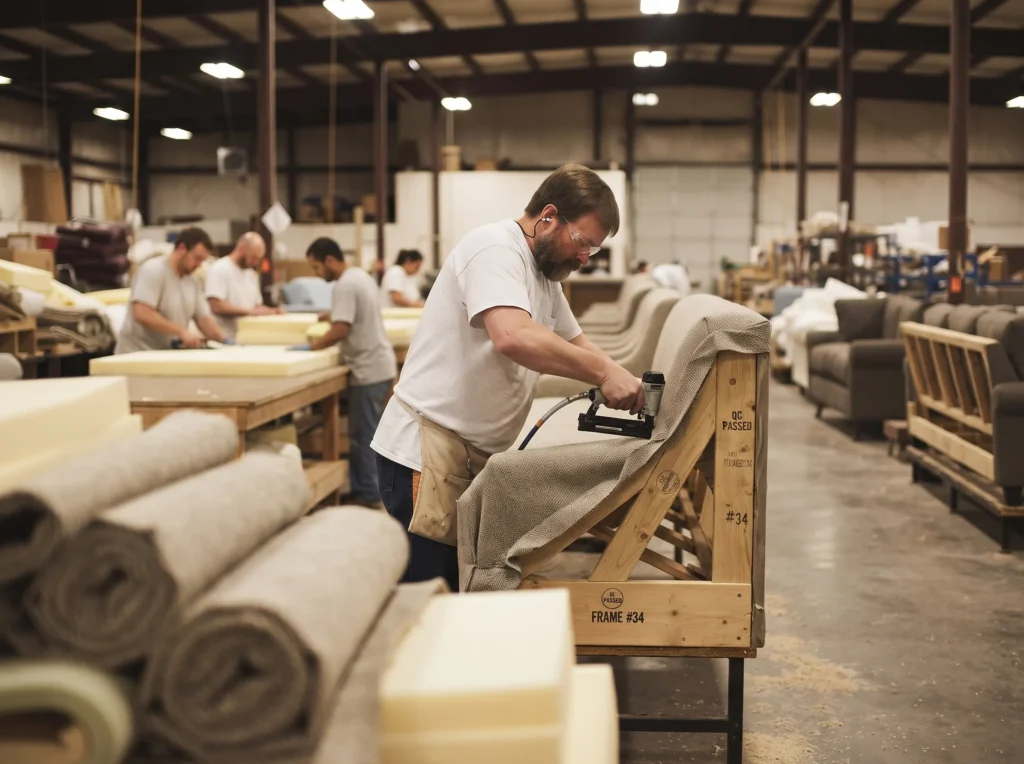
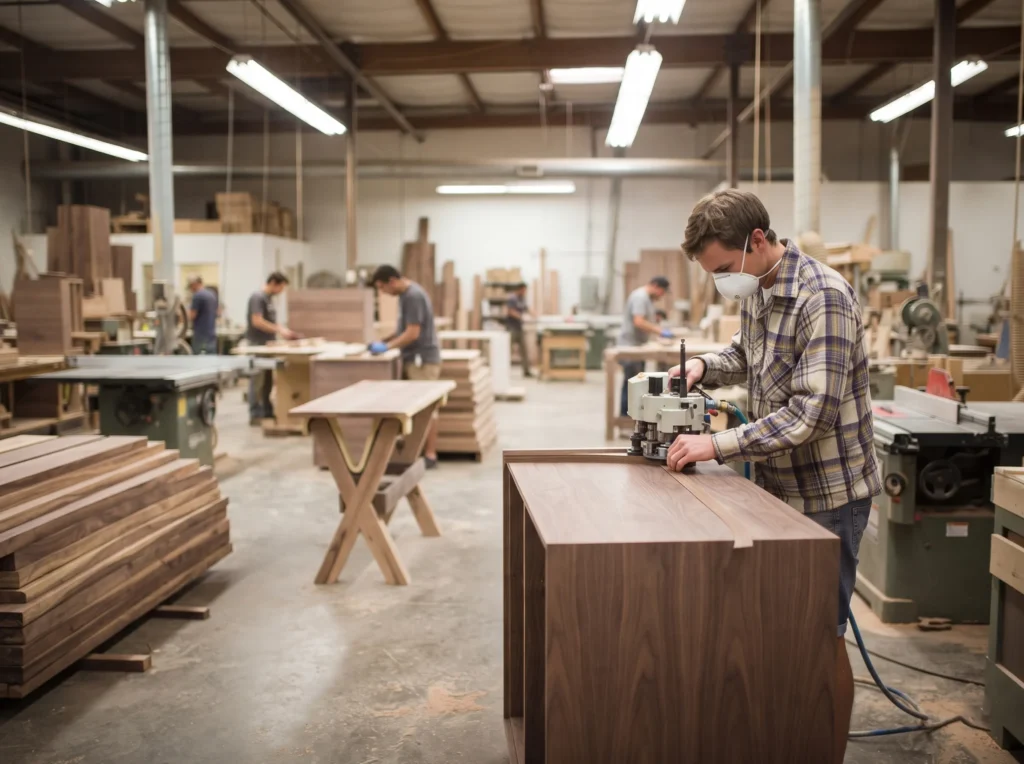
There are three places where American factories genuinely compete. First, bespoke high-end residential furniture where labor hours are sky-high and the customer expects to pay for craftsmanship. Second, government and institutional contracts where domestic content is legally mandated. Third, emergency small-batch reruns for retailers staring down a stockout—situations where air freight from Asia would exceed the domestic premium.
The Categories Where Imports Still Dominate
Mass-market upholstered sofas. Standardized dining sets. Flat-pack RTA furniture. Anything where scale economies determine who lives and who dies. American factories lack the labor pool, the component ecosystem, and the capital base to compete on unit cost at volume. A 40-foot container of dining chairs from Vietnam will undercut domestic production by a margin that no amount of patriotism can close.
The “Assembled in USA” Gray Zone
The FTC has a clear rule: unqualified “Made in USA” claims require the product to be “all or virtually all” domestic. The gap between the rule and reality is where most of the industry lives. Plenty of brands marketing “American-made” furniture are doing final screw-together or sewing operations on imported frames, imported foam, and imported fabric. The last mile happens in the US. The value creation does not. If you care about genuine domestic provenance, verify the Bill of Materials. Don’t trust the hangtag.
The Hidden Challenges No One Talks About
The Workforce Gap: Aging Craftsmen and Missing Apprentices
Here is a number that doesn’t make the press releases: according to BLS establishment data, the furniture and related products sector lost 1,000 jobs in May 2026 alone. IBISWorld puts household furniture manufacturing employment at 112,535 in 2026, down an average of 0.6% annually since 2021. Office furniture manufacturing sits at 101,370, contracting 0.1% over the same stretch. The sector has not recovered to pre-NAFTA employment levels. It is not expanding. It is shrinking, slowly but steadily.
The workforce that remains is aging out. Your typical skilled upholsterer or master woodworker is in his fifties or sixties. The apprenticeship pipeline has not refilled. Community colleges in North Carolina and Virginia have restarted training programs, but graduation rates are a trickle, not a flood. Without people, you cannot scale. Automation helps at the margins, but this is not an industry that robotizes easily.
The Supply Chain Illusion: Why “Made in USA” Still Relies on Global Parts
There is no such thing as a closed-loop American furniture supply chain. Specialty fasteners, synthetic performance fabrics, the chemical precursors for polyurethane foam—these all flow through global trade lanes. Reshoring final assembly creates domestic jobs and photographs well for campaign ads, but it does not insulate production from international shocks. When tariffs hit Chinese components, American factories feel the pain almost as acutely as Chinese exporters do.
The Policy Uncertainty: What Happens If Tariffs Disappear
The most dangerous assumption in reshoring investment is that current tariff structures are permanent. They are not. They are the product of administrative policy, not legislative statute, which means they can change with an election cycle or a trade negotiation. American factory owners know this. It is why many reshoring announcements are heavier on press releases than on capital equipment orders. If tariffs vanish, the economic rationale for domestic production evaporates overnight. That uncertainty suppresses long-term investment.
What This Means for Buyers and Suppliers
For US Retailers and Brands: When to Go Domestic, When to Import
Domestic sourcing makes sense when speed or compliance is worth more than unit cost. Government contracts, custom high-end lines, emergency restocks—those are domestic plays. Mass-market volume, seasonal trend goods, price-sensitive categories—those stay offshore. The smart money is running a dual-track strategy: domestic for velocity and storytelling, imported for scale and margin.
For Chinese Exporters: The Competitive Threat Is Real but Measured
Chinese furniture exporters are not losing share to American factories. They are losing share to Vietnamese, Mexican, and Indonesian factories as American buyers hunt for tariff-advantaged alternatives. The competitive threat from reshoring is real in government contract categories and negligible in consumer mass market. The bigger risk is third-country substitution, not domestic revival. Chinese exporters should be evaluating nearshoring partnerships and assembly arrangements in Mexico and Vietnam to maintain market access.
For Global Buyers: Understanding the New Dual-Track Market
The American market has split in two. Track One: premium-priced domestic product with short lead times and compliant provenance. Track Two: imported product at a fraction of the cost, with longer transit times and tariff exposure. The procurement question is no longer “domestic or import?” It is “what mix, for what channel, under what risk tolerance?” Buyers who understand the true cost architecture behind each track will allocate better than buyers who don’t.

FAQ: US Furniture Manufacturing and Reshoring
Is furniture made in the USA really three times more expensive?
Yes, as a rule of thumb. For equivalent specs and comparable quality, domestic product typically retails at 2.5x to 3.5x the price of imported alternatives. The gap is narrowest in solid wood categories where domestic lumber is abundant, and widest in upholstered goods and mechanism-heavy products where labor and component import costs compound.
Which furniture is actually made in America versus just assembled there?
True domestic production means domestic sourcing of structural frames, primary wood stock, and—in upholstery—domestic foam and fabric. “Assembled in USA” or “Designed in USA” usually means imported components get final screw-together or stitching operations on American soil. The FTC requires “all or virtually all” domestic content for unqualified “Made in USA” claims, but enforcement is spotty.
Are American furniture factories hiring and expanding?
Not in aggregate. BLS data shows the furniture and related products sector shed 1,000 jobs in May 2026. IBISWorld reports household furniture manufacturing employment at 112,535 in 2026, down 0.6% annually since 2021, and office furniture at 101,370, down 0.1%. Individual factories may add shifts for specific contracts, but sector-wide employment is contracting, not growing.
Will US furniture manufacturing ever compete with China on price?
No. The structural cost disadvantages—labor rates, regulatory burden, energy costs, incomplete component ecosystems—are not reversible in any business-relevant timeframe. American factories compete on speed, customization, and compliance. They do not compete on unit cost at volume, and they never will.
How do tariffs affect the cost of imported furniture in the US?
Tariffs on Chinese furniture add a substantial percentage to landed costs, varying by HTS code. The importer pays, not the exporter, and the cost flows through to retail. Tariffs have compressed margins and accelerated sourcing diversification to Vietnam, Mexico, and Malaysia. They have not made American factories cost-competitive; they have merely made imports more expensive.

Recommended Resource
Interi Furniture specializes in custom furniture manufacturing for residential, hospitality, and commercial projects. Their experience in materials, craftsmanship, and project realization makes them a valuable resource for designers and buyers seeking tailored furniture solutions from China.