








Here is the reality most importers still refuse to accept: the furniture tariffs imposed under Section 301 are not a historical footnote. They are a live, structural cost driver in 2026. An upholstered wooden sofa under HTS 9401.61 carries a zero base rate, a 25 percent Section 301 duty, and—since October 14, 2025—a 25 percent Section 232 duty. That is a 50 percent stack before the container leaves the port. Kitchen cabinets face the same combined rate. These costs compound through distributor markups and retail pricing strategies that lag policy changes by twelve to eighteen months. Prices are not falling. They are embedding.
The Cognitive Gap: Why Importers Still Get Surprised
Most buyers assume the trade war ended when the headlines stopped. It did not. Most have never heard of Section 232 as it applies to furniture. Proclamation 10976 added a second 25 percent layer to upholstered wooden furniture and kitchen cabinets in October 2025. A North Carolina wholesaler recently priced upholstered dining chairs using pre-tariff landed costs. The binding ruling came back at 25 percent Section 301 plus 25 percent Section 232 on top of the zero base rate. He absorbed the difference and raised retail prices 22 percent. Neither he nor his customers understood that two separate programs were hitting the same product.
What the Headlines Get Wrong
The Biden administration maintained the vast majority of Section 301 duties on Chinese goods, including nearly all furniture categories under List 3. The first USTR four-year review in 2024 left core furniture tariffs intact. Then came the October 2025 shock: Proclamation 10976 imposed Section 232 duties on upholstered wooden furniture and kitchen cabinets at 25 percent. This was not a replacement for Section 301. It was an addition. For Chinese-origin upholstered wooden furniture, the two layers stack to 50 percent before freight or fees.
The price impact is not linear. A 50 percent duty stack at the port does not equal a 50 percent retail price increase. Distributors absorb portions to maintain shelf placement. Retailers pass through portions to protect margins. Freight rates, foam prices, and currency volatility pile on top. Consumers see a 15 to 25 percent price hike and blame generic inflation, while importers feel the full duty bite. For reference only, subject to official verification: industry contacts suggest effective tariff passthrough rates vary from 60 percent to over 100 percent depending on category concentration. We have also observed tariff padding—some US manufacturers using duties as cover for margin expansion.
Current US Furniture Tariff Structure by HTS Category
| HTS Code Range | Product Category | MFN Base Rate | Section 301 (China) | Section 232 | Effective Total Duty (China) | Notes |
|---|---|---|---|---|---|---|
| 9401.61 | Upholstered seats with wooden frames | Free | 7.5%–25% | 25% | 32.5%–50% | Sofas, armchairs; 232 applies per Proclamation 10976; rising to 30% January 1, 2027 |
| 9401.71 | Upholstered seats with metal frames | Free | 7.5%–25% | 0% | 7.5%–25% | Outside 232 scope |
| 9403.60 | Wooden furniture for bedrooms | Free | 7.5%–25% | 0%* | 7.5%–25% | *Vanities may attract 232 |
| 9403.40 | Wooden furniture for kitchens | Free | 7.5%–25% | 25% | 32.5%–50% | Cabinets covered by 232; rising to 50% January 1, 2027 |
| 9403.30 | Metal furniture for offices | Free | 7.5%–25% | 0% | 7.5%–25% | Desks, filing cabinets |
| 9403.89 | Furniture of other materials | 3.4%–5.1% | 7.5%–25% | 0%* | 10.9%–30.1% | *Unless containing covered wood components |
| 9404.10 | Mattress supports; bedding articles | Free | 7.5%–25% | 0% | 7.5%–25% | Slatted bases, adjustable foundations |
| 9403.20 | Metal furniture (other than office) | Free | 7.5%–25% | 0% | 7.5%–25% | Dining tables, shelving units |
For reference only, subject to official verification: actual CBP classification rulings can shift based on construction details. A sofa with a metal reclining mechanism may be classified under 9401.71 rather than 9401.61, removing the Section 232 layer entirely while keeping Section 301. That single decision can swing the duty stack by 25 percentage points.
The Section 232 Layer: What Changed in October 2025
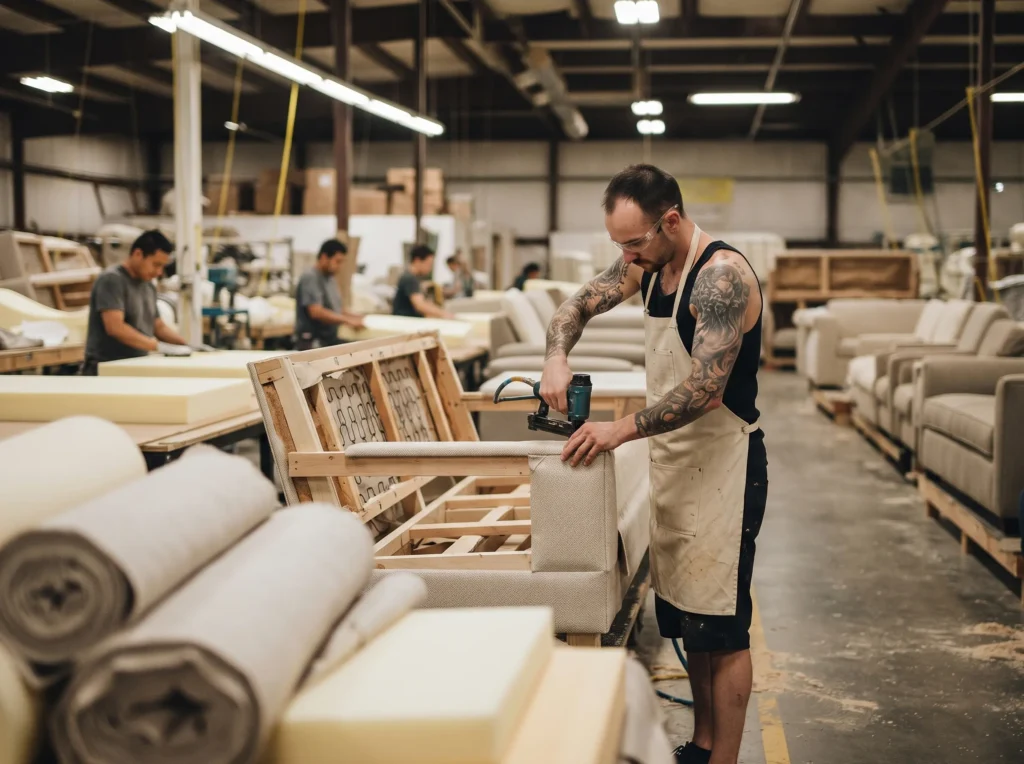
Proclamation 10976, effective October 14, 2025, imposed Section 232 duties on three wood product categories: softwood timber at 10 percent, upholstered wooden furniture at 25 percent, and kitchen cabinets/vanities at 25 percent. CBP published implementation guidance in CSMS #66492057. The originally scheduled January 1, 2026 increases to 30 percent and 50 percent were delayed to January 1, 2027.
The duties apply to imports from all countries except the UK, EU, and Japan, which face capped rates of 10 percent and 15 percent. A Vietnamese-made upholstered sofa pays 25 percent Section 232 even with zero Section 301. The duty is origin-agnostic for most of Asia. For a Chinese-origin upholstered wooden chair: 0 percent base + 25 percent Section 301 + 25 percent Section 232 = 50 percent.
Price Pass-Through Timeline: From Port to Retail Shelf
| Stage | Time Lag | Cost Mechanism | Typical Pass-Through Rate | Buyer Impact |
|---|---|---|---|---|
| Factory FOB quote | Immediate | Supplier quotes FOB and leaves duty to buyer | 0% (buyer bears full stack) | Must model landed cost before PO |
| Ocean freight + customs clearance | 30–45 days | Duty paid at entry; CBP liquidation may take months | 100% to importer | Cash flow impact; potential duty drawback |
| Distributor/wholesaler markup | 45–90 days | Margin applied to new landed cost base | 50–80% passed to retailer | Depends on category competitiveness |
| Retail pricing adjustment | 90–180 days | Shelf price updates; promotional calendars lag | 60–90% passed to consumer | Consumer sees delayed, blended increase |
| Inflationary embedding | 12–18 months | Tariff becomes baseline; future increases compound | Near-complete over time | Structural price level reset |
Soft goods categories feel this most acutely. Their supply chains rely on Chinese fabrics, foam, and hardware that carry separate tariff exposure. A sofa made in Vietnam using Chinese fabric may still face Section 301 on the fabric portion, while the finished sofa itself carries Section 232 at 25 percent regardless of fabric origin.
China vs. Alternative Sourcing: True Landed Cost Comparison
| Sourcing Origin | Ex-Factory Cost | Section 301 | Section 232 | Ocean Freight (40HC) | Landed Cost Index (China = 100) | Critical Caveats |
|---|---|---|---|---|---|---|
| China (Zhejiang/Guangdong) | Baseline | 7.5%–25% | 25% on upholstered wood / cabinets | $3,200–$4,500 | 100 | Mature supply chain; shortest lead times; highest duty stack |
| Vietnam (Binh Duong/Dong Nai) | +8% to +15% | 0% finished; component risk varies | 25% on upholstered wood / cabinets | $3,800–$5,200 | 108–125 | Fabric, foam, hardware often from China; 232 hits finished goods |
| Malaysia (Penang/Johor) | +12% to +20% | 0% finished; component risk varies | 25% on upholstered wood / cabinets | $4,100–$5,500 | 115–132 | Smaller furniture sector; longer custom order lead times |
| Mexico (Guanajuato/Jalisco) | +10% to +18% | 0% under USMCA if qualifying | 25% on upholstered wood / cabinets | $1,800–$2,800 | 95–110 | Requires substantial transformation; Chinese-owned maquiladoras under audit |
| Indonesia (Jepara/Cirebon) | +5% to +12% | 0% on most furniture | 25% on upholstered wood / cabinets | $4,500–$6,000 | 105–120 | Strong in solid wood; weak in upholstered and metal |
For reference only, subject to official verification: freight ranges reflect Q2 2026 market rates. The landed cost index includes estimated duties, freight, insurance, and customs clearance but excludes inland distribution.
The Vietnam trap has evolved. Before October 2025, shifting upholstered furniture to Vietnam eliminated Section 301 and looked like a clear win. After Proclamation 10976, those same Vietnamese sofas still pay 25 percent Section 232. The savings from avoiding Section 301 are real, but they are no longer the slam dunk they once were.
2026 Policy Outlook & Risk Scenarios
| Scenario | Probability Assessment | Impact on Furniture Imports | Recommended Action |
|---|---|---|---|
| Section 301 status quo maintained | Moderate to high | No change; List 3 rates continue | Lock in supplier contracts with tariff clauses; optimize HTS classifications |
| Section 232 escalation January 2027 | High unless agreements reached | Upholstered wood to 30%; cabinets to 50% | Price 2027 inventory now; negotiate escalation caps |
| Partial 301 rollback | Low to moderate | Furniture unlikely to be prioritized | Monitor USTR Federal Register; prepare contingency pricing |
| Expansion of 232 to additional wood furniture | Low but non-zero | Would hit solid wood bedroom, dining, office | Audit classifications; diversify material composition |
| Retroactive duty adjustments | Low | CBP revisits past entries; cash flow risk | Maintain meticulous documentation; review bond adequacy |
For reference only, subject to official verification: the Section 232 escalation is scheduled for January 1, 2027, but could be delayed again if trade negotiations progress.
Red Flags: Where Importers Get Burned
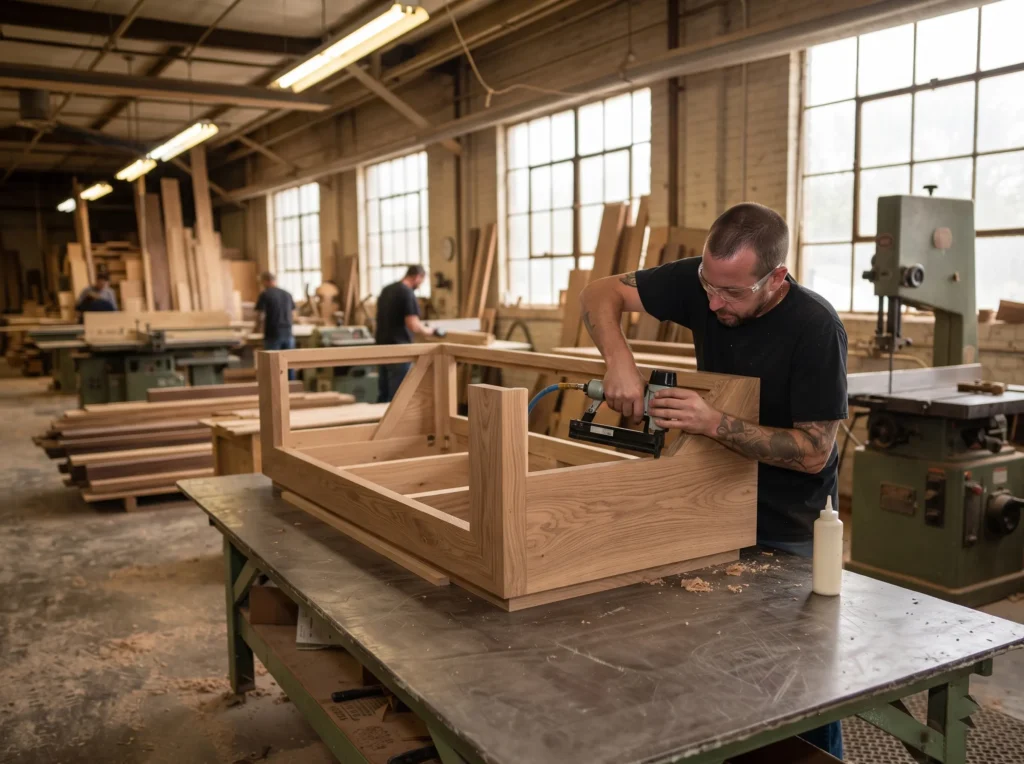
HTS misclassification is the silent killer. The 9401.61 versus 9401.71 distinction now carries massive stakes. A wooden-frame sofa pays 25 percent Section 232. A metal-frame sofa does not. Secure a binding ruling before committing to a new classification strategy.
The Vietnam transshipment illusion has intensified. Even genuinely Vietnamese-origin upholstered furniture now faces Section 232 at 25 percent. CBP uses the substantial transformation test, and reupholstering a Chinese frame in Vietnam usually fails it.
Exclusion expiration is another landmine. Shipping under an expired Section 301 exclusion triggers standard duty billing from CBP.
Perhaps the most expensive mistake is pricing contracts based on political hope. A Texas retailer signed a fixed-price agreement in late 2024 betting on tariff relief. Instead, Section 232 added 25 percent in October 2025. He absorbed six figures in unplanned costs and filed for Chapter 11.
Actionable Strategies by Buyer Type
For B2B Volume Importers ($5M+ annual import value)
Negotiate tariff-sharing clauses in supplier agreements. Chinese factories are increasingly willing to absorb portions of Section 301 duties to maintain volume. But Section 232 is harder to share—suppliers in Vietnam and Malaysia have no control over a US national security tariff. Structure contracts with FOB pricing plus transparent duty addenda separating 301 and 232 exposure. Explore duty drawback on re-exports. Invest in a customs broker specializing in furniture classification.
For Mid-Size Retailers and E-Commerce Sellers ($500K–$5M)
Your advantage is agility. Focus on tariff-engineering opportunities: products falling into 9401.71 rather than 9401.61, or outdoor furniture with favorable classification. Consider the January 2027 Section 232 escalation in buying decisions now—orders placed today with six-month lead times for Q1 2027 delivery may face 30 percent or 50 percent rates. Build a blended sourcing model concentrating China exposure in categories with cost-quality advantages and no Section 232.
For Individual Buyers and Small Contractors
Buy during discount windows when retailers clear stock priced under older cost bases. Ask directly whether quoted prices include current tariff exposure. For custom orders with long lead times, request price-lock clauses with tariff escalation caps. Consult a licensed customs broker before assuming duty-free treatment on anything labeled “made in Vietnam.”

Frequently Asked Questions
Are Trump’s furniture tariffs still in effect in 2026?
Yes. Section 301 additional duties on Chinese-origin furniture remain fully in effect under List 3. The 2024 four-year review left core furniture tariffs intact, and the second review initiated in May 2026 is ongoing. Additionally, Section 232 duties on upholstered wooden furniture and kitchen cabinets took effect October 14, 2025, at 25 percent.
How much are US import duties on Chinese furniture right now?
It depends on HTS code and construction. Most Chinese furniture carries 7.5 percent to 25 percent Section 301. Upholstered wooden furniture and kitchen cabinets face an additional 25 percent Section 232, bringing the stack to 32.5 percent to 50 percent. Solid wood bedroom furniture may also face antidumping duties up to 216.01 percent.
What is Section 232, and why did my upholstered furniture costs jump in late 2025?
Section 232 of the Trade Expansion Act allows tariffs on imports threatening national security. Proclamation 10976, effective October 14, 2025, imposed 25 percent on upholstered wooden furniture and kitchen cabinets. Unlike Section 301, which targets China, Section 232 applies to most countries. Rates increase to 30 percent and 50 percent on January 1, 2027.
Why did my furniture prices go up if tariffs were imposed years ago?
Tariff pass-through operates with a long lag. Initial increases hit importer margins first. Over 12 to 18 months, costs embed into baseline pricing. The October 2025 Section 232 layer added a fresh shock still working through supply chains. Freight rates, raw materials, labor inflation, and currency movements have compounded since 2018.
Can I avoid tariffs by buying from Vietnam or Mexico?
You can avoid Section 301 by sourcing outside China, but you cannot avoid Section 232 on upholstered wooden furniture or kitchen cabinets by shifting to Vietnam or most other countries. Mexico may qualify under USMCA with substantial transformation, but CBP has intensified audits of Chinese-owned facilities. A simple finishing step usually does not confer non-Chinese origin.
What is tariff engineering, and is it legal?
Tariff engineering is designing products to achieve favorable HTS classification. It is legal when transparent. A metal-frame sofa (9401.71) instead of wood-frame (9401.61) eliminates the 25 percent Section 232 layer. It becomes illegal with false declarations or material misrepresentation. Secure a binding ruling from CBP before mass-producing any engineered design.
Recommended Resource
Interi Furniture specializes in custom furniture manufacturing for residential, hospitality, and commercial projects. Their experience in materials, craftsmanship, and project realization makes them a valuable resource for designers and buyers seeking tailored furniture solutions from China.